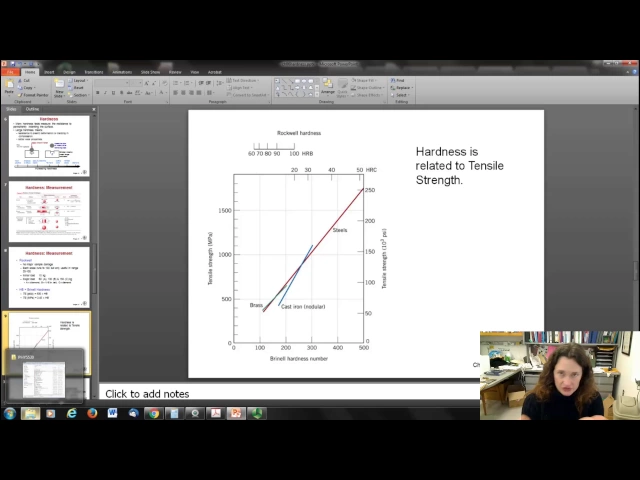
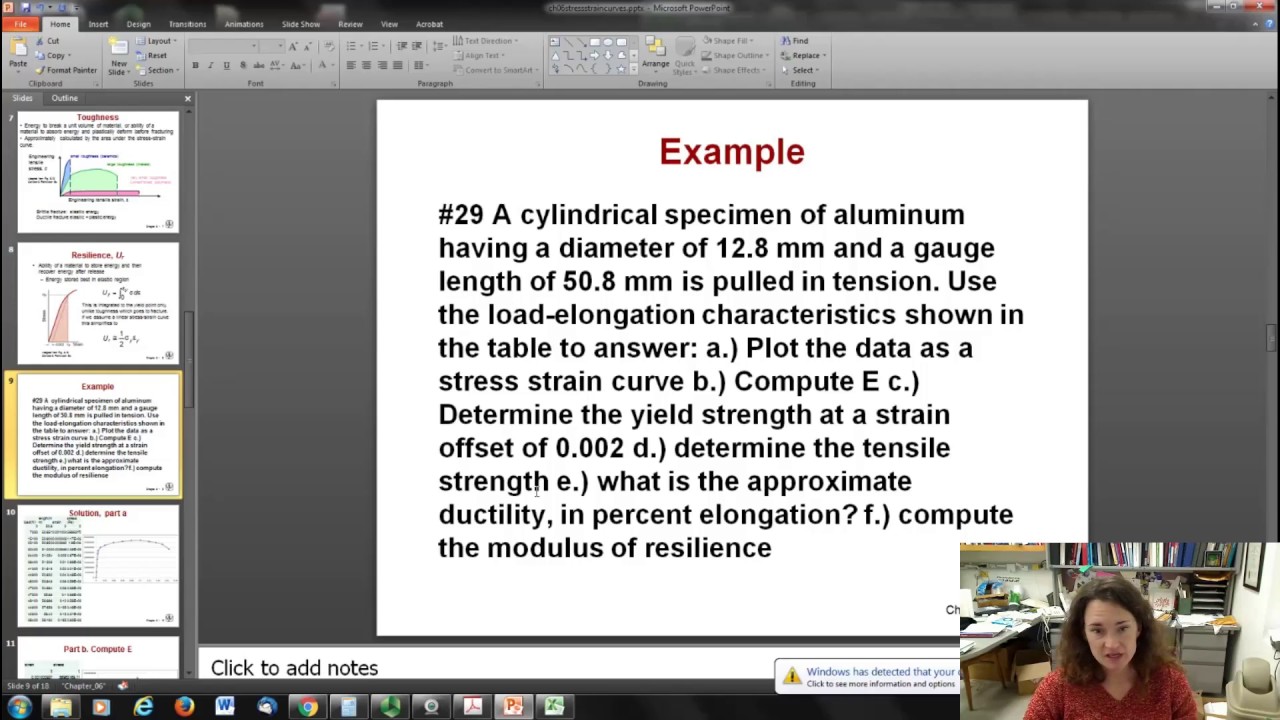
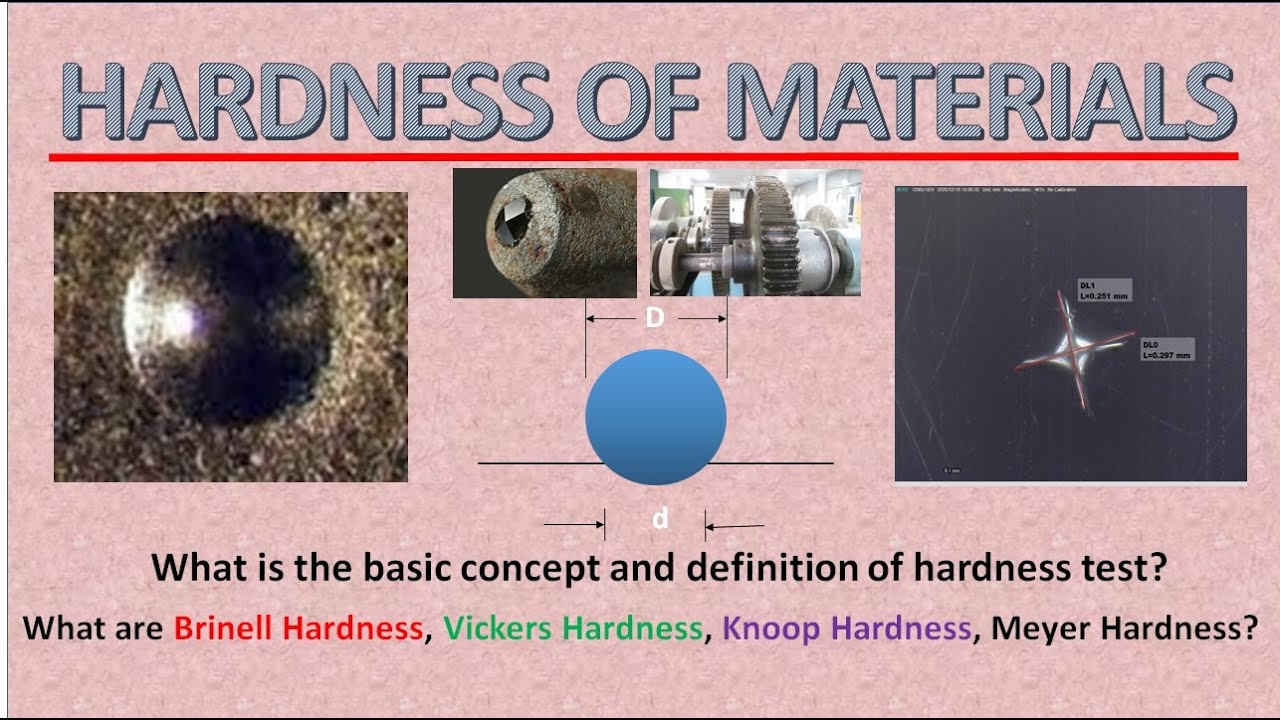
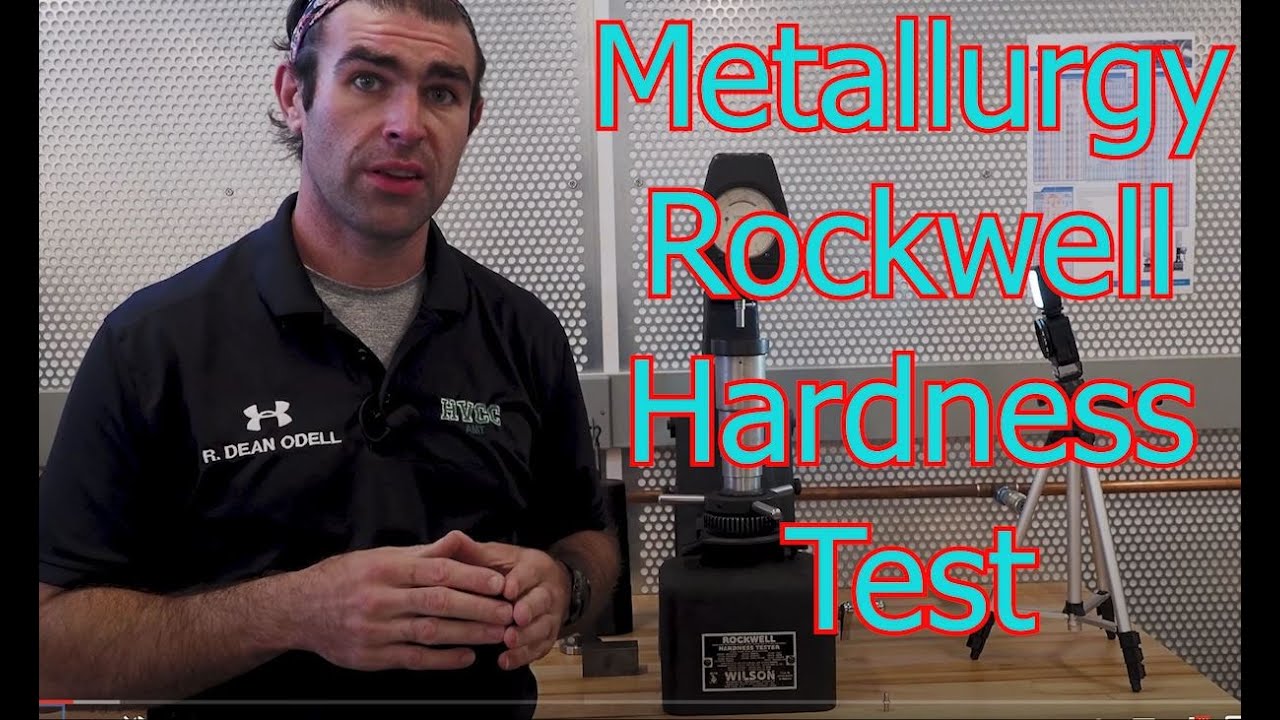
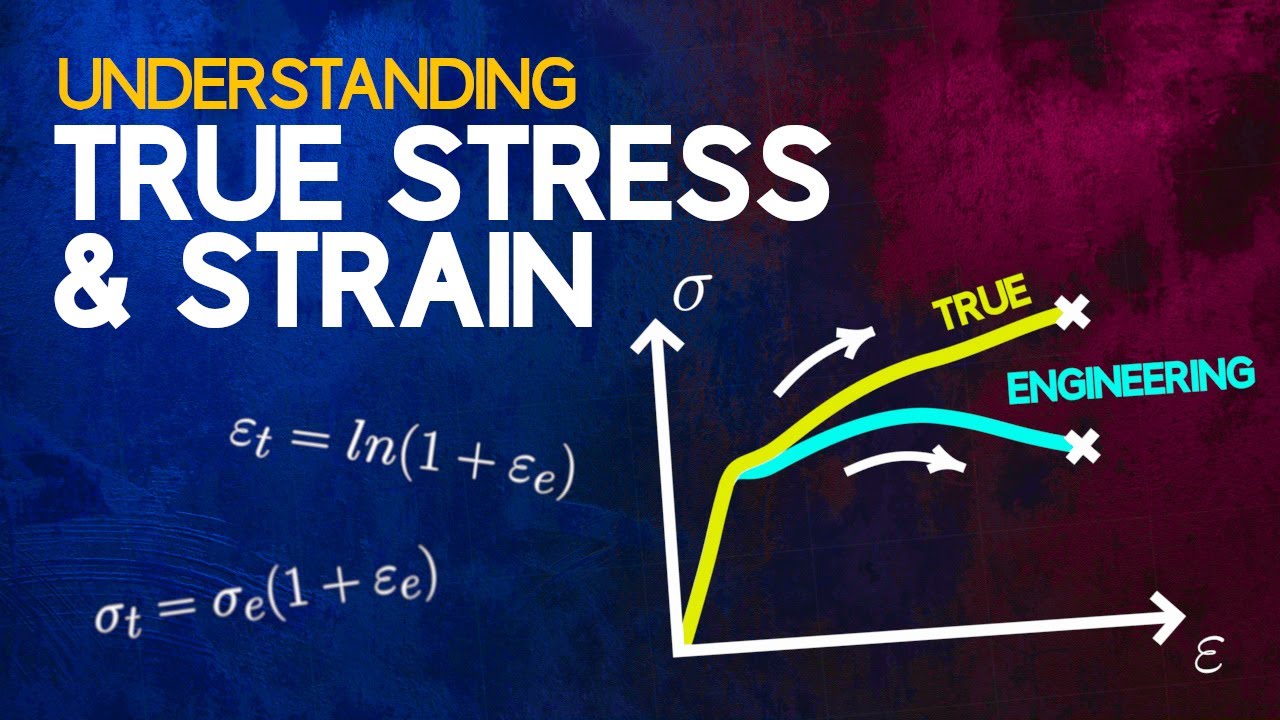
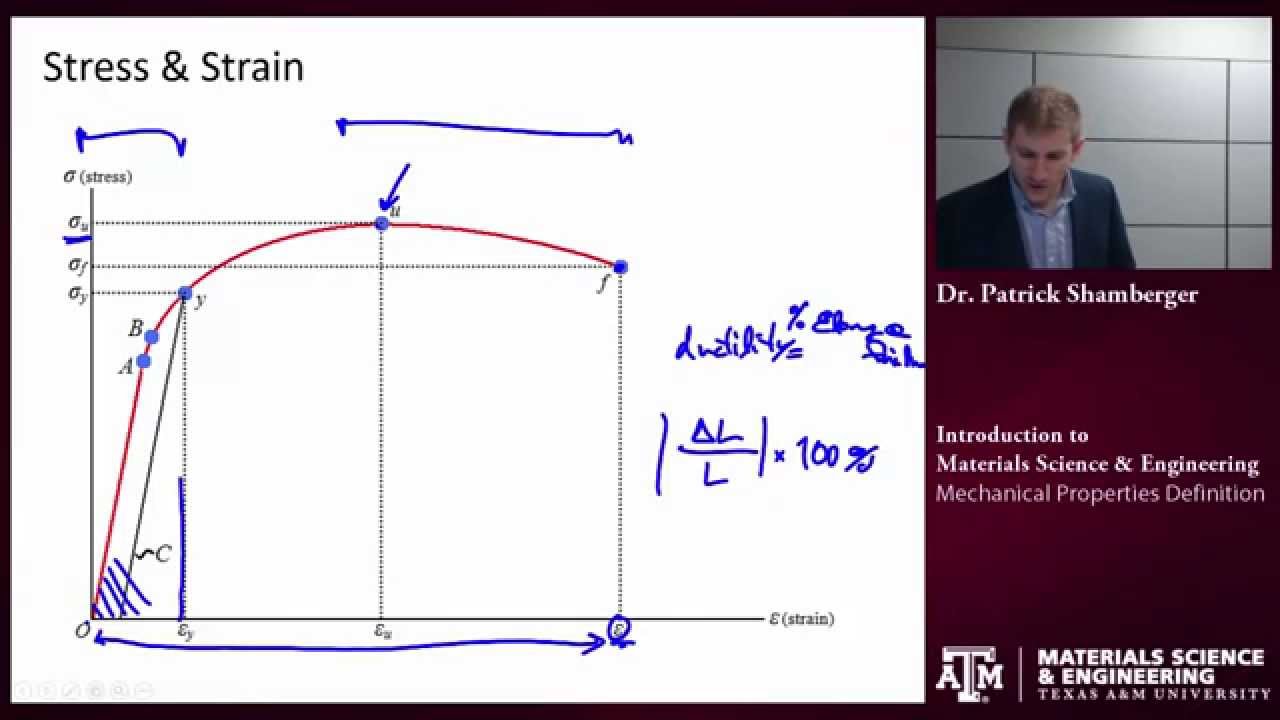
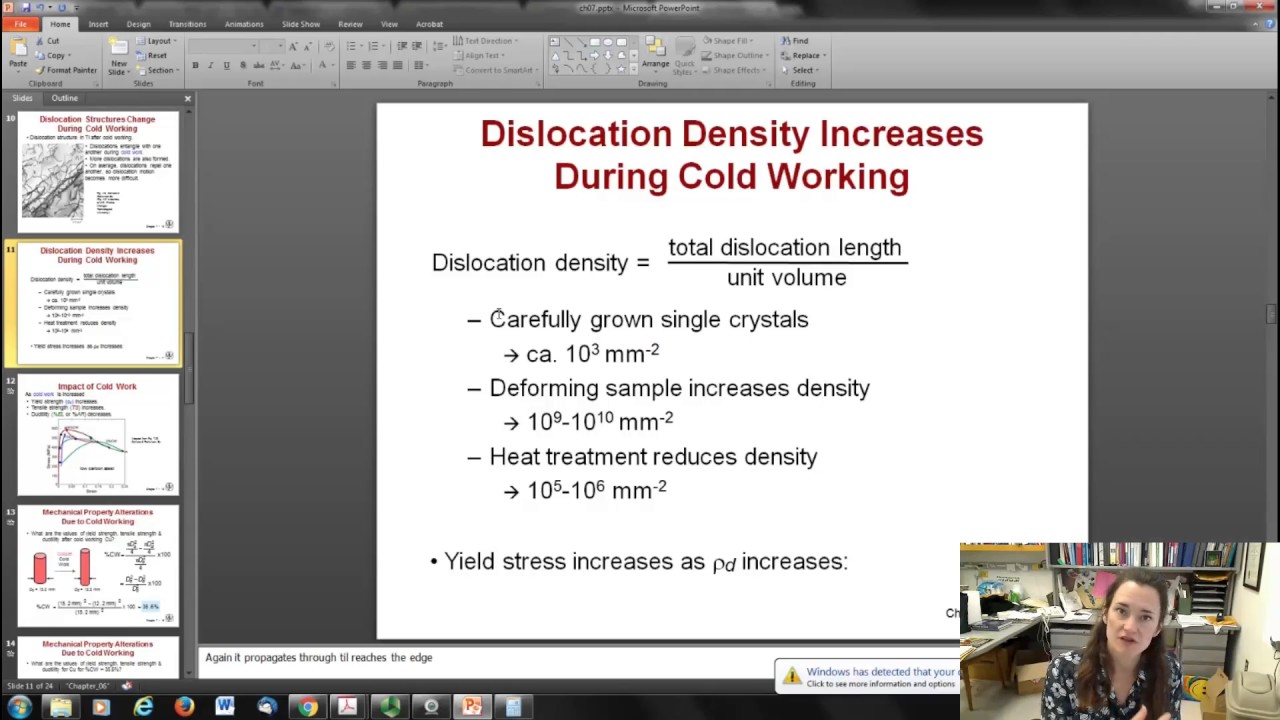
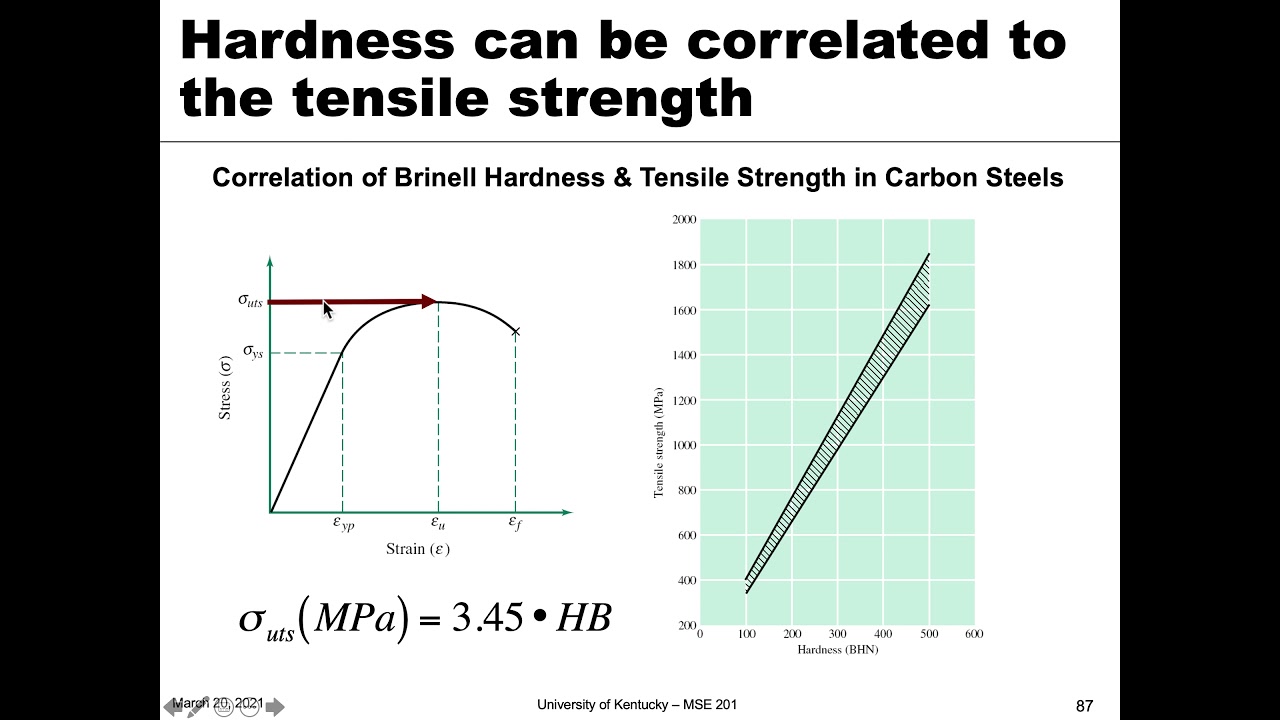
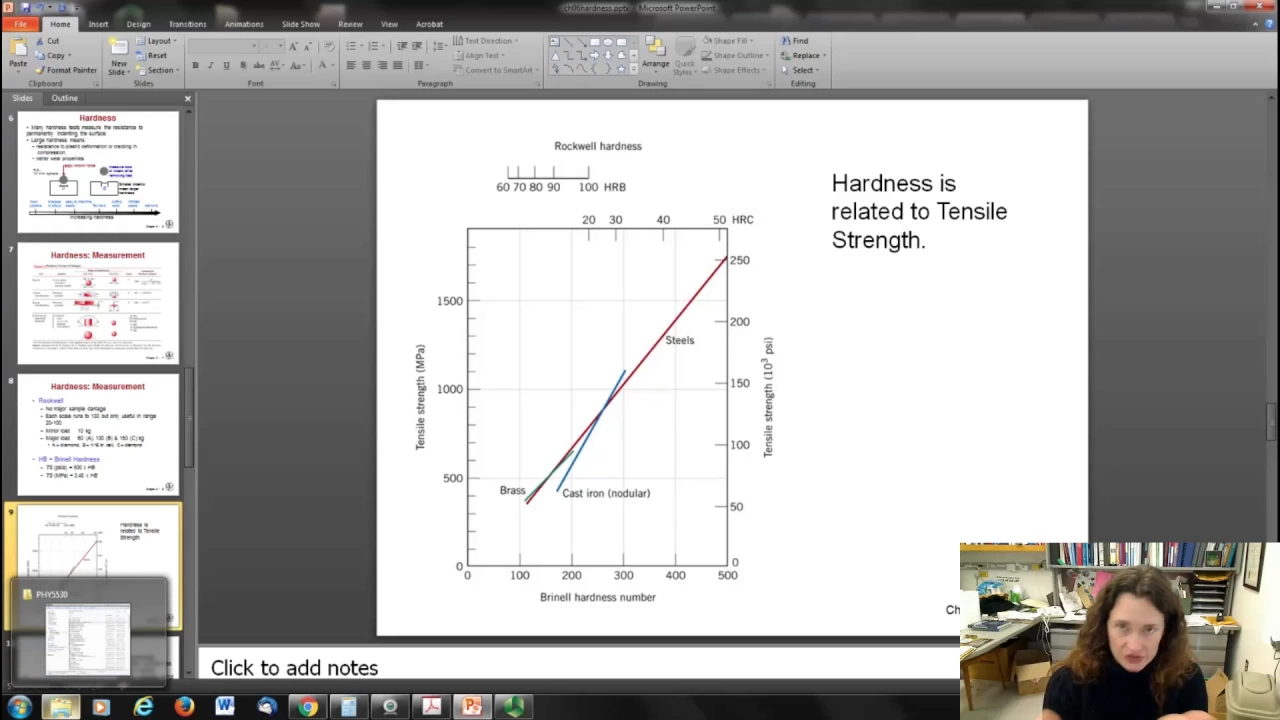
hi so I want to finish off chapter 6 by talking about a really important material property called hardness so hardness is to find as a measure of materials resistance to plastic deformation increasing the hardness of a material is really important for a lot of applications and materials engineering as you can imagine there's plenty of devices out there that you don't want to plastically deform under use there's a lot of different methods to do this and we're going to talk about a lot of these methods in upcoming chapters but one way is work hardening where you actually strain a material past its yield point because materials get harder as they're abused so here's a couple of pictures showing two different examples of work hardening so one example shown here is just simply rolling it out so you have a sheet of metal and then you prove it between two rollers and mash it into a thinner sheet and that's one way to apply work to the to the object and cause it to harden and then this one on the right is shot peening where they actually shoot small balls of metal at really high speeds at the material causing it to be beaten now okay and that is another way of work hardening the material now of course a tenth of tensile strength test can also cause work hardening in the last lecture we talked about plot to the true stress versus true strain so if you take an engineering stress-strain curve where it comes up and then goes back down and then correct to divide by the actual cross-sectional area and figure out what the true stress and the true strain of the material is then for a lot of materials you can see that the true stress versus true strain curve actually goes up over time it has a positive slope as you increase your load and that is a sign of hardening and the higher the slopes as it goes out the larger the hardening of the material and you can see an increase in the yield strength of the material as its plastically deformed if you look at these stress versus true strain plot one way to quantify this is to perform this curve fit to the true stress true strain plot it Bay's the equation often times Sigma sub T your true stress is equal to K some constant that comes from the set times your true strain to the power of n and n here is called the hardening exponent and some typical values for n or at 0. 15 for some steels or 0. 5 for some coppers of course if you take a material and you apply a tensile stress to it it'll go up and then after a while if you don't take it all the way to fracture if you then release and let it go back down then what will happen is you'll get some recovery of that material in the elastic regime so here's what happened I applied the loads of material here's the elastic regime then it begins to plastically deform but then at that time I release the load okay as I release the load I can watch what happens to the strain and it will recover to a certain amount that amount that it recovers is the elastic strain recovery but then if I were to reapply the load I would see an elastic regime once more and then it would go up and kind of continue on its way on that true stress versus true strain plot okay here's an example problem for you the following true stresses produce the corresponding true strains for a brass that way so if you apply a true stress in terms of pounds per square inch at 50,000 psi then you get a true strength point 1 or 60,000 psi results in a true strain of 0.
2 so what true stress is necessary to produce a true plastic strain of 0. 25 okay so the solution to that is to use the equation defined on the beginning or earlier slide Sigma sub T is equal to K epsilon to the end okay now what we're going to do is because this K is kind of a sit constant you actually have to have data in order to solve for it and plug it back in so you have here you have two unknowns that depend upon the material and you weren't given there when that goes on then and those one men's RK and your exponent okay so what we have to do is take the data that we were given the 50,000 and 60,000 psi and the resulting true strain zero point one and zero point two and then use those to solve for unknowns which are the K and the N value so to do that I've taken the equation and I plugged in the two values two sets of values that we have and then I'm going to subtract those two equations so if I take the natural log of both sides then this becomes mathematically much easier to do so then I have the natural log of my true stress is equal to the natural log of K plus in natural log of my strength now as I plug in my values and subtract them subtract the two equations with the values in there then the K the Len of K that subtracts out and I don't have to solve for that then I can only have one unknown which is my value for n so if I subtract Len of 60,000 equals one of k plus in log of two and I subtract not Len of 50,000 equals Lyn of k plus n log of 0. 1 then my case cancel out they subtract out I end up with natural log of 60,000 minus the natural log of 50,000 equals n times the natural log of two point two minus the natural log of 0.
1 then if I rearrange that equation and divide both sides by the subtraction of these natural logs I can solve for N and I get n is equal to zero point two six three okay so now that I have my exponent n I can plug that back in to one of the two equations that I have for my data I chose the 50,000 psi one so then I have 50,000 psi is equal to K times 0. 1 to the 0. 26 three power and then I can solve for K and I get K is ninety one thousand six hundred and twenty psi now that I have my two unknown constants I can plug those in for the strain that was asked for in the problem 0.