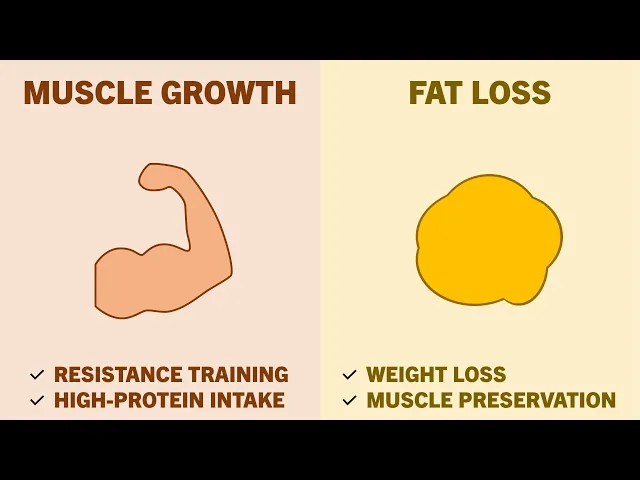
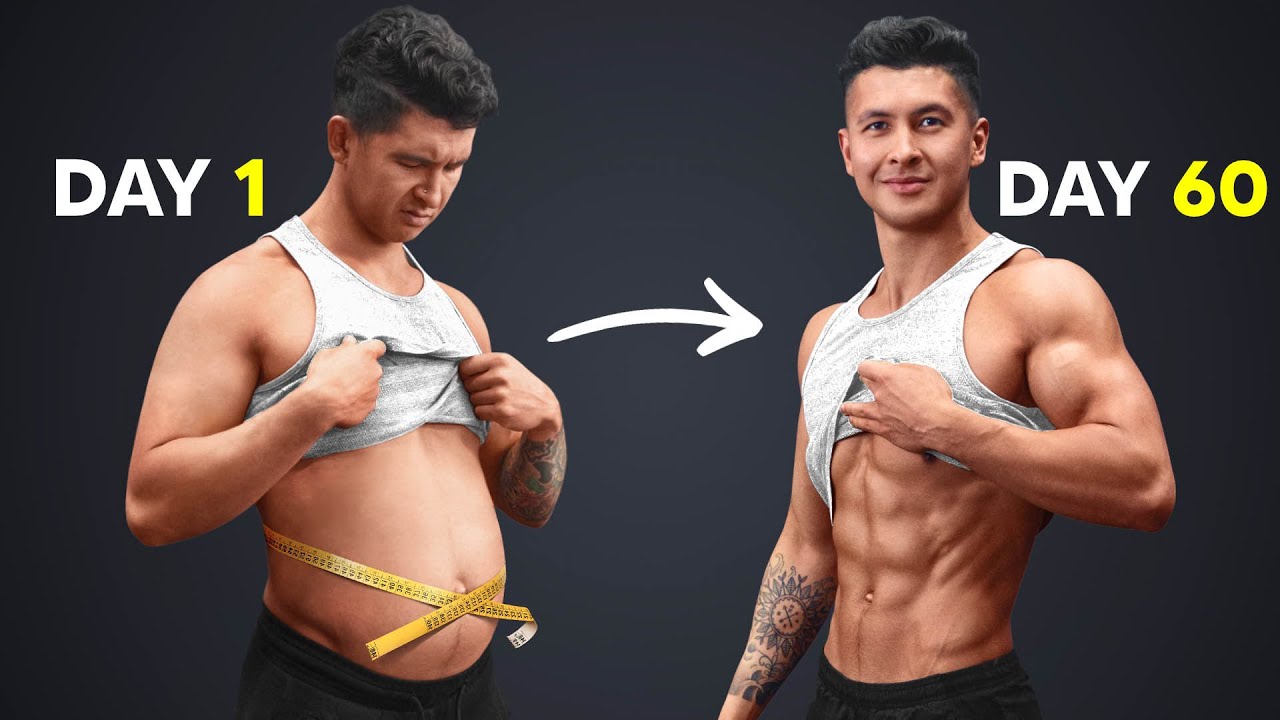
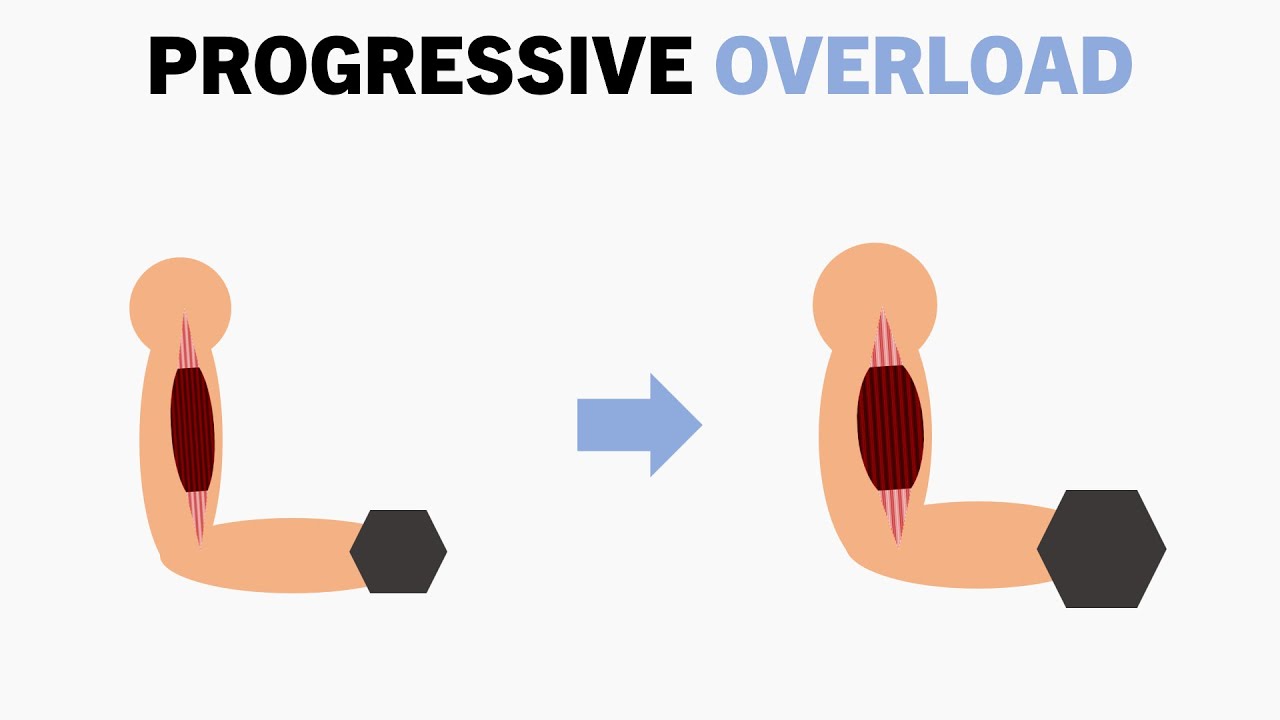
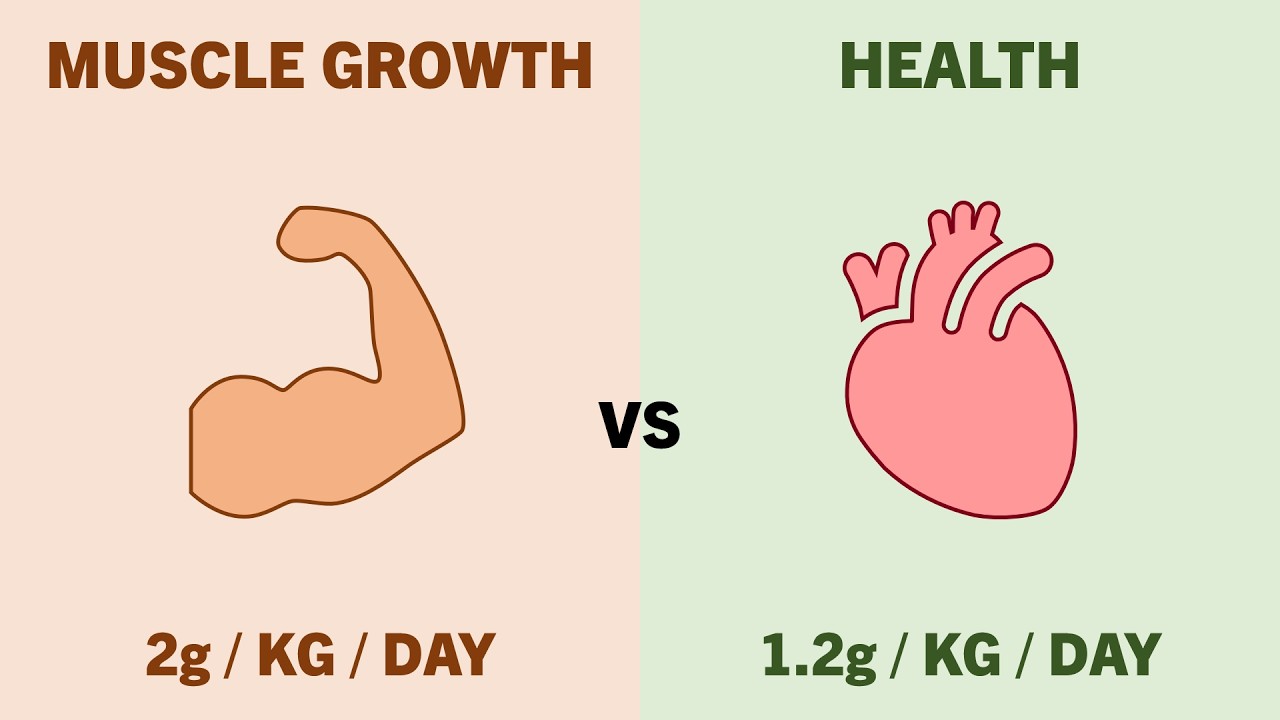
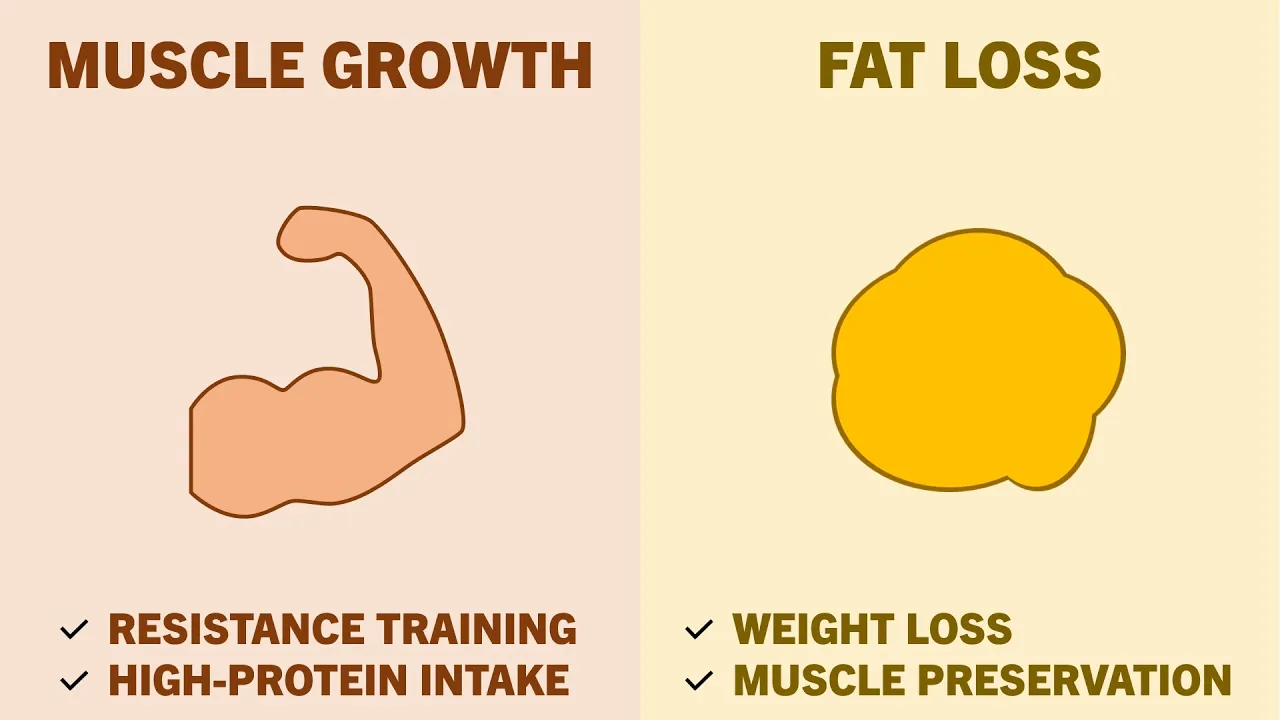
we can change our body composition through diet and exercise in most cases we want to increase muscle mass and reduce body fat in this video we will cover the diet and exercise strategies we can Implement to achieve these body composition changes first let's cover muscle growth each muscle is composed of facies which are just bundles of individual muscle fibers the muscle fibers themselves are composed of individual units of contractile tissue known as meio fibral so myofibrils are basically just the smallest individual units of contractile tissue muscle growth is thought to primarily occur via an increase in the number of myofibrils in each muscle fiber making the muscle fiber thicker in diameter which is known as myop fibrilla hypertrophy and if the size of all muscle fibers increases it results in a larger overall muscle belly but how do we achieve this adaptation in the first place well the primary way in which this is achieved is via resistance training resistance training is the primary stimulus for muscle growth it provides a stress to the muscle resulting in an adaptation and this adaptation would hopefully involve muscle growth since muscle growth has occurred we should now be able to provide an even greater training stress resulting in further muscle growth and so on and if we continue to train appropriately over time significant muscle growth can be achieved this is of course a simplistic overview in reality there are many more details that go into how we should train to build muscle mass but the main thing to understand is that resistance training is the primary way in which muscle growth is stimulated as we will discuss soon nutrition can assist this adaptation process but nutrition alone isn't sufficient to stimulate substantial muscle growth independent from training so how should we lift specifically for the purposes of maximizing muscle growth as a brief overview the most important considerations to train for muscle growth include the following train somewhere in the approximate 5 to 20 rep range and use a load that is sufficient to achieve this take each set close to failure leaving no more than around three reps in reserve train the muscles you want to maximize growth for with sufficient volume at least around 10 direct sets per week select exercises which primarily stress the muscle you are trying to train ensure the target muscle is what fatigues first first and limits performance of each set by training with fairly strict technique and try to progress the Reps and load you use over time within these constraints so assuming we have a solid resistance training program being performed consistently we can also manipulate nutritional variables to enhance the muscle growth achieved via training although as we discussed nutrition isn't going to stimulate muscle growth independent of exercise it can just help to assist muscle growth there are two Prim Ary nutrition components that seem to influence the degree of muscle growth achieved the first is our total daily protein intake here we are referring to the total daily amount of protein consumed from all sources including food drinks and supplementation in general a higher protein diet tends to result in Superior muscle growth via resistance training compared with a lower protein diet but how much protein should we aim to consume we have two meta analyses that we can look at to make an informed decision first is this meta analysis which aimed to establish the relationship between protein supplementation and gains in fat-free Mass via resistance training it was found that protein supplementation had a positive effect on fat-free Mass up to a point however once total daily protein intake exceeded around 1. 6 G per kilogram of body weight per day there was no additional benefit similarly this meta analysis also aimed to establish the relationship between total daily protein intake and muscle growth this graph shows the relationship between protein intake and gains in lean mass across all studies with and without resistance training as we can see higher protein intakes tend to result in Greater gains in lean mass but it isn't a linear relationship greater benefits seem to be achieved by consuming up to around 1. 4 G per kilogram of body weight per day then beyond this point higher protein intakes appear to have have less of an additional benefit so I think that the relationship between protein intake and muscle growth seems to look something like this higher protein intakes generally result in Superior muscle growth but follows a diminishing returns response and for most people the point at which significant diminishing returns start to exist is once consuming more than around 1.
5 G per kilogram of body weight per day furthermore this relationship is likely mediated by the amount of Le mass and body fat of each individual so in theory females with a higher body fat percentage might require a lower relative intake while leaner males may require a slightly higher relative intake and if you want more detail on how to individualize protein intake check out the video Linked In the description and the other primary nutrition variable that seems to influence muscle growth is energy balance in other words the net total calorie balance when subtracting energy expenditure from energy intake there are three General energy balance states that we can be in at any given time when calorie intake is greater than expenditure we are in a calorie Surplus a consistent calorie Surplus over time will cause an increase in body weight long term when calorie intake is less than expenditure we are in a calorie deficit a consistent calorie deficit over time will cause a decrease in body weight long term and when calorie intake matches expenditure we are at maintenance calories which will result in a maintenance of body weight essentially I hypothesize that the relationship between muscle growth and body fat versus energy balance looks something like this muscle growth can be achieved in all energy balance States but the likelihood decreases with a larger calorie deficit while a surplus generally results in Greater muscle growth but there is less additional benefit with a larger Surplus and substantially more fat gain so ultimately if you want to maximize the absolute am ount of muscle mass you carry a calorie Surplus is recommended although this will likely result in body fat gain too and if you were to then lose substantial body fat a proportion of this muscle mass will likely be lost too so ultimately most people probably shouldn't be trying to maximize the absolute amount of muscle mass at all costs as this will mean being at a very high body fat instead we are more concerned about the relative amount of muscle mass we carry at a given body fat percentage and depending on your current body fat and what your current goals are you can determine your goal energy balance State moving on let's now look at how to achieve fat loss essentially we have a layer of adapost tissue that sits underneath the skin and on top of our muscles this is basically just stored energy reserves which can be used at times when energy is scarce reducing this layer of adapost tissue will make the deeper muscles become more visible can assist with athletic performance and often often results in numerous health benefits and this reduction in subcutaneous adapost tissue is what fat loss refers to so how do we accomplish this well the most important factor is to lose body weight it is possible to lose small amounts of body fat while staying at the same body weight sometimes referred to as body recomposition this would be achieved by building muscle mass while maintaining body weight however substantial fat loss usually requires weight loss this is because we usually have multiple kilog of body fat that we aim to lose so to lose such body fat while maintaining body weight we would need to build multiple kilog of muscle mass and while this might be possible over several years of consistent weight training it probably isn't going to be achieved in any short or moderate term time frames in most cases and as we have discussed weight loss is achieved by being in a calorie deficit on average over time but how do you know if you are in a calorie deficit it well the most direct way to determine your energy balance state is to Simply record your body weight over time we can use longterm Trends in body weight to determine if we are in a surplus deficit or at maintenance if average weight is reducing over time then you are successfully eating in a calorie deficit on average and if not you can then adjust your habitual diet to achieve weight loss as we have mentioned there are two sides to the energy balance equation intake and expense expenditure and technically we can achieve a calorie deficit by either reducing our calorie intake or by increasing energy expenditure via exercise so which one should we rely on more to achieve weight loss in most cases diet interventions are more successful in reducing body weight compared with exercise interventions for example this study explored the effects of a diet and or exercise intervention on weight loss 439 overweight or obese women wom were assigned to an exercise and or diet protocol for one year one group was assigned to perform 45 minutes of airobic exercise five times per week another group received individualized nutrition counseling from a dietitian and the third group were assigned both the exercise and diet interventions after one year all groups successfully lost weight the exercise group lost around 2% of their initial body weight the diet group lost around 9% body weight and the combined exercise and diet group lost the most weight around 11% so why is this the case this is likely because the amount of exercise required to substantially increase energy expenditure is quite long and effortful furthermore with higher exercise levels we experience energy compensation in other words other components of energy expenditure are downregulated to conserve energy when lots of exercis is performed so the net effect of physical activity on energy expenditure is usually not as much as we would expect based on the effort it takes to perform for example this study compared the effects of different physical activity levels on energy expenditure 11 adult men underwent three different exercise routines on different days in one protocol less activity was performed in the second protocol more activity was performed and in the third protocol less total activity was performed than the previous group but there was more high intensity the exercise total step counts for each of these days were around 9,000 30,000 and 24,000 in each group respectively although energy expenditure wasn't increased in proportion with activity levels on the lowest activity day total energy expenditure was around 2,200 calories and on the other higher activity days it was around 2,800 calories so while exercise can help to increase total energy expenditure the time and effort it takes might not always be worth it as a general rule we probably want to achieve at least a moderate activity level to help burn some additional energy as well as for the health benefits this would be somewhere around 5 to 10,000 steps per day and if you can achieve a high step count about 10 to 15,000 per day that is going to help expend a little more energy however it probably isn't worth spending additional time and effort going from a high to very high step count more than around 15,000 per day unless it occurs as a consequence of your occupation sport practice cardio routine or household duties once a reasonable level of physical activity is achieved diet should be the primary way in which the calorie deficit is achieved so assuming we are successfully able to reduce body weight over time the other consideration to maximize fat loss is for muscle retention while weight loss alone will result in fat loss we ideally want to maximize the proportion of fat that is lost and minimize the amount of muscle that is lost there are a few ways in which we are able to enhance the proportion of muscle that is retained the first and most important strategy to achieve this is via resistance training as we discussed in the muscle growth section resistance training is the stimulus for muscle growth so if resistance training is performed during weight loss we typically are able to retain significantly more muscle mass and in some cases we can experience gains in muscle mass during weight loss if the circumstances permit this for example this meta analysis aimed to assess the effects of resistance training during weight loss on body composition overall it was found that calorie restriction with or without resistance training tends to result in similar total weight loss however when resistance training is being performed simultaneously lean body mass was able to be maintained meaning a greater proportion of fat mass is lost whereas a calorie deficit alone tends to result in Greater losses in lean mass the second factor which can influence muscle retention during a weight loss is protein intake like muscle growth a high protein intake generally permits greater muscle retention during a calorie deficit and this would result in Greater fat loss as a proportion of the total body weight lost for example this review paper explored body composition changes with weight loss this graph shows some examp examples of how much fat Mass versus lean mass was lost in various different studies with different diet strategies in most cases around 25% of the weight that was lost came from lean mass while the rest came from fat Mass although high protein diets typically result in less muscle loss and therefore a greater proportion of fat loss although it should be noted that a high protein intake isn't necessarily a replacement for resistance training resistance training is generally more of effective for building and preserving muscle mass compared with any diet strategies but a high protein diet in addition to resistance training typically produces the best body composition results this was seen in this study which compared the effects of protein intake and or resistance training on body composition changes during weight loss 100 overweight or obese adults followed a diet designed to be 600 calories below their estimated energy needs for 10 weeks subjects with split into four groups one consuming a lower protein intake of 0. 8 G per kg per day one consuming a higher protein intake of 1. 3 G per kog per day the third group consuming a lower protein intake but also performing resistance training three times per week and the last group consuming a higher protein intake plus performing resistance training three times per week after 10 weeks all groups lost significant body weight the lower and high protein intake groups approximately maintained all their fat-- free Mass the group exercising saw a slight increase in fat-free mass and therefore a greater proportion of fat loss and the high protein plus exercise group saw an even greater increase in fat-free mass and therefore an even greater proportion of fat loss so how much protein should we consume to maximize muscle retention well these would be the same recommendations as for muscle growth a minimum of 1.
5 G per kilog per day is a good General recommendation and this can also be individualized based on body fat as discussed in the previous section on muscle growth and the last primary variable that can influence muscle preservation is the rate at which weight is lost this is influenced by the magnitude of the calorie deficit a larger deficit means faster weight loss while a smaller deficit means slower weight loss and we generally find that losing weight at a slower rate tends to result in greater body composition changes compared with faster weight loss for example this study compared the effects of losing weight at a faster versus slower rate on body composition changes 24 Elite athletes from the Norwegian Olympic sports center performing their regular sport practice in addition to resistance training four times per week were assigned to lose weight at two different rates half the subjects lost 4. 2 kg in 8 and 1/2 weeks for an average weight loss of 0 . 5 kg of body weight per week while the others ended up losing the same amount of weight 4.
2 kg in 5. 3 weeks for an average weight loss of 0. 8 kg of body weight per week the athletes also consumed a high protein diet consisting of 1.
6 G per kog of body weight per day during the weight loss intervention while total body weight loss was the same in both groups the slower weight loss group managed to gain 1 kg of lean body Mass while the faster weight loss group lost a little this meant that the slower weight loss group lost a greater proportion of fat Mass compared with the faster weight loss group so what rate of weight loss should we be aiming for to maximize muscle preservation this was explored in this meta regression evaluating the magnitude of the calorie deficit on changes in lean mass as we can see the overall relationships suggests that a greater calorie deficit generally results in Greater losses in lean mass mass and it seems that once we consume a deficit of greater than around 500 calories per day we tend to see losses in lean mass whereas a smaller deficit of less than 500 calories per day increases our likelihood of preserving lean mass while these approximate calorie numbers are a good General starting point they aren't necessarily generalizable to everyone this is because we all have different energy expenditures so the same calorie deficit could be a different relative deficit it for two different people instead it makes more sense to track body weight over time and aim for a certain rate of weight loss calorie intake can then be adjusted to achieve the desired rate of weight loss here are some general guidelines for the rates of weight loss to maximize muscle preservation those with a higher body fat don't really need to worry too much about their rate of weight loss slightly leaner individuals might want to avoid losing weight at a rate of greater than 1% per week at relatively healthy levels of body fat individuals should probably cap their rate of weight loss at around 0. 75% of body weight per week and those who are extremely lean are at a high risk of muscle loss already but losing weight at no more than around 0. 5% of body weight per week can help to mitigate this in summary let's establish some practical recommendations to build muscle mass resistance training is the primary stimulus for growth there are also nutrition nurition variables that can result in Greater muscle growth but these are secondary to the training stimulus a high total daily protein intake of at least 1.
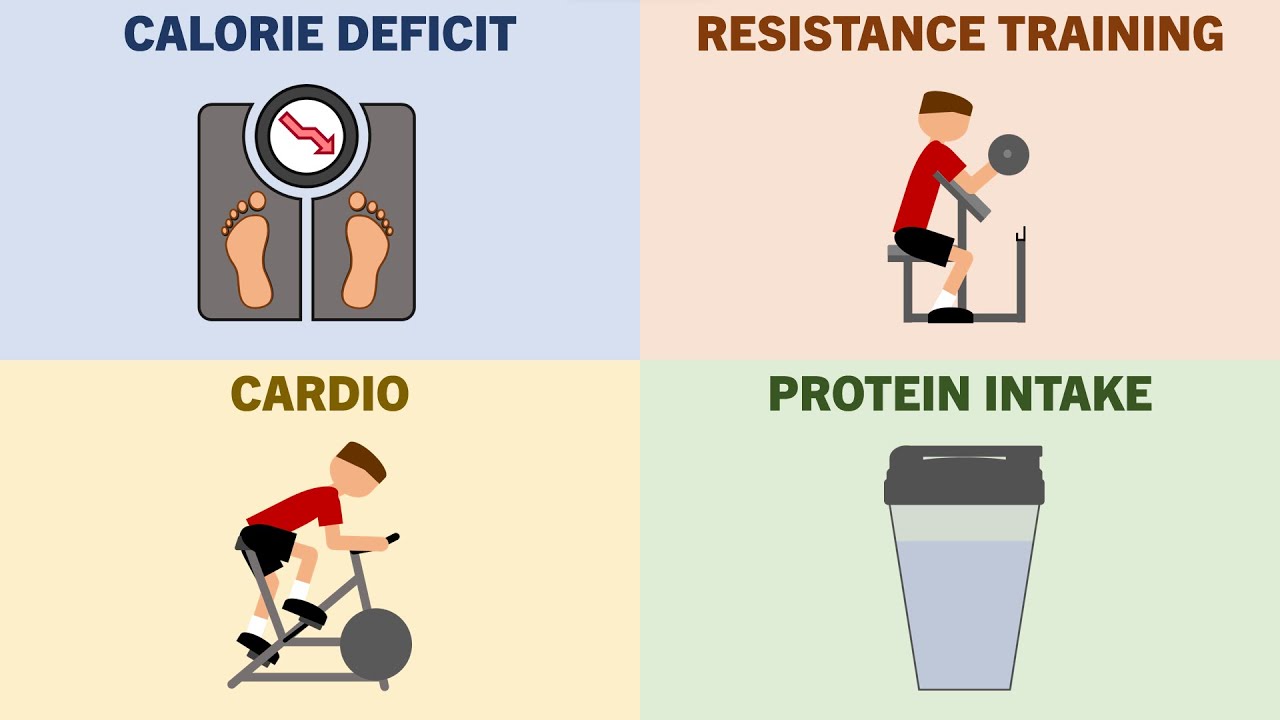
5 G per kilog per day can promote greater muscle growth in terms of energy balance a calorie Surplus typically produces greater muscle growth but also tends to result in disproportionately more fat gain in trained lifters for fat loss weight loss needs to be achieved for substantial fat loss to occur this should Prim be achieved via limiting calorie intake but a moderate to high level of physical activity can secondarily assist this furthermore to maximize fat loss we need to try and preserve as much muscle mass as possible during the weight loss process similar to muscle growth resistance training is going to be the most effective way to preserve muscle mass and secondarily a high protein intake of at least 1. 5 G per kg per day as well as losing weight at no more than around 0 . 5 to 1% of body weight per week depending on your body fat levels can improve muscle preservation thanks for watching and hopefully you got something out of this video check out Flo highper performance.