we'll begin our discussion under chemical kinetics I'm so excited because we have a lot of videos available on the on the channel about kinetic cells feeling lazy to make the introduction and just telling myself I can just steal one of those videos but I said no I think I can do better right now and just try to break it down more in detail step by step okay so this is going to be the entire topic chemical kinetics I believe we're going to go over even up to three to four hours in total okay so what
basically is chemical kinetics to start with so we Define chemokinetics to be the study of reaction rates okay so reaction rates now that terms can be trained to study the changes in concentrations of our reactants and our products with time and then not only is chemokinetics not only is chemical kinetics restricted to the rates of reaction but also reaction mechanism so reaction mechanisms are just basically breaking down not only looking at how fast the reaction progress but also trying to understand basically what goes on for the reaction to basically happen so look at things like
Collision Theory and so on and so forth I know I've not written anything and I may lose I may be losing your attention so have said chemical kinetics is a study of reaction rates okay so I've defined reaction rates to be the rate of change so rate of change of concentration or concentrations of reactants and products in respect to time is the study of reaction rates and reaction mechanisms now I've said so you can finish that up now the other thing that we are studying under chemical kinetics is reaction mechanisms how basically the what basically
happens Within for a chemical reaction to progress okay with that basic introduction I need to go on straight away and just try to basically talk about the reaction rates okay so who basically get to have a very simple example to just help us understand what we are talking about so let's trade to take this let's say we have the reaction between a b to give us C and D I think if you have one of people have watched the videos already available on the channel I usually use this to just try to explain the intra-party
to reaction rates you just understand what we basically mean so I'm using small letters to denote the coefficients of the stoichiometric coefficients of these reactants and products respectively so we understand that in a forward reaction we have you know we have on the left hand side reactants on the right hand side products right so the rate of a chemical reaction or if we are taught to determine the rate of this reaction the formula we can use is there is no restriction to what you can use you can use either reactants or products now if I'm
using a reactant let's say I'm using air the rate is going to be 1 over the stoichiometric coefficient which is a so 1 over a now I'm starting with a negative of that and then the change The observed change in concentration of a Within the specific time okay you understand why it is negative four the same applies to B now this is also equivalent to a case where I can decide to get a product so for product it will just be one other for example let me use d and then the change in the concentration
of D divided by the time taken for that change to basically occur now why is it that for the reactants we are using a negative and then for the products we're using a positive value the reason is simple if let's say we started the for chemical reaction okay let me do this so on top I'll put the initial concentrations and then on the bottom I'll put the final concentrations and let's assume all this took place within um within what 10 seconds or to be more realistic you can make observations at least maybe after 20 seconds
right and then we can say the initial concentration of let's say a was a one molar concentration and then the final concentration after measuring after 20 seconds of reaction maybe we have 0.5 and then on the other side since I'll use d as an example so let's say we add its initial concentration to be so obviously if you're starting from scratch a chemical reaction at the start of a chemical reaction of which this is our assumption in this case we don't expect to have any concentration of a product so after a certain period of time
now it became uh let's say one molar concentration Okay so we've got the initial and the final after 20 seconds so just that simple demonstration there using the formula I've given you're able to determine the rate now remember that we have a letter there use small letters to denote the coefficients so let's take the coefficients to have been let's say we have the two in front of a and then we add well what can I put the maybe also okay let me leave it as it is so in terms of determining the rate of the
reaction I can use either a or or D so if I was to use yeah so in terms of the reactance of course I need to mention that it's a rate of depression or the rate of consumption of a lot of decomposition so it would be negative 1 over our coefficient of a which is a 2 now we're changing concentration is going to be the final answer initial so the final is 0.5 the initial was one now don't forget that it's supposed to be by the time taken so if we started from 0 seconds to
20 seconds so you it's going to be 20 minus zero so take note that the concentration on top here is smaller and then on the bottom the time is in seconds so I have negative one over two zero point five minus 1 would be 0.5 so negative 3.5 so that is the same as negative one over five now don't forget that on the bottom we also have a 20 so I dividing by 20. so I'm just trying to do this because I didn't get the calculator and I don't want to do any bit of editing
so 2 times 5 on the bottom give us 10 times 20. now that is going to give us a positive positive 1 over 200. so you can grab your calculator and just try to divide that one of the 200. so whatever you're going to get the answer is going to be more like a second and that's the unit for the right to the rate okay so you've seen that the answer is positive despite us having a negative here so this negative is there to ensure that the result of the rich is always going to be
in terms of a positive value okay so in terms of looking at it in point of view from the this side there you can expect that basically if you try to perform the regulation it will be one over D your D in this case is coefficient is a one the change in concentration will be from 1 1 minus zero which is just like a one over a Time taken twenty and O so that would just be 1 over 20. of course smaller per second you can divide that to get to have your answer in decimal
places so this is our introduction to chemical kinetics let's proceed and then just talk about the the reaction the factors affecting the rate of a chemical reaction so talking about the factors affecting the rate of a chemical reaction we've defined the rate of a chemical reaction to be you know looking at how fast um the reaction progresses and other times we broke it down to be a the changes the rate at which the concentration of the reactants or products change in a chemical reaction the rate at which we observe that change or how fast the
concentration the concentration changes of reactants and products okay now there are certain factors that affect how fast the reaction will progress okay so what are the things that we want to talk about now in terms of giving reasons or trying to describe how the factors affect the rate of the chemical reaction I usually like basing them and of course it is a requirement that you base them on theories that way it makes more sense so I'll use the Collision Theory I know you already know the factors that affect the creative correction now the point here
is they may not even ask you to State and if they ask you to state of course they just have to ask you to explain how they affect so Collision Theory just what's what what is this so Collision theory is uh it's basically an idea that for a clinical reaction to progress that cause must collide with sufficient energy so I want you to write that down particles must collide with sufficient energy so what if I said so I've said that for a chemical reaction to progress particles now these particles are particles of the reactants so
for a quick reaction to progress particles of the reactants must collide with sufficient the last part there is the energy of course that is going to be talked about later what is what we call the activation energy the minimum amount of variant required for chemical action to basically go on so there is need but for reaction to be successful between reactants let's say and B they are particles must collide with sufficient or enough or minimum energy okay so if we are to increase the rate of a chemical reaction then we need to basically do something
that is going to support the successive collisions between the particles of the reactants okay the other way you can think about it is we are we have what we call kinetic theory so kinetic theory you can try to research more about that so kinetic theory basically tells us that as we increase the kinetic energy of the particles so increasing the kinetic energy of a particles the increase in the kinetic energy particles increases the temperature of the particles I don't know how I'm supposed to put it if it's Island temperature or an increase in temperature increase
to uh but we can think about it in this way so an increase in the temperature is an increase or we can Define temperature to be the increase in the kinetic energy of the particles yeah so as you increase the temperature the kinetic energy of a particles basically get to increase okay so basically you talk about this in terms of temperature as a factor that affects our the rate of a chemical reaction so using these two theories we should be able to of course not stating them it's not a necessity but in terms of directing
them to a very second Corrections should be able to give reasons so some of the factors that are very important the common one is the very ones that you you know of uh include include temperature so what is temperature so temperature is average kinetic energy of a particles which are already defined okay so how does it affect the rate of a chemical reaction so it's actually it's very simple if we are to understand our temperature affects it of course we understand that if you increase the temperature the rate of a chemical reaction is expected to
do at two increase now we need to give a reason why we need to account for that so using the kinetic theory we've seen that an increase in the temperature is an increase in the kinetic energy of the particles so we are trying to say that the temperature increases where to become correction increases now why because an increase in the temperature according to the kinetic theory so I think it's in in the temperature increases the kinetic energy of what of the particles so now remember that according to the Korean Theory particles must Collide and then
with sufficient energy so this actually increases the probability of what so increasing the kinetic energy particles means they are moving now what particles tend to move faster so if they move faster what happens the likelihood of the collisions increase or more collisions occur leading to more successive collisions leading to the reaction taking place because we are saying according to say we need particles to collide and they should collide with sufficient energy so if we increase the temperature we increase the kinetic games of the particles which means they tend to move faster leading to more successive
collisions between the reactants okay now of course the opposite is true if you reduce the temperature you are using the kinetical image of a particle the particles will move less and slower leading to fewer fewer successive collisions between the particles and so there it is law the most important of all that I was supposed to start with we see red small two of the Collision theory is the concentration of the particles instead let me use the word reactants so the concentration of the reactants so we've said that we want more collisions for the reaction to
basically progress so what happens if you increase the concentration of the reactant so you expect that after increasing the rate of the concentration of the reactants even the rate of a chemical reaction is going to increase why because an increase in concentration means more particles and more particles means the likelihood of colliding is more so a concentration of the reactants basically affects the rate of Correction the more the higher the concentration the higher the probability of the particles colliding leading to a higher rate of the chemical reaction because of more successive collisions because of the
particles IR concentration lowering the construction reactants the probability of a particles colliding are is less and the other thing that affects uh as a surface area so I know I've been making videos about surface here but I basically don't even uh I don't have a formal definition of surface area but do I understand surface area is like if you think about the sort sort is uh is very tiny right and then think of something um now imagine sort was like in form of of course some of us have seen the software it is like not
in Crystal form where it is like in blocks like this okay so what I want you to understand is the thought that is in Crystal form has got higher surface area okay higher surface area then this one which is in Brooks is actually has got a lower surface area so now the question is what do you think if you are to try to dissolve the two which one will dissolve faster taking that as our reaction so you understand that the one with the IR surface area which is smaller is basically going to that is going
to lead to more successive collisions now why am I saying so I'm saying so because we are trying to support the Collision Theory so you can think of both reactants to be happy to be in to be that small so we'll be able to add they'll be able to collide more successfully as compared the parts where they are bigger because remember particles are small so they are actually making up their the blocks that we've written there now in a case where something is bigger the outer area of encounter is limited okay so the IRS office
area the other rate of a chemical reaction okay that's what you need to understand there so the other surface area of the particles the IR the probability of the particles basically getting to collide with one another so this user deals with solids as you've seen in my description so bad deals with solids now in terms of gases pressure also does affect okay I know people people with pressure is like force over area okay so pressure so it's deals with gases so we are the pressure so variation she parties updating pressure is that pressure is industry
proportion to volume they are the volume the lower the pressure so if you've got something a container I cut and then you've got another container like that and then you put two different gases inside the two continents where do you expect that there will be our pressure so you need to have air pressure in a container where it is smaller if you put the equal number of particles where so in the bigger containable chances of a particles colliding ah are Slim So what you're going to say is the higher the pressure of gas gaseous reactants
the Ayah the number of collisions the reason is simple pressure is higher in when the volume is reduced okay so more collisions so if you can think of pressure to be as a result of collusions between the particles or among the particles okay so basically these are the factors that affect the rate of economic reaction okay you can try to research for more but these are the major ones okay okay so we are now familiar with uh reaction rates we are familiar with the factors affecting the rate of a chemical reaction I also give you
ideas on how on what you're supposed to do for it to determine the the rate of a chemical reaction in a case of given you a chemical equation so in this case I'll consider a chemical reaction which is a decomposition reaction okay so we have a decomposition reaction like that and then it is decomposing into water and oxygen so first to balance it has to be a two there okay so you understand that from the explanations that I did if you are trying to determine the rate of decomposition you have to focus on the on
the reactant in this case in a decomposition reaction you only have a single component being broken down into its constituents okay so in this case we can determinate the reaction of course by two ways by looking at what has decomposed and also looking at what has been produced so I said when you're dealing with what is on the products on the reactant side in this case what is decomposing it is negative one over the stoichiometric coefficient in this case which is a two and then the change of concentration of what you have over the time
it has taken okay so now you realize that if you look at the the table that I've put there there are many considerations that you can make I can decide to choose from zero to let's say 12 or I can decide to choose from zero let's say all the way up to 24. now all those things basically tells us the two different kind of rates that we have so we have what we call the instantaneous red and then we also have what you call the other iterate of reaction sorry if you're about to get some
noise I was trying to attend to it okay so what are these so the average rate basically deals with looking at the total time right where I can get from zero all the way up to 24. and then I get um I get what I get the initial concentration all the way up to the final I just kind of consider those and then determine the rate that is the average rate of the reaction now the instantaneous rate of reaction refers to the rate at a given point in the reaction so for example I can decide
to to determine the rate from 0 to 6. hours of course in this case we're using hours okay but we use seconds most times so and then you look at each concentration at start up and also after six hours okay so in such a case performing the calculation will have negative one over two now the final concentration of 0.5 after six hours the initial or the one divided by the change in time it took six hours right so you find that you are going to get a negative 0.5 by that it will give us a
positive answer so it would be 0.5 on top and then on the bottom six times two give us a 12. okay so if you grab your calculator there and then basically I get to divide that get to divide 0.5 by 12. so the value what I'm getting there is what zero point zero for one seven now the unit in this case we are dealing more per liter which is just like molar concentration now we'll set the hour so I've considered from 1 to 0.5 taking into consideration there's six hours that are taken okay so what
is how we basically get determine the rate of a chemical reaction especially in terms of the reactant okay now trying to observe the question that we have or the the table that we have I just want you to make an observation to say of course would take all our rates to be positive right yeah so of course this is given yeah like the changes in terms of the concentration between a given time so for example a negative 0.5 is like a difference between the first and the second and then this otherwise the difference between the
second and the third and so on and so forth so it's like the top part is already being determined and then you just need to divide by the difference in time now which also has been given six there so you divide this by that okay and then of course you divide by what now one thing that with these we are forgetting is to determine the actual rate of decomposition you would have to there's need for you to get to multiply by the stoichiometric coefficient so I don't know if my equation is balanced I think that's
what is making the difference uh between our two solutions okay yeah so they forgot the two so the two is very important okay so without understanding we'll still take these to be the correct Solutions so if You observe going down you notice that the rate was changing and what was how is it changing it was reducing so the reason is simple why are we observing rate of the rate of decomposition reducing as time progresses it is because the concentration is reducing remember we said concentration is a factor that affects the rate of the reaction so
after the reaction was progressing the amount of our decomposing compound had reduced so even the rate at which it was decomposing also reduced after certain period of hours okay so this is a basic introduction to determining rates of reaction where we've given you a table okay they give you the time and then they give you the concentration so sometimes they'll give you even for all the products as well where they can give you for water and oxygen you can also determine their rates dependent on that the only difference is you start with a positive value
the main idea is you want to terminate to be a positive result okay I'm just trying to make sure there's nothing that I've not forgotten here so there is an aspect of I need to to to to Define this because this will be very useful as we look at what you call Red rows so initiate so initial rate is more like instantaneous rate now at start so instantaneous instantaneous rate at start so another term is like the the rate of the reaction at start what is the initial rate okay and then instantaneous rate is the
rate of reaction at any given point in the reaction so it may be at start at the end in between now looking at the average average looks at the overall okay you look at the overall from the start to the end so if they ask you to determine you'll use the initial starting time and the ending time and then use the initial concentration and the final concentration that's what average rate deals with okay so usually the initiate is basically a bit difficult to determine so is the need of some calculus to be involved let me
just give you ideas in case a graph was given to you and then you are told you you you may struggle so we'll take the the compound that we had in our previous example there so just use a few numbers to just demonstrate so let's say the y-axis is representing the concentration take this concentration to be molar concentration and then let the x-axis denote the time okay so let's say we have got one two three and four so we already know that in this kind of a reaction this being the decomposer or being a reactant
it's going to be reduced in concentration at the reaction progresses so start some let's say we started with three molar concentration so after certain time it will be reducing okay so it producing in terms of a curve so something like this my cave is not so good let me do a better one no it doesn't it never goes up never goes up okay so if you are to ask you to determine the instantaneous rate at any given point let's say at this point you can basically draw a tangent to that point okay so a tangent
is a line that cuts the graph at one point so when you draw that tangent of yours it should be long enough so that you're able to break it down into X and the Y what I mean is you draw something like that so what it means say that your tangent and then you have your Delta Y and your Delta X so your Delta y you know that it is representing what the change in concentration and then this is denoting the change in time and then of course all you just have to just multiply by
there by the reciprocal of the coefficient and then Delta y over Delta X you'll be able to get the instantaneous rate at a given point so if you're trying to determine the initial rate you'd have to go back to the starting point and draw a tangent to that point okay so a tangent I've already said Castle graph at one point so whatever you would draw there as your tangent you can do the same as well break it into the Y and also the X so using that the Y Delta Y and Delta X you should
be able to determine the instantaneous or the initial rate of the reaction so I'll just need to mention that in case they give you a graph and then you ask to determine the instantaneous rate or the initial rate at which is instantaneous rate that's that so hopefully I've not confused you differentiating initial instantaneous rate and average rate so let me give you the formal definitions as we proceed so we've already defined what the rate of the reaction is so the change of concentration of reactants or products per unit time or we've given within a given
time some of the difference between the average initial and instantaneous rate is where the issue is so I've stayed I've saved instantaneous rate is the rate of a chemical reaction at a given time okay so this is like more at a shorter time like at a particular time let's say maybe what was the rate at 10 seconds that's an instantaneous rate so we use calculus to determine instantaneous rate okay now the instantaneous rate at start is what we call the initiate so what was the rate of the reaction at start that is the initial rate
so it's an instantaneous rate at that now the average rate is different in a way that is a change of concentration for a period considered you can say from zero up to 10 seconds for example that's an average rate because within that period as we noted the rates are different at a given time so in short we've got difference different instantaneous rates within that period but looking at the entire time we can determine the average rate by using the spontaneous rates okay so the average rate is the change of concentration for a period considered whereas
the initial are for a particular the initial and statistics are for a particular time of course the initial is under instantaneous so the initial rate is the rate at the very beginning of the reaction the instantaneous could be for any particular time at which the reaction is occurring I hope you are enjoying the study under chemical kinetics so let's define what Electro is so basically Electro is a star maybe the most simplified we can call it the rate equation it's just like a mathematical expression that describes a relationship that is there between the the rate
of a chemical reaction and the concentration of its reactants so what that means is if you have a b in your reaction giving you C and D so the mathematical expression which will give us the rate well we can say the rate is dependent on K as a constant multiply against the consecration of A and B as reactants now this reactants A and B will be raised to certain powers let's say m and n most of the Times They Are positive values but we're also going to have cases where there are going to be fractions
or negative okay so a mathematical expression describing the relation between the red and the concentration of the reactants is what we call a rate law now from onset I want you to understand that it's not always but the rate will be dependent upon all the reactants in the reaction there are some cases where you can find that the reaction is only dependent on a single reactant place the only air so that implies or what that means is the rate of the reaction is only affected by the concentration of air the construation of B has got
no effect on the rate of a chemical chemical reaction okay and also it's possible you can average being dependent on multiple reactants depending on the kind of reaction you're talking about you can even after up to a b and c raised to different powers okay so the addition of the two the M and N by the way are called the order of the reaction in respect to a reactant so we can also determine the overload of the reaction by adding the powers the the reaction orders of each reactant there okay anyway things will begin to
make more sense as we proceed and look at practice questions but let's consider guess what we've got uh nitrogen dioxide reacting with carbon monoxide to give us nitrogen oxide and carbon dioxide so I'll just read you a statement okay so given that the reaction is second order second order in nitrogen dioxide and then zero order in carbon monoxide what is the Retro of the reaction so that that is simple straightforward so the Retro I've said is dependent on the constant care multiplied by the reactants raised to their orders so in respect to nitrogen dioxide is
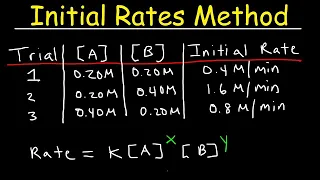
a two in respect carbon mass at zero so you know that raising something to zero is just as good as not writing it goes to give us a one so overall that is our retro for that reaction now let's proceed now and discuss how we can determine the lateral of a given equation where we've got experimental data usually initial rates is the formula that is used where they give you the initial rates for different trials well what I mean is uh you may have experiment one explain two Experiment three and then they give you different
uh different what different concentrations at stats okay maybe sometimes we may only have a single reactant but usually you have two or three and then you also have a initial concentration of our b as well and then they also give you now the initial rates that is the rate that starts in that experiment okay let's say in that one it was 0.4 in that one it was uh but usually what happens is one of them is maybe maintained let's say where we maintain the 0.1 there and then we can say at that point we maintain
the the air so the basic idea is you're trying to observe what has happened after changing the concentration here so let's say you write something like this what would you conclude that is the rate pair these are the concentrations so in experiment one in experiment one with the concentration of a was 0.5 and B 0.1 was 0.4 molar per second now in the second experiment after we maintained B and increased a we've seen an increase in the rate of the reaction now from the second to the third we've maintained our air we've increased our B
but the radar still remain the same that means that in this case you can conclude in this with this data to say B has got no effect on the rate of the reaction so likely most likely as you get to present your lateral it is likely to be dependent on air now what you need to learn or understand is how to find the actual power is it a two is it a three is it a one so let's proceed and look at a few practice questions about that with the basic introduction that we've looked at
to laterals let's answer these few questions to Justin Bieber so in this first example we have A and B as a reactance and then giving us C okay so I already explained to say the lateral is dependent on the reactance concentration okay so where our error did not start and then we have got a constant k and then we have a and b as our reactants in this case these are supposed various to put different parts let's say X and Y so first to determine the letter in this case what we need to do is
to find the values of X and Y respectively so we should also be able to find the K units after that because it also usually ask that question now I want you to be smart about it I want us to make a certain observation about the data that we have in our table okay so if we observe our first experiment there try to observe air what has happened to air from the first to second experiment a has been doubled okay from 0.1 to 0.2 okay how about B if you check B B has been maintained
now if I ask you a question what has happened to the rate after all that it has been doubled so what can you conclude you have been able to notice that actually a has an effect on what on the rate of the reaction now let's try to check what has happened again yeah it has been maintained and then a when B has been doubled what has happened we are seeing that the rate has been quadrupled that's like four times okay so let's try to see now how we can basically trade to determine the values of
X and Y in the two scenarios so I usually like working with a case where we have got a bigger value so this equation would be our basis of calculations so on the right output periods so I'll get the first and the second experiment okay where I know that b as bin is constant so I would start with a second one because I know it has got bigger values so I'll say my rate my rate of experiment too over the rate of experiment one so let's try to substitute now for the second rate for a
second experiment the answer is 10 so we have 10 equal to now let's use our equation so for equation we have k so let's have it so we have k now what is the value what is the construction of a in the second experiment the construction is 0.2 so 0.2 now this 0.2 is raised to the power x you can put any letters of your choice and then our B is also 0.2 there raise the power y will divide by the second one or the first one sorry so for the rate one the let the
initial rate of the five and then we need to divide by upper values as well so for the first one the value of our a or 0.1 as a concentration so also is the power x and then for our B it was at 0.2 as well so we can clearly see that in this case where one is constant zero where our b as is constant it can just divide there okay you can just divide the powers are the same the values are the same but in other terms the actual calculations that are appearing there are
indices right where you say if you've got the same base what do you do so that is basically easy to deal with so we've got the same base maintain the best subtract the pause y minus y will be a zero so zero point to the power zero is just like a one so no need of us showing all that now let's try to divide on the left so if we divide 5 into 10 it's twice right so of a 2 being equal to case will also cancel out they'll divide that's why we don't necessarily show
them in most of the calculations and then we've got 0.2 and 0.1 there always to the power x what should we do so if we basically get to divide 0.1 into 0.2 so in other terms what we can do is since the power is the same we'll leave what is inside there and then raise them all the power of of x so 0.1 into 0.2 just be a two so I have 2 being equal to 2 to the power x so you can tell we are at the value of x is definitely one if these
are to be equal so X is equal to 1. so what do you think what should we do first determine the value of y so if I want to find the value of y which of course is the order of B we need to get a case where a has been maintained so that is bit from the first to the third experiment so I'll say the third experiment divided by the second right by the first so for a second for a third the value there is 20 for the rate equal to k the value of
a was what 0.1 now notice that 0.1 is not in the value of what the value of x and then 0.4 is Notting the value of what the value of B raised to the power y over so we are dividing by the first experiment that's why we know that our value of x divide our value of air is maintained so here we've got K 0.1 as the value of air raised to the pi x and then 0.2 has the value of B raised to the power y according to what we've come up with here and
then the rate there was a five so after dividing 5 into a twenties four times the case will go now 0.1 into 0.1 is just going to give us a 1 there this part will also just divide give us a one now 0.4 divided by 0.2 will give us what you can here I see that 0.2 is like twice into 0.4 is 2 the power so what should we do first to find the value of y so we need to raise four or explicit in form of 2 to the power 2. so what the bases
can match up and then the powers will also be equal so y therefore is equal to 2. according to indices so from what we've done so far we now know that our answer therefore for our rate is equal to K our value of a so a is supposed to be the power one B to the power 2. so even if I don't show the one there's no I'm there so what is our Electro for this reaction okay so if you ask you to determine the overall of the reaction add the powers of A and B
so the overall order is a three if I ask you to find the units of care what do you need to do you know that the rate there is measured in molar per second and then we've got turkey the units for a is molar because that is concentration the units for B that is also molar because that is concentration now B where it is squared so we have molar per second is equal to K now we've got three M's there so it is going to be m to the power 3. now you want to make
kill the subject so I divide both sides by m the power 3 m the pottery so you notice that for one M will cancel so you mean with 2m on the bottom so K is equal to 1 over M squared s so those are the units if you want you can take them on top well we know that the powers now are supposed to become negatives so those are the units for our K in this case okay with now a bit of some experience let's look at another one so feel free to pause the video
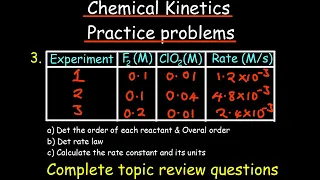
and just try out this one and be able to see if you're about to answer it now there's only a new question that we're going to encounter that we've not answered previously which is uh this one okay where you can now use the the lateral determine the to find the rate when you're given the values of X and Y okay so wait for it so we are considering the initial Rich data as well here we had four experiments being conducted okay so let's try to see what we're going to have what is the order of
the reactant X what is the order for the reactant X let me just straight to ensure this is visible enough just in case it's not then I can try to okay operates better okay so what is the order of reactant X where is our X our X is there so I said if you want to find the order of a certain reactant try to notice or observe a case where the other one is constant so in which experiment is y constant integrated lit rows so so far I've talked about the differentials and just a mind
of some of the letters that you you need to have in mind um are it being equal to k and then we can have our are it being equal to k e B only they can just put a to the power one and then we're gonna have a one B one so the other form of uh the second one would be where it is only a single ad single reactant to the bar two so we've got what you call reaction orders and I said that the overreaction order is determined by adding the powers of the
orders of each reactant okay so the first one you can notice that it can actually reduce to just k so that one is called the zero order reaction okay so in a zero Direction since the rate is equal to K the units of the rate and K are the same and then in this kind of a case the units of K is also smaller per second and then the other thing that you need to notice the rate of the reaction is independent of the concentration of the reactants and then in this other case the rate
is only dependent on a single reactant even if there are two only depend on a single reactant okay usually common in that composition reactions why when you have a single reactant but even some cases where you've got more than two reactants the reactions may still be dependent on a single reactant to the power 1. so here's a chord faced water reaction for the last two if I look at this one if you add the powers one plus one will have the second order reaction so sometimes it may be other indicated to or sometimes just a
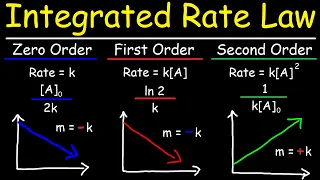
single reactant to a part two so they are both examples of second order reaction so as we look at the integrated literals within their our scope we are going to talk about the zero phased and second order reactions okay so now what are the integrated literals so integrated electrons as the name entails are determined after integrating the differential electrodes that we basically get so why are they called differentials for example why we started with our reactants a plus b giving us c and d right so I said taking our stoichiometric coefficients to be they are
small letters if we're talking about the rate for example in terms of a it would be negative 1 over a change in the concentration of a divided by the change in time so you understand from calculus that Delta change in y over change in X is a derivative okay that is differential you're looking at the difference okay the rate of change the rate of changes a derivative okay now let's talk about the integrated literal so I've already given an example of a lecture where you have a zero order reaction so start with a zero order
reaction zero other action so I'll just combine them so that you basically get to get everything together face Dandy second okay so these equations are very easy for you to basically get to remember okay so what have I said I've given you an example to say in a zero Direction the reaction the rate of the reaction is only equal to K if there's a reactant level is the power zero okay so I've said I've made a very important statement to say in such a case the rate of the reaction is independent of the reactant so
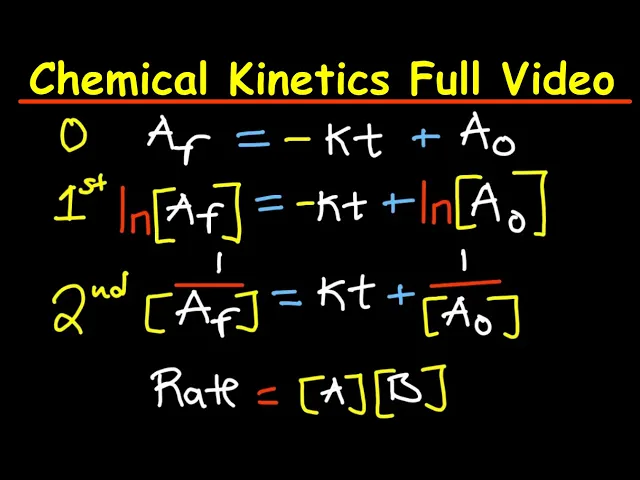
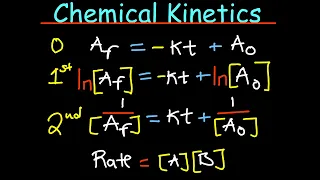
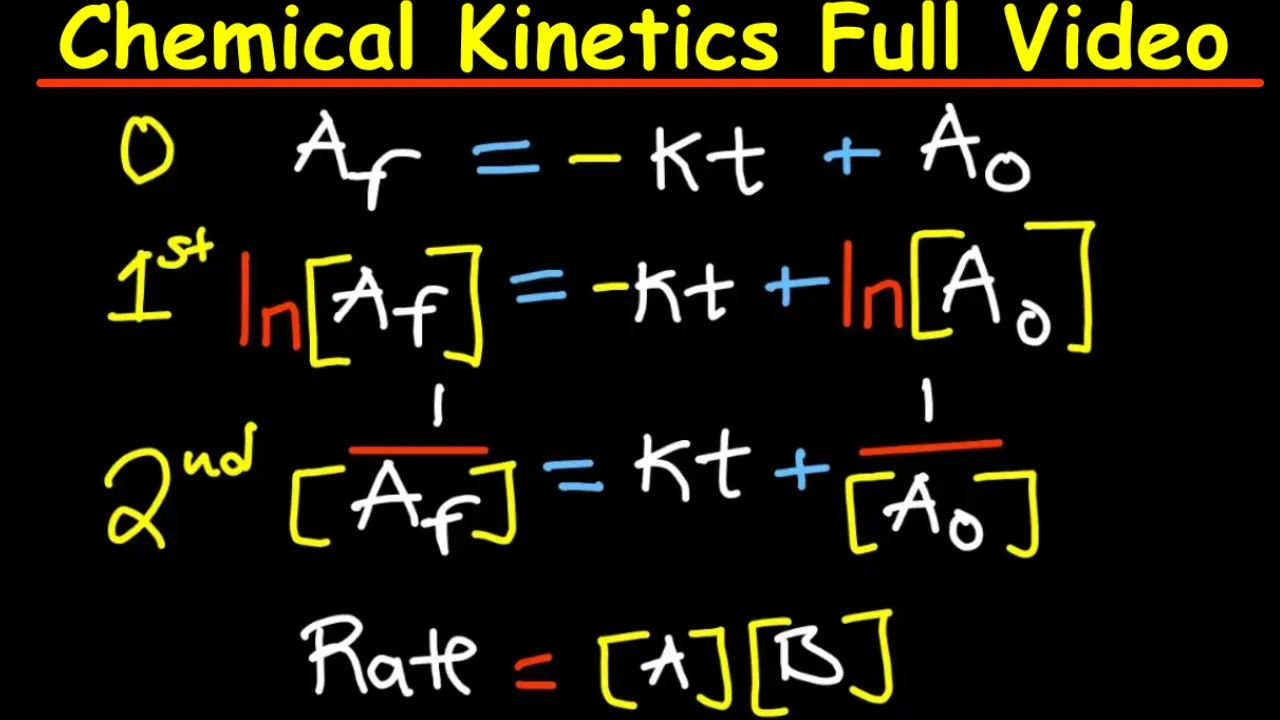
the actual equation for the integrated Electro or the integrated Electro for a zero Direction becomes the final concentration being equal to negative k of t Plus the initial concentration of course this makes more sense if you start with the initial concentration and then subtract KT this tells you that Afters as time progresses you expect that the amount of what you had started with initially is going to reduce in terms of care and also how long it has taken okay now for the first order I like deleting it to the first one because if I remember
from the first one it's going to be actually easier for me to remember the second one in a way but the first we only introduce the natural log to the parts where we have the concentration so we have natural log of the final concentration being equal to negative KT and then plus natural log of so I've said we're only introducing the natural log to the paths where we have the concentrations that part and that part password makes a difference between the first order and the zero direction of course an example of the electro here is
where it's only dependent on a single reactor and raise the power one now for the other one if we asked of course two examples of the the what the letters the case where you've got two reactants with the power arms or a case where you only have a single one to the order two so a the Electro is the first one but here we put the fractions so it is 1 over the final concentration being equal to and what makes it unique easy here the the gradient part is positive so KT plus 1 over the
initial concentration so I've related the last two first and second in comparison to the first one converting the zero direction to the first order you only introduce a natural log converting it to the second order you put the reciprocals of the concentrations and then don't forget that the KT is positive for the second order reaction so these are the first these are actually the integrated load flows for zero phased and second order reaction so you're able to make some observations by just looking at them as they are giving hopefully you're able to remember them now
I need to mention to say these have got certain graphs that you need to expect this maybe some cases where they ask you to put on a graph and ask you to tell the the the order of the reaction okay so we'll take something as let me just draw all the graphs at the same time so that you're able to compare them and make sense out of them so you can have something like that and something like that okay so let's proceed now and just get to talk about the half-life why am I saying the
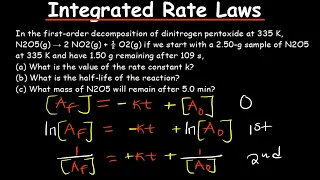
half-life so before we talk about the half-life let's talk about the fact some some some few practice questions just now to just make sure our episode idify whatever we've we've covered yeah so that part will go and edit it to just get a few of what we do in uh when you are making videos behind the scenes Okay so in the first order the composition of dinitrogen pentoxide at 335 Kelvin this is the equation that we have if we start with a 2.5 0 grams so already that is the initial and then 1.5 grams so
this is the final after 109 seconds the first question is what is the value of the rate constant okay so each time they tell you the order of the reaction the first thing that you need to remember is remember the equation so I about to remember the equation of the first order reaction let's talk about half-life so if life is as simple as the time that it takes for a mass to reduce from the mass of the concentration of the reactant to its half okay so time foreign but we've not yet defined what it is
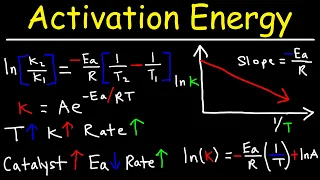
we've used it in the different literals the differential letters as well as the integrated electrons so we're going to define a k to be equal to a multiplied by the exponential raised to the power negative e a of RT