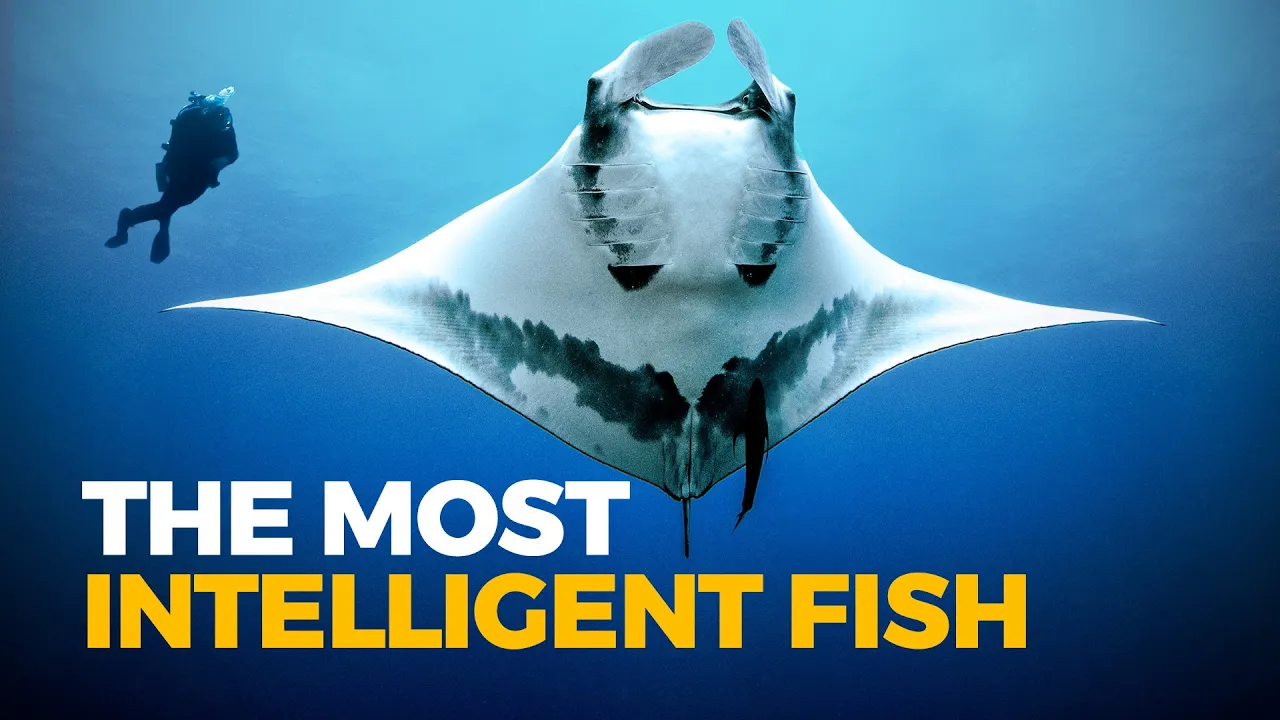
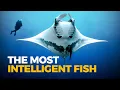
the world of mobular rays transcends the barriers between oceans the borders between shallow seas and cold ocean depths and even the ocean's ultimate barrier the one between sea and sky found in tropical and temperate seas around the world the genus mobula contains some of the most incredible organisms that have ever graced this planet there are over 600 species of Ray in the ocean but only 11 different species of mobul array all of which have a distinct diamond shaped appearance with wings that allow them to glide through the water and put on stunning displays of Elegance
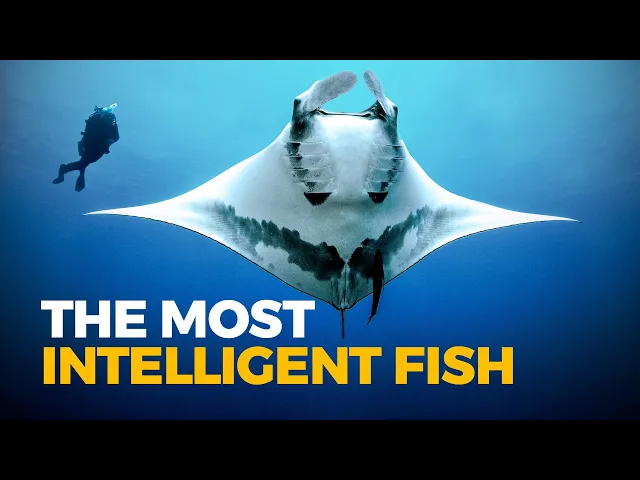
and Agility some are small and congregate in incredible numbers occasionally flying out of the water in acrobatic leaps others are absolutely enormous so enormous that their Elegance appears to defy gravity the giant Oceanic mantay is is the largest species of Reay in the world with wingspans that can reach over 8 m their sheer size makes them a striking presence in the ocean captivating researchers and divers who are lucky enough to encounter them but more than just being huge they're also gregarious and often as curious about human swimmers as the swimmers are of them and this
is because the giant Oceanic manay is incredibly intelligent manay have the largest brains of all fish with a brain-to-body ratio that exceeds that of the enormous whale shark and it turns out giant manta rays are much more mysterious than scientists even realized until very recently we didn't even know how to categorize them until 2018 scientists listed giant Manas and reef manay under the genus Manta but more analysis of their morphology and genetics resulted in scientists placing them in the mobula genus along with smaller Devil Rays and now scientists are learning that the giant Oceanic manay
isn't the animal they once thought it was it's not simply a shallow water Plankton eater but a deep sea Renegade with movement so efficient that teams of roboticists around the world are working to emulate it and not only does it dive deeper than we ever thought and move more efficiently than we ever thought to the shock of the Science World giant manta ray have been observed to rapidly change the color and pattern of their skin something that's basically unheard of in the world of elasmo branks the giant ocean Manta is Big intelligent and still absolutely
full of mysteries why did the giant ocean manta ray evolve to become so enormous and how does an enormous body move so efficiently what are they doing when they dive to the cold dark depths and what does it it mean when they change their color as the giant Oceanic manta ray Glides through the water it flaps its massive pectoral fins giving the appearance that it's flying when Rays diverged from sharks around 200 million years ago the pectoral fins expanded into what we now call the ray dis and for the giant Oceanic manta ray this expansion
was extreme their wings can reach over 8 m across and their pectoral fins make up around 85% of their body length for sharks of a similar size their pectoral fins make up just 10 to 15% of their body length but what benefit do such massive Wings give versus the more typical sharkish body plan a hint emerges by observing the behavior of the giant manter Ray compared to the similarly sized great white shark the great white shark is a powerful fast swimmer but its bursts of speed usually only happen in One Direction it's hard for a
great white shark to turn on a dime compare this to the giant manta ray it's often seen swimming in tight acrobatic circles circling back to eat clusters of Plankton or to evade Predators its maneuverability and Agility are almost unheard of in such large animals and it's thanks to the giant manta's large and flexible wings while the overall shape of a man Wing is similar to the wings of birds these fins can undulate and bend in many more ways than bird wings can the manay has numerous support structures inside the pectoral Fin and these structures can
all be controlled separately but as useful as maneuverability is for evading Predators it comes at a cost maneuverability is simply controlled inability and without stability an animal can't move steadily and efficiently along a predictable path luckily the giant Oceanic manta ray strikes a balance between these opposing qualities and is maneuverable while also maintaining stability and efficiency one way the giant manay maintains stability is by having wings with a fairly High aspect ratio during flight in the sea or in the sky longer narrower Wings give a plane or manay more stability it's sort of like a
tight RPP Walker who holds a long pole as they walk the extra length helps balance the body manay wings aren't exactly long and skinny like glider wings but their length does help balance the animal while gliding High aspect ratio Wings also help generate lift efficiently and the way the giant manta moves its pectoral fins also allows its swimming to be highly efficient and sometimes surprisingly fast on average giant manta rays swim about 9 mph or 14 1/ 12 km per hour hour but to evade danger they can Sprint as fast as 22 mph or 35.5
kmph to reach these speeds they combine fin oscillations with undulations oscillations are the flapping of the wing up and down which generates large propulsive and lift forces but at the same time that the wing is oscillating up and down it's also undulating sending a traveling wave outwards from its body towards its flexible wing tips as giant rays flap in this manner their fins disturb the water and create vortices which push against the surrounding water and propels the animal forward and these two types of motion make the giant manay an extremely efficient swimmer scientists have measured
the propulsive efficiency to be 89% to understand more about the biology of manta rays I talked with Jessica Pate founder of the Florida Manta project and research scientist at the the Marine megap Foundation basically manta rays have to keep swimming in order to breathe so they are designed to swim you'll never see one resting on the bottom so they're just designed very hydrodynamically efficient they have like this more pointy diamond shaped body structure where normally like a stingray that lives on the bottom is going to be just more like round so they can get a
lot more power out of their wing tips it's so powerful and efficient that researchers are designing underwater autonomous vehicles modeled after giant manes they hope that these bioinspired machines will be able to help map the sea floor perform search and rescue missions and inspect underwater technology far more nimbly and efficiently than current systems based on their pancake-like shape and flapping wings you might assume that mobulas are a bigger version of stingrays it's true that all of them belong to the elasmo bran subclass of cartilagenous fish as do shark and skates but there are some significant
differences between mobulas and stingrays mobulas have mouths on the front of their bodies rather than underneath they also have calic loes which are two fin-like appendages around their mouths unlike the anterior part of most stingrays these calic loes do not have any electrosensory abilities rather they're there to help funnel water and Plankton straight into their mouths the calic loes make mobular Rays the only vertebrate with six paired appendages rather than four two by their mouth two pectoral fins that act as their wings and two pelvic fins at the back and while stingrays have long stingers
in most mulus species including the giant manta rays their tails have lost their ability to sting and sometimes people don't realize [Music] this but one of their other differences is something you can't see unless you get up close and personal with either of these animals and that's their teeth stingrays have crushing teeth plates that help them feed on Crustaceans and fish mobular Rays on the other hand only have teeth on their lower jaw and these are small peg-shaped uneven teeth pretty useless for chewing today they're only used for mating when males latch on to females
instead of crushing their prey manta rays are filter feeders when Plankton is abundant they open their mouths and swim through it there's no sucking in everything in their path just travels into the large oral cavity and passes through their Gil rakers manta rays are like giant flying colanders filtering out the tasty bits this transition from grinding teeth to filter feeding dates back to sometime before 50 million years ago in the fossil record perhaps after the extinction of the dinosaurs 66 million years ago when other ocean dwelling planktivores disappeared opening up a large environmental Niche there
was also a geologic event called the paleocene eosine thermal maximum about 55 million years ago in which global temperatures increased from 5 to 8° C leading to a boom in Plankton growth whatever the reason manteras became voracious Plankton eaters and because of this something else remarkable occurred manta rays became Giants but how is it that a diet of tiny Plankton pushed these creatures to become so big researchers have found that gigantism isn't limited by the trophic level AKA which type of food an animal is eating but rather by the quality and abundance of that food
and the Animals ability to exploit it there's a biological theory about this concept called cop's rule it hypothesizes that evolutionary lineages tend to increase in size over time because being larger improves survival for Apex carnivores this is only true up to a point there's not much point in being larger than a size where you have no enemies and can pre on anything you want but for Plankton eaters being bigger is almost always better being massive gives them an increased foraging range since greater swimming efficiency enables traveling farther in search of Plankton and greater energy storage
Ena traveling farther between patches of Rich feeding grounds a larger mouth and increased surface area also allows them to process much more water and gather much more Plankton and perhaps the biggest advantage of being so large is that you're less likely to be eaten when manta rays are full- grown adults they have very very few Predators really it's only orcas there is actually a recent Orca predation in Hawaii on a manter or or large sharks in mosm Beque one of our study sites uh they have a very healthy bull shark population and like 75 to
80% of their mantas have shark bites but they're surviving because they're just taking little chunks out of the back however history has shown us that large animals are more at risk of extinction because large organisms are often more vulnerable to environmental crisises due to their need for more resources like food as well as their long reproductive phases organisms that reproduce in the span of a few weeks are much more likely to undergo rapid Evolution than something like a mantay in which pregnancies last a full year and females only give birth every few years their overall
like life history strategy is more similar to say like an elephant than like another kind of fish because they grow really big but they reproduce really slowly so generally when you have that kind of strategy you're surviving you have higher survivorship because you have to because you're putting basically all your eggs in this one reproductive basket but for the giant manay being gigantic and eating lots of Plankton has so far been worth the risk and for a long time we thought shallow water Plankton was all they were eating we'd see them swirling around shallow Coastal
waters mouth open catching Plankton and we thought that was the end of the story but it turns out manta rays aren't just inhabit T of the sunny shallows they in fact dive deep sometimes really deep all the way down to the ocean midnight zone for decades scientists have struggled to fully understand the lives of giant manta rays because they're simply hard to track down they're known to travel huge distances and when scientists are lucky enough to spot one it's usually from a boat in shallow water thus for a long time all the data surrounding giant
mantas came from observations in only this environment But as time went on some researchers had a hunch that there was more to manta ray Behavior than they were seeing to gain more insight they traveled to Ecuador where the largest number of giant manta rays are known to congregate here they collected small muscle samples from the Rays as well as samples of Plankton they wanted to find evidence in the rayed bodies that their diet was made up of entire L shallow water Plankton to do this they compared the nitrogen and carbon Isotopes in both the Plankton
and the mantay muscle tissue nitrogen Isotopes in particular are very useful because they can tell us about what marine organisms have been eating because the ratio of nitrogen increases with each step up the food web in other words top predators like sharks and tuna will have a much higher nitrogen ratio than something like Plankton which eat algae and carbon Isotopes are are useful in telling us the origin of food sources for example surface Plankton and mopic Plankton have different levels of carbon 13 what the researchers found in the case of the giant manta rays was
that their chemical signature wasn't correlated to surface Plankton it looked much more like they were eating food from the mopic a much deeper layer of the ocean later scientists put satellite tags on the manta rays and found that they were diving to depths of 1,400 M another group of researchers tagged Manas off the coast of Peru to see what their movements would be like throughout the day and found that three of the Rays Dove much deeper at night than during the day it's possible that they stayed closer to the surface in the daytime as a
way of warming up since they're ectothermic meaning they can't produce much of their own body heat and rely on the surrounding temperature to keep them warm but the Deep Dives aren't the only unexpected movements these Oceanic mantas are making it also seems like they're moving around their habitats in different ways than we once thought for a long time giant ocean man rays were believed to be Intrepid Travelers migrating huge distances to get from one feeding ground to another and that probably is the case with some manays one survey that stretched over 4 years and relied
on citizen scientists along the east coast of the US collected more than five th000 sightings of giant manta rays and saw them moving hundreds of miles up and down the coast depending on water temperature they can't make really longdistance migrations our team just published a paper where they tracked a manta going a thousand kilometers so that's a pretty longdistance migration but maybe not like the white shark who swam from South Africa to Australia it's not something crazy like that but a couple years ago a mantay showed up in Coco Island which is it's kind of
about in the middle of the ocean off the coast of Costa Rica but it was a reef manay which Reef man rays are not known to the Eastern tropical Pacific and the closest place it could have come from is like Hawaii which is thousands of miles away but other researchers looking at giant manta rays around Mexico and Indonesia found that the Rays didn't swim more than 150 mi from where they first were tagged they stuck much more closely to their own neighborh Hood than researchers expected they also ate a diet that was very specific to
their region so their non-migration could be due to the abundance of food in those particular locations finding and studying these more sedentary populations could open up a new chapter in manay research and we clearly still have a lot to learn about them including something that seems fundamental can these mysterious creatures change the color of their skin and if so how did we only just find out about this spectacular [Music] ability Manas are typically described as having one main type of coloration called the Chevron which is a dark Navy or black shade over most of their
dorsal side with two white triangular patches across their head their vental side or belly is largely white in color with different patterns and patches of black but when observing captive IND individuals researchers were surprised to see the coloration of the giant manta rays rapidly change the skin around their eyes mouths the inside of their calic loes and the Chevron shapes on their backs all rapidly lightened or darkened when the individuals were having intense social interactions or just before they were fed this is something our team is actually looking into we were always a little bit
skeptical about it cuz we had never seen it and just with the way we do our research like I said it's quite different than everyone else so we usually are looking with the Drone and the sky and while you can't necessarily tell who is who based on their dorsal coloration like usually from the Drone I can tell like that was the first one that was the second one that's the third one just because they look slightly different and I look at hundreds of mantas all the time but one day I was like oh this is
a new Manta and we got in and it was the same Manta from 2 hours before but it looked dramatically different all the color changing was reversed fairly quickly but researchers really don't know how or why the giant manta rays put on such a show we do know that they have good visual abilities and large brains so maybe the color changes have to do with social behaviors and this ability isn't just limited to the giant ocean manta ray the smaller Reef Manta has been observed to change colors too it's a tantalizing hint that these mantas
are more complex than we might give them credit for another piece of evidence that suggests the extent of their intelligence is the mirror self-recognition test this experiment is generally thought to be one of the most reliable ways to gauge an animal's self-awareness or self-recognition for land animals like chimpanzees it's easy enough to put some kind of marking on the animal that they can't see without the aid of a mirror if they notice the mark on themselves in the mirror and respond to it that suggests they're aware the image in the mirror is their own body
while researchers couldn't easily place a marking on Manta Rays the mantas did significantly more repetitive movements in front of a mirror than in control conditions their calic fin movements also increased almost like they were making faces at themselves it's not quite possible to say whether they passed the mirror test but the results are intriguing nonetheless and while it is difficult to quantify the intelligence of any animal especially the giant manay we do know that they have the biggest brain of any fish and in the mobula genus the telen seylon is the largest part of the
brain accounting for 61% of the total mass this is also the area of the brain associated with memory learning complex social behavior and higher sensory processing and they don't just have like a big brain because they're a giant animal they have a big brain for their body size so we think that manta rays are likely pretty intelligent probably because they're very social creatures and you know manyi divers or people who've been in the water with them you know they're always like I get this feeling that The Mantel was looking at me or we have experiences
when they're entangled in fishing line and they just kind of stop swimming and let you just remove it all and then swim off and really they have like these complex lives and are really intelligent they're more similar to sometimes I say like a dolphin than they are than to like a normal fish there are so many characteristics of giant manta ray that make them unique their brains their behavior their bodies the list goes on but many aspects of their lifestyle also make them increasingly vulnerable to Extinction in 2018 the giant Mane was listed as threatened
under the US Endangered Species Act because they feed on Plankton they're also more likely to ingest large quantities of microplastics and we just don't know what that might do to the health of animals that live more than 40 years they're also exceptionally vulnerable to almost every kind of fishing and in shallow water habitats they're often hit by boats speeding by above them people also falsely believe Manta Gill plates give those who eat them health and vitality so they're killed in huge numbers specifically for that one single body part but researchers are doing their best to
understand manay behaviors in order to protect them whether that's creating locations that have special designations as nurseries or monitoring their movement from the mopic back up to shallow Waters the more we learn the better we're able to make sure our activities don't interfere with theirs and the more chances we'll have to go out in the water and see them gliding by as this year comes to a close I just wanted to thank each and every one of you for watching and allowing me and everyone who works with me on this channel to keep bringing you
more and more videos about the subjects we care so much about it is literally a dream come true your support watching sharing and liking videos and signing up to our sponsors keeps the channel alive and thriving and now there's a brand new project that I'm creating a five-part docu game show called archaeology Quest that I produced and starred in with my co-writer and friend Lorraine this this is probably the biggest project I've ever been a part of it's a mix between serious archaeology education and then our absolutely ridiculous attempts to take what we've learned about
ancient technology and put it to the test in a series of competitions against one another with the ultimate question who will succeed in creating a meal using only Paleolithic technology this will only be available on nebula and it's coming soon last year I know that thousands of you signed up for what we call the bundle deal to get access to curiosity stream and nebula for one price at the same time but we have a big update for anyone who got in on that bundle deal curiosity stream has informed us and even included in their latest
SEC filings that they don't intend to pay us for any bundle Revenue in 2024 even for the accounts that still have access if you purchased a bundle subscription or renewed in 2023 you will still get access to nebula until the end of your 12-month subscription but unfortunately going forward none of the money will go to nebula and therefore it won't go to the creators you likely signed up to support we know we're not happy about this either if you're a bundle user and still want to support this channel by being a nebula subscriber in 2024
the only way to make sure your money goes to supporting us and nebula is by signing up directly for bundle subscribers if you switch to a direct nebula subscription you'll sign up and pay today but we won't start the clock until your bundle access expires and for existing nebula subscribers and new subscribers alike this holiday season nebula is offering lifetime memberships for $300 you'll get nebula for as long as both you and nebula exist this is a way for us to raise capital for the amazing creator-owned projects nebula is on a roll with green lighting
things like archaeology Quest the new docu game show that I mentioned earlier that was only possible thanks to your support on nebula so if you sign up using the link below you can support this channel directly and get both nebula and nebula classes for 40% off annual plans a little over $2.5 per month or you can sign up to a lifetime plan for $300 ensuring you get access to every piece of content the creators on nebula will ever make while also helping to fund new and exciting projects and as we're approaching the Holiday Rush it's
good to know that the lifetime plans on nebula can be purchased as a gift for someone else in the form of a gift card it's the perfect gift for nebula fans and content consumers of all types and the only place where you'll be able to watch archaeology Quest check out