- [Sven] Steven Soderbergh's latest film was edited by Mary Ann Bernard. Mary Ann Bernard cut over 15 of his films and 30 of his TV episodes. - [Steven] As I get older, I find it more difficult to have to kind of sit down and articulate why I made certain decisions.
It runs counter to how I make those decisions, which is to be more instinctual and not to analyze. - [Sven] But Mary Ann Bernard is not real. (Suspenseful music) - [Karen] So I got in touch with you, Sven, because I want to talk about directors who edit their own films.
- [Sven] Mary Ann Bernard is actually Steven Soderbergh. - [Karen] In early film, nobody had any specific role. The whole thing of credits and defined roles and unions, all that comes much later.
So at first, the director's making all the decisions and then just telling the editors, you know, "Cut here, cut there. " But it keeps getting more complicated, and so the editors start to be in the viewing room, as we are now and we're making decisions with the director. Part of storytelling evolves away from directors and to editors, and editors become storytellers.
- So you go from this shot. . .
- [Actor] You can't go back to the ship! - To that. - This is a high-powered editing team right here.
They're a very quiet bunch. They're editors. But they're here to save my ass today, okay?
- [Sven] This video is brought to you by Sohonet ClearView Flex, Emmy-award winning real-time review. - [Karen] Later in film history, around, the 1960s and '70s especially, we get this idea that the director is the author. The film's author, right?
The auteur theory. - [Sven] Right. - [Karen] It raises a lot of questions for me.
Why does one person get that name of author? Especially because as you know, the editor writes the last draft of the script, right? So there's the scriptwriter, there's the production, and then there's the editing, and these kind of three versions of the script all exist, and the film is actually made in the edit suite.
- [Sven] Right. - I'll bet she does imitations too. - [Karen] So these are the things I'm thinking about, and I guess I'm kind of coming 'round to the question, should editors be considered authors?
And one of the ways I'm looking at this is now by looking at directors who edit I'm thinking, okay, what's going on there? Why are they editing their own films, and is that a good idea? - [Sven] There's obviously this secret contract between editors and directors.
When they go into an editing bay, they kind of make this deal, that they are exploring the film, this what is called the editors cut, which is the first shot, the first crack at a film. You kind of play around with the film the film gets done and then the director walks out of the editing bay with a finished film ideally - [Karen] Right. - [Sven] And presents it to the world and gets all the credit.
- [Karen] Yep. - [Steven] The editors are okay with it, because that's how it's been and that's the understanding. Now granted This Guy Edits, the YouTube channel, it started with the idea to celebrate editing and turn editors into stars themselves in a way.
- And this is us. It's not glamorous. - [Cameraman] Nice, I can feel the history.
- [Sven] To celebrate their creative participation in the process. So obviously I'm a big fan now giving the editors more credit than they currently get on film. - Nick do you think I can show any of it?
- [Nick] Yeah, we might be able to pull it up. - [Karen] Sometimes people say, oh, well the director is the author because they're the ones who are making all the decisions, right? So obviously that's not true in editing.
Because what happens in editing, is the editor makes literally thousands of decisions. And then they hand that to the director, and the director says yes or no. They'll put something in, it's a collaboration, it's not like the editors making the decisions all by themselves.
- [Sven] I'm just going to make this a little longer. - [Karen] But the editor has made thousands of decisions and is responsible for thousands of decisions that the director more or less just ratifies in that sense. - [Sven] Yep.
- [Karen] And so one of the reasons I'm really curious about directors who edit, is I'm wondering about this idea that in a way they're still directing while they're editing. They're the exceptions that prove this rule that editing is part of directing. - [Sven] Oh interesting.
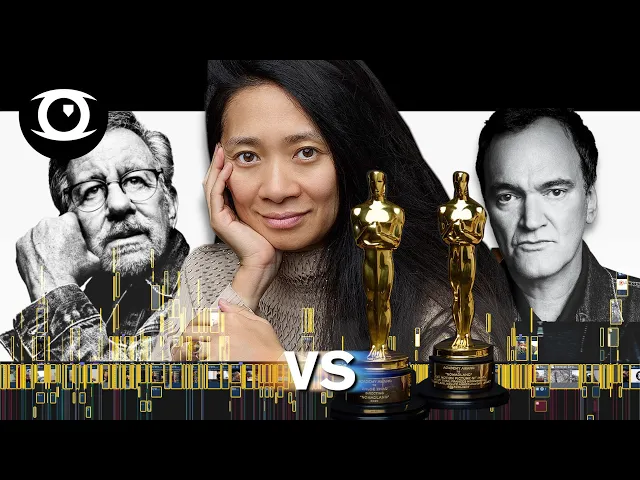
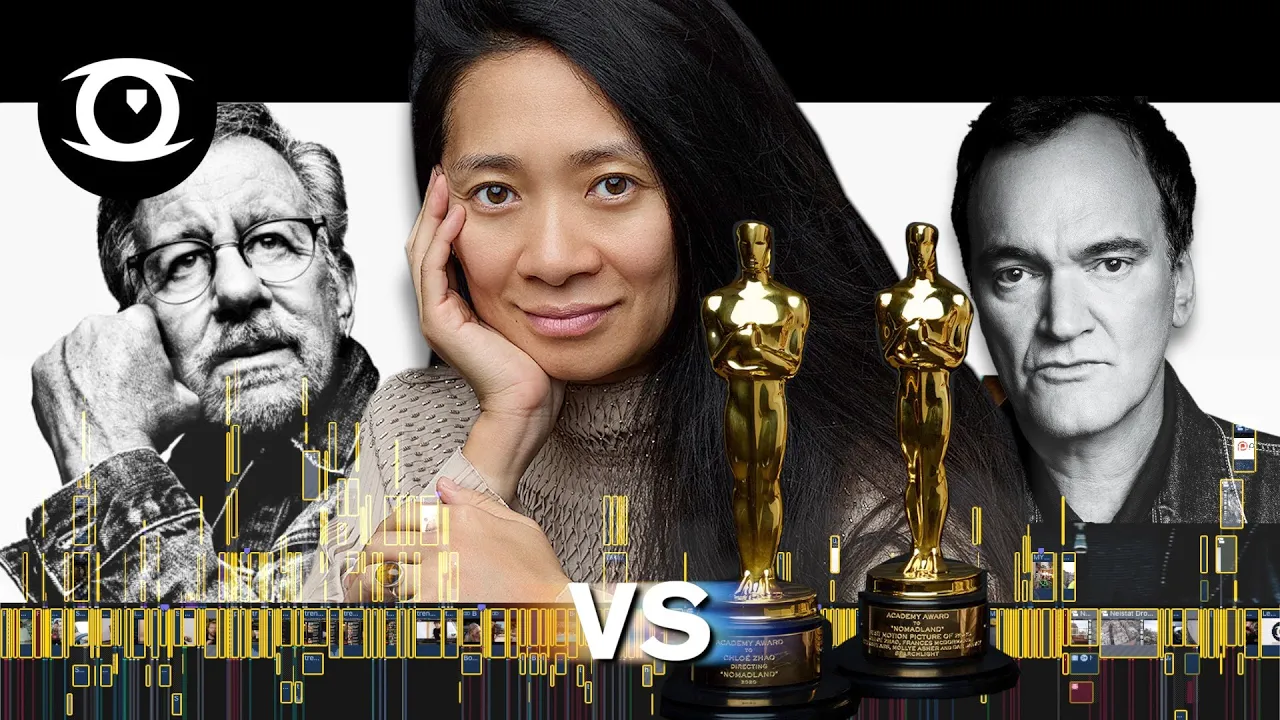
- [Karen] There's a few key examples of this, and the one that really pops out at the moment is Chloe Zhao. - [Announcer] And the Oscar goes to, Chloe Zhao, Nomadland. (crowd cheering) - [Karen] She edited Nomadland.
- And maybe when I die, my friends will gather around the fire and toss a rock into the fire remembering me. - [Karen] The editing of Nomadland is incredible. It is so sensitive and beautiful and intelligent.
And I was amazed when when I got to the end and saw the credit and realized that the director had actually edited it. - [Sven] Do you have some example why you think it was edited well? - [Karen] What I thought was really exquisitely done about Nomadland was the structure and the rhythm.
So the structure how it's organized, how events unfold, that couldn't have been scripted, or not completely scripted. The scripting was still literally going on in the editing process because it was part documentary, they didn't know what people were going to say or do exactly. - [Sven] Yeah I read that many of the characters in the film are actually real nomads playing themselves and not actors.
- [Karen] Yes. - I wish I had an easy answer for you but I think you've come to the right place to find an answer. - [Karen] And when I look at Nomadland, I think you know, you can see the director continuing to direct through the editing, because you can see her still thinking, still asking the question what is this film?
How can this film be itself? Which are questions that editors ask. - Being a director, we get a lot of credit as director.
But it's team work, it's never about one person's vision really. I'm not a really huge fan of that work to be honest. - [Karen] Now you mentioned that secret contract that directors and editors have to explore things together.
I sometimes think that editors are kind of like mind readers. I have this article I've written called Editing and the Vulcan Mind Meld, right? Where, as an editor, you need to absorb the thinking and the rhythms of the material that's in front of you and of the director and of your intended audience.
You're kind of a conduit for all kinds of different thinking that's coming together in you as the editor and then expressing itself in the edits which are your visible thoughts. But I think that when you have a director who's editing, I guess I'm wondering, is that for them a more efficient way of thinking? Instead of trying to put their thoughts through an editor's body, they're just going direct to the material and thinking with the material the way that editors do.
- [Sven] I think it can be, it's definitely the more efficient. Because you're immediately going from what your vision is, to executing on that. You don't have to communicate it.
The downside really is when you're also editing as a director, you're missing the second set of eyes. - You're going to have to cut this. - Why?
- [Karen] Right? - [Sven] That is so important in the editing. - I always wanted to direct.
- Obviously everyone wants to direct. That's a bumper sticker and a t-shirt. - Absolutely.
- [Director] Action Lenny. - [Sven] I've been in that situation where I've cut a film on my own that I've directed. And I can only push it as far as what I'm capable of.
It doesn't matter whether I'm directing, or whether I'm editing. I can only push it this far. Let's say I'm the editor and I'm in the editing bay, and then the director comes in, and then the director takes the ball and keeps playing with it, while I'm done playing at this point for a certain amount.
I need some pushback, I need somebody to say this doesn't work let's try something different. - [Karen] Now also, directors and editors actually have really different skills. And maybe directors lose out on a little something when they don't employ these specialist skills that editors have.
Directors need to interpret the script, the words on the page. Editors need to interpret the movement that they have imprinted on the camera card or the film strip. Directors also have to elicit performances.
This is a big part of their skill. Dealing with the interpersonal aspects, getting the best out of people. What editors have to do, is then shape those performances, put them into a dynamic relationship, but have them make sense together and make sense over the whole.
So again, the director is instigating or generating possibilities. Editors have to decide, they have to make that final really controlled decision which shot, where, and for how long. - [Sven] Before we discuss how first time directors can harness the skills of a good editor, we want to give away 10 of Karen's books called Cutting Rhythms.
Plus, one of you lucky winners, will get a Clearview Flex streaming box. That's right, it allows you to collaborate remotely with your creative team on a high-end level. - And I started working on Karen's notes.
- Yeah I was going to ask you about that, so she sent you some pick-ups right? - Yeah, I put them in. - [Sven] Clearview Flex is the simplest and most accurate tool for real-time collaboration.
We used it when cutting this episode. Morgane lives in France, and she edited this video. Together we reviewed her timeline so that we can discuss specific notes.
That's a great bite, I think we can cut that in half. The beginning is good where she says being a director you get a shit ton of credit, and then that end part is really strong here. - It's never about one's vision really.
I'm not a really huge fan of that word to be honest. - Yeah that's a strong ending. Our sessions were run through a Clearview Flexbox, which is simply plugged into my editing station, via HDMI, or SDI and connected to the internet via ethernet.
It's simply plug and play. Morgane could then log in through her desktop web browser, mobile phone, tablet, or even via Apple TV to discuss the cut. Frame and color accurate, with surround sound all in realtime.
You can invite up to 30 of your collaborators, to view a session, edit, review, and collaborate with Clearview Flex. Book your free demo video, by clicking the link in the video description. - It's very good.
- And also Karen was thinking about putting the sponsorship for the book here. - Okay. - But I'm don't know if you have an idea?
- Now, to get a shot at winning a Clearview Flex streaming box, or one of 10 of Karen's books, simply answer her question at the end of the video. Some say that you need a great crew to make a great movie. - [Karen] It's really important for young directors to work with editors, especially because young directors tend to not really realize either what's wrong with the material that they've created, or what it's deep potential is and they need those outside eyes to find that for them.
- Same hat. Let's take this one. - [Sven] I have to say from my own experience, the first time that I directed, this is more on me.
I basically pushed the editor out. - Get out, I mean it. - [Sven] I have to admit that it was very friendly.
(Karen chuckles) he was a great sport and he didn't mind at all. So very grateful for the experience. - [Karen] I've had the same experience.
I think because my training is first in editing, it's just so hard for me to let go and give it to an editor. My thought needs to go through my hands. I can't verbalize my thought, I can just do it.
- [Sven] The thinking happens with the material. For me there is no way to find the best solution of a scene without playing with the shots. That's how editors think.
And I think directors usually don't think that way, because they don't even have that available to them unless they're editing themselves. - [Karen] Yes. Let's talk for a minute about the different kinds of expertise.
Because this is something I find really interesting. - [Sven] Yeah. - [Karen] I think the authorship analogy is a bad one.
I don't think anything about filmmaking is like writing a novel. So I think we should just ditch author. That's the wrong analogy for directing.
I think though that directing and editing, are actually really different skill, and different forms of expertise. Here's my experience. When I am directing, if I were going to make an analogy, it's more like conducting an orchestra, than it is like authoring a novel.
As a director you just don't have that much control. You're throwing a whole bunch of pieces into the mix, you're saying to the actor who's like the first violinist, play this music, and they play it how they play it. And then you got the designer and you're saying it's futuristic dystopian and they design it how they design it.
And you go in just with the editing process, and you say oh, a little more this, a little less that, so on and so forth. But in my experience, directing is not really about control, it's about instigating. Whereas, editing is ultimately about control.
Like every single frame that's in the final cut, has been put there deliberately. It's all in there on purpose. And I feel like these are two different kinds of expertise almost.
There's expertise of making something happen and there's expertise of pulling it into shape into form. - [Sven] I remember an interview by Quentin Tarantino where he described directing. - As a director, your job is to hire talented people.
Your job is explaining your vision. Your job is articulating to them what you want on the screen. And then all of a sudden the whole mystical shamanistic thing that I thought directing was just went (making popping sound) And I realized I could do that, that it wasn't this Merlin-like magic kit that I needed to know the right spell, in order to conjure.
Oh I can describe what I want, I know what's in my head. That's the easiest part, I'm good at describing. Action.
- [Karen] And it's really important. One reason it's so important is that, actors and designers and DOP's they can do anything, I mean, they're amazing, they're miraculous. So they need a direction to go in.
But the difference is, directors don't give instruction, they give direction. - [Sven] Yeah. - [Karen] But they don't put their hands on anything.
So when we talk about the thoughts going through our hands, and this really direct translation of some impulse or idea that isn't even fully formed, into some material form that it can be worked with. That some directors are working through other people to make that happen. - Hello hot stuff, how were those pickles?
- Real good. - [Sven] So what should we change? What should change?
- I would say that the idea that individuals make films, is pretty flawed. One thing I would like to see changing, which I don't know how many of your listeners will care about. But here's one of my proposals.
When academics are citing, when we're writing, there's this little Latin phrase that we're supposed to use when there's more than one author and that Latin phrase is et al. And it's short for et alia. So here's a proposal, what if when we're writing about film, we don't say a Scorsese film, we say a film by Scorsese et al.
And it just puts it out there that there's more than one author. - [Sven] I just worked with a German director doing a feature film and when I saw the credits for the first time it said a film by, and he had the entire crew on one slate. That is Amazing.
(speaking foreign language) Now, don't miss out, and win a streaming box by Clearview Flex, plus one of 10 of Karen's books, Cutting Rhythms. Simply click on the link in the video description to answer Karen's following question. - [Karen] So Sven.
- Yes? - I have a question for you. - [Sven] Shoot.
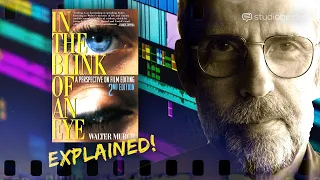
- [Karen] And maybe you can ask all the people who are watching this video. I wrote a book about 10 years ago called Cutting Rhythms. And then about five years ago, I did a second edition of the book and now I'm getting ready to do the third edition of the book.
So Cutting Rhythms is about the craft of editing and I thought maybe for this third edition I should just throw it out there and find out what people who might want to read this book would especially like to see covered in it. - [Sven] Yeah let's post the question, what should be talked about in an editing book. A book about creative storytelling through editing.