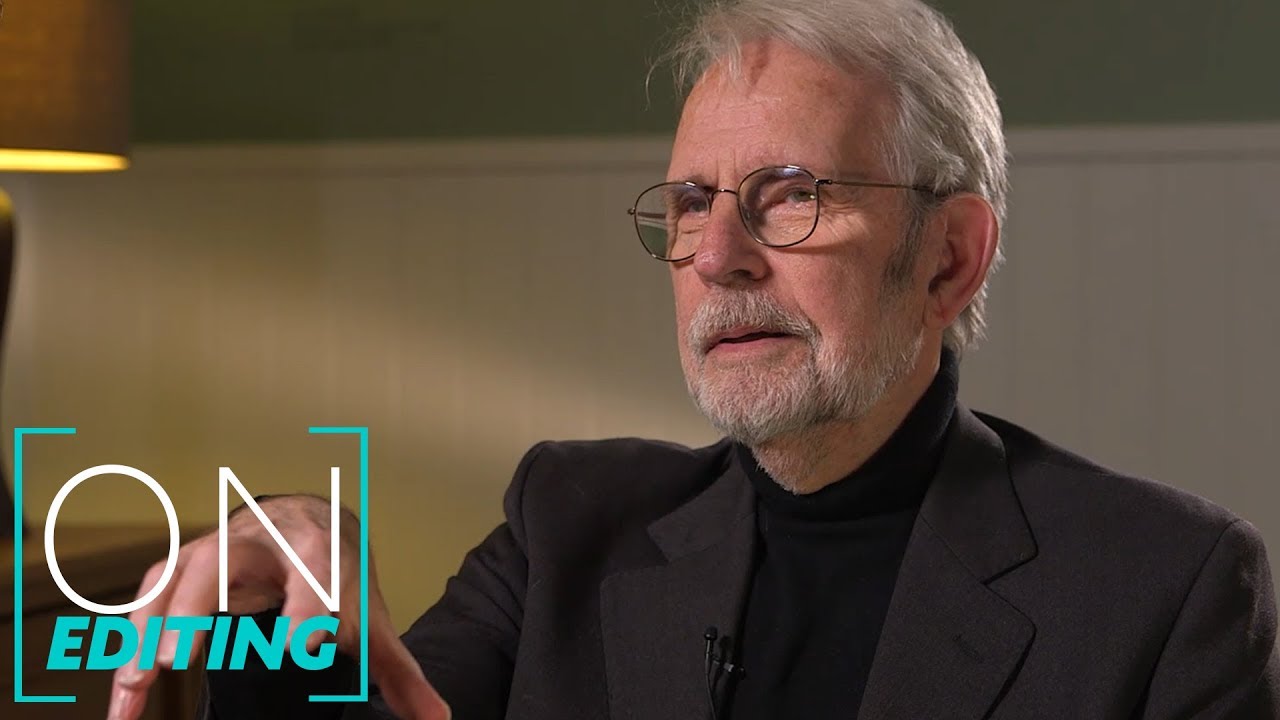
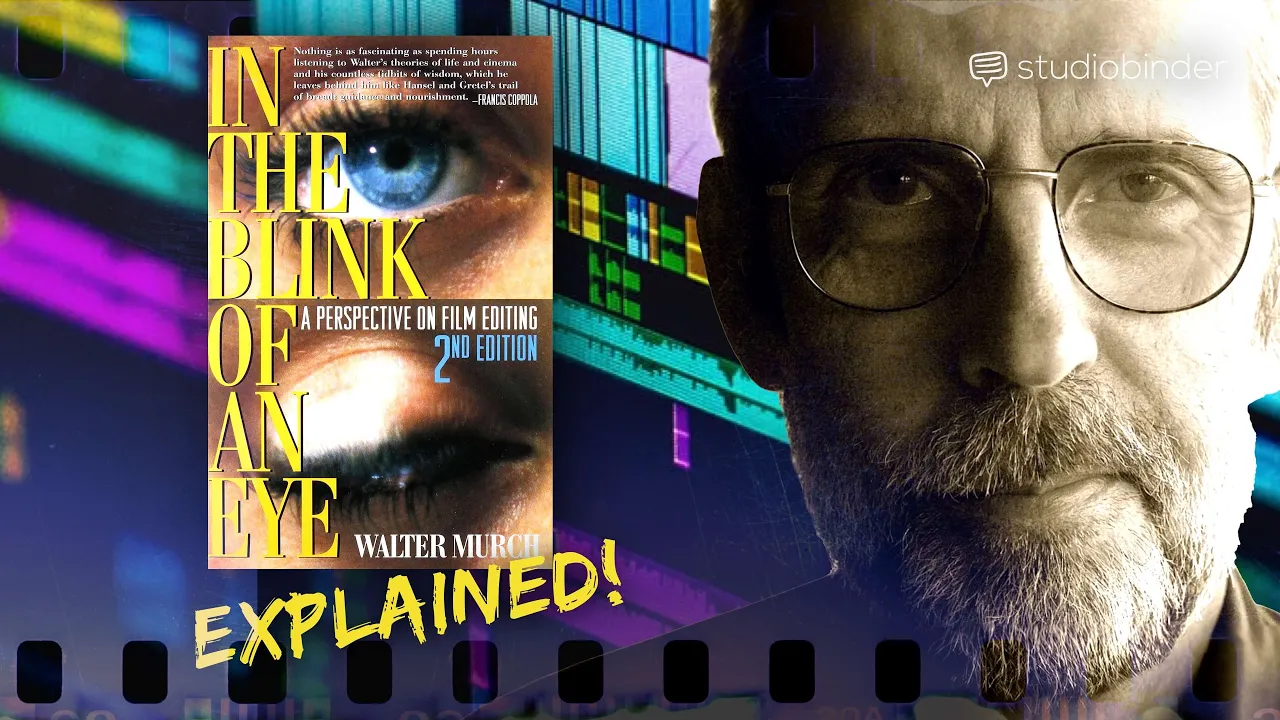
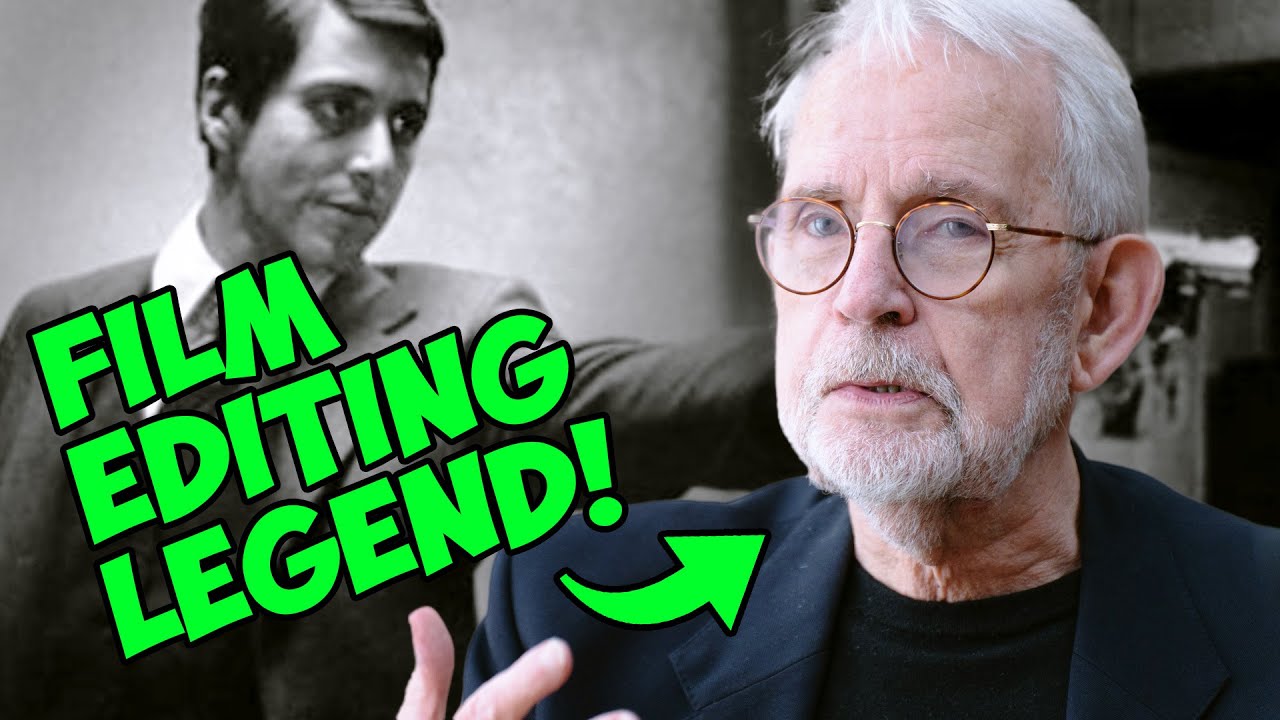
[Music] that's what the cut is the cut is a link in between two focuses of attention Walter merch is one of the most respected film editors of all time and his book in the blink of an ie is a seminal text for anyone who wants to better understand the art of editing in this video we'll look at Walter merch's editing philosophy and examine why it continues to be so influential this is in the blink of an eye explained before we get cutting be sure to subscribe to Studio binder and click the Bell to stay up
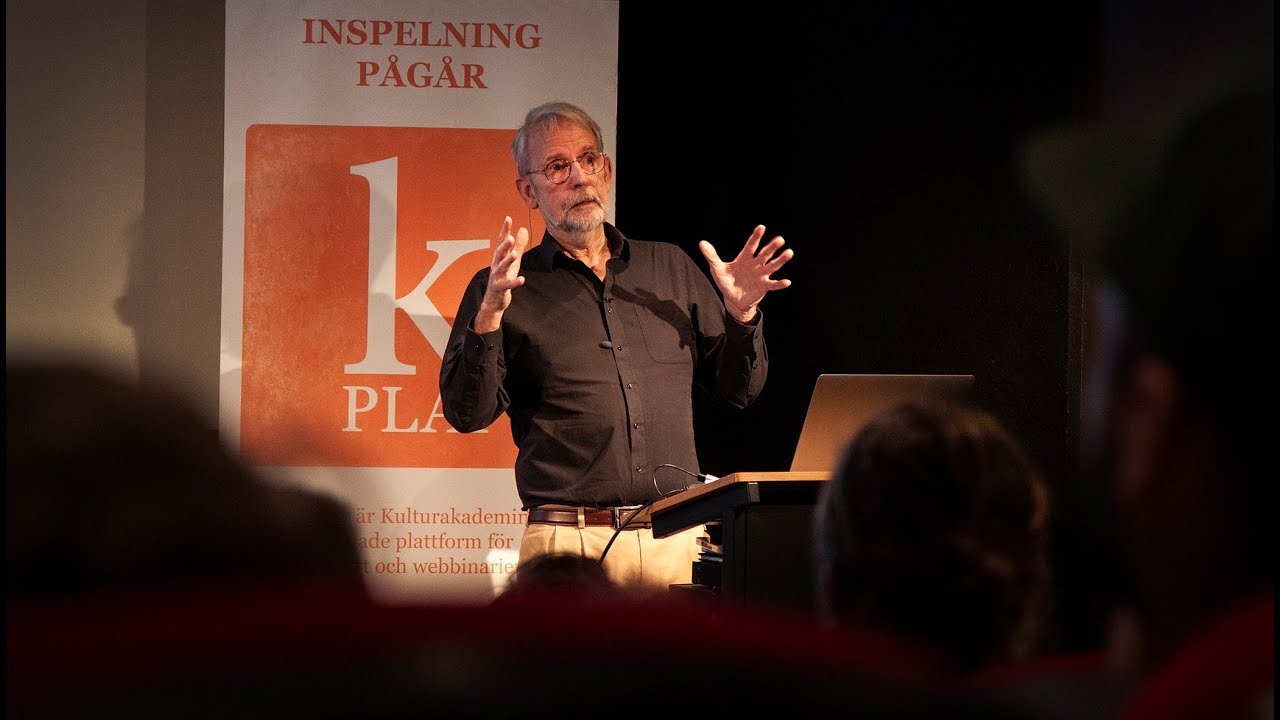
toate on more of our videos time to fire up the flatbed to understand why in the blink of an eye is so important one must know its author's background Walter merch is a groundbreaking editor and sound designer he came to prominence in the late 60s and70s and was an integral part of the new Hollywood movement merch has worked with filmmakers like Francis Ford CA and George Lucas and his filmography is legendary he has won three Academy Awards and been nominated nine times for his pioneering work on Apocalypse Now merch became the first person to be
credited as a sound designer in 1995 he published in the blink of an eye based on a lecture he gave about editing in Sydney Australia the book has since become one of the most popular books on editing ever and in 2011 merch released a second edition which added a discussion of digital editing in it he touches on various topics that can be grouped into why Cuts work the rule of six and an editor's job let's look at the core of merch's editing philosophy why Cuts work cuts are jumps in space or time and sometimes both
so how do they avoid confusing or distracting an audience in his book Merch interrogates this central question in film editing he notes that cutting as we know it today did not exist for much of early Cinema editing was not invented along with lotion pictures it was a number of years before somebody had the idea of putting these images together to tell a a coherent story eventually filmmakers learned that two distinct images could be placed together and audiences could not only follow it but they could make meaning out of the J position when this Discovery was
made merch writes films were no longer Earthbound in other words film's full narrative and aesthetic potential was realized with the Advent of the cut but why exactly our audiences not perturbed by a cut the answer merch argues lies in the blink he explains that although it seems like we experience the world continuously we actually experienced Cuts every time we close our eyes when we're in conversation for example we blink at moments that feel natural to us merch argues that a blink occurs when a thought is fully formed writing we entertain an idea and we blink
to separate and punctuate that idea from what follows similarly in film a shot presents us with an idea or a sequence of ideas and the cut is a blink that separates and punctuates those ideas merch takes this Theory even further claiming that he uses an actor's blinks to inform how he edits in the conversation for example he found that he was cutting close to where Gan Hackman was blinking since it subconsciously signaled that he had completed his thought you have to feel the moment where you're going to cut and at the appropriate moment over and
over again much more than chance within a few frames of the that Mark Jean Hackman would blink there's something going on there by editing with these blink points in mind merch argues that you also control how the audience is meant to process the information in this way you are blinking for the audience to underscore the ideas and emotions of the characters and so in merch's theory if the editor can find the right rhythm of a scene they could make the ENT enire audience blink at the same time the opposite of this editing approach is what
merch calls the draget system named after the 50s detective show where Cuts were made after each line it's your brother Cony I'll get it for you stay for you just going to get the phone for you I'll take care of the phone this style creates a Punchy rhythm of its own but for Merch it ignores the nuances of our everyday conversations could I ask you please to paste your paintings into my book I I should like to have them I should be honored merch Likens editing to another Universal Human Experience dreaming movies are dreams dog
that you never forget according to merch editing often imitates dreams where we typically make sense out of combinations of images as merch writes we accept the cut because it resembles the way images are just opposed in our dreams in fact the abruptness of the cut may be one of the key determinants in actually producing the similarity between films and dreams in the darkness of the theater we say to ourselves in effect this looks like reality but it cannot be reality because it is so visually discontinuous therefore it must be a dream this idea can be
particularly applied to editing techniques like the kulishov effect where two different images are placed together and create a third separate meaning merch also uses natural phenomena to influence how he edits in space he gives us an analogy about bees and their hive bees are not confused if their hive has moved miles from its original location but merch writes if the hive is moved 2 yard the bees will become fatally confused the environment does not seem different to them so they do not reorient themselves the same goes for editing cutting to a shot that is too
similar to the shot before can be jarring to an audience A good rule of thumb therefore is to cut to a shot where the camera is at an angle that is at least 30° away from the pre shot this is commonly known as the 30° rule but merch argues that spatial considerations should not be the primary concern of an editor this brings us to merch's rule of six perhaps the most famous passage in in the blink of an eye is merch's list of priorities when making a cut he ranks each consideration by importance and labels
the resulting list the rule of six merch writes that the foremost job of an editor is to establish an interesting coherent rhythm of emotion and thought as such he prioritizes emotion claiming it is the thing that you should try to preserve at all costs emotion is whatever this shot is and the cut to the next shot how does it make you feel and is that feeling what you want for the film at this point in its storytelling the second consideration is story advancement a cat should be necessary to push a narrative forward do you understand
what's going on with the characters with their motivations with what's happening the plot next is rhythm is the cut happening at the right point in a musical sense or is it like a drummer comes in too late or Too Soon count again 1 2 3 1 2 3 1 2 3 rushing or dragging so you do know the difference merch notes that the top three things on the list emotion story Rhythm are extremely tightly connected the forces that bind them together are like the bonds between the protons and neutrons in the nucleus of the atom
in other words finding the emotion of a cut when likely lead to progressing the story and creating the right Rhythm the fourth consideration is it trace this refers to where the audience's eye is focused in a frame if they are likely looking at the upper right section of a shot then a cut where the subject is also in the upper right will feel more natural you construct the film to direct their attention by where you place the cut and where the focus of interest is on the incoming shot [Music] next an editor should think about
what merch calls planarity which is often labeled the 180° rule the shots being cut together should generally not cross the line of action established by the opening shot of a sequence the final consideration is threedimensional continuity which merch describes as where people are in the room and in relation to one another to sum up merch argues if the emotion is right and the story is advanced in a unique interesting way in the right Rhythm the audience will tend to be unaware of editorial problems with lower order items like ey Trace Stage Line and spatial continuity
in other words he holds that typically it's satisfying items higher on the list will obscure problems with items lower on the list but not vice versa in the end merch describes a successful edit as when the shots themselves seem to create each other finally merch spends a good portion of his book describing the logistics of an editor's job while merch's high level philosophizing is vital his discussion of the ongr reality of an editor's day-to-day is also crucial the first step is to have a plan an editor must make thousands of decisions in every scene when
receiving dailies merch recommends finding a still from each shot that best represents it he argues that this will help down the line when an editor has to pick which takes to use when actually editing merch famously insists on standing he explains editing is a kind of dance the finished film is a kind of crystallized dance and when have you ever seen a dancer sitting down to dance and somehow this is important for me because it allows me to internalize The rhythms the visual rhythms of what's Happening merch also notes that collaborating with directors is an
integral part of an editor's job he argues that while it is important to help a director realize their Vision directors Ally have their own limits especially when it comes to the smaller details and that is where an editor must step up with their own ideas merch also emphasizes that directors often come in with preconceptions based on their experiences on set and it is an editor's role to try to see only what's on the screen as the audience will I make it a principle not to go on the set not to see the actors out of
costume not to see anything other than the images that come to me from location and that's how it's going to look to the audience but an editor can only anticipate an audience's reaction so much this is where feedback from test audiences comes in audiences he claims are good at noticing when something isn't working but they aren't good at pointing out why when you ask the direct question what was your least favorite scene and 80% of the people are in agreement about one scene they do not like the impulse is to fix the scene or cut
it out but the chances are that that scene is fine instead the problem may be that the audience simply didn't understand something that they needed to know for the scene to [Music] work whether editing analog or digital Merchant philosophy holds as true today as it did in the 1970s no matter what happens on set no matter how many visual effects are required almost all movies are still built on simple cuts and editor's job doesn't have to start in post-production the collaboration can start with a script the storyboard or the shot list this is the kind
of collaboration Studio binder was built for get started on your next project with the sign up link below for more on the art of editing watch our in-depth interview with topgun Maverick editor Eddie Hamilton and step-by-step tutorials on the studio binder Academy Channel until next time remember with a great editor sometimes you can fix it in post w [Music]
![Ultimate Guide to Camera Movement — Every Camera Movement Technique Explained [The Shot List Ep6]](https://img.youtube.com/vi/IiyBo-qLDeM/maxresdefault.jpg)