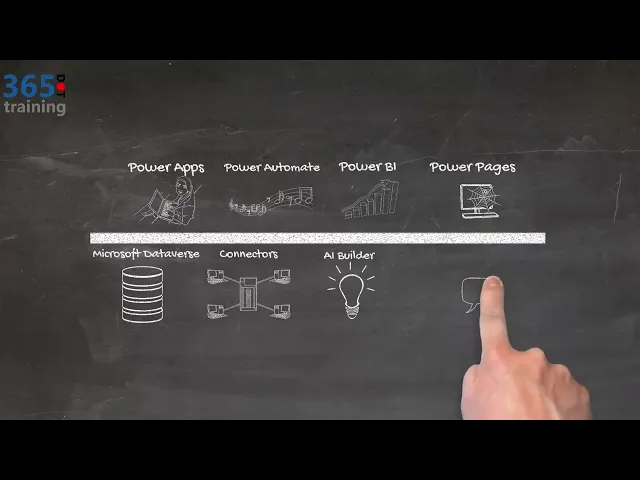
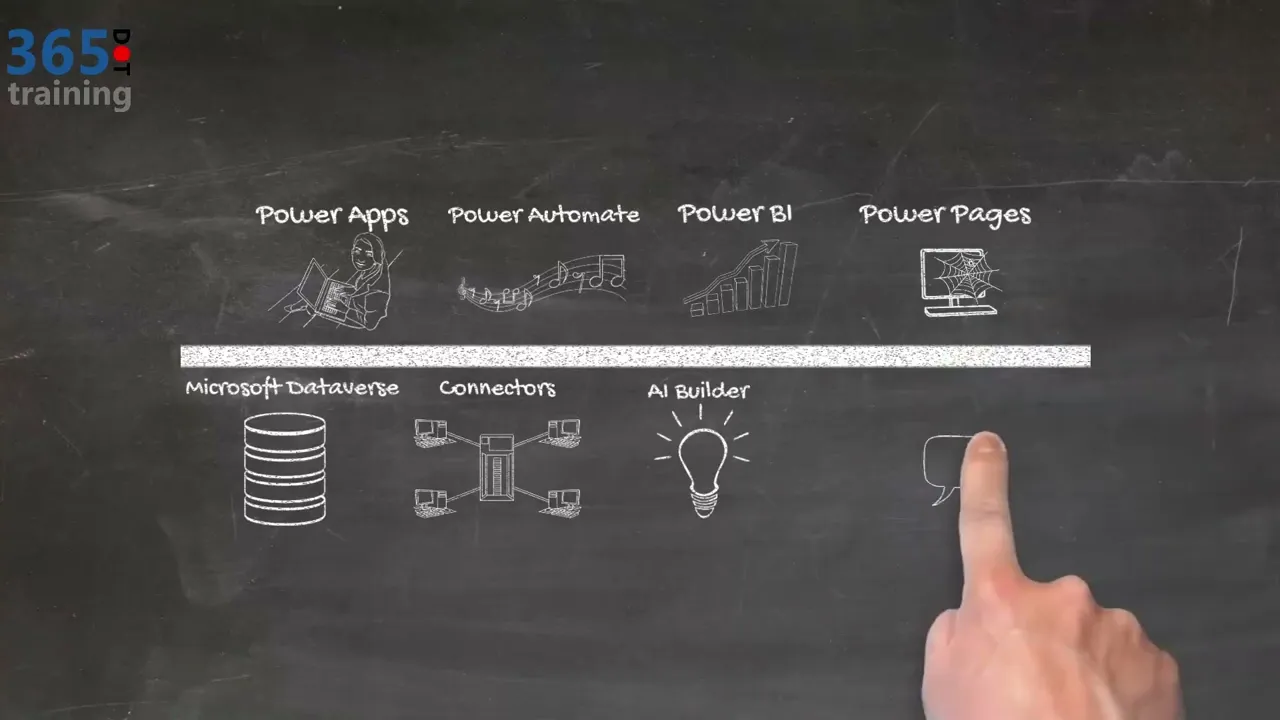
hi this is David yak and in this video we're going to look at a common question I get asked when I tell people what I do is work and build things on the Power Platform the Power Platform consists of four key components the first we'll talk about is power apps power apps are applications that you build that users can interact with you build these applications using low code techniques without having to dive into traditional developer tools like Visual Studio that means that they're able to be built by a broader set of people in your organization
and don't have to have as much maintenance as things change in the underlying platform the next component we'll talk about is power automate power automate allows you to automate a series of steps think of it as rather than doing the work manually where you might forget at one of the steps power automate can automate that work in a repeatable sequence with the consistency of a robot and using connectors that we'll be talking about in a little bit you'll able to connect to systems throughout your organization or externally to use them as part of your orchestrations
the next component is powerbi powerbi allows you to take the raw data that we collect in an organization and turn it into beautiful visuals that we can get insights out of and take proactive actions as well as use the natural language queries to poke at the data to get answers to our important questions the final component is power pages the newest addition to the Power Platform power pages is a low code software as of service platform for creating and hosting external business websites using power Pages you can extend your business processes to start with or
include the in customer now the key components that we just talked about depend on some core Services these core Services enable the components to do their work pretty much all business applications need to store store some data they collect from users and might want to bring data from separate silos in the organization into a central place this will allow building applications and automations to be easier Microsoft dataverse is an abstraction across multiple Microsoft underlying data storage technologies that brings the best of all these Services into dataverse dataverse implements the common data model which effectively takes
Decades of Microsoft's knowledge of the business application structures and formats of data and implements it as an open- Source version that that dataverse implements and allows you to store data in because all data will not be in dataverse Microsoft has implemented a concept called connectors connectors enable power apps as well as power automate flows to easily interact with data from other systems and services these allow you to do those interactions without having to know the apis or developer interfaces that those Services provide there are over a thousand out-of-the-box connectors and you can build your own
custom connectors by just defining the existing apis that your own Services might Define allowing internal services to also use the connector model today's business applications are expected to be smarter more proactive and not reactive to problems that happen one of the ways you can do that is by infusing AI into the application now traditionally that requ required a data scientist background and a lot of sophisticated capability what AI Builder does is bring those capabilities so they're easily achievable without having a data science degree and use them in power apps and power automate as part of
the applications and automations you build co-pilots are becoming our trusted Partners to help us get information and take action Microsoft co-pilot Studio allows you to customize co-pilots like co-pilot for Microsoft 365 or you you can build completely custom co-pilots and gpts for your own unique scenarios using co-pilot studio now Microsoft Azure plays two key roles in the Power Platform first most of the services of the Power Platform are built on some aspect of Microsoft Azure leveraging all the great capabilities in terms of reliability scalability and so forth in the components that are built for the
Power Platform now the other way Azure is used is in terms of when you need to extend power apps power automate power Pages beyond what the capabilities are of the Power Platform itself you can rely on Azure Services just like you would if you were building the application from scratch to extend the Power Platform now it's no secret that at the heart of most business processes that there is email document collaboration as well as Communications that have to happen Microsoft 365 provides those key services and integrates well with the Power Platform form now on top
of all this is where we build applications I would like to refer to this as the overall Microsoft business Cloud this is where you'll find the pre-built applications like Dynamics 365 sales service and field service and so forth that have been pre-built on business scenarios that you commonly have in your organizations you can start with that pre-built application do some slight customizations and you're ready to deploy in a record amount of time now just like Microsoft independent software vendors can use the same Microsoft business application platform Power Platform to build applications so if you have
an idea you can build that same capability on the Power Platform using the same techniques that Microsoft uses to build Dynamics 365 applications and build your own vertical focused or horizontal isv application that you can sell now for customers that means you can also just look at Dynamics 365 look at appsource to see what isvs have built instead of building your own now if that doesn't make sense you can just build your own on top of the Power Platform these can be built by anybody in your organization from Jo or sewer and accounting to your
professional IT staff that are building apps for you today well thanks for joining us to look at the Power Platform and I hope you dig into more of what the Power Platform is capable and learn about each of these components and how they can solve your business challenges