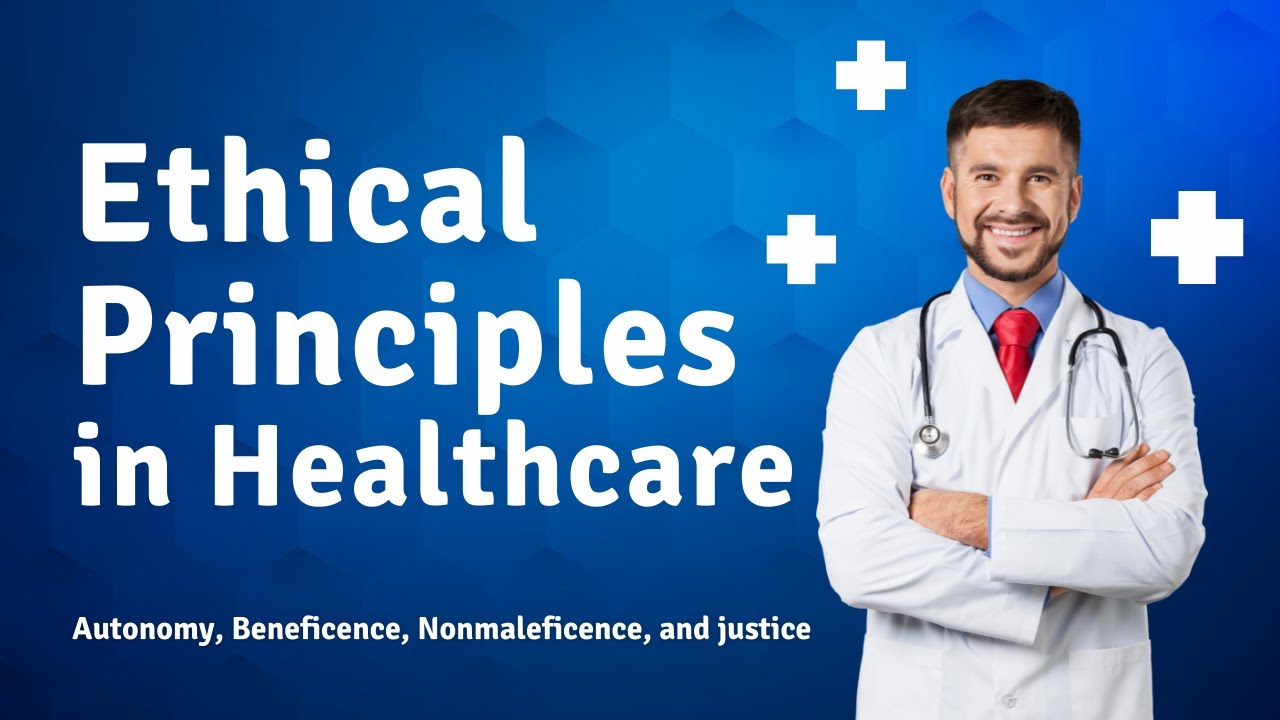
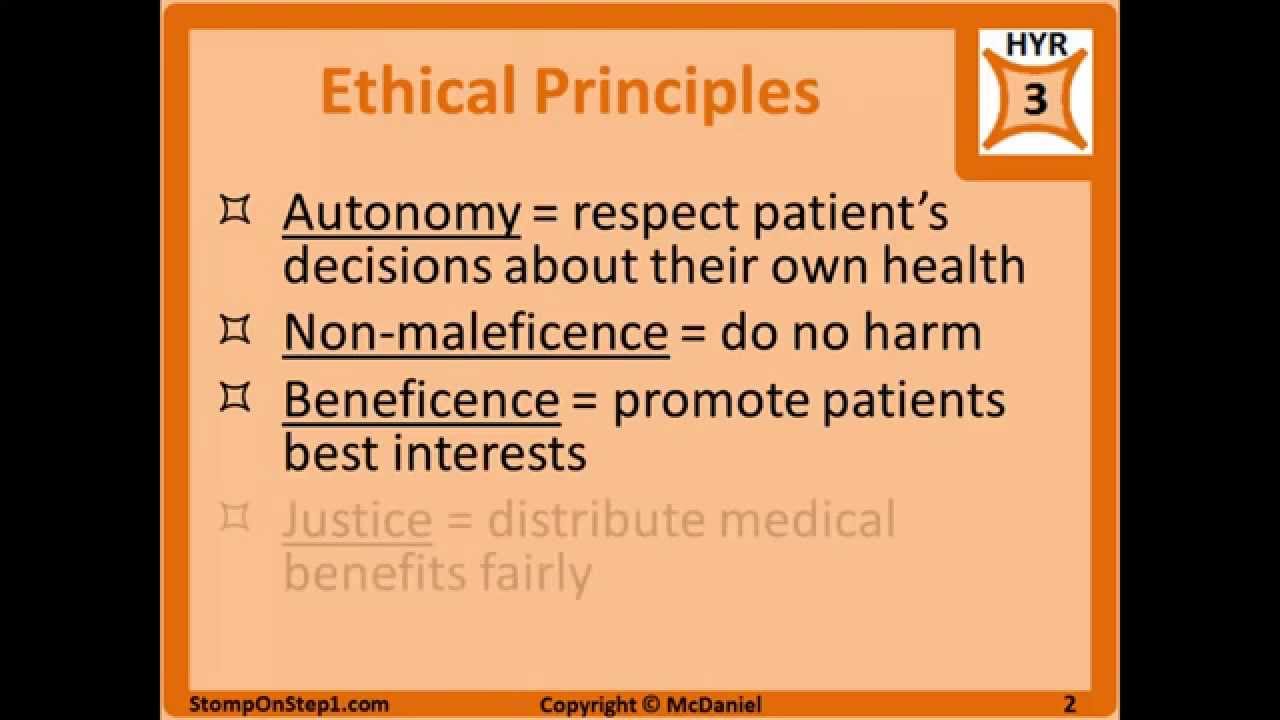
Welcome back! In this video, we'll talk about the core ethical principles of medicine, starting with autonomy, which is the independence and freedom patients have when making their own decisions without any external pressure or influence. While the physician has to honor the patient's autonomy, the physicians have autonomy of their own, and there are certain situations in which the physician can refuse to provide treatment, such as refusing to perform a cesarean section for a patient who lacks any medical reason.
There are also certain situations in which the patient doesn't have autonomy; for example, if a patient has active TB, they have to take the treatment to protect the community in which they live. [Music] Next is beneficence, which is the duty of a physician to act in the patient's best interest, essentially choosing the best treatment available and following procedural guidelines. Next, we have non-maleficence, which is also known as "do no harm.
" The doctor has to weigh the benefits and risks of any treatment or procedure, such as treating a patient with medication or surgery. Finally, we have justice. Here, the physician has to treat each patient fairly and equitably, not equally.
For example, in the emergency department, a patient with an urgent, life-threatening illness can be treated first before patients who come in with simple trauma. And here's a small quiz: try identifying the ethical core principle used in this [Music] scenario. Alright, guys, that's all I have.
Thank you so much for watching, and hopefully, this [Music] helps you!