Not everything that does photosynthesis is a plant! Hello how are you? In this video from the “Minutos de Botânica” channel, we will talk about photosynthesis.
Often, when looking for a unique characteristic of plants, the term “photosynthesis” comes to mind. But does this process only occur in plants? Photosynthesis is a complex biochemical process, consisting of several interconnected chemical reactions.
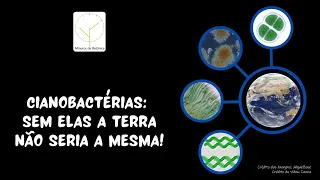
To understand how different groups of organisms are able to carry out photosynthesis, we need to go back in time and rescue the history of the planet and the emergence and inheritance of photosynthesis in these different groups. 3. 5 billion years ago, it is estimated that oxygenic photosynthesis appeared: the one in which, in addition to carbohydrates, the final product is oxygen gas derived from the breakdown of water molecules.
There is very little evidence of this process, as we are talking about a very. . .
very long time ago. The first beings with this type of metabolism were cyanobacteria. But before cyanobacteria appeared, other bacteria already existed that carried out anoxygenic photosynthesis, and therefore did not release oxygen at the end of this process.
Both photosynthesis exist to this day. There it is! The answer to our initial question is already answered.
Since bacteria aren't plants, it's not just plants that photosynthesize, right? Photosynthesis appeared long. .
. long. .
. long before the emergence of plants. In fact, it emerged around 2 billion years earlier!
But did oxygenic photosynthesis arise several times over the course of evolution, then? Could such a complex biochemical process have arisen multiple times? The probability for complex processes to appear more than once in the course of evolution is not very high.
Practically until this 2009 publication [John M. Archibald, 2009], we didn't know much about this story and we didn't know very well the origin of the organelles responsible for photosynthesis in plant cells: chloroplasts. Some clues present in chloroplasts - such as a membrane similar to that of bacteria, DNA similar to that of prokaryotes, and ribosomes similar to that of prokaryotes - allowed the researchers to reconstruct the history of chloroplasts distributed in the cells of different groups that carry out photosynthesis.
Basically, what would have happened, about 2. 4 billion years ago, was an event of engulfment of a cyanobacteria by a non-photosynthetic eukaryotic being. That is, one cell engulfed another smaller cell: the cyanobacteria.
Or, the cyanobacteria invaded the larger cell. In fact, we don't know who took the initiative in this case. What we do know is that the cyanobacteria started to live inside this eukaryote, and this event we call "primary endosymbiosis”.
The engulfed cyanobacteria would not have been digested and would have conferred an advantage on its host, which began to use the products of photosynthesis in its metabolism. There it is! Here we have the first plant - a single-celled plant, of course - which inherited photosynthesis from this engulfed ancestral cyanobacteria.
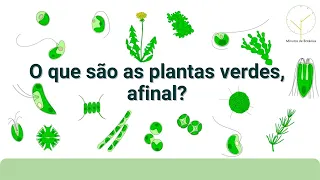
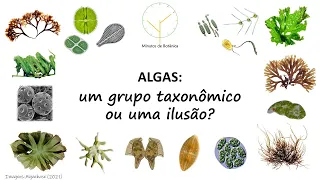
The plant group is therefore monophyletic, having diversified from this unicellular ancestor and is also called “Archaeplastida”. Therefore, Archaeplastida or Plantae refers to the group of organisms that includes glaucophytes, green algae, red algae and land plants. This primary endosymbiosis event gave rise to a photosynthetic cell that contains primary chloroplasts, each chloroplast containing two membranes, both of bacterial origin.
The primary endosymbiosis event was fundamental to the evolution of all photosynthetic eukaryotes, not just plants. But, you may ask yourself: “But, what do you mean the photosynthesis of eukaryotes is not exclusive to plants? ” No, it's not!
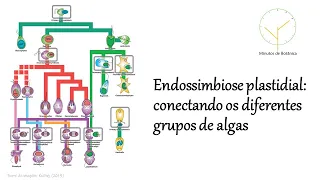
Just as plants have inherited photosynthesis from cyanobacteria, some groups of eukaryotes have inherited photosynthesis from plants. This has happened several times throughout the evolutionary history of eukaryotes, in events we call secondary endosymbiosis. In this event, a non-photosynthetic eukaryote engulfs a single-celled plant inheriting not only the two membranes of the primary chloroplast, but also the membrane of the engulfed plant.
These chloroplasts, then, are called secondary and have three or four membranes. As examples of organisms with secondary chloroplasts, we have several euglenophytes, chlorarachniophytes, haptophytes, cryptophytes and brown algae. Groups with tertiary endosymbiosis, such as dinoflagellates, have also been observed.
But, don't be scared! Organisms living inside each other are more common than it seems, and some of them can bring harm, but many can bring benefits. Think of the set of bacteria that live in your gut, known as “gut flora”.
Did you see? Photosynthesis is not unique to plants and the rescue of the history of endosymbiosis events allows us to understand how different groups of photosynthetic eukaryotes not so closely related to each other have exactly the same type of photosynthesis!