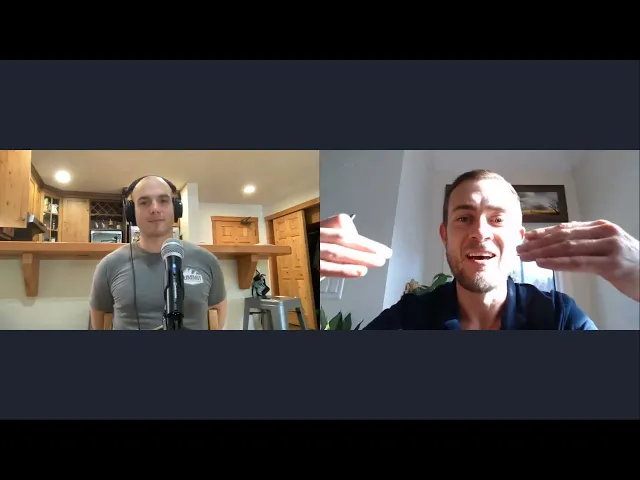
One and we are on episode number eight of the art of move podcast with myself anthony manuel and my good friend dr william rabar in banff alberta i'm in canmore alberta we're in the canadian rockies here and the art of move podcast is trying to create a grand unified theory of human movements and how the body is meant to move base And will and i talk a lot about movement outside of this podcast in fact my inbox is constantly inundated with videos and ideas that will has on the fly and we're always talking about this
and sometimes the uh the breadth of topics that we can cover can be so overwhelming and so intense that it's hard to pick what we're gonna cover for One of the episodes that we're doing so today what i kind of wanted to do was i'll do a broad overview of different systems of the body how we should train them or think about training them how people prioritize them currently in popular training and then in terms of the ideas about movement that we've talked about what systems would we prioritize in training and this is kind of
a freestyle episode this is you know i have this idea and we have a Gazillion ideas and one of my favorite things about this podcast is a lot of these ideas take form as the conversation is happening and so this is going to be an overview freestyle conversation about systems in the body and um you know we've principally talked about movement we've tried to avoid breaking the human body down into segments i know our first few episodes we're going joint By joint and talking about uh you know what what are the functions of each joint
but then when you put it in a broader movement context it's hard to compartmentalize the body into joints into parts into systems and to realize that the the whole is greater than the sum of its parts so with that in mind as we're going through the systems realizing that all the systems work in synergy to create the infinitely complex system of the Human body itself we're going to break down a few systems that are commonly thought about in training in physical culture in movement and i'm going to start with a few off the top of
my head there's the muscular system which is often trained in bodybuilding there's the fascial system there's the circulatory system the respiratory system the lymphatic system the the nervous system and you can say central nervous system you can say Autonomic or or even sympathetic and parasympathetic nervous systems there's there's all kinds of systems in the body and those are just a few off the top of my head and when you think of system because you were the first actually you were the first person to actually uh introduce to me the idea of systems oriented training versus
like body oriented or strength oriented or Like lifting pattern oriented training so when you think of systems orientation what's the first thing that comes to mind for you well the way it's done right now is everyone is emphasizing the muscular system and uh tendon training you know um basically uh emphasizing the tendons is hot right now but it's such a small area of what it could be You mentioned the list all those can be improved so every system you can take and improve it on its own so i can take my vision i can improve
my vision by let's say what i do on a regular day is i'll be in the forest and i'll just try to track things through the forest and that's something i do regularly during the day there you go there's a systems improvement that's not something People think about it's again muscles muscles muscles so um really systems is just improvement of a system right so so like you're saying what would your vision be like your ocular system so you're you're walking through the forest and you're tracking things you're looking at things farther and closer uh and
if you think about the system of Vision or the ocular system it works in conjunction for your proprioception your spatial awareness that translates to movement directly your ability to and to process visual information translates to your your spatial awareness and your movement in general if you can see better what's that you're gonna be more but not not just like confidence in social situations but as a Human being as somebody who has good senses you can see out of the corners of their eye because you've trained it and see close far can um concentrate on things
quickly okay so i can switch my vision you know like move from side to side track objects i'm walking through the forest here dangerous animals my my nervous system slightly heightened all the time because i'm looking Constantly for them so in that way it's a confidence booster if i didn't have that vision i wouldn't know what was coming great so you can you can improve your vision um but but the emphasis you said was on the muscular system right and we can we can really just see that in any training any instagram posts where people
are posting Uh flexing their whole sport based on just emphasizing and perfecting the muscular system to the aesthetic bodybuilding and this for most people i mean i got into lifting because of bodybuilding i wanted my body to look better i didn't even think about looking better being a function of being able to move better or being more athletic when i first started i just thought oh i lift weights i look better It's to the point where people just think of this autopilot like if i see somebody with a muscular system that looks ripped i'm like
health you know uh yeah in the past right and that's basically what most people think but there's you know the the list of systems that you did at the start is probably missing 20 right um yeah i don't know you mentioned lymph Fascial um vision there there's just so many smell you can train them all so why limit yourself to the muscular system it just makes no sense to me however that is what's emphasized and what's autopilot right and you know let's let's kind of break that down because if if the muscular system and the
show of the muscular system Specifically it's not you know it's it it's it's the aesthetics of the muscular system it's not even the muscular system as a whole and its function just the aesthetic show of the muscular system and that's equated to health but what let's go through a few of the systems and say like what how could you define good health Based on a system's view of things right so obviously eyesight's a pretty easy one if you can see things that are close to you and you can see things further away you have good
peripheral vision that's a healthy ocular system essentially um what other systems would you kind of be looking at qualified good health under if you're not looking to emphasize the the muscle i know a loaded question but like Uh well i mean they're all in a spectrum if i can't see it all because either there's a block in my brain where my you know um my vision goes to uh interact with the brain if there's a problem there then i'm at zero i need to get to a hundred or closer to a hundred right so i
look at every system in a um zero to a hundred scale let's say and i want to get it closer to a hundred and i wanna train it that way always if my vision's slipping if uh you know i'm Driving at night all of a sudden i can't see then i know i have to work on my vision and this is not a thought process most people have they're like oh i'm my vision's gone that's it you know and there's no systems in your body so uh the thought process behind even making systems a priority
is more healthy in itself right to parse things out in the system How is my lymph system doing compared to my muscular system compared to my circulatory system compared to my vision compared to my uh balance proprioception it all has to interact right so um i i can't really define health through that but i would say increasing the systems in general And if you have one lagging you have to bring it back up to par yeah i do find you know like what you just said too if your vision starts to lag sometimes you see
systems being compensatory or almost synergistic in that way where it's like your vision starts to go maybe you compensate by having better hearing in case of people who are terminally blind right or you you basically your proprioception From the your awareness of your surroundings through your auditory senses becomes exceptionally heightened right and but the the i think what you just said where it's like thinking about who in their right mind thinks okay my vision is kind of going i should work on it the the the vision of the version of working on it for most
people is going to an optometrist and getting glasses Right they don't they don't think that they can train their ocular system they don't think that they can train their vision um but your your gustatory senses can be treated like your senses in general can be trained that's the same as going to a medical doctor if you have a muscular um ailment and saying give me something that's gonna block what caused this Right so we think of that that makes sense in the muscular system but we don't think of it another system okay so that's basically
how i think of health there within that context that's that's a and that's a good way to think about it again because then you're taking you know how many things do we do that we take exogenously like glasses or like a pill or like a brace or like a physical surgery Or like you know these these exogenous interventions when we could be having a systems focused approach to training and not just you know not just basically thinking about the word training differently too because training again for me when i said it out loud i like
my brain automatically associated with the muscular system even though i don't even directly emphasize the muscular system In my own training anymore i still train my muscular system but i don't emphasize it right but it's so associated with it the word training you know it can be could be vision training it could be auditory training it could be all kinds of different um sharpening of these systems or or optimizations of these systems so in training because we've talked about movement a lot and we've sort of We made our case for why you should de-emphasize lifting
as much in terms of that the reverse gear sort of idea where it's backwards movements it plants your heel into the ground and it sort of decodes you out of these really native good locomotive patterns and we started we made our case for why you shouldn't lift in these fixed plane movements and how it can screw up our patterns if you're doing a systems approach to Training you know patterns i i don't think you could say you have a pattern system necessarily unless you would argue that like would you say like what systems would you
prioritize in training when we're thinking about the way that we talk about prioritizing movement well um movement in itself is a composition of systems right it is your your muscular system and i Don't even you know the word muscular system doesn't even work for me it's myofascial it's soft tissue and uh bones basically okay that system you're basically tuning your avatar you're getting the biomechanics of the soft tissue which is the hardware and you're encoding the software which is your nervous system and making them interact with your abilities so let's say i have Arthritis i
can't move my wrists as much i can't work on that system until i am able to get more motion in the joints right so it depends on where you're at too as well right so if i have more range of motion within my body because the parts themselves work well the joints then i can encode more into my muscular system into my nervous system i have More options of movement okay so within the context of movement that's kind of how i look at it i don't want to go too generally here like i started talking
about vision i kind of want to stay away from that and maybe go into like a what happens when you lift weights to each system yeah yeah yeah well right what i kind of heard too is like if you're taking a movement based Approach to training and living your life then systems oriented training first of all all that like they're like you said movement is a compositive system and being like getting granular and specific about certain systems becomes more relevant when you run into an issue right like for the example the Arthritic who who can't
move their wrist they have to do a you know a joint or or maybe they have to you know work on their synovial fluid or like there's there's a specific thing that they have to do if you don't have a lot of elasticity right maybe you're you're doing more fascial rebound training right like there there would be you you would pick the system based on the obstacle or the limitation that you Have otherwise all systems are pretty much engaged anyway right or your um yeah yeah four year old four year old and that's that's the
big thing right so an example of that is is um how i train the fascial system let's say if i want to throw a harder hook for boxing i have to bring i have to make the heck like where the fascia goes from my pec to my arm and my lat i have to make that a sling i have to make it like a Recoil okay so i actually train the tissue in that area to be more elastic so in that case i've trained that system to be more elastic right i knew that that's the
requirement that i wanted for a harder hook to be more efficient in the use of my shoulders so i had to bring that system up to par versus if you were trying to build enormous pets for bodybuilding for Example you would de-emphasize the elasticity of your pack and probably focus more on just pure hypertrophy right pure growth it's the muscular system hypertrophy yeah so i mean like let's let's look at a few popular training methodologies and see what's like what systems they work on and how like bodybuilding we kind of covered a little bit there's
obviously the Muscular system there's depending on what rep scheme you use and stuff there's there's a circulatory system right um go ahead well i was gonna say um like with regards to let's say the nervous system in bodybuilding in general okay there's not gonna be a lot of learning involved Outside of single joint exercises okay so the nervous system is being encoded with single joint movement so when the going gets stuck what's your body gonna do you've only taught it one behavior you've only taught it one thing right so you're gonna see single joint movements
have you ever seen a bodybuilder trying to box you should pull that out i'll pull that up and uh show it at some Point but my point is that you will see what happens in the movement by what system you're training okay so my nervous system if i'm a bodybuilder will go to a single joint motion all the time it'll probably be your like nerves at the single joint uh let's say it's the bicep it's gonna be tight your nerve system going to be sending energy to that area all the time in order to keep
the tone That you're encoding into your behavior and that's that's ultimately what you won't be able to yeah well that's that's you know a bodybuilder top-level bodybuilders are trying to optimize contraction you know and when we say you know what are you coding your nervous system to do your nervous system as in your brain and all the nerves that it's connected to are learning patterns and optimizing Four patterns and the the pattern of bodybuilding is just pure contraction of muscle right it's it's actually very funny you know i've seen videos of like bodybuilder tries to
box bodybuilder tries a gymnastics workout it's always really funny watching bodybuilders in any situation that requires any degree of suppleness or elasticity because they're just a mess But that's because they're they're prioritizing contraction it's like how tight how hard can you flex your muscle and how much can you keep it flexed and by bodybuilding we're going in the strict sense right like bodybuilding to us means uh you're going to the gym with the goal of hypertrophy of your muscles to make them bigger to make them better looking more aesthetic to have the symmetry okay so
within that context of that goal it all makes sense that's what You're trying to do but within the context of what's happening to your being to your body or let's say even parsing it out to the systems to your nervous system it's being coded with i need to move at a single joint but the body in three-dimensional motions never does this or it's very much not ideal to do it yeah okay so you're basically coating yourself out of good movement And movement that's going to keep your joints healthy and sacrificing that for an aesthetic look
that is probably temporary but hey maybe you'll be able to keep it going i'm not sure is there a way to do both i think so okay so there's nothing wrong with the goal in itself it's more if you're going to the extreme with it you're encoding your nervous system with Something not so great we can talk about what happens with the lymph system we can talk about what's happening at the circulatory system right or along those lines i mean like well yeah well bodybuilding is is a funny thing because it does it does it's
you see a lot of bodybuilding bros the anti-cardio for example it's like i don't want to work my respiratory system because i lose all my gains It's like by it's like they will literally acknowledge that training other systems of energy or other systems in general will de-prioritize the muscular system and debris errors has the recovery and the optimization of just the muscular system and they they brilliantly it's yeah they willingly become unidimensional in their body's capacity right yeah and that's the goal that they're looking For so i mean uh it's their goal and to each
his own but that shouldn't be marketed in any healthy way you know that's not a healthy practice to maximize one system and trust me i thought when i was a kid and i saw bodybuilding i saw arnold i saw the flex magazines i thought that was the thing to do And when it catches you um when you're young you're just going to keep doing it until somebody's until either you get injured and realize that maybe not the way to go if you want to encode good movement or athleticism um it's definitely not the way to
go but there is that kind of uh marketing towards it like bodybuilding is health you know or i shouldn't say bodybuilding I should say lifting weights with an isolated isolated motions all the time to get the muscles bigger yeah that's like um you know and and the argument sometimes is that well it's better than doing nothing you know that's a great audio body bodybuilding is better than being sedentary um a hundred percent but you also have to Acknowledge that specializing your body and actually it was edo portal who i first heard say that any time
you choose to specialize in a particular direction you're going to pay for it in one way or another and at the time i was powerlifting and i was like [ __ ] you edo portal like i don't want to hear that [ __ ] that brings more than others it's not all equal right yeah like i think power lifting I shouldn't say this i was going to say it's like a level above in terms of complexity but it's not easy to the extreme each can be more devastating than the other because they are specialties right
like um it's rare to see a really heavy power lifter like somebody who's really competitive and who can lift a lot of weight they don't look athletic anymore They can't uh run they can't do anything but power lift anymore there is rare exceptions like you've seen that guy uh jimmy fuji or whatever his name is that um can do the splits and he's a weight lifter do you know who i'm talking about uh oh gigi mufu yeah yeah okay so it's like a bodybuilding power lifter uh and tricker like he does like acrobatic tricking how
much do you want to bet he was an acrobat before he was a Bodybuilder i don't even know oh i don't know because there's no way to get the acrobatic body like to get acrobatic movements after you do so much isolation you're gonna at some point decode yourself from good movement but he encoded himself from a young age to do acrobatic flash um you know whatever kind of motions you call those really heavy ranges of motion Splits um you know backflips and all that he learned that as a young age and he's probably making himself
worse at them but he's powerful enough to go through it because he yeah he's maximized his uh muscular system now he's just like ridiculous right he's the guy who'll he'll he'll do like a 500 pound deadlift wearing roller skates and Then do a backflip you know um like absolute absurdity he's he's the type of person that you look and you're like okay you're just taking everything to the extreme then when the extremes aren't enough he somehow makes it more extreme um that he's a good example man he he has like a multi-systems approach and but
it is the order right like i came into gymnastics and and like i said the ido portal method and a lot of like Dance and stuff uh as a means to try to undo the rigidity that i formed in years of heavy weightlifting and prioritizing powerlifting specifically rigidity and what uh like in rotation in um these systems were rigid what systems are rigid well my muscular system was rigid and always partially contracted Um like first and foremost my fascial system seemed to be really bound up really tight um i had very poor respiratory like cardiovascular
fitness basically so like my respiratory fitness was very very low um what else like i mean like there were There were there were so many things what about your lymph yeah my lymph system was probably garbage like i like i walked a lot which you could say the sort of like the bounding of walking and because here's the thing my lift system might have gotten a good work because of how rigid my steps were how inefficient my stepping was it was always pounding on the pavement So there was that little bit of percussive balance that
was happening so maybe that progressive bounce helped my lymph system that's it it's funny i asked you because i thought you would have said i have no idea because most people have not thought of their lymph system and being massive your lymph system is basically your garbage removal system from your body okay and most people have not even thought about how training Implicates this right so with the bodybuilding for me my muscles were always tense my nervous system was always tense i was always moving towards that bigger faster stronger heavier lifts bigger muscles your lymph
system literally is getting crushed it's harder for your like i'm not i'm not joking the movement that you actually have is very minuscule if you think about it right now when i walk my whole body sways there's a participation Of my body and a looseness that allows fluid to go through if you just think of it like blood pressure my blood pressure was way higher when i was bodybuilding compared to what it is now because the pressure of my body was higher i was always contracting my abs i was always tight with my nervous system
my muscular system was always tense because i was either sore or um you know when you go through life like That it just builds on itself your body's tense you can't let go there's no way for fluid to move through so i was getting sick more i attribute this personally and this is just my thought that i was getting sick because my lymph system wasn't flushing through my body i was just too tense to let the energy flow that's a really interesting perspective and by the way i didn't think about my Lymph system uh probably
until two or three years ago where i i saw this guy i ran into him i knew him from town he was a big bodybuilder he took a ton of steroids was obsessed with the same thing then i ran into him and we worked at the same restaurant at one point and he weighed like i don't know 70 pounds less uh he'd lost he basically stopped training and he was like hey man like I realized my lymph system was all locked up and it was made you know and he said basically the same thing so
i was getting sick all the time he he kind of went through like a sort of like really far their hippie spiritual awakening and he was like i'm destroying my body with steroids and i need to be natural into the source man like very but he said you know every time i was trying to get this pump in the gym The thing that i was actually craving was lymph movement i was trying to you know i was pumping my circulatory system up but i was just trying to move my lymph and that was like the
craving that i was getting and uh and like i said this guy was like 70 pounds lighter and he said you got to think about your lymphatic system man it's it's like it is your garbage disposal right the thing about lymph too is it's it doesn't circulate naturally Through your body it's not something that pumps itself the same way your blood is pumped with your you know your your blood and your circulatory system has a pump the heart but your lymph system doesn't you actually have to move that's why like uh even tony robbins was
like get on one of those little trampolines and rebound for a whole bunch of time so that you can get your lymph moving it's this percussive this rebounding this movement That's why i said maybe the percussive nature of how my steps might have moved it around but you still need like you said if you're too tight it's not going to move exactly um yeah no i i agree with that and the thing of how we view exercise now we view movement as exercise you're going to the gym to get exercise and that's your movement it's
really not The same thing right like your body is meant to move in good positions all day but you're like well i got a job i can't move all day it's like well your body doesn't care it's still going to accumulate the effects of you not moving all day and i'm not saying you got to twitch all you know 24 7. but um you're meant to be moving all day and the consequences of not moving all day is uh tight muscles is um you know tight Fascia is restricted lymph but that is for most people
who don't know how to keep themselves in good health i should say that think that going to the gym for one hour a day is going to do it all it's just not going to so that's where getting a practice of movement and having it integrated into your life is very important Okay so for me like just in how i live i'm able to get into the forest a couple hours a day i go barefoot getting sun um so there i'm you know i'm getting nutrients from the sun i'm getting uh barefoot walking which is
strengthening my foot okay something that i want to do anyway and then uh i'm getting my vision work in So my daily life is basically integrated with movement i think people need to in general find a way to do that and make it socially acceptable yeah well i gotta ask because the snow is falling are you still doing some barefoot stuff outside in the snow are like i am right now there's not that much snow but it's going to be hard it's going to be Tough going soon um usually what i do is i i
get rocks and just step on rocks i'll put them in the oven and in the winter and i'll just step on them you know three four times a week something that i can keep it up and get my foot used to being over those uh weird objects i want my foot to act more like a hand to make it that type of a system yeah if i if i just keep it in a rigid Boot all winter and you know when it's frozen half the time in the house you know like when you wake up
it's a minus 30 here so uh your feet are always cold they're going to become rigid i need to make them um loose again right so yeah simulating the environment basically is what i have to do i i mean your foot is one of the more Most sensitive parts of your body it has so much can take in so much sensory information and we just lose and again this is an issue of of the things that you don't use you lose you know in the case of the vision that you brought up it's like if
you if you just get glasses then your vision won't improve it'll probably decrease over time if you always wear shoes and you're not taking in any sensory Information through your feet or you're not even like even if you're wearing shoes and you're still not paying attention to the the sensory feedback that you're getting underneath your foot you're going to lose that sensitivity in one of the most sensitive parts of your body so if you look at that in your spectrum you have like the sensitivity in the uh um the nervous system there of the bottom
of your foot You're decreasing it when you're wearing shoes all day right so that system is going down you're going more towards zero right you want to get that system of proprioception of feeling underneath your foot to go more towards a hundred if you don't want to that's fine but you're gonna uh suffer the consequences of not having that system up to par yeah And and so this uh this systems-based approach is really really interesting because again like thinking about the more you tend to optimize certain systems like the muscular system like optimizing the muscular
system obviously we just established limits the lymphatic system you if you de-prioritize the respiratory system and the circulatory system like my blood pressure was high too when i Was a power lifter so i was like you know like tensing as tight as i could to to have as much intra-abdominal pressure as i could so that i wasn't crushed under these weights and that's like that is going to make my circulatory system suffer that's going to make a lot of my other systems tougher because i'm i'm putting so much stress on my body to Optimize this
one particular system and our bodies are really adaptive like we can we can throw any stimulus at it and it'll gradually start adapting to it right like i noticed my vision started to get like markedly worse um like a year into working for you know working on my computer working from home and looking at a computer screen for many many hours a day Um because i haven't been consciously active taking time to look at things farther away from myself and i haven't had you know as much time to go outside and do some of the
like look at the farther away trees and focus in on different things and you know like because i haven't used it because i my my body your body will basically optimize to whatever demands it has of it right So if you're if you're always looking at a screen that's like five years like a few centimeters away from you you know or like a foot away from you you're going to be optimized to look at things that are a foot away from you yep and that's you know like that's i've experienced that firsthand like i'm i'm
still trying to reverse some of the damage that is how would you do that let's i would say simple how would you Um battle let's say or how would you write the wrong of looking at a screen five foot away from you all day well one thing that i am actively thinking about when you're doing it yeah like that like one one thing that i actively do is that unless i'm driving somewhere i do not wear eyewear um and the only reason that i wear eyewear while i'm driving this because i feel it's a responsible
thing to do but In general i don't wear okay i have i have sets of contact lenses i have glasses and i just don't use them uh unless i don't know i'm not entirely sure but i do think that just becoming reliant on inherently and and using an exogenous way to correct it is going to you know basically not give my body a reason to adapt you know like if you if we want to use the Muscular example it's like you know what's going to challenge the muscle more doing a pull-up with your body weight
or doing an assisted pull-up with a band yeah i mean that's yeah of course right like you're gonna be putting more demands on the system but um [Music] basically what i was trying to get at There was that um for me what i do because i'm looking at a screen five feet away all day i'll look at a mountain far away that's the antidote right so um i'm on my screen all day can't help it but on my walk i can practice far vision looking at a mountain for five minutes and trying to focus at
the top of the Mountain and go along the ridge i'll do that quite a bit and then i'll do convergence divergence having my uh fingers like this and focusing on different uh you know the tops of the fingers focusing on doing the same thing with trees there's many things that you can do um that are easily put into the day that can increase that system okay we Just have to think of easy things that we can integrate into our lives to make that happen so i you know this is this is kind of cool because
like obviously whatever you do that causes a dysfunction or or anything that you do that prioritizes one system and takes away you obviously need the opposite to remedy it right so even even just now i was like i was kind of Looking at the cabin that's far away in the distance here through my window behind my computer screen and you know in just a few minutes of doing that the the brush that was a little bit closer up also just started to look more clear right like it's it's it's very it's their program it's it's
a thing it's a thing i know i'm just i'm sitting here staring and i'm like no i'm not frozen literally Staring at a cabin in the distance um now one training modality that you and i have both been involved in is crossfit right and crossfit is this idea like the the way that it's marketed is that it's a multi-systems approach right you're you're obviously you train work like in my mind crossfit isn't a wholly Well-rounded fitness modality it aims to be it wanted to like i forget what the domains of fitness that it trains are
but it was supposed to be this idea that you were going to create a balance out that they could basically do or handle anything right and uh it does work on many many different systems and one of the frustrating Things about crossfit is like you start to get really good at one thing and then you realize that you suck at another like you your strength will go up and you notice your cardio or your work capacity is down don't optimize one system too much right so go ahead um so uh yeah with crossfit basically it's
you're doing all what appealed to me about crossfit um at first when i was getting into it i Was powerlifting right and uh my buddy brought me the idea or or said yeah you can lift that heavy weight but can you do it after you're tired and i'm like probably not i wonder how much i can lift after i'm tired right and it it switches things right so it made you have you know cardio which is your cardiovascular system your um circulatory system It had many other components to it uh way more so than power
lifting which is your nervous system emphasizing that and your muscular system right so and you know the fascial integrations that go along with that okay so to me crossfit was way more all-encompassing i'm like okay i got to learn different movement patterns which is you know really firing your central nervous system to learn things very Stimulating um you know you do get in better quote-unquote shape like you get ripped you get the muscles uh all that happens okay the nervous system i would say for most crossfit athletes if we're talking athletes they're burnt to divert
to the max okay they're um i would find it hard to argue that they're not okay but maybe maybe i'm wrong about that i don't Know the amount of volume that they do i i just don't see the central nervous system adapting well to that over a period of time and uh i see a lot of problems with adrenal and uh i'm not personally i don't see them but i predict a lot of problems with adrenal fatigue and uh central nervous system issues of fatigue So so can we can we just uh pause for a
second like this i i had symptoms of that right like this this chronic exhaustion when i was uh when i was doing my like when i was training really hard for crossfit uh i i would have to take a nap sometimes for like an hour every day like every day i was always dragging my ass around and it see it felt it really felt like the only thing that i had Energy before was that like one to two hours a day that i was putting in the gym and then the rest of the day i
was like dragging my ass and so so what is adrenal fatigue okay so your central nervous system right is basically two components and this is very basics of it okay we have your um sympathetic nervous system and your parasympathetic nervous system sympathetics like your fight flight okay Parasympathetic to your rest and digestion type of uh nervous system when you have one that dominates over the other you got a problem you want them in balance in general okay and then crossfit sympathetic nervous system is what you're working no matter what okay so your primitive brain thinks
you're running from something thinks you're um in trouble over a period of time Right if you especially if you can't adapt anymore if you've just done too much and life also puts stress on the same system okay so theoretically if you did crossfit and you took it easy and you didn't you know go in there breathing hard and trying to go hard for the um Workout maybe you could make it a little bit more chill but in general i think it's a very stimulating uh problem for your nervous system over a period of time the
way it's done as an athletic endeavor and your your nervous system literally the chemicals are running out like you're just you're stressing you're stressing your Adrenal hormones to the point where they just have worked too hard they can't pump out anymore the cells are dying because you're just making them work too hard and if you combine the fact that modern day life like most human beings have really poor stress coping mechanisms there's a really interesting book called um why zebras don't get ulcers and yeah yeah so so like a zebra that just Got like attacked
by a lion can go from that like heightened state of stress back to this like sort of relaxed state within 15 minutes after being attacked by a [ __ ] lion right while in the you know while human beings on the other hand like we'll we'll experience the stress of our workout and the stress of our relationships and the stress of our jobs and and stress management and this Ability to go into this relaxed resting state is really diminished we're chronically in in these stressed out states so if you're if you're throwing high intensity workouts
on to someone who has poor coping mechanisms for stress anyway of course you're going to get to a point where you're burnt out yeah and if you're it's just some people's personality runs higher um yeah stress coping mechanisms as a Therapist i see patients and the biggest thing i think now and the biggest change i've had in the way i practice is i look at what i'm doing to the nervous system during a treatment so when a person comes in and i can just see the nervous system being tense because i've worked on thousands of
people and i can feel the tensions between different systems i'm Like i have to calm this nervous system down this person needs to be calmed down so my treatment is more calming and geared towards calming the nervous system down and that brings people out of pain certain people with heightened nervous systems right yeah so it's like did i just change the tissue probably not did i change the nervous system yes and this happens so much in in the Office that i can't deny that it's going on right like it's a nervous system is big and
having control of how stressed your nervous system is is massive having a practice like let's say goda where it's not about jacking up your nervous system it's about bringing it down and having a calm nervous system all day or Um just you know yoga or meditative practice um that brings your nervous system down sometimes that would be better than going and doing exercise yeah or a lot of times that would be better especially especially if you're already in the camp of a heightened nervous system okay so overall being let's say theoretically you had two weeks
Ahead of you you're at a heightened nervous system your sympathetic nervous system's on fire you could go and do hard workouts for two weeks probably a bad idea you're gonna put yourself in a massive hole or you can meditate for two weeks not touch an exercise and you'll probably be better off Holistically at the end of two weeks maybe your muscular system might suffer a tiny fraction because you can't exercise harder why do you want to exercise hard in the first place you know it brings it more into a psychological realm but i'm saying that
nervous system where you're at in the moment is absolutely of utmost importance I so so the why do you want to exercise in the first place if you're in this chronic state of stress i'm going to get like a little abstract because i have this i have a funny theory about this um you know when you have an alcoholic or you have a drug addict their systems are so accustomed to a baseline level of intoxication from these exogenous substances that they become addicted to it and withdrawal from it makes their bodies feel like they're moving
out of Homeostasis it makes them you know makes their systems panic and that's why they're addicted is because their homeostasis the thing that our bodies are trying to steer towards at all times are dependent on this substance in the same way uh the the hormones and the chemicals that are produced like adrenaline like cortisol the stress hormone like if you have the same thoughts over And over and over again those produce a certain chemical reaction in your brain your body is contingent on these different reactions your thoughts produce uh chemical reactions in your brain i
think that you can become addicted to cortisol in the same way that an alcoholic can be addicted to alcohol or a drug addict can be addicted to whatever the drugs are and the reason that these people who are in these high stress states is because They're cortisol addicts they're adrenaline addicts they're they cannot that like it feels like their body is moving out of homeostasis to relax for a minute i mean that's like yeah you you could say that everything you said is true and it really comes down on a deeper level to where the
person's at psychologically i think you know why are you doing this why do you have to exercise so hard for me i was Competitive as a kid i don't you know we can go back layers and layers and layers of why but it ended up where i wanted to compete at exercising you know what i mean like um bodybuilding it started with you know going with my friends and eating with bench press competing with squats and then power lifting oh i can see how much i can lift and then crossfit it's like oh let's see
how hard I can go so for me personally i was destroying my nervous system maybe a person who approached it differently could uh enjoy those systems in a much better capacity for their nervous system so there is a layer behind it psychologically it's not just the hormones themselves why was my psychology driving that Behavior that drove those hormones in the first place yeah okay so yeah psychology goes really really deep into this too because again like this this is the the problem of breaking things down into systems you can't you can't separate your psychology from
these physiological processes either right it's funny because like you said it's like maybe someone with a different Psychology could enjoy these different systems i read a story about a russian power lifter who he he like he would when he was at a powerlifting meet you would wake him up from a nap to do his attempt he would jack himself up do a 650 pound squat and then go take another nap and like he would be able to turn himself on and then shut himself right off like no instantly there right there you're talking about Um
a perfect example of control of the system you know what i mean like he has put work or he's extremely lucky but most likely he put work into being able to control his nervous system he can heighten it but he can also decrease it that's where you want to be you want to be able to play with your nervous system so there's many methods of doing that There's breath work there's meditation there's you know introspection becoming aware um it's a practice right and i can do this somewhat pretty well myself at this point i think
i was born able to do it fairly well but let's let's take a good example yesterday i was boxing while i was boxing one of my goals was to breathe the whole time so i was letting the Punches come at me and i was making sure i was thinking about my breath coming through as punches are coming at me okay there is my nervous system like in a sport where you're supposed to be heightened or theoretically you would think it would be a heightened nervous system i was able to relax as i was doing it
okay so i took Where i'm at now and took a sport where you're supposed to be heightened and had it at a low level where opposite happened when i was a kid i would go to the gym and i was just thinking like an animal you know what i mean like i was picturing like i wanted to crush weights for hours at a time and that was my only goal and i wanted to make my muscles explode And i'm not joking and i would take i would hide my nervous system up to such a high
level that i would probably have a heart attack if i did it at this point in my life but i was able to do it when i was you know 16 to 20 with very little consequence other than being tired all the time yeah and i mean that that would be like why pre-workout and caffeine like like you Look at what caffeine is the most abused substance in bodybuilding culture or in fitness culture in general like you see how hooked people are on caffeine because it emulates that same pumped up jacked up state that people
become hooked on right it's not only caffeine that's probably the easiest to get what is any type of stimulant really like If you gave me jack 3d back in the day i'd love you you know what i mean like hit me up with it literally used to make your limbs tingle original photos it's time to hit the gym if someone like interfered with your weight at the gym there's a problem you know what i mean because your nervous system is so amped up that you have no choice but outlet an Extreme amount of energy real
fast or things are going to get weird you know and like that was up not abnormal back in the day for somebody who lifted every single person in the gym was on some sort of stimulant yeah it's wild to think about you know what i mean so it's really it's really crazy now the opposite of that you know you mentioned gota being this system um you know gota is one of many systems that tries to create movement efficiency Above all else and if you're if you're trying to create movement efficiency and and you know basically
increase your power without your your output and it's it's it's power versus force right like i don't know if you ever read that book by i think it's david hawkins but like great book yeah um it's it's this idea that like you can still move really well and move really fast but you don't have to jack yourself up to do it right like if your Movements are really really efficient you don't have to stress yourself out as much to move versus if you're trying to like just blast yourself with as much resistance as you can
and jack yourself up so you can make your muscles explode which saying been there done that you know um the the opposite of that is training for movement efficiency or less stress if you have good biomechanics you know um i always like to Give credit where i first hear these things nauti aguilar was one of the first people that i heard talk about uh you know stress being related to biomechanics principally uh if you have poor biomechanics your body's going to be in a state more likely to be in a state of heightened anxiety or
or that that you know that synthetic state that like jacked up state um That said if you if you have good biomechanics you're not stressing as much because you're just you're flowing through your movement your systems are run and you're just you're you know things things are naturally happening with less effort and less effort you have the less jacked up you got to be and and that doesn't only go with like your mind either so the examples i gave earlier was your adrenaline system Jacking up your sent your central nervous system your sympathetic nervous system
jacking up there's also interplay between your body so when i've trained let's say uh barbell training or let's say anti-rotation training i'm gonna pick on anti-rotation training again okay let's say i do that a lot and i train myself not to rotate which i did a lot and i try to rotate It's gonna it's gonna look ugly it's gonna look really really rigid like how i trained it it just makes so much sense i trained to be rigid and to not rotate out of my spine so i couldn't get rotation out of my spine they're
like the counter argument obviously is and i did train rotating my t-spine you know while keeping my lumbar spine neutral and then rotating my hips it never works out like that in real life there's bends of your spine you can't train like that If you want fluid movement it is a spinal engine you need to wave your spine back and forth as you move like i didn't know this so even training towards rigidity in your motion will give you rigidity in your motion no matter what even if you're training weights you're going to be training
rigidity in your motion it's going to be more linear than without weights now there is a time and place for this if You want to be strong if you're a lineman you don't want to be training like a dancer okay well maybe you do a little bit in the in the footwork and the movement and the principles but you need to move objects so you need to train like that and rigidity isn't much of a problem but if you want to train for movement if you're bruce lee then you want only a small amount of
rigidity Enough that keeps your structure stable and you want your nervous system to be relaxed being able to like you mentioned before have it as hard as you can accelerate it if you need to but also bring it back down to relaxation and you have conscious control of that that's the next level i mean that could be as simple as like people people can start doing that and training that that on and off switch Even it like just using lifting weights because this is an example if you're doing like three sets of ten on an
exercise on your rest periods see how relaxed you can get on your working sets see how jacked up you can get and see how you can start switching between the two right like that's that's i think i think it's a useful skill yeah absolutely like even in crossfit um like i was saying that in general Crossfit for me because i was being competitive with it jacked my nervous system up to the max but even the hard workouts if anyone who's done crossfit they know that like a really hard crossfit workout there's kind of nothing like
it right like yeah your your body's just toast and then you kind of get like a heightened feeling near the end of the workout you're like oh i'm gonna finish this right it's like a whole battle in Your mind but my point is that like i got to a point where that almost felt good to me you know what i mean it's [ __ ] it's euphoric it's so good i want people to control my breathing when i got to that point right like it was that was more along the lines i was able to
actually take that practice at the you know when i got pretty good at it And control my nervous system somewhat during that time so there was value in that um however in general my nervous system was just way too heightened i was always rigid my normal motions didn't want to run couldn't run without getting injured because my body just would not uh allow itself to be open and be free and again like it's not about how strong you are that's gonna prevent you from running injuries it's how efficient you Are and how well you're transferring
energy through your body um it's gonna be really hard to transfer energy efficiently if you're rigid because again go listen to our previous episodes you know this is episode eight uh listen to our previous episodes about efficiency and movement we talk about like we have a whole [ __ ] hour and a half but um this is this is a really fascinating Conversation i i love that we kind of moved away from just your biomechanics and talked a little more nuanced about you know some some of the other systems too because i it's all it's
all part of movement this all influences our ability to to move and it also shows us that you know one of the things we've talked about a lot is the more we prioritize certain goals the more we hurt others you know um You know our lymphatic system will suffer if we prioritize hypertrophy our ability to breathe deep even like i mean i still i i have like such thick lats from doing uh like gymnastic lever work and bodybuilding that when i side bend there's air that gets pushed out of my lungs and i do like
i'm not i don't even i'm not even breathing in or out i just literally have such intensely tight Muscles from bracing and my lats are so huge doing that that like side bending pushes air out of my lungs crazy that is still trying to notice that well then i felt the same way like right now i'm uh i would say i'm pretty thin right compared to what i usually am because i'm like i literally emphasize movement as the priority and to be honest being a little bit skinnier makes it easier to move right so like
it's oh yeah google But i'm being healthy with eating healthiest i've ever been so it's not an issue for me right um on the other end of the spectrum when i was jacked like you it was very hard to even like i'd have to turn and my muscles were so restricted they were they were actually physically big enough to stop my joints from moving like my pecs would get in the way of me crossing my arms So like i would literally like have them like the meat stop the motions of my joints it was in
terms of someone who wants to be athletic when the priorities shift in in the mind i'm like this is not aligning with my priorities of health at the moment i gotta switch things and i just happen to start dancing and doing that and i'm Like whoa this raises my vibration and i can switch my nervous system like this doing a great dance so crossfit to dance it's like such a weird dichotomy sorry go ahead i was going to play something yeah um pull it up from while you're doing it i'll just just just related to
what you were saying right um you know i talked to philip chubb on my very first ever no Filter network live stream the mindful mover and he used to prioritize hypertrophy at all costs he'd be eating all day he would train hours a day he got up to like i don't know it was like 186 pounds totally ripped out of his mind uh but he was always breathing heavy and like he had high blood pressure it was the same thing he couldn't move well he was part of the movement culture but uh But like he
he was like this is not he he acknowledges like this isn't actually healthy like i thought that the more muscle you had the longer you live it's not true you know like must yes muscle degenerates over time but you also stop moving as you get older right so you do need a degree of yeah yeah um she pulled up the ranch loop event from from crossfit um i actually like i'm Gonna go through it with you here because i actually haven't seen this myself i just want to kind of look at it and see what
we see here just with regards to nervous system muscular system like right off the get-go it's a it's a competitive environment so you got the top um crossfitters here right yeah these guys are muscle-bound like they are ripped to the max magazine Cover everybody right but take a look it needs to be because of the events that they do exactly right but i'm gonna take a look at this guy and uh i i just know his movement's gonna be rigid like how much do you want to bet and uh look yeah let's take a look
here actually that's not too bad these guys are dying though like think about the Thought process behind this right like to be that exhausted keep going that mentality behind it also take a look at the heels in on both these runners that second one yeah right it's it's about like you train your toes out when you're lifting and your toes are your toes are going to be out with you well right now this this person back here Her femur is spinning internally and her uh tibia is spinning externally two bones spinning in opposite directions she's
about to run downhill okay so it doesn't matter how fit you are he's gonna need some kinesio tape um between events here okay so he's already wearing casio type of course right they're the they're the top Athletes but take a look at this uh i think this is stacy tover right that's that that's tia claire to me okay so yeah i don't really know them but watch how rigid her upper body is because you're that rigid you can't use the spinal engine as well she's braced her core look at her yeah yeah yeah she's going
to have her movement gonna have to swing your arms wildly From side to side to be able to look like yeah big big arm swing all these guys are gonna have to do the same thing they're out wider this person you know the heels in like i mean they're tired right i shouldn't be picking on them too much but this is very interesting like right at the end of the right at the end of the first leg of course these guys are beasts though like look at the size of this guy's Muscles and his cardio
is probably 10 times of both of ours right so there is i mean they're working their muscular system they're working their nervous systems those are sorry their cardiovascular systems those are probably way more on point than mine like mine right in terms of if i was talking hypertrophy with the muscles which i Don't think is important if i was that would be um they're way more advanced than me actually this girl is way more muscle than i do okay what look at how rigid she is she's a multi-year champion so is it okay yeah yeah
like i mean her i think she's won like three or four years in a row now it's like her demands are weightlifting and gymnastics so i mean she's uh geared towards that But wow that is some yeah like the rigidity through the show like through the shoulders and core is the stands out for me most and there's not a lot of even hip movement going on it's it's literally you know when we were talking about the model of like the rigid spine and then the the legs or the thing that are responsible for driving you
forward that's really what you see you don't you Like her hip her hip doesn't have a lot of opening movement in it um and her her shoulders are just pure like again like lots locked in not a lot of thoracic movement just kind of you know driving her legs to bounce herself forward and like yeah funny hey you can see how some like the girl behind there is is very front chain dominant to her hips her hips like when she was like running She had that uh that hip in front of the shoulder situation going
on for sure very very interesting it is interesting stuff right and uh yeah so taking a look at this obviously the nervous system is like right now these guys are punishing themselves within a nervous system like after this event they're going to need a week off or sorry those games that They're doing they're going to need at least a couple weeks off but i would be willing to bet that they're going to be in adrenal holes when they're 40 years old or in their 30s it's gonna like there's going to be problems coming from this
because it's just too extreme right now again i know these are the top guys and they're competing in sport i get all that but um yeah that's that's what i felt during When i was doing crossfit is a major adrenal fatigue we don't have you know we don't have it like crossfit's such a new sport that we don't have any examples of what the long-term consequences of practicing at a high level are yeah we don't have any old crossfitters basically other than the people who joined it in their master's age division period um so it'll
be it'll be kind of Interesting to see you know like the rich prunings map freezers even like the t eclairs in their 60s and 70s how they're how they're holding out right after doing that at a high level crossfit like uh someone like kelly starrett who was one of my original i thought kelly start was everything right i'd watch everything i'm like this guy's a genius because He's fixing the problems of lifting right he's fixing the problems of crossfit and crossfit has become amazing at mitigating issues but again it's just pushing it down the line
like yeah you can foam roll you can go to the chiropractor if you want i can ease away your pain but until you stop doing the thing that's gonna get you the problem in the first place It's just going to be an ongoing issue and the issue really stems to the systems are you increasing the systems are you relaxed with your nerves do you have control of your breath do you have control of um are your muscles too rigid are they too loose are you taking care of your joints we haven't even talked about joints
yet That's actually the biggest one or one of the biggest ones um are you you know they're all the systems need to be thought about again popular ones crossfit powerlifting uh olympic lifting uh bodybuilding most of them don't have a lot of these systems in mind Yeah it's very task and exercise oriented we can do more if we just think about it more clearly and use systems approaches to how you execute health within your own body running is an interesting one too because running is a very very popular form of quote exercising again people will
go for runs right like you talked a little while back about how you know your your day should just be Full of movement period and one of the ways that you've integrated that i used to do this too i don't do it as much anymore because i live out of a town but is like just running from place to place like you got to go somewhere you just jog there right like that's that's an easy way to integrate movement naturally and and going for runs It's like what like what is running it's cardio that's the
the go-to that's the go-to assumption about running it's working your cardiovascular system your muscular system's still working if you're not work if you're not wearing like crap footwear that has like a ton of padding and stuff you're still you're working so many systems if you're running in fact running is one Again we we prioritize running as one of the four fundamental uh human patterns that we should be able to do right that that should be prioritized well into old age well i think like when i look at it now it is the top priority i
i'd be willing to debate that but even how we view running psychologically right most of the time it's like i'm going to go for a run I don't do that anymore no i'm just like i'm gonna go outside and i'll probably run but i'm gonna see what my body's doing oh i'm gonna try to get in the code for me that means like i'm gonna hit the checklist make sure i'm landing on the outside of my foot make sure my ankle bone's high oh i might spend five minutes just feeling the bottom of my foot
right i might accelerate oh i'm feeling good i'm gonna run really fast Or today i don't feel that good i'm gonna you know slow it down a little bit i don't have a particular task in mind like i'm going running it's just like i'm gonna go feel my body and do what i'm what my systems need basically right so it's a different mindset towards it and sometimes they'll go for a run and time it out but that'll be one in every 10 runs Right right so if that and i think you know the benefit of
doing something like going for a run and like you said timing it or even going for a specific distance the benefit in my mind is specifically that you can you can sort of characterize What your inefficiencies are like if you're inefficient and you're running for a long distance you'll know it if you're if if you're if you have a systems deficiency and you're using a longer run kind of catch yourself you'll know you'll you'll see it right having having structure and specificity is good to kind of see where your your weak spots are so to
speak Um but i like you know again i like the approach of just you know having having an intuitive based relationship with with what your body needs in the moment um we we covered a lot of ground today as we normally do and i think some of the takeaways that i'd like to sort of re-emphasize are um think about what you're like the nervous system is the one that i want to circle Back on the most because there's so much first of all the nervous system is very complex right but every time you train you
are coding something into your nervous system this is the system that i think about the most now um because we are trying to promote a movement pattern based priority approach to training and movement so the nervous system is the most important System in my mind uh and and the way that you can think more about the nervous system is how much time are you spending in a heightened jacked up state versus how much time are you spending in a relaxed resting state uh what's what's your percentage are you able to switch back and forth between
those two do you have control over your alert present fight or flight mode or like jacked up fight you Know like intensity as much as you have control over the ability to relax and chill out what patterns are you ingraining into your nervous system what are you loading locking into your nervous system on a regular basis that is something that you should think about a lot because everything that you do in terms of movement trains your nervous system if you're lifting training your nervous system to be optimized for that pattern If you're running if you're
running correctly or incorrectly you're you're training your nervous system to be optimized for that pattern so the the the type of training that that i do and that will i'm assuming you do is a nervous system coding it's it's patterning it's it's trying to pattern the most effective efficient movements and to get in in these these patterns And these habits of movement that are going to promote longevity it's it's really about habits and uh no matter what all these systems are being trained what you're doing is training the systems if you're sitting down you're training
your muscular system you're training your nervous system it's like all the systems are being trained all the time so in order to change which systems You're prioritizing you have to change your behavior to match what you want and for me i'm like okay i got to integrate it into my life um the example being i walk with my dogs i have a breathing apparatus that i use to um work my uh breathing my breath okay my lungs that system i'll scan the Environment i'll look far away divergence convergence work my visual system work my nervous
system by relaxation and then times during the day when i'm heightened on purpose you can train everything and it really is order priority for you if you don't have control of your nervous system now you need to do something about it asap get rid of everything else that's your Priority right now but in terms of biomechanics i do think there's superior ways to move than others that is i mean the checklist i've mentioned millions of times check out go to movement um uh they have a lot on that um with regards i wanted to go
through a little bit of a story do you have time or Yeah yeah let's let's wrap up the next 10 okay i wanted to tell like a little bit of a story about my nervous system and how it came to be okay so when i was young i knew i could heighten my nervous system i knew i had that like i could see other kids i remember being like i could just amp myself up more than these kids so when i was playing sports as a young kid i'd hate my nervous system to the max
and i'd go go go and I'd be able to rip endlessly and it was because of the nervousness system right so i that was my advantage i didn't have size but my nervous system was the most heightened okay so i use that to my advantage because i did i brought it to a high school like um into high school i was able to keep doing the same thing with regards to working out with regards to sports with Regards to how i lived my life i could amp up my nervous system and when you're young you
can do it it's no problem right in my 20s it started to be a problem um getting more sicknesses not understanding what's going on falling asleep um you know what since i can heighten my nervous system i'm gonna go out tonight i'm gonna stay up all night then i'm gonna stay up tomorrow night and then I'm gonna go to the gym and then i'm gonna run 5k you know like it was literally to that point i'm like whatever i can just do it you burn yourself out no matter what okay i burnt myself out my
late 20s early 30s to the point where i just didn't like i was doing crossfit at the time and because i lived my life like that and because i could heighten my nervous system and kind of Hide the fact that it wasn't regulated properly it crashed okay and then i looked at i was lifting heavy weights at the time and even though at the time 400 pounds wasn't that heavy for me sorry just give me one second yeah rip it hey no um yeah so basically i had to do something that was a little bit
less Demanding on my nervous system okay then lifting heavy weights and competing at crossfit all the time even light workouts to me would be like would be going to the gym and doing i only did uh a 400 pound deadlift for 10 reps and then i did 100 pull-ups nice and easy and then i went on the air down for half an hour right no problem um that even that to me was low-level Nervous system but man it needed to go way down it needed to go to like me doing nothing and breathing relaxing it
didn't go down to that level i took up dancing which really really helped at the time okay most people didn't understand what was going on with me like why isn't will at the gym he's like i'm like man i'm resetting my adrenals because they are screwed you know what i mean and then so Basically i went on along with that journey i learned how to uh regulate my nervous system and now it is way way better and my being feels way better i feel way more connected to the world um i shouldn't say to the
world to nature i can go outside and i can relax my nervous system if i want to or i can rip it and heighten it if i want to but if you don't have the choice if you Can only go turbo mode or fall asleep you have an issue or you know instead of some people can't sleep it goes to that level right so um basically you should be able to regulate your nervous system relax perhaps you're a person who had their Nervous system their advantage in life by having the nervous system jacked up like
me if that's the case you need to take some time to bring it down a notch to learn that the opposite could be true for some people right yeah so not many people some people are too low-key right well i mean you know the the it could be very many people who lack motivation and or more sedentary but Very few people who are naturally inclined let's say do an athletic endeavor are going to have the issue of an under stimulated nervous system right most people it really doesn't happen that often like i hardly ever did
it's always the opposite way yeah you know like um you see a range of of things like I'll also tell you when i work on bodies some bodies like i'll get into muscles and if they're holding energy they'll start shaking okay this is to me i'm like okay this is usually a good thing because i can hold it and let that go depending on at some point the muscle stops shaking okay and i'm like that's a good thing because like the nervous system went high and then went low the real problem comes when i get
into Somebody and nothing happens yeah like whoa okay so this person is in pain and the nervous system is just it's nothing's happening that's a little bit more worrisome and i have to go a little bit further with that but that's the level i was at you know what i mean where it was just everything was so tense so tight nothing was flowing energy was stuck i looked good quote on quote jack ripped Muscular system on point nervous system a total mess um many other systems total messes so know what systems you have and be
real with yourself if it's your nervous system that's a problem you'll know it if it's a lymph system you'll know it um maybe not actually you'll probably get that diagnosis but basically you can if you introspect feel within your body scan your body that's a good practice Yoga people do it really well breathing really good practice you'll you'll come to more conclusions and think about your body as more than just muscles and how you look it's uh it's pretty straightforward um this is the art of move podcast we record these live on nofilter.net where you
can see the actual streams you can ask questions in real time we always have a chat box Open you can actually knock and join the stream yourself if you want to never debate a point or tell a story yourself or or get your movement checked out we you know one of the reasons that we started this is a we love to talk about movement b uh sometimes we get tired of just agreeing with each other all the time we want someone to come on and disagree with us so if you disagree with any of the
things that we say Come on and debate us right so that's that's the art of move podcast on nofilter.net uh this is episode eight if you haven't listened to the first seven episodes they're really really cool they're really interesting hopefully they're helping you think about your movement a little bit differently i know will has personally helped me move a lot differently in my body and think about my body in a radically different Way so if you're listening to this on spotify or itunes it would mean a lot if you left a review or you subscribed
or you left a rating whatever you'd like um we are going to start posting clips on youtube here soon stu at the art of move um and you can also follow will at the same handle at the art of move for more information and awesome content on movement in general thank you for Listening guys this is episode eight we're gonna be back on thursday at the same time 1 30 p.m mountain standard time right here in the rockies hope you enjoyed it and we'll talk to you soon that movement be your medicine