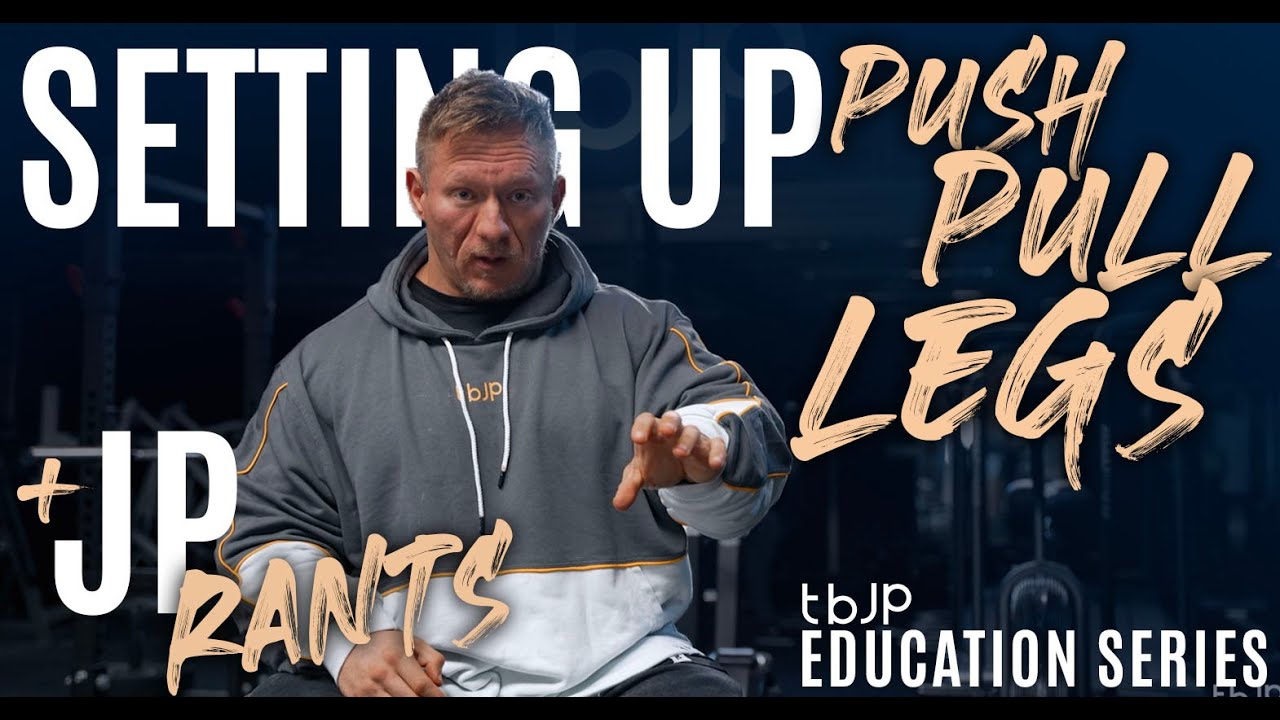
what is up guys welcome back to the education Series today we're going to cover how to specifically set up poll and then when I say that now I know that the subtitles is going to say Paul um they literally just twigged in my head straight away cuz it's pretty funny as I know a lot of you found that amusing in the last one I certainly did for those of you that are relying on the subtitles I do apologize but there isn't much I can do um at the moment I don't have the time to manually
input the subtitles so they're done on um an auto update and they like to to say that Paul is pul although I do think I pronounce them differently but apparently I don't so how are we setting up pul and specifically the kind of volume parameters specific to the push pull leg split and then equally how we would approach a resistance profile perspective now like I said in the previous video I like to set my push pull legs split up with push pull rest legs rest and I was going to wait till this video to really
get into another reason as to the specific kind of situation that I like to do that really means that those rest days either side of legs are kind of a must because I did get a couple of questions of what I think about two days on one day off and it's okay the same reason is like three on one off might be okay but the The increased frequency that 3on one off brings I think is brilliant but the over fatigue aspect is then frustrating the two on one off does then increase the frequency slightly but
then it brings an issue where you're constantly going to have sessions back to back that means you aren't specifically able to focus on a pull from the ground so that was my reasoning for always going back to push pull rest legs rest because I'm firstly someone that really enjoys pulling from the ground so the enjoyment Factor there for me plays a big influence in wanting to prioritize the pull now if I was a a big squatter it would be the same thing because I would definitely want to be going into that session neurally fresh focused
having had a day off the prior to that movement to then get as strong as I possibly could for me the deadlift earlier on in my bodybuilding up till about 2017 was a huge priority movement for me um knowing full well that it's never going to be a movement that is fantastic for muscle building because the effort that is needed to be put into the exercise and what it takes away from you in terms of your recovery doesn't actually bring about huge amounts of hypertrophy so we can quickly caveat into that because it's important because
I know that that topic again confuses a lot of people um the reason for that is because the deadlift is about mechanical advantages in the sense that you're not using any one body part specifically to lift the weight when you deadlift you're using a lot of knee drive a lot of hip extension simultaneously which then means that when you're simultaneously using those explosive muscles to get together no single one muscle is forced to recruit all of its fibers necessary to create hypertrophy because hypertrophy occurs through masses amounts of mechanical tension and that situation what's going
on there is that as we start to reach closer to muscular failure um and that rep speed slows down on heavy weights and you start to see things about to grind like you're grinding things now your body then is basically grabbing every single muscle fiber it can to do that work and that's called the principle of size where it will start off only doing the necessary amount of of like muscle fiber recruitment to do that work and as it gets to failure it will grab everything if you use really heavy weights you're going to start
getting into what of them de effective reps early on which means then that from the very first rep you might grab every single fiber in high rep sets it would only be the latter end of the set where you then start to do that you're only going to accumulate those effective reps in those last grinding reps in a deadlift because of the spread of what's being used there's no one specific muscle that really is grabbing all of its fibers together what actually tends to happen is that there'll be like a mechanical break down which then
causes a lift inefficiency that then people struggle to overcome that's largely what's happening so from a hypertropic perspective it's less than ideal but nonetheless very fun and something that I love doing which meant that for me I always wanted to make sure that there was a rest after that day going into legs because the deadlift the conventional deadlift is going to use some L Body and then it's also going to generate some fatigue that I needs to recover from to about to go into LS when you're training those sessions back to back it's simply not
ideal not necessarily just from like a a Neal recovery standpoint but to actually train muscles on consecutive days is not a good idea so deadlifting one day and then training your legs the next day is a pretty poor setup because your leg fatigue is going to be apparent coming into that leg session and then you're going to struggle to progress your lifts over a period of time so that's my explanation as to why I always settled on Push Pull rest legs rest and I didn't do a two-on one off version or a three on month
version now again that's not to say that these aren't things that you have to shy away from because what can be done in the three on one off is you can deadlift potentially in legs and you can stiff leg in legs but again I don't love the idea of training my back and then deadlifting the next day for me again that brought about some mechanical breakdown issues because there was a very strong efficient deadlifter like in 2017 I pulled 380 kilos um you need your up back fresh to be able to deadlift like that like
when you're a weaker deadlifter you can get away with getting five six plates off the floor with a fatigued upper back but once we're talking 8 n plates off the floor everything's going to be fresh so for me then that setup reflected a real desire to do lift that brought me a lot of happiness in 2017 I actually stopped investing my energy into the conventional deadlift and started to really harp on about then changing the mechanics of the lift to then more efficiently load the lower back and this is where I know for a fact
that no one was talking about this before I was I was the first one to start talking about how the deadlift is an inferior muscle building exercise compared to the stiff leg in the RDL um to 2017 no one was talking about that before then uh I started to hammer on about that endlessly because I I was feeling it and this is the thing I I I learned everything I did through feeling things out and it literally got to a point where I was like the deadlift is bringing me nothing but I still want to
carry on lifting from the floor and I still want to actually now specifically build muscle which means the stiff leg or the RDL is now my tool of how to do that so for those of you that are quite strong and your goal is then more specifically to build the thickness in your lower back focus on the stiff leg deadlift the C Deft is not really going to add much of a difference to your LP development although and the reason for that is because the L isn't um lengthening and fully shortening with that being said
if you're really really really strong at lifting off the floor you'll notice that everyone's back that does that looks a certain way way my back when it was at as biggest a certain way like it was a smaller version then of how kind of Ronnie's back looked well a much smaller version but the shape is the same James's back when he's just standing there is the same and then even like a smaller version of a natural lifter keii West who is awesome his back looks the same you you you you get more development in the
lower LP all the way up to the top just through pulling from the floor so although yes it isn't an exercise that you would think is a lap movement definitely not that's a stupid thing to say success leaves Clues and when all of us that are good pullers all have a back that looks a certain way Dusty as well I forgot about Dy uh same shape back that that famous photo uh photo shoot picture of him standing there holding that barwell from behind you can see that that back look um so yeah successfully is clued
which means then again when you hear those say that okay the lifting things from the floor isn't going to develop your back as a whole sh you don't you have a Nath back and you're weak so you haven't built the back that I did Dusty did that James did that keithy West did I'm going to leave Ronnie out that because mentioning Us in the same vein as Ronnie is just weird um so that's important success Lees Clues um and I I kind of circle back to the last video like when I was 12 years old
I was just watching what people were doing of me and thinking to myself okay they did that they look like that I'm going to do the same Ronnie was pulling nine plates off the floor I'm going to pull nine plates off the floor so if you want to build that level of musculature that's how you need to approach it um so I've now kind of outlined the necessity for the rest a either side of pole to allow for a lift from the floor I've explained how the conventional deadlift might not be the most ideal exercise
of hypertrophy and then you want to focus on the stiff leg and then I've kind of hammered home that I feel the stiff leg to be a lower back thickness movement with a little bit of extra back development love thrown in there and then reinforce said there if anyone tells you it isn't going to make your back as a hell big they don't know what the they're talking about but um the specifics of the pool session itself so for me I would want to come in and always do my pull from the floor first just
because that's what that day was about that day was about getting freaky strong off the floor on whatever movement I choose um and everything else falls into place after that when I tore my lap last year that had to change and I had to put a lap movement before it so from a safety perspective just consider how things feel once you start to get strong the spe specifically why I got hurt and actually I this has been a reoccurring thing I've got hurt when I've been pulling against band tension and the reason for that leg
pressing was the same and when I hurt my chest it was the same overcoming that accommodative resistance at a point in the lift where you're all of a sudden not used to being able to develop that much force can sometimes kind of basically shock things and because all of a sudden you hit a wall at a different range in in the lift than you're used to so when we when we talked about how it's hard to get muscles short so that Force necessity at the fully contracted position is quite apparent our bodies are used to
that with accommodative resistance that that that kind of slowing down of the rep speed happens earlier in the lift so it's whilst the muscle is still slightly lengthened that then you get that whoa factor of having to recruit more fibers each time that happened to me when I was at Peak strength I tore muscles really easy to explain why that happened because our body isn't used to recruiting that level of muscle fiber or that kind of changing bar speed demand whilst the muscle still lengthened it is when it shortened so then that for me was
why I got hurt in all of those situations to overcome that thereafter I did stick a lap move before my pull from the floor so feel that out as to what feels great for you now what I'm just going to do is I'm going to run through my favorite pull setup and then you guys can go away try it see how that feels and then kind of go from there pull from the floor first potentially the stiff leg deadlift standardize your form keep your hips High minimize knee Drive important Fed Up of seeing exercises that
are not the stiff leg deadlift that are basically just a deadlift where people keep tagging me in them please stop it I won't reshare it it's if you want me to resare your stiff leg deadlift do a stiff leg deadlift if your knee traveles it's not a stiff leg deadlift the point of the stiff leg is to keep your leg drive out of it so you're literally just bending over at the hip and you're standing up and as the weight gets heavier and as you get closer to failure your form doesn't change so the same
discussion that we had about log booking and actually making progression you cannot let your knees start to travel just to try to get more reps and more weight on the bar it's poor don't do it you will never ever see me ever have done that in the whole time was pulling with this stiff leg variation because it and I hold myself to standards when it comes to pulls from the floor so we we've done our pull first with that I would do one to two sets sometimes it would only be one because I know that
that's all I need because again like I mentioned in previous videos I was just exposing myself to a stimulus I've never done before and I know that that's a very demanding lift in terms of the fatigue it generates across the week for me so I just do one set of it on weeks where I F really good I might then do a back off one to two sets Max you do not need to do more than that on a lift like that if you do you're going to bury yourself when you're weaker in the lift
the fatigue isn't going to creep up with with you as much and the reason for that leg pressing was the same and when I hurt my chest it was the same overcoming that accommodative resistance at a point in the lift where you're all of a sudden not used to being able to develop that much force can sometimes kind of basically shock things and because all of a sudden you hit a wall at a different range in the lift than you're used to so when we when we talked about how it's hard to get muscles short
so that Force necessity at the fully contracted position is quite apparent our bodies are used to that with accommodative resistance that that that kind of slowing down of the rep speed happens earlier in the lift so it's whil the muscle is still slightly lengthened that then you get that wo factor of having to recruit more fibers each time that happened to me when I was at Peak strength I tore muscles really easy to explain why that happened because our body isn't used to recruiting that level of muscle fiber or that kind of changing bar speed
demand whilst the muscle still lengthened it is when it shortened so then that for me was why I got hurt in all of those situations to overcome that thereafter I did stick a lap move before my pull from the floor so feel that out as to what feels great for you now what I'm just going to do is I'm going to run through my favorite pull setup and then you guys can go away try it see how that feels and then going to go from there pull from the floor first potentially the stiff leg deadlift
standardize your form keep your hips High minimize knee Drive important Fed Up of seeing exercises that are not the stiff leg deadlift that are basically just a deadlift where people keep tagging me in them please stop it I won't reshare it it's if you want me to reshare your stiff dead lift do a stiff leg deadlift if your knee travels it's not a stiff leg deadlift the point of the stiff leg is to keep your leg drive out of it so you're literally just bending over at the hip and you're standing up and as the
weight gets heavier and as you get closer to failure your form doesn't change so the same discussion that we had about log booking and actually making progression you cannot let your knees start to travel just to try to get more reps and more weight on the bar it's poor don't do it you will never ever see me ever have done that in my whole time is pulling with the stiff leg variation because it's and I hold myself to standards when it comes to pulls from the floor so we we've done our pull first with that
I would do one to two sets sometimes it would only be one because I know that that's all I need because again like I mentioned in previous videos I was just exposing myself to a stimulus that I've never done before and I know that that's a very demanding lift in terms of the fatigue it generates across the week for me so I just do one set there on weeks where I felt really good I might then do a back off one to two sets Max you do not need to do more than that on a
lift like that if you do you're going to bury yourself when you're weaker in the lift the fatigue isn't going to creep up with with you as much but once you start stringing together lift progressions regardless of your strength status you'll feel it because that demand is still high demand for you so I really do advice only sticking to one to two sets on that after that I like to focus on a lap movement that emphasizes training things in the shortened position so my favorite movement was either the single armed pull down on the prime
machine that you guys may SE me do a lot or if I'm doing a dual armed version it would just be something where my arms are kind of like slightly in front of me just because then that's going to get a better contraction on the lap versus straight above cuz when you're straight above you have to arch your chest when you arch your chest it emphasizes scapular attraction so the goal of that L movement is to avoid scapular attraction because the lp doesn't attach to the scap okay it attaches to the top of the humorus
and to like basically like the lower spine so to fully contract the lap we're thinking about driving the humoris into the spine so it's a downward movement it's not a retraction this is super common knowledge there's a video on my old Channel in from 2017 called how to find your lats so if you want to go back 5 years and look at when I first started talking about that you can again look at that 2017 was a real Discovery year for me actually it was a year where I first started to really understand upper back
versus lack Recruitment and it was the first year where I started to kind of understand the Investments neurologically on exercises and understanding that the deadlift might not be superior and I think that was 2017 kind of came about because 2016 was again a discovery year where it was really deeply understanding training as a whole the relationship to frequency volume intensity so on once I kind of ticked off that herdle with things when I moved into 2017 I was interest just in this complete analytical process of trying to understand every component so then again there was
a lot of Discovery in 2017 and just whilst we're on the topic the other thing I stopped doing in 2017 is I stopped doing dumbbell lateral raises never did them again and the difference was was big in 2018 which is where I was probably my most muscular the development in my shoulders was hugely different from just focusing on machine and cable laterals uh so just Chuck that out there for the 2017 kind of Revelations that I came across with myself um so yeah how to find your lats the difference between LP and upper back training
now it's talked about endlessly um I don't really talk about it anymore because it's boring um everyone else is talking about it you can find that information anywhere um but I will say who needs Credit in that area but I first started to learn from On It is cassim Well whilst we're on the topic cim first introduced me to the idea of it in 2014 it went over my head in 2014 um I don't believe anyone was talking about that before cassim um I know Cass was taught by um pvis who was probably the very
first instigator of that discussion uh who I know is a very smart chat I think his first name is Tom I know his name is pis um and he had a phenomenal understanding of biomechanics so you can seecap some of his information I never learned directly from Tom um but I did and still do continue to learn from Cass Cass I think is absolutely fantastic he is a very very sharp mind um before him and before Tom definitely no one was talking about it uh but yeah 2014 it went over my head uh in 2014
I was still way too obsessed with just external stimulus to me there was there was no internal stimulus I had blinkers on to internal stimulus all I cared about was how much weight could I LIF really zero regard for standardization and anything other than taking a win from the session and progress in my log book but that was a very naive um and foolish JP that still made progress because it got very strong but didn't understand how to Target my weaknesses um so 2017 was certainly a more of a revelation year for me um once
I've done my lat movement which I always like to do first reason being the lat is very hard to get short once it fatigues so regardless of your strengths upper back versus lats and whilst I say that very very few people are going to have awesome lats and then a nap up a back that's rare that's really rare the only time I've seen that is with guys that have just bashed out tons and tons and tons and tons of chinups and that have never ever bent over holding a weight that is where I've seen that
situation and there are a couple of those guys about that's rare um so always focus on that lap movement first just because off if you if you train your upper back first you are going to get some crossover lap recruitment but without really being able to fully Target it which then means that when you then go to progress your lap movement second you're going to struggle to create lift progressions over a long period of time whereas when you focus on the lap we first it'll be able to progress and then when you focus on the
upper back movement second it will be able to progress so again I like to focus on a fully extended lap movement that then targets the lower lats after that I like an upper back movement that again biases the shorten position so for me it will either be a machine based that is harder in the contraction point or it'll be a seated cable run both of those depending on what cable machine you have depending on what machine you have generally they're going to be hardest in the shorten position just because most things are unless they have
unless they have an adjustable resistance profile now once I've done my two movements with my lap and my upper back that focus on uh the the the difficulty in the shorten position and then move on to another lap movement that then drops off in the shorten position just because it's now going to be really really hard to get my lat short so this is where super key to have an ex exercise that does able you to adjust the resistance profile now for a lot of you you might just have Hammer Strength machines and that's fine
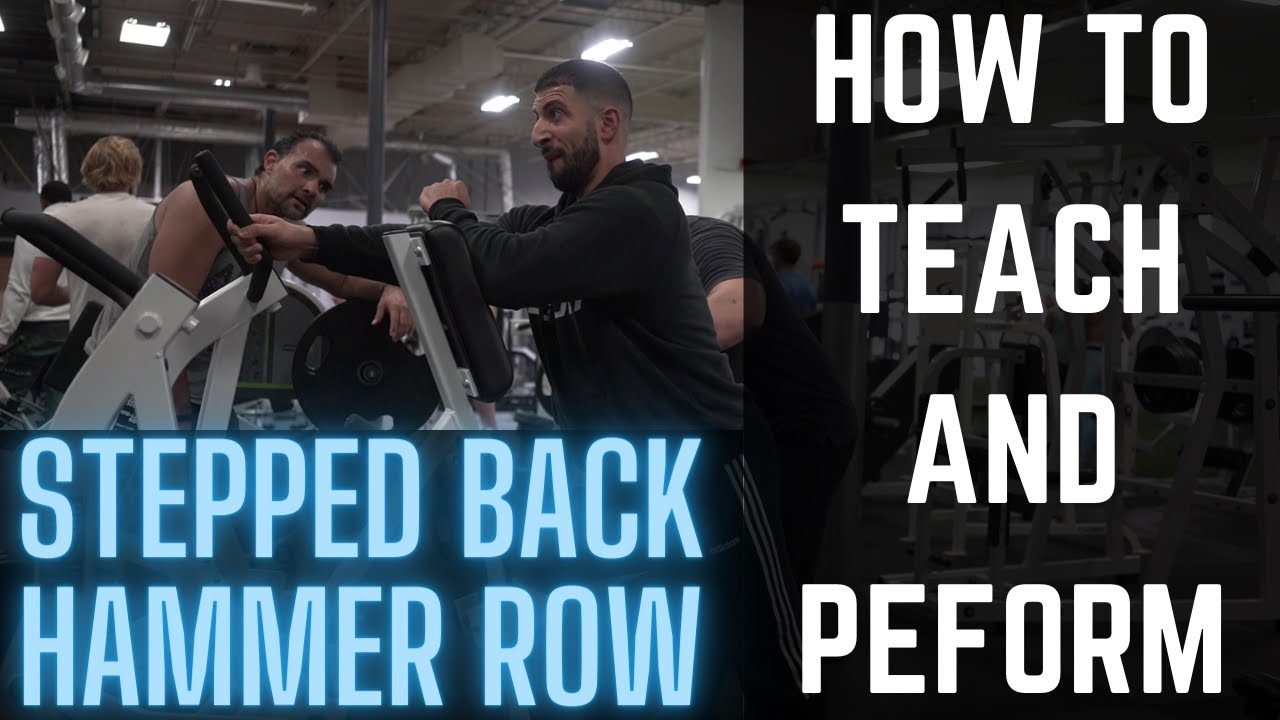
because the single armed row backed away on the Hammer Strength machine is absolutely fine and then we can just focus on driving that elbow down again you'll see tons of people doing this so what what all you need to do is step away from the machine and just be having your hand on the chest pad uh again you're better find some 2017 videos of me doing that on my old YouTube channel if you have the option of adjustable resistance profile machines through the prime then take a pick uh do do a single armed lap row
on the prime seated grow machine my favorite pieces for these are the gym shop pieces and you'll see there the pull down behind me and it's probably just out shot but I think got a seated row here those are phenomenal for dropping off in the shorten position uh the they were based on the original Nautilus machines the explode version and they're the same thing but most of you will have Hammer Strength pieces if you don't have a Hammer Strength piece I can't think of any other way off the top of my head to train the
lp in the length of the position because everything else is going to bias the short just because the lat is really hard to get short unless it actively drops off so yeah you're going to need to at the very least seek out somewhere that has a Hammer Strength machine but hopefully I see a lot more gyms now buying um it's and then quite a lot of the gyms have got the gym shop pieces in as well because they were very good now once we've done that lap movement we're then going to focus in on an
upper back movement that equally drops off in the shorten position so again you can use if you've got Prime I would love the seated row or the the prone machine Row the extreme row or the upper back pull down on the prim machine but the but the point is is that it's a pull first it's a lap movement first sorry a lap movement second but the first of the kind of lap versus up back exercises that we do focusing on the short upper back focusing on the short then lap focusing on the lengthened then upper
back focusing on the length so that's five movements each of those at two sets each if you have an area that's weaker in terms of your lap versus your upper back once you get to the second two movements the ones that train the lengthened add volume there that is my advice do not add volume to the initial lat and upper back movements and the reason for that is because as you start to progress your lifts you'll find it harder to progress the sets in the latter part of the session because you've created a lot more
fatigue at the beginning whereas you're always going to be able to progress those latter sets of the session if you run into a point where you then can't keep progressing them you then know that you're doing too much work as a whole and you drop them back out but you cannot progress everything all the time in terms of weaknesses so add volume to either your lat or your upper back based on your weakness and I would only just start by adding one set I think that's all you need but considering that the the the volume
of the session would be eight total sets of lat and upback work at its lowest we can then go to nine and then potentially you could add one to the upper back as well but you're going to need to play with that so we're going to we're working it between 8 to 10 direct sets for lats and upper back every 5 days after that I would then always add a shrug variation just because I always found that to get really crazy hip upper traps and lower traps you aren't just going to get those alone from
training the upper back scap and retraction variations some people believe you do I didn't I needed to specifically train the shrug if you have super developed traps just from your upper back movement you don't need to train the shrug if you have a t-shirt on and I can't see huge slabs of muscle coming out from the back of your t-shirt in my opinion you need to trade the shun and I take that analogy from Dante like Dante was huge on the shrug it massively influenced me to do the shrug and then I saw really great
development to my traps either before or after the shrug depending on the balance of your physique you would then also train rears here how you train the rear Del my preference is the rear run and again I learned of Cass PRI introducing the rear Del road to the bodybuilding world I don't believe anyone really knew that that exercise existed um if you were talking about that before casted in 2014 you're a super smart cookie and you way ahead of everyone but cim first introduced me to the idea of it in 20 2014 it went over
my head in 2014 um I don't believe anyone was talking about that before cassine um I know Cass was taught by um pvis who was probably the very first instigator of that discussion uh who I know is a very smart chat I think his first name was Tom I know his Sur name is pis um and he had a phenomenal understanding of biomechanics so you can seek out some of his information I never learned directly from Tom um but I did and still do continue to learn from Cass Cass I think is absolutely fantastic he
is a very very sharp mind um before him and before Tom definitely no one was talking about it uh but yeah 2014 it went over my head uh in 2014 I was still way too obsessed with just external stimulus to me there was there was no internal stimulus I had blinkers on to internal stimulus all I cared about was how much weight could I lift really zero regard for standardization and anything other than taking a win from the session and progressing my log book but that was a very naive um and foolish JP that still
made progress because it got very strong but didn't understand how to Target my weaknesses um so 2017 was certainly a more of a revelation year for me um once I've done my LP movement which I always like to do first reason being the lat is very hard to get short once it fatigues so regardless of your strengths upper back versus lats and whilst I say that very very few people are going to have awesome lats and then a Naf upper back that's rare that's really rare the only time I've seen that is with guys that
have just bashed out tons and tons and tons and tons of chinups and that have never ever bent over holding a weight that is where I've seen that situation and there are a couple of those guys about me that's rare um so always focus on that LP movement first just because off if you if you train your upper back first you are going to get some crossover lap recruitment but without really being able to fully Target it which then means that when you then go to progress your lap movement second you're going to struggle to
create lift progressions over a long period of time whereas when you focus on the lap movement first it will be able to progress and then when you focus on the upper back movement second it will be able to progress so again I like to focus on a fully extended lap movement that then targets the lower lats after that I like an upper back movement that again biases the shorten position so for me it will either be a machine based that is harder in the contraction point or it'll be a seated cable R both of those
depending on what cable machine you have depending on what machine you have generally they're going to be hardest in the shorten position just because most things are unless they have unless they have an adjustable resistance profile now once I've done my two movements for my lap and my upper back that focus on uh the the difficulty in the shorten position and then move on to another lap movement that then drops off in the shorten position just because it's now going to be really really hard to get my lat short so this is where super key
to have an exercise that does able you to adjust the resistance profile now for a lot of you you might just have Hammer Strength machines and that's fine because the single arms row backed away on the Hammer Strength machine is absolutely fine and then we can just focus on driving that elbow down again you'll see tons of people doing this so what what all you need to do is step away from the machine and just be having your hand on the chest pad again you're better find some 2017 videos of me doing that on my
old YouTube channel if you have the option of adjustable resistance profile machines through the prime then take the pick uh do do a single armed lap row on the Prime C grow machine my favorite pieces for these are the gym shop pieces and you'll see there's the pull down behind me and it's probably just out shot but I've think got a seated row here those are for phenomenal for dropping off in the shorten position uh the they were based on the original naus machines the explode version and they're the same thing but most of you
will have Hammer Strength pieces if you don't have a Hammer Strength piece I can't think of any other way off the top of my head to train the lat in the length of the position because everything else is going to bias the sh just because the lat is really hard to get short unless it actively drops off so yeah you're going to need to at the very least seek out somewhere that has a Hammer Strength machine but hopefully I see a lot more gyms now buying Prime um it's and then quite a lot of the
gyms have got the gym shot pieces in as well because they were very good now once we've done that lap movement we're then going to focus in on an upper back movement that equally drops off in the shorten position so again you can use if you've got Prime like I would love the seated row or the the pro machine Row the extreme row or the upper back pull down on the prime machine but the but the point is is that it's a pull first it's a lap movement first sorry a lap movement second but the
first of the kind of lap versus back exercises that we do focusing on the short upper back focusing on the short then lap focusing on the lengthened then upper back focusing on the lengthened so that's five movements each of those at two sets each if you have an area that's weaker in terms of your lap versus your upper back once you get to the second two movements the ones that train the lengthened add volume there that is my advice do not add volume to the initial lap and upper back movements and the reason for that
is because as you start to progress your lifts you'll find it harder to progress the sets in the latter part of the session because you've created a lot more fatigue in the beginning whereas you're always going to be able to progress those latter sets of the session if you run into a point where you then can't keep progressing them you then know that you're doing too much work as a whole and you drop them back out but you cannot progress everything all the time in terms of weaknesses so add volume to either your lat or
your upper back based on your weakness and I would only just start by adding one set I think that's all you need but Cons considering that the the the volume of the session would be eight total sets of lat and up back work at its lowest we can then go to nine and then potentially you could add one to the upper back as well but you're going to need to play with that so we're going to we're working it between 8 to 10 direct sets for lats and upper back every 5 days after that I
would then always add a shrug variation just because I always found that to get really crazy thick upper traps and lower traps you aren't just going to get those alone from training the upper back scap of retraction variations some people believe you do I didn't I needed to specifically train the shrug if you have super developed traps just from your upperback movements you don't need to train the shrug if you have a t-shirt on and I can't see huge slabs of muscle coming out from the back of your t-shirt in my opinion you need to
trade the shrug and I take that analogy from Dante like Dante was huge on the shrug it massively influenced me to do the shrug and then I saw really great development to my traps either before or after the shrug depending on the balance of your physique you would then also train the rears here how you train the rear Del my preference is the rear del row and again I learned that of cassim prior to cassim introducing the rear del row to the bodybuilding world I don't believe anyone really knew that that exercise existed um if
you were talking about that before casted in 2014 you're a super smart cookie and you're way ahead of everyone but he was the first person that I know to talk of that and that's who I learned that movement from and it I once I started to do the rear delt row instead of focusing on kind of just reverse PC deck type movements either on the cable the reverse P themselves my rear Del development jumped hugely now one of the biggest misconceptions of the rear del row is that you will have your hands out all the
way to the sides like this and that's not the case this situation here actually encourages more up back so when we think about the positioning of our elbows when we're doing rows this will Target the upper back more so this kind of in between we'll focus the rear delt more so and then really tucked we'll focus and uh dropping down to the more towards the hip we focus on the lap for in my opinion if you want to learn the mechanical differences I would go and check out cass's content it's much better that than me
because that's his obsession and he's brilliant about it and that's who I learned from like that that he's still putting out content now that is incredibly novel because he's um a very unique thinker in my opinion he's the best in the world when it comes to that so I'm I'm not going to go into YouTube content on that stuff where it comes to kind of specifically targeting different aspects of the tricep and targeting different aspects of the glue because it's not an area that I've been obsessed about or Focus my learning on um it's simply
an area that I have picked up from Cass for example um so I'm not going to be one of these guys then is going to do that content video on that and then just put my name to it like every other out there does because that's ridiculous my area was working out how to train how to get as strong as possible and as big as possible as a whole understanding volume frequency intensity those were my areas I was obsessed with and that's why I'm able to sit here now press play on a video it have
no edits whatsoever and just talk for however long this is going to be without content prepared because I adore this topic I couldn't do that on the areas that Cass can do I would need to like fully like look things up in advance and make sure that I was like okay what was I trying to say whereas again he can nail all that stuff so go check out cass's um great great so the red up R so we're we're replacing the red out either before or after the shrug depending on our development but I would
still always focus on the lat then the upper back the lat then the upper back then the shrug or the r now at the very end of this poll session I might stick a couple of additional sets of biceps just because they have pretty big fatigue resistance and that I found that I could train my biceps at high frequency so I can train them at the end of pole for two sets and within two sleeps I can then train them again at the start of legs and that for me worked phenomenally well phenomenally well um
and again since as we're mentioning where things have come from Dante was the one that introduced me to training biceps at the start of legs Dante was also actually quite keen on biceps at the start of pull when the pull volume was very low and also your strength was kind of more at the beginner to intermediate phase so on his um some of his variations of his programs he did favor that as he found the bicep work didn't take away from the back work I don't love that approach I used it for a period and
it worked for me in kind of like my infancy with my training as an more of an advanced training on my push pull leg setup I didn't use that approach I would put biceps at the very end and the other reason for that was I was happy to train them fatigued because I knew then that in two sleeps of time they'd actually didn't get trained fresh at the start of legs so that was always my preference of that setup and again it would just be a couple sets there because I know they've only got two
sleeps until I can expose them to more volume at the start of legs but I'll go into that session one together um so yeah that's where we're at guys so we're at 8 to 10 sets of direct back work one to two sets of pulls from the floor one to two sets of shrugs one to two sets of rear DS there is the potential to add more volume to the rear delt if you have ma machines that have adjustable resistance profile and you kind of have underdeveloped delts you can then do a third set and
you did then just solely train the r out in the length and range for that third set if not i' 62 set because that additional work you're going to do is going to end up being junk volume because you're not going to be a to fully take the sets to failure unless you did a r out row where you then have someone assist you to get things fully short kind of like how I talked about in the push video the the actual training session in push video um so yeah that's that guys I hope that's
helpful for you any questions that I didn't cover please ask um I know that what I'm going to get in the comment section is shall I use this machine or that machine if I don't don't have it it's it's just impossible for me to answer guys like you're going need to seek out the necessary pieces of Kit if you want to make crazy progress if you are still in kind of beginner phases then you don't need to worry about resistance profiles which then means really you don't need to be on the push B leg split
if you're on this split it's because your development necessitates it and at that level I would then be wanting to seek out machines that allow me to do the job as optimally as I can I know that's not entirely realistic for everyone because you have jobs you have limitations and that's fine so in that situation just do the best you can then basically just train hard train hard in the order of movements that I said one helpful thing is that if you have Hammer Strength pieces use them first use those as your pieces that are
your lat shortening and your upper back shortening because the hammer strring pieces all of them are really hard to get short so use those first and then then after that if you have if you're going to trade the lat you can at least step off if you don't have that machine after training the hammer strring pieces first a cable machine will have a more even resistance profile than a hammering machine I'm pretty sure I've covered everything there