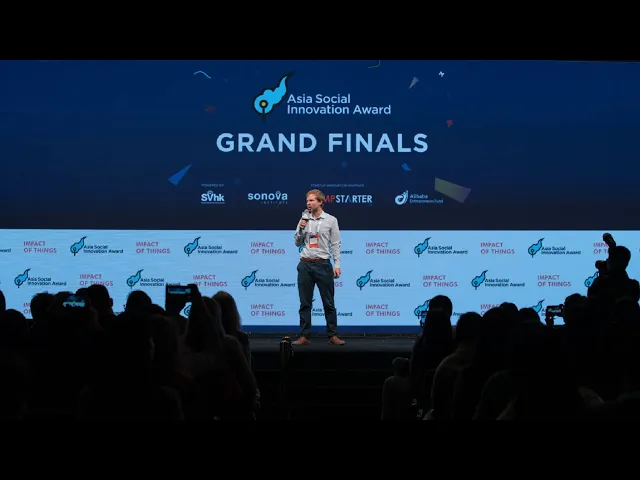
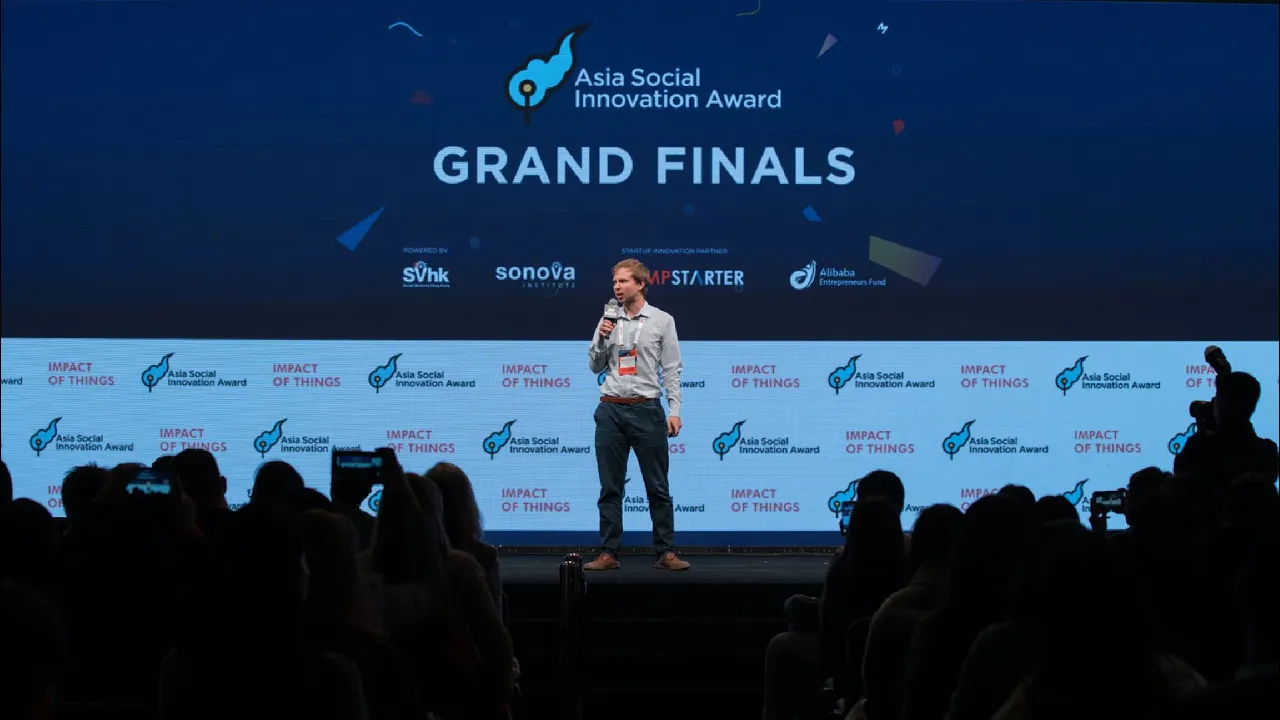
Good afternoon everyone, my name is paddy and I'm from Smart Air. I'm here today to tell you about the simple, no-nonsense clean air that we provide. To do that, I'm going to take you through a story of how we got started.
It was back in Beijing in 2013, when the apocalypse struck, and our founder Tom was living there at that point and he was faced with two very real problems. First of all, the air pollution that he was breathing was killing him. Now, ninety percent of the world is breathing polluted air.
It causes over four million deaths per year, of which most of those are in Asia. Now I just checked and today Beijing, sorry Hong Kong's air pollution levels are five times worse than Beijing! So even Hong Kong has an air pollution problem.
We're all breathing polluted air! Tom thought he would solve this problem by buying himself a purifier. He jumped online and found out that he would need to spend over 4000 USD just to get clean air in his home.
This was when he would face his second problem. He decided to build his own, so he bought himself a fan, a filter and he made his very first simple, low-cost and effective purifier. Now I say effective, but how can we be so sure that this actually works?
We've run over 10 000 hours of tests comparing these simple purifiers to some of the big brands out there. This is a price effectiveness graph showing the effectiveness of the purifiers. In blue, showing that all of the purifiers perform about the same.
In red, we have the price and what we can see really clearly, is that clean air does not need to cost a lot of money. That's what Smart Air was set up to say and since then we have been spreading this mission about clean air. We do this in two ways.
We provide education on air pollution and we provide clean air in an effective and affordable way. Our education programs include offline workshops where we teach people about air pollution, and raise awareness of the problem. We've run these in over 10 countries across Asia for over 5000 people.
We also have an online content platform where we use open data to tell people and explain about air pollution. The clean air we provide is now expanded to a whole range of purifiers, which we've shipped to over 20 000 people across here, across Asia showing we are scalable. Last year these purifiers brought in revenue of over 700 000 USD.
So what makes us different? Well, we are a true social enterprise. We are driven by a social mission, which is to create a transparent and open market.
We are also a registered B Corp, one of only 10 in China. Our business model is very simple, we actually started with a workshop. We wanted to educate people about this problem.
We found that this led to raising awareness and people needed a solution, which they could afford. We then sold purifiers and now, we've closed this loop by using the revenues from our purifiers to grow our education platform. Our users are over 2 million, 18 to 35 year old based in china, who are open to this idea of simple, effective clean air.
Last year we had a market share of over 0. 4 per cent. On the B2B front, we are targeting 200 000 small to medium-sized enterprises in the Hubei, the north and east part of China.
We are aiming for over 500 sales of our larger units in those markets, so here's just some examples of who's breathing cleaner today. We've shipped our purifiers to the BBC in Beijing and Hong Kong, Zomato in India, as well as one very happy clean air breather in Mongolia. He's uh he's very happy in the middle.
Our team comes from a diverse range of backgrounds. We're scattered across the globe in our offices now in India, Mongolia and the Philippines, showing that we are truly scalable and bringing this solution to the world. So thank you everyone that's the story of how Smart Air is solving the health problem of air pollution, and how we can help solve this problem today!
Thank you Smart Air! Judges, you're now up for your two minutes Q&A. Thanks for the presentation!
How can you convince the public that the purifier from Smart Air is as effective as those brand label because they look more sophisticated from the outlook. So how do you convince me to believe that it works as well as that machine? The question is how can we convince people that their fancy marketing and high price tag isn't needed, and what we do is we use open data and testing to show this.
So we provide our website has over 10 000 hours of data showing this in replicable tests, that these purifiers don't need to cost that much. They're as simple as a fan and a filter and they work just as well, so we use data and an open platform to show this. If it is that simple, there would be copycats in terms of products.
How do you sort of like be a first mover as well as in terms of preempting and dominating the market and not let other cheaper versions of copycats to take your market share? For sure I mean we're talking about china, we're talking about TaoBao. There's already many copycats.
What we have that they don't have is the data and the effectiveness of these. Other organizations don't know how to present and show that this is the case. So we have the recognition, the trust from people that we are actually bringing a viable solution.
For example, XiaoMi brought out a low cost purifier. We've tested that purifier to show that their marketing hype actually is marketing hype. It doesn't work as well as they say it does.
We publish that information and that's our most viewed article on the website today! Thank you judges! Thank you Smart Air!
Thank you everyone! Hope you all breathe safe here in Hong Kong!