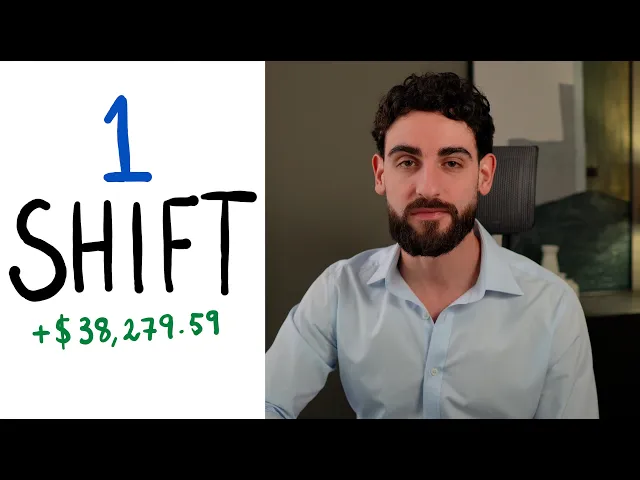
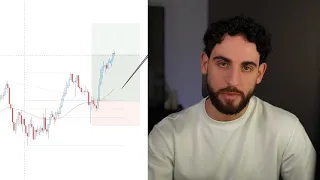
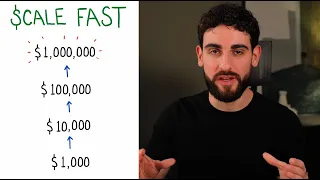
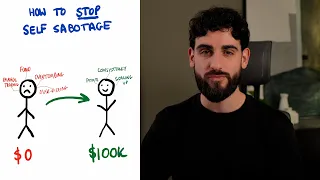
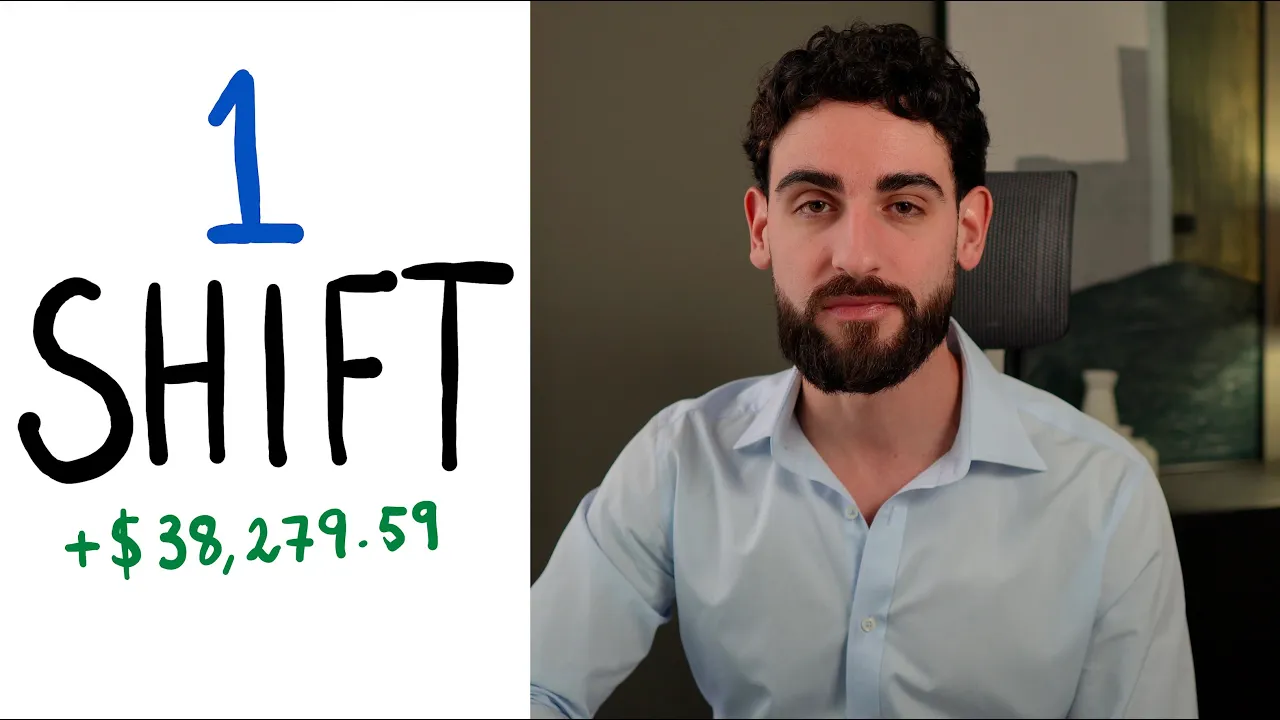
With one mindset shift, I helped this trader make $38,000 in payouts in 17 days. And this trader $22,000 worth of payouts in less than a month. And this same mindset shift also helped these two traders scale up to nearly seven figures in capital.
And by the end of this video, you're going to know exactly what that mindset shift is, and you're also going to know exactly how to implement it into your trading to get the same results. A couple years into my trading journey, I had a profitable strategy. Yet, when I picked up more funding, I blew everything because my mindset wasn't in the right place.
At that point, I realized that trading is more than just having a profitable strategy. So, I studied the human brain, trying to find a mental model that would help me become a profitable trader. And over the last few years, I've taken everything I've learned and helped turn consistent losers into consistently profitable traders.
I've consulted for some of the top prop firms and trading education companies. And I've helped thousands of traders in 92 plus countries around the world reprogram their trading psychology, eliminate self-sabotage, scale with funding, get payouts, and even leave their 9 toive job so they can trade full-time. And today, I'm going to share a major part of my trading psychology work.
Now, if you have any particular challenges you're facing your trading right now, comment them below. I'll offer you some help. So traders usually come to me because they're experiencing painful losses or regret or missing positions and having this deep regret when they're trading.
They have a lot of fear and hesitation. They overtrade or they undertrade. They don't stick to their trading plan when the market presents the opportunity.
They have enormous amount of FOMO and that drives them to take trades that aren't part of their plan. Or when they take losses, they spiral and they revenge trade. They blow funds accounts.
It's almost like something switches in their mind and they lose control of themselves. And I help these traders go from these problems to effortless trading, consistent payouts, just like I showed you with those few traders before. And today, I'm going to show you one mindset shift you can make to go from here to here.
I've worked with many profitable traders over the years. And the first profitable trader I worked with, I had a little bit of a shocking experience. The first thing they said to me was that they still take losses.
They still have negative weeks and negative months. And to me that was quite eye opening because I thought that to be a profitable trader you need to be winning every week, every month, even every trade. So this trader really redefined what profitable trading meant to me.
It's not about being right on every individual trade. It's not about having a winning day every single day. It's not even about having a winning week or a winning month every week and month, but rather it's about embracing a sample space and letting your edge play out.
So, a profitable trader week is going to look something like this. They're going to have losing days. They're going to have winning days.
They're going to have losing days, week winning days, sometimes even break even days. But what they try and do is they try and stack the odds in their favor where their winning days are bigger than their losses and their losing days. And what they're trying to do is they're trying to cut losses quickly and let their winners run.
So too, sometimes they're going to have winning months, sometimes losing months, sometimes winning months, sometimes exceptionally good winning months. And usually these winning months take up and make their yearly average, and sometimes losing months. So when you look at a profitable trader sample space, they're going to win, they're going to lose, they're going to win, they're going to lose.
It's part of the game. It's part of the edge as a trader. The truth is, every profitable trading system has a strike rate.
Meaning that if you take 10 trades, you're probably going to be right on maybe four, five, six of those trades. What you're trying to do is manage your risk so that your winners are bigger than your losses. And that way, at the end of those 10 trades, even though you didn't win all of them, you end up profitable.
Now, all these examples here, the sample space here, the weekly results, the monthly results, they're all assuming flawless execution of your trading plan. But here's the big issue. What happens is traders even subconsciously without them even realizing have an expectation that they have to win every trade.
They want to win every trade. They desire winning every trade. So the moment they take a loss, something switches in their mind and they have a spiraling experience.
They revenge trade and they are now so filled with fear and rage that they overtrade. They take trades that aren't part of their plan or when the market presents an opportunity, they don't trade out of fear of experiencing that loss again and they spiral out of control and they deviate from their plan. So, they can't end up being profitable because they don't let these trades play out.
The rest of them, they interrupt their sample space here, deviate from their plan, and they spiral, take loss, loss, loss, loss, loss. They blow their accounts. They go on tilt.
They become highly emotional. And so too, they end up having one negative trading day and they think it's the end of the world and they throw in the towel. They try and change something.
So this is the big problem we have to learn to overcome if we want consistent profitability, if we want to get payouts and scale with funding just like those traders I showed you at the start of this video. And this is exactly how you overcome this challenge so that you can have consistent profitability and consistent payouts. Now suffering in trading is not getting what we desire.
and the pain and the suffering that ends up interrupting our edge when we take an inevitable loss and deviates us from our trading plan. That's what we need to learn to overcome. So, how do we overcome that suffering?
How do we overcome that painful loss that usually takes us away from our trading plan? As a trader, what we have in our mind typically is this desire and attachment to the win. And it's not only the dollar amount, it's not only the percentage, but it's everything we associate to that win.
traders, what they do is they build up this story in their mind that if I take this win, I'm going to make this amount of money, this amount of percentage. It's going to bring me all this benefit in my life. It's going to help me pay rent.
It's going to help me get payouts. It's going to help me get status in my community among my friends. It's maybe going to help me get a new funded account.
And we create these greeds and these fantasies in our mind. And then what happens is we become attached to those certain outcomes and to those desires on every individual trade. And whether we're consciously aware of it or not, we have these expectations at the back of our mind and we're expecting it.
So when the inevitable loss comes around, because we're so attached to this positive experience, the moment we get the inevitable loss, we experience the pain and the suffering. And that's what the pain and suffering is. It's the unmet expectations.
It's the unmet desires. It's the unmet attachments. It's not getting what we desire.
So as a trader, if we want to be able to let our sample space play out and we want to let our edge play out on each individual trade so that we can approximate our edge and we can end up profitable at the end of the large sample space, what we have to do is we have to learn to transcend outcomebased thinking to processbased thinking. The truth is winning an individual trade is what I call a false form of winning because you can take an individual trade, you can be profitable in that individual trade. That's not what profitable trading is.
Profitable trading is about consistently pulling money out of the market over maybe every 3 months or every year you're consistently extracting money from the market. And just having one big winning trade is is not the true form of winning. The true form of winning is sticking to your trading plan and your process over a large sample space letting your edge play out and every 3 months to a year extracting profits from the market.
Yet traders get caught up and they become so attached and desired to the individual outcome, the short-term thinking, and they become attached to this false form of winning that it actually stunts their growth to having true winning because what happens is they perceive themselves taking a big win and they're very happy by that. They go on the boom cycle and then when the inevitable losses come around, they think something's wrong. They spiral out of control like I was explaining before.
So as a trader, if you want to have true winning and consistent payouts and consistent profitability over the long run, you have to learn to remove the attachment and the desire to the winning on each individual trade, the false winning. And you have to learn to focus on process-based thinking. That's the only way out of this cycle of boom and bust.
extreme pleasure when you're winning, elation, and then depression when you take the inevitable loss, which keeps you in the form and the cycle of boom and bust. It keeps you in a a cycle of chasing your own tail. So, how is it you actually implement this?
The way you implement and transition out of outcomebased thinking to process-based thinking is by firstly becoming aware of what you're attached to and desiring on that individual trade. It's about becoming aware of that and identifying that in the moment and then grounding those attachments and expectations. Becoming aware of what you're desiring and seeking from that individual trade and then reminding yourself a simple truth that the market on the individual outcome is unpredictable.
There are millions if not billions of factors influencing price at any point in time. No individual knows what all those factors are and no individual certainly knows how each of those factors is going to impact the price at that point of time. So you want to remind yourself and humble yourself and in that moment uh bring to your awareness that you have no idea what's going to happen on this individual trade and then also remind yourself that you don't need to.
What's important is sticking to your processes and trading plan over the large sample space. And you want to visualize both the win and the loss on that individual trade and you being undeterred by both you not being impacted or or emotionally affected by either win or a loss because you know you made the right decision and sticking to your trading plan on that individual trade. And if you do that a h 100 times if not a thousand times you know you'll be a true winner, a consistently profitable trader.
And I have my free bulletproof your mindset tool which helps you implement this process. It helps you implement this one mental shift that will take you from emotional trader to consistent payouts. So, if you don't already have that tool, make sure you download it, put it up next to your computer when you're trading, and fill in that tool before every single trade.
Follow the step-by-step walk through, and it will guide you in the proper mental model to help you have consistent payouts as a trader. Now, if you found this video useful, make sure you like and subscribe. This tells YouTube it's valuable content and pushes it out to a wider audience.