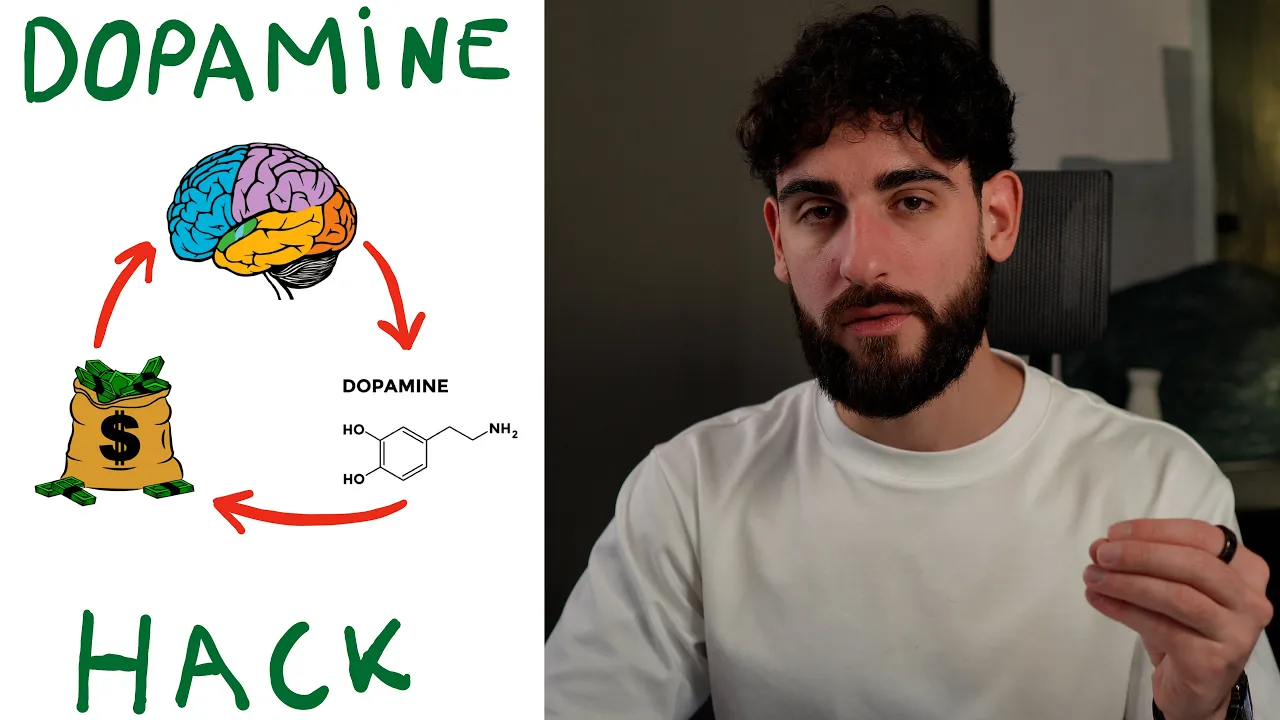
I've worked one-on-one with hundreds of Traders and nearly every unprofitable one had the same hidden problem their dopamine system was wired against them every time you doom scroll binge YouTube snack mindlessly you're draining your dopamine reserves the same reserves that could be used to help you become a profitable Trader in this video I'm going to show you exactly how to rewire your dopamine system so you can trade with certainty for long-term success and consistent payouts and don't worry this isn't another YouTube video telling you to have a cold shower or an ice bath I'm going
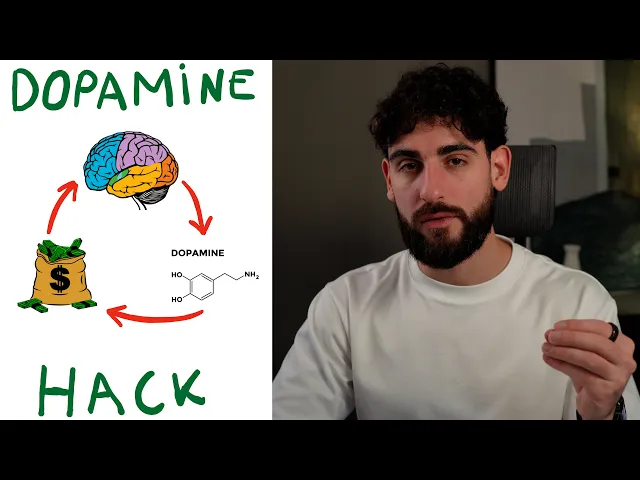
to be showing you real research and ideas that you've probably never seen anywhere else before to guarantee change to your dopamine reward system I'm going to be showing you exactly what I show my one-on-one clients to fix their brain and consequently fix their trading now I want you to comment below your biggest trading psychology challenge right now I'll offer you some guidance now dopamine is your brains Feelgood button it's one of these little neurotransmitters one of these little guys here that is present between two neurons this is one neuron this is another neuron and the
brain has these neurotransmitters to communicate certain signals and information to your to your brain to your body and dopamine in particular is triggered when you do something rewarding and what it does is it makes you want to do that particular thing again so so if you did a certain action that in your perception was rewarding or it supported your values and priorities at that time then your brain is going to uh Rel release this neurotransmitter dopamine to make you feel good to make you want to do that action again and to make you feel motivated
towards doing that action there's a very famous experiment done by a psychologist called BF Skinner um this was done many decades ago but Skinner's experiment what he did and this is by the way called operant conditioning in Psychology and what he did was he put a mouse in a box and this box had a lever that would reward it with food and this box although you can't see it in this diagram also had a grid floor that had electrical shocks and what he did was the lever here would reward the mouse with food and Skinner
wanted the mouse to use the lever he wanted to train the mouse to do that particular action of putting pushing the lever down so the first thing he did was he introduced a reward for doing that particular Behavior so whenever the mouse would come up and push the lever down the mouse was rewarded with something with something pleasurable that mouse was and he only put hungry mice in that box so as soon as that mice leared that there was a connection between pushing that lever and being rewarded with food they would continue to do that
particular Behavior because they knew they were going to get something pleasurable at the end of that behavior so Skinner came to the conclusion that rewards introduced increase of behavior he wanted the mouse to push the lever so he incentivized the mouse to push the level with food as the reward now on the flip side of this there was also another part of the experiment the floor had electrical wires through it what would happen is just before these electrical wires were going to put an electrical current that was painful to the to the mouse this red
button would pop up so there'd be a red button that shows and there would be an electrical voltage through the floor here and the electrical current would only stop if that level was pressed down so again BF Skinner showed that if you want to uh have a certain Behavior done you can reward that certain Behavior but on the flip side of that you can also punish the mouse if they don't do the behavior so the moment the mouse leared that pushing the lever down stopped the electrical current then what they did was they were incentivized
to push the lever down to remove the pain that they were experiencing from the electrical current so Skinner came to the conclusion that punishment introduced decreased the behavior of not touching the lever so it increased the behavior of pushing the lever down so Skinner could so Skinner could increase a certain Behavior through either pleasure of rewarding that or pain of not doing that now on top of this the mouse also leared to associate that whenever this red button was going to show the voltage was going to come through and this was proven through a different
um experiment of Pavlov's dogs that you may you guys may be familiar with but the mouse came to realize and came to learn there was an association between the red uh light flashing up and the electrical voltage about to come through the floor so the mouse was actually conditioned and trained into the moment they saw the red light they went and pushed the lever down before the electrical voltage even came through the floor so this experiment proved that human behavior can be altered through rewards and punishments and it's no different with human beings you will
see that throughout your life that when certain behaviors you were rewarded for that made you feel good you had a dopamine and oxytocin release you were more inclined to do those certain behaviors again and so too if you did a in if you did a behavior that had consequences to it and you had a drop of dopamine and oxytocin in your mind as a as a result you're less likely to do those behaviors and just a really quick example of this is a speeding find for example if you want people to follow the speed limit
the way you do that is introducing a punishment if they go above that so people now have pain associated with speeding so they stick to the speed limit for example so you may be thinking how does this apply to my trading how can I use this idea to make more money as a Trader and it applies in two different ways there actually a negative repercussion of Skinner's experiment in theory and there's a very positive repercussion of this as well I'm going to show you how to avoid the Trap I'm going to show you how to
use this to your advantage now in your trading there are things you have control over there are also things you don't have control over you have full control over the process you have control over your perceptions decisions and actions you have control over the way you view the markets you have control over making a decision to read your trading plan every trading day forecast and plan and then you have control over the actions of which trades you take either according to your plan or not according to your plan so you have full control over the
process what you don't have control over is you don't have control over the outcome whether that trade is a win or whether that trade is a loss that individual trades a win or a loss is out of your hands or millions of factors influencing price at any point of time so it's completely out of our control the act with that individual trade so what's very important is that you focus on what you have full control over and not worry too much about what's out of your control and instead of trying to control the outcome of
each individual trade rather it's wiser and this is what the top 1% of Traders do to focus on sticking to your process and your plan and letting the outcome approximate your Edge over 100 if not a th000 trades because if you tie your emotional state to the outcome of each trade you're going to be run by the market when you take a win you're going to be very happy when you take a loss you can to be very sad when you take a win very happy loss sad win good loss bad and what's going to
happen is you're now run by something you don't have control over and you go through the boom and bus cycle how you feel and how you trade is now dependent on what the market provides to you as opposed to you standing above that and just sticking to your plan consistently and if you do that every single day you can say right I stuck to my trading plan it's been a good trading day irrespective of the outcome I know over a large sample space I'm going to end up profitable that's when trading is run by you
and that's how you have consistent profitability this is Boom bust this is consistent profitability now the big trap that Traders make is that they continue to do a behavior because they win a trade and if you think back to Skinner's operate conditioning what's happening is that Trader wants to do a certain Behavior again because they won on a previous trade and they want to recapture that dopamine they want to recapture that pleasure of that particular win but the issue with trading is that just because you had a win on a very similar looking setup in
the past and just because you did a certain action in the past doesn't guarantee it's going to happen again in the future so it's really important that you detach from the outcome and just because the outcome of one trade was profitable it doesn't mean that that behavior you implemented is going to be profitable over a large sample space and if you're interested in consistent payouts and long-term success like I know every single one of you watching this channel is then you want to make sure that you're not falling into this trap of continuing a behavior
just because it was a one win in the past and is a pleasurable win now if you're not interested in consistent payouts you're not interested in long-term success this is definitely not the channel for you and it's also important not to stop a certain Behavior just because a previous trade was a loss and think about that how often do you think about changing your trading plan how often do you think about how often do you think about going back to the drawing board just because of a single loss so it's very very important that you're
aware of this idea of Operate conditioning firstly because it's a trap if you buy into the outcome of the individual win and loss and you you think you should change your behavior just because of one win or just because of one loss don't fall into this trap otherwise you'll be constantly stuck in what is called resulting and thinking a decision is good or bad based on the outcome of the individual trade as opposed to sticking to a trading plan that has a proven Edge and letting the result approximate your Edge over a larger sample space
now the key to consistent payouts and using this idea of Operate conditioning to your advantage is to train your yourself into adherence of the process by reward and Punishment and in particular by reward I'm going to show you how to do that so instead of being influenced by the outcome of the individual trade which is random on the individual sample space you want to train adherence to your process which you have full control over you have full control over the process you do not have any control over the AC of the individual trade so the
few things you want to do and you want to train yourself into doing through operate condition in is firstly finding a profitable Edge and that's that should be the first objective as a Trader you want to make sure you have a profitable Edge whether that means learning multiple different strategies learning from multiple different um Educators and figuring out what actually works for you for your risk tolerance for your life style and then testing it not taking anybody's word for it but testing it and ensuring it's profitable knowing the entries knowing the exits knowing your risk
management knowing all that is profitable whether you have a you know a strike rate of 50% and a a risk reward of of uh 1 to2 great you're profitable or whether you have a strike rate of 60% with a risk reward of 1:1 great you're profitable most Traders don't even get to that point and then that's step number one you should not move on unless you have that and if you haven't found that yet then you want to make sure that each of your daily action steps are dedicated towards that whether that's researching and learning
and and studying content and back testing and then with those action steps you want to set a you know get a booklet and write those action steps down and if you TI those off every day you then want to reward yourself you want to tie in operant conditioning here whatever is important to you whatever you value and you prioritize you want to reward yourself with that so you can reward yourself to follow through with the proven process this is how you start to reprogram your dopamine and how you start to go from outcome Focus to
process Focus I see far too many traders that are in this trap of thinking that I need to re reward myself for a profitable win on the individual trade no no no you need to reward yourself for doing the proper processes that lead to profitability over a larger sample space and then once you finally have that you then want to go into taking that edge and disseminating it into a mechanical trading plan know your entries like the back of your hand know your exits like the back of your hand know your risk management have that
all organized I have a free template in my free bulletproof you trading mindset 2.0 course so if you need my trading plan template that I give to my six figure Traders that's in the first link in the description and then again you want to your action steps now need to be structured around this right maybe you need to do more back testing and then you need to go and fill in the template fill in the tra trading plan and then test that make sure it's rock solid and then if you follow through with those action
steps daily you want to reward yourself for doing that again you're training this operant conditioning of good I'm doing the proven process I'm getting rewarded for that you start to learn to associate dopamine to doing the proven processes then number three you have to start focusing on your mindset now to ensure that now that you have a proven Edge in a mechanical trading plan you're not letting fear impact your trading decisions and stop you from taking trades or getting into trades too early out of this fear of missing out so this is why I have
my bulletproof your trading mindset 2.0 um tool which helps you become aware of your greedspeed to a certain outcome certain desire there's no longer foro there's no longer fear of loss there's no longer fear of missing out but now you just stick to your trading plan and again you want to make sure you're doing that before every trade and rewarding yourself when you follow through with that and then number four every single day you want to come to the market you want to plan you want to read your trading plan you want to plan you
want to forecast the opportunities in the market plan your potential setups for the day and then execute with the bulletproof your mindset tool free of expectations and that's the process after you have a profitable trading plan after you have a mechanical put that into a mechanical trading plan then you want to focus on planning focusing on your mindset make sure you you got your free of expectations using this tool here and then execute and then what you're going to do every single day is you want to make sure that if you follow through with this
proven process of sticking to your trading plan you reward yourself irrespective of the outcome whether it's a win or a loss you stuck to your trading plan and that's what matters most now it's also really important at the end of the week you want to make sure all right did I stick to my trading plan at least more than 80% of course there's going to be some human error here and there but if you can do more than 80% you want to reward yourself it's a really great ballpark sticking to your process is more than
80% now if you're not you want to ask yourself why not why do I feel the need to deviate from my plan am I not certain in my plan do I have a fantasy of making more can I ground that fantasy you want to do some self-review and analyze why am I not sticking to something that works and you want toid identify the root cause of that and then resolve that so that you can get back to sticking to your processes and continue to reward yourself for that now at the end of 3 to 6
months if you're consistently executing on your process and you're still not getting results you want to make sure you go back to step one and ensure you truly have an edge but give yourself at least 3 to six months don't change things too soon give enough of a sample space to let your Edge play out and don't try and Chase your own tail and try and fix things too soon give it time focus on the process focus on rewarding yourself following through with the process that's the proven recipe so when we talk specifically about consistent
payouts they are a result of consistent processors associate dopamine with the proven processes by rewarding yourself to sticking to your trading plan that has a proven edge with the right mindset of free of expectations and you will be incentivized to have consistent payouts now if you found this video Eye openening make sure you like the video and subscribe this tells YouTube this is valuable content and also keeps you up to date with my future releases and now before you click away make sure you click on the next video YouTube is recommending to you this is
the next piece of the puzzle to help you master your trading mindset