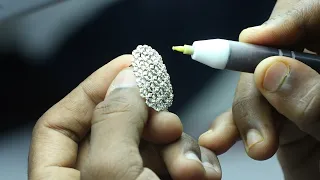
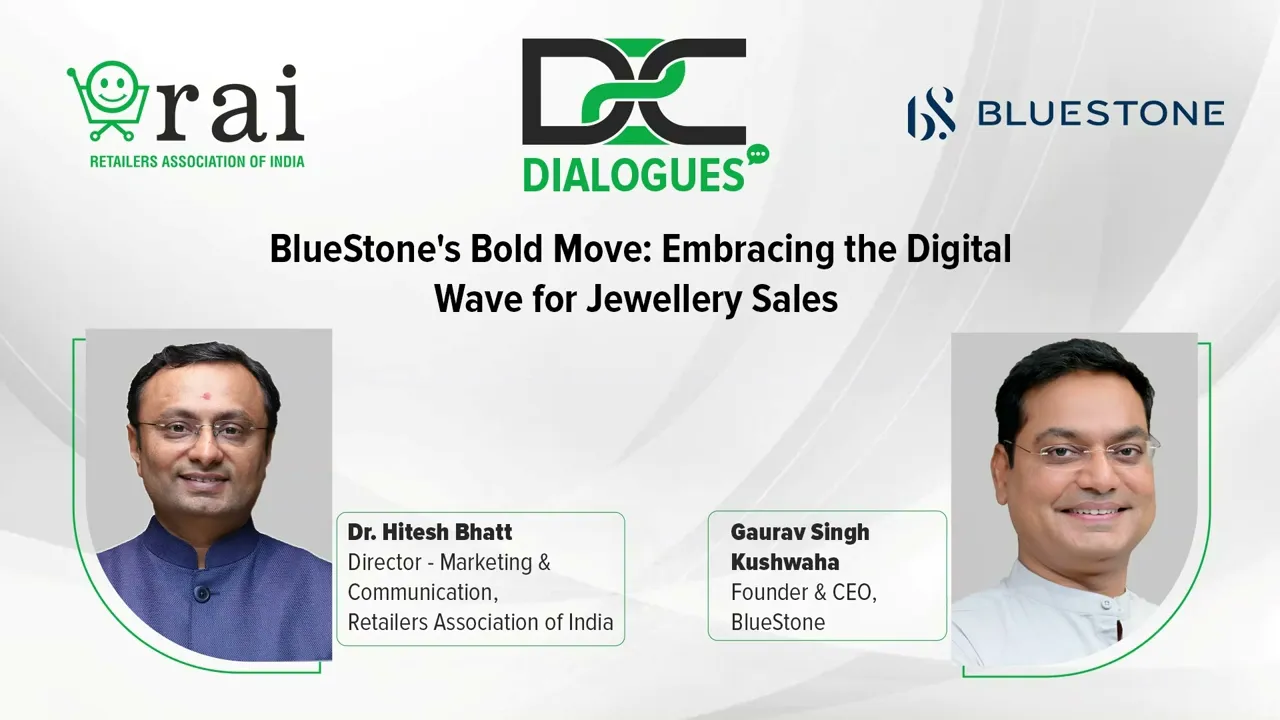
hello everyone and welcome to d2c dialogues today we have with us Mr gaurav Singh kushwaha co-founder and CEO Bluestone Bluestone founded in Bangalore in 2011 by gaurav Singh kushwaha is one of the India's largest digital first Fine Jewelry brands the culmination of a rapidly evolving consumer preference to shop online and the Legacy jewelry Industries load digital adoption The Trusted brand is synonymous with modernity and digitization Bluestone has revolutionized the jewelry Space by creating an endless aisle online with 170 odds to experiential stores offline delivering a seamless omni-channel Journey for cosmopolitan couples the proprietary text tag
enables consumers to tailor their preferences into the journey from design to delivery making it possible for Bluestone to be a part of their momentous Milestones online in-store or from the comfort of their homes the hundred percent certified jewelry designs come with lifetime exchange and buy back and range across gold Platinum diamonds and gemstones ensuring something to suit every mood movement and budget with this it's my pleasure to welcome gaurav co-founder and CEO of Bluestone welcome to d2c dialogues gaurav really excited to be here thank you the first question that came in my mind is as
a co-founder and CEO of Bluestone what was the key factor that influenced you influence your decision to transition into Fine Jewelry after having success with chakpak and also the category right so Service uh yeah I was running chappa which was into social networking space and it was uh uh and uh so we could very very quickly grew to around two to three million users uh in just two to three years and uh we sold it to Flipkart and I moved out of it and then the next logical thing that I saw and in fact the
the uh the behavior shift that I was seeing in the market was that a lot of categories were moving online uh to different extents so books was moving much faster than many other categories which are higher ticket and so on uh so I looked around uh at the categories where they can be an interesting play uh where online can play an interesting role and the categories which are also differentiated uh enough to build an independent and a large company uh so when I looked at that I noticed that jewelry uh in India is a very
is a huge category the time is especially huge uh a lot of fragmented players uh so there was definitely a scope of consolidation also and then online was not something that was already masked by someone so with uh with coupled with all these learnings I decided to take up lunch in this category so you found a gap in the Market online was not that famous but the question still arises and that is jewelry being the category that it is did you not have the apprehensions that you know it's not a an apparel category or it's
not XYZ which is a small you know uh unit item small price item Jewelery is something which Indian women or even men for that matter want to touch and feel and you know experience and how how what was your confidence level at that time I understand that nobody was there in the digital space as far as jewelry is concerned but I'm talking from a business uh sense sure so uh so you're right in fact even a parallel had not moved online uh to a large extent at that time if you remember 2011 when a lot
of people are trying to get uh trying to convince consumers to actually start trying out apparel and a lot of these high touch categories online and we also believe that it's going to be a long journey uh when a let's say when a good percentage of people start buying it online but given the size of the market which is almost 80 billion uh US dollars if you do some back of the envelope math even if one to two percent of our moves online let's say so the behavioral shift does not happen but some people who
are just very very comfortable browsing online shopping online and so on even if they move online that actually still results in a billion plus uh Topline category or a Top Line company so uh so those were the thoughts and we were super confident that uh let's say few percentage Point even in low single digit would definitely Move online however as we moved on we uh we we had our own learnings we realized that uh people were super comfortable uh browsing jewelry online and this is an experience which is lacking in the offline world so if
you look at any other category you will get shoes if you look at apparel etcetera people these days go to Zara these uh goes to Lifestyle Shoppers stop and large format retailers and do a lot of browsing before they make a purchase but in jewelry that's not the case you generally go to a jeweler to just buy not to browse now because offline lagged the entire browsing experience so much as soon as we gave a quality offering online people started browsing online a lot but given the nature of the category uh we were able to
we were able to convert US relatively small percentage of that into business in a pure online fashion and which is where we also evolved so from 2012 to 2015-16 uh we were very sure that online uh only uh creating an online only brand is the way to code but around 16 or so 2016 or so we started becoming very evident to us that only channels are much much bigger play while online is going to grow at a very good Pace Omni channel is just an even bigger opportunity and that's how we kind of morphed in
so we also learned it's and what we thought in 2012 and what we think today is very very different very different just before you go to the Omni Channel and the offline part you know how did can you share some insights on how did Bluestone become the first online jewelry store the insights in terms of the learnings or you know because you said 80 billion was the market but even you are new uh the market and the customer was not accustomed to or never had experienced and uh online uh buying experience so we did few
things so we learned by first principles we had no prior experience in jewelry uh or in retail also so just freshmen we could all uh the experience we had was on building websites and kind of getting uh online marketing online website and creating a very quality high quality online presence so we applied all those uh tenants to jewelry uh and like I said we learned from first principles so I looked around uh we noticed that the consumers which are comfortable buying online not just jewelry but any stuff were largely in the age group of 25
to 35 at that time now it's much broader but at that time it was still relatively younger and it was less than 25 also but less than 25 were not our buyers uh young girls college girls don't buy that much of Fine Jewelry golden diamond which let's say married newly married and women were a certain age they buy so from our lens uh our TG kind of stopped at around 25 to 35 we also saw that they are kind of fashion forward so they are not looking for the very traditional ornaments Etc which almost every
other jeweler in the country is providing anyways so in terms of our design language we chose a design language which was which would cater to that TG we notice a lot of other things also since online is not something that anyone had tried seriously the the skill the skill set and the ability to actually present a very beautiful Catalog online was not there so product photography Etc was not cracked for this category uh we looked around and almost everyone had like very bad photos in them were saying photos so bad that no one would actually
go to Second without product page so that was another problem that we had solved in and we use a lot of Technology they use 3D rendering 3D modeling and a lot of other stuff also which would actually create a quality image and quality digital assets see offline World also you would have seen it's very important to present the product very beautifully right and in the uh with the right light with the right angles and so on I'm saying all that is even more important online because in online all you have is photos and videos there's
no physical product when someone is browsing when someone is making up a mind so uh so that was The Innovation another thing we realized was that as that's one of the strengths of online is to provide a wider wide catalog now inventory comes in the way of white catalog you know whether it's offline or whether it's online so we had set up our own manufacturing also in just one year after starting so that we could enable just-in-time manufacturing I think it's a dream of a lot of retailers a lot of businesses to have just-in-time manufacturing
kind of a model to keep it inventory light and to be very responsive to the changing Trends so that is something that we had set up back in 2013-14 itself so since then we have been so we are running our own we run our own factories we have our own design teams and so on because of all these things we wanted to be kind of very tight on very tight and sharp on almost all these aspects so uh so these were these were the things that we had created for online and uh which were kind
of very very different we we created almost all the functions so here is an entrepreneur who who has just ventured into a business with no category experience of jewelry nor a retail experience but you said you did have that digital exposure in your previous stints in your career the TJ that you targeted was 25 to 35 you had uh you had got a white catalog you've got solutions for your photographs you know high quality photograph 3D rendering so on and so forth started your own manufacturing you know just in time inventory I think these were
the founding pillars for you know creating an online jewelry store a successful jewelry one a store but what was the differentiation at that time uh which you could uh you know compete against because still uh people even today as you rightly mentioned that even a fraction of people if they could come online and buy then we could have got uh an x a huge market share but what was the major differentiation from a Bluestone brand perspective so okay so Brian was not strong in fact brand was not the reason why people were also buying from
us uh is what we had realized and that is something that is still uh they we still have a long way to go uh in terms of building plan I would say we are doing uh we're doing phenomenal business but that is despite the fact that the brand has still not been brand is still not as strong uh as it can potentially be so in those early days uh the reason so okay so the differentiation now you'll have to look at the differentiation from the lens of the consumer right not from the lens of let's
say businesses from the lens of consumers uh they were none of the offline jewelry Brands had a website and I'm saying quality website so the brands might be strong but if the if that person if that particular customer is more comfortable let's say first looking at the offerings online there was no way that person could do it for any other Duty player in the country right those are more like marketing websites that okay these are our policies these are our stores almost everyone had that kind of website not a website where someone could experience the
products so ours was the only experiential website for for that matter uh I don't think anyone understood the uh the strength of search engine optimization searching marketing and a lot of those things wherein you can actually pull in people and start doing real business there uh Jewelers I I think almost everyone was a non-believer so they were creating their websites Etc also with that uh with that basic belief and hence there was no focus on Commerce person so we were the only ones who are focusing on Commerce also uh and people who bought from us
for first three to four years almost 85 to 90 percent of them said that they bought because just love the design not because they love the brand not because you had the first more Advantage we did okay that that was nice when did you realize that you know now is the time that we should change gears and move from online to offline what was what was that time and what made you take this decision that was around 2015 2016 uh we uh we spoke to a lot of our customers we generally do that we we
do that almost every year we spoke to a lot of buyers uh and asked them why did why did you buy from Blue Stone and reason to reasons to buy so almost 85 percent of them said we fought because the design we love the design so much that I love the design so much that I had to add it uh almost nine percent people said choices we had so much so many choices that we would go through and three percent said price one percent said convenience right so which was kind of very very different from
when you uh when if Amazon or Flipkart would do the same circuit where the price and convenience together would be 90 Plus so we were very clear that's a brand game now uh the interesting even more interesting survey a question was the question that you post to non-buyers who exhibited very similar Behavior to the buyers on the web portal so someone would spend almost the same amount of time someone would almost shortlisted almost the same amount of products did everything same like a typical buyer but did not end up buying so we asked them why
did you not buy uh so so even before that all of the almost all of them said that the designs we just love the designs which is which was something that the buyers had also said but uh in terms of barriers to buy the number one barrier was touch and feed how can we buy something so expensive without touching and feeling it second was let's say a few years down the line if I need to if something goes wrong with the product if it requires a minor repair polish or anything where do I go and
number three was let's say down the road if I want to exchange this product for a different design how do I do that now these were all very very common behaviors these are very common behaviors in the industry and and the interesting thing was that the ratio of these buyers to non-bias was in the tune of one is 220 or one is to 30. right so for everyone buyer they were 20 to 30 who who would have bought if you had given this service if only gets all those numbers okay right so which told us
that the uh and so these couple of surveys told us that the pull of online is very strong but the ability to actually convert that pull and all that browsing and all that love and to sale is something where offline potentially is stronger so both the channels have their own have their strengths and the magic would happen if both of them kind of come together which is when the Omni Channel Journey started with that with that survey with that data and with that hypothesis and then the magic happened and then the magic happened now my
question here is the most important part for any consumer to go to a jewelry store and buy that jewelry from that store is trust how could you you know create that trust being a new brand you know in the market uh it's a very difficult uh thing to kind of tackle uh add-on is this I mean if you go out and Shout the trust me trust me trust me people will start doubting even more so you can't do that you must not do that I think trust will get built over time I'm not uh severe
with the with enough differentiation that we have created we are getting very strong growth and very strong business right so I'm so if I if I solve the trust also let's say overnight magically we might do 10x also from where we are but I'm saying all that will happen even without that our growth rate is actually staggering uh so I'm not so this is not something that I want to actively sulfur or actively handle I've thought about it and this is the first question that I get asked almost all the time I am saying trust
will get will get built over time as we do the right things for the consumers as we have right policies and as we as we uh under under promise and over deliver over years once we do that I think trust will get billed automatically you're not looking for that much magic want to kind of build it tomorrow and you're right and it's very difficult for new brand but we have been around for 10 years in 10 more years you'll be around for 20 years right so you'll not be a new brand anymore I think these
things will kind of get solvented for a period of time yeah very aggressively on this but one Testament to this is you know uh the confidence that comes to you know the brand is 170 stores and when you started with one so uh can you just tell us something about the operations the stores and the customers and the scale Etc yeah sometimes right so we opened up a store in July of 2018 uh and by fa 19 we had five stores and by March so FY 20 which is March 2020 uh we had 15 stores
when the covet hit right so as we just started our former Child Journey uh the pandemic and the lockdowns had started happening so in between pandemic and lockdowns we start we kept on opening more stores so by March 22 we had 74 and then by March 23 we had 155 and then this year we opened 15 more so uh so that's that has been the journey it has been an exponential rise and that is because we're seeing tremendous success and tremendous a tremendous conversion in our store so essentially where we are opening stores the business
is increasing many foods and hence the charter and because the online business is already very strong right and this is kind of creating a layering underneath that online presence which is the task at hand so faster we create more efficient the business will become and with that thought we are kind of rolling it out uh very very very rapidly for us having started as a top-down National brand uh north south east west do not make any difference we are as strong in East as we are in North so uh which is good because otherwise I
think a lot of Duty Brands struggle with that having started from having started from one particular region they find it difficult to expand to other regions because they have that uh Regional touch to their brand yes which actually which is which is a great enabler for that region but for in any other region it's a advantage in this region is a disadvantage in other regions essentially so uh so what was your strategy you know because they had a regional touch you had a corporate touch we had a corporate touch we had an online touch right
so uh so so basically when people so we had we okay so few things that are associated with our branders is New Age contemporary design so these are the kind of attributes that people would generally associate with our brand which are generally very differentiated from let's say the kind of uh attributes they would give to they would assign to change Jewelers or the state or city universals go to one thing that has come out you know and I've just observed in the last uh 15-20 minutes that you are very passionate about designs you know that's
what the USP of Bluestone is you know that you have got this design what kind of designs you have and when I ask this question what I mean is in terms of quantity and uniqueness and uh the differentiation part of it sure so essentially uh the kind of designs that we have and one key Focus for that we already always have is the designs that a person that a woman would be comfortable wearing on a normal evening outing or or normal office day or on a normal day and not let's say just for those big
days like waiting Duty Etc now the interesting part is that wedding and these big occasions are used to constitute almost 80 85 percent of the overall jewelry consumption so a lot of uh Jewelers who have been around for generations and traditional Jewelers they are they have generally they've largely been focused on those categories and for Right Reasons right those are those are the bread and butter and those are the categories that made them big but that shift is happening so right now the shift is almost 50 50. between generally bought for big occasions and jewelry
you bought for almost every day uh for all for everyday wear means smaller occasion and so on let's not waiting not big occasions so uh but what had happened was the focus on design in that category had not been there because almost everyone was getting their gratification their business from that from that bigger category right so the smaller category was more like okay we have few products just choose from it but no one had actually uh um focused a lot on what is what are the kind of designs that would actually work here what are
the kind of innovations that can be done in these particular designs right so all that Focus was given focus and love was given to the big ticket items right so uh so that is essentially we uh we brought to the table we said okay this is uh that those big ticket items yes fine you can you can wear it for once once in two years three years four years and I will go sit in the locker but every day you'd be wearing jewelry which were almost were almost no one in the industry is focused on
innovating especially in terms of designs Etc so our Focus then had been on that I mean uh so be the kind of brief uh we give to our designers be the kind of uh incentivization across the structures be it the kind of data we we crunch to figure out what's working what's not working but this is the category that we operate in uh the jewelry that that bracelet that you would be comfortable wearing let's say you went to gym you know uh question to the design part is then comes the testing part and you know
you had mentioned the importance of a b uh testing and defining metrics before testing to keep biases at B could you share some of the valuable insights that you have you know gained through this process and blue stone right so uh okay so date of being an online first company uh data's data runs at the core of everything that we do so almost all the designs that are launched in the very early days we test all those online we see the performance how many people are actually clicking on One Design these are the other design
how many people are proceeding with the entire checkout flow for that particular design and how is that behavior different from region a to region B right so all these things uh we measure especially are very very aggressively for a design as it is launched and we already know where this design is going to land even before we stock it in let's say so many stores that's a lot of these insights are are generated or acted upon which actually keep make it very very sharp for us uh very less error so while we are it also
allows us to be experimental at the time of creating the designs because we know that at a later stage there would be data to actually guide us if that experiment was successful or failure if you don't have enough data then you cannot be experimental it's like you'll have to go the tried and tested route and then you will end up creating the same designs that have been created over 20 30 40 years you have done uh many Innovations one of them is uh blue stones try at home service yeah now the banking industry and the
industries had no personalized Banking and bankers coming to your house Etc uh what is this concept of try at home no and how how is it you know been received by the customer sure so uh so one of the things was that we noticed was that Jewelers typically Jewelers would would encourage or would enable let's say home trials for very high value customers etcetera and that's not that was not something that was really new to the category right so Jewelers typically would have very strong relationship with their patrons and for some of those who with
uh with whom they're very deep relationship they would they would even take Judy to their home and they would actually go through those pieces and then pick few and so on so that that experience was there I think but that was that was therefore very select few it was not there for masses Etc so and the idea was that we want to create a we want to give that experience the experience that is generally available to only uh let's say hnis and high value customers you want to kind of create that experience for Masters also
and online actually allows us to do it right so because when I'm doing try at home I can actually roll it out like a process and not like someone just calls and how are you doing today it's not that kind of fun right so uh so so we noticed uh some uh some of that some of that experience uh being already available to select few decided that okay that means that there is Merit in this experience people do like this experience uh how about we take it to Masters how about we make it available to
a person who is not who's looking to buy something for 40 50 000 one life and not necessarily it's a one included now the last leg of our interview gaurav you had mentioned that the first round of scale should happen online you know offline should not cross your mind you know initially uh so there is no such formula as such but uh does this premise even stand today because I am talking about 2011 when you started and in couple of years you went offline but today uh everybody you know every d2c brand who starts online
you know has an offline plan already ready so why why did you say uh you say that you know uh you should first concern it only on online and then subsequently move offline sure so see we should then first of all look at the Genesis of d2c why d2c and what is d2c it's not that consumer brands have not been around they've never been created in last 50 60 70 years right and there are new and more and more new consumer brands that have been coming along uh be it in line I mean let's say
uh less than 80s but 90s to uh then last two three decades also and what had changed and why the term d2c now let's say rather than in 2001. okay so uh so almost if you look at a lot of those brands that got created those are so okay so in the offline only world world when there was no internet the distribution of any new product that you have created is going to is was very very tricky for a company which is new which is not crack distribution so let's say you have created a great
shampoo but whether the shampoo is great or not wouldn't even matter if you cannot crack the distribution right so almost entire focus of a company which is or of a of a of a bra of a newly created brand Under a new company would go towards Distributing that so much so that the product Innovation would take a back seat it's like if you have cracked distribution you can ship you can push anything in the distribution yeah there's no need to innovate innovate on product or at least the incentive to innovate and product is lower because
distribution is the key so you don't so you just keep pushing one product after the other as as many other biggies or most big FMC companies do right that their strength is distribution product is something that rides on top of that distribution and it had largely been like that for a very long time so let's say if you have distribution there's no point innovating on the product or the incentive to innovate on product is low if you don't have distribution then what would you even do after innovating on product you'll not be able to distribute
it anyways so the new brands being created by a new company uh was very rare and there have been cases of that but it was very rare where people had actually been able to crack both product and distribution at the same time with very few phenomenal entrepreneurs I have done that now with internet what had happened was it actually gave you a direct access to Consumers it will be the scale is limited but but you have direct access to Consumers so essentially what happens is let's say okay even if you're not if you're creating a
product new product which would which can technically appeal to let's say 100 people and eventually it'll have 100 units of sale at least six to eight or ten of those can potentially come directly online and for that you don't need to tap into that distribution the offline distribution don't have to crank that operand distribution in the in the first leg itself okay you can you can directly send it to the customers you can actually iterate on your product hardly any product is perfect in the in the first version people have to iterate right so let's
say which is much easier in online world because you don't have to actually sit on a huge piles of inventory which in offline world you have to do so you you haven't you had internet you had aggregated demand and with the ability to actually talk to your consumers which is not in the offline world you would actually be talking to retailers not the end consumers so your ability to iterate on that product and fix that product or make that product even better those these three things were enabled by the by internet and essentially that's what
gave rise to d2c and I'm saying let's then let's be very clear that these three things are very very important Even If eventually so what happens in a fully Baked company you see that online is only 10 of it and offline is not 90 yeah or let's say 20 and 80. and hence a new person entering things that okay online only has a 20 role to play that's not the case online is the enabler online is what grew it from zero to six in a fully mature fully grown you don't see that but that doesn't
mean that online was not important the offline was important actually online was almost 100 contribution was of online in in in lifting that company to its feet it's only when it started running that offline came into the clean the whole groundwork was done by online you mean to say it's like first uh infant and toddler years you only need online and once you are kind of a little let's say six or eight years old and you start to kind of compete to run and so on then you need offline it's what here is an advice
from gaurav and we'll come to that final point of that advice before that the uh two questions that I want to ask one is in your view uh where is the jewelry industry in India going today and the second one is uh how will the definition of blue stone that you had envisaged 11 year 12 years back still remain the same so where is the industry going and then Bluestone right so uh so in terms of where is the the direction in which the industry is headed uh I see that the industry is headed towards
uh consolidation towards a branded place from a largely fragmented place that was there in terms of the kind of actors that are in the industry that are going to be there in the industry uh people are getting a lot more Savvy lot more aspirational a lot more uh West looking people want uh more designs right gone are the days well let's say for two or three generations there'd be hard there'd be very little innovation in design but because we had that relationship going on for three generations people who just did come and buy from you
today's consumer today's women they would actually look for the best design that they can get best offer that they can get the best value that they can get and more important most importantly best design that they can get uh so all those Innovations are going to become important and I think branded players would actually fare better there uh secondly the strength of regional players was uh in in keeping and keeping those relationship Bombs Over Generations now what's happening is a lot of people are moving from one city to another people gone are the days when
uh off joint family even three generations would live in the same city right and when people move so much the value of that relationship that was built very locally kind of goes down so I think some because of some of these factors uh the Advent of uh the the Branded Jewelers will see very strong Tailwinds non-branded will struggle uh that doesn't uh uh what would happen in terms of the actors in the industry in terms of products uh more and more so shift towards a lower weight uh everyday products is going to keep on accelerating
as today even even in marriage and girls are asking if I should buy something so big which I'll never be able to there again in future so so those are the those are the kind of shapes that are going to happen in terms of in at the industry level at the end of your second part which is about blue stone the definition of Bluestone I would say see the the Mission and the objective would remain same which is essentially to make uh to create to give very high quality design options uh high quality so to
innovate on designs and to give high quality products uh to end customers and to innovate in that bucket which was largely which had mostly been ignored for uh for very very long time uh how we do it whether we do it online whether we have our own Factory the own design team external design teams Etc all those things will change and like any business it learns a business that is not learning and will not be in business in a lot for um in long run right so our thoughts change our operating methodologies Etc would change
but if something that is that has become even firmer in last 10 years that is that there is a space there is a gap uh what industry is offering and what consumers want is significantly different I mean there is an opportunity There's an opportunity there last question and we would like gaurav to give the advice to Young budding entrepreneurs who are planning to launch a d2c brand particularly in high value categories what is the advice that Governor gives see high value okay so start only online when you are especially in let's say maybe first one
to two years or so as when you're iterating on the product so get the get to the right product Market fit but if it's high value there's a there's a high likelihood uh that Omni is going to be very very important for you and I said High likelihood to each its own uh everyone needs to discover their own Journey but this is what would come to my mind right start online product Market fill a fit and Omni which is extremely important yeah in that order that that's it other way around it can be disastrous that
was very nice of you very insightful gaurav thanks for sharing all these insights with us and we look forward to connect with you in the near future thank you very much