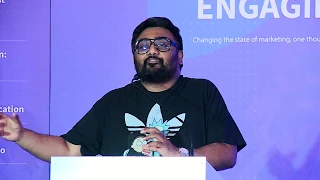
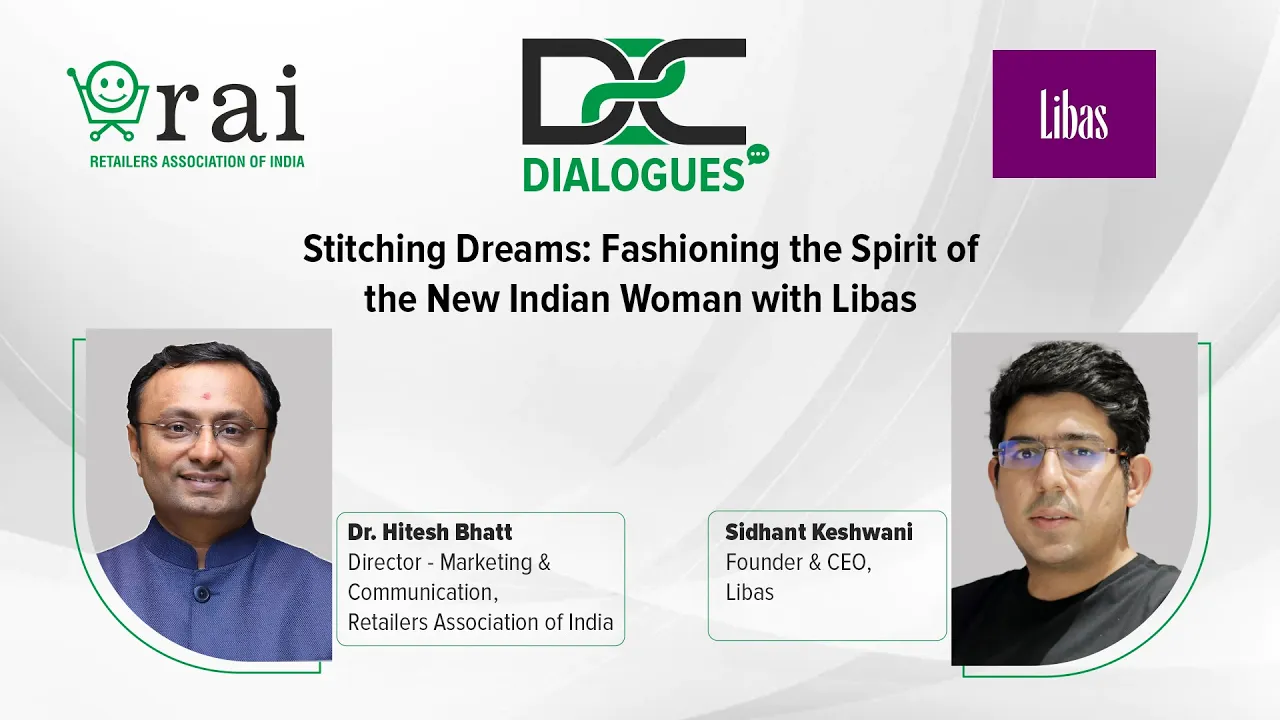
hello everyone and welcome to d2c dialogues today we have with us siddhant keshwani founder and CEO of libas tells the story of a new age Indian woman who is free spirited independent and aware welcome to d2c dialogues siddhant hello hi hi drishwani I'm very very happy to be a part of this forum and I'm looking forward to a very insightful session with you the first question which everybody asks you have been in the business for a decade or two or more than that but when and how did you get this idea to start lebas started
sometime in 2014 and and the idea was that uh this was back in the day when I was studying in the UK um I have e-commerce shopping had become a big pad over there and people were actually addicted to shopping on on places like Amazon where I mean the whole idea of convenience of getting products sitting at home that idea honestly this was not that big in India back in the day when I'm talking about early 2011-12 early 2010 so so e-commerce was just picking up at the time I think the only eCommerce platform that
we all knew about was maybe a Flipkart even Amazon and India didn't exist back in the day so I actually saw this train where people were actually very addicted to e-commerce shopping in other countries like UK USA and I was pretty sure that the concept of e-commerce is going to really scale up in India as well in the coming years so the idea the the seed of doing something in this e-comm space something comments is actually when it all began and uh and that's where the idea came in that I was very shorted I want
to do something in the space of e-commerce and as soon as I graduated back in 2012 I came back and my research towards what product to launch how to I mean tackle e-commerce in our country what are the right platforms so that's how the Journey of retail or journey of e-commerce really started for us so being a d2c brand so this was the reason now what was the reason to get into ethnic wear any specific reason that you could you know share or inside oh I remember back in the day you know people a lot
of people were getting into this e-commerce business I could already see that you know this is going to be a very competitive space in in a few weeks in a few months and and actually what people were doing mostly was they were actually importing products from China wide labeling them here and selling it online so that was actually the main e-commerce business I wanted to do some product records actually that we could manufacture in India fortunately I had some family background in the supply chain of women's ethnic wear so I thought at least the supply
part will be sorted and I can focus on distribution and sales and I'll have some experiences I've actually grown up looking at Fashions so fashion was actually an upfront choice for me I was I will I definitely knew that I wanted to do something in the space of fashion ethnic were amazingly because of two to three reasons one of them being like uh the majority of the people that were actually shopping online at the time were working women or working men who were going to office services and and they didn't have the time to go
out to retail store so they thought that this convenience that so that market was growing rapidly so we actually targeted the working women we thought that uh selling kurtas which at a sweet price point of 500 to 800 rupees back in the day because people are not comfortable spending more money online that time and 500 to 1000 was actually the sweet price point where people are very comfortable spending and they wanted to experiment newer platforms so we tapped onto the market of working women and we wanted to create Workwear kurtas etc for women so that's
how the idea of doing ethnic wear really came in you mentioned the price range and you mentioned the category also uh what were the other uh you know strategic initiatives that you had taken at that time because it was just a launch although you had a background of uh you know a parallel but one the segment that you have chosen second the price range that you have chosen and that too uh almost a decade back what were the major challenges you face that times are done because as you rightly mentioned e-commerce was just you know
in its initial stage so uh the idea of ethnic world was pretty clear but I still spent about one year to understand how the market is leaving because at the time when I had experience we also had experience in slightly heavy suits language Etc which was actually not a right fit for the e-commerce space in India nobody at that time was spending five thousand ten thousand rupees online so we actually spent about a year to understand what product would really do well so the idea was like I said working women and we wanted to actually
tap onto that culture of addictive shopping that the trend that I saw in the Western countries or fashion right that's why we wanted a product that people buy again and again because the challenges all that market was growing but uh newer audiences were not growing as fast until say 2014-15 so we actually had to make sure we did a product with repeat purchases happen quite often and and working women was actually the only people who were they wanted to wear something new to offices they wanted to actually buy a product that they had confidence in
in terms of quality because ethnic where in our country has mostly been unorganized for the last 30 40 years right especially the kurta category or the kurta set category or casual category it's been mostly 895 profit was unbranded and with e-commerce what happened with the approach and the pan India scale that you could achieve people who are moving from unbranded to branded so that's that's the ideology that we really wanted to tap on to and and and and I remember still remember that we actually uh after the research back in 2014 we were ready to
go live we made about 1000 products and we thought it can be a thousand making in anything online with those thousand products and we thought he is uh we'll have inventory for 30 40 days to our surprise uh that inventory got sold out within three days so as soon as we got live I don't know that time uh even the brands are less or abroad was fantastic or we hit the right Market that's where we really got the confidence now the challenges were that how do you scale up supply chain and operations for something like
that because today I think in a country with a population of 1.5 billion people distribution is not a huge problem Supply is something that needs to be organized right and until date I feel that now they're shipping almost 50 lakh orders in a year and and even then we are still playing catch up uh with you know trying to uh catch up with the supply problem in our country right so I think that challenge was back there back then as well and today it still exists so so still you after even after supplying 50 lakhs
orders you still have the challenge this is an Ever growing market right you prepare for 50 you reach 60 you prepare for 60 you actually read 70 so wow demand has been tremendous in our country fortunately that uh so siddhant you are on an auto mode for growth absolutely I I mean I would actually put the right and that would be the right word that I think if you crack Supply not crediting distribution is not a problem for most good quality products so product is right and you crack supply distribution honestly is an automation because
if you have the right Platforms in front of you selling really happen or happens on its own so what who gets the credit for this it's only distribution or what were the other areas staying relevant uh with times uh I would give credit to that that our teams have always made sure that because I think they have Market changes quite fast these days Trends are changing quite fast fashion is changing quite fast uh certain kind of products do well in six months and in the next six months it's something else right so personality plays a
huge role by the way I would give credit to our whole team that we've always stayed relevant even after these 10 years we've been leaders in e-commerce space and and a lot of brands are coming in and then we actually dominating at the top and maybe making sure that nobody is able to kind of do better products and us or you know stay more relevant so so either credit to the team for that plus uh more than that I think credit to a lot of platforms were scaling up really well so Marketplace is a big
size of the business for us so they've really strategically partnered with us and seen our potential so I think I would get credit to all that you started as a e-commerce brand or d2c brand when did you decide that I have to go offline see uh we always knew that offline as compared to a lot of other countries where online penetration is so high that the offline markets have been crashing down right there are certain countries where online businesses are now like 30 to 35 percent of the overall retail and in a country like ours
even though e-commerce is growing rapidly but today it's still like mid single digits and late single digit right I mean 90 of the people are still shopping offline uh back in the day we started offline just in 2020 we didn't start before that because we felt the online space was growing very very rapidly and offline while it was big it was still very very competitive and I think post-proverty would have seen 80 of the brands who used to swear by offline and say that online right so we felt at the online space is getting fluttered
now and people are actually scared after covet to scale up offline and but we knew as a brand that the future is going to be Omni channel it's it's not online it's not offline for us we actually feel that it should be an ecosystem where whether you're a consumer it's because you have to be very consumer is right so today as a brand if I'm available online and my so I might have a loyalist for example if you're in the bus buyer you're actually a loyal customer online but on a Sunday if you're going to
a mall you have that mode of shopping right if I'm not available to be prepared and be ready at every platform where the consumer is kind of looking for your product so offline Journey For Us started sometime in 2021 after covert uh we felt there was huge potential because a lot of people were actually getting scared shutting down stores we thought this is a great time to kind of enter the market where there are a lot of gaps a lot of openings in terms of malls markets Etc so that's where our offline Journey really started
is the consumer of libaz same in online as well as offline I think that conversation of online customer is offline customer is different has completely finished now I think everybody knows that it's essentially the same consumer I like we get so many uh inputs from our offline stores that actually customers are working in with an image of a product that they've seen on this online store but I want this particular product right that's why I said like today it's an ecosystem if you're because see today going to a mall or going to a High Street
Market is not just product driven it's more of an occasion for an Indian consumer as a family you want to go out irrespective of online being there you might receive the product in 15 minutes but that one time once a month maybe that scenario has gone that if you need a new shirt you especially go to a mall in one of the weekdays in particularly that maybe that training is moving now but occasionally that's why we've seen that shift to how 50 to 60 percent of our sales and happening during the weekends why when we
can stepping out having an experience with a family that is something that is never going to go down I feel so we feel that customer is common sometimes he's going to buy online sometimes it's good he's going to buy offline but if you're not available across both platform we might lose out on that customer so what would be your strategy now going ahead from an offline perspective so I think uh we're really rapidly scaling up our uh offline activities and to our surprised what fortunately we have one of the few Brands who actually moved online
in a who were big online and moved offline to Discovery is much easier today the customer acquisition cost for me the slide is much cheaper because when people are actually walking in for them it's actually an excitement and they finally they have a bar store near us right in our mall or in a High Street uh near us so so for us we are rapidly scaling that up and we are seeing some great Trends all our stores are profitable since day one so we are not really taking that journey of six to eight months to
you know acquire consumer and then be profitable so it's been fairly easy for us and we are stepping onto the accelerator now and we've actually found the right fit right side right model to kind of server offline consumer as well so from an operations perspective uh how many stores in which categories you must be having currently and what would be our online and offline scenes see today as of today we are already about 11 to 12 vbo strong and this it's just been about a year year and a half since we started our Evo Journey
uh we rapidly scaling up our multi-brand Outlets as well so we are already available at 400 Plus stores of Shoppers stop lifestyle Centro all major change that you'll see so we're rapidly scaling that up as well and in the next one one and a half years we expired to open 100 plus ebos and be at 12 000 plus uh large format stores across India as well in terms of our Revenue split I would say e-commerce is still a dominating Factor here uh we are still 85 to 90 online about 10 to 15 offline at the
moment but we see that this trend is going to be about to 60 40 in the next two years where 60 will be online and 40 will be offline wow so uh when you start it was 100 and now it has 50 in a decade's time this also shows uh you know something about the robustness of the Indian market that even though you started online you had so much of you know success in the initial years or almost a decade but now you are going to have close 200 ebos and thousand mbos in the uh
coming year or two so I think that's uh that shows a lot about the robustness of the economy and the demand side as well what would be your or what are your key or what have been your key marketing strategies to achieve you know this success yeah I think uh we there was a trend about 10 years back we saw that consumers are actually looking at ethnic wearing a slightly low line because they felt that it's slightly backward or it is not as good as a product that you can probably pick up from Azara it
is not modernized because that time the modernization was happening a lot of international Brands were actually coming into India right which was very important for us to ensure that ethnic wear stays relevant and we felt that the only way to do that is to modernize ethnic work so the ideology whether you come to a website whether you visit one of our stores the idea is the brief to the teams are straight that it should give you fresh feeling a young feeling a modern day feeling like it should be a feeling as that you know you're
entering a sales store or an h m store it should not be those traditional heavy designer looking stores where you know you'll see those castles palaces Etc right so that was never the breath even when you do a photo shoots any communication you will not see that Palace Vibe or you know that most ethnic where brands do it'll be more floral it will be more green so that is the approach that we so that's how we actually communicate to our customer and that's how we modernized Indian uh ethnic web and in terms of our marketing
strategy being a digital first brand right so we still feel that online marketing is the best form of marketing digital marketing is much more relevant and targeted as compared to a lot of offline channels like say magazine so we prefer to uh 95 of our budgets today even though offline is rapid rapidly scaling even the offline consumer we are actually targeting through digital modes only we are not spending a lot of money in the offline and the old traditional way of marketing so uh we feel that we actually did one of our first TV campaigns
last year uh we got a random message on board Sarah Ali Khan so we again got a brand ambassador who's fairly young who looks at ethnic wear and model light so he specifically got Sara Ali Khan because of that reason and the target audience for us for that campaign was also around 18 to 30 and the campaign did tremendously well where we actually saw an upward trend of younger people actually buying the bars so so that's been our marketing Journey over the last few years could you share some insights you know on the performance of
ethnic Wares from a sub category perspective the kids were the lounge where you know uh within libaz and who what would be your cash cow there so for us of course our dominating categories so we feel that's about about almost 50 to 60 percent of our business comes from this category and it's followed by kurtas every day Etc so 80 of our pie comes from these two categories and then balance 20 25 we do smaller capsules like we do the bass kids uh we have now a sub plus size brand which is doing phenomenally well
because now we're talking a lot about inclusivity as well so so that is definitely on an upward Trend and a loungewear as a concept really started picking up after covet as we all know so that started scaling up it's still about five to six percent of the overall business not very very big but I would say about 45 but it's definitely a market that is here to stay and we are consistently focusing on that we have dedicated things or serving the loungewear space as well so the the fashion trends are changing you mentioned in our
initial discussion and the consumer preferences are also changing how does libas stay ahead you know in all this uh changes that are happening actually uh you know innovating is in our DNA I mean anybody that you talk to in our organization today if you walk into our office they will never be settled with where we are we feel that every time no matter where we reach there is some way to innovate right so today for the last two years we've done a lot of advancement in the space of AI we are using AI a lot
in terms of whether you talk about experiences on our website I mean keeping front-end which a lot of people are doing in the back end especially we are using AI very very rapidly in terms of for that matter our new season mood boards UH 60 or 50 of them are made basis AI based Trend forecasting we are working with a lot of Partners to kind of uh stay ahead in terms of what kind of fashion what Silhouettes what color trends are doing well across the world and and we're using that those kind of inputs to
kind of create do newer Creations that is one then uh use of so we feel that we are very so we have huge customer Obsession in the organization so we actually take feedback really really well and our last one one and a half year the focus has been to increase speed so speed is actually the core term within the organization speeding getting newer products to Market speed in terms of the website experience in terms of payment gateways or you know checking out checkout experience speed in terms of delivering the product speed in terms of returning
the product so we actually said that speed is our time Focus that we want to solve in the next two years uh and like I said starting from conceptualization of a new product to the to the journey till the customer is returning the product we've actually separately sold speed over the last one one and a half years so today we are actually if I talk about just warehousing or shipping the consumer so we today as a d2c brand or on marketplaces we are one of the only Brands who give promises of one or two Day
deliveries to over 75 percent of the country these PIN codes from our own Warehouse normally you will see that Trend only where you know a Marketplace is like Amazon and Flipkart are holding inventory in their warehouses we are actually doing and committing the same speeds that they are doing from there you know in our warehouses so so that's something that we've been able to achieve then in terms of uh returns for that matter so we have no questions asked Returns the moment the product is picked up even before doing any QC we will actually issue
you the refund uh in terms of fashion so we've actually moved over the last two to three years we moved from Fast fashion to ultra fast fashion so when we started out actually we started out with the concept of Zara we wanted to be the Zara of ethnic world so over the last one year we actually changed their model from the Zara of ethnic way to being the sheen of ethnic where I'm sure you're interested in the success story so now we've actually moved to an ultra fast fashion model where you know as compared to
launching 20 to 30 Styles per week we've actually moved to about 70 to 80 and almost 100 next year uh per week so that's the kind kind of speed that we are bringing passion into the market earlier we used to most traditional Brands work two to three season in advance we used to work one season in advance now we actually don't worth any seasonal advancement yes we are redoing real time retail where real time designing sampling from sexualization is happening and real time orders are being placed for those merchandise uh Sudan can you share some
of the defining moments or strategic shifts you know in your journey which you feel that you know it's worth sharing as an insight for all of us yeah I think uh so both have very different insights inputs of online and offline are very bored insights I think uh for online for the e-commerce based most brands should focus on speed and being customer obsessed right because today at the end of the day we're living in a busy world right people first priority for anybody to convert or be a consumerism be satisfied and we've actually done research
where I said that most of the satisfaction metrics are dependent on speed starting from order placement to order delivery to return so all three places customers are not happy if you're promising one day and you're interested in the order in two days customers are not happy if you don't have the right payment Gateway or your website is slow on the website customers are not happy if you're saying that you will issue the refund within two days and if you don't issue it in two days right so customer acquisition cost being so high today the consumer
is coming to you and because of these three to four Matrix if you lose them your customer acquisition cost is going waste you're not able to increase your loyalty which in return will I think that is one of the most important things and as the journey goes on we have to stay relevant and the only way to stay relevant is to adapt to newer Trends if only child is doing well you have to be on your channel if d2c is only doing well you have to be focusing on d2c so we feel that that's how
we've actually stayed relevant over the last eight to ten years because we've adapted at every process we've not had a delay of even three months covet started with new d2c is going to be the fact so we immediately overnight said yeah let's focus on d2c after that Omni channel was the itward within three months we launched our first store I think that's how you kind of stay ahead of the curve right so so that those are the strategies that we really follow to make sure that we are covered across all directions one important vitamin for
growth is vitamin money n and what are your views on the funding side of uh you know the business and any plans for the near future okay uh we come from a slightly different background a very conservative background we wanted every business that we touch should be profitable and it should be able to fund itself uh of course money is required to accelerate that group uh sometimes but yes we never feel that if that you know today a product is not making enough money there is going to be some bright day that it starts making
money uh to accelerate if you decide to kind of give us that is one thing but at a unit economics level we believe that no matter whatever launches we do even if it's a new story even if it is a large format store even it is focusing on d2c we always ensure that unit economics are such that it's funding itself rather than burning money so so that's been a we've been 100 bootstrap business uh so far we've not released a single penny from outside and even profitable and one of the few Brands you can probably
say who's reached a scale of 500 plus being 100 bootstrap in the d2c space so there are so many competitors coming up so many conglomerates corporates individuals startups all of them are you know venturing into this space and it has become overcrowded how will you stay relevant sit on yeah we believe that uh the majority the major reason for our growth so far has been our customer Obsession and the quality of products and the value that we deliver we feel that these three places are in check I think as a brand new will always say
hello your product has to be good you have to be a good value you should not it should not uh put a hold in your customers pocket and you have to be customer obsessive where you're looking at feedback and solving on those feedback immediately I think if you have these three tick marks there is no way a brand can go wrong final question uh siddhan what is uh therefore future any product lines what are your plans collaborations Innovation Innovative strategies what's there you know it's a significant tennis so we actually hear a lot of questions
on this particular topic where people say that why don't you start menswear you're such a uh I mean it's direct it's a very similar product to what you're already doing it's a much easier extension for you so honestly menswear right now in the pipeline we don't have uh one of the major reason being we wanted to do uh expansion on the side where we target the same consumer rather than completely tapping a new consumer a different gender is means different forms of marketing different target audience different targeting so instead where we are actually expanding is
in a lot of categories uh for example like Footwear handbags where the consumer essentially Remains the Same we are trying to kind of do upselling and uh upselling in certain categories like that so I think one of the newest categories that you'll see from our side is going to be handbags which will be planned to launch anytime uh before Diwali and Footwear early next year so so this is a certain plans on the pipeline final leg of our interaction uh siddhan this is the rapid fire round and I'll be you know uh throwing some questions
I'll have to be prepped for this properly yeah okay we start what is your favorite feature about libas see I think how we've kind of modernized Indian where I think I mentioned this in the organization many times I think that is the key highlight that I would take away that uh modernizing has been the key highlight and people look at ethnic people in the pool right now again so I think that has been one achievement that we've been able to achieve what is the most memorable customer feedback you have received so that's a very difficult
one so uh many of them actually I think one of the best ones that I remember was that I met somebody a couple of years back in uh the female was telling me that at one of the events that I'm a very very big lebas fan and uh we actually in our family it has become so common that everybody knows that occasions so please did it in our family it's actually become an emotion so for us is actually an emotion not just a product so I think that was one of the key uh the best
compliments or I think the biggest achievement I would say that we've you have already answered this but still if you could collaborate with any celebrity for a special edition product who would it be I think we've already uh like I said we've actually worked with sarali Khan before and we would of course love to do a collaboration with her again on one of her products and of course one more celebrity that we have on our mind is because we feel that she carries ethnic wear really well uh she also uh you know tapsed on to
that younger audience and she has that recall so if you had to describe liba's brand personality in three words what would they be young modern and uh fashion fashionable so I think these are the three words that young modern and fashionable if you could give one superpower to your products what would it be honestly I would firstly give it the power to sell itself so that at least we can focus on other attributes but honestly most importantly I would give it a feature or superpower of self-healing because we feel that no matter how much we
try how stringent our QC activities would be at certain times we do end up sending that product that the customer might not like and I wish that we could give it a power to self heal in terms of that product so yeah if you could describe the future of fashion and apparel in one word what would it be so a future of fashion for us is of course fast fashion and the marriage of fast passion is sustainability so I think that is the future and I feel that marrying these two things is most brands you're
going to succeed in the years to come so marriage sustainability and fast passion fast fashion absolutely name one brand you see as your closest competitor I think I mentioned already Shane we wouldn't compare it to ethnic competition honestly because we are trying to create a category of our own and I don't feel that there are a lot of brands in this yes I honestly since day one when we started we started as a competitor not any of the ethnicular land but Zara to be our direct competition honestly speaking so so that's what we're really competing
with and uh if you could if you could quantify this where do you see libas five years down the line the uh obvious fire to be the largest Fashion House of the country in the next five years and like I said they're going to be a full stack only Channel brand and you will see at every possible mall near you so I think we're going to create the Omni Channel's seamless ecosystem where no matter where you engage with the brand you'll have the exact same experience as a CEO of libus what is it that siddhan
loves the most about this brand see uh I like that hunger within our teams to innovate I think I think that's what's made us stay relevant over these years with so much competition like you earlier mentioned so we are hungry and we are customer obsessed and and I think those are two things that I love about my teams as well because it's in their DNA probably they see me that's why it's kind of it's built in their DNA as well thank you very much thanks siddhan keshwani founder CEO of libas for speaking to us at
d2c dialogues thank you very much thank you thank you so much for having me and it was a pleasure