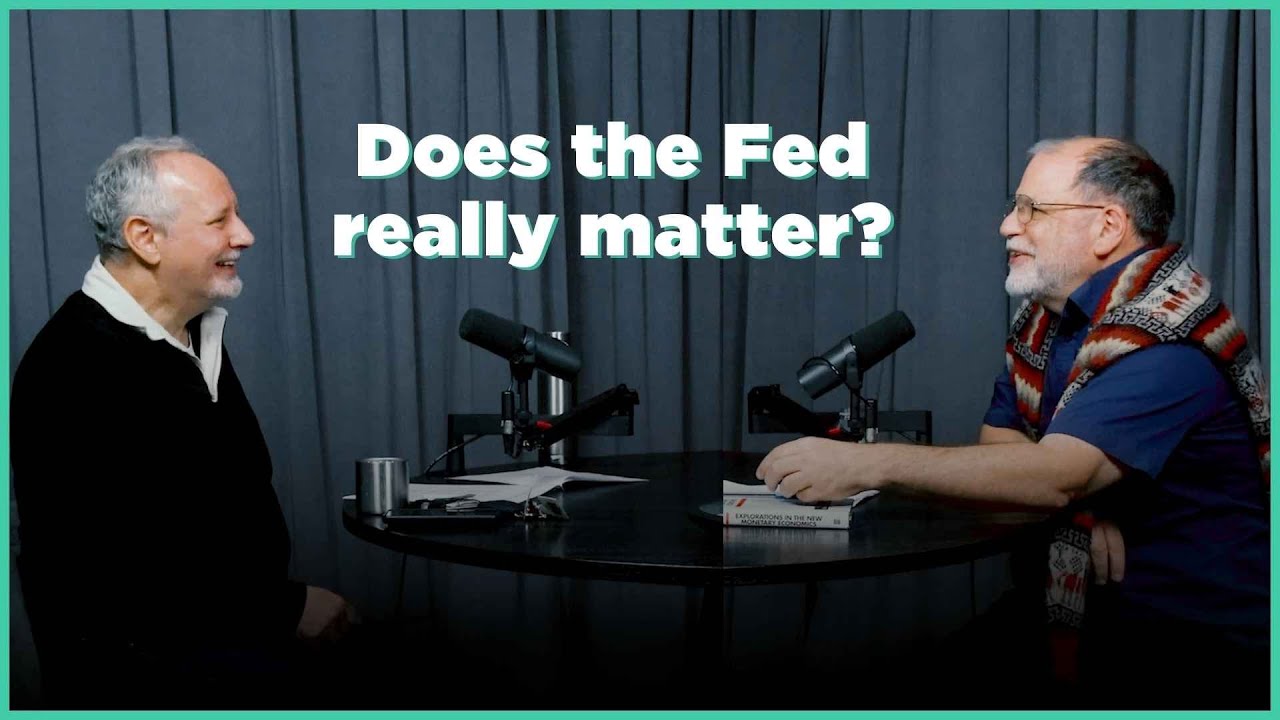
[Music] welcome to the Lauder Institute at the University of Pennsylvania I'm Jules van binsbergen director of The Institute and a finance professor at the Wharton School and I'm Jonathan bur a finance professor at The Graduate School of Business at Stanford University this is the all else equal podcast [Music] welcome back everybody today we're going to talk about price caps during the presidential election there was a lot of talk about price caps and you know Jules and I were of the view that it seemed so obvious both given the theory and the empirical evidence that price
caps are a pretty stupid idea it came as a surprise to us that people were seriously talking about price caps and we thought to ourselves why don't we do an episode on it yeah indeed Jonathan and I think that let's be honest the proposal of price caps to get inflation under control isn't exactly a new idea so if we talk about applying the scientific method to this question and you would say has this thing worked this approach worked all the times that people have tried this before I think that very quickly the answer is going
to be not really or actually not at all but I do think it's important to think about what is inflation why do we have it what causes it and if you have it and you want to get rid of it what are you supposed to be doing if not imposing price gaps because it seems so obvious to some people that if you just say that prices can't rise any further I've solv the problem but I think that of all the all else equal mistakes that we have discussed this might probably be the best one to
really dive into which is once you start messing with prices in an economic system and you think that just by capping the price you fix the problem you really haven't thought through the economic equilibrium properly yeah I mean if there's one thing that is naive and missing the or else equal mistake it's price caps the DI will solve in place just let's legislate it away we'll just say prices can't move and then we won't have inflation because of course the obvious question is if it was really that easy why did we ever have inflation anywhere
why did we ever have hyperinflation and as it turns out today we're going to talk quite a bit about Argentina why did Argentina have hyper why did Germany have hyperinflation if it was really that easy exactly all right J so why don't we start with just a brief discussion of inflation you know I would say there two types of inflation and let's first talk about the inflation in normal times yeah so in normal times I think a lot of developed economies today Target an inflation rate of around 2% per year which means that everything becomes
more expensive by 2% per year so think about buying Breads and so if in a particular year breads cost $2 then it goes up by 2% and so therefore it goes to $24 the next year and every year we have this percentage increase to the price of the bread and so the question is why is 2% a good number what about trying to hit 0% suppose that a central bank or as a government you had tools to make it zero why are we not seeing that that's actually a pretty tough question to answer Jonathan but
I do think that many people argue that deflation which is the decrease of prices is arguably even worse and so if you would think about a world where you target a certain number but you could be off a little bit on the top and on the bottom if you really think deflation is a terrible thing then maybe zero isn't the right thing to Target than 2% would be something to Target but let's also be clear at these stable 2% inflation rates which we actually had between let's say 0 in the US between 1985 and what
was it 2020 or so nobody to really mind it nobody seems to be worried about it nobody seems to feel that inflation has a distortionary effect on the economy and everything functions quite normally and so that's for developed economies but today we really we want to talk about developing economies economies that are running hyperinflation where people are tempted to turn to price caps and so that's the other kind of inflation and I would say what people often call is hyperinflation very high inflation rates and they generally come from the fact the governments are essentially choosing
to finance this expenditures by inflating the currency basically by printing money the first thing to understand in all of this is look if the government's going to spend money the money has to come from somewhere it can only come from human beings either it can come from current taxpayers through taxes maybe to come from future taxpayers through government borrowing but has to come from somewhere and the third possibility governments do is they just print money often the way they do this in the modern economy is they sell bonds and force the central bank to buy
the bonds that's just the modern way of printing money and if you print money as I said government expenditure has to come from human beings and so it's coming from human beings through inflation and so basically you could think of inflation as a way of taxing population yeah so to put it differently governments want to make a claim to real resources because they want to finance things that they want to do they want to build roads they want to redistribute money from one person to the other and so in the end for whatever government program
we're thinking about these real resources have to come from somewhere and this idea that if you can just print money out of nowhere and that just finances all of your deficits and you never have a problem ignores the fact that in the end the amount of real resources available for us to do things together is limited because we have a limited number of people we have a limited number of capital goods and so in the end if the government wants to use part of these resources it will have to come from somewhere else and that
somewhere else is going to be taxpayers either today or in the future Jules really there is no free lunch right you could naively say oh look I could Finance government expenditure what we'll do is print money and put price caps and then nobody has to pay for government expenditures like that would be a free lunch and we all know that that's impossible so something has to give so you may say to me J what's wrong with price caps well if you limit the price of something in a system what of two things is going to
happen either you can enforce the price caps in which case there'll be shortages or you can't enforce the price caps there's a black market and the price is r anyway we may have talked about this story before Jonathan but Michael Sandell in his book what is the right thing to do has this fantastic example where Katrina hits in New Orleans there's a huge shortage of drinkable water and so you see that the price of a gallon of water just goes through the roof and in the end the government comes in and they try to fix
this problem by trying to put a price gap on and say water cannot be more expensive than x doll and x with some super low number and what you saw was that IM immediately all the water was bought up at this low price by a small number of people and what will they do they will sell it on the black market for a very high price and so the only thing that you've achieved through the price GS is that the people that bought up all the water could make really large profits off of selling it
to other people on the black market now you can try to then say that is an illegal activity and then you can try to go after those people and then you need to try to get that enforcement going but there may be much better ways of trying to resolve this issue of of course the best way to resolve the issue in this case was to just get the supply of water up if you can get the supply of goods up that will make the increase in prices not so bad and and I think that particularly
in the recent inflationary episode in the United States when we saw the large supply chain disruptions that happened through covid what made inflation come back down again while making sure that the supply chain disruptions were resolved and so in the end increasing Supply is probably the best way to try to make inflation not be as high well Jules I think this is a good time to introduce Our Guest because probably one of the economies that have suffered most from inflation over the longest period of time is Argentina and I guess is a real expert on
that economy Our Guest today is Veronica rapor who is affiliated with the London School of Economics where she's a professor in the management department and most importantly for the conversation we're going to have today with her is that she was the Deputy Governor at the Central Bank of Argentina in quite a key period of high inflation Veronica welcome to the show thank you Jonathan and thank you jel for having me here tell us what went wrong over the last 50 years in Argentina why on AOS case when it comes to inflation if I have to
put one thing that was obviously the main problem in Argentina has to be with the structural fiscal problem if you go 1970 to 2020 pretty much with the exception of five years every single year we run a deficit a primary deficit every single one and you can say well for a couple of years this is not a problem but when something is so structural and the market loses any confidence and therefore doesn't lend you the way you you basically sustain that can of fiscal deficit is by relying on the Central Bank the treasury sells the
bonds to the central Bank the Central Bank prints money up and gives the resources to the treasury and that goes fast into inflation the more people know about this mechanism the fastest is the connection and we had 50 years of that and there's a point where people are very Savvy investors are very savy and recognizing this problem right away so we at Mohamad are and on the show where we talked about the US fiscal deficit don't you think that there are certain lessons that the US could take away from the Argentinian experience that they could
learn something from I do so the first lesson is not to listen to theories that are way too crazy but the US I think is different in that it has a a size of an economy a size of the productive system that can eventually if things got really bad absorb a lot of what is in there and moreover there's not an elasticity in which financial investors have a clear alternative against the dollar if things get really bad in a country that is much smaller like Argentina when things get bad you immediately go to a more
credible currency and typically that's the dollar away from our peso and that makes the effect go much faster than in any other place but Veronica let me just understand what you're saying that no country even United States can permanently run a primary deficit without stimulating inflation I'm not saying that I'm saying that if eventually investors do not want to fund the deficit every time the US runs a deficit issues debt and if investors do not want to have that debt and if the government doesn't have any other alternative than to sell that debt to the
central bank then that creates inflation but basically all governments have to come to terms with a choice that they either have to run a primary Surplus and use that to repay debt or they have to run inflation and use inflation to repay debt you know if countries never pay debt they just don't allow the debt to explode eventually so if that debt is believed to be sustainable there's no reason why investors do not want to hold it so in our country this is very often believed to be non-sustainable moreover the debt is not the debt
that you have in the US is a very shortterm debt very unstable we have a history of not paying it back when the investors run away so in our case that was very very much perceived not to be sustainable I don't think the US needs to run a surplus to pay that debt back I don't imagine the us having to pay that debt back it just needs not to be perceived as unsustainable so Veronica particularly in Argentina there seem to be a discrepancy between the different ways in which you could measure inflation there are more
real- time measures there are more official statistics and so I think that a major effort was made recently to try to measure inflation better could you tell us a little bit about this experience and what you learned from it this is part of our ridiculous history of dealing with inflation one of the most naive ways of dealing with inflation and I don't want to say naive as if it didn't have bad consequences it was naive in that it didn't have any of the good consequences that they envisioned but it was really detrimental is that they
dodged the numbers they literally intervene the statistics department and they made up numbers for the inflation rate wow partly because they claimed that they wanted to potentially politically they wanted to convince people that what they were experiencing in the supermarket was not real partly because they wanted to what they claim was to Anchor expectations and the way of anchoring expectations was by dodging the numbers and partly because some government debt was indexed to the price index and by doing that they were hoping of paying less dividends but that obviously backfire because people in Argentina became
V Sai at coming up with their own ways of computing inflation and they actually very interesting papers where they even measure inflation expectation and you have to see how people that do not you do not expect to be so in top of Economics they know absolutely everything I don't know my grandmother knew about inflation better than what the statistics Department was reporting the other thing they did at the given point is do price controls and they try try to Target those goods that have more weight in the price index so they actively went after some
Staples that have a high share in the index with which we measure inflation now price control we have a lot of experience with price controls and price control is an umbrella that basically includes a variety of different policies none of them is good for controlling inflation but there's a lot of a range in the consequence for some short-term effect to non effect at all to only really bad on detrimental effect you have some price control that result in shortages some other ones that were kind of not that bad for example Venezuela is another country that
has price controls and in there you have really bad experience of shortages you might go to a supermarket at the peak of the price controls and literally do not find anything if you go to Argentina there was not anymore thank God but there was a variety of price controls so you can go to the supermarket and there was some prices that were monitored and that implied in some cases in the best case scenario there was an agreement between the government with some big companies of food products for having the basic variety of the product line
with the price ceiling for a couple of months and and that actually ended up not being terrible because the companies liked it in exchange for putting that product there they had a lot of free advertisement they have an special place in the shelves so if something they increase sales of that particular good for two months but after those two months the price actually jumped and and nothing happened really with inflation but then you have other things that I a little bit more problematic and in that I think we can take some lessons from Argentina in
what not to do when you have a pecking inflation or we have a situation like I don't know what the aftermath of Co governments rely on transitory subsidies to reduce price increase those transitory subsidies are very difficult to remove for example for utilities you end up having a big distortion that requires more and more subsidies to solve and that it was a big part of our fiscal deficit in Argentina where subsid trying to keep utility prices from increasing when inflation is increasing and increasing and increasing and that is a problem because at the time when
you want to control inflation and you need for controlling inflation have some kind of honesty in what the relative prices are plus reducing deficit by reducing all those subsidies that you putting in place to try to pretend that inflation is not there is complicated because removing all that is in itself inflationary in the short term so when you're trying to disinflate the economy you're are removing price controls and subsidies that are trying to keep the prices down so you have to be very clear in that what you are doing to disinflate the economy is going
to create inflation in the short term how do you communicate that when you're trying to have some credibility in the central bank is a complicated thing so every time you try to mend One Price here over there you introducing all these frictions and all these distortions that removing them creates a problem for the central bank at the time of this inflating so Veronica one thing that really surprises me is that you know if we approach this scientifically and we look at historical track record of price controls maybe I'm wrong but it seems to me that
it has a horrendous track record every time it's been tried it's essentially not worked and yet it seems so tempting to every time when there is an inflationary period for politicians even in the US we saw some politicians do this say oh I'm going to fix inflation with price controls and the narrative seems to work every time at least for a certain voter base do you understand where this comes from or is it just that the alternative is so painful cutting the fiscal position that therefore we just like to tell ourselves fairy tales what is
going on here well it it's even worse than that because in many cases the price controls include some fiscal subsidies so the Russian invasion in Ukraine the energy prices went to the roof the first thing that a lot of European countries did is to put some subsidy in there it's difficult to remove it I can understand how you want to but in principle I think it's better to help people with cash but maybe it's my bias because I'm coming from Argentina and I know how difficult it is to remove a subsidy especially when when you
have some populous governments around and election comes and the next cycle of election so then once you put a subsidy it's impossible to take it out and then you end up having a deficit so you reduce a subsidy and then you say well you know what this year do not do any investment in utilities or in energy just keep the prices down and then next year the same and then three years down the road you start having blackouts it's just these things that are supposedly transitory end up in the long term either distorting the prices
a lot or resulting in really high expenditure when the government needs forever to put subsidies in there or really underinvestment in energy in Renewables or whatever that you need the prices to work so I think you know the answer as everybody does which is is difficult for a politician or in general to go against and I don't want to just be politicians are all bad it is true that people were hurting when Energy prices went to the roofs in a tough winter you understand the reasons it just is difficult to deal with the consequences as
you know we call the podcast all else equal exactly because some of these things that sound so attractive to fix things always have equilibrium consequences and long-term consequences that are so nasty that they're actually not worth the short-term presume benefit but you know I do agree that a politicians Horizon and decision Horizon is different than that of a larger economic long-term plan well maybe we have to think of a way out every time you put something that you think it's important understand that you want to have a measure that even if it's not the best
it has the easiest way out so the way out needs to be included in the design of whatever transitory policy you want to implement so let me ask you a question argentinia has a new president who I think has created waves outside of argentinia in the rest of the world president M do you think he's going to succeed and change the course of Argentinian history oh I hope so so I really do I'm always pessimistic when it comes to Argentina but I've been proving wrong this last year I didn't think he was we were going
to be here a year after he run into office so we're doing better than I anticipated he managed to reduce fiscal deficit a lot so he we actually have a surplus in the primary deficit even in the financial deficit he had as I said a peak of inflation at the beginning he promised that that was transitory and indeed inflation is going down but we are talking about 3% per month not per year you know this is above the inflation Target in most countries per year is what we have per month but it's going down but
of course all this was tough on the economy so we have that we are still at a drop in GDP of 3.5% probably this year but hopefully things were so bad that people are willing to go through this If eventually we come out out of inflation and what we saw lately so the only good thing about how bad things are in Argentina is that people are willing to give it a chance you know when President Malay was at Stanford he told a joke which I thought was very appropo this discussion he said imagine there two
Villages and a river between them and the villagers want to trade so they figure well they want to build a bridge they could ask the private Market to build a bridge but instead they say ask the government to build the bridge till the government builds the bridge and it leads to tremendous wealth and everybody's very happy and so the government decides well we should build another bridge and then very soon the government builds another bridge and then very soon there's so many bridges there's no longer any water to bridge the government then decides what they
need is the Department of water to make Rivers so they could build more bridges that's a good analogy definitely for Argentina I don't want to be here saying that markets do not need any regulation that everything can be done with the market but Argentina is so far from free market that we are so into a distortion world that every Distortion is trying to be fixed with another Distortion and another Distortion that you just want to remove everything at this point and maybe tweak things here and there but you're really far from that so I like
that on really yeah well I will say Veronica I think you're being too nice to the devop world I think that we also suffer from having too many distortions and too many government programs and that we could learn a bit it might be but I'm not an expert on this I let to talk on those things yourself thank you very much V it's really a pleasure to have you on the show it was wonderful thank you guys it was great to talk with you thanks for listening to all El equal podcast please leave us a
review at Apple podcast we love to hear from our listeners and be sure to catch our Next Episode by subscribing or following the show wherever you listen to your podcasts for more information and episodes visit all El equal podcast.com or follow us on LinkedIn the all else equal podcast is a joint production of the LA Institute at the University of Pennsylvania and The Graduate School of Business at Stan University and is produced by University FM