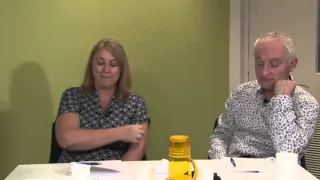
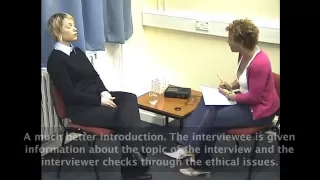
hello my name is Allison Jones I understand that you've taken a series of chart training workshops I'm doing qualitative evaluations about the training so we can learn more about how participants think about their training and what they've learned um so I'd like to ask you about your experience with the chart trainings is that okay yes okay great um can you tell me your your name please my name is Shea Bloomer Shea Bloomer okay can I call you shay yes okay thank you um and Shay what do you do for a living what's your profession I'm
a nurse you're a nurse how long have you been nursing I've been a nurse for 12 years oh interesting so first I'd like to start out and just kind of get your immediate reaction to the training your memories of of how it felt to be in the training um what was your favorite part of the training and your least favorite part of the training um well uh I would say that my favorite part of the training was that the facilitators really took time to have discussions with us and it was a very open um kind
of discussion that we had about a number of the the topics that we were discussing and I felt like um I wasn't just being told things it wasn't a one-way sort of experience we were very much um learning from one another and um it was exciting to be in a group with my peers and to be able to discuss the issues that we confront every day and learn different ways of approaching them I know the training was a while ago but um I'm wondering if in these conversations that you were having with the facilitators and
with some of your colleagues can you remember um any particular topic that was especially interesting for you well one of the uh topics that we talked about um was taking sexual histories and um as nurses who are working in in HIV care and in testing um it's often important for us to take a sexual history but it can be very uncomfortable for example um depending on who the patient is we have patients who come in who seem too young for us to need to take a sexual history patients who frankly seem too old to for
that to still be relevant and um it was interesting to talk about how we all sort of approach it in a different way and how a number of us frankly were fairly uncomfortable with the topic but um having this kind of discussion about it really helped me to feel um more empowered to talk to all of my clients about their sexual history so um I heard you say that you're now taking these sexual histories differently and I'm wondering if because you're taking them differently if different kinds of information actually comes out from your your consultation
with the patient yeah I think certainly because the truth is that I was so uncomfortable doing them before that I often sort of skipped over it or um found ways to just ask yes no questions and get through it and so now that I'm more comfortable taking the history I'm actually doing it with all of my patients MH can you think of any ways that that might affect um the actual care the patients receive definitely because before I wasn't thinking about a number of these patients in terms of needing the kinds of services like HIV
testing um and now I realize that the Elder generation is sexually active and I'm taking their sexual history and some of them do need to be tested can you tell me um anything else that you remember learning from the training well one of the things that we discussed a lot at the training um was patient confidentiality and um I I feel like I was aware that confidentiality was important I was not aware of the many ways that we can accidentally violate patient confidentiality and um it's caused me not only to look at my practice um
personally but to also be thinking about the way things sort of happen in our Clinic because um there are a number of things happening in our Clinic that I actually think are making it harder for us to maintain patient confidentiality h that's interesting can you tell me more about that well for example we have a very small waiting area that's directly in front of where all the patient records come out and we have a limited number of consultation rooms so a number of times during the day um conversations need to happen among providers and there
aren't very many places for that to take place and often what ends up happening is that at the desk where people are waiting to sort of sign in and things like that we are having discussions about patients um and we always sort of think I think of that desk as being a barrier but in fact it doesn't block sound and so I think that that might be an issue that we need to have um a safe space for providers to be able to have discussions about patients so it sounds like this is something that you've
noticed at your workplace that this area may not be um it may have been treated as a confidential space when in fact it's not has um have you noticed anything that's changing in addition to your own own recognition of this well I've started whispering um and trying to keep my voice very low um and I've talked to other colleagues about it to try to find another space and how how's that going for you well we have limited resources and so um we're working on trying to identify a space but because we really need the consultation
rooms to see patients it's been challenging mhm so can you um tell me about any of of the activities that were done in the training that have really stuck with you um well one of the activities that we did was um an activity where we talked about the different words for the body parts that are in our vocabulary because so many of our patients don't use the sort of scientific terms that we use um and so I think it helped to sort of desensitize us to that language and and get us comfortable with all the
language that patients might come in using um and so it was both sort of it was sort of entertaining and also a little awward at the same time I'm hearing you laugh as you say it so it yeah it's it was fun to have sort of this group of Professionals in there sort of throwing around this vocabulary yeah um another activity that we did that I thought was um really effective was that we watched um these videos these short videos that showed us um something happening at a facility that might contribute to stigma and discrimination
um and then we had really really great discussions as a group around whatever it was that we were sort of seeing in the video um and you know those were things that I think that a lot of people in the room could relate to and had seen happen in their own facilities so it was it was good to be able to have a discussion about them um did everybody seem to have the same reaction to the videos when you listen to them or watch them I would say that um people universally seemed to acknowledge that
what was happening in the video was wrong um but people had sort of different reactions about why it was happening um or what could be done differently MH okay great um thank you very helpful um can you think of any additional trainings that chart might provide which would help reducing uh stigma and discrimination at the facility for people living with AIDS well I think that at least in my facility I don't really think patients are discriminated against um so I'm not sure what additional training would be necessary okay so let me um let me make
sure that I I have it right and I I wrote it down correctly so I think what I have here you mentioned earlier um I I thought I heard you say that there are some things that that are being done differently in terms of conversations around the desk and keeping people's voices low so that seems to me to be a change and um now I'm hearing you say that there's not a change so I I'm wondering which part of it I'm not understanding correctly can you help me with that well you asked about additional training
and I'm not sure that people need additional training to change their attitudes um I think that like what I mentioned about what's happening at the desk and that's that's not people intentionally um jeopardizing patient confidentiality it's sort of a function of um the limitations of our setting so I think that some of what we need assistance with is um sort of the place where we're working and how to have those kinds of conversations that are out of patients hearing range um but I don't think that it's intentional I don't think people are intentionally discriminating against
patients so I really that's a really good example of um of a problem or an issue that exists at a facility that can't obviously be changed by training but something else needs to happen a different flow of patients or a different flow of staff so that they can discuss patients can you think of any other um structural issues at the facility that might um threaten confidentiality no not really mhm okay so that sounds like like that's the the primary one um are there I guess one thing I think that we do need at our at
our facility would be training for um other staff beyond the healthc care providers okay for example for example um the janitorial staff and people who are who are sort of around the patients and might see patients there but who aren't Healthcare Providers um I think they would benefit from some training uhhuh can you give me an example where um where you've observed or heard of these employees uh engaging in a behavior what I'm not saying it was an intentional but something that they may may have done that a training would help amiliar yeah for example
um just a couple of weeks ago uh one of our janitorial staff approached me and said you know oh gosh what are the patients in here for because I saw that you know it was like his it was his friend's girlfriend who was in the wait who was in the waiting area um and she was there for an HIV test and he was feeling like he needed to go tell his friend um and so we had a a sort of one-on-one discussion about that um but that sort of alerted me to the fact that we
might need to train um staff beyond the healthcare staff okay great thank you um are there any other kind of major areas of practice at your facility that you think training might be able to address well I think that um I think that our staff would benefit from more training in diabetes management um it's one of our most pressing health concerns um so I would like to see more diabetes training I think that also some health administration training would be useful um I know of a training that is offered at Howard University that would be
beneficial for some of our management or leadership staff so this these are things that it sounds like you've thought about and looked into already yeah um in terms of short trainings um if we just kind of think within the realm of a day or maybe training by distance um are do you have ideas about how whether that would be enough for these types of of topics that you've mentioned the administrative management um piece for example a diabetes Well the administration training that I know of is a it's a longer training I think that it's a
three-month program um but the diabetes training could probably be addressed through short-term trainings okay great thank you um thank you so much for answering all these questions it's been really helpful um before we end I was just wondering if there was any other feedback you'd like to provide about the training how we could improve it or things you'd like to see us do differently just that I I really appreciated it and it was really useful training um and I hope that you'll keep me in mind for future training great thank you so much Shay have
a nice day thank you