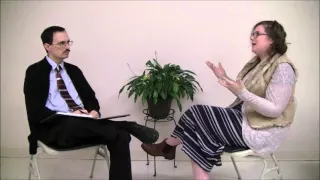
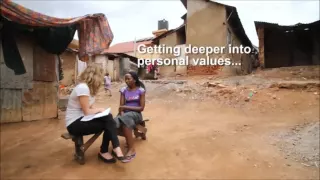
I: Hi my name is Alison Jones I understand that you've been to several chart trainings and I am the qualitative interviewer and so I'm interviewing people and asking them for feedback about the training, and how it went for them, and all of that. So is it okay if I talk with you about that? R: Yes of course I: Great, so um what is your name?
R: Shae Bloomer I: Okay, profession? R: Um I'm a nurse I: Great and how long have you been a nurse? R: I've been a nurse for 12 years , I:OK um, did you enjoy the training?
R: Yes I did I: Would you say that you enjoyed it a little bit, a medium amount, or a lot? R: I enjoyed it a lot I: Great OK, and um did you learn something by the training? R: Yes I did I: Excellent OK, and would you recommend it to a friend?
R: Yes I would I:Great OK, so can you give me an example of something you learned? For example some people have learned that they may think that they're not discriminating and that they're very open and respectful of everybody, but then when they actually get down to it and they go through the training and they understand that there are things that they actually do have some sort of biases in them and they may not have known it, but then the training helps them discover it, and then just helps them be very self-reflective in that sort of thing. I: Do you think that maybe that's something that you learned in the training?
R: Um certainly I think some of that was covered in the training R: We also learned about taking sexual history and effectively taking a sexual history which is a sensitive topic, and it's not something that I was trained in in my professional education. R: We also learned about patient confidentiality and the importance of maintaining patient confidentiality in order to protect our patients, and both of those I think were very relevant for me. I: I'm sorry can you say that last part again?
I got distracted I'm so sorry R: Oh it's okay, um. I believe I was talking about how we talked about the importance of patient confidentiality and maintaining confidentiality of patient records to protect our patients I: You've been talking a lot about what you learned and now I'd like to ask you a little bit about what you've done differently? I: I mean it's one thing to say we learn something but then it can be quite another thing to actually try to do something differently, so can you tell me anything that you may have done differently because of the training?
R: So what I'm doing differently since the training? I: There must be something that you did differently. I mean think about it, you know.
Anything because you mention these different things that you learned about, so can you think about, you know, maybe keeping your voice softer, or spending a longer time with patients, or being more empathetic than you were before? I: Anything like that? Do you think any of those, maybe things that you did differently?
R: Um yes I'm sure they must think that I'm more empathetic than before I: Great OK, so now let's talk about the training methodology. I; Do you think it was effective? R: Yes it was I: Great.
And, how was it effective? R: Well it was a very interesting training. I was happy to be there.
I: Great, but it helped you learn and do your work differently? R: Well um perhaps. .
. I: Now I'm a little bit confused. It seems that you're contradicting yourself.
I think earlier you said that it helped you learn and you were doing something differently, but now you seem to be changing your mind and so now I'm just very confused. I; Can you clarify for me whether you did something differently because you learned from the training, or you didn't? R: Well what I mean to say is that I think that I've always done my job well, and I like my job, and I think that I've always been respectful of my patients but I think that there are certainly some things that I'm doing a bit better than I did before the training I: Great OK, great thank you, um, so that's all really good, thanks.
So would you like us to provide you with more training on this or at any other topic? R: Well yes actually there are a number of different trainings that we could profit from in my facility that I personally would like to attend. R: I am very interested in a Health Administration course that's offered in Washington DC at the moment in Howard University.
R: I'm also very interested in having some more in-depth training on diabetes which of course is a large concern for us. R: I am also interested in taking some further training in care of pregnant women who are HIV-positive. R: So there I think a number of trainings would be of interest I: Um can you just say that again, I didn't get that last part?
R: On pregnant women with are HIV-positive? I: OK I: OK so what are some of the other problems at your facilities? R: Well one of the one of the concerns that we have been going round and round with the administration about, is the some of the water issues in the examination rooms.
R: The running water isn't working in some exam rooms, which limits the number of rooms in which we can do certain procedures because the water is not running or or there's not . . .
. R: So that's one issue that the water is not working in a number of the exam rooms. R: I think there's also some communication issues, some systems issues between the pharmacy folks and the people who are in the wards, and I think that it would be useful for the hospital if we were able to have some communication issues resolved between the pharmacy and the ward.
I: Hmm OK great. I think it's about time for us to wrap up. Is there anything else you'd like to say?
R: Er, no, I don't think so did I answer all your questions sufficiently?