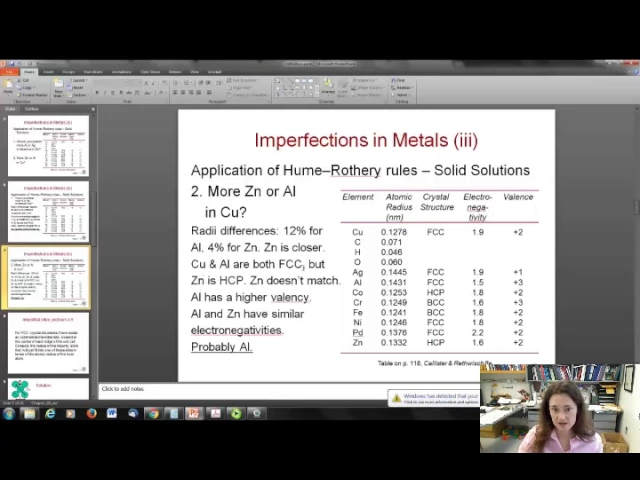
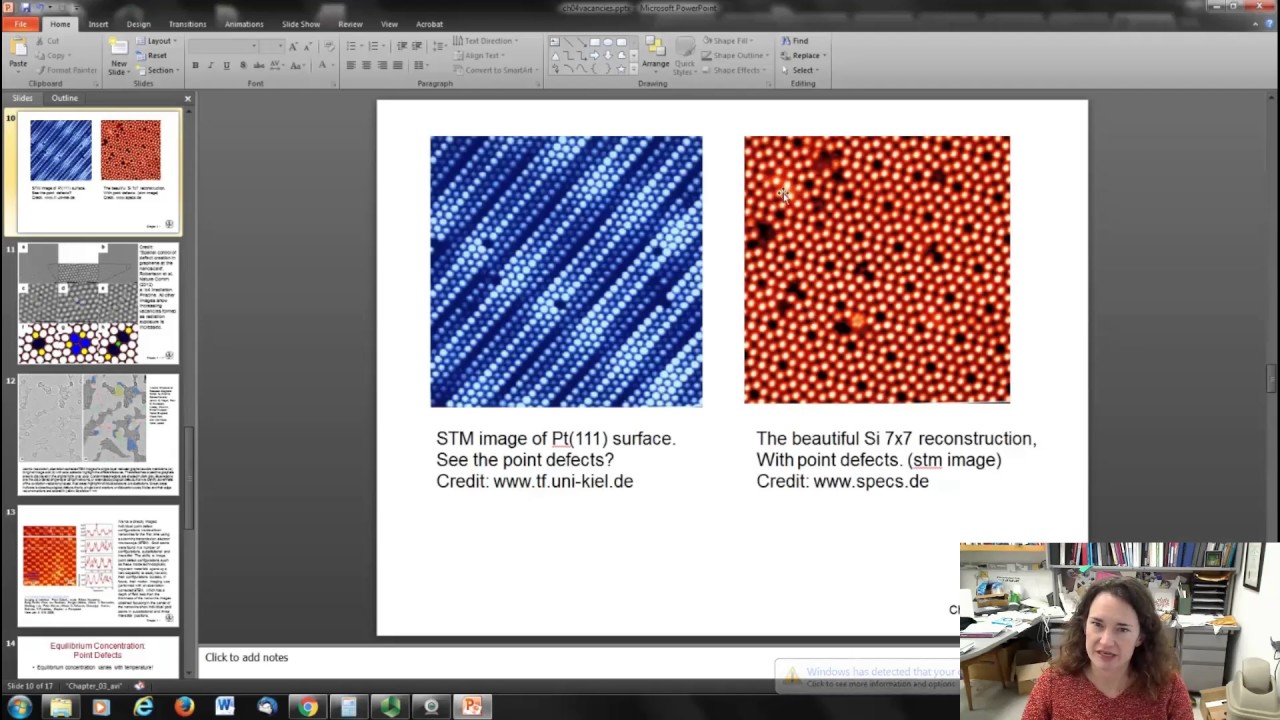
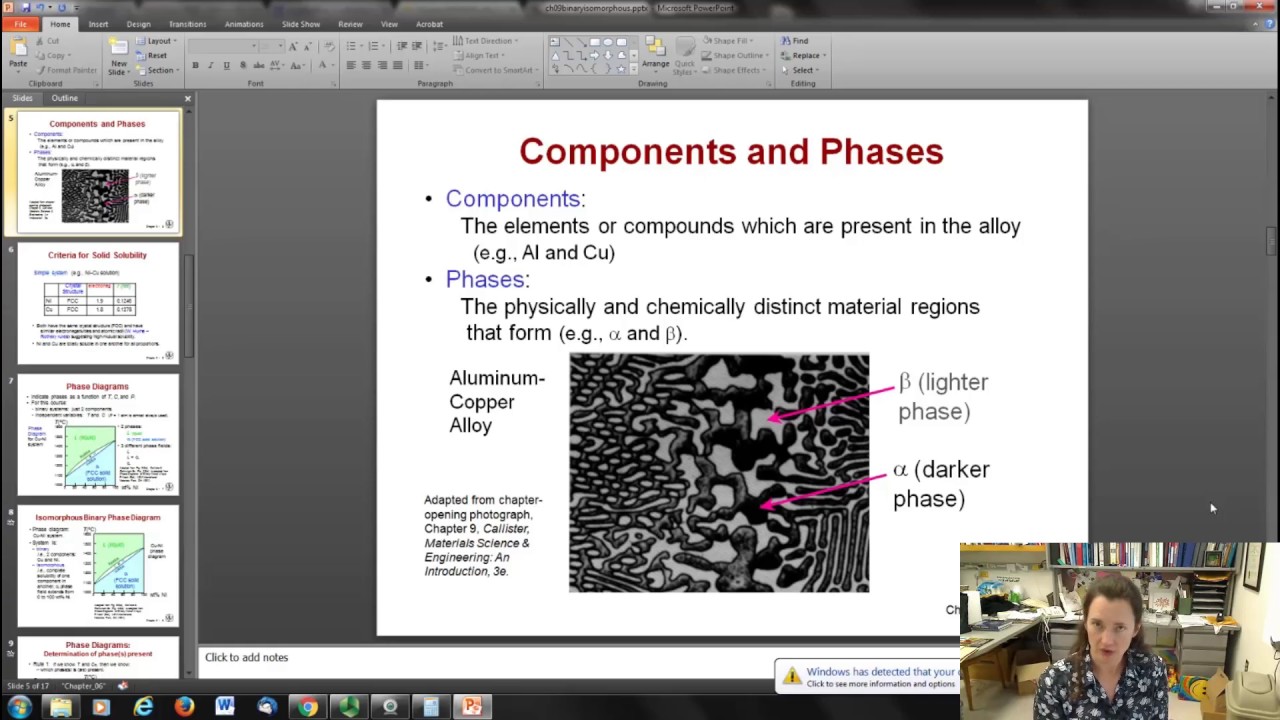
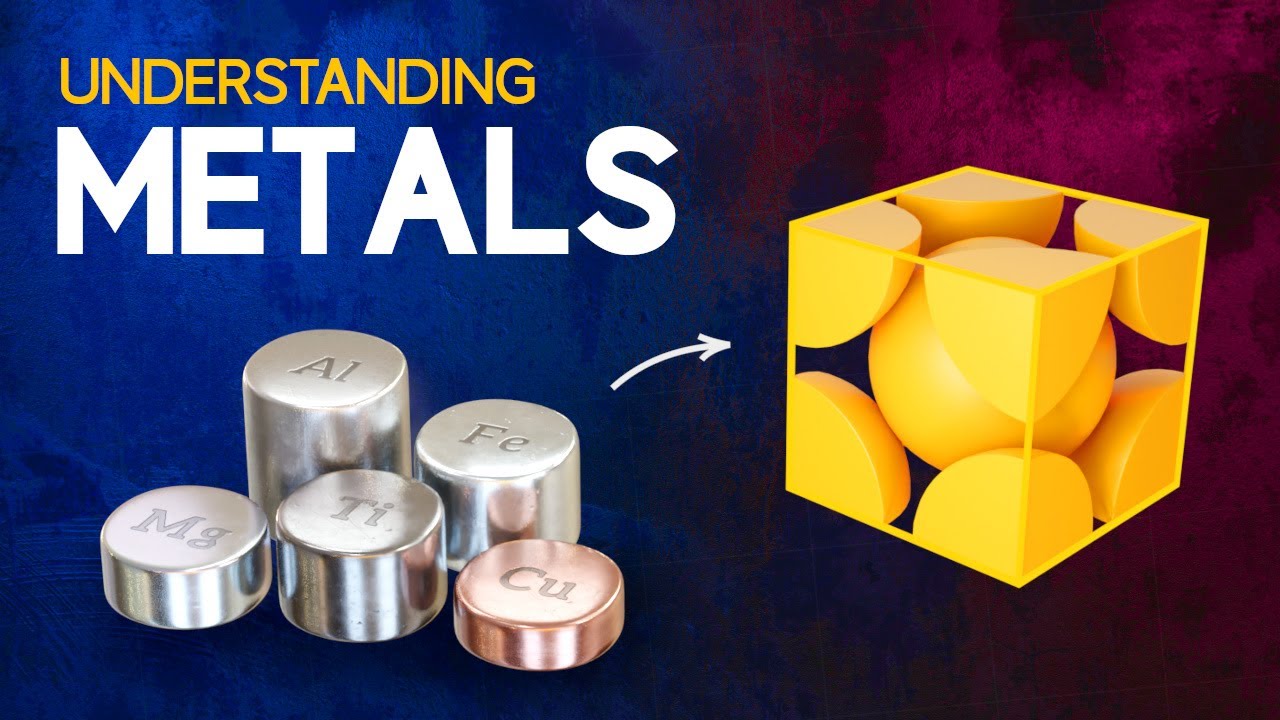
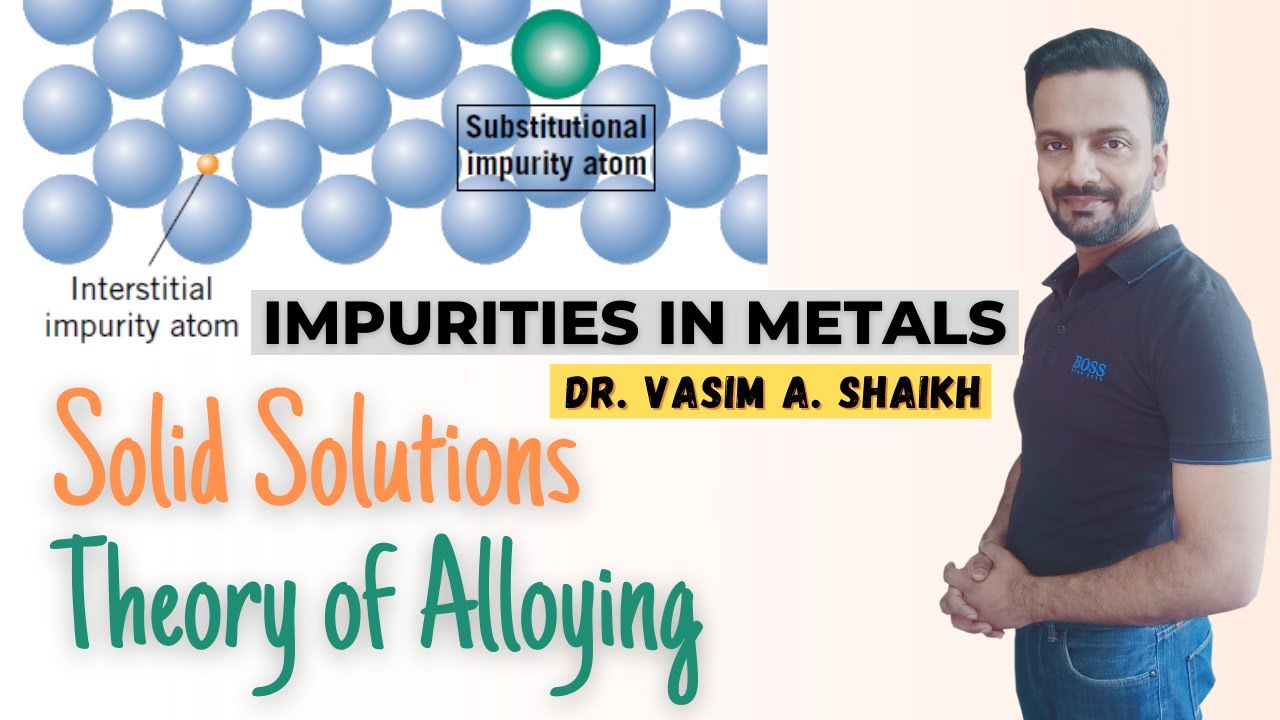
hi okay so I want to talk about Alloys as defects um and this is of course from chapter four um in your material science textbook so just some definitions an alloy is a a blend of different metals and you start off with say a pure material and then you add impurity atoms to it and you do this intentionally so that you can get certain characteristics of the material that you like so for example instead of iron you might want steel so it's more resistant to rusting um instead of copper you might want brass um so that it's a little tougher and harder instead of aluminum to make your airplane out of you might want dur alumin you might not have heard of this one this is a particularly cool alloy um that they make airplanes out of and they make airplanes out of it of course because aluminum is a very light metal it has a low density um but it's also really super soft soft um in its pure form so if you add dopants or impurity atoms of things like magnesium manganese and copper then you make a harder tougher alloy that's still very lightweight um and maximizing all the properties that you want of that blend so basically when you do this you're creating a solid solution a mix of different things dissolved in other things okay you add these impurity atoms to the host the host maintains its Crystal structure up to a threshold Point um and it's compositionally homogeneous now you can look at two different outcomes if you add an impurity which will call B to the host which will call a so first of all if you have your solid solution of BNA a then what can happen is that the B atoms which are pictured here in Gold can just replace one of the a atoms in its lattice position and this happens if they're similar in size and have some other criteria that are satisfied and it's called a substitutional solid solution one example of two metals that form a substitutional solid solution or copper when you add it as a dopent to nickel or you can have what's called an interstitial solid solution and that what that's what happens if you have a large difference in the radi between the two different materials and this is for example carbon that you add to iron to make Steels um this is uh this is an intertial solid solution because the carbon atoms are so tiny that they can just fill in those little potential Wells that exist within the um the iron lattice now we'll study phase Transitions and what happens as you increase the percentage of different dopant within the The Matrix later on um we'll study that in more depth um but what happens is as you increase the percentage what'll happen is they form these little nodules or these little separate phases phase particles um because things can undergo phase transitions as you increase the composition of the dopent material so that's something for later okay but if we're still back where we are today with our little substitutional solid solution that makes a nice um homogeneous mixture then the conditions for a substitutional solid solution are given by the Hume Ro three rules okay there's four different things that you need to think about the first is that the atomic radi of the two metals can't be that different they should differ on a percent different difference basis by no more than 15% for example they should also have similar electr negativities in other words they should be close to one another in the periodic table they should also have the same crystal structure it's really hard to mix for example a BCC crystal in with an FCC lattice that that's kind of hard to do um and then all else being equal a metal will have a greater tendency to dissolve a metal of a higher veency than one of lower veency and remember here the valency is the number of electrons in that outermost energy shell so let's look at some possibilities some applications and questions applying these Hume Roy Rules for solid Solutions so there's two questions that we're going to examine the first is would you predict more aluminum or more silver to dissolve and form a substitutional solid solution in zinc and the second is would you expect more zinc or aluminum to dissolve in Copper and so what we're going to use to answer these questions is this little table right here um this is from your textbook it gives you the element the atomic radius of the element the kind of crystal structure that it likes to form on its own the electr negativity and the veency and we're going to use those four things um applying the Hume Roth three rules so first of all let's answer question number one would you predict more aluminum or silver to dissolve in the zinc so if you look at the radi of aluminum and silver then you see um they're given here 01445 and 01431 nanometers and then the radius of zinc is 0 1332 so the radius of zinc is lower than both of these two if you calculate the percent difference that the silver and the aluminum make with the zinc respectively you get 8. 4% difference and a 7. 4% difference now both of those are less than the threshold value that was given of 15% and they're actually not all that different so this probably isn't going to be the deciding factor the radius here because the radius of silver and aluminum is pretty similar the next thing to look at might be the electro negativity well aluminum's electro negativity is 1.
5 and that's close to zinc's value of 1. 6 but if you look at the value for silver it's electro negativity is 1. 9 so in other words the value of aluminum um for its electro negativity is a lot closer than zinc and that would suggest aluminum might be the answer but let's look at the rest too okay so if you look at the lattice structure aluminum and silver are both FCC lates face Center cubic lattices and zinc is hexagonal close packed so since aluminum and silver have the same structure and neither of them match zinc then that's not really going to be the deciding factor and then finally the veency if all else is equal you look at the valency it turns out that the valency for aluminum is higher than the valency for silver the valency for aluminum is plus three and silver is plus one so you would expect silver more than you would expect I'm I'm sorry you would expect aluminum more than silver because of the electr negativity and the valency that's the deciding factors okay let's look at question two so question two said would you expect more zinc or aluminum in Copper okay well if you look at the radi there's a 12% difference for um for aluminum from copper so the the radius for copper here is 0.
1278 aluminum. 1431 and then zinc. 1332 so you can see that the copper is a lot closer to the zinc than the other um and so the uh aluminum has that large 12% difference now they're both still less than the threshold but 12% versus 4% is a pretty big difference now copper and aluminum are both FCC but zinc is hcp right so that means the zinc doesn't match so that would give you have you leaning a little bit more towards the aluminum versus the zinc aluminum also has a higher veency um but Al and aluminum and zinc have similar electr negativities so given that you have more matches for the aluminum um than the zinc you're probably going to go with the aluminum okay okay all right now for the interstitial solid Solutions basically what's happening there is that they're falling into those little vacancies that exist within the lattice of the material um the host material so for example for um here we're going to look for problem 4.
5 lots of times the geometry of the situation will dictate what the upper limit on the radius of your dopent can be okay because it has to fit within those little vacancies so problem 4. 5 says for an FCC crystal structure there exists an octra octahedral interstitial site which is located at the edge the center of each edge of the unit cell so compute the radius of the impurity atom that will just fit into one of these sites in terms of the atomic radius of the host atom so here's the solution to that if you look at a face centered cubic remember that what happens in a face centered cubic is that you have on on each face of your Cube you have these five host atoms here that I've depicted in green so there's one in the center and then one on each Corner in an FCC structure now the interstitial site that they're talking about is here along the top Edge I've colored that interstitial site here in this kind of deep red color okay so what's happening is it's just fitting there in the widest point of that vacancy or in the narrowest point between the two spheres there okay now if you assume that this is an FCC cubic lattice then each um of the centers of these four corners forms a square and we're going to call the dimensions of that um a okay so the length of the side of the square is a and since it is a square the diagonal of the square will be < tk2 * a okay now we're going to call the radius of the host atom the larger atom Big R and we're going to call the radius of the little substitutional um material little r because it's going to be a small radius so just using geometry if you look at the length of this side um here then a is the total length and you can see if you connect Center to Center for these um host atoms connect Center to Center that the that length a is going to equal to two times the radius of your host atom plus two times the radius of your interstitial atom and then what we want is an expression for the interstitial atomic radius in terms of the host radi so I rewrote that expression 2 little Ral Aus 2 Big R okay now we can also write what our um value of a is in terms of the radius Big R and then we can sub in for a so if you look across the diagonal here the diagonal gives you two full diameters of the the atoms um which is four times the radius and four times the radius is going to equal that < tk2 a and then I can sub in a would be 4 R over < tk2 I can sub in um 4 a into my top equation and get this expression here when it's simplified I get 2 little r equal Big R * 4 over < tk2 minus 2 and then I can solve for that little math expression 4 < tk2 minus 2 and I get 0. 828 so 2 little R equals 0.
828 Big R or when I solve for little r i get 0. 414 Big R so that's the ratio basically or the the factor there that relates your little radius for your interstitial at to your big radius and it was just solely determined by geometry okay now in terms of how we talk about Alloys the way that we usually do it is we give the percent composition we can do that in one of two ways we can give the weight percent composition which is really super common because the engineers just weigh out how much of each um component that they want in their alloy or you can get give the atomic percent of each of each um component excuse me so if you have a two component system then the weight percent for component one which is called here C1 is going to be the mass of component one divided by the total mass which for two component system is just M1 plus M2 and then put in terms of percent that would give you a fractional composition and then you multiply that fraction times 100% And that gives you your weight percent now of course if you have an alloy that's a an alloy of multiple components then all you would do is instead of N1 plus M2 on the bottom is you would put the sum of all the different components M1 plus M2 plus M3 plus M4 whatever and you would just leave M1 there on the top okay so that's how you would do your weight percent in terms of an atomic or a mole percent what you would do is to get the percent composition you would multiply 100% times the number of moles of component one divided by the total number of moles for the system you could also do atoms if you prefer that um now your book takes these two very simple formulas and it deres a whole host of formulas in this section um that are all that all come from these two formulas I am not going to go through each one of the I think you know 10 to 15 formulas that it goes through in that section um please read it and you can see it goes through you know how to find the average density how to find all this stuff um and we don't need to worry about that um you just read that section and you'll be just fine there's some more conventions that are kind of fun for uh talking about percentages of Alloys you've probably heard of the carrot system that's used in Gold um Alloys for example so basically the um the Purity in terms of its percentage is just going to be the gold carat value divided by the total so they consider 24 karat gold to be pure gold 24 Kat gold is pure gold so that would be your total on the bottom of the fraction and then whatever else you put on the top so if for example you have 18 karat gold then you have 18 divided by 24 and that gives you 75% gold so other words if you have 18 carat gold you have 18 Parts gold and six parts of whatever else you're mixing in um for a total of 24 and then 18 divided by 24 gives you 75% so that's how to do the conversion from the carrot system over into for example the weight or mass percent um which we're more familiar with and this is 12 karat gold for example would be 12 Parts gold 12 Parts another and that's 50% gold so on and so forth now I stole these prices off the internet of course prices fluctuate from day to day so if you look up the price for gold um now it might be different from what's displayed on this slide because there is a lot of fluctuation but gold is a very expensive metal it's a precious metal um and the other metals also fluctuate from dayto Day based on demand and Supply um on the day that I originally made this slide gold was $1,380 per troy ounce the economy was in a really bad State um so gold was $1,380 per troy ounce Platinum was actually more expensive than gold at the time and it was $1,480 per troy ounce it fluctuates right now I think today uh Platinum was a little less than gold but you know whatever Palladium another one $700 per trol ounce still quite an expensive metal but nickel and copper were are cheap so nickel and copper are $7 and $2 per pound not per ounce per pound so it's really cheap and silver today was $15 an ounce so understand that all these different metals have their own monetary value so that would mean that not all gold is truly of equal monetary value even if it's the same carrot waiting because it depends upon what other metals are in the mix in the alloy weirdly enough though sometimes they don't price things that way so that's interesting so for example there's different types of gold if you go to buy jewelry you might hear the Jewelers speak about yellow gold Red Gold rose gold Pink gold or white gold um and those are different colors that the gold can take on and those depend upon what that the gold is alloyed with so for example yellow gold is mostly gold with a little bit of silver and copper and zinc okay Red Gold has copper mixed in with it rose gold has copper and silver mixed in with it and so does pink gold just in different concentrations and then white gold which is really hot right now for engagement rings and wedding rings has depending upon what it what the alloy is platinum Palladium silver nickel or zinc mixed in with it okay now of course Platinum a Palladium Platinum can be more expensive than gold at times Palladium is still pretty expensive but it was about half the price of gold nickel cheap zinc cheap so depending upon what the gold is alloyed with the white gold it might dictate a little bit um your price I don't know I haven't really done a lot of pricing of white gold if it doesn't it should now I stole this off a jewelry website this is pretty interesting um there's some issues with white gold okay this is something to bear in mind if you're going to be looking or in the market for an engagement or a wedding ring people are all excited about these white gold engagement rings these days but one thing that they do is they fade in color they they're not as shiny and bright at year two as they were in year one the reason is that these white gold rings that they typically sell they usually plate okay they put a thin layer plating is putting a thin layer of another metal on top of the base metal what they usually plate it with is rodium okay um so rodium is also quite expensive but because it is is a plate it has a tendency to flake off after a year of heavy wear so you might need to get your white gold ring replated every once in a while which is probably not going to be all that cheap because rodium is not cheap also remember that um you might have to think about any allergies that you might have or the person might have that you're buying the ring for when you get the ring um if they have an allergic reaction to certain Metals then that could cause irritation and people in general on average have more allergic reactions to white gold than they do to yellow gold so that's another thing next in terms of repairs and resizing yellow gold is really easy for the Tex to work with because yellow gold is usually got mostly gold or some copper and silver and copper and silver and gold are all more malleable and ductile than the things that they usually put in the white gold like the Palladium and the platinum and the nickel those things those are more brittle Metals they're less malleable and less ductile and so if you want a truly seamless repair for any jewelry that you might have you would probably go for the yellow gold over the white gold now what they say on the jewelry website is something that I actually sort of disagree with um but it seems to be the industry standard they say yellow gold white gold and even rose gold have the same value providing the assay or carrot is the same the they base that on the argument that 14 garat gold is 14 karat gold in other words it has the same weight percent gold regardless of what you're doing because it is 14 karat right so if you've got an 18 karat ring it's 75% gold and then they say Well since it's got the same weight percentage of gold it should be the same price ah but wait if you have a white gold ring that's been alloyed with Platinum Platinum is very expensive then that should be more expensive than a white gold ring that's been alloyed with padium which is half the price of gold and if you have a white gold ring that's been alloyed with nickel although that's not common anymore because so many people have allergies to Nickel but if they do that stuff is dirt cheap and so that white gold ring should technically be cheaper than the white gold ring that's been alloyed with platinum or Palladium so in my opinion they need to do a little bit more thinking about that but who knows now if you take your ring to a pawn broker or you're trying to you know just value the price of your jewelry or whatever they're going to test your ring to see what the carrot rating of the ring is the way that they do this in general is that gold is very resistant to reactions with all but the strongest acids it's very resistant to reaction so what they do is they take your jewelry they take a special stone they rub the jewelry on the stone so they get a small Trace amount of the metal on the stone and then they put different acids on the stone on on top of your metal rubbing and see if the acid can dissolve the metal or not okay um if it dissolves it all very easily at a low with a weaker acid then it's not gold at all if um then they have a scale to test if you if you dissolve it all and there's this really Green reaction then it's not gold okay it's some other base metal and it's not gold if um if you have the different with the different strengths of acid what they do is they um vary the the strength of the acid going left to right with the rubbing and then when the metal rubbing completely goes away depending upon the strength of the acid that'll tell them what the carrot rating of the metal is so um that's pictured here uh in this um in this little graphic so they took a rubbing of the different metals they did the um acid on it in the rubbing they rubbed the acid across the top and then that told them what the um rating of the gold was so that's kind of fun another way that you could do it would be totally non-destructive is if you could measure the density of the metal so what you could do of course is do a water displacement method to get the volume and then measure the mass divide the two and you have a density to show you what this would mean is let's figure out what the average alloy density for 18 karat white gold would be if it were alloyed totally with either platinum or plaum so to do that I'm going to use um one of those many formulas derived in your book that started with the weight percent okay we're gonna figure out what our average density is so the formula for the average density for a two component mixture the average density is equal to 100% divided by the percent composition the percent by weight of material one divided by material one's density plus the percent of material two divided by materials 2's density so in that formula for my average density I'm going to plug in my values for the gold and for the Platinum the padium so first of all 18 karat gold 18 divided 24 gives you 75 and that means that you have 75% by weight gold now the densities of gold platinum and Palladium are 19. 32 211.
45 and 12. 02 gram per cubic centimeter respectively so for the average value that in for the Platinum we have 100% over qu it you now now the denominator 75% divided 19. 32 plus 25% divided 211.
45 which gives you an average density of 19. 81% divided by 75% over 19. 32 plus 25% divided 12.