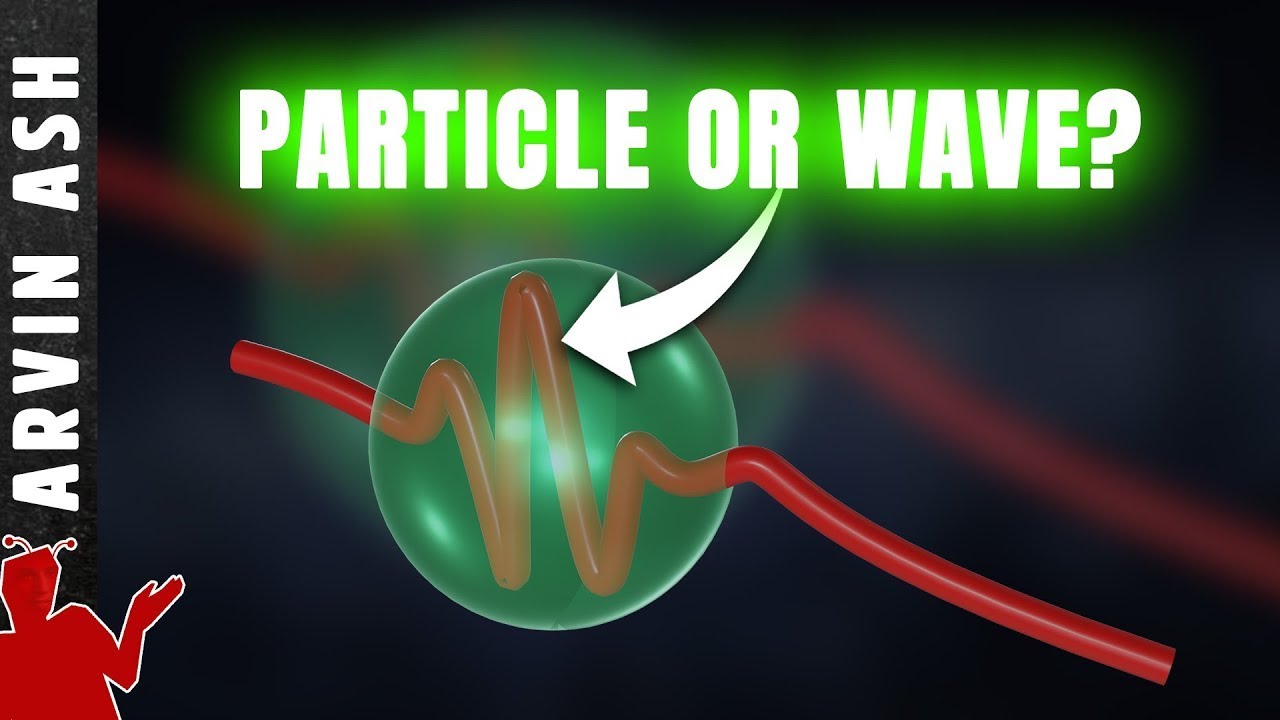
In 1801 Thomas Young, a British physicist and doctor, decided to put an end to doubts about the nature of light. He wanted to prove that light was an electromagnetic wave, as had been theorized by Christiaan Huygens, a theory that was contrary to that of Isaac Newton, who argued that light was composed of tiny particles. The problem was that, depending on how it was used, the light could have characteristics of either a particle or a wave.
Young's experiment consisted of opening two small slits in a large box and measuring how a beam of light would behave when passing through these two slits. His experiment proved the wave nature of light, but this certainty lasted only one hundred and four years. I am Nyx, the Goddess of the Night.
Today, in the second episode about simulation theory, we will delve into the secrets of physics, to discover that even science can be as magical as an arcane grimoire and that nature itself can reveal the secrets behind reality. Come with me. .
. . .
. find the flaw in the Matrix. For thousands of years, humanity has been searching for answers to the same questions as always: Who are we.
. . Where did we come from.
. . and where are we going.
. . Initially, part of these questions began to be answered through legends and myths .
Afterwards, they were organized into religious movements that began to manage practically all aspects of life. Along with the answers to quell spiritual doubts, there were those that aimed to describe the justifications for the functioning of the natural world and its relationship with the action of the gods. Thus, faith was able to control all matters, both worldly and divine.
They were the first philosophical movements that tried to look at nature and tried to look more closely at the elements, trying to separate their properties and classify them according to their primordial characteristics. One of the most influential theories in Western history was the theory of the four elements. Proposed by Greek philosophers such as Empedocles.
According to this theory, all matter was composed of four fundamental elements: Earth, Water, Fire and Air. These elements were considered the primary substances of nature and their combination in different proportions explained the diversity of materials and phenomena in the world. Another important concept in ancient Greece was atomism.
Proposed by Leucippus and his disciple Democritus. They believed that all matter was made up of small, indivisible particles called atoms. These atoms were eternal, unchanging, and varied in shape and size.
According to Democritus, the different arrangements and movements of atoms in the void explained the variety of substances and natural phenomena. Atomism was later developed by Epicurus and popularized by Lucretius in his poem "De Rerum Natura" (On the Nature of Things). These ideas, however, were more speculative and not based on experiments like modern science.
Aristotle proposed a different view of the nature of matter, known as hylomorphic theory. He believed that all matter was composed of substance and form; substance was matter in potential, while form was the organizing principle, which gave identity to an object. Aristotle also maintained the theory of the four elements, but integrated them into his philosophical system, where matter was pure potentiality, shaped by forms.
In addition to the 4 elements, many Greek philosophers believed in a fifth element, called Quintessence, or Ether, which made up the celestial bodies. This element was considered eternal and perfect, in contrast to the earthly elements, which were corruptible and imperfect. In ancient Chinese philosophy, the nature of matter was explained by the concept of Wu Xing, or five phases.
These phases: Wood, Fire, Earth Metal and Water were not elements in the Western sense, but dynamic forces or processes that interacted with each other to produce changes in the natural world. During the Middle Ages, both in the West and in the Middle East and Asia, alchemy was a practice that combined elements of philosophy, mysticism and protoscience. Alchemists believed that all matter shared a common essence and that it was possible to transmute basic materials such as lead into precious substances such as gold through the alchemical process.
The Philosopher's Stone was one of the most sought after objectives, being supposedly capable of transforming any material into gold and granting immortality. In Indian philosophical traditions, such as Sankhya, it was believed that matter (prakriti) was eternal and composed of three qualities (gunas): sattva (lightness, goodness), rajas (activity, passion) and tamas (darkness, inertia). In the Nyaya-Vaisheshika system, matter was seen as composed of atoms (anu) that combined according to natural laws.
Regardless of how this idea evolved over the millennia, it was becoming clear that there must be some rule dictating what matter should be and how it was organized. However, leaving all the answers in the hands of the Gods did not seem to be productive in practical life, when it came to resolving the most immediate issues that directly impacted the lives of society and the individual. Scientific thought became an integral part of divine understanding itself, initially, making science and religion share much deeper roots than either would like to admit today.
During the Middle Ages, Catholic monasteries played a crucial role in preserving and transmitting classical knowledge. Ancient manuscripts, including works by Aristotle, Plato, and other Greek philosophers, were copied and preserved by monks. This helped keep the intellectual tradition of the West alive.
The Catholic church founded many of the first European universities, such as those in Bologna, Paris and Oxford, which became centers of theological and philosophical study, but also of natural science. In these places, the study of nature was often seen as a way to better understand God's creation. Scholastic philosophy, which dominated medieval universities, sought to harmonize Christian faith with reason.
Philosophers such as Thomas Aquinas, who integrated Aristotelian ideas with Christian theology, established a system of thought that emphasized logic and reasoning as tools for exploring both religious and natural questions . Some scholastic thinkers, such as Roger Bacon, promoted the idea that observation and experimentation were important for understanding the natural world, which was a precursor to the scientific method. During the Islamic golden age, roughly from the 8th to the 14th centuries, Muslim scholars played an essential role in translating and preserving scientific and philosophical texts from Greece, Rome, India, and Persia.
Study centers like the house of wisdom in Baghdad became storehouses of knowledge, where important texts were translated into Arabic and studied. Islamic scientists made great advances in areas such as mathematics, astronomy and medicine. Al-Khwarizmi, for example, is known as the father of algebra and his works were fundamental in the evolution of mathematical thought.
Islamic astronomers also refined planetary models and made precise observations that later influenced European scientists. Islamic philosophers and scientists such as Ibn al-Haytham (Alhazen) are often credited with developing the experimental method. Alhazen, in particular, is known for his work in optics, where he emphasized the importance of experimentation to test hypotheses.
A central tenet of the modern scientific method. Islamic culture promoted interdisciplinarity, encouraging the study of various areas of knowledge as part of a unified search for truth. This created an environment where the scientific method could flourish, by integrating mathematics, philosophy and empirical experimentation.
Ancient China also contributed to the development of scientific thought, especially in areas such as astronomy, engineering and medicine. The invention of paper, the compass, gunpowder and movable type printing were innovations that had a global impact, although Chinese scientific methodology did not develop in the same way as in the West. Ancient Indian scholars made important contributions in mathematics and astronomy, such as the concept of zero and the creation of the decimal number system.
These advances were later transmitted to the Islamic world and then to Europe, influencing global scientific development. Mesoamerican civilizations, such as the Mayans and Aztecs, developed advanced knowledge in astronomy and mathematics, including accurate calendars and sophisticated agricultural techniques. Although they did not develop a formal scientific method, their empirical observations influenced their cultural and religious practices.
During the Renaissance, the rediscovery of classical Greco-Roman texts, many of which had been preserved and commented on by Islamic and Christian scholars, helped fuel a revival of interest in natural science . The fusion of scholastic thought with new humanist ideas set the stage for the scientific revolution. Many of the prominent scientists of the scientific revolution, such as Copernicus, Galileo Kepler, and Newton, were devout Christians who saw their scientific work as a way to explore and understand divine creation.
Although the Catholic church has had conflicts with scientists, as in the case of Galileo, it has also sponsored and supported many others. The scientific method as we know it today, based on observation, experimentation and logical reasoning, is the result of centuries of intellectual development. With significant contributions from various cultures and religious traditions.
While the method was refined and formalized during the scientific revolution in Europe, its roots are spread across different times and places. Showing that scientific knowledge is a shared legacy of humanity. Understanding the relationship between religion and the development of science is extremely important to realize that, from the beginning, all that was sought were answers to explain the nature and the phenomena of the world.
The point was that, until then, humanity had not been able to look either very far or very close. Letting only your intuition dictate the rules that could, until then, be tried, reproduced and proven, both in the macro and in the microcosm. The problem is that the macro is bigger than expected and the micro is infinitely smaller.
In the early 19th century, John Dalton revived atomic theory to explain the laws of chemistry. Dalton proposed that each chemical element was composed of atoms of a single type, with a specific mass. And that chemical reactions involved the combination and separation of these atoms.
This theory helped explain the fixed proportions in which elements combine to form compounds. JJ Thomson (1897), using a cathode ray tube, discovered the electron. A negatively charged subatomic particle.
This demonstrated that atoms were not indivisible, as Dalton had thought, but composed of smaller particles. Thomson proposed the plum pudding model, where electrons were distributed within a positively charged sphere. Ernest Rutherford (1911), performed the gold foil experiment, where alpha particles were fired at a thin sheet of gold.
He observed that most particles passed straight through, but some were deflected at sharp angles. This led to the conclusion that the atom had a small, positively charged central nucleus , where most of the mass was concentrated with the electrons orbiting around it. This was the birth of the nuclear model of the atom.
Niels Bohr (1913) proposed the model of the hydrogen atom in which the electrons orbited the nucleus in fixed orbits, with quantized discrete energies. He introduced the idea that electrons could only occupy certain energy levels and that light was emitted or absorbed when an electron jumped from one energy level to another. This explained the emission and absorption spectra of hydrogen.
Louis de Broglie (1924) proposed that particles such as electrons could have wave properties, suggesting that any particle in motion could be described as a wave. This was a fundamental idea in the development of quantum mechanics. Werner Heisenberg (1927) introduced the uncertainty principle , which states that it is impossible to simultaneously measure, with absolute precision, the position and momentum of a particle.
This principle was one of the bases for the quantum interpretation of the probabilistic nature of atomic and subatomic systems. Erwin Schrödinger (1926) (did someone say Schwedinger's cat? ) developed the wave equation that describes how the quantum state of a physical system evolves over time.
over time. This equation known as the Schwedinger equation is fundamental to quantum mechanics and describes the probability of finding a particle in a given position. The Copenhagen interpretation developed by Bohr and Heisenberg suggests that a particle's wave function collapses into a single position when it is measured and that quantum mechanics does not describe objective reality itself, but our predictions about it.
This introduced the concept of indeterminism into physics. The double slit experiment, initially used to prove the wave nature of light by Thomas Young, was revisited in the context of quantum mechanics. When particles such as electrons pass through 2 slits they exhibit an interference pattern typical of waves, but when measured, behave like particles.
This confirms wave-particle duality, one of the pillars of quantum physics. Explaining better: This would be an experiment where any subatomic particle passes through an apparatus that divides the particle's path between two possibilities. When there is a probability of the particle passing through the two slits, that is, it is not known where the particle passed through, its probabilistic nature is visualized.
Demonstrating a wave pattern on the measuring instrument, where several bands spread across the screen, like a spreading wave. Now, when it is certain which of the slits the particle passed through, and this can be done through instruments that detect its presence in one or another slit, the nature of the particle changes. It starts to behave like a materialized particle in the real world and its pattern on the meter becomes simpler, with just two bands receiving the particle, like small balls thrown against the slits.
However, there was a problem: Classical physicists argued that quantum physics was fundamentally wrong in stating that particles and, ultimately, matter itself and the foundations of reality, were not deterministic. Albert Einstein was one of the fiercest critics of the non-deterministic model and clashed intellectually with Niels Bohr on several occasions. Accepting that quantum physics was right meant that Einstein accepted things like quantum entanglement, and, as he himself called it, ghostly action at a distance, things that would completely break his model of the universe.
Where nothing could travel faster than light and where the entire relationship of cause and effect could be explained no matter what scale you looked at. Despite this intellectual dispute, the world continued to progress and quantum physics proved to be perfect for explaining events occurring within the scope of subparticles, even dictating much of the modern technology that humanity takes advantage of today. When the term measurement was taken into account in the equation, many questioned what this act of measuring would be.
Classical physicists argued that the interference in the experiment would come from the fact that the measuring instruments themselves were influencing the behavior of the particle, causing them to collide and cancel out the wave effect, going against the probabilistic nature of matter. To counter this statement, in 1970 John Wheeler proposed a version of the double slit experiment that questions the idea of when a particle decides to behave like a wave or a particle. In Wheeler's experiment, the decision whether or not to observe which slit the particle passed through can be made after the particle has already passed through the slits, defying the intuitive notion of causality and suggesting that the choice of experiment can, in some way, influence the outcome.
past behavior of the particle. His experiment, however, was only mental, as at the time there was no equipment capable of carrying out the feat and, only in 1999, Yun Hokin proposed an apparatus that could prove Wheeler's theory. He and his team then succeeded.
The test consists of using entangled pairs of particles, which pass through detectors at different points in the experiment, similar to the double slit. One of these detectors was out of direct measurement, after the particle had passed through one of the slits, measuring only data from the entangled particle. and not the original particle.
As long as the result of this entangled particle was not measured , the probability wave pattern was recorded normally. But the moment you chose to measure the information, the wave pattern disappeared. As this happened after the particle had passed through the double slit, the foundations of classical physics were even more in check.
Because the relationship causes effect in this experiment seemed to be able to alter the past. The experiment, called the "Delayed Choice Quantum Eraser," empirically validated Wheeler's theoretical predictions and reinforced the counterintuitive nature of quantum mechanics. He showed that quantum reality is not fixed until a measurement is made and that the relationship between cause and effect in quantum systems is much more complex than in classical physics.
One of the most profound issues is that the impact of observing quantum mechanics goes far beyond the scientific and practical problems of the material world. Philosophy was shaken because, precisely, the foundations of reality were questioned. .
. . .
. again. Like Oroboros, the discovery of the apparent non-materiality of reality returns to feed the primordial questions of the human race and the vision of the illusory world ends up taking new forms in lines of thought and new theories.
Both in the philosophical, esoteric and scientific fields. One of these theories ended up being precisely the simulation theory, where all these "Bugs" of non-locality, non-causality and non-materiality of particles could be explained if the universe, and everything that lives in it, were, in essence, digital/ And that, due to the evidence that says that the possibility of knowing the position of a particle can make it change its behavior, consciousness would be a fundamental element of reality. In the next video, we will talk about the rebirth of these philosophies, new esoteric and scientific schools and their adaptation to new paradigms.
And how many are trying to come up with a theory that can unify both classical physics and quantum physics. In what they call "The Theory of Everything". What did you think of this subject and these discoveries?
Do you believe that the relationship between faith and science is really so distant? Write in the comments, as I would love to debate and learn from you. If you liked our content, I ask you to subscribe to the channel and turn on notifications so you don't miss any videos.
Participate. Your Like, Dislike and comments are essential for me to improve the channel. Always.
Thank you so much for getting here and stay well.












![What Is Reality? [Official Film]](https://img.youtube.com/vi/w0ztlIAYTCU/maxresdefault.jpg)