When we went through the compounding era and patients fear about not being able to get their medication and you know having to do amas in the community about what our plans were and how we could help them and you know what we would do if we had to transition them off medication you kind of sit at those moments and they're kind of jaw-dropping that you're in that you're like playing a role in such an important Journey for People when you know we joked about a lot of internally when we originally set out to about start
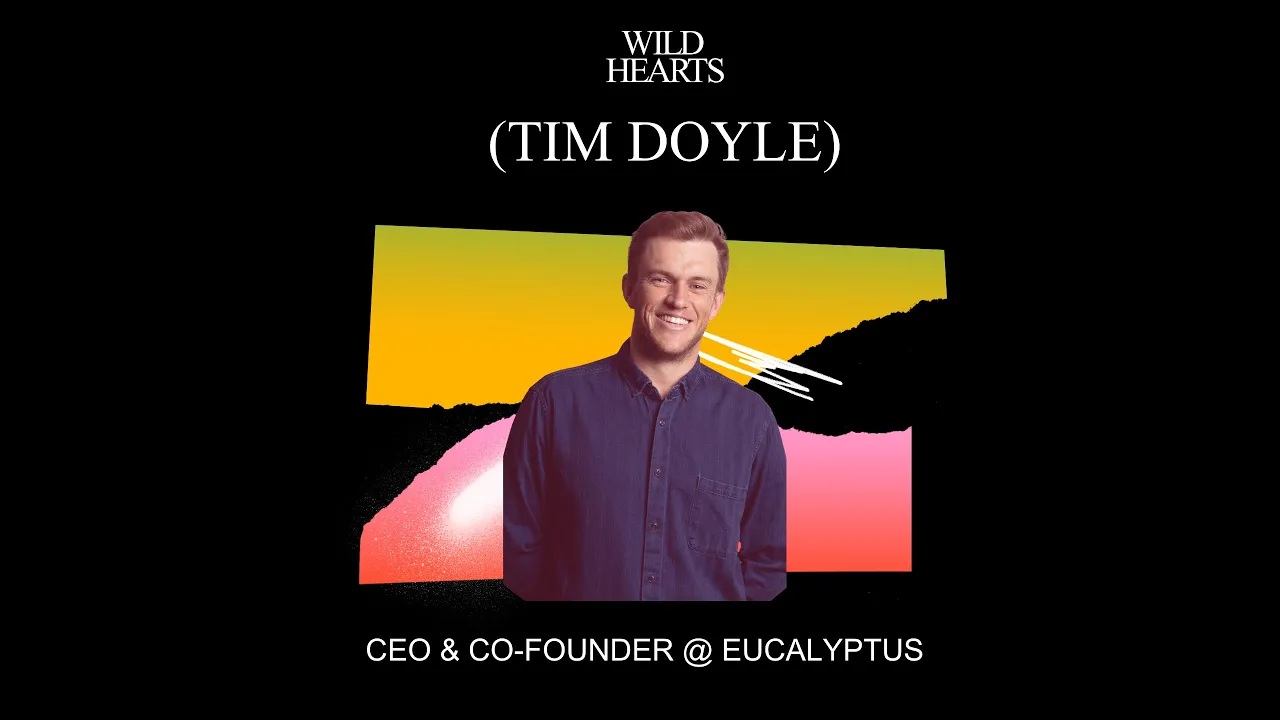
the business it could have been you know pet food or prams or or whatever whatever felt like the right thing at the time welcome back to Wild Hearts this is the third time Tim DL the founder of eucalyptus has joined us on wild Hearts each time as a banger and this time is no different last episode Tim said that he wanted to shock the business into a Newed level of ambition this episode we reflect on the journey that has turned yuk from a house of Brands into one of the highest performing Healthcare organizations in the
world we talk about the trials tribulations challenges and wins we will see you calyptus serving 1 million patient by 2027 if you enjoy this episode and want to listen to the other gems we've got planned over the season I'd love it if You would subscribe to this podcast it'll help others find wild Hearts too this podcast would not be possible without Melia Raina our head of communications and star producer our marketing Guru Jonathan Bleckley and from welcome to day one Annie Jones and finally if you're a Founder right at the beginning looking for investment my
LinkedIn dams are waiting for you to say hi and with that here's my conversation with the CEO and co-founder of Eucalyptus Tim Doyle a lot has changed since I last had you on yeah when was that 2021 which I was actually quite shocked to see initially wrote 2022 yeah trying like it's like a it was it was what was that time in 2021 I think like still top of the market low interest rate environment everyone in very much in growth mode so to kind of weather like the changes in the market and then so like
the maturing of the business as like a healthcare Organization over the last 3 years it's remarkable that it's been it's been 3 years like it's such a different business and environment and kind of company than than it was at that time so it's like fun to reflect on that so much has changed which will probably be at the center of this chart in one of the investment memos Nick and I wrote back in the day there something on lines of like generational companies are built in sequences and they're hard to predict at The beginning you
didn't set out to be the leading Healthcare voice in Australia and the world um but here we are and I just wanted to start on how's that Journey been to realizing that you are a healthcare organization oh so we we had our cycle opener the first time we had a cycle opener um a couple of weeks ago but cycle oh like a so every four months we we like start a new cycle we on three Cycles a year and like introducing just what the business is Trying to do over that period And so this was
our first one ever doing like a massive one of those with everyone in one place and we introduced a uh like a kind of new set of of goals for the company but also like a new mission for the company huge yeah and and it was it's like a the third mission we've had I think which is actually quite funny because like you know you think that those things don't evolve that much but like we had a very uh like build a great Business oriented Mission through phase one and then a like what does it
actually mean to be a Healthcare Company oriented Mission through Phase 2 and then we're now starting on like this like we are clearly a Healthcare Company what does it make mean to make a difference about uh to the Healthcare of you know millions of people around the world over you know over the next decade and so like that has been such a stark journey and then like the opportunity to Reflect on that and think about like my the first version of the business was very much about you know taking the skills that I had um
and using them to build a large company once it started to appear that you know a large company was possible it was kind of a question of like what type of company that would actually be um both from an internal and external perspective and then and now you know the last two years have been like so hard but uh you know such a Rewarding journey to being uh something that is actually a meaningful making meaningful difference in many people's lives from a healthcare perspective and so you step back from that and you're like oh my
God the thing that I know now now know how to do is so much more interesting and ambitious than what I set out and so that opportunity is both like it's fantastic but also not something that I would have expected at the start no way I mean the the Responsibility of a Founder is enormous already it's probably an order of magnitude when you get into healthare could you have predicted the shift and the weight no definitely not like I think like so you our junipa Facebook communities have there's two of them they have um you
know tens 10,000 people or something approximately in each of them um and so you see every day I think one of them has a th posts a day um and so in that Community um with a th post a Day of women all through all through Australia in the UK posting about their Journeys with weight loss and with obesity management and with weight management and the confidence issues that come along with that and the um the emotional issues that come with that and seeing that and and feeling the responsibility you have to delivering that Journey
well like even even things like um when we went through the compounding era and patients fear about Not being able to get their medication um and you know having to do amas in the community about um you know what what our plans were and how we could help them and um you know what we would do if we had to transition them off medication um you kind of sit at those moments and they're kind of jawdropping that you're in that you're like oh I'm I'm you know playing a role in in such an important Journey
for people when you know we joked about a lot of internally and you Know even I think probably in the first version of this podcast about like how we when we originally set out to about start the business it could have been you know pet food or prams or or whatever whatever felt like the right thing at the time yeah what recently stood out to me I was reading an article it said something along the lines of like you're thinking about retiring how are your energy levels oh I think like what I was saying about
when I that was In the the Forbes thing right and I think what I was trying to push back on there is this like idea that like the founder journey is one of like kind of invincibility and endless energy it's like obviously not and it's like super um fraught with ups and downs and like emotional strain and you know fears of what goes bad and what goes well and like um and like you know 20% of your body at any given time is like desperately searching for the exit to This thing but um the other
side of it is so rewarding and so great um that that that obviously gets compressed and and pushed away but um but I I just don't like this um Arc that tends to happen where people hero success in a way that is like this person was like ordained um from from a young age to make this happen like it just doesn't it never is like that and and the journey is so much more complicated and so I try oh like and We're obviously on the early in our journey but I try and kind of be
as real about the ups and downs of the thing as possible when you're talking about it because I think it can it's it's dangerous to send a message that it's ever easy or um or that only you could do it because you know lots of people do it yeah it can be traumatic yeah yeah for sure can you bring us into a moment where it got really tough yeah I mean I think The what's the best version of this I mean we' we've been through several I think the toughest moment was so we had found
out that there was no AIC in the country um and there wasn't any sign to there being more um and we had thousands of patients successfully losing weight on either sender or AIC you know the two the two uh medications uh approved in the country and there's now there's now thousands of patients who have tasted momentum in this space often for the First time um that are now asking questions about like what would happen if um you know if I can't get access to this medication and so that's happening on one side um and so
we're like kind of considering how to solve that problem and and compounding is one of the options and so we're working through like the safety profiles of of compounding at the same time like as we get closer to doing that you know there's like a whole lot of media Pressure about like the incentives and the motives of doing this kind of thing and then there's um investor pressure about whether it's the right thing or not and so you've got like what is the right thing for patients what is the right thing um for the business
um from an investment perspective what's the right thing for the people that work in the business um that you're trying to navigate and it's an incredibly complex Environment and you you you've got a lot of voices coming in at the same time and you kind of just trying to navigate what's ultimately the best thing um for patients at that moment and you there's so much pressure on that like extremely and you like I'm how am I even how am I even in this decision you know like let alone you know you're talking to government and
you're talking to regulators and um I think like there was an exact moment where we had just made The decision that we were going to offer compounded semaglutide to patients um or help them try and access it um and the we were at our Christmas party and like it was 500 P p.m. at the Christmas party and the TGA um the ABC push sent a push notification about a TGA announcement so a push notification through the ABC up to like millions of people um about the dangers of compounded product that from a TJ announcement and
we were like oh my God like this is like such such intense Pressure even though like you know we'd seen all the safety testing we' seen all yeah we'd seen all the safety testing we' seen everything you know everything that we could have done to make sure that this was safe and high quality um to still have this like weight of pressure on was like you know pretty pretty incredible that is incredible and in the back of my mind I'm thinking how how how the heck does one silence the noise I don't think you like
silence the Noise right I think like I think one of the things that's been really important about this company from very early on its life is like there's a lot of really great people who um who work here and have been attracted to the the problem that trying to solve and so I think like ultimately you build the support infrastructure around you so that like when things are noisy you have voices that you can go to um you know whether that's our Clinical Director our legal Team our researchers um just people in the exact team
or around the business generally that like you have confidence that you can deliver this thing um at the standard required because you've spent a long time working with people who can perform at an incredibly high level and so you you get energy from that internal capability not from dealing with the exteral noise which is inevitable can you give me an example of like how to how did everyone respond at The Christmas party I don't remember exactly like I don't remember exactly but I think like through through that time like people underestimate the complexity of communicating
a change like that to tens of thousands of people right so you you have to ensure that they fully understand and consent to um what is going on and so you have to ensure that they pra a a firstly educate the practitioners um so they understand what's going on and then you ensure that The practitioners educate the patients um and ensure that that's going on and then you have to run an entire consent process so that patients um understand what is about to happen to them and you're checking that that's you've done that properly and
so you know there are thousands and thousands of pieces of communication that go into that um and they have to be empathetic they have to be clear um they have to be delivered in the right way um they have to be Compliant you know and so like doing that at scale is like such a hard problem and like you know teams of 20 people sat in a room for you know weeks doing this and so to get that right is is really really difficult I'm remember asking you few years ago where do you get the
most energy the moment that you see the team doing something that they haven't been able to do before because of the products that you built and the platform that you built underneath them Um it's in those moments maybe you could share like how has the team evolved in the last few years the first thing is there's like so many of the people that were you know we were talking about as people that had joined the company and were incredible people of of incredible potential you know three or four years ago are now like the leaders
of the company you know so like there's a classic example in like Beck who runs our UK team Which is you know like nearly half of our business now um you know she started as like a relatively uh junior person in the business grew over four years and is now you know managing you know what would be multi hundred million dollar business um and then uh Simon you know who's our coo in a similar position um you know like even like de and Joe who like have have both recently kind of uh left the business
to see them go from like Junior you know growth and Engineering people to like fantastic leaders and and over the course of four years like it like felt like validation for the early bet we made on um people's potential to to grow as part of the organization and then like the organization to grow on the back of their efforts as well so I think like that feels as true if not more true than ever like the the ability to get energy from seeing people progress and and kind of take on new things um and then
you Know like the the kind of constant source of new energy is like well what does that mean to go from doing that at you know 300 people to doing that at 3,000 people you know what does it what does it mean to attract the next generation of that Talent what does it mean for the people that we have now to be to step into those roles and take on those responsibilities like we so Joe was head of growth and then um Matt Rossy took over his head of growth and Now um and now Carly
um has taken over uh as head of growth and like all all three of those people kind of learned growth um largely within eucalyptus and you know like to see khie go from like a performance media buyer to to a really really strong leader is like you just like you get so excited by that journey and what's what's in front of those people as well what's been different about the SE hat of a healthcare organization from before where it was Agnostic watching creative Brands I think like I think the biggest thing about being CEO of
a Healthcare Company um or Healthcare organization generally is most of the decisions there are many many critical decisions that aren't yours um and so I think like to come back to the kind of compounding example is like ultimately it's not my call to make whether it's safe to do compounding um you know that's that's a clinical decision and so I have to trust our Clinical leadership and so um having a Clinical Director in in Dr mat Vias in a clinical Advisory Board um of real quality and going like hey you're the final call on whether
this is safe or not um so we will trust whatever your decision is here because ultimately I'm not I'm not a doctor like I'm not specially trained in my ability to do that so the ability to like give up control of those decisions and Trust the people around you to make good decisions Um based on their training it's different to other companies right you know there's been a lot of Buzz and stuff recently around like founder mode you know and like in a healthare organization you don't go founder mode ever because you don't control most
of the decisions you know we facilitate an interaction and support an interaction between professionals and patients um and so there is a responsibility to and a and a resp to be relatively low ego About that and so you know you learn in in seeing thousands of patient interactions go through and seeing how clinicians make those decisions and you learn an enormous amount of respect for their decision making in the systems that they run and and how to facil those decisions rather than um making them I think is the really big change what is the how
has the influence of that sort of lack of control that you have sort of evolved over the last few years uh well I think it's like you you've got to build systems which you trust right so you know over the last three years we've built you know a clinical Advisory Board a risk and audit committee a whole lot of safety infrastructure um both internal and external audit standards all of these type of things and you can play a role in designing those systems But ultimately the output of those systems has to be uh pres like
kind of decided over by clinicians and so um you Build a lot of trust in those people to make a good U medical decisions but good commercial decisions along the way as well and like um so you you you end up orienting around building a great system rather than um you yourself making uh great decisions in that space and I think like it feels foreign to people coming in like even even you know in the context of making some of the ma the macro clinical decisions we've made over the last couple of months everyone Thinks
they've got an opinion that's valid on whether or not you should do a thing um you know um and the reality is like if you're a um you know you're a professional investor or you're you know a CEO of another company or whatever um your opinion is actually not valid on whether it's safe or not you know like it's just not and so like learning the humility to be like this is not my call is a hard thing for people that are used to making calls um and so yeah that's That's been a big lesson
are you a control freak no definitely not you can't be you can't be in like you can be if you are a single-minded product Builder and and you know we've like some of the greatest product mins in this country and in the world would probably ascribe to being um controlling if not control freaks but I think like and and that produces great product in you know many of the examples That we know about but in a healthcare organization uh you just can't do that like you have to have so much trust in the expertise of
others and I'm not just saying in the medical decisions but you know in the pharmaceutical decisions in the legal decisions in the risk-based decisions like they're just not your calls um you can be um a voice for um a perspective but the the willingness to like step back and I think like my job is to make sure that everyone has enough Context to to make the decisions they need to make across the many vectors that the the business operates on but actually making those calls you just cannot be controlling because um you don't have the
mandate to do that one of the things you can or cannot control is the media um what's what have you learned about your relationship with media yeah I mean obviously have a controver history um with a variety of uh Australia's technology journalists it Was hard for me because I think like there's there's a phase in startup life where um all publicity is good publicity you know like um the hardest thing about media is getting media um and so if you can say something that might be perceived as slightly controversial or um an opinionated take and
that leads to your business getting um promoted in a way that it otherwise wouldn't have that largely is a posi um and then at some point that changes and you become a Story you know regardless of what whether it's good or bad and so um then the incentives are for you to be written about um regardless of whether it's good for you or not right and so um you know the first time I featured in real window it was because of something I said on a podcast and like it was amazing to me that people
were even listening to that podcast um but I learned pretty quickly that like oh yeah like now um there are enough people that would like to see you Know us do poorly and enough people like to see us do well that there will be enough eyeballs attracted to content about our business whether good or bad um that the age of me trying to get media to promote the business is over and the age of me trying to manage the reputation of the business through media has begun and and that was quite a um you know
like a difficult transition because um the long tale of things that you've said historically um can come Back to bite you in in in different ways and so um that that happened to me you know pretty quickly and pretty painfully but like I don't resent the incentives of the media or the media Professionals in that cuz like ultimately their job is to uh produce content which people read um and so if I've said things which were designed to produce content which people read historically then I'm I I can't be held responsible I can't be angry
I can certainly be held responsible for the Repercussions of that coming up later um and so while it was like personally quite draining um because I didn't feel like it was a fair representation of where the business was at the time or what our um goals were or what we were trying to do like I I understood why it existed um and so then the job was is to get on the front foot with a narrative that uh reflected what we were truly about and so I think my immediate response to uh like there's a
there's a You know an often shouted line um in Australian media about a business like ours being commercially motivated and therefore not doing the best things for patients and I think like that's a subjective opinion based on like a vague perception of what Venture capitalists and Venture Capital back companies do and I'm like well if you're going to have an evidence-free discussion um we can have that evidence free discussion but I'm not going to win Because um you know you can Source whatever materials you want and you can slant the article however you want because
you control the pen and so our job there is to build a narrative that says something different and provides evidence and and brings facts to this conversation and so something I'm extremely proud of is you know we've got 10 pieces of um peer-reviewed research published in the last 12 months wow um and so and they they talk about Everything from safety to efficacy to adherence yeah across a wide rate of demographics and countries and prescribing models and so like we have brought facts to this conversation and so the next time that um these things play
out I would hope they play out in a way that is like um well here is eucalyptus presenting its evidence um whoever chooses to present a perspective or a subjective view on the other side all power to them um but you know the Weight of things should should skew or fall um to a more a more fact driven version of the discussion can you tell us more about some of the research that's been published yeah so uh it kind of breaks down into like three kind of major areas the first is the efficacy of medications
when prescribed through a digital model with um support services around them so um we're obviously hearing a lot of Buzz at the moment about the gop1 medications the question Is is like what is the safest and most effective way to prescribe and manage those and so we we look at likelihood to lose significant amounts of weight um likelihood to lose certain amounts of weight and that's like a tranch of our publishing and like what's really exciting is patients on uh Juniper um were shown to be four four and a half times more likely to lose
5% of their body weight um than the clinical trial for that same medication and so what That says is like if you build a deep and empathetic Journey around the medication where patients can get the support they need as they go on their Journey whether that's through talking to nurses talking to pharmacists just being in a community um they're much more likely to stick the journey up and so therefore they're much more likely to see results and that's like a fantastic um outcome for for those patients because many patients you know these These drugs are
miraculous but um many patients never see the benefits because they drop out of the journey um because they don't have the support they need too early um so that's like one tranch um the second tranch is around um what version of support experience produces the best outcome so high touch coaching low touch coaching automated coaching um dietician support there's like a whole world of things we need to work out about like outside of the medication Over a 10-year period what produces the best health outcomes for patients um and so we're learning and Publishing in that
um area to to show that there is real value to supporting practitioners around this um and then the last area is around safety so content about dispensing errors content about prescribing errors showing that like tele Health as a model can not only be like a low cost and high utility option for patients but can be something that's extremely safe and Valuable part of the system and so you know in our two biggest markets there is clear supply issues on the GP side for in the UK and in Australia so technology has a role to play
in lifting productivity and and we're hoping that our research can show um that role and the perception that uh tele health is like some loose Wild West um can kind of uh be replaced by a set of standards and set of rules that show um some safe and high quality Care let's just take a step Back on g1's because in 2021 I'm not sure that was no I don't think we're talking about it at all obviously now it's a huge part of this business I'd love to hear from your words are they safe why are
they important for a weight loss Journey yeah for sure I mean the the question of like why they are important for a weight loss journey is that uh like I I think it's uncontroversial to say that obesity is a out of control problem across the entire World um and has been getting worse despite huge amounts of in investment and huge amounts of interventions um over the last kind of two decades three decades and um you can point blame in multiple directions but the reality is we were making no progress uh and then the opposite yeah
yeah yeah we're getting we're getting much worse and then so you know 15 years ago the first research comes out uh about uh the class of medications that are GOP ones and uh It shows you know quite substantial weight loss um for patients you know at 3 6 and 12 months and what was remarkable about it is like had a reasonably uh I mean a very safe side effect profile um and so people feel nausea but outside of that um there hasn't been you know significant concerns for those patients and that they are losing weight
consistently and keeping that weight off um on that medication Journey so like just like a Remarkable change in how treatment is done um and so you know they start at the mask Consciousness and like obviously asmic um first approved as a diabetic drug so semaglutide the the molecule um that is a zic first approved as a uh diabetic drug um and then later approved as an obesity medication um so I think like the argument has often focused a lot on whether this is a diabetic medication or whether it should be used for weight loss and
I think Actually it's kind of a redundant argument because it is approved as a weight loss medication it's just labeled differently and so I think like there's an education piece to be done for the Australian public which is wovi which is the brand name of the weight loss medication and as zic they're actually just exactly the same medication at different doses they that starts to hit the popular conscious Consciousness and then I think like what we then see is Like this well what does it mean to have these as part of the medical system and
I think that's the discussion that we're having now which is like you know if there can be very effective medications for weight loss um how do you ensure that patients are getting this done safely done in the right way it's for the right patients and how do we get supply out to as many patients that qualify for this as possible and so that's where we we've played a really Important role because we've you got 50,000 patients around the world at the moment and what we really view our role is is to help patients navigate that
Journey with the right support from practitioners in the first place and then from dieticians and coaches uh from exercise phys physiologists and so that over you know this is not just a I get in and I lose 10 kilos which I think is like a lot of the media narrative it's like how do I turn that into a longer And healthier life um and so that's where our focus is at the moment did you say 10,000 were in the Facebook groups yeah 10,000 in Wild engagement yeah like the thing is like the the very very
frustrating thing about the weight loss conversation um as it's kind of generally represented is that um it's an entirely aesthetic thing and that it is like somehow shallow and um so therefore like and that it's cheating to do drugs for this and that like why aren't people Just you know every day we get comments on our Facebook ads and in our posts being like um why aren't people just eating less and moving more um that's like you know that's what it's really about that's what it's about discipline and it's like that's just like so fundamentally
not true so firstly like obesity is like largely a genetic condition and then secondly like once you have put on weight it is so hard to lose and so tools that help people uh on That Journey are so powerful and then it is such an emotional thing like people massively underestimate the impact it has on people's lives to be able to you know run around with their kids um to be able to kind of sleep better um to be able to have more control of their appetite like it fundamentally changes people's outlook on the world
and we're like still stuck in this like conversation about which which celebrity has dropped 5 kilos using his mic and It's like that's ridiculous and it's underplaying the enormous impact this can have in society over the next 100 years is there an anecdote that comes to mind that illustrates that example yeah like I mean it it happens all the time like I just like it's not more like more the the counter example of like a successful Journey the examples that come to mind and not wanting to kind of name individual patients is um there is
a very very common Journey which is Mother very fit and healthy lifestyle through their youth uh has children uh de prioritizes their own personal health because um life gets very busy um then either um enters menopause and puts on weight that comes on like biologically with that um and then loses control of that weight gain gets extremely disenfranchised by that probably tries 20 diets does a lot of exercise through that Journey gets injuries through the exercise because they're not doing the Right things there or they like haven't learned the right ways of doing things and
then ultimately feels like hopeless and and is looking at like a quite uncomfortable Journey that often ends up in diabetes and and and you know like a a wide variety of illnesses and so what you see there is like the transition where medication is the spark and so you see them lose you know 5 to 10 kilos out of the gate quickly on the medication and then you see the entire way that They approach their their body and their health change and so you see them kind of changing their exercise habits you know talking to
the community about um diet choices kind of making better diet choices then you see like a complete change um and often we see you know like we see so many patients lose 50 kilos so so many and like it's just like remarkable when you see that and you forget like and then it's like small non-scale vict trees that come off the Back of that which is like um you know patients talk about you know being able to buy different clothes or there was like one particular uh example that came up recently where it was like
this patient had like recently gone through like quite a painful breakup and one of the things that her partner had done through done during the relationship was like buy clothes for her a size too small to try and get her um to lose weight like completely psychotic Behavior um but then now this patient was having all of these new clothes because they they lost all this weight and like so their newly single self had uh had benefited from all of these clothes that have been bought and um it was it was an example that we
talked about at our our cycle opener is just like you forget how much people's mood and and lives can change um you know through through these programs you talked to the Telly Health Advantage and Like how you think about not just being a drug yeah yeah for sure for sure so the first is on access right so I think um the reality of the modern internet is that people will SE health information on the internet like that's just an undeniable fact and so being able to meet patients with high quality information and professionals and Consultants
at the point they're seeking that information is such a valuable unlock for those patients because a lot Of them will find out you know we'll end up in Edge Reddit forums we'll end up in weird communities we'll end up buying things from Pete Evans you know and so being able to meet patients where they are with legitimate coms and legitimate practitioners is a real unlock for those patients as they begin their Journey a lot of them will just never get to the point where they actually seek um proper help for this so getting closer to
those patients is a real unlock that tell Health provides the second is um under the access Banner is um you know convenience and removal of friction in an environment where like it is often quite hard to get access to um practitioners for many people and so um lowc cost high quality practitioner interactions powered by technology is like a big part of the unlock so you know being able to do things largely online largely when you need it um is is extremely powerful for both practitioner And for patient um and I think like that's kind of
the first era of T Health the second and much more interesting era of tell health I think is then like how can you build a multi- practitioner relationship with patients that serves them over the course of their lives so patients by interacting with junipa which is one platform that they can go back to every day they can track their weight they can track their mood um they can talk to their coach they can talk to Their practitioners they can get diet support they can get exercise support they can talk to the community right so all
of those things in one place um mean that every micro decision that they make across their health um is likely to be better because of the infrastructure that supports them on making that decision so you go from like an episodic at need largely when you're ill oriented version of healthare which is like I completely understand why existence is Is is you know works great for most patients to something that can be decision support across every decision you make um and I just think like ultimately if people are making Better Health decisions um around diet around
exercise um around which practitioners they go and see their chances of avoiding serious incidents go get so much better and so like we view our job as helping people to make good health decisions throughout their lives so that Their chances of ending up in hospital go down whether that's working with their GP whether that's working alongside a team of their practitioners whether that's working alongside their Specialists that we're agnostic to how that ends up working it's just that we want to be the decision support across all of the small decisions so um an example a
really really simple example that I'm like quite passionate about in a in a weird Way is like it's really really hard like everyone's trying to eat more protein right everyone but like most of your like also cpg companies and fmcg companies understand branding so they will put protein stickers on everything m and which which protein bar is the best protein bar I would guess low sugar I would guess high protein I would guess depending what you're trying to do probably low carbs yeah yeah I mean that's probably a good a good heris sck Right so
how many people actually know that heris stick or how many of them just walk into a and go oh that's a protein bar that's what I need um or that's high protein that's what I need and so you see so much sugar in these things and so it's like it's not easy right and so I think health education is like the the opportunity for us um and decision support along like a really complicated Journey but technology lowers the cost of Interactions and so if you can drive the cost of high quality interactions as low as
possible and then drive up the number of those interactions then you have a patient that feels supported across a much uh many a you can support many more patients and B that those patients are supported across a much more diverse journey and ultimately that means that they don't end up in hospital and hopefully I mean know that's what the research will show over the next couple Of years thought experiment if there is an uncapped number of glp 1s and the value URS to the drug manufacturers then you ultimately could see the commoditization of those drugs
yeah those prices decline and the value sort of Slither away from uke to them over time how do you think about that which is by the way obviously many years away because the inverse of uncapped is true yeah no no I like I want I want uncapped Supply right I want I want to See a world in which patients can access these medications as free freely and as availably as possible and ideally as low a cost as possible cuz like I think the societal benefit of um as many people having access to these as possible
is enormous commercially I don't view it as disadvantage advantageous to us anyway I think this is a wedge um for people to start to treat their health differently and to build a relationship with practitioners on the UK CPUs platform That will evolve over time from one that is like largely around medication access through to one about all of Healthcare Management and so I think like if we were hedging our bets on being the margin driven um medication provider I think that would be a ridiculous long-term proposition I think it's like we our goal has to
be and you know has been for some time is like how do we use that wedge to build a relationship with patients where we can be decision Support across all of their health um and so and how can we provide as many services and as many products um along that journey to help them make good decisions and so you know compound is a bet in that direction for us like it is like it helps with weight loss for men um and body recomposition for men for sure but um it has a much broader mandate to
do uh Diagnostics it has a much broader M mandate to do um kind of exercise planning to do um support on Kind of transforming your General Health rather than specifically being about medication access and so I think if you want to look at the future of eukalyptus you should look at um what compound is trying to be and then what Juniper can be alongside that and I think that that is the future as we see Healthcare evolving over the next decade talk a bit more about compound how it's different to some of the emerging competitors
and why you're excited about it oh yeah I Think like the idea of extra health information for the worried well whether that is through exact exact health checks or um super premium Diagnostics um I I I heard a a uh anecdote from a friend who was telling me that she was one of the first people to go to the longevity uh Institute in the US which was like one of the original longevity doctors and got a full body scan and um had a uh a kind of a growth or a lesion um that was unidentified
and so spent 12 Months worrying about something that um actually had no treat no impact and no treatable you know nothing treatable and so like I think this idea of just like data for patients is good for the for patient sake is is actually not true and net negative and I think um these businesses won't be fantastic businesses or fantastic services for patients like what I view compound as is a companion to your health decisions across and a long journey but not for the hyper Rich Trying to get healthier and live for three more years
and you know have an ice I think it's for how do we get it to a price point um that the average person can have it in their pocket and be a member and it helps to make better Healthcare decisions and like I know it's expensive now because we're doing it all manually um and so it's uh you know quite a loss making entity um right at this point but not because um I don't Think not because I think the unit economics will be the way that they are forever but because um I want to
make sure that the services of equality that as we learn how to scale that we learn how to scale the very very best possible version of that and so you know the challenge of um an example being uh we tell compound members um if they if they tell us a restaurant they're going to that night we tell them what items on the menu are You know uh which ones should to avoid which ones to you know try and try and get what they might like you know like that type of thing that's obviously a difficult
thing to scale very manual but like I'd imagine the eventual version of this does this really effectively and so the role of technology is to lower cost but we're doing it all manually to learn I think a lot of things never get off the ground because of the fear that it looks like a service and can never be a Product yeah um can you sort of speak to what you're looking for as points of Leverage in the compound experience that I guess is is giving you the the feedback to go that's interesting well not to
be like a gen gen Fanboy kind of say the same thing everyone's ever said on any podcast ever about gen but like um the big unlock of gen is service interactions P high quality personalized service interactions is going the cost of delivering those is dropping by Orders of magnitude yeah right and so if I can somebody's diet diary and provide recommendations at the restaurant they're going to that night myself it's not long before we can do that through an llm it's probably doable now um and so our job is to be like which of these
experiences on top of models are valuable to patients which one do they like using and therefore which which one should we include into the interface and so what I'm looking for is um which Parts of this experience we're delivering to patients really value and so you know do we need to be sending the meal kits um do we need to be how much control of their diet should we actually be taking um you know there's there's General heuristics around no sugar no alcohol no bread or there is we will actually monitor and deliver every meal
that you eat throughout the day and I'm looking for where to be on that Journey same with exercise right like doing Resistance training and telling people how to do the basics of resistance training is one level but actually most people don't lift properly and I'm like I'm in this camp like I one of the things I learned when I did my compound cohort is like I'm actually terribly inflexible and have never really spent any time in gym so when I do go into a gymm I'm like a walking injury um and so learning to lift
properly was you know a like a humbling experience because I had To go back to the very foundations of movement but be built up so much more confidence in me that like if I do go to a gym now I feel like I can do it safely um and so I'm I'm I'm now someone who will probably strength train for the rest of their life whereas there was absolutely no chance that was happening you know before I done compound what else did you learn about yourself when you went through the compound Journey uh I learned
that I like knew nothing Really about nutrition as well um you know I knew enough puristic wise but just the small parts of what I was eating you know I just like I like I learned that the habits were like quite you know I I was I thought when I thought I was eating healthy quite often I wasn't eating healthy like just like um all that I wasn't eating like I guess like I would eat out a lot and a lot of the meals that I would eat out were just like really unhealthy and I
just kind of Passed them through some vague measure of being like yeah it's got you know some protein in it and some vegetables in it and that's probably good enough and um I think that just proved to be like not true and then I think um the other thing that I learned was just like the value of novelty in exercise so um we did a wide variety of different types of workouts over the 10 weeks or so that we did it and so I like learned new things that I can now revert to um as
Methods of training so when I get bored of my usual running oriented Workout World I've got new things that I can like lean on and learn from and um and kind of find energy in so like actually a much more balanced workout profile is is something that's much better for me now too let's move on to something slightly different how have supply chain shortages for gp1s impacted the business yeah I say substantially um so uh just for the context there's for the Last two years um there's been intermittent shortages of all um gop1 and related
medications in Australia the UK Germany every country which we operate so how that affects us is um our partner phes who um so we not a pharmacy ourselves how partner phes to distribute medication so um we would typically pass the um prescription to them or the patient would pass the prescription to them and then uh that they would fill the medication and we would fulfill the Services around that um and so you know to have none of these pharmacies have any medication for a period of um you know sometimes a year or two years think
like what it did was um it build like a lot of resilience into the organization so um you know we had the patient support teams here and the coaches teams here and the med support teams here calling pharmacies um trying to help patient and seek medications and find medications um we had you know Conversations with uh you know the international drug manufacturers about when supplyer would be coming back we had the entire kind of compounding era so I think like as like a a lesson kind of extrapolated out um you know it built a lot
of resilience into the organization and into the team and I think like like lots of startups have these type of experiences right that are these like existential threats that are kind of binding for the group and and Things that um kind of teach you what's possible under pressure um that you know there are many many canonical examples of pivots and crazy near near death experiences for businesses where teams bind together and find a solution and I think um the last 18 months has been very much that for us um in the sense of like I
think it's built resilience into the OR but also like raise the ambition of what's possible because you know if we can get Our patients through that then um we can really make an impact on Healthcare more broadly because it's forced us to build such deep relationships in the system as we've tried to navigate on behalf of our patients and ADV on beh of our patients so I think like now the ambition is way higher and the resilience is higher because of that as well do you have a a story that comes to mind like okay
so maybe actually like the the UK is a better example that business had gotten Off to a really good start um you know had had a few thousand patients and then all of a sudden like zero patients and so we were talking to like every single wholesaler of medication we we we actually own the pharmacy in the UK so it's it's a different system and talking to all the individual Wholesales of medication and um like it got to the point where we were talking to Providers and they were like yeah yeah we can get you
10,000 units and like we're like Really this seems a bit bit dodgy and it's yeah yeah I've got like deep long-lasting relationships with these drug companies and so they're like if you pay us if you transfer us like a million dollars tonight we'll get you we'll get you the medication and so and and it turned out to be like entirely fake and so you've got like people members in the team trying to pass whether or not these like uh secondary Market people were legitimate and Whether or not the medications were legitimate and so and then
the pharmacists are trying to work that out as well and so it's like this extremely intense high pressure environment and then you kind of come through that and um you've built a system which can so like through that we build a system where like we could distribute medication you know from a lot of different types ofes and differentes and so now you're like okay well the Experience for patients is way better as Supply kind of normalizes because we can get the medication faster and from more places and so um it's a better experience but it's
it was a painful one to get through what did you learn about setting expectations and rallying around what's been really tough over the last 18 months M um okay so I think like the like the generalizable experience for startups there and I think like you know When we last talked we were like um everyone was in like this growth at all cost mindset right so you just like you're sitting in front of your board and in front of potential investors and you're like this is going to be you know huge and it's going to be
huge in these timelines and like it's going to be a linear journey I think everyone was extrapolating their early growth forward to you know to the Moon um and it it it's it's just like humbling to see how Quickly that can be not true right and so I think if you overly fixate on the short-term measures of success that come with growth um you are setting yourself up for a like a hollow type of growth um and then B um you're setting yourself up for that to you know you hit turbulence and to not have
the resilience to deal with that turbulence I think we learned that like the hard way um you know we obviously went through like a large redundancy and um and also just had Periods where you know businesses that were growing you know 20% month a month went to zero not even zero growth but zero um overnight so like really really volatile experience and so like what do you actually tell the team through that and you go well do we believe in this category um do we believe in the services we provide in this category do we
believe in the experiences we're delivering to patients do we believe that this thing is going to be enormous If we can get through this and so the the focus on resilience and getting through and providing high quality services to patients and you know the short-term rewards from for maintaining that Faith with patients becomes much more wor the conversation you have and you have much more like patient outcomes oriented um conversation and then that feeds into a resilience in the org um that then when you navigate through that it becomes like part of the culture that
You've got that thing and so you become less growth um obsessed or oriented and much more focused around what you can achieve in the long term and what the Milestones on the way there are and how you're much more patient oriented in that sense what's fascinating about the last episode I think the quote literally at the beginning is like we're going to basically shock the business into reising its ambition and there are a few bets that were made and you mentioned The redundancies um it would be remissive me to not ask you like what was
the learnings from yeah I mean that's exactly like that shocking the business into re-raising ambition didn't work right cuz like we like didn't work at all because we had like um we had like what the principle there was for for those that aren't three part listeners um is um we thought that we could take on a whole lot of bets simultaneously we Would learn how to do them and then we would eventually figure it out while we had heaps of time SC we never got through that phase we actually just like created that complexity didn't
resolve it because it was extremely difficult and I like loaded up the business with too much complexity and then when the pressure came which was earlier than I imagined it was going to come because pressure doesn't come when you run out of money Pressure comes when um your trajectory changes because you go from being fundable with heaps of cash to unfund with lots of cash cash to unfund with not heaps of cash and then that's the point where things have to change fundamentally and so actually while you're still unfund with heaps of cash so and
and what that really physically meant in the business is we're burning a ton of money plus our big bets weren't progressing as fast as we'd hoped then You actually have to change direction there so you never get the kind of incubation time um of shocking the business into a different trajectory Because by the time you've changed the trajectory for the worst um you're already at Red Alert and so like the way that we paid for that mistake is um you know we ended up having to make redundant you know a third of our Workforce which
is like such a it was a really painful experience because it was Like directly derivative of my poor decision- making around how to go to the next stage of scale like some things contextually fell through and obviously the market changed but still I made those calls along the way and so um very formative for how I think about risk and Bets now um is you know the experience of going through that we are much more considerate around the types of bets and the way we'll go about those bets and the way that we will fund
those bets now Than we would have been historically like I think um I think you know it's pretty popular startup Trope to be like when you uh making a bet kind of go all in and like you know like that that idea of real high conviction um but a certain at a certain scale you're like a capital allocator as much as you're a you know step change innovator and so getting your bet sizing right when you don't know what things going to work or not Because you've got a business to protect as well as one
to grow um is's a real Challenge and I think there's a lot more Nuance to that than a lot of the truisms and tropes that you see talked about um particularly by Americans where um American businesses are often um much more win or lose and uh often much more single mode in what they do and so like there's much less respect for efficiency of growth and much less respect for kind of efficient allocation of capital and So I think as an Australian business and wanting a kind of strange Market we had to learn that the
hard way I didn't originally dealt with the consequences and now much more conceded around what bets we take and how we fund them so many places to dive in there maybe just to keep it simple like share just an example of like how that the the learnings of being more conservative being more efficient have then being repurposed back into the business at a Much more operational yeah there's a really simple example right which is um so like you're kind of looking for S curves all the time in when you're building growth businesses right you're looking
for the next um driver of differentiated growth and so for us we were well funded in the end of 2021 but actually none of our major bets were really yielding and so what we did to cover for that instead of being like well we're going to gr gross level for a While and be more efficient we just spent more money on marketing and covered the Gap with less efficient marketing but more scale right so on the surface it looked like we're growing as fast if not faster than ever but the underlying economics of that growth
were far worse um and so we set oursel up for a position where we'd sacrific core operating principles around marketing efficiency to paper over the Gap that our major infrastructure Investments Weren't yielding at the pace we'd hoped and and neverly we set two fires there because we had the existing infrastructure fire about that being too slow and now a new marketing fire which was what had been a fair efficient growth had become inefficient growth and so you don't get to paper over inefficient growth because the only way to do that is to spend more money
um and if you spend more money you become less efficient and so the only path out of Inefficient growth is to slow down and so we went through that pain in a in a real sense through 2022 um and and a much much better business for that like we would just never allow that to happen anymore like we would go through periods of slow growth quite happily um and the market is much more tolerant of periods of slow growth so um that that's the reality and what have you learned about scaling internationally uh that Australian
Companies are should be and are generally really good at this so there is a natural cultural element to being Australian that that drives like a a acceptance of like different cultures I think and then B A willingness to put yourself out there in in different places I think like just the inherent Like Love Of Travel that that is pretty common among like people Australians in their 20s when you compare that to American college students or um or Others I think like that means that we're very fast adopters of new cultures and so when American a
lot of American companies when they go to Europe or they go to Asia they're just cultural cancer because they like don't know how to localize they refuse to acknowledge the Norms of other markets and so s um by our culture should be really good at this but of often like our lack of ambition as a country stops US doing that so like I I've just learned that Like um our teams you know largely made up of Australians are up there talent wise with anyone in the world and so if you give them the infrastructure and
back them in a bit of capital then they can achieve really really awesome things and you know our UK team is probably 80% Australian um and is such a shining light for like what you know Landing in a market and winning that market can actually be and so like I'm I'm just like super Bullish on Australian compan ability to go International what are the differences in the healthare landcape between the UK and Australia what could we learn uh so the the NHS is in a tougher spot than the Australian healthcare system because they have a
supply side crunch on practitioners that's much worse than our supply side crunch on practitioners and so like luckily Australia can be a net importer of doctors in huge numbers and that that Covers for some of the issues um I think 50% of practicing GPS are B outside of Australia and yeah I think that's right that might not be exactly right but it's it's close um so that covers over some gaps the UK is much more had to adopt adopt technology as a mechanism to cover those gaps and so you see a much greater willingness to
adopt technology at the practitioner level at the system level and so therefore you see like a much more mature digital Health landscape I Think that eventually comes here as well because like supply chain supply problems are real um but so yeah you kind of have to see how they've got through the pain that they're dealing with and like they're not fully through it all but um but the willingness to adopt technology as a mechanism of raising productivity is is probably the number one thing I've taken from that market if the weight management products are now
such a big percentage of the Business how has your view on allocating Capital evolved I like I think it's it's consistent with what we said originally so if you go back to our C deck um which is like out in the out in the world now it says like in 5 years we'll have a $500 million Revenue business and it'll be made up of $1250 million brand $1150 million brand and a bunch of 30 to $50 million Brands so we're 5 years in now um we're not close to 500 mil um but you know hopefully
be there in the next Couple of years so bit overly optimistic but composition wise I think um that is where we are we you know we have a leading brand in Juniper a secondary really strong brand in Pilot um uh a range of smaller Brands and one that I'm really excited about the future of in compound so um I don't necessarily think um we've been wrong there I think we're in a phase where the focus is on Juniper but that phase may or may not last for forever um and we'll continue to like Allocate into
what we think the best opportunities are at a given time how does uke work with Regulators um super proactively and I think like um in the most part Regulators often get like a you know a bad wrapp in like startup land or or kind of corporate world for for red tape I think uh actually we found Australia's Regulators in the most part to be um super pragmatic and super Forward Thinking particularly in the health side so like like we've had a lot Of good conversations with the TG over the life of the business about how
content on the internet around tell health is going to work um you know there's been uh some situations where they haven't been supportive of what we're doing but it's understandable and then you've got the health department as a as an example of someone that like is really Forward Thinking and and tries really hard um and then I think like where you where you run into some like More issues is where the you have the doctor kind of like more more like Lobby groups or the colleges I think like that that's where there tends to be
more friction because um they're representing the is is interests of what largely like brick and mortar doctors who feel a little bit threatened by the model but those aren't Regulators right those are those are just industry bodies so um you have to have a dialogue with industry bodies and when disruption is happening Then you can have a dialogue with it is sometimes confrontational with those industry bodies but as long as like you know The Regulators are working off a a fact base that we're supporting and trying to create then I'm I'm I'm super confident in
our dealings with them um because I think like they're largely really practical tell me about Tim in 2021 and Tim in 2024 H yeah think like like the the thing that I I reflect on most is like kind of like naivity to the I think like the same principles of company building I like I believed in then but just like the um that naivity to the variance that could come you know it was just so early in the journey so I think like people shouldn't kind of um speak like they've solved problems um you know
when they're in the first part of their cycle the cycle and it's like series a time and like it's just like you just don't really know anything yet you know you're kind of naive to the Challenges that had to come yeah like I think that that was the biggest thing and I think like now so now like as you know being so much deeper in healthare you learn so much more about how how not healthare organization works and how to deliver Care at scale is such a lesson and so hard one um that I'm something
I'm really proud of that we can do but you know hopefully like a lot of that the same energy about I think like listening back to those first two Episodes like I I got a real feel for like the ambition of the company at the time being big um and it's bigger than ever now um and so I feel really excited about what is to come and I think like the thing that uh I guess the thing that stands out about by thinking at the moment is even though you are ambitious early on that you
can build a really great you know globally impactful company when the opportunity starts to actually like show itself as real um It's a whole different feeling like you know like the like a million patients feels within touching distance right like a million full care patients feels close um and that's like remarkable and then 10 million you know doesn't feel ridiculous um and so to think if we would be providing to 10 million people is you know within 5 years time is just like amazing to me um and so so yeah I think like the 2024
version of me probably a little bit more circumspect And um and kind of aware of the ups and downs but also I think hopefully like maintain the same sense of ambition what advice would you have to Founders at I don't know series a seed listening back to your former self yeah I think like what do I think to be true so I think like the thing that I really reflect on a lot is um that like being really good at the one thing that you're really good at early on it gives you so much space
and like don't give that up like I think I was very obsessed at the time about kind of building out a a company that was like capable of doing all of these things and being all of these different um having all these different high functioning teams um and like that's really really important but I also probably lost a little bit of focus on like what I like did best and and and um so making sure that I was able to create space and oxygen for the company by doing what I do myself well is something
That I I reflect on not being good at at the time that I wish I'd done better and then I think the other part is building resilience into the organization is something that you can um don't undervalue like I think what are the sources of competitive advantage that remain true through whatever cycle comes I think like if you expose yourself too much to the big bet that you're you know you're thinking about doing and and don't kind of continue to service the Thing that works for you you can expose like the downsides like people disappear
pretty fast um you know when it comes to venture funding and so building a durable business with maximum upside is a hard challenge but like one that is really really important I think like we got enamored with maximum upside probably at the cost of durability um and I think you know maybe many Founders have learned that probably over the last couple years but if someone could have Told me that um a couple years ago maybe I would have you know been in a the journey would have been less treacherous um because because of that what
else yeah I think like the other thing that I I think is really true is you know there's this temptation and it comes from a lot of the Venture capitalists in Australia which is to like hire more senior people you know hire um you know you need this role you need that role you need to find someone who's done this You need to find to find this and a general take that I have is that most of the senior people in Australia are [ __ ] and actually not that many people have done anything in
Australia and so um and a lot of the ones that have uh you know still in the organizations that they did them at and they still working hard there and so I think I think like don't undervalue the great people that are early on the journey with them and don't undervalue their ability to grow and to Change and to take on more responsibility and like it won't happen every time that they were able to do it overnight but like you know I think every time I've stuck or most of the times I've stuck with that
I've I've been really proud of the outcome and many of the times I've done the opposite I've I've been really disappointed with what like has happened so I think like Venture capitalists and board members and and and you know people around the Business will feel a sense of safety from more senior people being in in the business cuz they think it's a safe Pair of Hands but the reality is is like if you think you've got great people they can become that and more if you stick with them and so I think like that's one
thing that I I I reflect on as a piece of advice I try and give I love that it's an Australian thing as well right it's like it's such an Australian thing to be like oh I need to get a big name Fing C Chief [ __ ] Operating Officer from stripe or whatever and it's like no you don't you don't you don't your person's probably good and also you can get them there and trust them because they're smart and they you know got to your now I think it's not always true obviously these things
are never always true but like um I feel like too often we we logos shop as Australian growth stage companies I think like I remember having This debate with the founder and it was like Yeah The Hungry nor The Proven and he's like yeah but if you can get hungry and proven then win- win uh problem being is your point just there which is it's it's hard to find the it's really hard it's really hard it's hard to find the hungry and The Proven and then it's also expensive and like time time consuming and like
I'm I'm I'm definitely not saying that like you can't have a transformational Senor Higher if you get those things right but like I would say like the Returns on cost that people and part of that cost being time for most companies pursuing that is not positive circling back you didn't actually share what the New Vision was yeah true true true uh so we've gone we we our new vision is to make good health last a lifetime what the undercurrent of that is or what we're trying to say there is we are trying to orient the
company around Keeping people healthy um and so helping them make decisions in their lives to keep them healthy um and so whether that is being on medication or being on a diet or being on an exercise plan or some combination of all of those things or um seeing a mental health practitioner um we want to reach people when they need that early provide those services to them and help them you know live long and healthy lives I think not to be confused with like the longevity Movement which is like extending healthy period people into living
for 200 I think it's just like there are many many things that the average person could do to improve their health and we want to be a part of that journey and so removing the friction and the cost of doing that is is the mission I love it it's cleaner okay with that as the anchor what needs to be true to get closer to that Vision over the next three years Yeah I think like we have to earn the right to have a broader conversation with patients about their health um so you know when they
give us information we have to return value um and so when they track their weight with us and they track their their nutritional uh intake with us and they track their mood with us um that has to turn into value so I think of it in in three parts like the first is we have to build a profile for those patients that is Rich um and Information dense and interesting enough that they want to use it um we then have to off the back of that design interactions that feed that profile but also interventions off
the back of those interactions which help improve their health so it put super simply it's like if they step on the scales and they report bad mood how quickly can we provide a high quality response um and so that's a really really important principle and then if we can provide That high quality response can we provide them with a set of options that may some of them may be monetizable that they want to then take up and so um in my really simple view it's like I want to be the place where people go to
manage their preventive health and so um we have to earn the opportunity to have that conversation and then deliver value in that conversation and then build out the ecosystem around that conversation and so if we're in 3 years time and um a Patient comes to Eucalyptus maybe as part of a fertility jour J maybe it's part of a menopause Journey maybe it's part of just a desire to um to lose some weight we can deliver value straight out of the gate and then we can broaden that relationship and conversation to helping them manage their health
I think I'll be extremely happy with that and that'll be a great part of the health ecosystem and and hopefully a great business make some predictions get you back and yeah yeah Yeah I mean I like predictions um I think what I'd love to see in in 2027 for eucalyptus is I think like a million patients on active programs is a a reasonable goal I'd love to see 30 to 40% of those patients managing multiple conditions with us I'd love to see 50 to 70% of those no probably 70% of those patients engaging with their
health profile every day and I'd love to see you know Our Brands being household names for the media in Australian around Australian person in the UK person in Germany and Japan about how they you know the best way to manage their health and there's a whole lot of research that will then hopefully FL off the back of that you know we'll hopefully 100 published papers by that point and and you know the crowning Jewel of that being like we're rting Quality quality adjusted life years to people I think that's the goal what's the advantage of
being that honest Uh that's a good question you I I think like look um when the first time we did this podcast and and both times we've done this podcast and and many of the other things that I've done is like I think like trying to be transparent with what we think is possible um attracts people to the business I think like I I I I was reading a kind of piece of content um recently about like the interacting with the media um and being honest and transparent in the way that You do that and
there's huge cost to doing that you know like reputation management is is a two-way streight but ultimately I think like you're going to alienate people and you're going to attract people and like I'm comfortable with alienating people um and so I I want to attract people to the business I want you know I want people that are wanting to solve hard problems at real scale to feel like this is a place that they can do that with autonomy and Control and I um you know that's been true for the business I think like the first
time we did this podcast there's never been a recruiting exercise like that and so that's like a foundational Truth for me in how I want to communicate what you CP to sees and what it does damn Tim thank you so much thanks Mason thank you so much for joining us on this latest episode of wild Hearts if you want to learn from other ambitious People that are building designing and creating the world that we want to live in then please hit the follow or subscribe button it would mean the world to us here on the
wild Hearts team we have an insane producer Melia rer an incredible editor and Jones from welcome to day one and our marketing and content support is provided by Jonathan Bley and we couldn't do it without them if you're searching for investment please my DMs are open find me on LinkedIn I'd love to Help and so with that we'll see you next week wild hearts [Music]