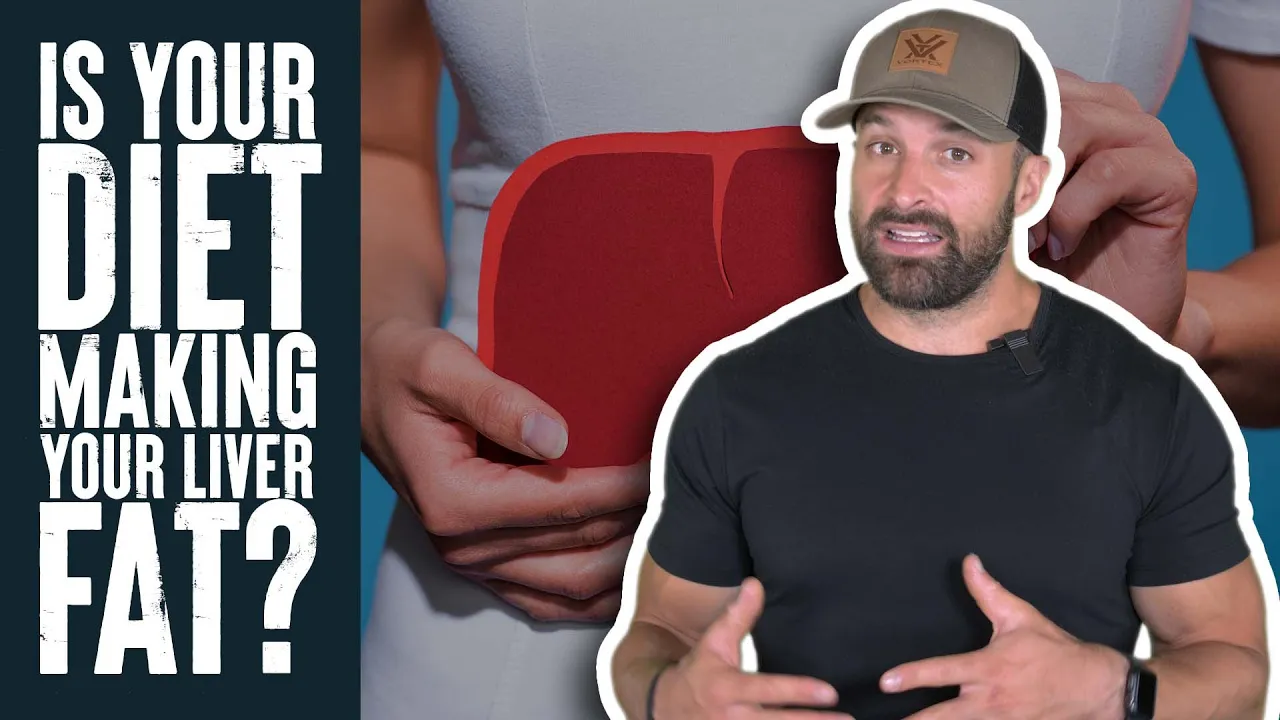
what's up guys back with another educational video and this week we are talking about fatty liver but before we get started make sure you hit that like button subscribe to the channel and leave a comment for the algorithm so there's a recent article in Frontiers and nutrition Journal looking at treating non-alcoholic fatty liver disease using low carb diets versus low-fat diets and kind of everything in between they were kind of looking at all right is one type of diet better than another type of diet for reducing liver fat and they also looked at liver enzymes
and those sorts of things in the context of non-alcoholic fatty liver disease when calories are equated there were 15 studies that met the inclusion criteria which was basically participants had to have non-alcoholic fatty liver disease with basically no other comorbidities and they couldn't be pregnant or nursing or things like that so basically adults over age 18 who had fatty liver who didn't have other comorbidities why is important to look at non-alcoholic fatty liver disease non-alcoholic fatty liver disease is a leading cause of liver disease and it's also associated with metabolic syndrome and reductions in insulin
sensitivity and type 2 diabetes so what did the researchers find across the board they really found no differences between low carb and low-fat diets when calories were equal they found that most of the benefits on liver fat over the long term were simply due to reducing calories and body weight and that reduction in liver fat was mostly a function of overall fat loss they did show that early on like in the first 48 hours that a low carb diet could reduce intra-hepatic lipids more quickly than a low-fat diet but at the end of 11 weeks
there was no differences between the two in terms of actual liver fat reduction both were equally effective at reducing liver fat so what does this mean for you well if you have nafld or you're concerned about liver fat and you want to reduce it it seems that getting in a calorie deficit losing a significant amount of body fat and then be able to maintain it is the most impor important aspect of reducing liver fat now if you're really concerned about reducing your atrial hepatic lipids more quickly then I guess you could start with a low
carb diet but in the long run it doesn't seem to make any difference and they did show that in terms of liver enzymes that a low fat diet might be slightly better than a low carb diet in terms of reducing liver enzymes as for my take on this it's pretty consistent with what I've been recommending for a long time now which is the most important thing is being in a calorie deficit and losing body fat if you're overweight or in this case have fatty liver so being able to get into a consistent calorie deficit lose
a significant amount of fat from both fat mass and liver fat is going to be your best bet and the best way to do that is to use the dietary preference that is easiest for you to adhere to so if that's low carb great if that's low fat great if that's ketogenic great if it's kind of a mix great Mediterranean diet whatever doesn't appear to matter that much what appears to matter is being consistent and this is what we tell everyone who uses our app consistency and adherence is what's most important compliance is the science
I know it's not sexy but it's the truth when we equate calories between different diets and especially if protein is equated we just don't see big differences in pretty much any kind of Health marker the only caveat to that is diets that don't have enough fiber or have too much saturated fat may have negative effects outside of the caloric and protein content of it but if you're getting enough protein you're in a calorie deficit you're getting enough fiber and you're not eating too much saturated fat the likelihood is you are going to have really great
improvements not just to your body composition but also to your health markers but again the most important part is finding something you can be consistent with so if you're trying to force yourself to do a low carb diet because you think it's better for your health and you find that you're just falling off the wagon so much because you can't be compliant then a low carb diet isn't what's best for you if you find that a low carb diet is super easy for you you can be consistent with it then hey maybe that is best
for you but what seems to be easiest to stick to for each individual appears to be quite individual find the diet that is the least restrictive form of restriction for you and that's why with our app carbon diet coach we have several different dietary preferences so you can do a balanced diet you can do a low-fat diet you can do a low carb diet you can do a ketogenic diet you can do a plant-based diet and pretty much anything in between because you can also within each of those dietary preferences adjust your ratio to carbohydrates
and fats as well as protein and shimmy those a little bit so you can have a wide spectrum of macro breakdowns to follow so that you can find something that's easiest to adhere to for you so if you're interested in carbon diet coach make sure you click the link in the description and I will catch you guys next week