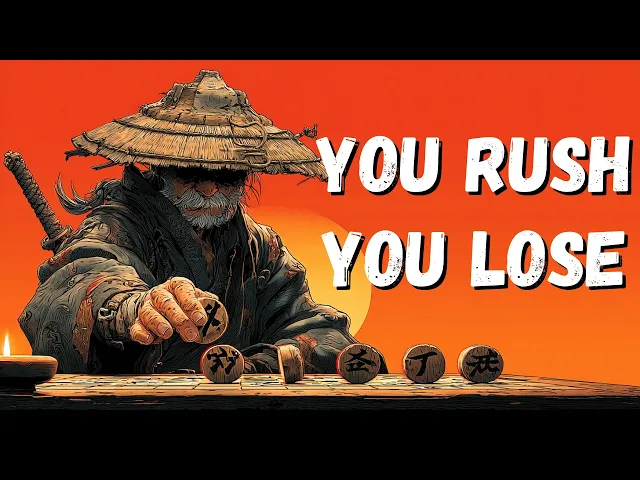
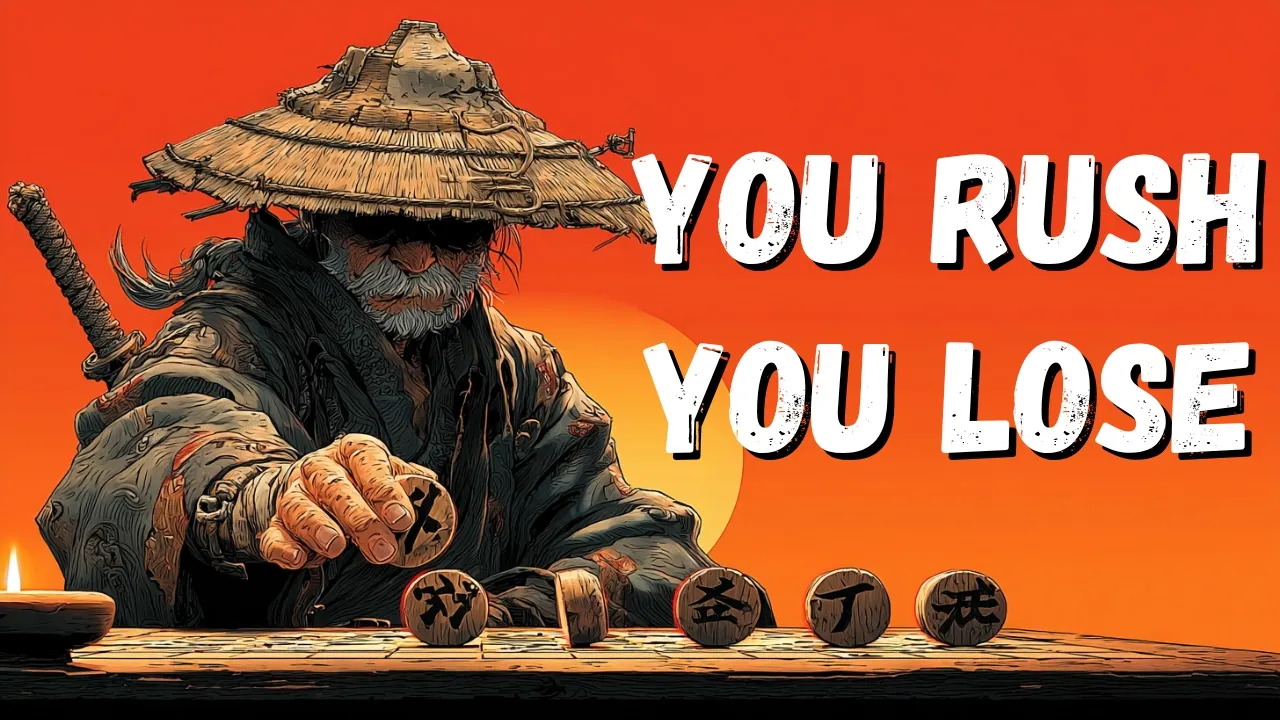
In 1598, before a crucial battle, a master asked his most talented student a question. Reniro, [music] your technique is perfect. Tell me, how long can you fight at full power? The young samurai answered confidently. As long as necessary, master, my technique will see me [music] through. The master shook his head. Wrong. You'll last exactly until [music] your grip fails. Your arms quit. Your body betrays your mind. Then you fall. 11 hours later, it happened exactly as predicted. Reniro faced an inferior swordsman and lost. Not because his technique failed. His form remained flawless. But in our
four, his hands couldn't hold his sword anymore. Here's the truth. No dojo teaches perfect technique in an unconditioned body [music] is just an elegant way to lose everything. The samurai who survived weren't the most skilled. They were the ones whose bodies were forged to match their minds. Who trained grip strength until fingers became iron. Who swung Heavy staffs until their shoulders never quit. Right now, you're fighting your own battles. Work, purpose, discipline. And you're losing not because you lack skill. You're losing because your [music] body quits before you do. Are you ready to learn what
separated the warriors who survived from the warriors with perfect form? Chapter one. The perfect technique. Heda province. Spring 1,598. Renjiro executed the overhead strike for the thousandth time that month. Perfect angle, perfect weight shift, perfect follow-through. Yamada sensei watched, nodding. Excellent. Your technique is beyond your years, Renjiro. 23 years old, 7 years of training. Renjiro could quote the book of five rings, recite passages from the Hagakur. His mind understood warfare at levels that took most warriors decades to reach. But there was something no one saw. After 30 minutes of practice, Reniro's hands achd. After an
hour, his shoulders burned. After 2 hours, he needed rest. His body, for all his technical brilliance, was soft, unconditioned, built for demonstration, [music] not war. The dojo emphasized cutter, forms, Philosophy, physical conditioning, the brutal work of building grip, strength, and bone density was considered beneath samurai dignity. Physical strength is for peasants. Yamada sensei would say, "A samurai defeats his enemy through technique, not brute force." What Rejiro hadn't seen was what happened when two skilled warriors fought longer than 5 minutes. When fatigue decided who lived, when the warrior whose body quit first died, regardless of whose
technique was more refined. That afternoon, a messenger arrived. Lord Ishida was gathering forces. All samurai of fighting age must report. War was coming. Real war. Yamada sensei called him aside. Reniro, [music] your technique is flawless. In combat, stay calm. Execute your forms exactly as practiced. Trust your training. Yes, master. I'm ready. But he wasn't. He'd never fought for more than 10 minutes at full intensity. Had never experienced what happened when adrenaline faded and [music] raw conditioning became the only thing keeping you alive. 3 weeks later, Reniro marched toward his first battle. His sword was sharp.
His [music] technique was perfect. His body was completely unprepared. Chapter 2. The principle. Hojo Uno. The night before battle, Renjiro walked through camp, unable to sleep. In a clearing, he saw five samurai training in ways he'd [music] never seen. One warrior swung a massive iron tetsubo in controlled arcs. Another twisted a strange stoneweight kiishi, his forearms bulging. A third thrust his fists into a wooden post, each strike like a drum. His knuckles were calloused, massive. This wasn't Carter. This was brutal conditioning that looked like torture. An older samurai noticed him. Tared son, a veteran of
20 years. First campaign. His voice was rough as gravel. Yes, these exercises. We don't do this in my dojo. Tequila laughed harshly. Then your dojo has never seen real battle. Tell me how long can you swing your sword at full power? Ringro thought. Our sessions are usually an hour, maybe two. And how long do you think tomorrow's battle will last? The question hung in the air. I don't know, hours. Maybe half a day, maybe longer. In the first hour, Everyone's technique is good. Second hour, technique breaks down. Third hour, that's when the dying starts. Not
from bad technique because bodies quit, grips fail, arms won't lift. He gestured to the warriors. This is Hojo uno buu supplementary training. The chi-ishi builds grip strength so your sword doesn't slip when your hands are bloody. The makiwara conditions bones so they don't break. The tetsubo builds endurance that lets you keep fighting when everyone else's arms are dead. Reniro watched. Nothing elegant, nothing philosophical, just brutal, repetitive work. Doesn't superior technique compensate? No. Teada's voice cut like a blade. In the dojo, yes, when matches last 5 minutes, technique wins. In a real battle, the samurai still
standing in hour four beats. The samurai gasping on the ground, no matter whose form is more perfect. He handed Rejiro a chiishi. Try this. 30 twists. Reniro gripped it and began twisting. His forearms burned after 10. By 20, [music] they screamed. At 27, his grip failed. He stared at his hands, shocked. He couldn't hold a weight for 30 seconds, yet he was supposed to grip a sword for hours. Now you understand, Teada said. Perfect technique executed by a weak body equals [music] a dead warrior. The second you understand this, the longer you live. How long
does it take to build this conditioning? Months? Years for a serious level? But you don't have months. You have tonight. Teada's expression softened slightly. Tomorrow, your technique helps you survive the first hour. After that, remember [music] this. The fight isn't over until you physically cannot continue. Not until you're tired. Not until it hurts. Until your body literally cannot function. The old warrior turned back. Train with us tonight if you want. won't make you strong, but you'll know what real conditioning feels like. Might save your life, might not. Reniro looked at his hands. Then at the
warriors training, then at the camp, others prepared in traditional ways. For the first time, he wondered if his seven years had prepared him for the wrong kind of battle. He picked up the keshi. Teach me. Chapter 3. The test. Battle of futile perfection. Dawn broke over the valley. Rejiro stood in formation trying to control his breathing. His arms still achd from last night's brief training. Just 2 hours of Hojo Uno had left muscles burning in ways 7 years ofQatar never had. The horn sounded. The armies charged. Our one. The first exchanges were brutal but brief.
Reniro's training served him well. [music] His cuts precise. His blocks are efficient. He engaged an enemy. The fight lasted 3 minutes. His superior technique won. Another engagement. Another clean victory. Adrenaline surged. The technique worked. Hour two. Over an hour of steady fighting. Multiple engagements. His technique remained sharp, but something new appeared. His hands hurt. Not from wounds from gripping so tightly for so long. His forearms burned with deep ache. An enemy charged. Reniro executed a perfect counter, but his arms trembled on impact. He won, but it took longer than it should have. He looked around.
Many warriors were dead, but some, like Teada, were still moving with frightening efficiency. Still strong. How? They'd been fighting just as long. Our three, everything hurt. Renjiro's shoulders felt like fire. Each time he raised his sword, it felt heavier. His grip was failing. An enemy engaged him. Inferior technique, but Reniro's body wouldn't respond fast enough. [music] His blocks came late. His counters are weak. The fight dragged on. 7 minutes. Both were exhausted, but Reniro was losing strength faster. He won barely. As the enemy fell, Renjiro's hands shook so badly he nearly dropped his sword. Hour
four. Catastrophe. Rejro's vision narrowed. His legs felt distant. Each step required conscious effort. An Ashigaru appeared a foot soldier. Not even the samurai class. His technique was clumsy. In the dojo, Renjiro would have defeated him in seconds. But this wasn't the dojo. Reniro tried to block. His arms moved too slowly. [music] The strike got through, cutting his shoulder. He countered or tried to. His sword moved like he was underwater. The ashigaru blocked easily. They circled. The Ashigaru was tired, too, but less so. Years of farm work had built endurance. Reniro's carter practice Never developed. Reniro
attempted an overhead strike, the same technique he'd performed perfectly thousands of times. But now, with screaming shoulders and failing grip, the form collapsed. Slow, weak, telegraphed. The ashigaru sidestepped and countered. Renjiro's body didn't respond. His legs wouldn't move. His arms wouldn't raise. [music] His perfectly trained mind screamed orders his exhausted body couldn't execute. The blade struck his ribs. Then again, then once more, Renjiro fell. The last thing he saw was the rough farmer soldier standing over him. Not because the Ashigaru was more skilled, but because the Ashigaru's body, conditioned by years of physical labor, had
outlasted Reniro's technically perfect but weak frame. As darkness closed in, one final thought. Technique without strength is theory without application. The most gifted student in two generations. Dead because no one taught him that a warrior's body is as much a weapon as his mind. Chapter 4. Warrior psychology. The science of physical conditioning. Back at the dojo, the news arrived 3 days later. Yamada sensei received the report. Renjiro had died. not gloriously Cutting down multiple enemies, but in the fourth hour killed by an inferior opponent because his body failed before his spirit broke. The old master
sat alone that evening. For the first time in 30 years, he questioned everything he'd taught. What modern sports science confirms, warriors like Takada understood instinctively, conditioning is not supplementary, it's fundamental. The neuroscience of fatigue. When Renjiro began fighting, his muscles had adequate ATP cellular energy. His nervous system recruited fibers efficiently. His technique worked because his body worked. But prolonged exertion depletes these resources. As ATP emptied, muscles couldn't contract with the same force. As metabolic byproducts accumulated, neural activation decreased. This is neuromuscular fatigue. Conditioning doesn't just build muscle. It changes how your nervous system manages fatigue.
Trained individuals maintain force production far longer, not because muscles are bigger, but because neural pathways are more efficient. Renjiro's perfect movements required precise coordination. That coordination collapses under severe fatigue. Warriors who practiced Hojo Unundo daily developed fatigue resistant Patterns. Their technique degraded slowly because their nervous systems functioned under extreme stress. The grip strength factor. Combat sports research reveals that grip strength is the most accurate predictor of combat endurance. When grip starts failing, your entire body approaches systemic fatigue. You can't grip your weapon means you can't attack or defend effectively. Chi-ishi training targets grip endurance. Holding
and twisting heavy stone builds not just forearm strength, but trains the nervous system to maintain grip under severe fatigue. Bone density and impact. Makiwara training striking wooden posts seems primitive, but it's biomechanically sophisticated. Each impact creates micro damage. The body responds by laying down denser bone. This is Wolf's law. Bones adapt to loads placed [music] on them. Samurai who struck Makiwara daily developed bone density up to 20% greater than others. This meant lower fracture risk, less pain from impact, and faster force transmission. The historical wisdom, Miiamoto Mousashi wrote, "Polish your weapons and train your body
constantly. Do not neglect these. Yagu Munori prescribed specific hojo uno, 1,000 sword cuts [music] daily, chiishi morning and evening, stone carrying, makiwara until hands couldn't form fists. These weren't punishments. They were survival protocols. The Hagakura states, "A samurai with perfect technique and weak body is like a sword with a beautiful handle, but dull blade, impressive to look at, useless in combat. The practical application, technique is important, strategy [music] matters, mental training is valuable, but if your body can't execute for the duration required, everything else is [music] theoretical." The warrior who trains only in technique is
an expert in the first hour. The warrior who trains in conditioning is dangerous every hour. Reniro died because he was the former. Teada survived because he was the latter. Chapter 5. The first transformation. The dojo changes. One month after Renjiro's death, Yamada sensei called all the students. The old master looked diminished, smaller. The weight of his students death is visible on his shoulders. I have taught you incorrectly, he began. Students shifted, confused. Their master never admitted Error. For 30 years, I emphasized technique above all else. Mental discipline, strategy. I taught you that physical conditioning was
secondary, optional. Beneath [music] samurai dignity. He paused, looked at each student. Reniro died because I taught him this lie. He died not from inferior technique, but from a body that quit while his spirit still fought. I sent him to war with a perfectly sharpened mind [music] in a blade made of clay. The dojo was silent. From today, everything changes. You will learn hojo uno, not as a supplement, but as a foundation. Your bodies will be forged before your techniques are perfected. That afternoon, the courtyard filled with implements. Chi-ishi stones, tetsubo staffs, makiwara posts, heavy rocks,
thick ropes. Yamada sensei brought in Taeda to teach. Show them what real conditioning looks like. Taeda demonstrated chiishi training for grip strength. Makiwara conditioning for bone density. Tetssubo swinging for muscular endurance. Stone carrying for total body strength. Your grip will fail before Your technique, Teada explained. So, we train grip first. The students began training. Within minutes, they understood why their previous practice had been inadequate. 10 minutes of chiishi work left forearms screaming. 20 minutes of Makiwara striking made the hands swell. 30 minutes of tetsubo reduced strong men to trembling exhaustion. This wasn't elegant. This was
a brutal physical reality. One student, Kenji, approached after the first week. Master, my technique has gotten worse. I'm too tired to execute properly. Yamada sensei's answer was cold. Your technique hasn't gotten worse. Your body was always this weak. You're just feeling it now. When your conditioning matches your skill, then you'll be dangerous. 3 months of transformation. By month one, grips strengthened noticeably. [music] Swords felt lighter. By month two, endurance increased dramatically. 3 hours of practice instead of one. By month three, bodies looked [music] different, harder, leaner, hands calloused, and powerful. But more importantly, their technique
became dangerous. Not because forms changed, but because bodies could now execute Those forms at full power for an extended duration. Kenji faced a visiting samurai inner demonstration. The visitor was older, more experienced, and technically superior. The match lasted 23 minutes. [music] By minute 15, the visitor's technique degraded, arms heavy, [music] blocks slow. At minute 20, he could barely lift his sword. Kenji was tired, too. But his conditioning meant he could still function. His technique wasn't as refined, but it didn't need to be. The visitor's body had quit. Kenji hadn't. Kenji won not through superior skill
but through superior conditioning. Afterward, the visiting samurai asked, "What changed?" Yamada sensei's answer was simple. "We buried a student who had perfect technique and a weak body. Now we build strong bodies that can execute imperfect technique for hours. The second one wins battles." Chapter 6. Deep training. The advanced forge. 6 months into the new regimen, [music] advanced hojo undo began. Basic Conditioning, Bua ilt foundation. Now came specialization. The four pillars. One, grip endurance. Chi is twisting 50 reps each angle. The thick rope hangs to failure. Rice bucket hand training 10 minutes daily. Hanging from branches
with increasing duration. Kenji's hands transformed. His grip became so powerful that he could feel enemies weakness through sword contact. Two striking power. Makiwara progression. Light strikes 200 daily months 1 to two. Medium 500 daily months 3 to 4. Full power 1,000 daily months 5 to 6. Advanced strike until hands can't form. Fists rest. Repeat. Knuckles became visibly larger. Bone density increased. Pain decreased even as power increased. Three, muscular endurance. Tetssubo training basic swings 100 daily. Complex patterns 300 daily. Full cutter with 40 lb tetsubo 500 swings. This built shoulder endurance for hour five. Combat effectiveness.
Four. Total body power. Stone training. Lift and carry increasing weight weekly. Throw for distance. Hold overhead for time. Walk while carrying created strength for fighting in armor, carrying wounded and maintaining effectiveness under load. The integration full training schedule 4 to 5 days weekly 5:00 a.m. Chihishi 30 minutes 6:00 a.m. Makiwara 30 minutes 7:00 a.m. Sword Carter Wjar 9:00 a.m. Tetsubo 45 minutes 11:00 a.m. Stone carrying 30 minutes 2:00 p.m. Full sparring 2 hours. Students now maintain combat effectiveness for four, five or 6 hours. The technique under fatigue degraded far less. One student, Dai, documented his
journey. Month one, everything hurts. I question if necessary. Month three, calluses formed, strength increased. I see why this matters. Month six, I am different. My body feels like a weapon. When I spar, I know my technique will work because my body won't quit. Month nine. Fought 4 hours straight. Still strong at the end. This is what Renjiro needed. Tea explained to advanced students. Hojo uno Is forgework. You are the sword. The ki is the hammer. The makiwara is the anvil. The tetsubo is the fire. The stone is the test. When a swordsmith forges a blade,
he folds steel, hammers out impurities, and creates layers that make the blade strong and flexible. This training does the same to your body. Weak parts fail under pressure. Strong parts become brittle. But conditioned parts tested, broken, repaired, tested again. These don't fail. They adapt. They endure. [music] They last. The students now understood what Reniro died without learning. A warrior is a complete weapon system where body, mind, and spirit are equally developed. Weakness in any area means death when pressure exceeds capacity. Chapter 7. The final test. Return to battle. One year after Renjiro's death, war returned.
Kenji stood in formation. But unlike Renjiro a year before, his body was ready. Truly ready. His hands held the sword with relaxed power. His shoulders felt loose, capable. His cis Ore is solid. His legs are stable. He'd spent the year being forged. Now came the test. The horn sounded. Armies engaged. Our one. Kenji's conditioning revealed itself immediately. While other warriors fought with desperate intensity, Kenji fought with controlled efficiency. First engagement, 2 minutes. Clean victory. Afterward, he felt strong, ready for more. Hour two. This is when warriors without conditioning began degrading. Technique sloppy movement slower. Kenji
noticed something remarkable. He wasn't tired yet. His Kishi training meant a solid grip. His Makiwara conditioning meant impact didn't hurt. His Tetsubo work meant his shoulders still functioned. He engaged an enemy who was clearly skilled, but the opponent's body was failing. Kenji just maintained pressure until the enemy's conditioning [music] failed. 3 minutes, victory. Hour three, where Reniro had died. The third hour, when bodies quit, Kenji looked around. Bodies everywhere. Many were killed not by superior opponents, but by their own fatigue. Warriors whose grips failed. Warriors whose perfect dojo technique crumbled when unconditioned bodies quit. Kenji
engaged enemy after enemy. His technique wasn't perfect anymore. Fatigue affected everyone, but his body still functioned. His strikes still had power. An enemy samurai older, experienced faced him. The veteran's technique was sophisticated. Decades of refinement visible. But the veteran's body was tired, old, unconditioned. They fought for 7 minutes. The veteran's skill kept him alive. But Kenji's conditioning meant he maintained pressure without restbite. Eventually, the veteran's grip failed. His sword dropped. Kenji could have killed him. Instead, he bowed and moved on. The veteran had lost not to inferior technique, but to superior conditioning. Hour four. Most
warriors were done, dead, wounded, or too exhausted. Kenji was tired. Everything hurt. But his body still functioned. His year of Hojo Uno meant he could [music] continue when others quit. He saw Teada across the battlefield. The old veteran was still Fighting, still strong. Their eyes met briefly. Teada nodded, [music] recognition of a warrior who understood. The battle ended. Kenji survived. not unscathed cuts, bruises, marks of combat, but he survived. His conditioning meant his technique [music] stayed effective throughout. After the battle, sitting exhausted, but alive, Kenji understood. Renjiro had died with perfect technique. Kenji lived with
an imperfect technique backed by unbreakable conditioning. [music] In real combat, the second one is what matters. The warrior truth. That evening, Yamada Sensei visited the battlefield. He found Kenji among the survivors helping tend the wounded. The old master looked at his student, tired but strong, battered but unbroken. Tell me what you learned today, [music] Kenji considered. That technique without strength is a beautiful theory. But strength without technique is a dangerous reality, and strength [music] with technique is what lets warriors live long enough to become wise. Yamada sensei nodded. Renjiro taught us this truth with his
death. You prove it with your survival. He looked across the Battlefield. Notice something? The survivors aren't the most skilled. They're the most conditioned. Skill gets you through first hour. Conditioning gets you through all hours after. Kenji understood. So, Hojo Unundo isn't supplementary training. It's foundational. Yes, the name is wrong. It should be primary training, but names don't matter. [music] Results matter. You lived because your body could execute what your mind demanded. They walked through the camp. Kenji noticed other survivors. Many bore marks of serious conditioning. Thick hands, dense bones. Endurance is visible in how they
moved. Master in the dojo. We called this peasant training. Like it was beneath a samurai. And we were fools. The difference between a peasant and a samurai. A peasant works physical labor daily, builds body naturally. Samurai practice elegant forms, then wonders why the peasant with a spear outlasts the samurai with a sword. Conditioning equalizes the battlefield. The technique provides an edge, but conditioning is the platform that lets technique work. Yamada sensei continued, "There's a deeper truth. Hojo uno isn't just about battle. It's about life. The discipline To train the body when tired, to push past
comfort, to forge yourself deliberately. [music] This is a warrior mindset. Every chi-ishi twist that burned you chose to continue. Every machiwara strike that hurt you chose to persist. These choices built not just the body, but the [music] spirit that separates warrior from fighter. Fighter trains when motivated. A warrior trains especially when not motivated. This discipline transfers to everything. Kenji [music] absorbed this. So the real lesson isn't just train your body. It's forge your capacity to endure past your current limits. Yes, technique is just a tool. Conditioning is the hand that wields the tool. Spirit is
will that commands the hand. All three must be forged. Neglect one, die unnecessarily. The old master looked at Kenji with something like pride. You lived today. More students will live because we learned. Rejro's death was a terrible price. But we honor him by never forgetting. No amount of skill compensates for a body that quits. Forge the vessel first, then fill it with technique. This is the way. The samurai le. 5 years later. Kenji runs the dojo Now. Yamada sensei retired, content that the school teaches truth instead of comfortable lies. A young student arrives, 16, eager,
talented, reminds Kenji of Renjiro. Master Kenji, I want to become the greatest swordsman in Japan. Kenji smiles. He's heard this before. Come, first lesson. He leads the boy to the courtyard. Chi-ishi stones, Makiwara posts, tetsubo staffs, and carrying stones. The boy looks confused. Master, I came to learn sword technique. These are just weights. Yes. And this is where you begin. Pick up that chiishi. Show me 30 twists. The boy tries. Fails at 23. Do you know why you failed? Because I'm weak? No. Because your body hasn't been forged yet. Weakness is temporary. But an untrained
weakness that believes it's ready for battle. That kills people. Kenji sits, gestures for the boy to join. Let me tell you about a samurai named Renjiro. The most talented student this dojo ever seen. Perfect technique, brilliant mind, dead at 23. Because no one taught him what I'm about to teach you. The boy's eyes widen. Every warrior who walks through that door wants secret techniques, hidden knowledge. But here's the truth. The secret is there is no secret. It's just brutal. Unglamorous physical conditioning sustained over years. That's what separates survivors from corpses. Kenji stands, picks up the
chishi. You'll start here, every morning, [music] every evening, for 6 months minimum. Your hands will bleed. Your muscles will scream. You'll want to quit. And here's what I'll tell you. This saved my life. This killed Reniro through its absence. Choose which story you want to live. He hands the boy the stone weight. Welcome to the dojo. Welcome to the real warrior path. It's not the one in stories. It's harder, less elegant, more painful. But warriors who walk it survive. Warriors who skip it die with perfect form. The boy grips the chiishi. Kenji sees a decision
forming. If you stay, you'll become dangerous. Not because your technique is perfect, but because your body won't quit when technique gets tested. That's worth more than all the secret scrolls in Japan. The boy bowed deeply. When do We begin? Kenji smiled. You already have now 30 chiishi twists. When you fail, rest for 1 minute. Try again. Repeat until you succeed. The boy began. Kenji watched. Another student, another chance to teach what Renjiro never learned. Forge your body, then your technique matters. In a real battle, the warrior still standing beats the warrior with perfect form lying
on the ground. Welcome to the forge. Let's train together. In 1598, before a crucial battle, a master asked his most talented student a question. Reniro, [music] your technique is perfect. Tell me, how long can you fight at full power? The young samurai answered confidently. As long as necessary, master, my technique will see me [music] through. The master shook his head. Wrong. You'll last exactly until [music] your grip fails. Your arms quit. Your body betrays your mind. Then you fall. 11 hours later, it happened exactly as predicted. Reniro faced an Inferior swordsman and lost. Not because
his technique failed. His form remained flawless. But in our four, his hands couldn't hold his sword anymore. Here's the truth. No dojo teaches perfect technique in an unconditioned body [music] is just an elegant way to lose everything. The samurai who survived weren't the most skilled. They were the ones whose bodies were forged to match their minds. Who trained grip strength until fingers became iron. Who swung heavy staffs until their shoulders never quit. Right now, you're fighting your own battles. Work, purpose, discipline. And you're losing not because you lack skill. You're losing because your [music] body
quits before you do. Are you ready to learn what separated the warriors who survived from the warriors with perfect form? Chapter one. The perfect technique. Heda province. Spring 1,598. Renjiro executed the overhead strike for the thousandth time that month. Perfect angle, perfect weight shift, perfect follow-through. Yamada sensei watched, nodding. Excellent. Your technique is beyond your years, Renjiro. 23 years old, 7 years of training. Renjiro could Quote the book of five rings, recite passages from the Hagakur. His mind understood warfare at levels that took most warriors decades to reach. But there was something no one saw.
After 30 minutes of practice, Reniro's hands achd. After an hour, his shoulders burned. After 2 hours, he needed rest. His body, for all his technical brilliance, was soft, unconditioned, built for demonstration, [music] not war. The dojo emphasized cutter, forms, philosophy, physical conditioning, the brutal work of building grip, strength, and bone density was considered beneath samurai dignity. Physical strength is for peasants. Yamada sensei would say, "A samurai defeats his enemy through technique, not brute force." What Rejiro hadn't seen was what happened when two skilled warriors fought longer than 5 minutes. When fatigue decided who lived, when
the warrior whose body quit first died, regardless of whose technique was more refined. That afternoon, a messenger arrived. Lord Ishida was gathering forces. All samurai of fighting age must report. War was coming. Real war. Yamada sensei called Him aside. Reniro, [music] your technique is flawless. In combat, stay calm. Execute your forms exactly as practiced. Trust your training. Yes, master. I'm ready. But he wasn't. He'd never fought for more than 10 minutes at full intensity. Had never experienced what happened when adrenaline faded and [music] raw conditioning became the only thing keeping you alive. 3 weeks later,
Reniro marched toward his first battle. His sword was sharp. His [music] technique was perfect. His body was completely unprepared. Chapter 2. The principle. Hojo Uno. The night before battle, Renjiro walked through camp, unable to sleep. In a clearing, he saw five samurai training in ways he'd [music] never seen. One warrior swung a massive iron tetsubo in controlled arcs. Another twisted a strange stoneweight kiishi, his forearms bulging. A third thrust his fists into a wooden post, each strike like a drum. His knuckles were calloused, massive. This wasn't Carter. This was brutal conditioning that looked like torture.
An older samurai noticed him. Tared son, A veteran of 20 years. First campaign. His voice was rough as gravel. Yes, these exercises. We don't do this in my dojo. Tequila laughed harshly. Then your dojo has never seen real battle. Tell me how long can you swing your sword at full power? Ringro thought. Our sessions are usually an hour, maybe two. And how long do you think tomorrow's battle will last? The question hung in the air. I don't know, hours. Maybe half a day, maybe longer. In the first hour, everyone's technique is good. Second hour, technique
breaks down. Third hour, that's when the dying starts. Not from bad technique because bodies quit, grips fail, arms won't lift. He gestured to the warriors. This is Hojo uno buu supplementary training. The chi-ishi builds grip strength so your sword doesn't slip when your hands are bloody. The makiwara conditions bones so they don't break. The tetsubo builds endurance that lets you keep fighting when everyone else's arms are dead. Reniro watched. Nothing elegant, nothing philosophical, just brutal, repetitive work. Doesn't superior technique Compensate? No. Teada's voice cut like a blade. In the dojo, yes, when matches last 5
minutes, technique wins. In a real battle, the samurai still standing in hour four beats. The samurai gasping on the ground, no matter whose form is more perfect. He handed Rejiro a chiishi. Try this. 30 twists. Reniro gripped it and began twisting. His forearms burned after 10. By 20, [music] they screamed. At 27, his grip failed. He stared at his hands, shocked. He couldn't hold a weight for 30 seconds, yet he was supposed to grip a sword for hours. Now you understand, Teada said. Perfect technique executed by a weak body equals [music] a dead warrior. The
second you understand this, the longer you live. How long does it take to build this conditioning? Months? Years for a serious level? But you don't have months. You have tonight. Teada's expression softened slightly. Tomorrow, your technique helps you survive the first hour. After that, remember [music] this. The fight isn't over until you physically cannot continue. Not until you're tired. Not until it hurts. Until Your body literally cannot function. The old warrior turned back. Train with us tonight if you want. won't make you strong, but you'll know what real conditioning feels like. Might save your life,
might not. Reniro looked at his hands. Then at the warriors training, then at the camp, others prepared in traditional ways. For the first time, he wondered if his seven years had prepared him for the wrong kind of battle. He picked up the keshi. Teach me. Chapter 3. The test. Battle of futile perfection. Dawn broke over the valley. Rejiro stood in formation trying to control his breathing. His arms still achd from last night's brief training. Just 2 hours of Hojo Uno had left muscles burning in ways 7 years ofQatar never had. The horn sounded. The armies
charged. Our one. The first exchanges were brutal but brief. Reniro's training served him well. [music] His cuts precise. His blocks are efficient. He engaged an enemy. The fight lasted 3 minutes. His superior technique won. Another engagement. Another clean victory. Adrenaline surged. The technique worked. Hour two. Over an hour Of steady fighting. Multiple engagements. His technique remained sharp, but something new appeared. His hands hurt. Not from wounds from gripping so tightly for so long. His forearms burned with deep ache. An enemy charged. Reniro executed a perfect counter, but his arms trembled on impact. He won, but
it took longer than it should have. He looked around. Many warriors were dead, but some, like Teada, were still moving with frightening efficiency. Still strong. How? They'd been fighting just as long. Our three, everything hurt. Renjiro's shoulders felt like fire. Each time he raised his sword, it felt heavier. His grip was failing. An enemy engaged him. Inferior technique, but Reniro's body wouldn't respond fast enough. [music] His blocks came late. His counters are weak. The fight dragged on. 7 minutes. Both were exhausted, but Reniro was losing strength faster. He won barely. As the enemy fell, Renjiro's
hands shook so badly he nearly dropped his sword. Hour four. Catastrophe. Rejro's vision narrowed. His legs felt distant. Each step required conscious effort. An Ashigaru appeared a foot soldier. Not even the samurai class. His technique was clumsy. In the dojo, Renjiro would have defeated him in seconds. But this wasn't the dojo. Reniro tried to block. His arms moved too slowly. [music] The strike got through, cutting his shoulder. He countered or tried to. His sword moved like he was underwater. The ashigaru blocked easily. They circled. The Ashigaru was tired, too, but less so. Years of farm
work had built endurance. Reniro's carter practice never developed. Reniro attempted an overhead strike, the same technique he'd performed perfectly thousands of times. But now, with screaming shoulders and failing grip, the form collapsed. Slow, weak, telegraphed. The ashigaru sidestepped and countered. Renjiro's body didn't respond. His legs wouldn't move. His arms wouldn't raise. [music] His perfectly trained mind screamed orders his exhausted body couldn't execute. The blade struck his ribs. Then again, then once more, Renjiro fell. The last thing he saw was the rough farmer soldier standing over him. Not because the Ashigaru was more skilled, but because
the Ashigaru's body, conditioned by years of physical labor, had outlasted Reniro's technically perfect But weak frame. As darkness closed in, one final thought. Technique without strength is theory without application. The most gifted student in two generations. Dead because no one taught him that a warrior's body is as much a weapon as his mind. Chapter 4. Warrior psychology. The science of physical conditioning. Back at the dojo, the news arrived 3 days later. Yamada sensei received the report. Renjiro had died. not gloriously cutting down multiple enemies, but in the fourth hour killed by an inferior opponent because
his body failed before his spirit broke. The old master sat alone that evening. For the first time in 30 years, he questioned everything he'd taught. What modern sports science confirms, warriors like Takada understood instinctively, conditioning is not supplementary, it's fundamental. The neuroscience of fatigue. When Renjiro began fighting, his muscles had adequate ATP cellular energy. His nervous system recruited fibers efficiently. His technique worked because his body worked. But prolonged exertion depletes these resources. As ATP emptied, muscles couldn't contract With the same force. As metabolic byproducts accumulated, neural activation decreased. This is neuromuscular fatigue. Conditioning doesn't just
build muscle. It changes how your nervous system manages fatigue. Trained individuals maintain force production far longer, not because muscles are bigger, but because neural pathways are more efficient. Renjiro's perfect movements required precise coordination. That coordination collapses under severe fatigue. Warriors who practiced Hojo Unundo daily developed fatigue resistant patterns. Their technique degraded slowly because their nervous systems functioned under extreme stress. The grip strength factor. Combat sports research reveals that grip strength is the most accurate predictor of combat endurance. When grip starts failing, your entire body approaches systemic fatigue. You can't grip your weapon means you can't
attack or defend effectively. Chi-ishi training targets grip endurance. Holding and twisting heavy stone builds not just forearm strength, but trains the nervous system to maintain grip under severe fatigue. Bone density and impact. Makiwara training striking wooden posts seems primitive, but it's biomechanically sophisticated. Each impact creates micro Damage. The body responds by laying down denser bone. This is Wolf's law. Bones adapt to loads placed [music] on them. Samurai who struck Makiwara daily developed bone density up to 20% greater than others. This meant lower fracture risk, less pain from impact, and faster force transmission. The historical wisdom,
Miiamoto Mousashi wrote, "Polish your weapons and train your body constantly. Do not neglect these. Yagu Munori prescribed specific hojo uno, 1,000 sword cuts [music] daily, chiishi morning and evening, stone carrying, makiwara until hands couldn't form fists. These weren't punishments. They were survival protocols. The Hagakura states, "A samurai with perfect technique and weak body is like a sword with a beautiful handle, but dull blade, impressive to look at, useless in combat. The practical application, technique is important, strategy [music] matters, mental training is valuable, but if your body can't execute for the duration required, everything else is
[music] theoretical." The warrior who trains only in technique is an expert in The first hour. The warrior who trains in conditioning is dangerous every hour. Reniro died because he was the former. Teada survived because he was the latter. Chapter 5. The first transformation. The dojo changes. One month after Renjiro's death, Yamada sensei called all the students. The old master looked diminished, smaller. The weight of his students death is visible on his shoulders. I have taught you incorrectly, he began. Students shifted, confused. Their master never admitted error. For 30 years, I emphasized technique above all else.
Mental discipline, strategy. I taught you that physical conditioning was secondary, optional. Beneath [music] samurai dignity. He paused, looked at each student. Reniro died because I taught him this lie. He died not from inferior technique, but from a body that quit while his spirit still fought. I sent him to war with a perfectly sharpened mind [music] in a blade made of clay. The dojo was silent. From today, everything changes. You will learn hojo uno, not as a supplement, but as a foundation. Your bodies will be forged before your techniques are perfected. That afternoon, the courtyard filled
with implements. Chi-ishi stones, tetsubo staffs, makiwara posts, heavy rocks, thick ropes. Yamada sensei brought in Taeda to teach. Show them what real conditioning looks like. Taeda demonstrated chiishi training for grip strength. Makiwara conditioning for bone density. Tetssubo swinging for muscular endurance. Stone carrying for total body strength. Your grip will fail before your technique, Teada explained. So, we train grip first. The students began training. Within minutes, they understood why their previous practice had been inadequate. 10 minutes of chiishi work left forearms screaming. 20 minutes of Makiwara striking made the hands swell. 30 minutes of tetsubo reduced
strong men to trembling exhaustion. This wasn't elegant. This was a brutal physical reality. One student, Kenji, approached after the first week. Master, my technique has gotten worse. I'm too tired to execute properly. Yamada sensei's answer was cold. Your technique hasn't gotten worse. Your body was always this weak. You're just feeling it now. When your conditioning matches your skill, then you'll be dangerous. 3 months of transformation. By month one, grips strengthened noticeably. [music] Swords felt lighter. By month two, endurance increased dramatically. 3 hours of practice instead of one. By month three, bodies looked [music] different, harder,
leaner, hands calloused, and powerful. But more importantly, their technique became dangerous. Not because forms changed, but because bodies could now execute those forms at full power for an extended duration. Kenji faced a visiting samurai inner demonstration. The visitor was older, more experienced, and technically superior. The match lasted 23 minutes. [music] By minute 15, the visitor's technique degraded, arms heavy, [music] blocks slow. At minute 20, he could barely lift his sword. Kenji was tired, too. But his conditioning meant he could still function. His technique wasn't as refined, but it didn't need to be. The visitor's body
had quit. Kenji hadn't. Kenji won not through superior skill but through superior conditioning. Afterward, the visiting samurai asked, "What changed?" Yamada sensei's answer was simple. "We buried a student who had perfect technique and a weak body. Now we build strong bodies that can execute imperfect technique for hours. The second one wins battles." Chapter 6. Deep training. The advanced forge. 6 months into the new regimen, [music] advanced hojo undo began. Basic conditioning, Bua ilt foundation. Now came specialization. The four pillars. One, grip endurance. Chi is twisting 50 reps each angle. The thick rope hangs to failure.
Rice bucket hand training 10 minutes daily. Hanging from branches with increasing duration. Kenji's hands transformed. His grip became so powerful that he could feel enemies weakness through sword contact. Two striking power. Makiwara progression. Light strikes 200 daily months 1 to two. Medium 500 daily months 3 to 4. Full power 1,000 daily months 5 to 6. Advanced strike until hands can't form. Fists rest. Repeat. Knuckles became visibly larger. Bone density Increased. Pain decreased even as power increased. Three, muscular endurance. Tetssubo training basic swings 100 daily. Complex patterns 300 daily. Full cutter with 40 lb tetsubo 500
swings. This built shoulder endurance for hour five. Combat effectiveness. Four. Total body power. Stone training. Lift and carry increasing weight weekly. Throw for distance. Hold overhead for time. Walk while carrying created strength for fighting in armor, carrying wounded and maintaining effectiveness under load. The integration full training schedule 4 to 5 days weekly 5:00 a.m. Chihishi 30 minutes 6:00 a.m. Makiwara 30 minutes 7:00 a.m. Sword Carter Wjar 9:00 a.m. Tetsubo 45 minutes 11:00 a.m. Stone carrying 30 minutes 2:00 p.m. Full sparring 2 hours. Students now maintain combat effectiveness for four, five or 6 hours. The technique
under fatigue degraded far less. One student, Dai, documented his journey. Month one, Everything hurts. I question if necessary. Month three, calluses formed, strength increased. I see why this matters. Month six, I am different. My body feels like a weapon. When I spar, I know my technique will work because my body won't quit. Month nine. Fought 4 hours straight. Still strong at the end. This is what Renjiro needed. Tea explained to advanced students. Hojo uno is forgework. You are the sword. The ki is the hammer. The makiwara is the anvil. The tetsubo is the fire. The
stone is the test. When a swordsmith forges a blade, he folds steel, hammers out impurities, and creates layers that make the blade strong and flexible. This training does the same to your body. Weak parts fail under pressure. Strong parts become brittle. But conditioned parts tested, broken, repaired, tested again. These don't fail. They adapt. They endure. [music] They last. The students now understood what Reniro died without learning. A warrior is a complete weapon system where body, mind, And spirit are equally developed. Weakness in any area means death when pressure exceeds capacity. Chapter 7. The final test.
Return to battle. One year after Renjiro's death, war returned. Kenji stood in formation. But unlike Renjiro a year before, his body was ready. Truly ready. His hands held the sword with relaxed power. His shoulders felt loose, capable. His cis ore is solid. His legs are stable. He'd spent the year being forged. Now came the test. The horn sounded. Armies engaged. Our one. Kenji's conditioning revealed itself immediately. While other warriors fought with desperate intensity, Kenji fought with controlled efficiency. First engagement, 2 minutes. Clean victory. Afterward, he felt strong, ready for more. Hour two. This is when
warriors without conditioning began degrading. Technique sloppy movement slower. Kenji noticed something remarkable. He wasn't tired yet. His Kishi training meant a solid grip. His Makiwara conditioning meant impact didn't hurt. His Tetsubo work meant his shoulders still functioned. He engaged an enemy who was clearly skilled, but the opponent's body was failing. Kenji just maintained pressure until the enemy's conditioning [music] failed. 3 minutes, victory. Hour three, where Reniro had died. The third hour, when bodies quit, Kenji looked around. Bodies everywhere. Many were killed not by superior opponents, but by their own fatigue. Warriors whose grips failed. warriors
whose perfect dojo technique crumbled when unconditioned bodies quit. Kenji engaged enemy after enemy. His technique wasn't perfect anymore. Fatigue affected everyone, but his body still functioned. His strikes still had power. An enemy samurai older, experienced faced him. The veteran's technique was sophisticated. Decades of refinement visible. But the veteran's body was tired, old, unconditioned. They fought for 7 minutes. The veteran's skill kept him alive. But Kenji's conditioning meant he maintained pressure without restbite. Eventually, the veteran's grip failed. His sword Dropped. Kenji could have killed him. Instead, he bowed and moved on. The veteran had lost not
to inferior technique, but to superior conditioning. Hour four. Most warriors were done, dead, wounded, or too exhausted. Kenji was tired. Everything hurt. But his body still functioned. His year of Hojo Uno meant he could [music] continue when others quit. He saw Teada across the battlefield. The old veteran was still fighting, still strong. Their eyes met briefly. Teada nodded, [music] recognition of a warrior who understood. The battle ended. Kenji survived. not unscathed cuts, bruises, marks of combat, but he survived. His conditioning meant his technique [music] stayed effective throughout. After the battle, sitting exhausted, but alive, Kenji
understood. Renjiro had died with perfect technique. Kenji lived with an imperfect technique backed by unbreakable conditioning. [music] In real combat, the second one is what matters. The warrior truth. That evening, Yamada Sensei visited the Battlefield. He found Kenji among the survivors helping tend the wounded. The old master looked at his student, tired but strong, battered but unbroken. Tell me what you learned today, [music] Kenji considered. That technique without strength is a beautiful theory. But strength without technique is a dangerous reality, and strength [music] with technique is what lets warriors live long enough to become wise.
Yamada sensei nodded. Renjiro taught us this truth with his death. You prove it with your survival. He looked across the battlefield. Notice something? The survivors aren't the most skilled. They're the most conditioned. Skill gets you through first hour. Conditioning gets you through all hours after. Kenji understood. So, Hojo Unundo isn't supplementary training. It's foundational. Yes, the name is wrong. It should be primary training, but names don't matter. [music] Results matter. You lived because your body could execute what your mind demanded. They walked through the camp. Kenji noticed other survivors. Many bore marks of serious conditioning.
Thick hands, dense bones. Endurance is visible in how they moved. Master in the dojo. We called this peasant training. Like it was Beneath a samurai. And we were fools. The difference between a peasant and a samurai. A peasant works physical labor daily, builds body naturally. Samurai practice elegant forms, then wonders why the peasant with a spear outlasts the samurai with a sword. Conditioning equalizes the battlefield. The technique provides an edge, but conditioning is the platform that lets technique work. Yamada sensei continued, "There's a deeper truth. Hojo uno isn't just about battle. It's about life. The
discipline to train the body when tired, to push past comfort, to forge yourself deliberately. [music] This is a warrior mindset. Every chi-ishi twist that burned you chose to continue. Every machiwara strike that hurt you chose to persist. These choices built not just the body, but the [music] spirit that separates warrior from fighter. Fighter trains when motivated. A warrior trains especially when not motivated. This discipline transfers to everything. Kenji [music] absorbed this. So the real lesson isn't just train your body. It's forge your capacity to endure past your current limits. Yes, technique is just a tool.
Conditioning is the hand that Wields the tool. Spirit is will that commands the hand. All three must be forged. Neglect one, die unnecessarily. The old master looked at Kenji with something like pride. You lived today. More students will live because we learned. Rejro's death was a terrible price. But we honor him by never forgetting. No amount of skill compensates for a body that quits. Forge the vessel first, then fill it with technique. This is the way. The samurai le. 5 years later. Kenji runs the dojo now. Yamada sensei retired, content that the school teaches truth
instead of comfortable lies. A young student arrives, 16, eager, talented, reminds Kenji of Renjiro. Master Kenji, I want to become the greatest swordsman in Japan. Kenji smiles. He's heard this before. Come, first lesson. He leads the boy to the courtyard. Chi-ishi stones, Makiwara posts, tetsubo staffs, and carrying stones. The boy looks confused. Master, I came to learn sword technique. These are just weights. Yes. And this is where you begin. Pick up that chiishi. Show me 30 twists. The boy tries. Fails at 23. Do you know why you failed? Because I'm weak? No. Because your body
hasn't been forged yet. Weakness is temporary. But an untrained weakness that believes it's ready for battle. That kills people. Kenji sits, gestures for the boy to join. Let me tell you about a samurai named Renjiro. The most talented student this dojo ever seen. Perfect technique, brilliant mind, dead at 23. Because no one taught him what I'm about to teach you. The boy's eyes widen. Every warrior who walks through that door wants secret techniques, hidden knowledge. But here's the truth. The secret is there is no secret. It's just brutal. Unglamorous physical conditioning sustained over years. That's
what separates survivors from corpses. Kenji stands, picks up the chishi. You'll start here, every morning, [music] every evening, for 6 months minimum. Your hands will bleed. Your muscles will scream. You'll want to quit. And here's what I'll tell you. This saved my life. This killed Reniro through its absence. Choose which story you want to live. He hands the boy the stone weight. Welcome to the dojo. Welcome to the real warrior path. It's not the one in stories. It's harder, less elegant, more painful. But warriors who walk it survive. Warriors who skip it die with perfect
form. The boy grips the chiishi. Kenji sees a decision forming. If you stay, you'll become dangerous. Not because your technique is perfect, but because your body won't quit when technique gets tested. That's worth more than all the secret scrolls in Japan. The boy bowed deeply. When do we begin? Kenji smiled. You already have now 30 chiishi twists. When you fail, rest for 1 minute. Try again. Repeat until you succeed. The boy began. Kenji watched. Another student, another chance to teach what Renjiro never learned. Forge your body, then your technique matters. In a real battle, the
warrior still standing beats the warrior with perfect form lying on the ground. Welcome to the forge. Let's train together.