Hello and welcome to this new show: What is a Film From? A documentary series about original and influential filmmakers. During the episodes, I will explore the life and work of film directors by presenting a point of view on this author in a few key concepts.
The aesthetic of these videos will be directly inspired by that of the filmmakers mentioned. The YouTube show will be accompanied by the Poetics of Authors podcast, available on all platforms to go in more depth. Welcome to CQFD!
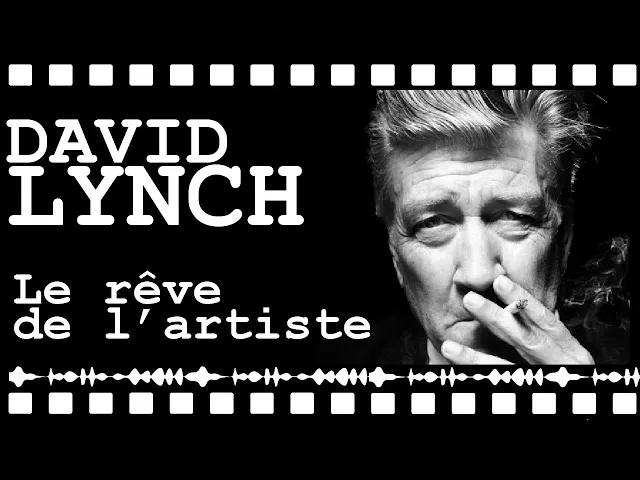
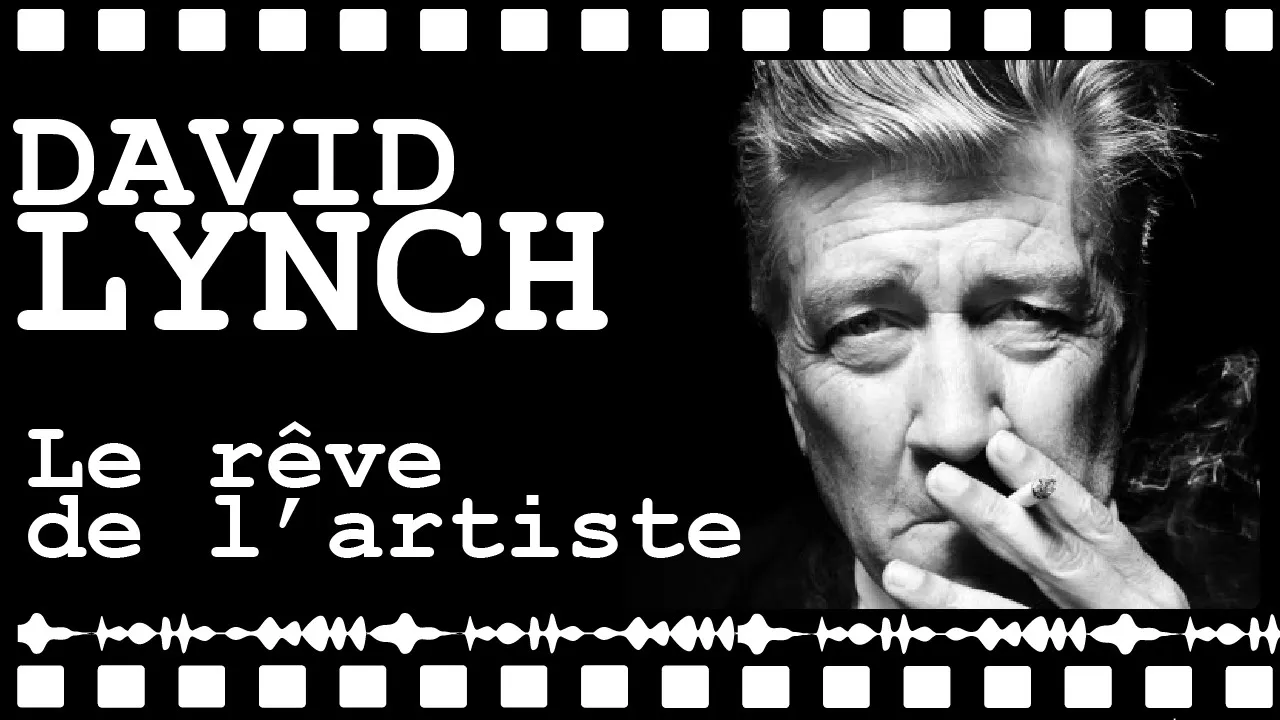
Today I am in a former slaughterhouse south of Paris. It's the perfect place to talk about the industrial and strange world of David Lynch, particularly present in his first films. David Lynch was born in 1946 in Montana and moved from town to town during his childhood.
He showed a gift for drawing very early on and was encouraged by his mother in his creativity. While he hates school, one day one of his friends introduces him to his father: the painter Bushnell Keeler. It is a revelation for Lynch who discovers that one can make a living from his art and his painting.
It is the founding event which could sum up in itself what he would pursue throughout his life: the life of an artist. He then took up painting seriously by taking a studio with the future production designer Jack Fisk and then left after high school to study fine arts in Washington then Philadelphia. It is there that he discovers an industrial and threatening universe, which will inspire him so much in Eraserhead.
He will even live close to a morgue, reinforcing this bizarre and strange world. He saw another founding event there. While he is painting a forest, he thinks he hears a breeze and sees the trees in the painting moving.
It is now towards cinema that he wants to go! He first engaged in filmed experiments relating more to plastic art but then made several short films before being admitted to the American Film Institute where he ended up having free reign in the old stables of the school in which he will shoot Eraserhead. This first film took seven years to be shot and edited but ended up having a small reputation in connoisseur circles.
We find there the key elements of what Lynch is: a plastic and sound artist, a creator of microcosms, a lover of the strange who does not hesitate to include quite disturbing scenes in his films, all to bring us in in his universe. “Cinema is not only made to tell stories, to stage words and dialogues, but also to create an atmosphere. What I see is this possible abstraction that the film shares with painting.
To go further in this abstraction is to go towards a deeper reality, which exists in parallel with the others. Eraserhead will open the doors to Lynch for a second feature film: Elephant Man. A fresco of the Victorian era and a moving portrait of a deformed man, this film is much more classic and is followed by Dune, a Hollywood blockbuster that Lynch considers a failure.
It is an important experience for him, which will make him understand the importance of having control over all creative aspects in order to achieve what he wants. It is now freedom as an artist that he will choose. Sound and music for Lynch have formed an essential component of his films since his early work, and his fourth feature film, Blue Velvet, beautifully reflects this importance with several songs performed by the actors, scenes that remain etched in the mind of the viewer.
Lynch's love for music went beyond the simple framework of cinema since he wrote songs, produced artists and even recorded an album followed by a concert tour. But the presence of music means something else, it is above all the metaphor of Lynch's films. Because music makes us feel, without even going through a phase of understanding or intellectualization.
You don't need to understand the lyrics to be transported by a Beatles song. This is probably the same way to watch a David Lynch film. We must not try to understand, at the risk of making things even more obscure, but only feel.
You don't need to understand the entire plot of Blue Velvet to be captivated by the interpretation of In dreams. Lynch only wants one thing: to take us where only cinema can go. “In music, we hear the chorus of a song, then we forget it, then we hear it again, which gives us a feeling of well-being.
Then he disappears, but it's too late, we have him in our heads. And when we discover the song in its entirety, it touches us more, because the chorus has created a form of expectation. » The omnipresence of music in Lynch and in particular in Blue Velvet is also accompanied by recurring motifs in the director's filmography, notably the importance of the stage and the red velvet curtains.
However, in addition to a very clear reference to music, they are also symbols of the double. A curtain hides something, a stage hides a woman behind the singer. Thus the opening scene of Blue Velvet explicitly shows this duality with the organic and teeming world beneath the American Dram.
It refers to Lynch's experiments with chicken kits and fish kits, works in the form of kits to be assembled but with organic elements. The theme of the double is therefore recurrent with Lynch, notably in the following two films that he directed: Wild at Heart, Palme d'Or in 1990 and Twin Peaks Fire Walk With Me, in 1992, prequel to the series of the same name of which we will talk later. The duality in Lynch is often that of good and evil but can take different forms, and above all, does not really put one in opposition to the other.
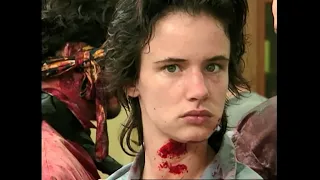
What interests Lynch is the presence of one in the other. In Sailor and Lula, for example, good and evil are both present in the same universe and the protagonists switch from one to the other throughout the film. While we start from a road movie coupled with a love story, evil permeates the story like the vomit stain in the Texan motel or the woman injured in the middle of the road.
It is to go behind these appearances that Lynch made Fire Walk With Me. This prequel explores the inherent and hidden evil of American society even more than the Twin Peaks series. This time the evil is truly hidden and even seems to belong to a sort of parallel universe, intrinsically linked to ours: it is the red room.
Without judgment, Lynch describes this dark side lurking in each of us that he takes pleasure in revealing and exploring to bring out extremely striking complex characters, like Bobby Peru or Laura Palmer. A gateway to this unexplored world is sex. At the same time universal, taboo and instinctual, sex allows us to reveal a certain part of darkness and to confront American puritanism which tries to bury this inherent evil in the society that Lynch wants to embrace.
“Some aspects of sex are disturbing – when it is used to exercise power, when it takes the form of perversion where it exploits others. Sex is a gateway to something else powerful and mystical. » After the failure of Fire Walk With Me, David Lynch had to wait five years before releasing Lost Highway, in 1997, a film oh so much on the theme of the double but which also explored another specificity of Lynch, his humor.
In the film, we will laugh, for example, when the terrifying Mister Eddy gives a driving lesson to a driver who is a little too virulent. However, there is nothing a priori funny about this scene. Mister Eddy is particularly threatening in front of a clearly terrified person.
But it is also a scene of great absurdity and it is this absurdity that we find everywhere in Lynch and which provokes laughter each time. *laughs* This motif can be understood with Bergson's concept of comic absurdity. For him, the absurd can be a way to make people laugh.
A comic situation then arises from an illusion of madness. A madness that is not unhealthy and therefore threatening but accepted by society. It is in dreams that this normal madness appears according to Bergson who writes “comic absurdity is of the same nature as that of dreams”.
And in a Lynch, as in a dream, we find this absurdity which would shock a waking person, but which seems almost natural to the dreamer, that is to say the spectator. This is Lynch's signature, making the normal seem weird and the weird seem normal. “An important part of Blue Velvet appeared to me in a dream, but I didn't remember it right away.
I always say that I prefer to dream during the day rather than at night. Let my mind wander. However, I like the logic of dreams.
Anything can happen, and it always ends up making sense. » The logic of dreams, beyond any absurd or comic aspect, is another essential element of Lynch's filmography, notably from the 2000s with Mulholland Drve, which has become cult, and the more experimental Inland Empire. In Mulholland Drve, causality seems to have disappeared and the film is divided into two large parts which could be considered as a waking part and a dream part.
However, it is impossible to know which is which; the logic of the dream actually seems to take control of the entire story. It's then a matter of trusting Lynch to let yourself be carried away in the same way that you live a dream, feeling it, without really being able to interact with it. But the appearance of dreams in Lynch is like music, a metaphor for his film, an instruction manual.
It takes us directly to Lynch's creative process which relies heavily on dreams and intuition. Not everything has an explanation and it is with a naive reading that we feel the power of the film. From then on, there is no need to question the meaning of the film, the answer to this question is the film itself.
The film then becomes a kind of meditation guided by Lynch to explore the limits of consciousness. And in fact, the director has been practicing transcendental meditation since filming Eraserhead. The teaching of the Maharashi is one of the most important parts of his life so much so that in 2005 he created the David Lynch foundation for transcendental meditation and world peace and will participate in a documentary on the Maharashi after his death.
. For him, and like dreams in psychoanalysis, meditation allows him to look deep within himself to bring out this unconscious in his films. “Intellect will only take you so far.
You have intuition. For the artist, intuition is the number one tool. » A form of meditation is also present in the third season Twin Peaks in which the scenes are sometimes stretched to the extreme, leaving plenty of time for the viewer's mind to wander according to the images.
Twin Peaks is a series created by David Lynch and Mark Frost in 1990 where we follow the investigation into the murder of Laura Palmer. It will be a resounding success at the time, although the season will have significantly less popularity. In 2017, Lynch directed Twin Peaks The Return, the third season of the series and undoubtedly one of his greatest works.
Designed as an 18-hour film, it plunges us into the heart of 21st century America as it has never been described. We travel across the United States from one end to the other through an impressive number of characters. And yet each of them is there for a reason, not for the story or the resolution of the mystery, but to be seen, by us.
It is truly an artist's view of the world around him that we find here. This look is never in a frontal judgment, but delivers a critique of its time with empathy. We then like to see evil appear and at the same time candor and kindness weigh on the other side of the scale.
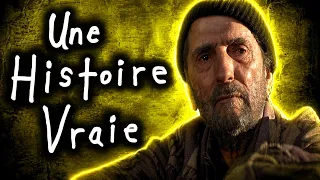
In this latest major work, Lynch explores a host of microcosms, always with the same benevolence as in 1999, when he made A Straight Story, a moving road movie about an old man traveling 400 kilometers by lawn mower to join his brother. And generally speaking, Lynch always takes us into a complex and magnificent universe, whether he created it or not. It is truly in this journey with the spectator that he excels.
Throughout his career, he knew how to take the smallest detail and develop it infinitely but also to summarize an entire society in a few magical fragments. Full of nostalgia, these works represent Lynch's greatest strength, creating a universe in which we want to enter and stay. This vision then seems to stand as the only defense against absurdity.
“Television channels embodied the theater of the absurd, it was the very nature of the beast” In parallel with his films, Lynch continued his work in the visual arts throughout his life. He also continued his work on music and created a website and then a YouTube channel to post his video experiments since the beginning of the internet. His vision of the world around him and his way of plunging us into waking dreams while being capable of making particularly moving films, makes him one of the major directors of the end of the 20th century.
For many years now, he has lived in a large property with his cigarettes, his coffee and his quinoa. Everything is at his disposal to create and he thus lives the dream of the artist that he has fantasized for so long. He still takes a pure and beautiful look at the world around him to continue dreaming.
. . It's up to us to make people dream.
Thank you for watching this video until the end. I hope it made you want to delve into Lynch's work. If you want to go further I refer you to my podcast La Poétique des Auteurs where I explore with two friends the influential films of the filmmakers I talk about in CQFD?
In this case we will talk about Elephant Man, Blue Velvet, A True Story and Twin Peaks. The podcast is available on all streaming platforms, the links are in the description. I also recommend reading Room to Dram, a biography and autobiography of Lynch.
Do not forget to subscribe. I also post behind the scenes on Instagram. I am impatiently awaiting your feedback and see you soon to talk about Agnès Varda!