We have been considering different ways animals can be harmed in the wild. This will be the last video addressing this issue. Here we'll see some examples of the physical injuries animals in the wild typically suffer.
Physical injuries are one of the most common threats to animals living in the wild. In some cases, animals incur severe injuries that kill them directly. In other cases, their injuries can affect them in ways that are Indirectly fatal, for example, by reducing their ability to find food or to evade predators.
Even when wild animals aren't killed by their injuries, they can be left with chronic pain, especially when their injuries don't heal correctly. Broadly speaking, we can categorize causes of injury into three main categories: conflict with other animals, injuries caused by severe weather and natural disasters, and accidents. In previous videos, we have seen injuries caused by other sources.
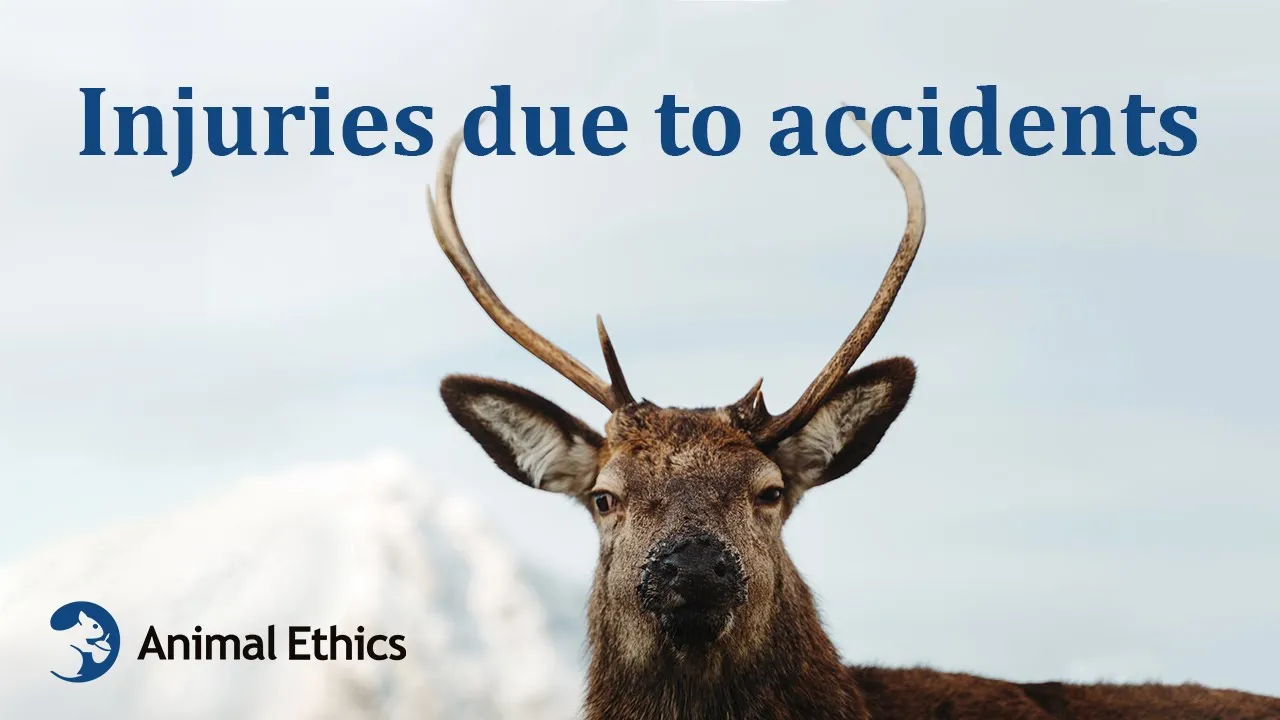
Here, we'll discuss how animals can be injured in accidents. Animals living in the wild are subject to injuries in their everyday lives. Many accidents result from falls, collapsed dens or burrows, collisions, or getting stuck.
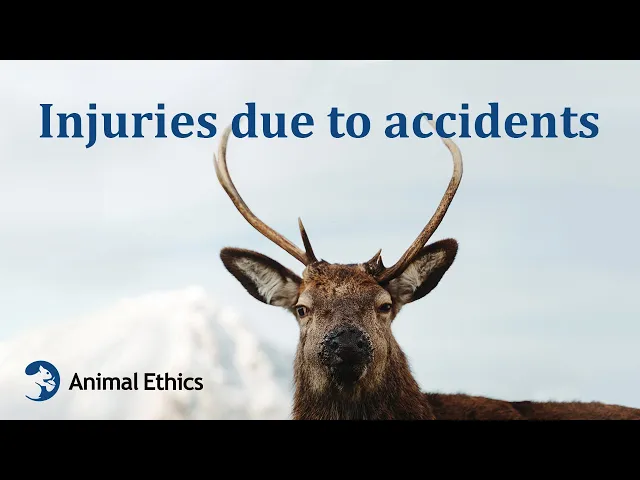
Elephants get stuck in swamps, deers puncture their eyes on low-hanging branches, and squirrels fall out of trees. Invertebrates get their appendages stuck and lose body parts in molting mishaps. Many animals sustain crushing injuries caused by accidental trauma.
Crushing most often occurs when an individual becomes caught between the ground and a solid object, often a rock or a larger animal. For example, rocks or tree branches can fall on an animal. Some animals accidentally step on smaller animals.
Male penguins can accidentally crush a pup while they are displaying, which can cause internal injuries. The type and degree of crushing injury depends on the amount of force, resulting in a range of injuries from minor bruising to severe hemorrhage, fractures, and rupture of internal organs. Vertebrates can suffer from a variety of fractures to bones in the spine, head and neck, limbs, jaw, wings, shell, or horns.
Bone fractures in spine limbs and wings are common and can be fatal. Birds and squirrels sometimes fall from trees and break their legs or backs. Animals can also get injured while trying to traverse difficult terrain.
A deer can break a leg if she slips on wet rocks while trying to make her way down to a river to drink. Walruses have been documented falling from cliffs, often in large numbers. Walruses often haul out onto land to rest, and sometimes when the beaches are too crowded they will climb up gentle slopes, with cliffs on the other side.
Once there, they can be frightened by polar bears, or they simply lose their footing when returning to the sea. Tortoises and turtles can get fractured shells from falls, object impacts, or being trampled by other animals. Large fractures can be quite serious.
A turtle's shell serves as a sort of backbone, and a turtle can be paralyzed or their lungs can collapse depending on where the crack is. If the fracture is deep, there can be blood loss. Shell rot can set in due to a fungal or bacterial infection under the crack.
Aquatic animals are particularly susceptible to shell rot. There are nerve endings in and around the shell, so it can be painful in the way any broken bone can cause pain. Some breakes can't heal, and the ones that do, heal slowly.
Because of their slow metabolisms, it can take years for a broken shell to heal. Horns are also made of bone and can bleed. If torn away near their base skin will be torn as well.
Birds have legs that are easily broken because they are small and often hollow. They may also be fragile due to malnutrition or excessive egg laying. The thinness of flying birds' bones helps them in flight, but makes their bones more prone to shatter or fragment.
Beaks can break from collisions or fights. A bird can also break her beak if she gets it stuck in something. If she panics and rips herself free, she can break her beak off.
Beaks are made of skin covered in keratin, the same material as our fingernails. A beak is attached to bones, and the beak tip has a concentration of nerves and blood vessels. Birds use their beak not only as mouths but also in the way we use our hands to pick things up.
If a bird's beak is injured, she may not be able to eat, drink, build a nest, or protect yourself. Certain breaks cause bleeding, and in some cases a bird can bleed to death from a broken beak. Injured beaks can also lead to breathing or sinus problems.
Beaks don't repair themselves, but the injured part can grow out. The tip continually grows because it is constantly wearing out due to use, but injuries far from the tip can be permanently disfiguring. An injured bird might only be able to eat soft food, which could make it hard to survive in the wild.
Bat and insect wings can tear from collisions with objects, plants, thorns, or from fungal infections. Tears and bat wings are serious injuries and can lead to blood loss. Tears can heal on their own, but torn wings affect flight capability, sometimes preventing flying altogether.
Animals in nature can sustain eye injuries due to foreign objects, punctures, or smoke. A common way an animal can receive an eye injury is from running into low branches. Because many animals escape predators and other threats by running into the woods, many run into low-hanging branches.
While this usually only affects one eye, any permanent damage or vision loss can cause the animal more prone to other harms in the future. This is something that can happen to a deer or an antelope, for instance. Flying animals are often at an advantage because there are fewer things to run into.
However, birds can injure their eyes falling out of trees at an early age, or run into branches when taking off. They can also get injured by talons in fights with other birds. Eye injuries that don't heal inhibit a bird's ability to fly.
Eyelid injuries, such as rips or punctures, often happen due to falls or running into something. The eyelid is a fragile part of an animal's body. It can easily be damaged, and if not healed properly, it can lead to vision loss or infection.
Getting sand, glass, or other foreign objects stuck in the eye can be very painful for many animals, who might injure themselves trying to get them out. Appendages like limbs, wings, and antennae can get lost directly in accidents or fights, but many animals lose appendages by self amputation. Octopuses amputate their own arms, lizards their tails, and spiders their legs when in danger, usually from getting their appendages trapped or stuck, in fights with other animals, to prevent venom from a sting from spreading throughout their body, or in molting errors.
The degree to which a lost appendage affects an animal depends on the type of appendage, the function of the appendage, and the environment. Some animals, like octopuses and spiders, often manage well when missing an arm or a leg. A crayfish who only molts once a year can manage without a leg, but losing a claw or an antenna could seriously impair their ability to survive fights with other animals or explore their environment and seek shelter.
An unhealed limb can be particularly harmful to jumping insects like crickets. Some vertebrates have some regenerative capacity, such as lizards who regenerate tails, different types of fishes who regrow fins, and salamanders who can regrow limbs Bats can regenerate wings and ears, and ungulates their antlers. However, the regrown parts may be smaller or weaker, and if the animal is under too much stress, they may not be able to regenerate the part at all.
Although arthropods are vulnerable to external injuries during molting and while their new exoskeletons are still soft, they are more likely to die or be injured because of a fault in the complex molting process. They might also fail to regenerate an injured body part, leaving them with reduced functioning until the following molt, which might be months or in some cases years. This is worse for older animals, who tend to molt less frequently as they age.
Molting arthropods can also tear off a sensitive part as they extract themselves, losing or twisting their limbs, crushing their lungs, or injuring an eye or other soft tissue. Some injuries cause life-threatening hemorrhages. Animals are more susceptible to attacks from animals of their own or other species while they are molting.
For example, prawns are more likely to be injured or killed by other prawns during certain stages of molting. An injured animal may experience intense pain and discomfort. Pain can also lead to behaviors that are dangerous to the animal, such as causing them to decrease their intake of food and water, leading to weight loss, muscle breakdown, and impaired breathing.
They may also be unable to eat or drink adequately to promote healing or even to stay alive. An injured animal is also likely to suffer from a range of other problems due to infections and related diseases. In the absence of medical treatment, infection is a natural correlate of wounding in the wild.
Damaged tissues tend to become infested by parasites. Parasitic infestation may be extremely painful and may cause additional complications such as diarrhea, vomiting, and visual disturbance. Finally, the disabling effects of the injury, exacerbated by infection or parasite infestation, jeopardize the animal’s wellbeing in many important respects.
Most notably, the animal may not be able to escape from threatening situations or to keep up with their social group. Injured animals also become preferential targets for attacks by animals of their own or other species. Animals living in the wild are vulnerable to a vast array of horrific physical injuries.
We’ve seen that the causes of these injuries are many and varied, ranging from the slashes and bites of other animals; fire, ice, and torrential rains; falls and collisions; and self-amputation and molting accidents. Many of these injuries would be mild if the injured animal had a safe place to heal and adequate food and rest, but this is often not possible due to the many challenges of living in the wild.