In the previous videos, we have seen numerous ways animals suffer in the wild, from weather related events and natural disasters, disease, and lack of resources necessary for survival, to other factors that cause physical harms and hardships. All these factors result in many animals having lives filled with suffering and dying very young. In this video, we will examine the extent of this by looking at general indicators of how many animals die on average relative to how many survive at different life stages.
This is a suitable method because the same factors that cause animals to die, such as disease, lack of food or water, injuries, and cold also often cause suffering to dying animals. It sounds obvious, but it’s an important point. If an animal is born and starves to death without ever being able to eat, the main experience in her short life is what it feels like to starve to death.
For this reason, knowing the proportion of animals who typically die at different ages in a certain species, known as age-specific mortality, can give us a general indication of the extent to which suffering is present in populations of that species. It can also enable us to roughly estimate the proportion of animals with very bad lives in comparison to those who have relatively good lives. This estimation may be very rough, but it’s the best one we may be able to make at this point.
We can begin by considering some of the reasons why some animals die in higher numbers compared to those who survive. Ecology and natural history are not shaped by the interests of sentient individuals. Instead, they optimize the individual’s biological fitness, that is, the continued reproduction of the individual’s descendants, or, among social animals, of the individuals who have similar genetic makeups.
Because of this, different animals have different traits due to natural selection, because particular traits tend to increase their fitness. Among these traits, some shape the life history of animals. A life history is the sum of the patterns and events that occur at certain ages, especially those related to reproduction and survival.
These include, among other factors, the age at which they reproduce, the number of offspring they have, how developed their offspring are when they come into existence, how much they invest in parental care, how many times they reproduce during their lifetime, and when they die. Organisms and populations face trade-offs between having some of these traits or others. If an animal has many descendants, it won’t be possible for that animal to invest significantly in their survival.
And vice versa, if an animal invests a great deal of energy in the survival of her descendants (so, for example, they are more developed at birth or receive more parental care) she will not be able to have many of them. Animals with these reproductive traits may give birth to just one child or lay just one egg each time they reproduce. Because of their low reproduction rate and the greater energy they invest in their offspring, populations of these animals will have relatively low rates of mortality.
But for a large number of species, what maximizes the number of offspring that survive is not the maximization of each one's ability to survive, but the maximization of the number of offspring they have. In these cases, a trait that provides some survival advantage, such as parental care, may not be selected for if it requires an energy investment that makes it impossible to have a larger number of offspring. It will reduce the number of animals in a population that reaches adulthood.
As a result, species that follow this reproductive strategy tend to have high infant mortality rates, and their individuals will tend to have very short lives. Through evolution, animals end up having some of these traits instead of others, and the traits they end up with shape their life histories. Some mammals such as great apes, cetaceans (whales, dolphins, seals, and porpoises), bears, elephants and other herbivores, and some birds such as albatrosses follow this kind of reproductive strategy of having a few offspring and giving them a lot of care.
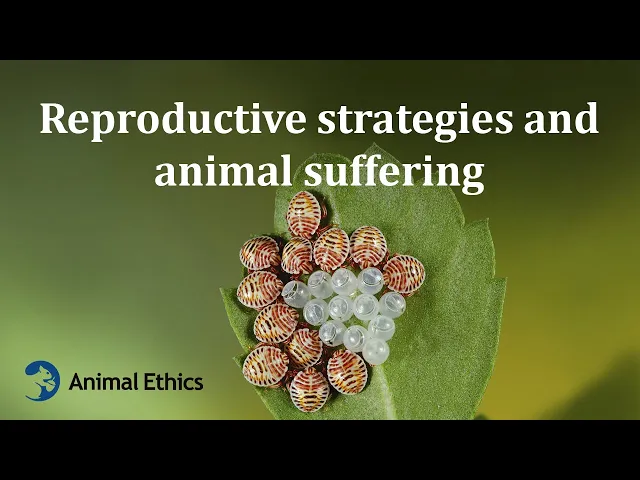
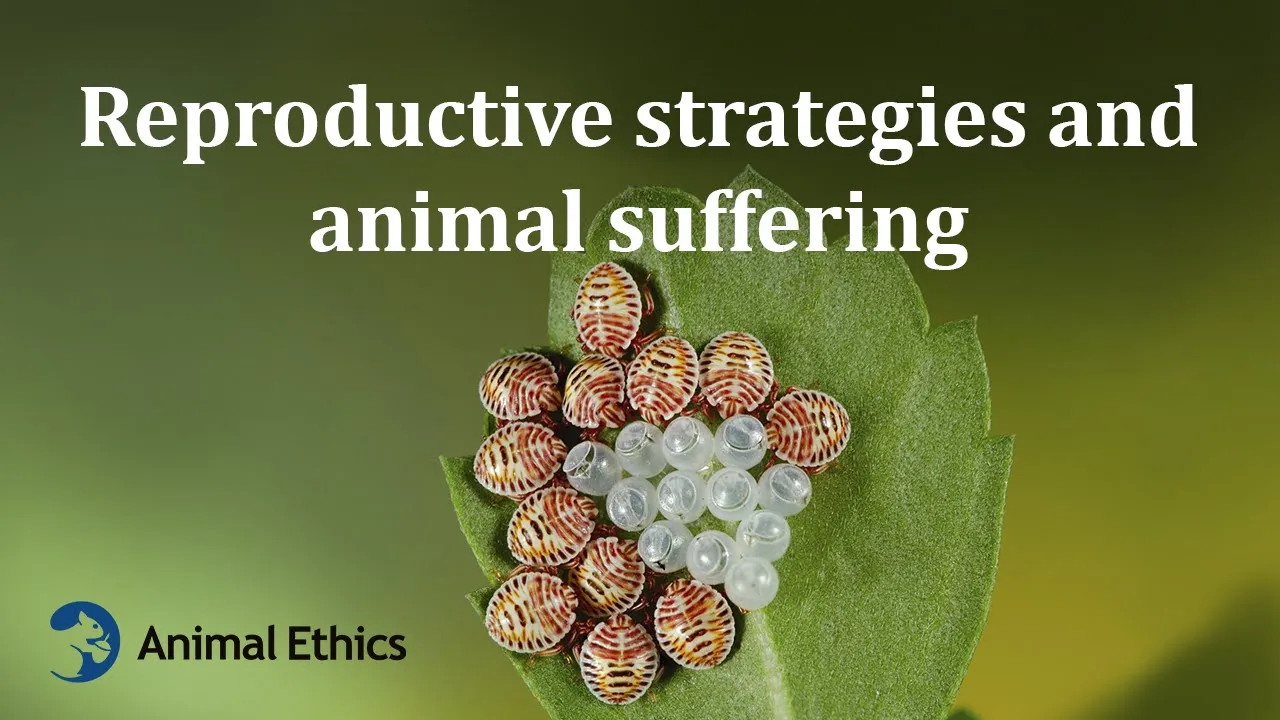
However, there are very few species of animals who do this. The overwhelming majority of animals follow a different strategy, reproducing in large, in most cases very large, numbers and with high infant mortality rates. In a stable population, assuming that the number of members of different generations remains similar, only one offspring per parent will survive to maturity and reproduce.
Most other animals will die, often shortly after coming into existence. Most animals exhibit this reproductive strategy, including most species of invertebrates and fishes, amphibians and reptiles. For example, common cane toads can have clutches exceeding 25,000.
The Atlantic Salmon might produce close to 20,000 eggs per clutch, while other common species of salmon, cod, and tuna reproduce in the millions. A sunfish can lay up to 300 million eggs. Among crustaceans, a crayfish can produce hundreds of eggs per brood, and among mollusks, octopuses can reproduce in the hundreds of thousands.
Land-based invertebrates, including many arthropods, can lay hundreds, thousands, and in some cases millions of eggs at a time. Other animals can have mixed reproductive strategies that also imply having large numbers of offspring. Rodents, for example, can have more than a hundred offspring in a lifetime.
The predominance of reproductive strategies that result in large numbers of offspring dying when they are very young has important consequences for the suffering of animals Although some animals might experience little pain due to a quick death or lack of sentience, many others suffer greatly from a prolonged death. The fact that many animals begin their lives very small and underdeveloped does not mean they aren’t sentient. For example, it has been shown that adult zebrafish respond to harmful stimuli in a way that indicates sentience, and that larval zebrafish respond in similar ways to adults.
In addition, death is a harm because animals who die when they are very young may not have had any significant positive experiences in their lives prior to the terrible experience of dying. This gives us strong reason to think that their short lives likely contain much more suffering than pleasure. You might be wondering: What about the animals who belong to species with high survival rates in infancy?
Many of these animals still die before reaching maturity. Even if a mother gives birth to only one offspring per reproductive season, the frequency of her reproduction means she can have several offspring over the course of her lifetime. We can see this in the case of humans, who biologically have the potential to have more than 10 children during their lives.
Recall that, for a population to remain stable, only one offspring per parent tends to survive. This means that even for animals with high survival rates, it is common for most children to die in their youth. Still, these animals are often able to live longer than those of the majority of species, so we can conclude that their lives tend to be less difficult than those of most others.
As for the few animals who live to adulthood, we can’t automatically infer that they are happy. However, in many cases these animals may have lives that consist of prolonged suffering due to factors like disease, malnutrition and thirst, weather conditions, parasitism and conflicts with other animals, injuries, and psychological stress. Thus, even when animals survive past their infancy, their lives might still consist of more suffering than enjoyment.
Even when adults have good lives, the total amount of suffering experienced by the young can still outweigh the positive experiences of adults, for reasons we have already seen: the disproportionate number of offspring who don’t survive and who have lives with more pain than pleasure. To conclude, what we have seen in this video doesn’t imply that suffering necessarily prevails for all animals, all populations, or all species, but it suggests that this is the case for the majority of animals. It also shows that by looking at the population dynamics of different species, in particular at how many animals on average die in comparison to how many survive at certain times, known as their age-specific mortality, we can get a very rough idea of the proportion of suffering compared to wellbeing in that species.
It can also help us to compare their suffering to the suffering endured by other animals with different age-specific mortality rates. This doesn’t depend on contingent circumstances, but is the result of how natural selection works. In a nutshell, the underlying explanation can be summarized as follows: In natural history, sentience is selected for because in many situations it increases the animal’s fitness.
Sentience implies that when an animal’s needs are satisfied, she will probably feel pleasure, but when she is affected by circumstances threatening to kill her, such as lack of food, physical harm, or inadequate temperature, the animal will suffer. In addition, certain life history traits are selected that favor certain reproductive strategies. The most prevalent traits imply that in most cases only a fraction of sentient beings can survive past infancy and have their needs satisfied.
Many more animals come into existence than can survive. Because of this, suffering is likely to prevail for the majority of animals. This shows why our efforts to help them when it is feasible can be so important.
We can’t help all the animals who need it. However, there are many cases when it is possible to help some or many of them. In the next few videos, we will see some of the ways animals are already being helped, such as rescues and vaccination programs.