So pitching that idea um a direct consumer business idea um to investors in you know 2018 or whenever it was what i need i think what we needed to do and what we did quite well is we acknowledge the problems with that model and we said like here is how the problems of that model get solved and so you can't ignore you know the frailties of your sector you have to go Like hey this is the dominant model but like people are not going to stop buying products and so therefore what does a viable product-led
business model actually look like in e-commerce and like that was the question that our like first dex fundamentally had to grapple with rather than like rather than being like hey is there a technology solution to this you Know specific issue in pet food it was like can there be a billion dollar business built out of um a sector where historically over the last five years there's been a lot of cash burn a lot of not a lot of upside seeing [Music] hi everyone welcome to episode 123 of the startup playbook podcast i'm your host rohit
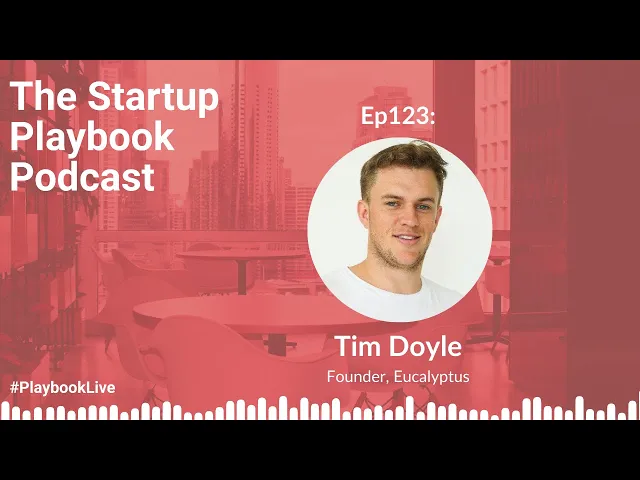
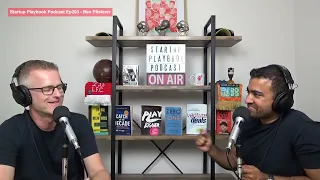
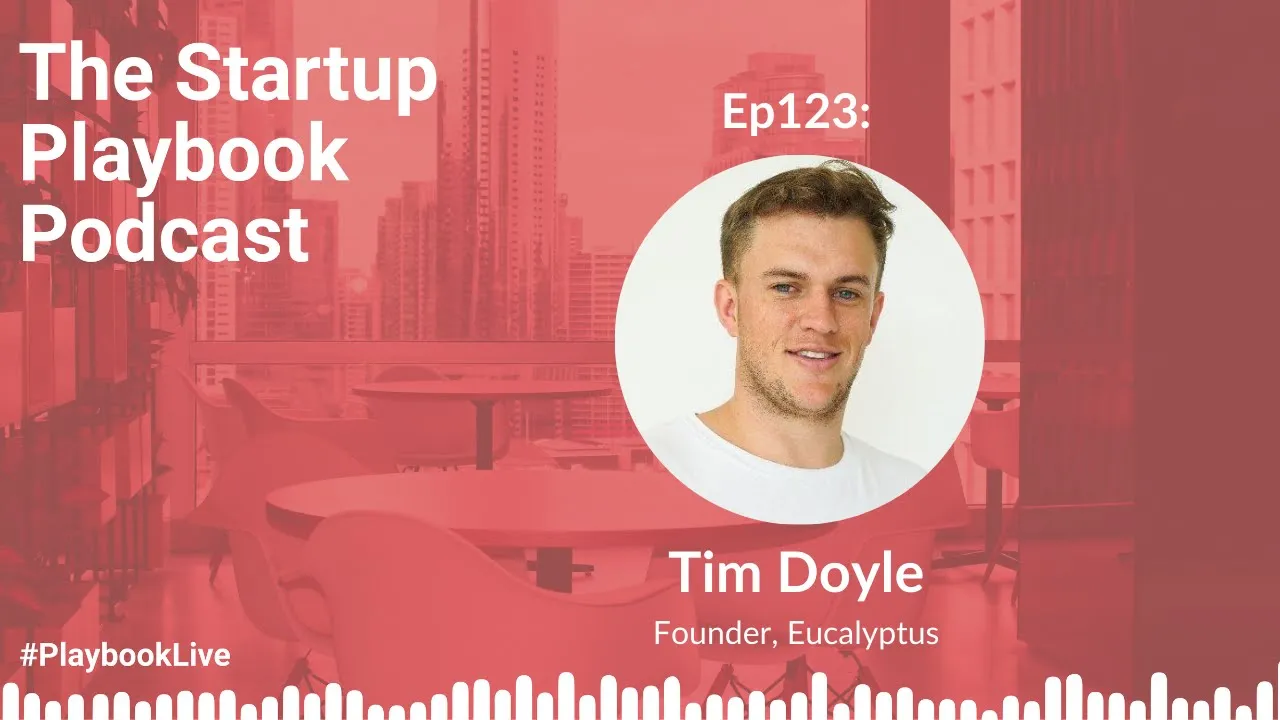
pageva and each week I interview successful founders investors and subject matter experts on how they got started the strategies they used to succeed and their advice to current and future entrepreneurs i'm delighted to have tim doyle the founder of eucalyptus as my guest for this episode tim is one of australia's most renowned marketers he was previously the head of marketing At direct-to-consumer mattress brand koala in two and a half years he took the business from generating five hundred thousand dollars in revenue a month to turning over more than 100 million dollars a year he is
now the founder of eucalyptus a brand engine that builds and runs its own digital consumer companies they currently have two products in Market pilot and kin fertility which are brands that focus on men's health and women's fertility respectively as tim announced on this podcast they are just weeks away from launching their third product in market a skincare brand called software.skin we went really wide and deep in this podcast interview covering a range of topics including lessons and insights from running Digital campaigns for the labour party in the 2016 elections how to build high performing growth
teams how to build traction and get your first few customers on a budget how to find white space opportunities and new channels for growth the fundraising process for direct to consumer brands and other off-trend startups and much more without further ado here Is my interview with tim doyle tim welcome to the startup playbook podcast and thanks so much for taking the time to join us this morning no thanks very much for having me right here appreciate it so tim for those people that may not be as familiar with you or your background you want to
share a little bit about your story and what got you here today uh yeah for sure so um i started i guess I worked in hospitality until i finished uni studied finance and then when i worked for a small consulting firm and kind of lucked into a project working for the labour party on the 2016 election um that was kind of like a bit of a transformative experience because i bought uh like all of their digital media so a whole lot of search a whole lot of facebook And kind of saw that becoming a really
powerful influence in decision making there straight off the back of that one of my co-workers went and started a koala mattress so about six months into their journey he asked me to join i joined his head of strategy um that quickly became head of marketing and spent two years doing that there um we grew really quickly i think when We joined we were doing about a million dollars or probably half a million dollars a month and then by the time i left two years later we'd done um we were doing about 100 million dollars a
year of revenue so um there's a pretty rapid growth story i think everyone kind of knows that one and then off the back of that i kind of had the insight that like the model that we were using for marketing and for technology And for kind of convenience based disruption um was viable across a whole lot of industries and so uh that led to the founding of eucalyptus and we're about two years into that at the moment um with pilot uh a men's health brand and in uh our fertility brand as the first two things
and hopefully a skincare brand called software.skin coming out in the next couple of weeks so very exciting Exciting very keen to obviously talk to you about your experience with koala and uh what you're doing with eucalyptus at the moment as well but just going back you know you touched on the experience that you had in working on campaigns for the australian labor party um and just the insight that it gave you on the ability to sort of influence or kind of shape how people behaved in things do you want to unpack a little bit In
terms of what did that sort of process look like or how did you approach sort of media buying or just marketing in general to drive that engagement yeah for sure i think like what the the core insight for me was like it was this moment of shift from like matt and you saw it in real time happening in labor party because like say let's say for argument's sake i don't know if these numbers are exactly Accurate but let's say they they allocate 20 million dollars to a advertising budget for an election campaign um and and
historically 95 percent of that has gone on tv and like it's of questionable effectiveness because of uh the like very linear nature of it and it's like a very forced mechanism and when politics is on tv all the time there's a question of like where the Organic element of press coverage and then the advertising element actually comes to play um and then there's this drastic shift that happens like i think in line with the facebook pixel which means and there's basically two pieces of innovation the first is um the ability to cut audiences from their
existing database of which is there is an incredibly rich incredibly detailed history Um and plug them into facebook and so therefore target it like a seat by seat but also kind of a street by street and even voter by voter level so that completely changes how you think about where your messaging goes and also then the second thing is um you're switching from like essentially like an interruption based model of advertising to a feed based model and so what you can then do is take those people that you think are Important to you as swing
voters and show them messaging that isn't necessarily like advertising but rather is like an article or content design to move their preferences so for example um the insight that like uh middle-aged men tend to not vote uh for left-wing parties because of perceived um economic poor perceived differences in economic management um So you can pick that up you can pick an article from a publication they trust whether that's the age or the smh or whatever you can run that as an ad in their feed you can see how they engage with that ad and then
you can see them move their voting preferences based on that and so that insight is like hugely influential um and completely shifts the way political advertising is done and like you've actually seen that move since Then into like much more i guess like scary and divisive mechanisms where you've seen like the rise of like fake news as a concept um but it all started in that i think that shift from like a tv based model to a feed based model and a targeted model and and i think we can't go back now unfortunately yeah i
think you just touch on you know facebook pixels which i think if i have it right um came Around around 2014 2015 or so um and really as you mentioned really gave access to data and an insight that wasn't really available previously um yeah if you think about it right like so say let's say it was late 2014 and i think that's more or less right so in 18 months post the facebook pixel you had brexit trump um and that 2016 australian Election which was mad which was marked by how close it was considering um
it was expected to be a complete whitewash for malcolm turnbull so um yeah three i mean like two significant world shifting events where the facebook pixel played a huge role yeah absolutely absolutely crazy how much things change within such a short time period but i guess when you're looking at it from business context it's Very easy to to figure out whether something is working or not to an extent um because you have a specific conversion event for something like running a political campaign where you don't really know whether something is effective or not um in
the same way or you don't have those as tight or closed feedback loops how do you sort of gauge the success of particular campaigns that you're running Or just even understanding if the approach or the strategy that you have is right or not yeah i think like the lucky thing i think like where political parties are significantly more advanced than most companies i would say is uh they've had this as a known problem for their entire existence right so um the idea of like what and how voters Move in a world where that's very difficult
to track um is like fundamental to the way they operate and has been for you know their entire existence and so um they're very very good at random control trials they're very very good at focus groups and they're very very good at polling and so that apparatus is set up for a world where you don't have a conversion event like a transaction And so what you end up having is feedback loops provided to you by other parts of the party that are like hey if you're running this in this area we will robocall that entire
area and get you actually um results and so um while it's not as like robust and like neat as an e-commerce event it still provides a really interesting insight into your ability to move voters or customers or whatever it might be and i think like That's actually something that's really poorly replicated in the brand marketing world where where people kind of throw their hands in the air and hope if there isn't a really nice purchase event to to decide on in doing research for this interview i came across a previous interview that you did where
you spoke about the need to separate out uh you know people that were Were essentially going to work for labor regardless of any advertising that they had or not and the other end of the extreme which is they were going to work vote for liberal and any sort of advertising that went to either of those sides was essentially wasted spend what you're really looking for is finding people in the middle again like i think it would be really interesting for Founders to know from that as a use case example of not just you know being
able to target people by geography or those sort of things how do you sort of separate out or exclude those particular groups to make sure that you're optimizing your spend in a way that is going to to the right sort of target audience yeah i think like the commercial analogy uh for this Is uh it's always nice to kind of feed advertising to your existing customers or your like existing uh fans and then watch the engagement juice flow through and it's kind of like an endorphin hit that feels nice and like will often not move
uh the needle for you in the way that you expect and i think like the classic example that like first time ecommerce founders have is like over retargeting Um so having you know anything more than 15 percent of their budget on retargeting is probably um was probably wasted spend because those people are probably moving through anyway and like ad technology companies have done an incredibly good job of putting themselves between um a statement of intent in the transaction and then claiming that conversion um and so in the political example uh You there's 30 of the
people on either end of the spectrum that are very unlikely to shift their vote um almost it's almost uh you know it's almost impossible um and i think there's also another probably 10 that are in seats that just don't matter um i think like one of the big moments of discovery for people in terms of how they view the political sphere is when they first understand whether they live in a state that actually Matters or not um because a lot of like us uh like i mean i mean you i think both live in the
inner city of different cities we actually don't matter very much melbourne a little bit more um because there's a green labor contest but in the inner city sydney you're you're you're either a wentworth voter who's voting liberal who's the party's going The election is probably going liberal or you're um in the inner city and going labor so you don't matter and so it's like about cutting those people out and then being ruthlessly focused on being able to go at the middle of those that middle group that um that uh end up switching between parties regularly
and then like focusing that and like getting used to the uncomfortable fact that like sometimes those people will have lower Engagement numbers lower click-through numbers much lower sentiment numbers but that's the wall that you actually have to win and you have to be willing to get uncomfortable with the fact that you're going to have to see some negative numbers as opposed to just kind of going to support a base shifting gears you know what did that sort of process look like of joining koala about six months in so Again from what i understand you had
about eight people or so at that time so what did the business look like and i guess what were some of the things that were already working and what were some of the opportunities from coming in from a growth perspective that you sort of identified were the initial sort of first steps okay so i guess like i knew danny before businesses started and i also um helped them organize their investment from Steve smith who's a childhood friend and so i'd seen the business from very early on and i think what they did incredibly well initially
to get um this amazing traction is like they solve for the customer experience problem like absolutely and completely um and so like they they their their desire to deliver like four hour delivery the 120 night trial um and then like a level of customer Service that was just unseen in the mattress industry meant that like they were they had a machine that like ingested people and spat out happy customers um and so like that being fundamentally working and like um and delivering meant that like the growth platform in which you were building on top of
was like really sound um and so i think they'd solved both a service problem a supply chain problem And a technology problem in order to facilitate this amazing customer service that was spitting out customers you know say it was spitting out 30 to 50 happy customers a day it's quite easy then to go and turn those 30 and 50 happy customers into 200 over the course of a year because you have a machine that works and you're and you're building on top of that what does that look like from from a Channel-based approach like i
know that you've kind of spoken previously about how facebook you know especially at that time was just so cheap that it was very easy to kind of scale that out you know i guess how do you sort of think about in terms of differentiating i think koala got known as well for running a bunch of radio ads and running sort of billboard advertising what is that sort of inflection point for for the business or for the brand Where you sort of switch away from just purely digital as kind of the main acquisition channel to sort
of exploring or looking at spend or kind of the maturation of the business over time uh i think like it's it's funny because i don't think they're necessarily inflection points um as neat like they were very neat for koala because i think we were living a mass inflection in the Market from like facebook being like drastically undervalued and therefore there was a really simple model which is like you make five statics some people engage with those statics the first time you drive some traffic to your website and then you retarget them to death and eventually
they transact and so like it was a really simple model that worked really well and pumped out you know Very affordable cacs for the business and so i think there are a couple of businesses in our position i think like vino mofo being another one at the same time i think like to an element even shoes of prey had bits of this um where it was like hey this is cheaper than it's ever been and what an incredible time to be building the ecommerce company um and then that that inflection point kind of changed when
like i guess like Particularly travel so travel hit the facebook advertising world particularly heavily um so the booking.coms expedias the airbnb some of the biggest advertisers in the world hit facebook i think probably sometime during 2017 and that was an inflection point for the cpms and so once this epm started to reflect something that wasn't just like a pure and simple arb the desire the Need to like find value across different channels became like immediately apparent and so um the brands were able to do that and go okay well if cpms are 15 bucks on
facebook and 25 bucks on 20 bucks on radio do i believe that i can produce a piece of content on radio that produce that performs as well if not better for the same value as what i was historically getting on facebook and That calculus just runs again and again and again as you introduce new channels and suddenly you have what like is perceived to be a non-digital diversified mix but in fact it's just a like a mechanism for shopping for value across different media yeah it's really easy to get kind of caught into we just
purely run digital what's the next digital channel to i think you've kind of spoken about this previously as well As like what's the next cheapest customer acquisition channel for us and kind of approaching it that way what does that look like in practice in terms of trying to identify what those channels are so like i think for a lot of companies it can be really easy to build up a core competency or skill or essentially build the backbone of a company on a particular channel as well and then you know when you start seeing things
Drying out it can be really hard to start from scratch from zero from your perspective how early should founders or companies or startups start thinking about first of all diversifying or testing different channels and then also how do you sort of identify you know what what are those channels and what works and what doesn't work so i guess like there's two questions there and the first is when do you begin To diversify and i would say that like the it's not like a finite point i think in the journey i think like as soon as
you start to see like the the classic story is that like you start to see uh performance in a specific channel wobble and you're like oh this doesn't seem to be scaling anymore and then you continue to spend on it and like try and change up tactically and trying to change up tactically ends Up costing you money because the reality is like you were saturating that child and that happens again and again and i talk to people who've been through that scenario um again and again so i think like as soon as you start seeing
those wobbles and that might be uh cpm's rising but it's probably more just fundamentally like tax rising like you start to see that happening like hey you know this doesn't seem to be working the way That has done so historically for us then you need to start looking for um diversification and i think the way that i approach the first stages of diversity vacation is like from a very first principles perspective where it's like okay like our customers look like this we have a pretty good feel for who they are and what they do because
of all the feedback we've received in like the two-way communication channels that Are facebook and youtube and you know just customer service in general um and then you go well where do i believe at first principles level these people um are putting their attention um in an un like in a i guess like where they outweigh the average user in a specific channel so like for us for pilot it's like we have you know we have 25 to 45 year old men on The platform so therefore like a lot of places where sport is broadcast
are particularly viable for us and so we just look to those and go okay well then where do i believe this channel is um underpriced because like the there are different pricing mechanisms for every channel there's some combination of like prestige there's some combination of like true auction based pricing and there's Some version of like difficulty of creative as well and so if i can find places that um creative is a channel is particularly underpriced then i like go well can i now design an experiment that shows whether this channel is viable for me and
so it's like can i limit a geography to something that i can measure or a pool of customers that i can Measure and can i measure uplift versus control in that group and if i like start to see all of those boxes being ticked then it's worth an experiment um i then try and make sure that the creative is the best we can do for that so like i very rarely would go and go like hey he's i'm completely new creative i'd be like hey this is what's worked for us in another channel um let's
not reinvent the wheel Here what does it mean to do this specifically in this new channel and then do that measure it and then begin the scale process or kill um kill the channel if i don't believe it's viable we spoke a little bit earlier just about facebook pixels and the amount of sort of data and insight that you can get from that especially when you're kind of looking at more less mature channels Or more channels that are kind of more traditional in a sense so things like radio or things like billboards for example where
you can't collect those same sort of data points what what does that collecting data look like i guess from radio you can sort of directly measure from the time that this ad goes out you know has they been uplift but i guess to something like billboards how do you gauge whether that's that's working or Not i think like the default method for testing is like definitely geo splitting so i think like you want to be looking for geo test feed controls whether that be at a postcode level a regional level estate level city level whatever
it might be and you kind of it's pretty easy to get a testing control group together um it's quite hard to like kind of set Up a control that is like a baseline version of a thing but like you can kind of do that if you keep all of things consistent and then you're looking for like directional uplift i think like the problem with a lot of these difficult to measure channels is that people expect the same level of data accuracy as they're getting out of facebook and i think like that's a really flawed perspective
Because like facebook is so like tuned to efficiency um and to uh and to the ability to trans see transparently into what's going on that like you're never going to get that repeated but the value of these new channels is actually in the fact that there's ambiguity so like if you can work out where value is better than competitors in your space by you know having a having a novel measure Mechanism for measurement then you can extract value way more simply than you can on facebook again sort of fast forwarding for your career so you
know you joined uh you joined koala at a time when you said i think they were doing about half a mil in in revenue um you left when they were doing about 100 mil in revenue an amazing and incredible journey and You know you were obviously a core part of that and then you decided to to leave and and sort of start eucalyptus first of all like what did that sort of process look like for you in terms of making that transition out and what were the early days of i guess putting the the concept
behind eucalyptus together like i actually had this conversation with one of our investors last week about like that in australia It's much rarer to um to step out of high performing reasonably early stage stuff into their own stuff and i think the explanation that he had coming from living in san francisco was that there are fewer examples of it and so people are less attuned to this idea that like the core insights you can pick up in a high performing company learning from great founders Can then be leveraging to build a second hopefully high performing
company and so it doesn't happen particularly often here just because there aren't as many mature startup stories to spit people out of um and so i guess my view was that like we were doing something i was lucky enough to join something that had a reasonably clear mechanism for differentiation and they had like Utilized that mechanism to the point of building a really great business that was that's you know will go on to be you know one of great the show's great startup stories and so my question like kind of two years in was like
well i could stick it out here and uh enjoy the ride and kind of continue to repeat on the same process again and again or i could test this Idea that this this differentiation point is scalable in different industries and um we can start building on that and i i just like the intellectual challenge of doing that was probably um the most important thing to me and so i i was lucky enough to be quite close to um a few of the team at blackbird so um both sam and nick and even nikki um had
it took the time to kind of Give me feedback on this idea that i had in my head about what what a kind of consumer conglomerate out of australia could look like um they were very supportive of the idea um and so when it came to like me actually making the jump we actually pitched them i pitched charlie um my co-worker who is now my co-founder um and uh we then pitched blackbird and they were very Supportive of being providing the initial capital to do it and so it made the jump off decision pretty easy
if i have this correct you were initially pitching dog food healthcare production i guess what instigated that and i guess what made you want to make the switch so i guess like the initial i guess the kernel of the insight that became eucalyptus was like we think that There is the potential to build a like procter gamble or unilever or even like an lvmh um type business out of australia where um a core engine runs uh technology marketing supply chain operations and customer service um and on top of that you build brands in different categories
um where there is high friction and you solve for that friction build up a Significant and successful brand in australia and then the best brands will have international potential and so the reason that pet food and i every time i mentioned pet food i spook mike halligan the founder of scratch because he's a friend of mine he's a friend so i'm gonna stop doing that but um but uh the reason we said pet at the time was because like pet in australia is dominated by pet circle Um and pet circle is um chewy.com in the
us and like to me that represents a broad horizontal um shallow ecom play and like the shift to direct consumer um has provided much more deep specific niche econ plays and so therefore i'm like well that change will happen eventually and whether it happens um for mike at scratch or the guys at leica or whoever it ends up happening for we Thought that was an opportunity so we were looking for a shape of opportunity rather than a sector to begin with and uh you know you touched on the uh the support that you got from
from the team at blackbird i i know that you've mentioned previously that you were blasted by a couple of other investors that you spoke to a conversation that i had with rachel newman and i can say this because she Said this herself uh was that you know at the start when she first got pitched this idea of you know a conglomerate of different brands or kind of all these different things at the very early stages of of eucalyptus very difficult for her to grasp it's such a different kind of unique model and approach and especially
in an industry like direct-to-consumer brands that I guess have gone a little bit out of vogue as well over the last few years more from from a story perspective for founders that are listening when you're trying to pitch uh pitch something that's unique or different or something that isn't the hot thing in in the industry at the moment and trying to convince investors to jump on board or see or share that vision for you what does that look like from your perspective or What was that sort of experience like in trying to get that sort
of initial initial investors or trying to get those initial backers yeah i mean like it's a really interesting question because i think it's one that founders run into all the time i think like if you were to walk into sydney startup hub now and like poll everyone on what was holding back their business The the number one answer would be that like investors don't appreciate my idea for what it is and i think like that actually is a self-defeating kind of narrative because like the reality is is like investors aren't like some big scary irrational
beast that's chasing fat after fat you know despite the fact that that's like a popular position to take on them there are reasons why they like certain Industries there are reason why they don't like certain industries and like the reason that director consumer fell out of popularity uh from a u.s investor perspective is because the initial idea was that you could pump capital into a business you could take market leadership and then tax would come down over time as you became the market leader in a space and that would drive investment returns and The popular
examples of the first generation of these businesses that proved out to me not true where like by being a high growth high cac leader in a category just meant that you got more efficient cleverer competitors competing with you um at a lower scale and you got you kind of got eaten from both the top and the bottom and so so pitching that idea um a direct consumer business idea um to investors In you know 2018 or whatever it was what i need i think what we needed to do and what we did quite well is
we acknowledge the problems with that model and we said like here is how the problems of that model get solved and so you can't ignore you know the frailties of your sector you have to go like hey this is the dominant model but like people are not going to stop buying products and so therefore what is a Viable product led business model actually look like in e-commerce and like that was the question that our like first dex um fundamentally had to grapple with rather than like rather than being like hey is there a technology solution
to this you know specific issue in pet food it was like can there be a billion dollar business built out of a sector where historically um over the last five years there's been A lot of cash burn and a lot of not a lot of upsides seen yeah i think something that you've mentioned previously is um you know probably difficult to build a singular billion dollar direct to consumer brand but there's a lot of sort of multiple 50 to 100 million dollar potential business opportunities within that and it's more about the infrastructure that's that's being
built and essentially That's what eucalyptus is trying to do is you know is there a replicable model underneath that that can spin out a bunch of these brands yeah for sure there aren't there just aren't very many few skew international global brand success stories that spun up in under three decades like you look at the history of like even the best brands of all time and like They started like with like single skew like i mean i even like you read that book shoe dog by phil knight about nike and you're like he started a
really specific category of like running shoe uh and then over 30 years diversified that out into you know the brand that it is today but i think like if you start with this idea that like we can be one thing for a significant amount of time i think you're heading For a situation where because competitive dynamics and market entry is so easy now getting for a situation where you're competing on a low differentiation product really quickly um and you get that burns you really fast and i think like you can actually like the simple example
of that is like the success of koala v um the relative failure of caspar which is it's it's us equivalent and you go like well why are These two businesses um so different you know you have one that is in australia in a much smaller market um but still has 20 competitors versus one in the us that is you know significantly um significantly underperformed expectation and like koala was able to diversify its product offering based on its core differentiation of convenience really quickly and so therefore he was able to create meaningful product Differentiation in its
category within the first three years of its existence while casper you know attempted to diversify into more mattresses which was just the same differentiation replicated over and over again and therefore got eaten by a number of competitors and so um yeah so i think you have to build something diversified really quickly otherwise Um you run into a number of problems that we've seen seen develop over the last five years so you've got this framework of a future that you want to build with eucalyptus essentially a house of brands that you wanted to to build what
what does that sort of process look like in identifying the pilot and then kin were were the first two opportunities that you wanted to go after Um why specifically them um as opposed to potentially other opportunities that you were looking at so i think like you can like i have a really simple frame for thinking about like differentiation um and that's like you can have product led differentiation where you have a meaningful product innovation and i guess that the example in that in econ would be like newer headphones And the idea of personalized sound um
then you have some kind of customer experience innovation which is like technology power and convenience uh discretion access and maybe a change in the price dynamics or you have some kind of brand differentiation where you're servicing a new community through a change in messaging for a specific product and i think look one version one of that which is product differentiation is Really difficult because it requires meaningful r d and like you've got to be a specialist in this in the field version two is probably the most common um and the best starting point and so
that was where we intended to start and then version three you kind of have to develop over time and i'm a bit suss on that as a starting a starting point so we have this idea of like building Convenience technology led convenience differentiation um customer experience differentiation and so then we're looking for like high friction industries and we're like okay well fragmentation in the doctor pharmacy patient experience is clear and we have a clear underserved community in like young men who are you know no longer having the typical relationship with the gp and therefore seeking
more information Online and like you know buying more stuff online and therefore not having the same level of care so like what if we could build technology innovation that that helped them get this access those services and that was kind of like the frame for pilot and then that meant that like once we had that platform we're like okay well where can this simple online doctors consult and Pharmacy relationship be spread to and i think the next logical place was uh contraception where there was obviously a high friction experience for women and then beyond that
you know that platform can now be leveraged across hopefully like you know five to ten brands over the next couple of years what did the the initial launch of sort of pilot and kin look like when you think about go to Market strategies for both of these these products what's that initial step uh i think like they were both marked by their discipline so like i think like what the first version of those businesses both did was solve a really simple uh like a really simple problem in a really simple way with very direct messaging
around it so both of them were essentially like pilot more with discretion than Convenience but then kin with convenience and so we like delivered on a really simple use case for a really specific group of customers very well for the first kind of six months built up trust that way build up an understanding of what those customers needed um built up the technology to service them and then kind of we're in a position to scale product offerings and um kind of forces of Differentiation from there so i know that you've uh spoken about pre-launch strategies
before um especially when it comes to things like setting up a waiting list for customers that that are potentially ready to buy and whether they do or don't convert for uh i guess i assume that there are a lot of founders that are listening to the to the show that are in the process of Potentially launching their first business um whether it's a b2b or sort of a dtc company how do you sort of think about pre-launch strategy in terms of making sure that you have your messaging right and that you're sort of ready to
launch on day one and then how should they sort of think about getting those initial customers And that initial traction in place for the business yeah i think um what i've said previously is like of my extreme skepticism of the ability to convert uh pre-launch customers into launch customers and i think like uh i think i just i basically think like the common mechanism that people run which is like some version of advertising to a list and then some attempts to engage that list meaning that they Um they they get it and i think the
example that i used is like we had 20 000 people on the waiting list for the qual sofa and i think we sold 50 or 100 sofas in the first week like something something remarkably low and so i think like people will sign up turning a waiting list just out of curiosity and i think that's a poor proxy for like actual engagement and so therefore like the question is then okay what do you actually do To what's meaningful and useful in a pre-launch phase and i actually watched the launch phase of a company called time
qi happened over over the last kind of six weeks and i think that was a super effective mechanism for a pre-launch right where and like very very strong props to the founder who was able to i think like engage potential customers across a Whole lot of channels by like an incredibly frequent two-way conversation requesting free feedback and like i like thought it was a little bit too much to me and i didn't like actually um i didn't actually engage in the community that much but i was just so impressed that he was able to like
form a committed community around the product by requesting product feedback Frequently in the time leading up to through development up to launch um and i think your job is not to like build a large list but to build an engaged list and like use that engaged list to seek feedback on both product on messaging um and everything that you possibly can do um in order to so a committed list of 100 is better than an email list of a thousand is is definitely true um and i think Uh if people want the time to example
i think is still live and so so that's definitely one that people should check out because i think it's a super successful example of um community building pre-launch yeah sean's fantastic i was actually part of the initial launch so i i was i think number 10 to buy a time sheet which i'm still going to claim but yeah right but that's exactly that's Perfect right like that's the perfect example like obviously you have an influential voice in the space and um and he was able to like bring you in and have you engaged from very
early on yeah so again assuming that there's a lot of founders that are listening that uh you know have bootstrapped their company haven't raised funding and don't have a lot of resources to uh to necessarily invest first of all do you think that To do marketing or acquisition effectively at scale you need a particular budget in place to do that and if not you know i guess what how should uh founders sort of think about growth or acquisition from that perspective if they don't have a large pool of resources to work with yeah for sure
i mean it's a it's a problem that comes up again and again And i think there are like two elements to it i think the first is um what happens a lot of people misspend um and so therefore like they will have like let's argument say the budget is 10 grand to do acquisition for the first you know six months of the company and that's that's the person's life savings brought into supporting to the business to bootstrap it um so i think quite often what you'll See is like um money into things like uh brand
development or like a branding agency um money into like an explainer feed or a launch video money into a pr firm and like inevitably all of those things are wastes um and so like what you end up is like you end up with no money left for like actual acquisition because you've paid for things that you Think a company should do um early on and in reality like your brand is not anything to begin with and you have no idea what it will be and no brand agency is going to tell you what it will
be so what you should be thinking about is like can i spend small amounts of money to like test very direct versions of my messaging um and hopefully like by the fact that you're launching a new Company and it's relatively novel is that there are a group of customers out there that are like demanding and waiting for your product and so your job is to like be focused on finding them and ideally um find organic ways to communicate to them and i think like that's obviously difficult but there's like all of the various kind of
like simple reach out engagement mechanisms to do it but then also just Like simple paid messaging um designed you know really simply and written um in from a first person perspective can be a real startup start hook to the to the business like i know um the example that i have in my mind is uh kj at delicio um who i think i've spoken about before he's my favorite marketing person he you know he's got no Like his initial product had no margin in it um and yet like he was able to test really simple
versions of his proposition with really simple content really effectively to get that first kind of group of engaged customers going through and then once he done that he had you know enough um enough momentum and enough scale for that to kind of spread a little bit organically and then like as well through paid channels from there Yeah what he was able to achieve with such small team and resources as well was absolutely incredible oh he's a machine like if you if you're looking for a starting point with facebook and like he probably actually won't appreciate
it so maybe i shouldn't do it but if you're looking for a starting point with facebook ads go to the facebook ads library and look at delusio's ads because like They are world class and have been for five years yeah absolutely it's fantastic one thing that i that i absolutely loved that you said in a previous interview is um earning the right to uh to build a brand for companies i love so much for saying that so thank you really thanks for bringing it up again i loved it i loved it you know i think
a Lot of the time you know being being founders it's so easy to have this really grand vision of what we want the future to look like and you know we want it to be all of these things and we want people to feel a particular way you have to get to a point where where you can where you have enough customers that you can actually build up that sort of brand recognition or purpose do you want to Break that down a little bit in terms of you know what what do you mean by that
that sort of process and what does that look like yeah absolutely like i think like again and again you see these examples of like and it's the way that we write about startups right it's the way that we write about success and the way that we talk about success is that we skip over the terror like i think the Best version we have of it is talking about mvps and how simple they are and like how important is to ship them but like the brand version of that is very rarely discussed which is like the
first version of most stories and most brands is incredibly simple and doesn't have the ambition the global world-reaching world touching ambition that brands end up having End up having you know years later and the first version is like solving a really simple job in a really simple way for a really specific group of customers and then kind of earning the right to expand that out from there is uh incredibly important and so i guess like being able to shrink your ambition is a really important skill set and like being able to go okay What does
what am i happy with for v1 here and like can i make sure that i you know in bringing engagement and then spit out happy customers and like on the simplest mechanism possible and then use that platform to then expand out because people's journeys are so non-linear and businesses journeys are so non-linear that like if you think that like where you're going to be in two years is going to be Like accurately predictable at day one like you're kidding yourself and i think being able to like do really simple things really effectively and spit out
your first happy 100 customers is the only purpose and like if that does if that means that you have to talk really simply and really direct language about the really simple service that you offer them then you have to do that and like Most businesses i think it's easy to get wound up in the idea of being like a startup founder and therefore you know that you're going to build the next you know world-changing business um from day one it just doesn't happen that way none of the companies that i've seen um go on that
journey have like i mean i mean even like talking about koala and like it's origin story like i think it probably changed five times you know but like what they were doing Is making it really easy to buy a mattress throughout that and so therefore um what it ended up being didn't really matter um it just meant that they were you know spitting out traction and then traction created more traction because feedback was used to iterate and then suddenly you've got a great business but you know most businesses fail before that point of first traction
I guess speaking about that you know one of the things that i think koala was really well known for is the the reviews that were in place and using that as an engine to kind of drive growth for the business which again isn't necessarily something that a lot of founders would necessarily think about how did you sort of focus on trying to get those initial reviews in the first place and using utilizing That how do you get that engagement or how do you incentivize customers to to leave reviews yeah for sure i mean this is
not something that i did myself so i'm definitely not taking credit for i think like danny set up in the both danny and mitch in the first versions of that business set up a really comprehensive and personal review funnel um so I think there's a you know there's a classic startup trope which is like talk to your customers and i think that takes a number of different forms and one of those forms is definitely this idea that you collect feedback in a really robust and scalable way and so therefore what they did is they you
know had review requests that went out every couple of days they engaged with every review they responded to Every review and then they use those reviews as advertising so therefore like it's the in an econ business there aren't many examples of good flywheels but um that's one which is like collecting feedback using that feedback as any insights to see your direct your strategic strategic decisions and then also um to scale your messaging so that more Customers do come through because i think the hardest thing on the internet to get now is trust and so if
you can build a platform which people trust quickly then you're in a really advantageous position against any competitor that wants to come into the market if i have this correct one of the things that you found the hardest for in the transition into being a founder is just balancing how You invest resources um both within your team and just kind of overall in the way that you look at the business so when you look at sort of shaping the team for eucalyptus across the two different products that you have at the moment you know how
do you make that judgment call between should we bring in a freelancer outsource kind of bring something in-house um and similarly when you sort of look At look at different channels that are potentially performing versus i guess diversification into into different kind of areas how do you determine um i guess how do you determine things that you should sort of double down in and invest because it will bring you potential long-term benefit versus things that you just need to kind of get in Um and do really quickly yeah i think um yeah this is it
is something that's definitely i think like the number one the most important skill set of going from like 10 staff to 100 staff and like we're kind of early on that journey is like the ability to pick the right areas to invest at the right times and then also like be able to find the best candidates in those areas and i think like you need some view of like what your Long-term sources of differentiation actually are and how you can continue to build those out so like like for example it'd be quite easy for us
to say like hey you know our number one thing that we do is like we do like convenient discretion based um access to medication um and like we could double down on that but like the reality is is like there are only so many ways that can go Um and so we need to actually build out new capability um pretty early on that allows us to kind of increase the number of services and products that we can offer so therefore like investing properly it'd be pretty easy to run a really simple transactional experience and then
like scale the marketing side of things and be like yeah you know this business is headed to the moon because when i You know pour five dollars into channel x it turn it spins out spits out ten um but the reality is like we've actually had to invest in the engineering capability to increase the number of different outcomes we can offer to patients quite significantly um and so it's guess i guess like to round that out as an answer is like we we've had to think through what differentiation look like at scale and invest early
on In that capability even when it perhaps was less uncomfortable to do less comfortable to do so than to just continue to invest in what we knew which was scaling marketing spend in terms of in terms of the team as well especially when it comes from a growth perspective uh you know there's often that balance between the creative side versus the analytical side or the technical actual kind of Placement of ads and those sorts of things when you think about that from from a team perspective how do you what sort of shape does that look
like and is that sort of built up um together at the same time or do you kind of skew towards one or the other um so i'm kind of uh my i have a really simple philosophy here which is like cutting down the difference between uh like the people on the tools and then The customer and so therefore like i think marketing is riddled with like what you'd kind of call middle managers and i think for startups middle managers in marketing are like deadly because they tend to be reasonably expensive um they lacked and tend
to out those things and they're not building like long-term sources of value and so my approach historically and i Guess like this will hopefully hold um into the future is where possible have specialists on the tools so like um particularly content creators i think like content creators are a particularly powerful mechanism um and then have them um as close to the customer as possible so producing as much content that allows you to test quickly kill the things that don't work and scale the things that do Um as well as possible and then like analytically capable
of people making the decisions around how that how that then gets spent but those you want those people on the tools as well um so i guess like the shape of teams at both koala and eucalyptus that might be different to larger marketing orgs or or historically kind of corporate marketing organizations is there a lot less Brand managers there's a lot less marketing managers there's a lot less middle managers generally and more people on the tools operating operating and creating so i feel like i can talk to you all day so i'm going to i'm
going to finish off with one last question before we shift gears to audience q a so for those of you that are joining them tuning in live if you have any questions please submit them by the q a Tab which you can find at the bottom of the screen so tim i know that you you touched on this a little bit earlier you know i think that a lot of a lot of founders uh get caught up especially if they don't come from a marketing background and just doing the same thing that everyone else is
doing just because it's the easiest approach but oftentimes the most impactful things will be to kind of look At white space opportunities that are a little bit out of the box but are very in line with where your customers are already paying their attention i think you've uh you previously mentioned you focused on kyo sport uh i think you've also mentioned previously that you've invested invested quite heavily in pornhub as well for pilot when you think about Assessing new channels first of all how do you determine what are interesting channels for you to potentially test
on and how do you gauge whether a new channel that you're just testing on is uh isn't effective because you just haven't executed on it properly or whether it's actually not that not the right channel and won't give you the returns that you That you potentially have hypothesized at the start for sure so i think i think um there are kind of a couple of elements to the answer to that the first is like you have to have your core channels doing what they're supposed to do right so like i'm anti facebook and google in
the sense of like them as like long term scale opportunities but it would be stupid of me to say that you don't have to have Them working for you as like mid funnel tools to close transactions so until you have that done and what i mean by that is like you can move people from first interaction with your brand through to purchase reasonably effective using those two channels then you don't necessarily have a baseline even to start to begin to scale into other channels um but then once you do have that Working i think the
question is then is like well where do i believe that i can get my my customers eyeballs uh or ears cheaper cheaper than others then i'm currently getting them in my in my main channels and like so i think like like like the pornhub example is a really simple one right it's like audience excuse Uh hugely male uh is the right demographic and it's probably thinking about the right set of things at the time that the advertising will be shown there and i know it's cheap because i know other brands will go there and so
like it was a pretty simple uh decision for us and then working out if it works like well fundamentally at a cpm level does it make sense so like do i at first Principles believe paying a dollar for per a thousand impressions for a particular group of customers it's obviously going to be low engagement do i believe we can do something with that yes and then from there it's like set up the tests to see if it is scalable and once you can see that you're getting like uplift in markets where you're running it then
scale it as quickly as you can and pour As much money as possible fantastic thank you for that team so as i mentioned we'll be shifting gears and moving to audience q a the first question that i'm going to pick out is from sonia shekhawat who wants to know any tips to win your first few customers uh so the first few i think is like so i think like there's a whole lot of organic stuff That you can do for the like first 25 customers where it's like okay where is like where is the super
low funnel point that people are making decisions here and can i literally just like display some like some messaging in some way and whether that's like getting to events or i think like in person conversations with potential users is probably the best way to just get Started because um hey it's great feedback loop for b it's like you can build trust through your own personal brand rather than having to rely on like a corporate um you know like the the very difficult thing of like a corporate launch and then the second thing i think is
like can you like rely on other people's customers and partnerships to like introduce or can you leverage someone else's trust into um Into getting that initial launch phase [Music] uh the next question that i'm going to pick out is from arnie mitchell who wants to know what is the criteria for the next product you're going to bring to market so i guess you just touched on a new product that you're bringing uh bringing in the next few weeks uh what was it specifically around that that made it the right next thing Yes i think um
in we so we're launching prescription skincare so like what do we what does our core engine do it like makes it easier to access doctor and doctors and pharmacists right so where is there categories where that is an opportunity for a better product um and for product differentiation and we felt like skin care was a category with like a lot of i guess like misleading or like lack of evidence-based information And like dermatology was a difficult to access field and so we could our technology platform could facilitate a smoother interaction with that field and so
um that presented as an obvious obvious opportunity to build something new and then beyond that it's like well where can we leverage our technology and supply chain customer experience platform and what we know about building brands To bring new things to market and that hopefully is a strategy that repeats over the next year or so great uh next question is from luke bramble who wants to know um hey tim i noticed you did some instagram influence influencer campaigns for kin do you feel this channel is worth exploring for early stage startups in terms of growth
and awareness from a cost perspective specifically micro And macro influencers so no would be my my example my answer um so i think i've had like i've done a lot of it over a long time now and i think the pricing is so difficult and it's particularly difficult in australia because audiences don't tend to be local they don't tend to necessarily particularly well represent the demographic That the person often is and so it's really hard to get a valuable cpm on a group of people that is small and is has a diverse following that kind
of spreads outside of a core demographic so like i found it really difficult to find pools of influences that are scalable early on in the life of a business and and funnily enough when it becomes viable is when they become super macro so actually it's actually scale that I've found to be effective and i guess the caveat that i'd like to put on that is if you have really really strong margins then doing like essentially what is affiliate deals with influencers can be quite powerful but we don't necessarily have those margins so therefore it's like
it's not a position that we can really like chase hard what you end up seeing is like Businesses like face masks where it's like incredibly high margin and they can split the revenue in some way with an influencer like sending out the product for free is a great way to to spread spread but i think you need that margin profile and not a lot of businesses have that margin profile fantastic and i touched on this a little bit earlier um you know in my conversation with rachel she Mentioned that you will always be part of
her anti-portfolio and she should have just trusted you as a founder to execute even though she didn't quite grasp what what it is that you were doing but you mentioned that um you know blackbird were one of the earliest investors behind my eucalyptus and part of that was your relationship that you had with nikki um samwong and nick crocker uh and so The next question is from bryce chi who wants to know tips for building relationships for raising down the line um i think it's like bring be open like so very very very few companies
should ever be in stealth yet a lot of companies tend to think they're in stealth and i think like the reality is like be open on the journey be willing to share Like i mean the person that i think of at the moment in this kind of space that's doing incredibly well is dom from fast who's an australian he's in silicon valley now but he he used to be in brisbane and like he's been so open and transparent with his journey that he has been able to attract investors kind of proactively towards him because people
have really been on that story With him and like he has every right to be in stealth like you know there is so many incentives for businesses for like large commerce providers to copy the product he's planning on building and yet he has valued that track that traction and that um that kind of community knowledge much higher than the idea of being able to build something in hiding and i think that's definitely true like Build audience and engagement on your story and then hopefully leverage that to um to attract investors when the time is right
but like you know if you come from nowhere at your seed or at your series a it's going to be infinitely harder yeah dom's been killing the the twitter game i think he's uh he hired his co-founder from a twitter dm as well yeah i'd like to go to the he's at the Point of being annoying but he is very effective so final question uh before we wrap up the interview is submitted from michelle lowe what is the one most important advice you will give to an entrepreneur who is going to launch his or her
first product uh i think like i might like i go back to like solving simple problems um in disciplined way is probably the Most important thing that i've learned um it's very easy as we've spoken about it's very easy to spread broadly it's very easy to try and solve the world's problems when you're beginning but like being able to focus on solving something really simple for a really small group of people will give you just like i think that like initial attraction is so so powerful and so Being able to really really simplify and boil
down and boil down and limit the desire to be you know world changing from day one is is such a powerful insight that has really shaped everything that we've built here and and everything that i've kind of had the opportunity to see me built um over the last couple of years fantastic on that note tim thank you so much for coming on the show and for Sharing your experience and insights i gained a lot from that interview and i'm sure i listened to it as well thank you very much for having me chat to you
soon thanks for listening to episode 123 of the startup playbook podcast as always we'll show notes from this interview will be available at startupplaybook.com i'll be back at 8am next tuesday the 11th of august with another live episode And my guest for episode 124 is the co-founder and ceo of airtasker tim fung since launching in 2012 airtasker has become one of the leading marketplaces in australia with more than 3.6 million members across australia and 30 000 monthly active taskers i'm really looking forward to that interview and hope that you can join us but in the
meantime if you enjoyed this interview Please don't forget to like share and subscribe as always thank you for tuning in and i'll see you next week you