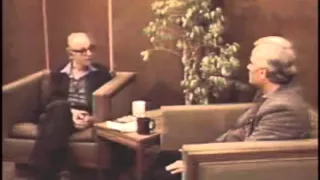
>> Albert Ellis: Rational Therapy or Rational Emotive Therapy also called RT for short, is based on several fundamental propositions or hypotheses. And the first of these is that the past is not crucial in a person's life. The past affects him a good deal.
That he affects himself much more than the past affects him because no matter what he has learned during is historical development the only reason why these things that have happened to him and have been told to him affect him today is because he is still re-indoctrinating himself with the same philosophies of life, the same values that he usually imbibed and taught himself too early in his childhood. So we stick largely in the present in rational emotive psychotherapy rather than in the past. And we believe that today the individual experiences negative emotions, self-defeating behavior, inefficiencies, because he now is indoctrinating himself with what we call simple exclamatory sentences which involve ideas.
Human beings can tell themselves ideas in all kinds of languages and pictures, in sign languages, in nonverbal expressions, math, for example. but they normally speak to themselves in simple English if English is their name tongue. And when they talk to themselves in irrational or an illogical way then they create, they literally create, their negative feelings or emotions and the behavior that follows therefrom.
Now just to give an example the individual usually tells himself when he's upset first a sane sentence and then the insane sentence. The sane sentence is something along the order of I don't like the thing that I've done. I dislike my own behavior And that would be fine.
But unfortunately he follows it with an insane sentence which says to himself And because I don't like my behavior I am a louse. I am worthless. I am a no-goodnik.
And this thoroughly insane sentence which is a sentence of faith unfounded on fact which has no empirical reference, which is a kind of superstitious or dogmatically religious system creates what we call his anxiety and through his anxiety, his depression his guilt, his other forms of self-defeatism. Or again the individual tells himself the same sentence I don't like your behavior when, let us say, somebody has acted badly with him and instead of following that up with that because I don't like your behavior I can still stand it and I’m going to try to change - to get you to change your behavior, he says, I can’t stand your behavior or in an absolutistic, god-like, grandiose manner you shouldn't be the way you are because I think that I don't like the way you are. Now it’s these second B sentences which upset the individual.
Or another way of putting it, as Epipedus, a Roman philosopher said many years ago it’s not what happens to us at point A that upsets us. It’s B, our view, of what happens to us. And in rational emotive psychotherapy we go after this individual, the patient's view, and show him that whatever he thinks has upset him usually some external situation, what somebody else has done, it's really what he's telling himself about this thing, this event, which upsets him.
And although he may never be able to do anything about the external event in A he can change the internal event, his sentence, his belief to himself at B. Now in rational emotive psychotherapy we try to show the patient three kinds of insight in contradistinction to some other therapies, which usually emphasize one major kind. The first kind we try to show him is that all his behavior especially his negative, self-defeating behavior which we’re interested, which is upsetting him has clear-cut ideological antecedents.
He may have learnt these, as I said before, in the past but right now, today, he must still believe these same ideologies else he would not get the negative behavior that flows therefrom. And insight number two, which is most important, and which is unfortunately neglected in many other systems in psychotherapy is that he being, as Ernst Acero once said, a symbolizing animal is continually re-indoctrinating himself with these ideologies. And that’s the issue.
That's why he's now disturbed. Now insight number three is that even when he sees clearly what he's telling himself and that he's telling himself nonsense, only by work and practice, by continually reassessing and reevaluating his own philosophical assumptions will he ever get better. Now we also stressed the fact that action is necessary to change an individual.
Just talking about things, thinking about things, is nice but not necessary. Or I should say it’s not a necessary condition for psycho-therapeutic change. What the individual has to do in addition usually is act.
And we, therefore, give him concrete homework assignments and get him to act these out and check up and follow to see whether he does these homework assignments. Our final goal is to get the individual to learn and learn for the rest of his life to challenge and question his own basic value systems, his own thinking, so that he really thinks for himself. He must do this, particularly when he feels miserable, he feels anxiety or depression, or guilt, or too much frustration, or anything else that is negative, or when he behaves very inefficiently.
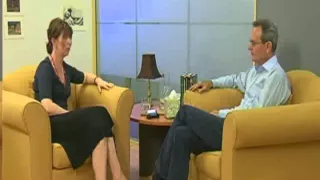
And, finally, he was able through this kind of add new thinking, rethinking his own assumptions, to apply what we call the scientific method to the facets of human living and to be truly scientific in his behavior, to question and challenge his own assumptions as we do in science and, thereby, to minimize or never entirely to eliminate the terrible anxiety and the atrocious hostility which unfortunately affects most of us in this existence. >> Albert Ellis: Hello, Gloria. I’m Dr Ellis.
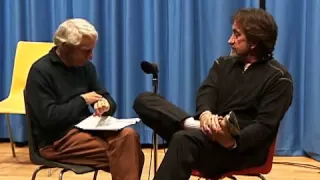
>> Gloria: Nice to see you, Dr Ellis. Be seated, please. Well, would you like to tell me what’s bothering you most?
Hum. Yeah. I think the things I’d like to talk to you most about are adjusting to my single life.
Ah. . .
mostly men, I guess. As a matter of fact, I – I don’t know if I'm doing the wrong thing but I refer to your book anyway because this is what I'm impressed with, the book about The Intelligent Women’s Guide to Man-Hunting. Yeah.
I tried to follow it and I believe in it, This is why it’s so fun reading your book, because I'm not much of a reader. But I sort of believe the same way you do. But then I’ve got a problem in this area.
The men that I do -- -- I’m attracted to or the type of man I'd like to become closely involved with I can’t seem to meet or I get too shy with or something. but I don't – It just doesn't click. The men I seem to be dating nowadays, I don't like; I don't respect much.
The ones I don’t enjoy much, they seem flip and uninteresting. I don’t know if it’s something about me or what. Because I really do want to meet this kind of man.
Well, let's talk a little about your shyness. Let’s suppose you meet somebody who you consider eligible. That you might like.
Now, let’s see if we can get at the source of your shyness. Just what you're telling yourself to create this. You meet this man and you feel shy, embarrassed.
Yes, but I don't usually show that. I usually act flip right back. Yeah.
I act like the other men act to me. As a matter of fact, I act flip. I don't seem near as intelligent.
I act like a typical dumb blonde. Ah. .
. I'm just - I'm just not myself with them. I'm more un-at-ease.
Yes. Well, as you probably know from my Man-Hunting, I believe that people only get emotions, such as negative emotions of shyness, embarrassment, shame because they tell themselves something in simple, explanatory sentences. Now let's try to find out what you're telling yourself.
You’re meeting this individual. Now what do you think you’re saying to yourself before you get flip? I know what it is but I'm not - I don't stand up to his expectations.
I'm not quite enough for him. He’s superior to me. Although I want this type of man, I’m afraid I won’t have enough to attract him.
Well, that's the first part of the sentence. And that might be a true one. Because maybe he could be scary to you in some ways.
Maybe he wouldn't be attracted to you but that would never upset you, if you were only saying that - "I think he may be superior to me. " Now you're adding a second sentence to that, which is, if this is so that would be awful. Well, not quite so extreme as that.
Because I thought about that too. It’s usually I've missed my chance again. because when I want to become -- If I want to show the very best of myself because I think I have self-confidence, and I have enough to offer.
Yeah. But when I get afraid like that, then I show all the bad qualities. I'm flip.
I'm - Then I'm - I’m so much on the defensive that I can’t show my good qualities. And it’s like I missed my chance again. There was a good opportunity to be close to this man and I loused it up again.
All right. But even - Let’s suppose you’re saying that. And I think you really are.
But you must be saying something else too. Because if you were just saying Hell, I missed my chance again, you’d say, All right next time I'll take advantage of what I learned this time and do it a little better. Now you still must be saying If you feel shame, embarrassment, shyness that something pretty bad about your error in missing your chance again.
I don't know if this falls in context to what you're saying, but the thing I do feel is that I get suspicious then. Am I the type of woman that will only appeal to the ones that are – to not my type of guy anyway? Yeah.
Is there something wrong with me? Am I never going to find the kind of man I enjoy? I always seem to get the other ones.
All right. Now you’re getting closer to what I’m talking about. Because you’re really saying, if I am this type of woman that none of these good, eligible males are going to appeal to then that would be awful.
I'd never get what I want. And that would really be something frightful. Plus, I don't like thinking of myself that way.
I want to put myself on a higher standard. I don't like to think that I may be just an average Jane Doe. Let’s just suppose for the sake of argument at the moment that that were so.
All right. That you were an average Jane Doe. Now would that be so terrible?
It would be inconvenient. It would be unpleasant. You wouldn't want it.
But would you get an emotion like shyness, embarrassment, shame out of just believing that maybe I'm going to end up like Jane Doe? I don't know. Well, I don't think you could.
Because you still would have to be saying on some level as I think you've just said, and it would very bad. It would be terrible. I would be a no-goodnik.
If I would just change up. Well, plus, I'd never get what I want. If I were just a Jane Doe and I’d have to accept it, I’d never get what I want.
And I don’t want to live the rest of my life with just icky men. Well, it’s not necessarily so that you’d never. You really mean your chances would be reduced because we know some icky girls who get some splendid men, don’t we?
Oh, yeah Yeah. You see. So you're generalizing there.
You’re saying it probably would be that I have a more difficult time, but then you're jumping to Therefore, I'd never get it all. You see the catastrophizing there, that you've jumped to. Yes, but it feels that way to me at the time.
It seems like forever. That’s right, but isn't that a vote of non-confidence in you? An essential vote of nonconfidence?
Yes. And the nonconfidence is because you're saying, one, I don’t want to miss out on things. I would like to get the kind of the man I want and be a – in your words – a superior kind of girl who gets a superior kind of man.
Yes. But if I don't then I'm practically on the other side of the chain completely A no-goodnik. Somebody who'll never get anything that I want, which is quite extreme away, isn’t it?
Yes. And that's what I call catastrophizing. Taking a true statement - and there is a good deal of truth in what you’re saying - if you didn't get the kind of a man you wanted that it would be inconvenient, annoying, frustrating which it really would be, and then saying I'd never possibly get what I want.
And even beyond that you’re really saying and I couldn't be a happy human being. Aren’t you really saying that on some level? Yeah.
But let’s just look at that. Let’s just assume the worst. As Bertrand Russell once said years ago.
Assume the worst. That you never got at all, for whatever the reasons, maybe the kind of a man you want. Look at all the other things you can do in life to be happy.
Well, I don’t like the whole process. I don't even like as I’m going through it. I don't -- All right.
Even if it wasn't a catastrophe Yeah. Even if I didn’t look at it as a catastrophe, I don't like the way I'm living right now. For example, When I meet somebody that I'm interested in that could have some potential right away I find I'm not near as relaxed with him.
I worry more. Should I be friendly? Should I kiss him goodnight?
Should I do this? If it's just a Joe Doe and I don't give a darn I can be anything I want be. I turn out to be more of a person when I'm not as concerned.
I don't like the way I'm – Well, I’m -- You’re not - You're not really concerned. You're over-concerned. You're anxious.
Because if you were just concerned you’d do you best. And you’d be saying to yourself, if I succeed, great. If I don't succeed, tough.
Right now I won't get what I want. But you’re over-concerned or anxious. You’re really saying again, just what we said a moment ago, if I don't get what I want right now I'll never get it.
And that would be so awful that I've got to get it right now. That causes the anxiety, doesn't it? Yes.
Or else work toward it. Yes, but if-- If I don't get it right now that's alright, but I want to feel like I'm working toward it. But you want to guarantee I hear.
My trained ears hear you saying I would like a guarantee of working towards it. And there are no certainties and guarantees. Well, no, Dr Ellis.
I - I don't know why I'm coming out that way. What I really mean is I want a step toward working toward it. What’s stopping you?
I don’t know. I thought – Well, what I was hoping is whatever this is in me - Why I don't seem to be attacking these kind of men, Why I seem on the defensive? Why I seem more afraid?
You could help me what I'm afraid of, so I won't do it so much. Well, my hypothesis is so far that what you're afraid of is not just failing with this individual man, which is really the only thing at issue when you go out with a new and we're talking about eligible male now, we’ll rule out the ineligible ones. You’re not just afraid that you’ll miss this one you're afraid that you'll miss this one and, therefore, you’ll miss every other and, therefore, you prove that you are really not up to getting what you want and wouldn't that be awful.
You're bringing in these catastrophes. Well, you sound more strong at it, but that’s similar. I feel like this is - this is silly if I keep this up.
If you keep what up? There’s something I'm doing. There's something I'm doing not to be as real a person with these men that I’m interested in.
That’s right. You’re defeating your own ends by -- I’ve done it again. Right.
If I weren’t so doggone anxious about trying to hook this guy, I could more real. He’s going to enjoy me more if I'm real anyway. So I’m only giving him the stinky part of me.
Right. How can anybody I respect respect a chooch? And that’s what I am when I don't really come through.
But look how you just devalued yourself. Let’s just suppose, for the sake of argument, you kept giving the stinky park of you. Right.
A human being, another person who’s trying to get it interested in you, might not like these attributes, these characteristics of you but I don't think he’s going to despise you as a person, No. Which you are really doing. I don't - I’m harder on myself than I think he is.
That’s exactly the point. But he just doesn’t like me. There’s not enough to me.
Right. And I say before, if people just didn't like you and you went through enough of them, - it would be hard to go through to go through enough but it would be possible - you’d eventually find one who did like you and whom you liked. But as long as you devalue yourself, personally, in your own eyes, you complicate the problem enormously.
And you're not focusing on how can I be myself. Change the traits. If you bring, for example, had a – let us just say, a mangled arm and you wouldn't accept your whole person, your being, because of this mangled arm, then you would focus so much on that mangled arm that you wouldn't be able to do things that you would have otherwise be able to do.
That’s almost what I do. Yes. Yes.
You see that's exactly – So you're taking a part of you, an arm, and focusing almost completely on that. And just to bring it down to our own conversation, you’re taking a part of you, your shyness, your not being yourself with males and focusing so much on that part that you’re almost making it the whole of you and you get at an awful picture of your total self because of this defective part. And we’re assuming, you and I, that it is the fact that we're not crossing over and saying, no, you're doing alright.
You’re not doing that well. Right. Now if you could accept yourself for the time being with this defective part, with these attributes and not beat yourself over the head as I feel you definitely are doing, then it becomes a relatively simple problem to work and practice, to work and practice against this negative attribute.
In other words, let's get back to that now. How to be yourself. Let's just suppose, for the moment, that you really were fully accepting yourself with your failings.
All right. You know you’re going to go out, and you know you're going to screw up with the next man, and the man after that, in all probability. But you're saying, all right, I have to go through a learning process.
That’s too bad. I won’t be very good during this while but I'll do it just as I would at ice skating where I'd have to fall on my neck for a few times before I learn to ice skate. Okay.
Now let’s suppose that. Then if that was supposed, you were really accepting you you go out, take the risks of being you. Because after all, if you do win one of these men, you have to be yourself.
You're not winning them for a day. You’re not winning them for a fair. I assume you want to marry one of these individuals eventually, and be with them for a long time.
But mostly a long relationship. I don't think so much marriage, as a long relationship. All right.
A long relationship. In the course of which you couldn't act, so we don't want to give you some technique of acting well that he’ll later find out was a role-playing sort of thing. So you have to eventually be yourself.
Now if you really weren’t so disturbed about these present, current failings of you, you could go out and be this self of you. Ask yourself what do I really want to do with this man to help enjoy him and have him help enjoy me, because that’s the basic function of life - enjoyment - which we tend to lose and you force yourself to take the risk of being bad. Because if you succeeded, great.
If you fail, too bad. Either you’re not for him or he may even not be for you. Because don't forget, you said before, when these men are rejecting you assume right away it must be my doing and my fault.
You know they may not be your cup of tea and you may not be their cup of tea, and it’s nobody's fault. It's just true incompatibility. It could be, yes.
You see. Yes. So if you would really accept youself as you are and then force yourself.
And if you were one of my regular patients I would give you this homework assignment and then check up on you to see whether you could force yourself to open your big mouth and be you for a while even though it hurt with these males. You would find that, A, you would start being yourself and gradually lopping off these inefficiencies which, incidentally, are the result of not being you but watching yourself from the outside while you're trying to be you, which is almost impossible, because you can’t spy on yourself and still be yourself very well at the same time. Well, it would become like a habit.
After a while if you took the risks and forced yourself to, as I said, open your big mouth and even though you thought maybe it'll come out badly, maybe he won't like me, maybe I'll lose him completely, and so on and so forth, then you’d start swinging in the groove. And being what you want to be and I would almost guarantee that you’d become more practiced and less inefficient especially in terms of the shyness, because you wouldn't be focusing on Oh, my god. Isn’t this awful?
How bad I am? You would be focusing on what a nice individual this is. And how can I enjoy him?
Which is the - the focus - the purpose of the relationship. Well, you see my position is the opposite way. Right.
How can I be more attractive to him? How can he be pleased by me? Because underneath, if I am not, then I cannot enjoy myself.
I refuse to accept myself unless I attract and win this good individual. Isn’t that what you’re basically saying? Yes.
And then I even go further, Dr Ellis. When. .
. ah. .
. when there is one of these men I come in contact with I find that I want to call it a bit more of a relationship, well, if he accepts me or we’re going along pretty great, I find myself constantly on the defensive. Constantly watching the way I sit, not drinking too much the whole time.
Instead of just to relaxing and saying he’ll either like me or he doesn’t. In emotion psychotherapy, you're giving a very good illustration of why other direct-ive-ness – other directness doesn't pay because if you really are defining yourself in terms of other's estimation of you then even when you’re ahead of the game and your winning them you have to be saying to yourself, Will I win them today? Will I win them tomorrow?
Will I keep winning on them? And you’re always focused on am I doing the things that please him and you never are yourself, you never have a self. While if you're saying what do I want to do in life, there must be some human beings who would like me the way I am.
Let's see if this is one of those human beings, then that's the only way is it that you can be you. You see? Yes.
Now we haven't got too much time now. So let's try to get it off on a constructive note of more concretely what you can do. You asked before where you can go.
How you can meet new people. I’d say that I don't know this particular area, but it's almost any place. If you could do what we are talking about, really take risks and focus on what you want out of life and on the fact that it's going to take time, which unfortunately it does, and if not awful and you’re not awful while it's taking that time, then you can leave yourself open, unshyly, to all kinds of new encounters.
And these encounters can take place on buses while waiting for a streetcar, if they have streetcars in this area, At cocktail parties, anywhere, you could talk to people who look eligible. You can ask your friends to get you eligible males, and so on. But the main thing is that you have to, A, like yourself while you're not doing badly and, B, not be intolerant against conditions which are bad, and I'm agreeing with you that they are.
Now, as I said, I would give you, if you were a patient of mine the homework assignment of deliberately, very deliberately going out and getting yourself into trouble. In other words, taking the most eligible males you can find at the moment and forcing yourself, risking yourself to be you. Are you saying even if it were like I went into a doctor's office to start a conversation with him because he was attractive to me or he appealed to me?
Right. Even go so far as starting out a conversation with him, a personal one? Why not if he’s an eligible individual?
Any kind of an eligible individual. I feel you can accept that but that seems awfully brazen or something. Well, let’s suppose it is brazen.
What have you got lose? The worst he can is reject you. And you don't have to reject you if you were thinking along the lines that we've been talking about minutes or say.
Oh, yes. Now can you try to do that? I think.
I think so. It sort of gives me a spurt to go out and see. You're right.
That's all I can do is be rejected. Right. And that needs you intact.
It just leaves you unfortunately not for the moment getting what you want. So you try -- One you’ve already read. And I'll be very interested in finding out what happened.
Oh. I'm excited about it. Well, it was certainly very nice meeting you, Gloria.
Thank you, Doctor. >> Albert Ellis: I enjoyed talking with this interesting and, I think, highly courageous patient and thought that it gave a - the session gave a pretty good illustration of a fairly typical session of rational emotive psychotherapy. How was it typical?
In several ways. In the first place, I was able rather rapidly and quickly to get to some of what I think are the philosophic cores of the patient’s disturbances. To show her that the reason she is feeling shy and ashamed and afraid in this instance is because even though, harshly unwittingly, she is defining herself in a very negative way or devaluing herself by blaming herself too much for imperfect behavior.
Because perfectionism is the root of most human evils, and she was showing some fairly typical perfectionistic notions. So very quickly, as it is usually done, in rational emotive psychotherapy, we skip some of the asides. We skip going back into the history as some of the psychoanalysts do and we skip some of the transference relations between us and the patient.
And we skip some of the nonverbal expressions not that we think these things are quite unimportant but we think they're of relatively little relevance to the basic core of the patient’s disturbance, which is her philosophy of life. And typically, again, this patient showed both anxiety and low frustration tolerance, which most patients showed. And these were intertwined and, again, very usually she was then beating herself over the head, blaming herself, condemning herself, for feeling these kinds of feelings.
Now she did not see the very clearly - at least I thought so at the beginning of the session - exactly what the clarative sentences and explanatory sentences she was telling herself to create these feelings and I endeavored to show her some of these sentences and what could be done about it. And among other things, I also, though briefly, because this is just one brief session, tried to give her a homework assignment that she could go and get her teeth into and actively try to do to de-propagandize herself by going out and taking risks which normally up to now she hasn’t been taking that much of. It's interesting to note that again quite typically in this session - although I was attacking fairly vigorously the patient’s attitudes and philosophies - she did not feel an attack on her.
She felt that I was supporting here, if anything. And she ended up I thought rather optimistically feeling that I had given her several ideas of what she could do in the future. Again, rather typically in this session, I kept persuading the patient and attacking her ideas and showing her that her philosophy of life not only was such and such, but that if she stuck to this kind of philosophy she had to get negative and self-defeating results from it.
And then I kept persistently going on even though at times she became defensive and wasn’t quite accepting by any means what I was saying. I didn't let this bother me but kept going on against her basic core system, her value system, because this is again what bothers patients. That they give up very easily on attacking their own negative evaluations of themselves and, therefore, they persist forever.
Now there were limitations, of course, especially in terms of time to the session and these limitations did have some effect. For example, there was enough - not enough time for repetition. In several sessionsI would have gone over much of the same material until I was sure that it had sunk in.
Then I would have had time to get feedback from the patient, to see whether she really understood in action, in particular, what I was talking about and whether she was following it up or leading herself up some other diverting pathway which people can do. There was no time to emphasize that she would have to continually re-assess her evaluations of herself and her general philosophies and do rethinking for the rest of her life. There was no time to show the patient very much that even during this session in relation to me and what she was saying about herself that she was displaying her bad attitudes toward herself.
And, finally, there was no occasion because since this was an individual session to see how she related specifically to other non-therapists as she would in group therapy. And in the midst of this group situation to show her exactly what was going on and what she could do about it. But I do feel help - hopeful about this session and think that perhaps I was able at least to give the patient a few ideas which she could then go out and work on on her own because unless patients do work themselves with the material that we therapists give them in psychotherapy, nothing eventually happens.
It isn't any magic that we have for them but we can give them certain catalytic ideas and influences which then, if they work and practice at, work and practice at, will do them good for the rest of their lives.