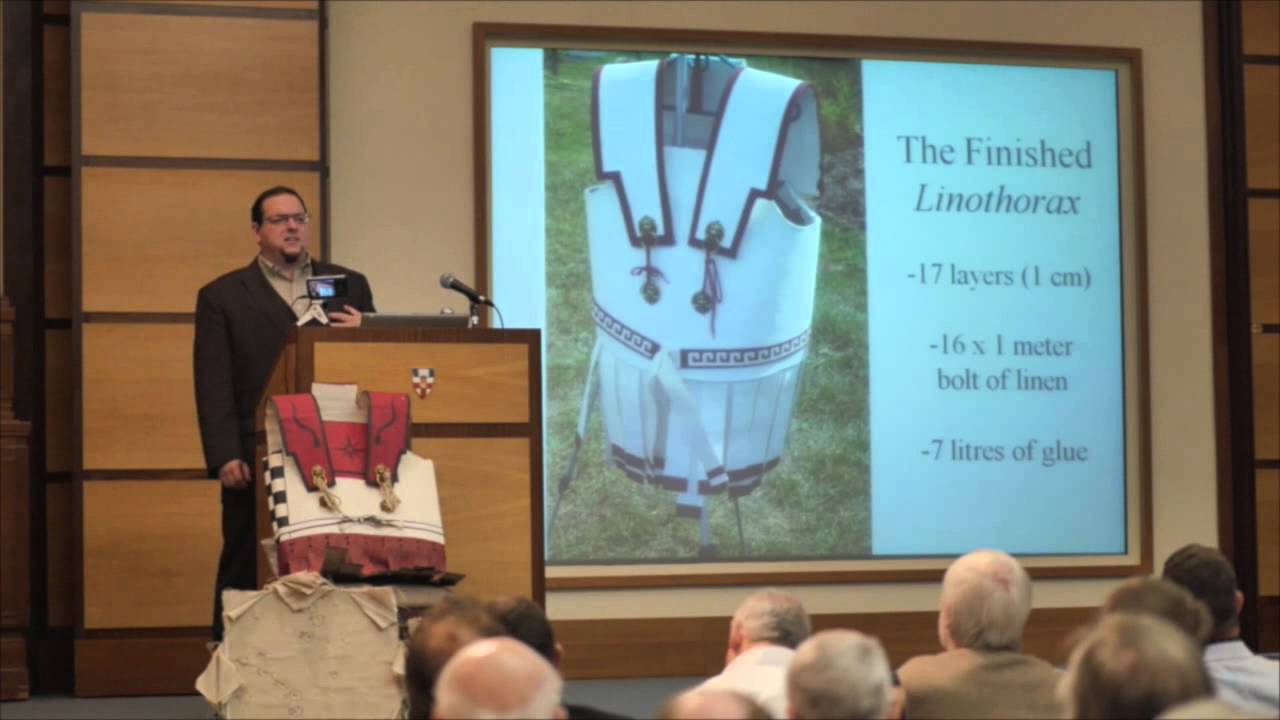
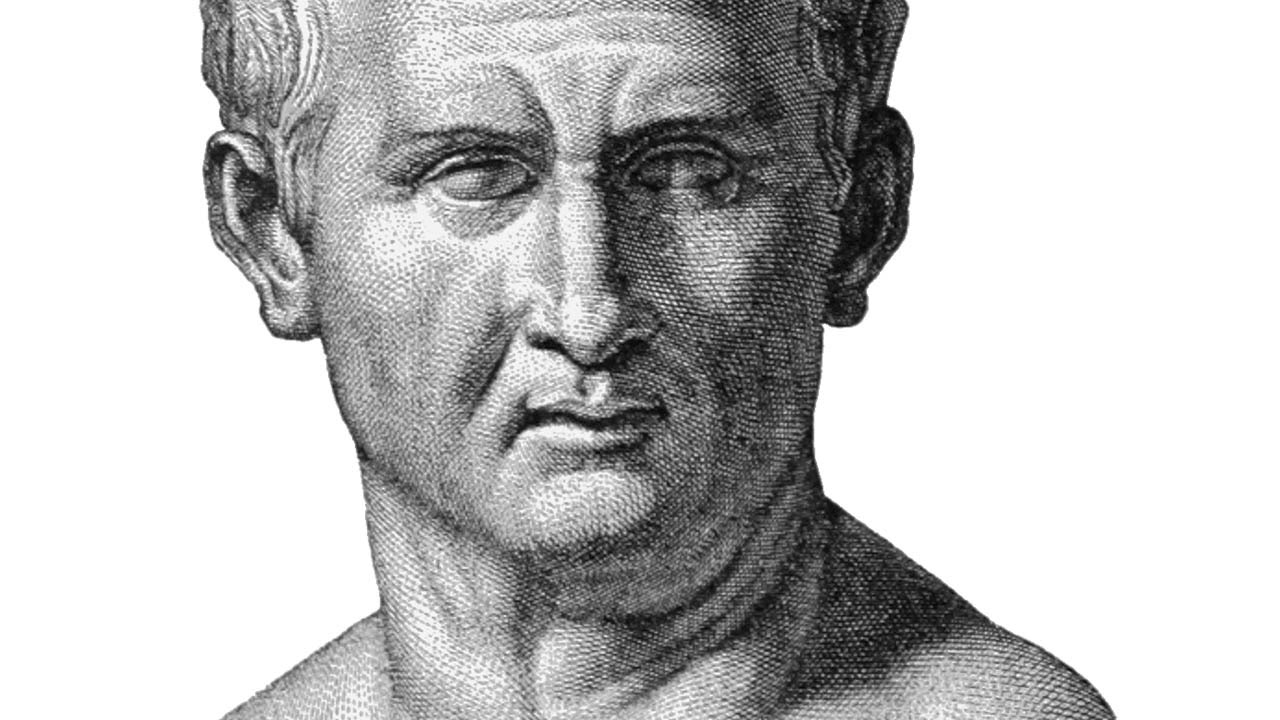
gratitude because an immense Blizzard came into into Wisconsin this weekend for seeing it yes we jumped on a plane early on Monday evening and arriving the dead of night on Tuesday at 1:00 a.m. was yeah in order to be here so he's going to speak today about Cicero and the panel's of persuasive oratory and then it's all going to speak again tomorrow afternoon about the kind of armor that was worn by the arm the soldiers of Alexander the Great so we're very pleased I'm here today to talk about Cicero thank you all right good afternoon
everybody thanks for coming what I want to talk about today is an aspect of the ancient world that I think is something that still has relevance to today and this has to do with how you persuade audiences persuade crowds and given sort of presidential election things that we're witnessing right now I think a lot of I talked about even though it's in ancient Roman context you'll be sort of supplying modern analogies to this I want to start out by basically taking you back in time 2,000 years to the time of the Roman Republic this is
the last days of the Roman Republic during the first century BC and this was a time when Rome had already as you can see on the map the sort of red color conquered the entire shoreline of the Mediterranean creating an empire that spanned three continents the form of government under which all this was accomplished was a republic which was sort of a democracy not really a true democracy but with democratic elements and despite all of these impressive external successes by the 1st century BC the Republic was really self-destructing due to a number of internal tensions
and as the Republicans sort of fell apart and collapsed a group of ambitious aristocrats vied with one another for power and for domination at Rome and many of these guys are so famous that their names are still familiar today includes people like Julius Caesar Anthony Pompey the great Brutus Crassus and Octavian so this was an unusual concentration of famous people and to be successful in an environment like this you had to be someone with exceptional talents or abilities and this really was an amazingly talented group of people some of them were brilliant generals like Julius
Caesar some of them were clever politicians like Octavian some of them were from powerful aristocratic families which gave them advantage like Brutus some were charismatic leaders like Mark Antony and some were simply incredibly rich like Crassus but today I want to talk about someone who lived at exactly this time who knew all of these people personally but who possessed none of their abilities he was so who is this mystery man he was an incompetent general really the one time he commanded troops he blundered he had no famous ancestors or famous family to draw upon he
was not from a rich family his family had modest economic means to others he often appeared vain and self-centered and he had the misfortune to repeatedly pick the losing side in political struggles so in an environment like this how did somebody like that manage to survive let alone prosper well the answer is that he too had one special ability he had a talent with words he had the ability to get up in front of an audience and persuade them of what he wanted them to believe and in fact he is often labeled rightly or wrongly
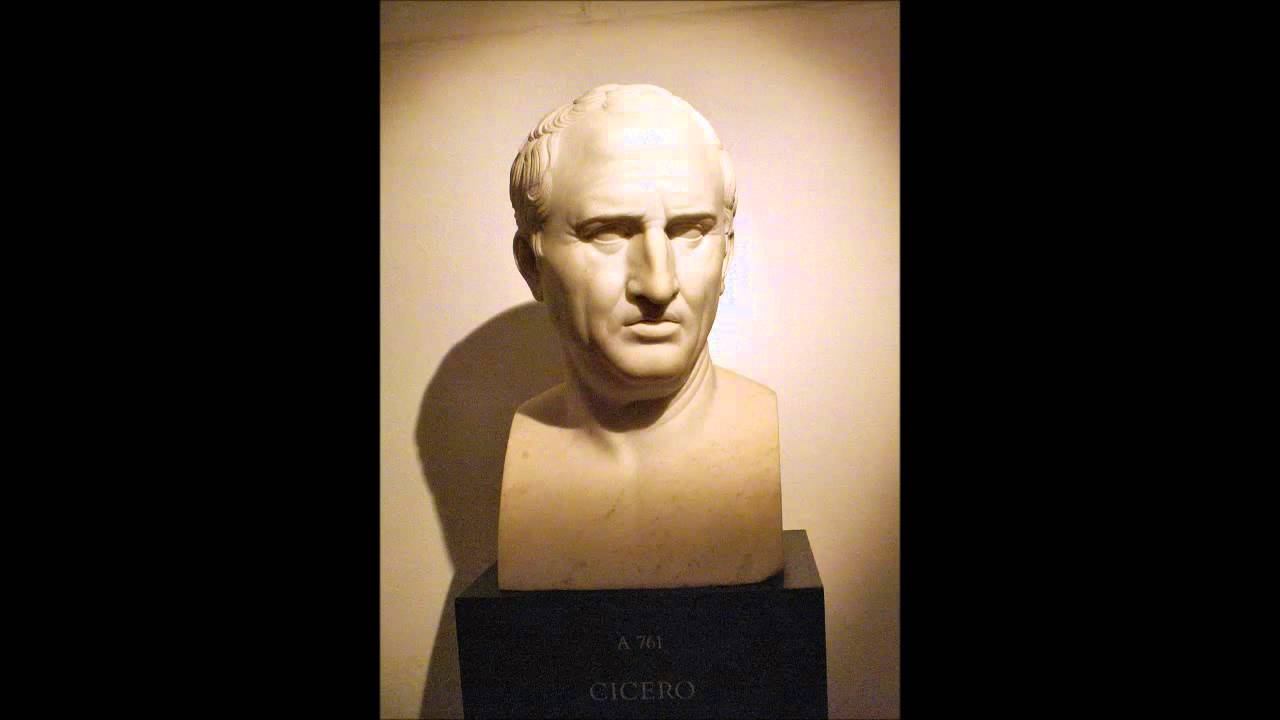
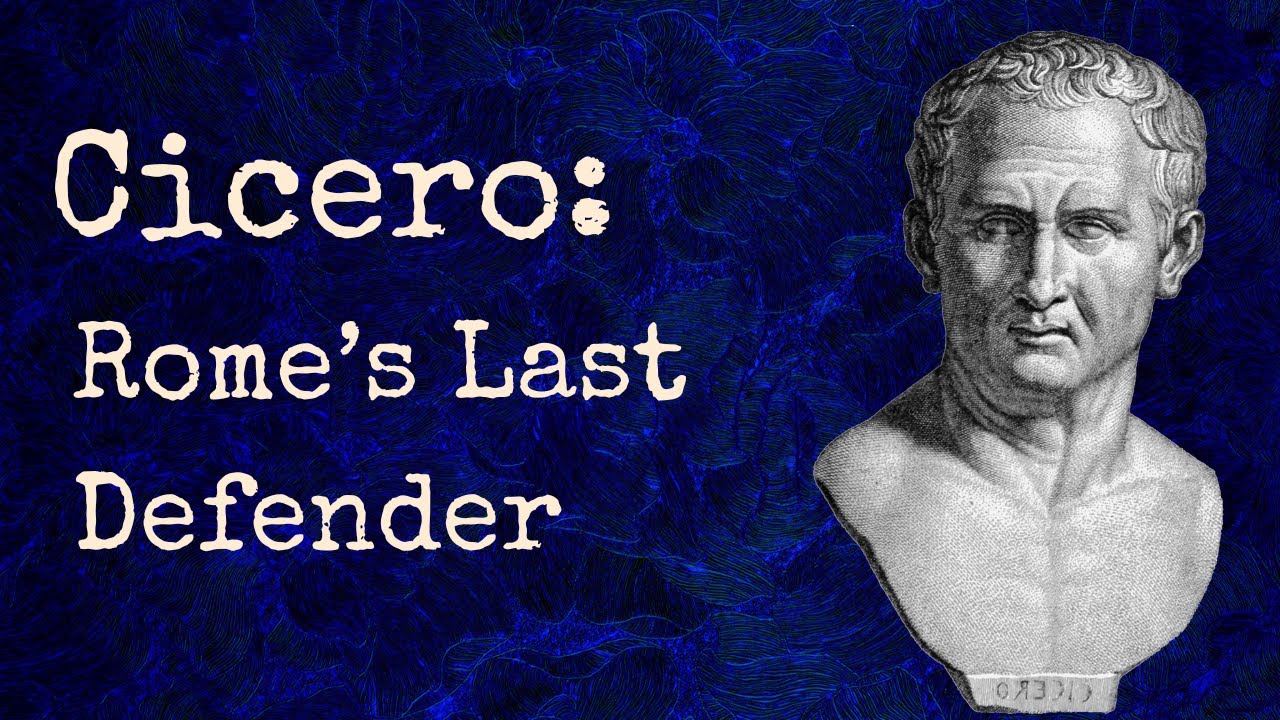
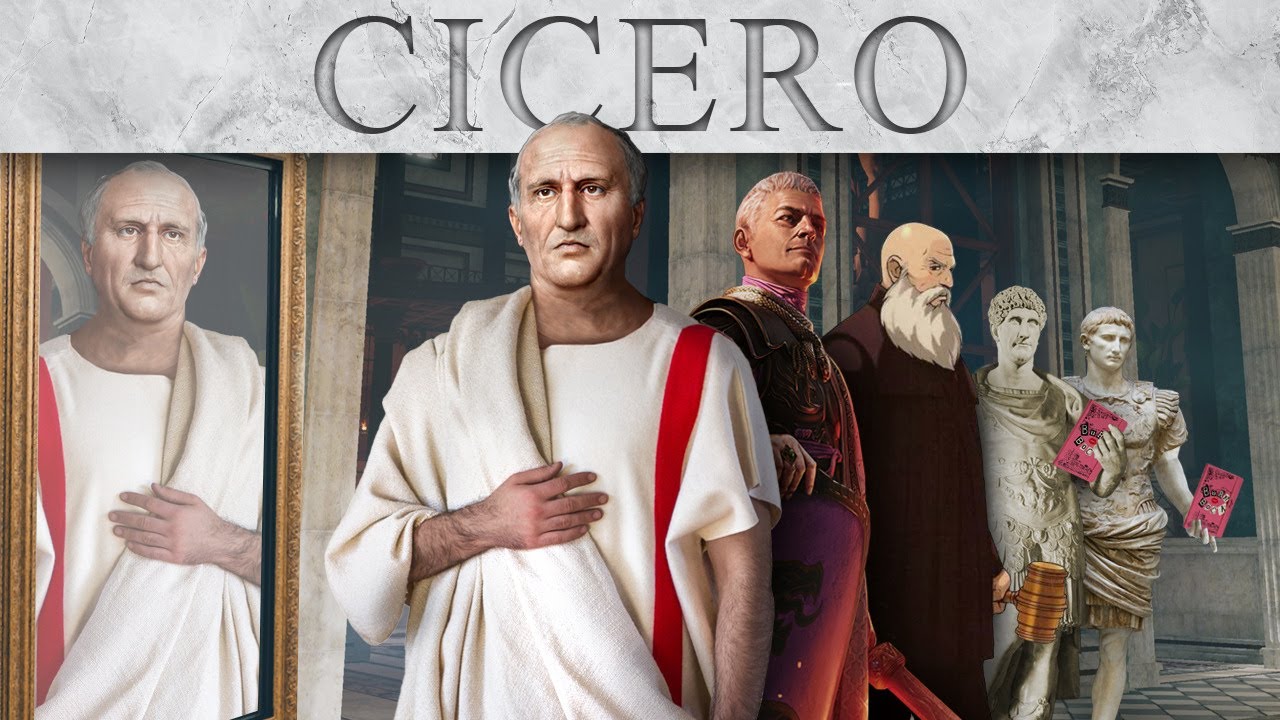
as the greatest order or the greatest public speaker of all time his name of course is Marcus Tullius Cicero not only by the way was Cicero a successful politician and public speaker but he was also a prolific author in fact I think more words of stuff survived from Cicero than any other Latin author so he we have many of his speeches we have his political treatises we have philosophical works he even collected the letters that he wrote to other people family and friends and sort of assembled these into books and published those so he wrote
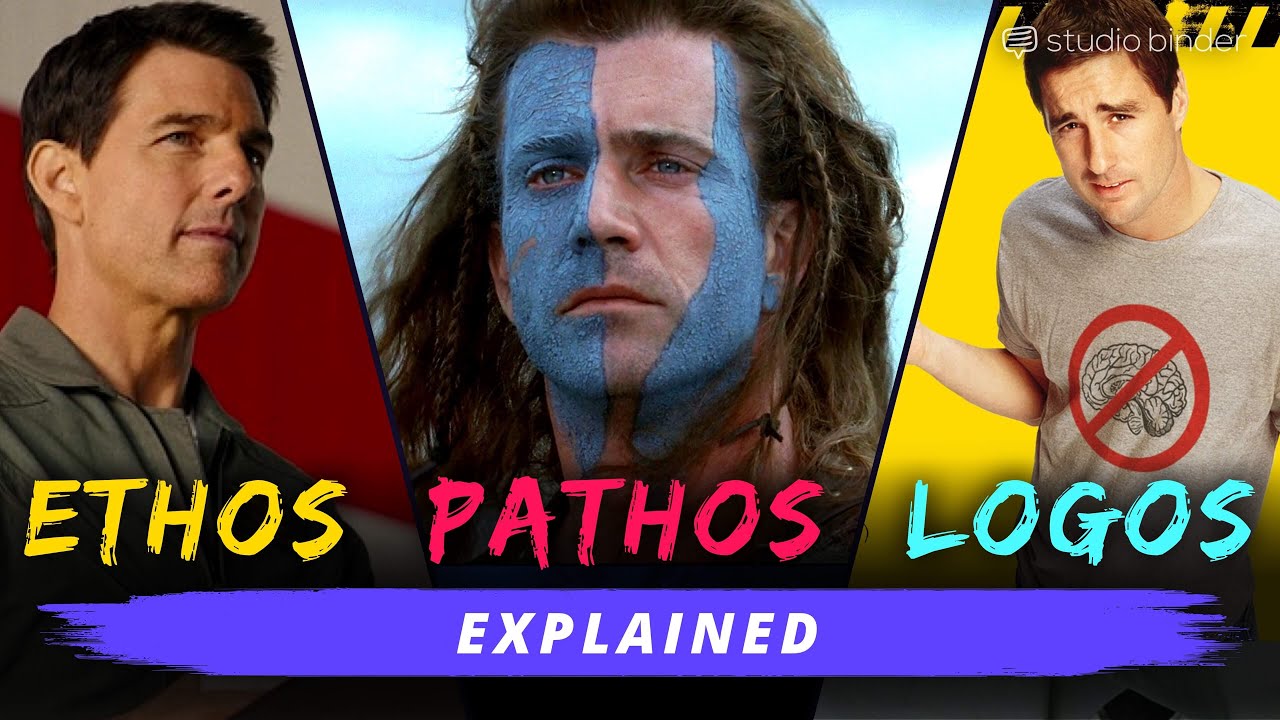
tons of things and an additionally this is what concerns me today he wrote manuals on how to be a public speaker how to guides on how you get up in front of crowd and persuade them of what you want them to believe and that's what I'm going to focus on drawing material from all right at the core of all of cicero's source strategies about persuading audiences is one fundamental concept the key to Cicero's oratorical strategy is the belief that human beings are fundamentally ruled by emotion so emotion is the key thing here accordingly Cicero says
if you're trying to persuade an audience then your goal is not to do things like appeal to logic or even science or reason but to appeal to their emotions if you can get an audience emotionally worked up to experience some strong emotion they will believe whatever you want them to so if you can get them to feel sad if you can get them to feel angry if you can get them to feel frightened or alarmed you can then persuade them or manipulate them to believe what you want and what's even better about this is if
you arouse the emotions of your audience that a lot of things that normally are seen is very important may not be important anymore so if you can arouse their emotions then things like the facts simply may not be so significant things like evidence may not matter anymore and even the truth may not be that significant so this is Cicero's goal and just to get a couple quotes from Cicero here's what quote where he says to sway the audience's emotions is victory for among all things it is the single most important in winning verdicts and from
another place he says nothing else is more important than emotion okay I'm going to give you a set of strategies or it might even call them tricks that Cicero used to try and persuade audiences but just to set a context for this let me talk just very briefly about how cicero was able to rise to prominence at rome and the key to his success or his route to fame was the law-courts of ancient rome now rome really didn't have what we would think of as professional lawyers particularly in the late Republic so often they would
get people who are simply gifted public speakers like Cicero to act in essence as prosecutors or defense attorneys and law cases some of them were held in public out in the open sometimes in the Roman Forum itself so you could have a large set of just random by standards gathered around watching these things and many people view these court trials as a form of public spectacle as a form of entertainment so you would go down to the forum you'd watch some of these things you would be entertained and because of this if you were successful
if you were good at making speeches if you're someone like Cicero you could become famous and so this was how he achieved his initial status also during the late Republic there were an unusual number of what today we would call celebrity trials trials involving some of the most prominent famous politicians and people at Rome so these attracted large crowds and by the way because the public nature of these trials the crowds themselves were very vocal they were not passive so they would shout things they would yell responses they would applaud they would boo that would
hiss that would throw rotten fruit all that kind of stuff so these were interactive public spectacles lively I want all right let's look at some of the actual specific strategies that Cicero advocates so first time one thing says is a effective speaker should be attune to the possibilities of using props says these can be very effective in arousing emotions visual aids cicero wrote that an order is similar to an actor and in the same way that an actor on a stage has to prepare that stage has have a costume you shove prop CF does have
a set an order should be attuned to the stage on which he's going to perform and sometimes supply props or visual aids to help them out to give an example in one speech that cicero gave to the roman people in the roman forum he arranged for a new statue of the god Jupiter to be set up just prior to him giving the speech and then during the speech he would allude to this statue he would say things the crowd like how could you possibly stand by and not take action when right under the very eyes
of the God himself so this is a strong appeal to emotions and just like speaker:today might use powerpoint to illustrate his talk cicero ensured that he would have a visual aid present to help him in his oration of course Cicero's visual aid was better than any slide or more potent because it was not just an object or an image but was the physical manifestation of a deity the Roman Forum was completely filled with all sorts of statues and monuments and shrines and this provided a forest of images that clever speakers could use so they could
refer to heroes from Rome's past to gods to all sorts of things embodiments of virtues and some of the temples another thing that orders would do particularly those who are prosecuting a law case where a violent crime was involved and we know this from the writings of another Roman orator is that they would actually commissioned a painting to be painted which would show the accused person committing the crime in graphic detail and then they would bring this thing into the courtroom and this seems a little unfair I kind of biasing the jury but that was
all right you could do that and you would plant that visual image in the minds of the jury of the accused person murdering someone something like that another thing that we know that Roman orders would do that some of these rhetorical handbooks advised is to bring props related to the crime so we know instances where people would bring in bloody swords or daggers or bits of bone taken from the wounds of the victims or the actual blood-stained clothing of the victims of a crime and they would display these to arouse the emotions and the pity
of the audience the another thing that's once did was to use props for sort of humorous purposes so this was yet another way could exploit these statues or whatever was lying around in the setting Cicero relates the story of when one time an order was denouncing an opponent who was present and he said now I'm going to show you what kind of person you really are and at this the the guy who's being accused sort of shouted out go ahead show me and the order rather wittily responded to this by pointing to a nearby shield
that was hanging on the wall and this particular shield showed a image of a grotesque face some kind of this flabby man and so everybody burst into laughter at this person's expense so it was a nice impromptu use of the setting to turn the tables on this guy who had shouted out a verbal challenge to him prompts by the way we're not limited to inanimate objects if you were really clever speaker someone like Cicero you could sometimes use living human beings as a form of prop one of my favorite examples of this is once Cicero
was defending someone who'd been accused of a crime and this man had had a young baby born to him just before the trial so Cicero actually gives the defense speech for this guy while holding the man's baby in his arms and you can imagine the sort of things you might have said you know it's a like Oh cute little baby how could you possibly find his father guilty and deprive this cute baby of his father so that's an obvious appeal to emotions and by the way in Cicero's own writings he says as a result this
sort of thing quote the entire forum was filled with sobs and tears so he was affecting the audience emotionally making them not want to convict this person of the crime similarly another time defendant that Cicero was defending didn't have a baby but he an attractive young boy attractive young son so you know what Cicero's gonna do he brings the son in has impromptu trial and he repeatedly drew the jury's attention to the boy with lines like this is an actual line from a speech I'm suddenly checked in the midst of my speech by the sight
of Publius sixties his son still in childhood turning towards me with his eyes Brig with tears so again it's this kind of blatant appeal to emotions on some other instances where defendants didn't have any photogenic parents Cicero is not about bringing in their elderly parents and sort of propping them up back in the back of the courtroom and again implying you know don't deprive this nice old couple these kind old folks of someone to take care of them in their old age perhaps one of the most famous uses of a prepared prop was the well-known
speech given by Mark Antony after the assassination of Julius Caesar if any of you know your Shakespeare this is the famous friends Romans countrymen lend me your ear speech Antony had constructed a larger-than-life wax statue of the corpse of Caesar and on this thing he had all of the injuries that Caesar had received from the assassin's blood Lee and accurately depicted and then he mounted this thing on a revolving stand in the forum and as he gave the fuel oration he would point out each of the injuries and described them and this was so effective
in rousing the anger of the crowd that they rioted and burnt down the Senate House so that was effective use of a prop all right second sort of strategy that Cicero advocates is make key points of your presentation rhyme or at least have a rhythm the rationale for this is people remember rhymes better this is the basis of a lot of marketing and advertising all companies want to have catchy little jingles that will lodge in your mind and you'll associate with that product Cicero liked to make important phrases in his speeches rhyme because he understood
the effectiveness of the strategy and how it would lodge those key points in the minds of his audience so for example in one of his rhetorical handbook Cicero is describing this technique and he gives an example the line gives in Latin is out Alcatel territory military placas it means you bluster li threaten you cringing li beg and of course this sort of rhyming slogan is not unique to ancient roman law cases like i say you see it a lot of marketing campaigns today by the way some of you may have heard of the OJ Simpson
trial and may have heard the famous thing there which defense attorney Johnnie Cochran declared if the gloves don't fit you must acquit that's pure Cicero it's straight out of his hand Bugaboo a subcategory of this is simply to come up with a pithy slogan that sort of encapsulate to your argument and again this is something exploited by modern advertisers a third strategy Scizor likes is repetition this one's really obvious you just tell people something often enough they'll start to believe it again the basis for much advertising and we can see this in a lot of
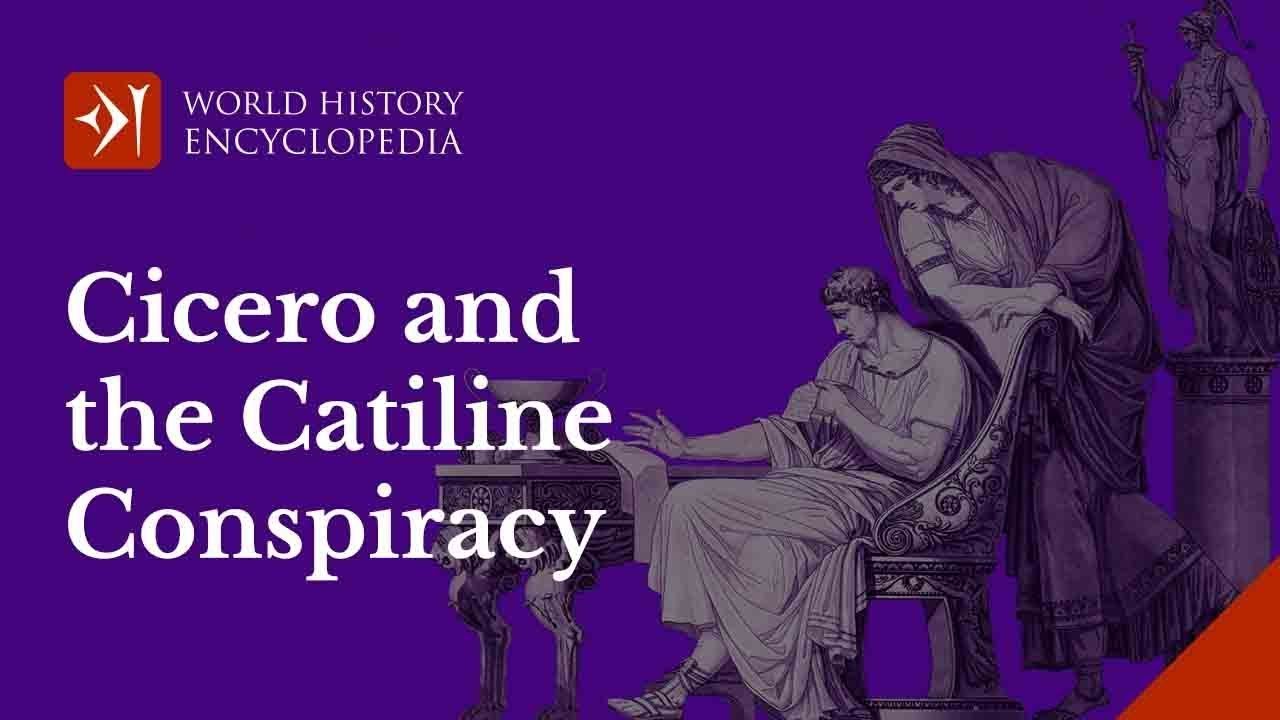
Cicero's speeches I'll get to some examples later now by the way I'm I'm a historian so I do ancient history and historians really like to work with texts primary sources so I can't resist using one of Cicero's actual speeches to illustrate some of these strategies and I think some of you read this the the second Catalan Aryan so right okay so I'm going to use some excerpts from that speech to illustrate some some additional strategies and the context for the speech is it happens during the high point of Cicero's career 63 BC he's been elected
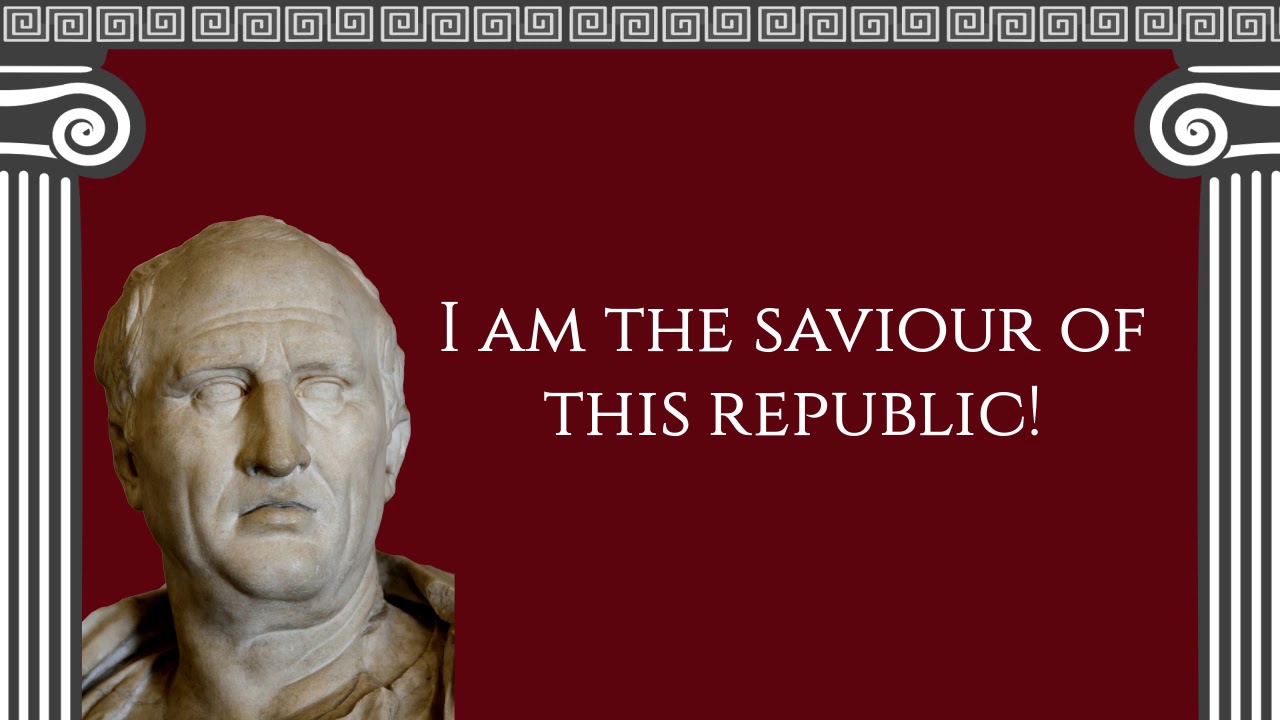
to the consulship that's the highest post in the Roman government and he prevented a conspiracy led against the Roman state by this guy Catalan for the rest of Cicero's life he's going to go around claiming he'd save the Roman Republic from this dire threat it's probably a little bit exaggerated but the speeches that Cicero gave condemning headlines survive and are among his most famous and just give you a flavor of Cicero's speechifying let me read to you the opening lines of this speech so he begins citizens Lucius Cataline raging with audacity breathing wickedness evilly plotting
the destruction of his country threatening the city in ourselves with fire and sword has at long last been expelled from Rome whether driven away by our words or having left of his own initiative he is gone he is fled he's escaped he's run away no longer will that fiend be within the walls devising schemes to demolish those same walls all right we can see the kind of loaded emotional language here you also see all the repetition while he's fled he's run away all that kind of thing he also introduces his basic thesis which is that
CAD line is a bad person and a threat to the state let's see what else he says about Catalan here's a vivid passage just slightly later in the same speech every gladiator with an inclination towards crime is on familiar terms of Cataline every second-rate actor with a predilection for Vice calls him friend in all of Italy it is impossible to find a single poisoner gladiator thief assassin parasite forger of wills chief glutton spendthrift adulterer corruptive youth youth who has been corrupted or depraved person who will not admit he has been on intimate terms with Cataline
and this illustrates another of Cicero's favourite rhetorical strategies which today we call guilt by association so one nice way to destroy someone's reputation sister just did is to list all the types of friends that person supposedly has and the sorts of people he associates with and the strategy rests on the assumption that if you hang out with bad people then you must be a bad person - it's the kind of let's look at your friends what do they tell you about us so if you have terrible friends you must be a terrible person as well
and what's nice about this strategy too is that if someone challenges you about this you can say well I didn't say anything about you I was just talking about those other bad people so you can kind of play the innocent here as well it'd be like today if you were to say this person I'm not gonna say anything about their character but we all know that his best friends are drug dealers murderers kidnappers and thieves alright next exaggeration and the way Cicero likes to use this one is to accuse someone of let's say a dozen
crimes and if you're in the audience you might not believe that they have committed all those crimes but you'll probably go away thinking you're guilty of a couple of them we might call this the where there's smoke there must be fire but what if all of them are invented here's the next part of cat of Cicero speech against Cataline he says there was no crime or wickedness planned or even imagined that Cataline was not behind in all these years what murder has been committed that he did not direct what act of repellent lewdness a wonderful
phrase does not bear the mark of his guiding hand now if you hear this you're gonna sit there in the audience and say there's no way Cataline committed every every murder in Italy in the last 10 years that's ridiculous but you're probably going to go away thinking he killed somebody but Cicero doesn't actually offer evidence that Cataline has committed any crime here so he simply created this impression next up mudslinging we've seen plenty of this already there's already been a lot of personal insults in the passage I've quoted but one time-honored strategy for dealing with
a political opponent is to focus on the personal defects of them real or invented rather than their actual policies this way you avoid having to engage in real debate about issues but you just attack the person and we've seen a good deal of this already the next strategy is often called labeling and this is the idea that you should try to associate in the listeners mind abstract positive qualities about yourself and negative ones with your opponent so the way you do this is if every time you mention your opponent or let's say your opponents political
party you just slap on a negative adjective doesn't even matter what and every time you mention yourself or your own group you attach a positive adjective cumulatively this will build up in your listeners Minds this sort of negative image of them positive image of you and Cicero is just amazing with this I mean he takes this to a whole nother level so again second culinarian let's look at his of labeling this is a good quote he says simply by comparing our cause against theirs we see how completely worthless they are one side is decent the
other lascivious one pure the other foul one honourable the other deceitful one reverent the other accursed one calm gather raving when virtuous the other decent one restrained the other salacious justice moderation courage prudence and all the virtues fight against injustice extravagance cowardice rashness and all the vices finally prosperity contends against poverty sound plan against recklessness sanity against madness and the noblest aspirations against the basest despair now if you're in the audience after hearing this how probable would it be that you could then get up let's say you sided with Cataline and raise your hand and
say I think I actually agree with Cataline on these political issues I mean to do that what implicitly to align yourself with a side that represents cowardice vyas insanity and injustice so it's kind of loading the dice here and it's not hard to translate this into modern political terms how often do we see candidates from all political parties and serve all parts of the political spectrum try to associate themselves and their party with positive words such as patriotic honest hard-working while trying to label their opponents with negative things such as irresponsible tax loving anti-american this
is exactly what Cicero is doing in this speech fear mongering this is a strategy that Cicero uses throughout the whole thing exaggerating the threat that Cataline poses and suggesting they've Cataline wins he'll destroy the entire country Cicero vividly conjures up images of fire destruction civil war and chaos and claims that that is what will result if anyone supports Cataline but again no actual proof is offered he's just playing off people's fears and stirring up their emotions something that grows out of this is an us-versus-them mentality so this follows from fear mongering sISTAR tries to convince
the audience that you cannot be neutral you can't see legitimate arguments on both sides but you have to take an extreme position and naturally he sets it up so that if you take Cataline side you're defined as being a traitor and unpatriotic and all sorts of bad things this kind of extreme polarization is always a good political strategy all right he tries all this how does he end his speech well the next one is always the sort of final appeal that you're going to see it's you appeal to the gods and religion so if all
else fails the final argument is always to claim God is on my side and sure enough this is exactly how Cicero ends a speech so he says quote innumerable clear omens from the immortal gods themselves have guided all my actions and thoughts the gods are protecting us right here in person defending their own temples in our houses with their divine powers pray to them citizens appeal to them beg them to shelter us and to protect this their City from the unspeakable evil of traitorous citizens so by claiming that he represents the will of the Gods
sister of course defines his opponents as ungodly or evil all right what's missing from all of this throughout the entire speech Cicero has not offered any hard evidence or proof that Cataline is actually planning a rebellion against the state he never offers any witnesses or written testimony to support any of the accusations that he makes Cataline was a political opponent who had raised perhaps legitimate questions about the policies of the Roman state but throughout the speech Cicero never mentioned CAD lines actual political stances or engages in a discussion of policy the whole thing is an
exercise in stirring up emotion and offering personal attacks and invective in place of facts proof evidence or even debate by the way in the end the people are so stirred up by these speeches that they agree to allow Cicero to have Cataline put to death though once things calm down everyone kind of general acknowledges that probably that was technically legal to do here's a couple other strategies I just want mention that Cicero uses but they aren't specifically illustrated by this particular speech first up is simplification so this is you know reduce complex issues and debate
to simple emotional arguments next is transferal if you're accused of something just flip around accuse your opponent and it's a kind of crude way of leveling the playing field so that's always a handy thing to do next is testimony and Cicero Cicero do some interesting things with this you want to cite witnesses to back up your points but what if you don't actually have witnesses how can you create the illusion that you do well something that Cicero does and we've seen other people do this is you use vague phrases so you say things like everybody
knows that or many people can testify that they were victims of his plans but you're not naming any actual witnesses and if you're really clever you can even do this with inanimate objects so for example in one famous case Cicero is describing a meeting of his opponents in which they supposedly engaged in all sorts of um sexual misbehaviors and Cicero has no witnesses to this but he talks about the scene and he describes it very vividly and he repeatedly says how the house and its walls witnessed this behavior she says you know house witnessed this
scene of debauchery and the walls witnessed this now later on probably a lot of the people in the audience won't remember the details they'll only remember that Cicero talked a lot about witnesses being present while forgetting that those witnesses were actually inanimate objects another classic strategy is very simple one divert and distract so if your opponent has some good points you get the audience's attention away from that with some sort of sensational statements you just throw something out that's got change the conversation and move it away from any good point your opponent is making another
one is humor audiences like laugh and they like to be entertained you can make them laugh particularly fed laughters at the expense of your opponent they may support you more or at least view you favorably and Cicero was especially fond of making jokes that mocked aspects of his opponent's physical appearance so among the many victims who suffered this from Cicero were ones who were ridiculed based on one guy who had a bad haircut several who were overweight one who had a prominent mole on his nose another who talked with a lisp one man who had
only one eye and one man who suffered from especially bad acne is a nut as well as a number of men who were suffering hair loss in one I think particularly cruel instance Cicero makes fun of someone who unfortunately had some especially ugly children so that's kind of unfair similar to this are Cicero's frequent use of puns that poke fun at other politicians names and frequently Roman family names were derived from word roots that were actually adjectives or nouns in Latin so this quality of Roman names offered right possibilities for human for example Cicero gave
a famous series of speeches condemning a man named Very's who was accused of corruption of extorting money and things while he was governor of a province and providentially for Cicero the name varies literally means the pig so much of Cicero speech has taken up with greedy pig jokes Julius Caesar was known to be particularly sensitive because he had a receding hairline as a result many jokes were made at his expense because very unluckily for him one of the possible meanings of Caesar in Latin is Harry of course he wasn't finally one of the most important
aspects of persuasive public speaking had nothing to do with the content of the speech but instead with how it was given so tip number whatever 216 is delivery and in some ways this is maybe the most important of all cicero wrote that a poor speech given with great delivery is always more effective than even a brilliant speech if it's delivered in a bad or ineffective manner cicero approvingly tells the story of demosthenes demosthenes was the greatest Greek order and one day someone came up to demosthenes and asked him demosthenes hear this wonderful public speaker please
tell me what are the three most important aspects of giving a speech and demosthenes supposedly replied that the first thing that you could say the most first most important aspect is delivery the second is delivery and the third is delivery so it really counts it matters a lot no matter how wonderful the speech if it's given in a boring manner it will be less effective than one that's given in a lively engaging way now so far what I've been describing are all techniques that obviously are still familiar today Cicero's writings illustrate I think that maybe
not all that much has changed in politics in 2,000 years or to put in another way maybe things that we sometimes think are modern propaganda speed and control really aren't that new at all but we're fully developed rhetorical techniques thousands of years ago all of these strategies are clearly still used by politicians today I'm sure as I've been naming them you've been mentally filling in examples from contemporary politics but in the last section of my presentation I want to talk about one aspect of public speaking there was a little bit more unique to ancient Rome
and this is the use of gestures in Roman oratory ancient Rome had very very large crowds sometimes so in the forum you might have ten twenty thirty thousand people in the Circus Maximus you could have these enormous crowd but remember there are no microphones there's no artificial means of voice amplification so this created practical problems with getting a large crowd to hear what you were saying and one a strategy that the Romans developed to at least partially deal with this perhaps was they developed an elaborate sign language that orders would use that they would make
hand gestures while they were giving their speeches and this is based on the simple fact that you can see person making a gesture at a farther distance than you can hear their voice unlike today's sign language though where the gestures you make mean the same thing as the words you're speaking the gestures used by Roman orders did not mean the same thing as the words instead Roman orders use gestures to add a kind of emotional gloss to the words in other words the gestures told you how you were supposed to feel in response to the
words that the person was speaking and to take this even a step further the Romans actually believed that if an order made certain gestures it would cause or perhaps even force those who saw them to feel certain emotions so if an order knew what gesture to make he could almost subliminally manipulate the feelings of his audience now this whole idea that if people make certain gestures it's going to cause the audience to feel certain emotions made seem odd might seem problematic but there aren't they're a prescient so there are analogies and one of them is
think of the effect that music can have on you if you're watching a movie and it's a horror movie you know that they're going to use sharp discordant sounds or chords in moments of tensions let's go to a and kind of make you tense if it's a tragedy they're going to have strings and make you feel sad if it's a love story they're going to use music which makes you feel romantic so music can clearly manipulate your emotions even if you don't want it to well Cicero was very aware of this effect and in his
writings he said that in the same way that certain musical tones and chords can make you feel happy sad tense and so on certain postures the body or hand motions can make you feel certain emotions and in one passage said that the orders body is like a liar a liar is an ancient musical instrument and the order needs to learn how to play his own body in order to arouse the emotions of his audience so gesture is an important part of Roman delivery its importance is I think summed up in a quote by another famous
Roman orator who wrote about public speaking the sky quintillion and he said the hands may almost be said to speak do we not use them to demand promised summoned dismissed threatened supplicate express aversion or fear questioned or deny do we not use them to indicate joy sorrow hesitation confession penitence and to measure quantity number and time there were a couple sort of basic rules of gesture one of the things is that most of the gestures were meant to be performed with your right arm and this is partly a practical thing because your left arm would
be unfolded and a bunch of folds of your toga so it's range of movement was limited you could sometimes use the left arm in conjunction with the right for especially important things also the preferred range of motion was roughly from the top of the head to the waist so really wild gestures were not seen as good they were meant to be confined in a sort of box like this all this might sound a little bit strange so to give you kind of a sense what this would have looked like let me do the opening line
from one of Cicero's speeches speech the prologue REO I'll do it in Latin and I'll do it with the appropriate gestures these are all actual Roman orator oratorical gestures mentioned by him or quintillion so next time you watch a movie with Romans the they should be looking like this all right here we go no cream em guy e Kaiser at ante honk diem no now D tum propinquity AS ad tey Quintus - bro day - Lee okay so that's a sort of you should be imagining what do you think about this I mean we're the
Romans right about gestures if I make some gesture will it make you feel some emotion let me just kind of experiment with this a little bit I'll make some actual Roman oratorical gestures and I will not tell you what you're meant to feel but you see if you can guess what emotion you're meant to feel when I do this okay so start at the simple one clench my fist press it to my chest kind of like this this is the touchy-feely part of the class so what what emotion do you think this is meant to
convey yeah there you go it works right here's another one this is a little more a little bit different so hands raised like this to the side and then emotion like this so in real time like so what emotion you guys think this is meant to convey toss up some ideas what do you think yeah forget so I don't remember this that's an interesting idea any others irreverence I mean what's it look like I'm doing what would I be saying while doing this yeah yeah fearful this is mild aversion so if you don't like something
I mean it's literally how to get away from me all right here's a variant on that same one how about I do that coupled with a head turn to the right so like this so that's going to be what stronger figure right so a strong aversion so it's working all right let me give you a more complicated one that this one my favorite ones it's kind of graceful gesture so it starts with a hand up like this curl the fingers in reverse the hand open down like this so in real time couldn't try this one
out so amazed your friends so what do you think this means can you guess this meaning I've actually had people do it before any ideas maybe turn it into an emotion you got Ted get in touch with your feelings Sablan very close yeah oh it's trying to sing it's actually wonder or awe so you're actually right okay here's one that quite honestly I don't get so here to the side fingers converge towards mouth down away so that's not I'm hungry alright I'm not gonna have you guessed this one that's mild surprise why I don't know
so not a whole tendency to work me but but some of them do um what do you think if an order we're making these gestures would that somehow influence the way you felt about the words particularly the words matched with those gestures do you think sirs be effective particularly let's say you were raised in a culture where you'd serve been told that's how you were supposed to feel I mean like that work might be a little more entertaining alright oh wow okay this is that oh yeah trivia here let me give you a little trivia
question this is a fun one anthropologist has stayed all sorts of gestures and gestures often mean radically different things in different societies but there's one gesture that supposedly at least has the same meaning in all the cultures that they've studied can you guess what this sort of one universal gesture is yeah a smile no way smiles can be aggression in some cultures you know showing your teeth angry that kind of thing so that that has very different meaning yeah point well indicative gestures yes but that's almost I'm not even sure that's a cultural gesture it
seems to be sort of innate to human beings but I guess maybe there's two other guesses yeah crying that's again not a gesture that's not our sort of an involved thing the other ideas your figure it yes I don't know you could actually get in trouble making some of the associate motions in some countries with that one otherwise oh boy it's not an obscene gesture so don't even go there but any ideas the universal one hmm anger like a fist or something now that can all sorts of meanings yes handshake that's close so the sort
of you know seal a deal idea or greeting though I think there are actually some cultures where it means something slightly different all right yeah wave love actually again means different things sometimes so sometimes greeting sometimes it's farewell sometimes it's a aggression sometimes it's all sorts of things here I'll perform it for units subtles you gotta watch carefully alright ready here we go you see that you waggle your eyebrows quickly up and down this is something called the eyebrow flash of recognition so it's what you do when you see someone you recognize you know like
like that so that's supposedly yeah here we go the the one universal gesture I don't know if that's really true but so I've read alright Mac - scissor back to Cicero - Cicero it was a serious defect if an order did not take advantage of the stuff if he did not use gestures to enhance his speech so for example here he is here he is berating another order for not using sufficient gestures he says you Marcus Khaled us there was no trace of agitation you neither of mine or body did you smite your brow did
you slap your thigh or at least stamp your foot no in fact so far from touching my feelings I could scarce refrain from going to sleep then and there conversely when orders did use gestures of which he approved he would praise them so if another order he says you're wagging finger made me tremble with emotion so that's a good thing now there is a danger to all of this and that's that if you just stick you late too much or do it in an awkward or an undignified manner it can actually backfire and for roman
orders they're wrapped up in a culture where upper-class roman men were supposed to have a certain kind of dignity and deportment even the way they walked was important so you're treading a fine line here you want to use these things to touch your audience's emotions but you don't want to overdo them you don't want to sacrifice your own dignity or make yourself look silly there's a lot of cultural things weighing on here and there's a number of examples of Cicero and quintillion and other people criticizing orders from misusing their gestures or using them too elaborately
one order had the habit of sort of making gestures like this what he talked and so he was widely criticized because people said look like you stress water away flaws you know he was being attacked by flies when he spoke another guy sort of swayed from side to side and it was said that looked like he was trying to keep his balance in a boat tossed by waves so that's not good my favorite one is there was maybe most embarrassing ly there was a man named sexist hideous and he had the habit of kind of
languidly moving like this when he was talking and so because of this a popular dance at Rome was actually nicknamed the tidiest so you could do the tidiest so that that was just not good for his dignity all right so I want to sort of raise some issues now I mean I hope you enjoyed this glimpse of oratory from 2,000 years ago but in all of this I think the really disturbing commonality that I'm sure you've picked up on is that Cicero doesn't seem concerned here with what's ethical or morally right but instead solely with
what's effective and to be fair to Cicero he has written extensively on ethics and morality has made treatises on this it's something he cared deeply about so that these are issues that he's concerned with he tries to live according to certain principles his life obviously sometimes that gets him in trouble but nevertheless when it comes to his oratorical handbooks when it comes to the topic public speaking he seems to really place an emphasis on results so to persuade is what matters and how you do that in accomplishing that almost anything is fair game and so
looking at all these kind of things I've outlined about the Cicero leads inevitably to the question do these strategies or tricks constitute what we would call great oratory certainly they're effective but many of them are also a bit unethical is this the kind of speech making that you would want to see from politicians or public figures or lawyers and in the end given this kind of questionable moral issues surrounding these techniques do you think Cicero deserves that title of greatest public speaker of all time does effective mean great and these are questions I will maybe
leave it for you to decide yourself or we can talk about them a little but I think I'll stop there thank you very much I'd be happy to talk about this further so what'd you guys think is that great