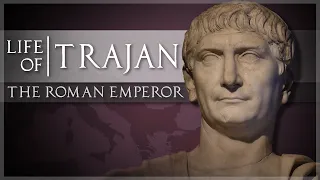
the transition of power among Roman emperors often involved deaths and betrayals however there was a period in the Roman Empire characterized by political stability and relative Tranquility known as the era of the five good Emperors the rulers of this period were nerva Tran hadrien antoninus pasus and Marcus Aurelius let's explore the history of each of them starting with nurva the first of the five good Emperors the death of emperor demission in 96 marked the end of the brief flavian Dynasty which had been initiated by his father thepan during the year of the four Emperors in a69 with no surviving heirs the Imperial Throne was vacant to avoid potential civil unrest violence or a civil war it was necessary to make a provisional or quick appointment until a more suitable successor could be found the solution came in the form of an already elderly and frail Man by Roman standards nerva he was an ideal candidate providing a strong contrast to his predecessor demission although he had not been prepared to assume the Empire like his older brother Titus the sudden death of Titus in . 81 led to demission rise to the throne despite demonstrating administrative skill demission used his Imperial power to exert absolute control which led to the near extinction of the Senate's Authority while he did not neglect the Empire he had those who opposed him executed and exiled by the end of his Reign after a failed assassination attempt paranoia consumed the emperor causing him to rely excessively on informers and adopt a cruel and punitive behavior and in the end it also led to his own death the sudden appointment of someone with no direct ties to the Imperial line raised questions about nervous Choice a relatively insignificant figure in Roman politics according to the historian suetonius nurva might have mocked demission in his youth but these were merely speculations from the Imperial Palace there were rumors that he had been contacted by the conspirators responsible for Dem mission's death although evidence to support such claims was scant it is possible that he accepted the throne to protect his own life fearing accusations of treason against the former Emperor and the Potential Threat of Exile while the Army was the only group mourning to mission's death the Roman senate exhausted by the former Emperor's tyranny quickly welcomed nerva and recognized him as emperor on September 18th 96 the Senate also conferred upon him the title of father of the Fatherland the general population seemed to greet him with relief at the end of D mission's harsh regime however the early months of his Reign were tumultuous statues of demission were destroyed and ceremonial arches were torn down nurva also had many of demission informers executed and granted amnesty restoring confiscated properties to those who had been exiled exiled remember to like And subscribe to our channel to support our content production on the Romans according to cashes Dio nurva ordered the execution of all slaves and freedmen involved in the conspiracy against their masters and following the common practice among newly appointed Emperors ensured that no Senator would be executed gradually the Empire experienced a return to Euphoria and an apparent restoration of Justice while citizens and the Senate welcomed the new emperor there were still those who desired Vengeance for de mission's death especially within the Army and in particular the petorian guard demission had granted them the only wage increase since the time of Augustus in 97 a Revolt within the petorian guard led by the commander casperia Alanis resulted in nerva imprisonment in the Imperial Palace they demanded the release of their custodians petronius and ptinus two of the men implicated in D mission's death in a gesture of desperation nurva offered his own neck to be cut but his sacrifice was ignored petronus was executed with a single Sword stroke while ptinus had his throat slit despite being imprisoned the incident damaged nerva Authority realizing he could not govern without military support and shaken by the situation he considered the possibility of abdicating without an air of his own nerva saw adoption as his only alternative and chose mark Marcus Opus tranis as his successor the adoption was formalized in a public ceremony in October 97 it is important to mention that nerva was responsible for appointing trun as governor of Germania since nerva had little knowledge of foreign policy and lacked military experience Tran's appointment aimed not only to ensure a successor but also to secure the support of the northern provinces nerva limited political experience revealed to his Close Associates that the emperor lacked greater determination and originality despite his relatively brief reign of only 16 months and his tendency to consult the senate for all decisions he made considerable efforts to stabilize the Empire he completed a forum started by demission in his own honor although some argue that his reforms were motivated solely by a desire for popularity nerva implemented several improvements such as restoring roads and aqueducts building granaries repairing the Coliseum after a Tyber flood Distributing land to the poor revoking a Jewish tax imposed by vaspian and reducing public games to balance the Imperial budget far from being the typical Emperor he even left the Imperial Palace to live in vespasian's former residence his adoption of trun allowed him to spend the rest of his life in peace he reportedly commented I have done nothing to prevent me from abdicating the Imperial office and returning to private life in safety on January 1st 98 at the beginning of his fourth consulship nerva suffered a stroke during a private audience a few days later on January 27th he died from a fever at his residence in The Gardens of salest when nerva died in January 98 trun did not immediately returned to Rome instead he conducted an inspection of the Kingdom's borders and the danu Not only to protect against the dacians but also to assess the Loyalty of the legions that were still loyal to demission trun sent orders to R for the execution of the pretorians who had pressured nerva to punish the conspirators responsible for his rise to the throne finally in the summer of ad99 Tran entered Rome on foot mingling with citizens and Senators although he maintained an excellent relationship with the Senate Tran was seen as an absolute ruler but in a less severe manner than demission or even nerva cases Dio described him as follows trun was distinguished by his Justice bravery and simplicity of habits being an emperor who seemingly cared equally about good Administration and public welfare Tran implemented an exemplary domestic policy he was generous to the people of Rome Distributing considerable cash gifts and increasing the number of poor citizens receiving free grain from the state additionally he freed many people who had been unjustly imprisoned by demission and returned a large amount of private property that had been confiscated a process nerva had begun before his death regarding the bonus for the petorian guard Tran granted only half of the usual amount given at the ascent of a new emperor however he treated the soldiers fairly trun also restored the deteriorated Road system built new Bridges aqueducts public baths and a modern port at anzio his rule gained such popularity that the Roman senate awarded trun the honorary title of Optimus prps meaning the best ruler although historians depict him as an emperor concerned with the well-being of the people Tran's true passion was always war and he excelled in this field during his 19-year Reign Tran was involved in three major military campaigns two against the dacians and one on the Eastern Frontier in ad 101 Tran left Rome to confront the dacians achieving a swift victory at the Battle of tapi the dacian king deis sought a peace agreement and was forced to seed an extensive territory North of the danu however deis did not honor the agreement leading trun to return in AD 105 for a new campaign against the Das many of deus's allies began to abandon him as Tran's Army approached after deus's defeat his head was decapitated and displayed in Rome DEA was completely incorporated into the Roman Empire and to prevent further revolts over half a million people were displaced from the region and replaced by Roman settlers transforming the area into what is now Romania Upon returning to Rome Tran celebrated the victory with an extensive gladiatorial Festival that lasted 3 months at the Coliseum the event included chariot races animal combats and gladiatorial fights the bloody spectacle reportedly resulted in 11,000 deaths mostly slaves and criminals as well as thousands of wild animals the festival attracted a total of 5 million Spectators over for the 3 months after that tran continued to govern as Emperor with the same popularity as before during this period he maintained constant correspondence with plenty the younger on how to deal with Christians advising him to leave them alone and allow them to practice their religion openly Tran also devoted himself to Major Public Works projects in the Roman provinces including the construction of Roads Bridges aqueducts land reclamation Port construction and buildings impressive examples of these Works can still be seen in Spain North Africa the Balkans and Italy Rome in particular benefited enormously from Tran's projects for instance a new Aqueduct was built to bring water from the north to the city Tran's memory endured in Rome for Generations especially due to two major legacies he left for the City The Forum of trun and Tran's column The Forum of trun funded by the confiscated Das treasure was was inaugurated in ad 1112 at that time Rome's population had reached its peak close to 1 million and needed a new Forum that would serve not only as a Marketplace and Commercial Center but also as a space for politics trade and religion the Forum was situated between the capitaline hill and the quirinal hill and on each side of the square there were two semicircular six-story buildings with spacious halls and office rooms to the north of the Forum a new Basilica called the Basilica alpia was built the architect of the Forum Apollo Doris of Damascus also designed Tran's bridge over the danu which was the longest arch bridge in the world until its destruction in ad. 275 Tran's second gift to Rome was Tran's column an Innovative work of art that celebrated his victory in the dacian wars and was inaugurated in ad 1113 in the following years the Roman Empire enjoyed a period of relative peace however in ad14 War erupted on the Eastern Frontier trun left Rome for the last time and never returned the conflict began when the parthians placed one of their own on the throne of Armenia a Roman buffer State disrupting The Fragile balance of power in the region trun intervened turning Armenia into a Roman province and his army Advanced Eastward annexing Mesopotamia under his command the Roman Empire reached its greatest extent stretching from Scotland to the Caspian Sea in ad 117 the Mesopotamians rebelled forcing trun to retreat during a battle he nearly lost his life when an arrow intended for him struck and killed one of his bodyguards at the same time several uprisings broke out both in the newly conquered territories and among Jewish communities in various Eastern provinces this led Tran weakened by illness and disheartened to leave Antioch and return to Rome however Tran died in campaign in cicia in ad17 while hadrien was commanding his troops in the rear historians believe that trun did not officially appoint his successor instead Tran's wife plina signed the sucession documents claiming that tran had chosen hadrien thus plina may have been responsible for adopting hadrien as air however it is clear that tran respected hadrien and even if he did not make an official appointment it is likely that he considered him for the position given Hadrian's service in various important roles before becoming Emperor on August 10th ad.
117 hadrien began his rule as Emperor as his first measure he sent a request to the Senate to Grant honors to his adopted father Tran additionally to increase his popularity and win public opinion in Rome hadrien implemented a series of significant financial reforms the most notable being the cancellation of all unpaid debts by by individual citizens both to the State Treasury and to the Senate treasury hadrien also fostered good relations with the Army which secured their Military Support even though the Roman senate had doubts about his succession there was little they could do about it hadrien was well received by most Romans and enjoyed great admiration during his Reign his popularity as Emperor is confirmed by the fact that even when absent from Rome for extended periods no significant criticisms emerged as shown in his biographies the stability and prosperity of the Empire allowed hadrien the privilege of traveling through the provinces where he personally inspected the projects He had initiated these construction projects are perhaps his most enduring Legacy in ad 122 after suppressing a Revolt in Britannia he ordered the construction of an extensive defensive wall to prevent invasions this structure is the famous hadrians wall which can still be seen in England today hadrien also founded New cities erected monuments improved roads and strengthened the administration of provinces across the Balan Peninsula Egypt Asia Minor North Africa and Greece in Rome he rebuilt the panthan which had been destroyed by a fire and funded the construction of other buildings and Residences many of these structures have survived intact for centuries and the pantheon still well preserved can be visited today hadrien had a deep interest in architecture and appears to have contributed ideas and even designs to The Architects in ad 132 hadrien visited Jerusalem which was still in Ruins after the first Jewish Roman War he ordered the Reconstruction of the city according to his own plans erecting a Temple dedicated to Jupiter on the ruins of Solomon's Temple this action provoked a Revolt led by Simon bar CBA resulting in great losses for both Romans and Jews when the rebellion was crushed about 580,000 Jews had been killed and over a th000 cities and Villages destroyed hadrien then banished the remaining Jews from the region and renamed the area to Syria Palestina in reference to the Philistines historical enemies of the Jews he also ordered the public burning of the Torah executed Jewish Scholars and prohibited the practice of Judaism with his health deteriorating hadrien returned to Rome and began focusing on writing poetry and managing the Affairs of the Empire the emperor realized that it was crucial to address the issue of succession and adopted Lucius Elias a 36-year-old former counil however Elias's extravagant lifestyle compromised his health to the point where during a ceremony to mark his appointment as Heir he was unable to lift a shield by himself after a brief visit to the danu frontier Lucius elas returned to Rome to address the Senate on the first day of the year 138 but died the night before the speech with Hadrian's imminent death he had to choose a new successor and opted for an 18-year-old named Marcus Aurelius given that Marcus Aurelius was young and inexperienced he needed guidance to lead the Empire therefore hadrien decided to appoint an experienced Senator antoninus pasus as Emperor however he required antoninus to adopt both Marcus Aurelius and the 88-year-old son of Lucius Elias this way the family of his first choice would be honored and marus aurelius's succession would be ensured hadrien died in the same year ad. 138 probably from a heart attack at the age of 62 on July 10th ad.