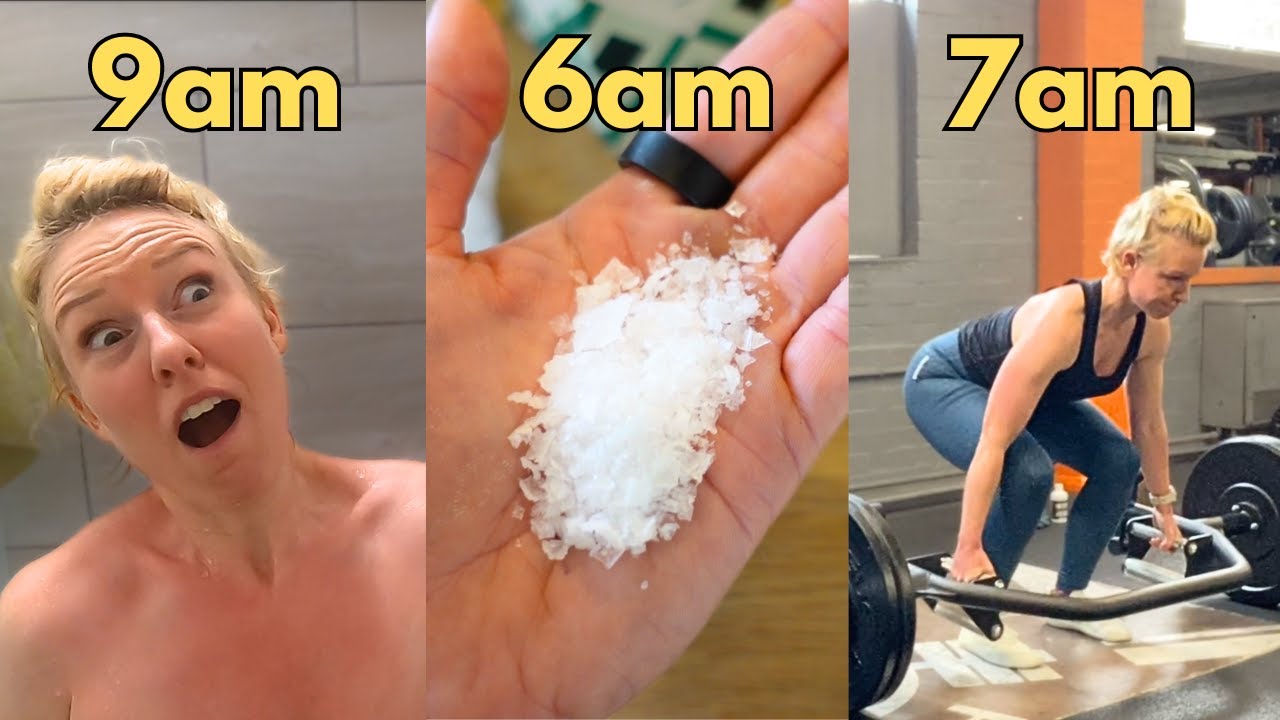
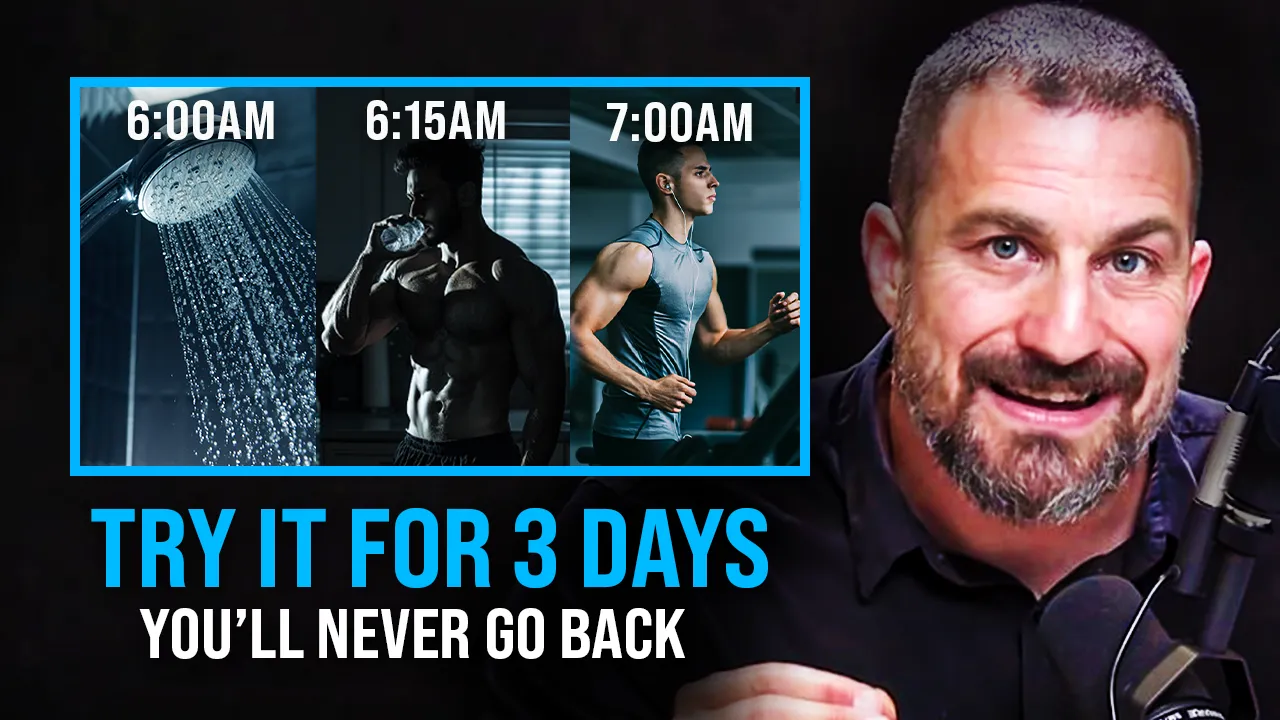
how can we make sure that we have great morning routines to support us so that we don't have brain fog at all in the morning or later in the afternoon I'll describe it as my routine I generally get up somewhere between 5:30 and 7: in the morning depending on when I went to sleep I'm not super regular about when I go to sleep um but generally that's between 10:30 and um midnight y you I try and avoid that Midnight Hour but um happens so I get up obviously I use the restroom I drink some water
I do think that hydrating is very important yes uh so I will I'll drink some some water and then the fundamental layer of health is to set your circadian rhythm the simplest way to do that is to go outside for 10 minutes and get some bright light in your eyes people always ask what if you wake up before the sun rises well simple rule if you want to be awake turn on as many bright lights in your house as possible but then when the Sun goes out comes out excuse me get outside and see some
sunlight you do not have to look directly into the sun but you do want to get outside out of shade cover if you can don't wear sunglasses if you can do that safely don't try and do this through a window don't try to negotiate with me on this point what about a window well the filtration of the of the important wavelengths of light through the window is just too high and so it would take hours for you to set your circadian clock that way you want to do this because once every 24 hours you're going
to get a a peak in cortisol which is a healthy Peak you want that Peak to happen early in the day because it sets up alertness for the remainder of the day I would say this is the fundamental step of any good morning and if you don't do this enough you are messing yourself up in a number of ways after waking up um to get bright light in your eyes you are setting yourself up for a complicated sleep wake cycle that leads to a lot of what we call insomnia when we talk about all these
things like the gut and the skin Etc it's tempting to say oh it's sunlight on the skin no it's actually only can be signal Through The Eyes because the clock lives deep in the brain that Master Clock and you need the signal to get to that Master Clock every cell in your body has a 24-hour clock all those clocks need to be aligned to the same time so imagine a clock shop with lots of different clocks and you don't want them alarming off at different times this sunlight viewing or bright light viewing early in the
day I would say within 30 to 60 Minutes of waking up for about 10 minutes or if it's very cloudy maybe 30 minutes or so that activates a particular type of neuron in the eye called the intrinsically photosensitive R gangan cell if people want to look that up signals to the circadian clock which is right above the roof of your mouth but that is the master circadian clock that then releases a bunch of signals into your body this all happens very fast and every cell in your body gets tuned to the exact same time reference
point so that your system can work as a nice concert of cells as opposed to out of whack there are a lot of sources of Rin fog the most obvious one would be a poor night's sleep okay and sleep of course being the most fundamental layer of mental and physical health you don't sleep well for one night you're probably okay for two nights you start to fall apart three four nights you're really a degraded version of yourself in every aspect emotionality is off ability to do most anything is off hormones start suffering so sleep is
is fundamental but assuming that you slept well there are a number of things one is your breathing patterns we often get into discussions of breathing but this is a slightly different one than we've had in the past a lot of people have sleep apnea they are not getting enough oxygen during their sleep uh or they are mouth breathing during sleep these days it's become um popular in some circles to take a little bit of medical tape and um tape the mouth shut yeah and to learn to be a nasal breather and there is excellent evidence
now that being a nasal breather most of the time as long as you're not speaking or eating or EXC izing hard enough that you would need to breathe through your mouth uh that it's beneficial to be a nasal breather so you wake up in the morning you slept your normal 6 to 8 hours but you're feeling kind of groggy and out of it and of course there could be other reasons that you're experiencing brain fog maybe you know for people that drink alcohol the night before maybe they had alcohol for people that maybe they ate
a meal that was too large before sleep maybe any number of reasons right but um getting adequate oxygenation of the brain during during sleep is key so learn to be a nasal breather and for those of you out there that say well I have a deviated septum a lot of people think they have deviated septums the problem is they're not nasal breathing enough the sinuses actually can learn to dilate if you nasal breathe uh exercising while nasal breathing will kind of depend on the sport like if you box often times there's the need to do
a sh or you know kind of like exhale on impact type thing so I I don't think anyone should tamper with their normal breathing patterns as it relates to sport or singing or some you know activity but what I'm talking about is when you're just standing around when you're walking down the street any low-level activity you're working at your desk you should be nasal breathing and breathing regularly there are really nice studies done by my colleagues in Stanford Psychiatry and biology Department showing that if that cortisol Peak starts to drift too late in the day
you start seeing signs of depression it's actually a well-known marker of depression so you want that cortisol almost stressed out kind of H the day is beginning I have a lot to do feeling that's a healthy thing you want that happening early in the day the sunlight will wake you up and what's really cool is that over time you'll start to notice the sunlight waking you up more and more the system becomes tuned up if you miss a day it's not the end of the world because it's a as we call it slow integrating system
but don't miss more than one day and if you live in an area where it's very cloudy outside just know that the sunlight the photons coming through that cloud cover are brighter than your brightest indoor lights now if you live in a very dark region region of the world or it's unsafe or purely impractical to get outside in the morning then it might make sense to get a a sunrise simulator or one of these lights but they tend to be very expensive what I recommend people use instead is it just a ring light ring blue
light this is a case where you can blast your system wow um so get that morning light that this is it sets a number of things in motion such as your melatonin Rhythm to happen 16 hours later to help you fall asleep I would say this is the fundamental step of good morning and if you don't do this enough you are messing yourself up in a number of ways your liver has a clock your heart cells have a clock every skin cell has a clock and for those that are not incentivized enough by the cortisol
stuff and all the other things actually the replenishment of stem cells in the skin hair and nails is activated by the system so hair grows more readily um skin turns over and nails grow more quickly because you have stem cells literally cells that release more cells that become new hair cells or new skin cells and new cells that make up the nails so skin hair and nails also benefit and it has to be light exposure to the eyes when we talk about all these things like the gut and the skin Etc it's tempting to say
oh it's sunlight on the skin no it's actually only can be signal Through The Eyes because the clock lives deep in the brain that Master Clock and you need the signal to get to that Master Clock [Music] [Music] [Music]
![I Tried Andrew Huberman's Morning Routine - [30 Days + Blood Tests]](https://img.youtube.com/vi/roK4g1e28mM/maxresdefault.jpg)