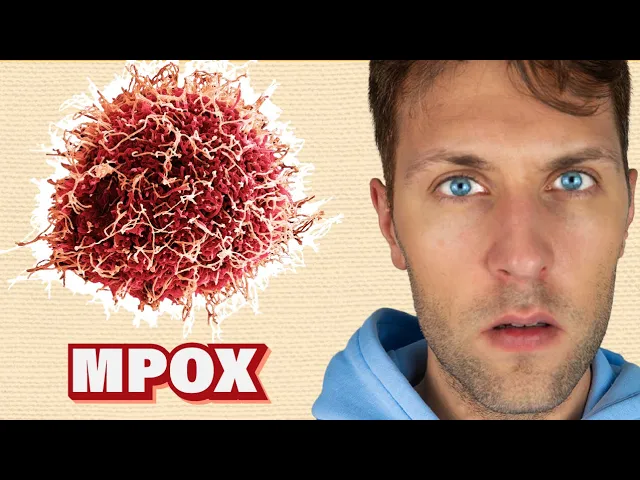
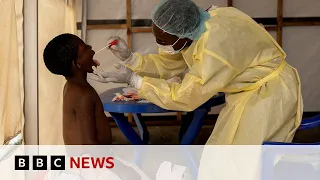
A new global health alert: the World Health Organization has declared Mpox a public health emergency of international concern. Global health officials are warning about the surging cases of a more severe strain of Mpox in Africa. Mpox is now confirmed on at least two continents, with the health agency warning doctors to be on the lookout for patients with symptoms.
Here we go again: a new Mpox variant is currently spreading in the Democratic Republic of the Congo. Some say that this virus could spread to other continents and infect many more people. Mpox is on the rise, but what does it mean for us, and what can we expect?
Here is what we know and don't know about the current Mpox outbreak. This is the story of Mpox. It's the year 1958.
Scientists have just received monkeys shipped from Singapore. At first, the monkeys seemed healthy, but after more than 50 days, they began to develop unusual symptoms. They exhibited rashes across various parts of their bodies.
Investigating the cause, the scientists identified a new virus: the monkeypox, or Mpox, virus. Soon afterward, it was discovered that the virus could also infect other mammals, but it would take years until the first human case was documented. In 1970, a 9-month-old boy was admitted to the hospital with a fever and strange rashes.
After running several tests, doctors discovered that he was infected with the Mpox virus. This marked the first documented case of Mpox infection in humans. However, it went largely unnoticed since the scientific community was focused on another related virus: smallpox.
Smallpox is one of the deadliest viruses in human history. In the 20th century alone, smallpox is estimated to have claimed the lives of over 300 million people. For over two centuries, generations of scientists tirelessly searched for a way to stop it, and they finally succeeded.
They developed the first effective smallpox vaccine. In the following decades, more and more people were vaccinated, and by the 1970s, no cases of smallpox were recorded. In 1980, smallpox was officially declared eradicated.
This was fantastic news, and the smallpox vaccine also had a second benefit: it provided about 85% protection against Mpox. As a result, the spread of the Mpox virus was kept in check as long as vaccination rates remained high. However, since smallpox was eradicated, there was no need for further vaccination.
This meant that people born in the 1980s and onwards were generally not vaccinated against smallpox. So, in the following years, the Mpox virus slowly began to reemerge. Between 1981 and 2017, the Mpox virus caused several outbreaks in the Democratic Republic of the Congo.
In 2017, Nigeria also faced a significant Mpox outbreak with over 122 confirmed cases. But the virus also occasionally surfaced in other countries. In 2003, Mpox reached the United States when African mammals were shipped into Texas.
Over 71 cases were reported. In 2018, four cases were detected in the United Kingdom, and in 2019, a single case was reported in Singapore. However, Mpox didn't spread further.
There was no pandemic, and cases remained sporadic, and there was a good reason for that. Mpox used to spread from contaminated livestock and couldn't survive in humans for long periods of time, meaning that no large clusters could form—until 2022. As COVID-19 restrictions relaxed worldwide, people began traveling again, but soon reports of unusual rashes occurred in the United States, Canada, Europe, Australia, and Israel.
These rashes initially appeared on their private parts and then spread to other parts of their bodies. And sorry that I have to say "private parts"—one of my videos got demonetized for using the medical term, though. Yeah, anyway, infected individuals were placed under quarantine, and testing confirmed that they were suffering from Mpox.
But this Mpox outbreak was different from previous outbreaks. The virus seemed to have changed. This new variant, called Clade 2B, became transmissible through close contact, including sexual activity.
As global cases surged, the World Health Organization declared Mpox a public health emergency of international concern in July 2022. In the following months, over 100,000 cases were reported across more than 120 countries. But there was light at the end of the tunnel: mortality rates were quite low, and most patients recovered on their own.
Moreover, vaccination initiatives and preemptive measures helped to curb the further spread of Mpox. As a result, in May 2023, the World Health Organization declared the health emergency over. But then something odd happened.
At the end of 2023, new cases surfaced in South Kivu in the Democratic Republic of the Congo, and this time, the virus behaved differently. It was no longer transmitted through intimate contact; instead, children were primarily affected, with over 70% of cases diagnosed in children. Moreover, the mortality rate was higher compared to the 2022 outbreak, reaching 5.
5% in some areas. As the virus spread, the healthcare system came under significant strain, with overcrowded hospitals becoming hotspots for infection. Shockingly, newborns, often just a few weeks old, began developing rashes and high fevers.
So far in 2024, more than 14,000 cases and 524 deaths have been reported in Africa. The majority of cases have occurred in one country: the Democratic Republic of the Congo. However, cases have also been detected in Burundi, Kenya, Rwanda, and Uganda.
Recently, this form of Mpox was identified in a patient in Sweden, raising concerns that it may spread further to other continents. Since this new version of Mpox appears to be transmitted more easily, the World Health Organization has declared it "a public health emergency of international concern. " Some scientists are warning that this might be the most dangerous variant so far.
So, what happened? What changed? Why is this Mpox variant on the rise?
To answer these questions, we need to understand how the virus works. Mpox, formerly known as monkeypox, is a DNA virus related to the variola virus that causes smallpox. There are two main clades of Mpox: Clade 1 and Clade 2.
Particles from Clade 1 often cause more severe symptoms and have a higher mortality rate compared to those from Clade 2. The variant currently spreading in the Democratic Republic of the Congo belongs to Clade 1, while Clade 2B was responsible for the surge during the 2022 outbreak. This is important as it means that the outbreak right now may not be related to the 2022 outbreak, and the viruses may not have derived from each other.
Early Mpox variants were mostly transmitted through direct contact between animals and humans. However, in 2022, the Clade 2 Mpox virus mutated and suddenly became transmissible through intimate contact. The current Clade 1 Mpox virus might be transmitted through bodily fluids such as saliva.
In both cases, the Mpox virus enters the body, infects nearby tissues, and eventually targets immune cells. Infected immune cells then spread the virus to other parts of the body. This process can take some time.
In fact, in the first few days, we might not even realize that something is wrong. As the virus replicates and more particles are produced, the patient enters the first of two stages. In this phase, the immune system begins to recognize the virus and mounts an attack against it.
This leads to swollen lymph nodes and symptoms such as fever or headache. A few days later, the patient enters a second phase of the infection. Despite the immune system's efforts to eliminate the virus, it continues to spread.
In this phase, there is also a major difference between Clade 1 and Clade 2 Mpox virus. Clade 1 Mpox virus can inhibit different parts of the immune system, which might explain why it tends to cause more severe symptoms. During the second phase, rashes start to appear.
The location of these rashes can vary depending on the variant. During the 2022 outbreak, the Clade 2 Mpox virus often caused rashes on the reproductive organs that then spread to other parts of the body. In contrast, the Clade 1 Mpox virus primarily starts in the face and other regions and then spreads further.
However, in both cases, the rashes are where we also find the highest concentrations of the virus. In most Clade 2 cases, the infection doesn't progress for long. The immune system gradually gains the upper hand, and most people recover from Mpox within 2 to 4 weeks without treatment.
In rare cases, Clade 2 Mpox can cause severe symptoms, which may include permanent blindness, pneumonia, or brain swelling. If other infections occur alongside Mpox, the situation can become life-threatening. For Clade 1 Mpox virus, the outlook is grimmer.
We do not fully understand why, but somehow this virus is able to spread more easily through the body and can cause more severe symptoms. But recent genetic analysis might give us a hint. Since the first Mpox cases were detected at the end of last year, we've already gathered data on mutations in this new variant.
Mpox relies on 200 different proteins to assemble new viral particles and infect organisms. Data released earlier this year indicates that seven of these proteins have undergone significant mutations compared to previous versions. These proteins are known to play crucial roles in suppressing the immune system and aiding in the creation of new viral particles.
For instance, the C9L gene, which is involved in suppressing parts of the innate immune system, has several mutations that could potentially alter the patient's immune response. Other mutations have been found in the A7L gene, which is crucial for the virus's entry into the cells, and the C7L gene, which helps the virus remain undetected by the immune system. But at this point, we do not know which of these mutations are driving the current outbreak, and we need more scientific data.
So the question is, should we be worried? Well, it's hard to say how far the Mpox virus will spread, but one thing is certain: we are only at the beginning of this outbreak. However, there is also some positive news.
The Mpox virus is a DNA virus, and this has important implications for how it will evolve. Viruses are incredibly diverse and can store genetic information in the form of two molecules: RNA or DNA. This distinction is important because RNA viruses tend to mutate much faster than DNA viruses.
Every time a virus infects a new cell, it hijacks the cell's machinery to replicate its genetic material and produce new viral particles. For RNA viruses, this process involves creating new RNA molecules. But because RNA is inherently unstable, the virus often makes mistakes during replication.
These mistakes, or mutations, lead to rapid changes in the genetic information of the virus. In contrast, DNA viruses typically use sophisticated mechanisms for copying their genetic material, resulting in fewer errors and more accurate replication. This difference is significant.
In fact, RNA viruses have roughly 100 times higher chances of mutating individual positions in their genetic information after infecting a cell compared to DNA viruses. This higher mutation rate in RNA viruses often means that their structure changes fundamentally, and that means we constantly need to update our vaccines. We've seen this with the COVID-19 pandemic, and it's also why flu vaccines need to be updated every year—the virus just keeps evolving, and we need to keep up with that.
The Mpox virus, on the other hand, is a DNA virus, and this means that it mutates more slowly. This slower mutation rate can be advantageous for controlling and managing the outbreak. Vaccines and treatments will not have to be constantly updated, and we can already see that smallpox vaccines, which were developed a long time ago, still protect against Mpox infections.
It is estimated that this smallpox vaccine can provide up to 85% protection against Mpox. Additionally, a second-generation smallpox vaccine, recently developed in the United States, has been shown to be highly effective against Mpox as well. This suggests that we have strong tools for fighting Mpox.
However, having an effective treatment is only one part of the solution—having access is another. Current stockpiles of smallpox vaccines are limited, prompting calls for action to ensure that populations in affected countries receive these vaccines. The U.
S. has pledged over $424 million and 50,000 Mpox vaccines to support the Democratic Republic of the Congo, while the EU and Japan are also working on vaccine donations. However, some argue that this is not enough.
In fact, some say that more than 10 million vaccines are needed to effectively control the ongoing epidemic. Since I see this on social media a lot, I also want to address the following question: could we have an Mpox pandemic? Well, obviously, it is right now hard to make any long-term predictions about this outbreak.
What we know is that this variant is transmitted more easily and that children are primarily affected. But there is so much more we don't know. Factors such as how easily the virus spreads and its interactions with bacteria or other viruses will play an important role in determining the likelihood of a pandemic.
But again, there is a good chance that the virus mutates slowly, and we already have effective vaccines and treatments. In that sense, we are much better off compared to the beginning of the COVID-19 pandemic. But even if we do not have a pandemic, the situation is serious, especially since so many children are affected.
This is a tragedy, and it underscores the urgent need for countries to collaborate to stop this outbreak. So yeah, I'll definitely make an update video if there are any developments in the near future. And until then, what is your opinion on the current Mpox outbreak and especially what you read on social media?
There is so much discussion online, so I'm interested to know what you think. And with that, I'll see you. If you're interested in how scientists are trying to slow down aging, you might like this video.