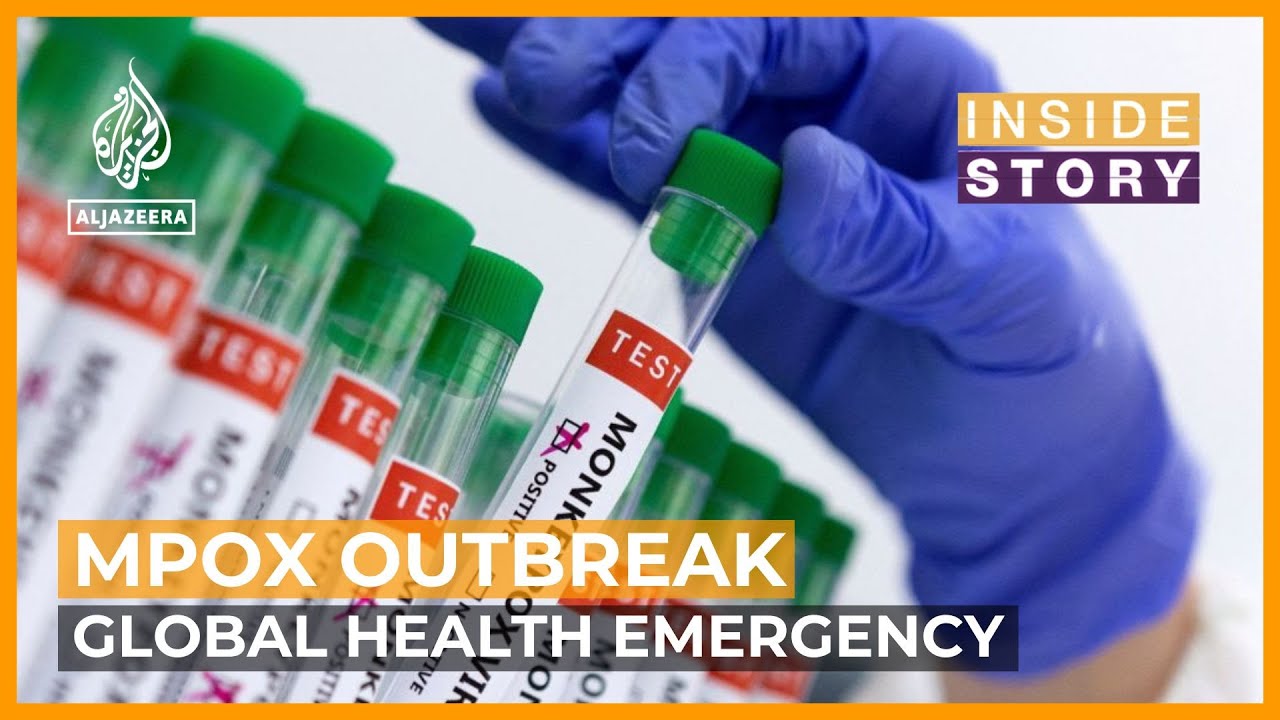
next to the global concern over the spread of a deadly new strain of empo from parts of Africa China has announced heightened screenings for goods and people coming from areas where the new highly contagious strain of the disease has been detected the World Health Organization which declared a public a global Public Health Emergency on Wednesday says more cases of the dangerous variant are likely to be found in Europe in the coming days after Sweden reported the continent's first infection and has urged wealthy Nations to share treatments and vaccines Simon Jones reports in the Democratic Republic
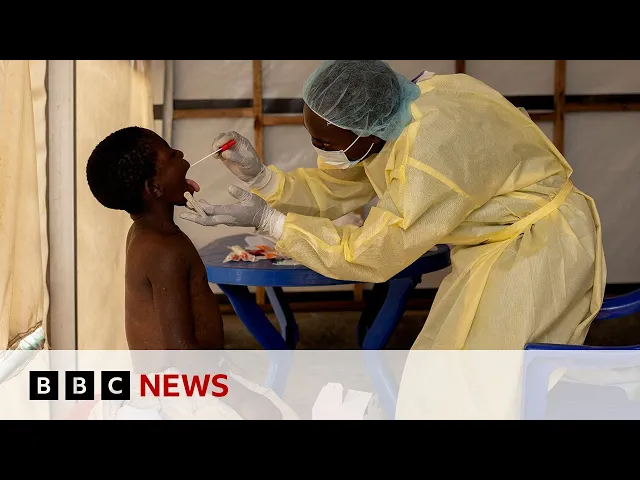
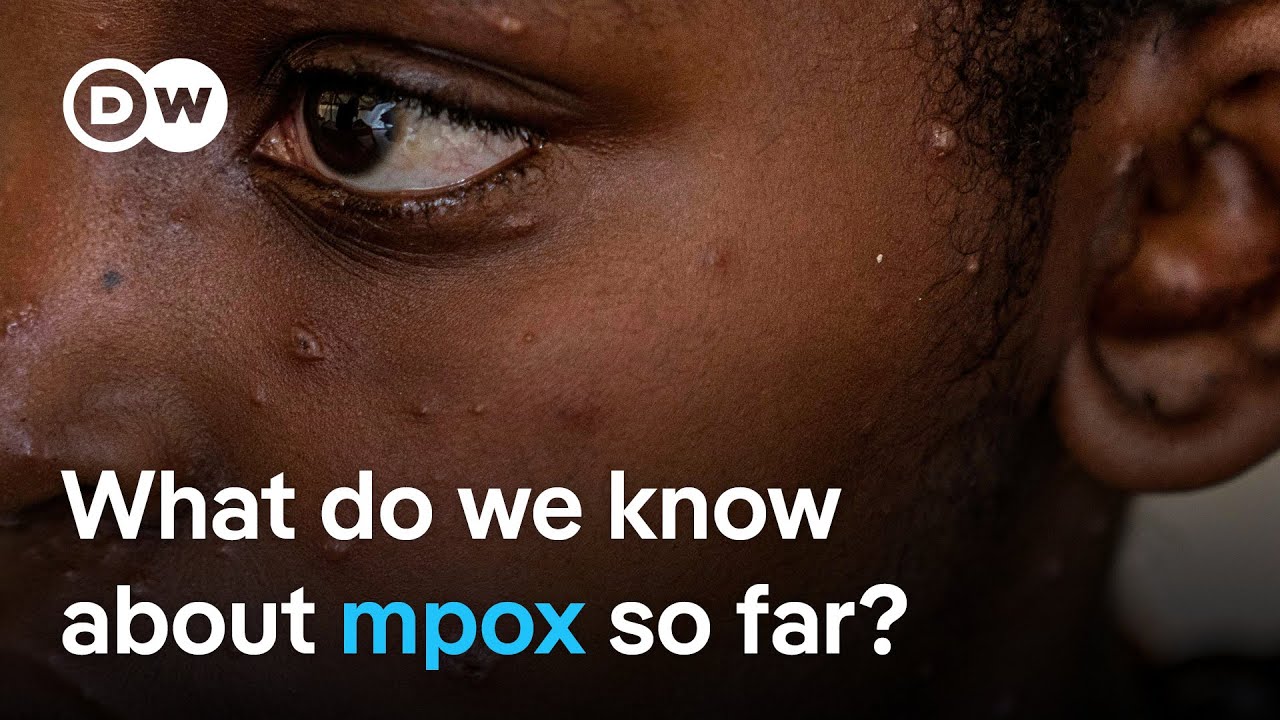
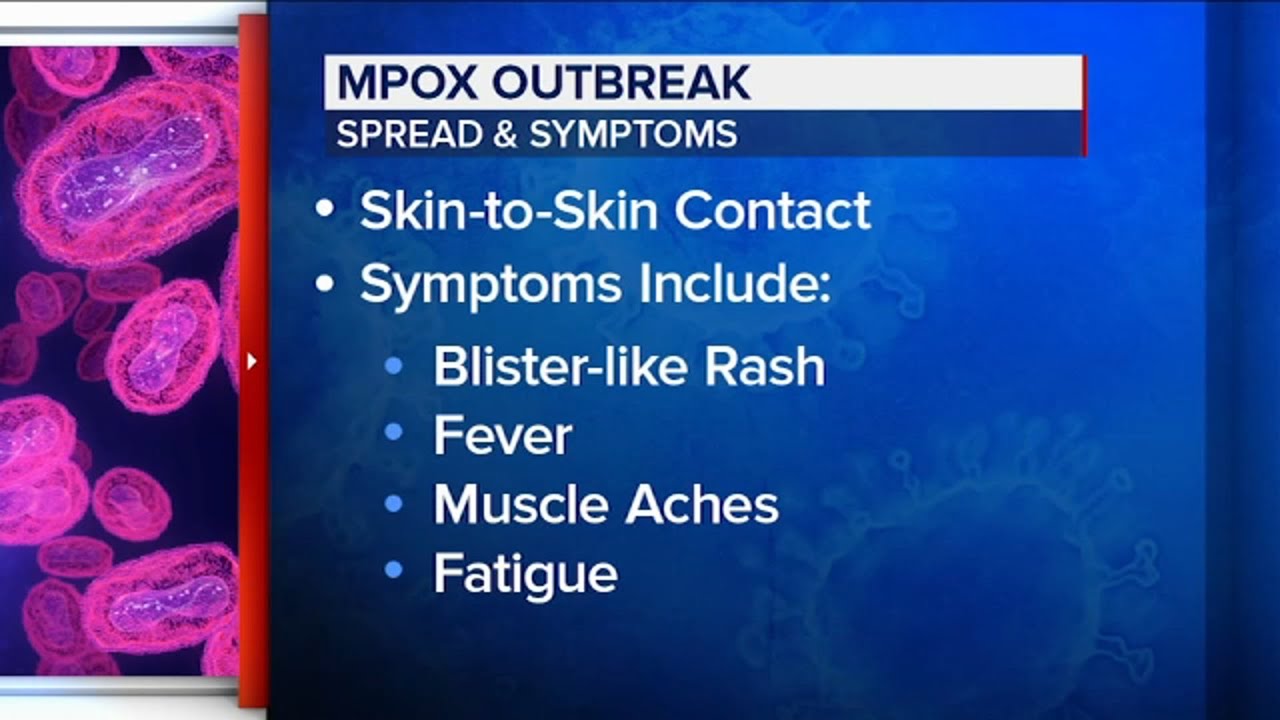
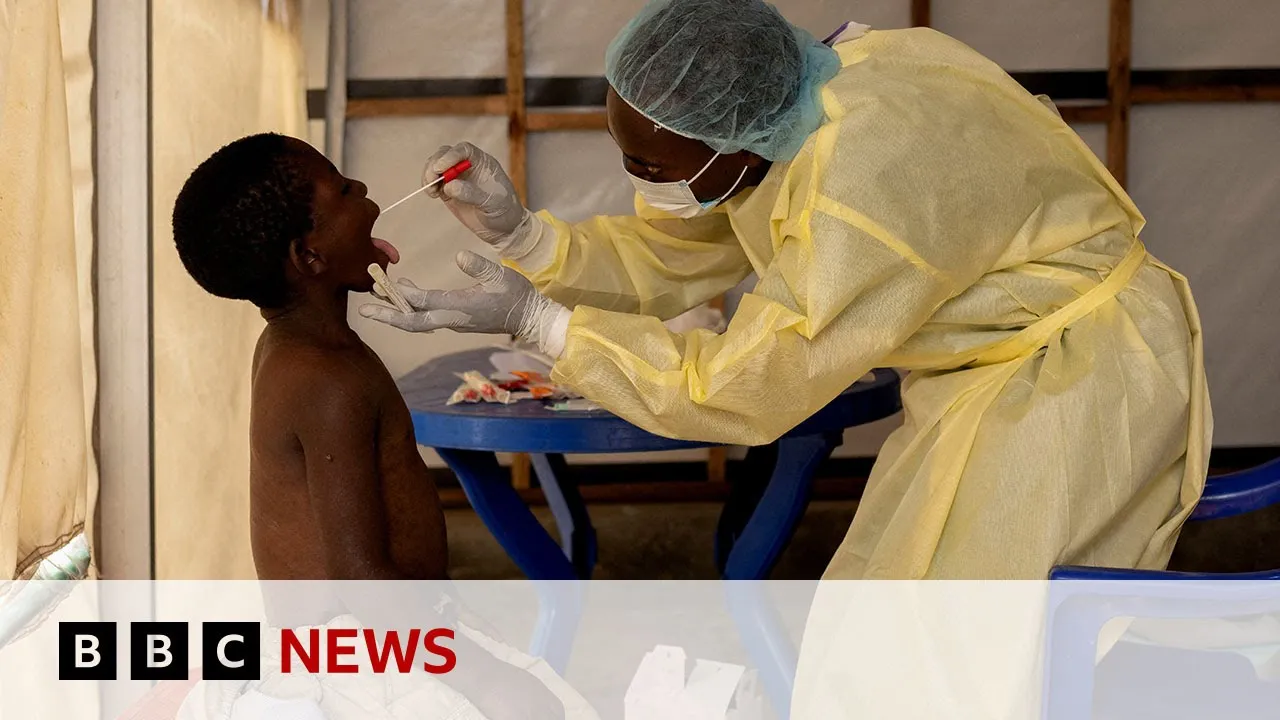
of Congo the country hardest hit Public Health campaigns are underway to warn people of the dangers of empo originally known as monkey pox it's transmitted through close contact such as sex skin-to-skin contact or breathing close to another person it causes flu like symptoms and skin lesions they often clear up within a couple of weeks but empo can be fatal particularly for people with weakened immune systems three of my children and I were infected one was treated here and the other two were taken to hospital after two weeks they were discharged a week later my wife
was infected now a case of the more dangerous strain of empo has been recorded in Sweden the authorities say the person became infected during a state in an area of AFA Africa where there is currently a major outbreak it is very probable that we will see more cases in Europe in the near close time so so it's important for all countries to be aware that this can happen there have been 450 deaths in the Democratic Republic of Congo following an outbreak of the new strain it's also been detected in neighboring countries including the Central African
Republic Uganda Kenya Rwanda and Burundi Dr Mira Chan from the UK Health Security Agency said the risk to the UK population is currently considered low however planning is underway to prepare for any cases that we might see in the UK this includes ensuring that clinicians are aware and able to recognize cases promptly outbreaks can be controlled by preventing infections with vaccines the UK government says it has stockpiles as part of its preparedness plans the World Health Organization says a coordinated intern response is now vital Simon Jones BBC News we're joining me now are our health
correspondent Dominic Hughes in Nigeria our Africa correspondent Simi jolaoso and our correspondent imin folks who is in Switzerland where the World Health Organization is headquarters um let me speak um to you Simi first about what how the countries in Africa are dealing with this and these huge concerns about uh the number of vaccines which are acquired ired yeah there are huge concerns uh so two countries have uh been given approval for sorry sorry there are huge concerns sorry about that two countries have been given approval for emergency use of the vaccines Nigeria and the Democratic
Republic of Congo so Nigeria has said that they have been able to get access to 10,000 vaccines when that will be we're not so sure yet my apologies there's a really bad sound coming from my earpiece and it's a bit deafening but I will continue apologies for that um yeah so two countries the Democratic Republic of Congo and Nigeria Nigeria said they are expecting 10,000 doses uh imminently U as we heard in that report there sorry I'm so sorry I might have to cut this we'll just leave it there with we'll try and sort out
the technicals with her let me just bring you in imag in folks because um there's this call isn't there for more wealthy Nations to um actually donate vaccines do it talk us through what's being said on that front well we heard from both the World Health Organization and the uh Red Cross this morning now the Red Cross has its local teams on the ground in DRC and they talked about a a really serious complete shortage of treatments vaccine an ability to trace and test as well and of course these are the key elements to control
um a disease outbreak now we know I'm talking to you now because we found a case in Sweden right I mean the epidemic in in DRC has been going on for over a year um and that is where the vast majority of cases are concentrated with some spread to neighboring countries in Africa so the wh would like wealthy countries which have stock by empo vaccines after the last outbreak two years ago to donate them to the most vulnerable and those are uh people in the affected countries particularly DRC and is quite quite bluntly one W
official said this morning control it where it's raging and it won't come to you yes okay well let's bring in Dominic Hughes um we were just hearing in my introduction about how China is starting to screen Goods as well as people in terms of how this uh strain can be spread can it be can it be spread through Goods not that I'm aware of uh my understanding is that it can be spread through close physical contact just even not just sexual contact but just shaking hands with someone or hugging someone or cuddling someone but also
as I understand it through bedding blanket sharing bedding and blankets that can also uh if you if you share bedding with someone who has these postures these lesions uh that can because they are absolutely loaded with virus that can also be a source of contagion I'm not aware of inanimate objects doing that as well the Chinese might know something I don't but uh it is clearly this this variant that is driving these this surge of cases in in particularly the Democratic Republic of Congo but now other countries in Central uh Africa as well well this
is clearly more infectious and more deadly as we understand it there's still I think quite a lot that's not known about this variant uh it's known as a CLA it's known as CA 1B but it's it's clearly more deadly and more infectious than the variant that drove the big Global outbreak in 2022 2023 that affected more than 100 countries and saw nearly 100,000 cases worldwide and of course people memories will turn to the early days of of of the covid virus and and and the restrictions that were people were brought in for people in terms
of of travel and that sort of thing do you think uh the lessons have been learned from covid and that they'll be you know using that experience in this instance yeah I think there are definitely some lessons that have been learned the the the value of contact tracing for example of having really good Public Health surveillance of trying to sort of use both vaccinations and public health information to help those groups who are most vulnerable to this to know what measures they can take to keep themselves safe I think those are all very valuable lessons
but if I mean we've heard from the World Health Organization this week already that they don't believe for example closing borders really works and we know also that for example things like lockdowns and closing schools they have tremendously damaging effects outside of uh the the the populations you're trying to protect so there are lots and lots of lessons I think that that still could be learned from from the covid outbreak yeah well let's go back to imagin then um imagin has anything been said on that front from the who in terms of what restrictions countries
should be looking at perhaps and like Dominic was saying not talking about closing borders yet it was said very clearly by both the World Health Organization and the Red Cross this morning that travel restrictions do not work in fact they can actually compound the situation because people will still move around but you've completely lost your ability to trace and test because they if you've told them they can't move and they still move they don't want you to know anything about them at all so it's actually uh counterproductive so we are expecting some recommendations from the
wh at some point this afternoon about what uh countries should be doing but I can tell you with pretty n on 100% certain C that border restrictions and closing borders will not be among them it will be the same things we heard over and over again with covid test Trace be transparent the who is very praising of Sweden for coming straight out and saying we have one case it was imported this person is now in isolation and that this this is crucial to uh combating a disease and again I come back to generosity sharing of
treatments and vaccines to the most vulnerable first at the moment they are appear to be children in DC