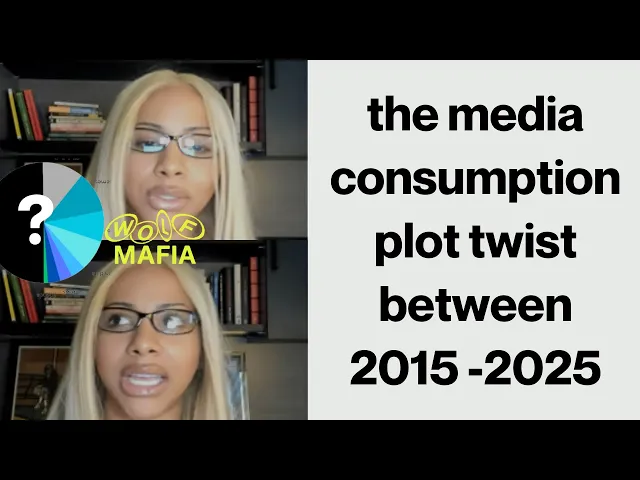
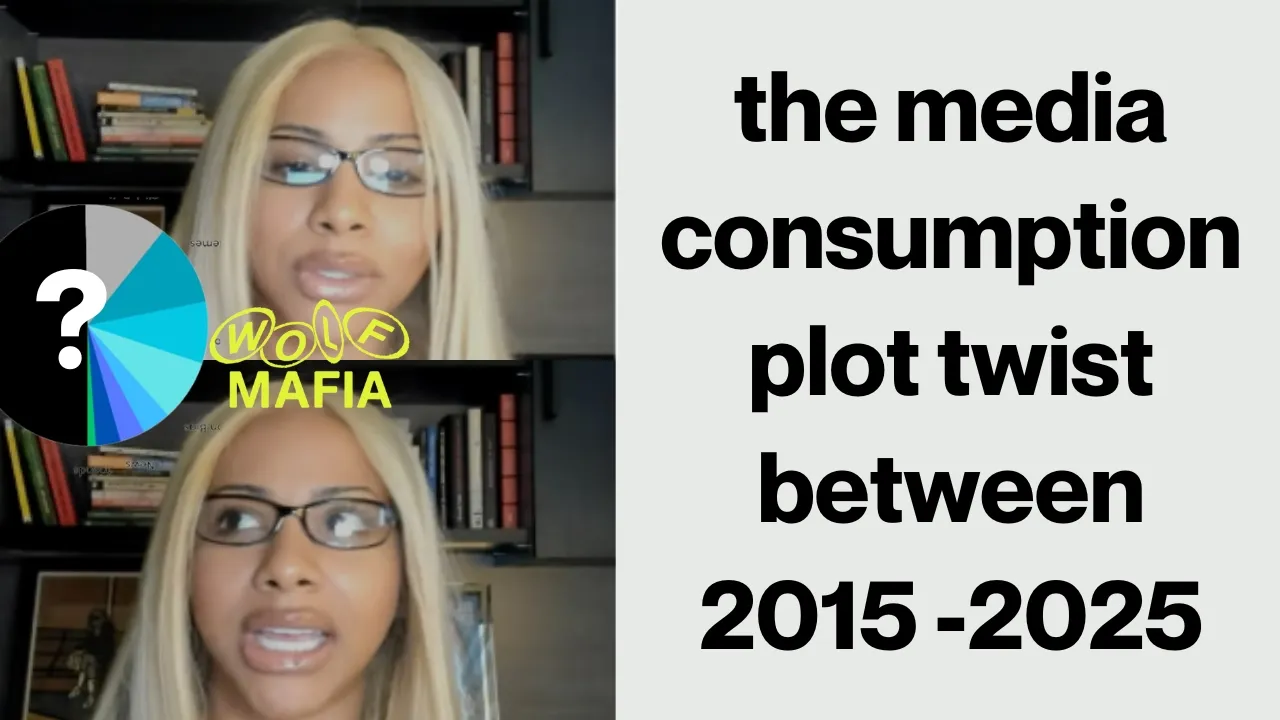
hey y'all it's me if you're new here my name is Alex Wolf I'm a tech philosopher as well as an investor and I wanted to talk today about what I believe to be today's mainstream media diet and how I believe it's changed in the past five to 10 years when I say media diet I mean what do people wake up in the morning and watch what makes up the content they're watching what type of content is it um how is it being absorbed is it being absorbed and so I've been thinking about this a lot
because I launched a mini documentary in 2018 called attention for sale which was all about my concern about society's attention span being shorter and shorter smaller and smaller by the way by the nature of the way we design most social media so advertisement business models essentially exploit our senses particularly the eyeball and you know it's kind of sweet to think that oh that was only you know 2018 that wasn't that long ago not much has changed but social media actually has changed a lot and I think not only has social media changed a lot but
our media diet has changed a lot as well as our attention span I think has even become a bit shorter since uh 2018 and 2020 so I just wanted to kind of theorize and talk through how I think the media diet has changed and I also consider these to be entry points aside from the ignored portion of this piie but consider I consider these like cultural zist entry points so if you are making content and you're asking yourself how do I become a part of mainstream conversation how do I circulate my stuff throughout the cultural
Z guys throughout the algorithm I think this will be really helpful because we'll see what entry points I believe to have grown and what entry points I think have shrunk um over the past 10 years so without further Ado so so the first part of this pie is the ignored section the reality is most of what we are scrolling through we are ignoring I would say about 50% of what we are scrolling through we are scrolling out of Habitual Behavior meaning it's just a habit right so you might be scrolling out of habit and you're
not really taking in most of what you're scrolling through if I were to ask you you know what were the last 10 posts you saw you probably would be able to only tell me one if if that so that's helpful context because I think that when people are making content um especially artists and creatives even marketers we tend to think that we have people's undivided attention and the truth is we just don't that you might put your Blood Sweat and Tears in a post but the chances of it being ignored are really high not because
that's a reflection of what you have to say but because of the behaviors that we've adopted as a society this vertical video feed um you're just more likely to deal with the stuff getting ignored so remember as people are scrolling through your content their habit scrolling they might be nervous scrolling they might be scrolling because they have anxiety and they're scrolling to soothe the anxiety not to necessarily take in content and this is an a very common behavior and usually the content tends to make people feel even worse um so this is just a reminder
that sometimes it doesn't matter how good the content is sometimes it's just luck that someone is scrolling and happens to actually be paying attention and got to see what your content was about um so don't take it personal but this again I think is really helpful context because I really think that most of us imagine people scrolling with the attention span or the media diet appetite of a typical user in like 2015 and the truth is the world has just changed a lot since then it it changes really quickly guys like this is part of
why I do the work that I do because I truly believe that we're having a hard time keeping up with ourselves because we keep um integrating new features out of like fear basically fear that some other app is going to take this app's um popularity or profitability and so we think that we're being smart by moving fast but I think a lot of us would agree that it might be the moving fast that is causing most of the problems to begin with so the first section is ignored that's what I wanted to cover and here's
how I think it's changed over the years I think in general most of the content on the internet has always been ignored but as you can see this is 2015 I believe it's only become a bigger piece of the pie because there's more and more content and people's attention spans have just become more and more fickle so I believe that's how that has trended it has gone up now the second largest part of the media diet is clickbait SLS spectacle content so content that makes you go what the is that um satisfying content that is
hard to take your eyes away from all of the clickbait content is designed so that it's really hard to take your eyes away from it's the particularly exploitative type of content when I say exploitative I mean exploitative to like the way your brain and eyeballs function because there's a reason why there's a saying that um you can't look away from like a car crash it's not that you actually want to look it's it's just that your brain and your eyes just make you do it and so a lot of the content if you go on
like the explore page on Instagram on YouTube on Snapchat on um Tik Tok a lot of it is just it has no meaning and it's just literally there for you to to be like what the hell is that even like your grandma might um be over your shoulder and it might catch her eye or your mom and I bring up your mom and your grandma to Showcase that this is not a matter of age it's a matter of human behavior and it doesn't matter what age you are anyone can get sucked into a vertical video
feed by way of clickbait or spectacle like content because human nature just goes what is that and that's why it performs so well in these algorithms and that's why it takes what I believe to be the biggest piece of the unored High because it's exploiting our um inability to look away which I talk a lot about in that mini documentary it's on my YouTube page by the way if you haven't watched it so yes this includes satisfying content sexual content anything that's stimulating arousal and and curiosity so when I say sexual content I don't mean
straight up porn um I think what is on the internet now would be considered porn maybe like 10 20 years ago but um so I'm not I'm not including like straight up like only fans corn I should be saying corn so yeah um it exploits your curiosity into watching something meaningless right and uh this also includes celebrity gossip so you can try this experiment go on your explore page not right now because I'm going to lose your attention if you're not already scrolling on something else the next time you go to your explore page start
to observe how much of it is actually just some form of clickbait celebrity gossip something going unexpected maybe someone's reading someone else's mouth to try to hear what they're saying or they might put like a little red circle on an image to make you click it to be like why is there a little red circle there right so it's just it's tap bait right clickbait is a little outdated because we don't really click that much anymore we don't really use mice as much um but yeah it's tap bait it's scroll bait and that's the biggest
piece of the pie that is not ignored so here's how I think that has changed over the years I think it has gone up second to that are humor content humor anything that makes you laugh memes content that's just designed to get you to laugh over the years this has just been true and tested over and over again that humor spreads online humor performs really well I have seen memes go from a language of Internet Reddit like users like form users to oh now brands are kind of using mem like composition in their ads to
Camala Harris literally her whole Tik Tok page is all video memes so we went from like hahaa this is kind of funny for like Niche internet people and now it's a language that's necessary um that that like the presidential candidates now feel necessary to integrate into their campaigns so that's how important humor is that's how important memes are um and so consider this a wide entry point so as you're thinking of your content strategy right how can you use humor to capture the attention and circulate your content in a way that is Meaningful and in
alignment with who you are are I'm even going to challenge you to think about how you can use clickbait to your advantage because there are ways to use it in a tasteful artistic way you just have to be a certain amount of intellectually you have to be pretty intellectually Advanced to integrate it but there are ways to do it I just saw Marc Jacobs did one where he created a spectacle by using fire it looks like there's an uncontrollable fire and that's a spectac that's something that if you are on the explore page you're going
to go what the is that and you click it and that is done in a way that I think is more tasteful than just straight up at least there's a grander artistic Vision in the intention as opposed to someone who's just trying to get your grandma to zombie scroll for three hours so here's how I think humor has shifted I think it's slightly larger because the thing is as other parts get smaller other parts get larger I also think that because there is so much fear right now about the election about AI about Society I
think that what ends up happening is we zoom in more on the humor content and the clickbait and um the inspirational content which I'm going to talk about next because it's a way to soothe and comfort ourselves to not think about the bigger problems that we feel are facing the world but I also think that what's helpful about this chart is that it illustrates how much this problem begets itself because if the fear is coming from the technology and the economy kind of spiraling outside of what feels like our control and the way we cope
with that is by focusing more and more of our time on trivial content and media it only makes that threat of you know Ai and all these creepy things bigger it almost makes the elephant in the room bigger and not just de side it's so habitual it's not most of the time when you're grabbing your phone it's not a conscious decision it's now ingrained into your behavior so the way that a lot of us deal with that anxiety and fear is by soothing it through content that's going to create a pleasurable experience through something that
is Trivial and the more that problem does not get addressed and the bigger that problem becomes now this is what Neil Postman who um wrote the book amusing ourselves to death who my mini documentary is dedicated to this was his big this was the hill he he literally died on um he was concerned in the 80s in the 80s he was concerned about how the television was a media d di that pacified consumers and citizens it is to call people citizens as opposed to Consumers that um they are too used to information coming in an
Entertainment form and his concern was what is that mean for everything else in the world that can't be told to you in an entertaining form so for example if you need to learn about both political parties um stances and and and what they are proposing and trying to change but you need to read like a 50-page report to really get the entirety of it of the complexity of it how does a society that doesn't have an appetite for that complexity handle the complexity of those position they can't process it and so that's the threat of
the media diet having this much triviality to it because there are parts of life that are not just a joke now I I I'm careful about how I say that because I also appreciate and understand the value that entertainment has in human nature because there's something about human nature that specifically AB uh hates boredom and so my only critique about Neil Postman and it's it's refined itself over the years is that he was so anti- entertainment that it felt like he was saying almost like we can't have any fun now I'm sure if he were
here to defend himself he would say no Alex that's not true I would watch a movie every Saturday like I know how to consume and enjoy entertainment but my concern is that what if it's too much entertainment what if people are being too Sedated by The entertainment and what happens to the more complex ideas in society if no one can actually process them and so I would say to him I get you I'm on the same page the reason why I think he was a little bit too much of a party pooper is because he
had a critique against like Sesame Street for example saying that you know learning through a show like Sesame Street trivializes learning which I would disagree with but that's just a nuanced point the majority of his work is phenomenal and I'm saying all that because when we're talking about what are we on I forgot we're on um humor yes so yeah most of what's being spread around right now is that clickbait and trivial content trivial key word there because trivial really represents meaningless meaning less is the feeling that this is not worth its while and a
lot of people feel right now empty inside there's I think arguably a soul sickness of the world and there seems to be a correlation between the meaninglessness of the media to the meaninglessness that people feel now it's nuanced y'all because just as easily as easily as I can say that I would also say that Tik tok's content actually offers a lot of meaning and connection for people who are becoming inspired by listening to Raw transparent stories and Tik toks so yeah I'm just messing up the pie a little bit more because I want to just
honor those nuances but look the reason why Tik Tok has more value for people than Instagram is because Tik tok's etiquette and culture was based in the more informal parts of social media AKA under produced in the moment media which always has performed well which I have plenty of videos about plenty of uh articles and tweets that I've done about how and presentations about how under produced content always performs the best on social media if you think about humor most of it most of those memes are are very lowii so the next biggest piece of
the pie is inspiration so inspiration performs very well and the media diet still has a huge place people love to be inspired it feels good look we're not ssts here we're just uh victims of kind of like exploitative design but we still know how to find meaning when it's there right when you think of humor and laughter that's meaningful and when you think of inspiration that's meaningful so inspirational content includes fashion anything in art you know music film dance motivational content motivational quotes inspirational quotes inspiration on how to design your home or how to throw
a party or all those kind of like you know we bought a we bought a cabin and now we're going to like redecorate it right so inspirational content I think is still a huge part of the media diet so again consider all these entry points if you had to enter the cultural Z guys where would you want to jump in would you want to jump in in a little sliver or would you want to jump in where you know the entry point is very receptive and circulating very wide across the internet so this is how
I feel inspiration has grown I think it's always been a big part but I think it's grown even more over the years all right the next piece of the pie is confirmation biased content so I actually think confirmation has gone up over the past 10 years confirmation biased content uh is any content that basically confirms what you already believe about the world so oftentimes it's mass that as news but they're usually just headlines that are designed to confirm a belief you already have about the world so there's a lot of like fake headline type meme
content that just goes around that's like confirms what you might think it might like there's a lot of men who think every woman's a gold digger and there's a lot of women who think every man is a cheater right we had a lot of division I think especially after 2020 there was just a lot of division in confirmation bias we see it politically right when you think about the election how much Spirals and dis is distributed in the algorithms to confirm what you already think politically this is content that's designed to prove stereotypes so again
content that takes sound bites of someone and says see all women are this or takes sound bites and says see all Republicans are that or it says see all you know whatever like see how right we are and people eat that up myself included uh we all e confirmation bias content up so I think this has only gone up since 2015 and I'm also including like podcasts with your worldview like most of the time people are listening to podcasts to confirm what they think about something and again this is very natural this does not make
you a bad person it's something you do want to be careful about because you can around and brainwash yourself and radicalize yourself without really knowing if you're not being being conscious but I think for the most part it's normal and healthy behavior for humans to gravitate towards other people and environments that affirm how their opinions and what and what they believe because especially now there's so little trust I think between like the modern person in the world and so the confirmation bias helps create some trust and create some anchors of identity and yeah anchors of
identity for people but we still got to be careful so as you can see from 2015 I believe that piece of confirmation has gone confirmation bias has gone up all right so here's why I think things get interesting I think that there is a certain type of content which I'm calling gur content which is basically all those people who tell you what to do I think that has gone down not because people people haven't been posting it I actually think people have been posting more of that and I think that's the reason why that has
gone down this is like the beginning of this trend but basically after 2020 there was more use of Tik Tok just more internet social media consumption right and suddenly it went from like there's certain internet experts to almost like everyone's an expert and everyone's going to tell you what to do and this is what you should be eating this is what you should not be eating this is you should date this is how you should not date this is how you should work this is how you should grow your business right anybody who's telling you
what to do or how to live your life I'm considering that Guru content so this includes aggressive internet Market marketers and the other thing I'm theorizing is that in 2020 There Was You know I come from the internet marketing background so I remember like first gen second gen internet marketers even from like the 90s to be honest like Russell runon and like those OG ogs and by the time 2020 came there's what are called the three Eternal markets which are basically markets that always sell no matter what and that is uh money- making like how
to make more money how to improve your love life and how to improve your health AKA lose weight so these are the three Eternal markets right and internet marketers usually come in and dominate those three markets because they work well because they sell and there's no harm in that but the issue is and what I think happened post 2020 is that there was all this conflicting advice like even if you go on Tik Tok now someone will tell you do this and then someone the next slide will be like don't do this or like even
on YouTube if you search something simple you might have a simple intention of like how to become a content creator right and then someone will be like here's how you become a content creator and then someone else would be like don't become a cont content creator and then someone else will be like like you know only focus on YouTube and someone else will be like only focus on Tik Tok so that information overload and the gurus competing first of all more more gurus coming into the market and then the way gurus compete is trying to
like disprove each other's method because they have that's part of what they have to prove is that their method is the best method and it's very hard as a consumer to process all of that and actually get a fruitful result because you're being tugged in all these different directions and not only that but if you're dealing with like a super newbie internet marketer um you might get burned you might buy something buy a course buy whatever coaching and it doesn't work and then you your trust goes down so I think that's why the guru media
diet has gone down because I think people overdid it in 2020 and I think that on top of the overall General fear that is behind the cultural side guys people are just like I don't want to hear this like if I go on Tik Tok I was just at a meeting with this investor and he's a gen xer and he was saying like how he'll do his Tik Tok scroll before bed and this grown ass man which there's no shame but it just goes to show that this is real it's not just like teenagers or
whatever people Envision when they think people on Tik Tok but he said said that he Scrolls right past any podcast any learning anything where someone's talking he's like I don't really care he's like I like seeing people dance and have a good time and I can coign that like most of the time especially now again like my my behavior has changed 20 in 2020 I might have had more patience to listen to a podcast but there was like a podcast explosion like atomic bomb that went off and there were all these podcasts and I can't
keep up with who's relevant and who do I care about and I I can't process who is important to listen to so I ultimately just like I don't care and but I do like this dance or I do like this meme right and so again dancing and memes are big parts of this media diet and they've only gotten bigger and I think those have only gotten bigger because the guru crowd up the market and I think less and less people are interested in that so here's how I think the guru pie I think in 2015
that was a pretty big pie that if someone was telling you they had you know this how to live your life this is what you should be doing I think that had more of a place in people's media diets where I think over time it's gotten it's gotten smaller and I think it will continue to get smaller now y'all might fight me and be like oh that's not true people still listen to gurus this is not about no one enacting in the behavior this is about the way I think things are trending up and down
and I think that is trending down of course there's still people who do it but I don't think it's as many people then we have the news so there's a lot of data about how people can't find news they don't look for the news they don't know where the news is like actual sourced news um from from the source as as opposed to sourced news um so news articles have gone down actual news has gone down and I pulled up some stats to share with you so news is way down according to the Pew Research
Center us weekday newspaper circulation print and digital combined dropped 50% from 2015 to 2022 there was another stat found that in 2023 only 22% of people access news directly by going to a News website or app and that is down from 32% from 2018 okay I kind of remember that I used to back in the BuzzFeed days 201 like5 I would actually go to news sites more and I found that I don't do that as much so it says more people were accessing news through social media or search engines instead another stat PE Research Center
data shows that as of 2021 about 48% of us adults often got their news from social media platforms compared to 9% in 2013 these are huge differences guys so they're getting their news from Facebook YouTube Twitter the most popular platforms for this and the other stat is on platforms like Tik Tok news consumption Rose significantly especially among gen Z in 2023 40% of gen Z in the US reported getting news from Tik Tok a sharp increase from the previous year so I included these stats because these are sharp stats these are like like we're talking
about 32% drops 50% drops significant drops in news and if you think back to Neil Postman this was his whole concern right if we're not consuming real news then what are we doing right and then not only that and this is what I mean about why it begets itself a lot of people they don't want to hear the news because the news is terrifying because the news is going to tell you about another terrifying thing that's happening in technology and then that black hole and these charts get bigger so let's look at news shrinking and
shrinking all right and then tutorials and learning I believe have also gone down so computers were originally branded as like learning machines like Library machines where you come on here and you become a genius like they were marketed like that to adults and to children and what we didn't account for is the fact that there was highly stimulate stimulating media on here that is just entertainment you know we this this is not a place of learning you you'll learn stuff but it's not a place of learning in the same way that I think we kind
of lied to ourselves to believe and I do think that the desire and searching for things to learn has gone down now I know someone's going to be in the comments like Alex and not me yeah not you but look at the video you're watching right now like you're not normal you're not the majority you're the minority so of course a minority of people who are are looking for stuff to learn of course obviously thankfully but thank you for your service but like the majority of people are not getting on Instagram to learn anything they're
getting on Instagram out of a out of a habit it's not to actually learn something so anyway content that I am including in this is how to learn a hobby or skill and so there is a Nuance between like this kind of learning and like the internet grifter learning because this is more like how to garden how to um learn a language how to like learn academic subjects like history or math or whatever grammar um and then I also included product reviews in here because I I think that counts like tutorials or how this thing
works like I think a lot of that has gone down even in makeup honestly I think it's gone down last but not oh so this is how I think it reflects in the pie chart as you can see that tutorial that dark blue getting smaller over the years last but not least friends remember when social media was about our friends when our media diet had a lot of our friends and now they're all muted right like in 2015 social media was still reminiscent of the early 2000s social media which was you go online to talk
to the people you already know offline and I think Tik Tok really pushed things into overdrive where actually I think the media I want to see shouldn't even have anyone I know it's actually more interesting when I'm seeing people I don't know uh this is how I think it's gone I think it's always been a minor part but I think it's only gone down more over the years so that is my take on today's modern media diets I'm curious to know what your thoughts are thank you for sitting with me and going through this together
let me know how you feel the media diet has changed and again consider how you can use these as entry points for your content strategy consider maybe why uh this relates to why your content strategy might not be working you might be trying to enter through a super narrow entry point and the algorithm and the state of the media diet at this point you have to study the way that humans are behaving with the media this includes you and includes the generations older than you and younger than you right so this is just helpful context
to have as your posting so thank you for tuning in and I'll see you in the next