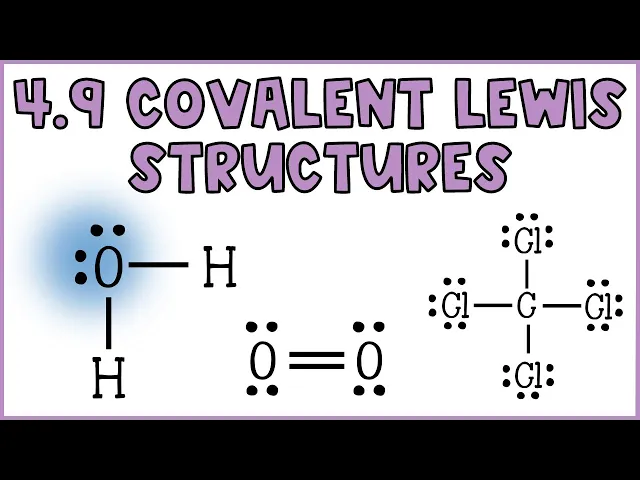
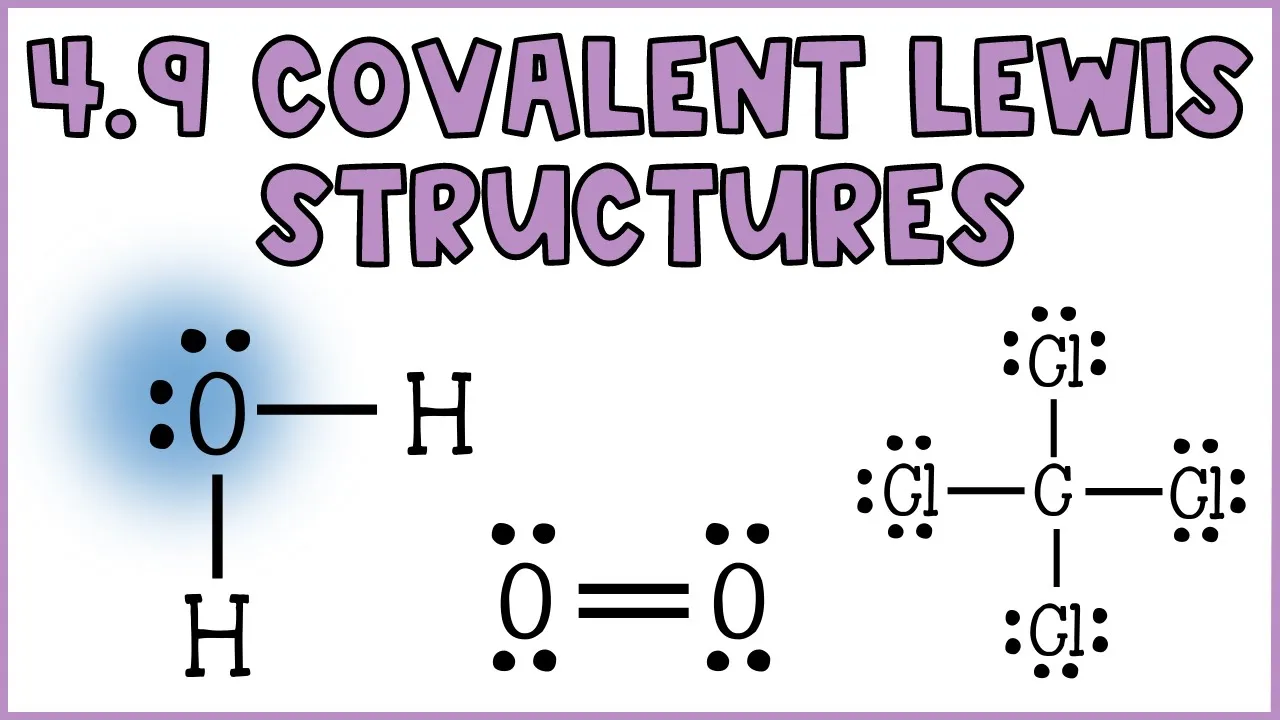
hello welcome to this lesson on drawing covalent Lewis structures I'm going to start you off by having you draw the bore model and the Lewis structure for oxygen and I want you to describe how they're different and then which diagram for or Lewis do you think would be best for drawing a water molecule and then explain why here we have the definition of a Lewis structure we've done some of these early on we did them for atoms just drawing the Lewis Dot Diagram for atoms and we've done a little bit of this with ionic compounds
but now we're moving into covalent compounds and this is where things get fun so a Lewis structure is going to show an element's symbol um with just its valence electrons electrons that are shared are going to be drawn as lines and electrons that are unshared are going to be drawn as dots so here we have a nitrogen molecule this is N2 the primary component of our atmosphere and nitrogen started out if you look at the periodic table it's in group 15. she started out with five valence electrons so it's easy to see that she has
uh these two and then she has one two three that are going to be shared with this nitrogen and this nitrogen over here should also have five valence electrons we have these two and then three that nitrogen puts into the bond this is a triple bond then over here we have methane or um carbon bonded to three hydrogens carbon is a member of group 14 started out with four valence electrons and shares all four of them each with one hydrogen who has one valence electron as a member of group one and shares its only electron
with carbon it'll get clearer just keep with me you should remember that all elements on the periodic table are going to bond to get a full valence shell which usually means eight valence electrons but when we have non-metals going out looking for electrons sometimes they will get those electrons from Metals entirely they get to keep them and other times when they bond to non-metals they have to share so we're going to look at two chlorines that are going to share electrons so if you find chlorine on the periodic table chlorine is a member of group
17 meaning it has seven valence electrons if we were to draw the atomic Lewis structure for chlorine it would look like this chlorine and seven dots for seven valence electrons well this chlorine also has seven dots and seven valence electrons so when chlorine goes out into the world to bond looking to get a full octet um they kind of like look to each other and go hey I have seven electrons and you have seven electrons too is there any way that I could have an electron you have a lot can I have one and the
other chlorine will say absolutely not I'm looking to get eight I can't give you any because I'm looking to gain there's no way so they compromise and they share so um kind of what happens is that they each share one electron I like to use the line I'll share one with you if you share one with me and that's kind of what these chlorines do so those electrons they each share are going to be put together into a line the dots get converted into a line and that is going to represent a single Bond a
single bond has two electrons in it one from each atom so you can see that chlorine is going to keep the other six electrons and add one electron to the bond this chlorine also going to keep the six extra dots and put one into the bond so if we look at it this way chlorine has six shares seven and it is shared the eighth so there's two electrons in this Bond sometimes these electrons are with chlorine other times these electrons are with the chlorine on the left they share now sometimes our atoms say I'll share
two with you if you share two with me and that's called a double bond in this case we have oxygen two oxygens O2 the oxygen we breathe and it has six valence electrons each oxygen is looking to gain two valence electrons so this oxygen on the left says to the oxygen on the right I'll share two with you if you share two with me six plus two is eight that's how they'll get their eight valence electrons so a bond is going to be formed between these two electrons and a bond is going to be formed
between those two electrons and those electrons are the dots get converted into lines once they're shared so in this case oxygen kind of just like shifts around these extra dots has four that it's not sharing it keeps four to itself it puts two into the bond and then two are shared with it and the same happens here oxygen keeps its four extra dots puts two electrons in the bond and has two electrons shared with it I'll share two with you if you share two with me this is a double bond which in total is four
electrons two for me and two from you and now we're up to the triple bond we're back to nitrogen nitrogen has five valence electrons so it's going to say to the other nitrogen I'll share three with you if you share three with me because five plus three is eight so we will have nitrogen keeps its two extra electrons and then of the remaining five it puts three into the bond shares it says I'll share three with you if you share three with me so if you like could put an imaginary line down this triple bond
half of those electrons belong to the right nitrogen and half of them belong to the left nitrogen and in total everyone's gonna have eight valence electrons because this triple bond in total is six electrons three from one nitrogen and three from the other totaling six plus the two that nitrogen keeps to itself so that is a triple bond now we don't have atoms share four electrons with other atoms it just gets too crowded it's not really possible um if you think back here to the triple bond we have six electrons in a very tight space
um eight electrons in a tight space is simply not going to happen so carbon gets an entire branch of chemistry all to itself of It sharing electrons with other atoms and that's called organic chemistry here carbon um has four valence electrons it's going to share all four of them but it can share all four to the same atom it's just not possible too crowded so in this case carbon is going to split up its four it's going to share with this hydrogen and that hydrogen and that hydrogen and that hydrogen and it is going to
make four single Bonds in order to get a full valence shell sharing multiple places so um carbon has four electrons and has four shared with it totaling eight now hydrogen is a little bit weird because hydrogen doesn't want can't even hold eight valence electrons it's way too tight um not enough space for all of those electrons not enough protons to even hold them together so hydrogen is going to follow the duet rule remember all of the atoms want to look like noble gases in this case hydrogen is going to want to look like helium with
just two valence electrons so hydrogen has its one valence electron it only needs one more to look like helium so it says to carbon I'll share one with you if you share one with me and carbon says yeah that's cool but I got to share some other electrons with other hydrogens and this hydrogen's like yeah of course I don't care do do what you got to do with your electrons I just need to worry about me so that's what's Happening Here notice that there's no dots on this Lewis structure at all and that's because there
are no leftover electrons for an atom to hold on to all by itself it's sharing everything it's got so here in summary we have the type of bond the number of lines and the number of valence electrons remember each line represents a pair of shared electrons in a single Bond the atoms say to each other I'll share one with you if you share one with me so it's a single Bond because they put in one electron but they get two they get sometimes they get their own and sometimes they get the one that's been shared
with them so the double bond you put two in but you can have up to four and then the triple bond you put in three I'll share three with you if you share three with me so there's six in total drawing Lewis structures can get really complex especially if you're going to start talking about formal charges and resonance which I'm not getting into here I am looking to show you how to draw binary covalent Lewis structures stuff that's pretty simple um just like two elements at a time when we get into organic Lewis structures it's
going to be a little bit more complex but that naming system lends itself to drawing beautiful Lewis structures that are actually really easy to figure out but until we get there we will not be talking formal charge and resonance if you're looking for that I'm sorry you're gonna have to go find another video um I don't like resonance I think it's such a pain in the neck and I don't want to teach it so I'm not going to um I'm just trying to get the basics across here so when we're drawing inorganic binary Lewis structures
we are going to determine the number of valence electrons for each atom you just do that using the periodic table remember everything that's in group 14 has four valence electrons 15 has five 16 has six 17 has seven eighteen has eight but we're not bonding with them because they already have a full valence shell then what we're going to do is take those valence electrons and draw them as dots around the element symbol think back to when we were doing Atomic Lewis structures we're going to start really with that then I recommend with a pencil
you just start connecting these dots until you get all of the atoms having a full valence shell it gets easier with time you will figure it out most of the time in a chemical formula and I should specifically reiterate most of the time in a chemical formula the element that comes first is going to be the central atom and then you'll have whatever is second is going to be attached to the sides kind of like we had with methane with the carbon in the middle and the hydrogens around the formula there is CH4 it kind
of tells you that C is in the middle that happens most of the time um and also make a note to look out for small elements like hydrogen they only want two valence electrons they cannot possibly fit eight valence electrons and then remember that each atom is going to um say to the other I'll share one with you if you share one with me I'll share two with you if you share two with me that's the only way that we're bonding right now there is something called a coordinate covalent bond where one atom does all
the sharing and the other atom does not we're not talking that here in this case in this video in high school level chemistry we are talking about Fair sharing I'll share one with you if you share one with me now we are going to take the bonded electrons that they decide to share and they are going to be converted into lines so every two electrons that are shared one with you one with me those are going to be converted into lines they are no longer dots now Lewis structures are going to show you how electrons
are shared among the atoms but it does not show you what an atom would look like or what a molecule rather would look like in real life or in three dimensions so we do not consider Lewis structures to be real life representations they're just models this is going to be important again when we talk about intermolecular forces um and specifically it's going to be really important when we talk about water water is a polar molecule which means that it kind of acts like a little magnet we'll get to that later um you can draw a
Lewis structure for water that makes it look like it's not a polar molecule and that Lewis structure would be correct technically so i s from the Inception of Lewis structures have my students draw water at a right angle so we're going to draw water and all of its cousins at a right angle now the reason H2S and h2se are considered water's cousins is because if you find oxygen on the periodic table sulfur is right below it selenium is right below that um when you have this type of water molecule or this type of molecule that
kind of looks like water it's a cousin to water we're going to draw it at a right angle um this is going to be a closer representation to the real life picture of water and it's going to help you later so this is just something that I recommend that you memorize you can technically draw the Lewis structure for water in a straight line hydrogen oxygen and then another hydrogen I don't want you to do that because it will lead you to the wrong answer later draw water and its cousins at a right angle now secondly
anytime we have double bonds this is going to be true later when we get to organic double bonds have to go in a straight line they cannot bend um the reason for this is because these double bonds represent four electrons and they are going to be repelling each other and the more spaced out they can be the happier they'll be so for realsies double bonds cannot bend like water does into the right angle it's not going to happen so if you have a double bond draw it as a straight line just get in that habit
now it will help you later like I was saying before in a chemical formula a lot of the time the element that's listed first is going to be drawn in the center but another way that you can more or less figure out how the drawing is supposed to look is that the atom with the lower electronegativity is typically going to be in the middle now if you look up the electronegativities of all of the elements laughs carbon has a lower electronegativity than oxygen you can also figure this out using your periodic table Trends if you
don't have the exact numbers oxygen is closer to fluorine on the periodic table than carbon is carbon is further away so it's going to have a lower electronegativity usually the thing with the lower electronegativity is going to wind up in the middle in the case of carbon dioxide the formula for that is also true where the carbon comes first and that's going to be the atom in the middle again this is not a 100 blanket statement rule it's just something that can help you get started with your picture sometimes it's not true and your picture
is going to look weird and it's not going to work and then you'll just have to know okay this must be one of the exceptions to that Center atom rule this is going to lead into again intermolecular forces in a few videos but when we have an atom that has multiple lone pairs of electrons meaning it has pairs of leftover electrons that it did not bond with those are actually going to need a little bit more space and truthfully they should wind up next to each other um that's going to make your molecule lopsided and
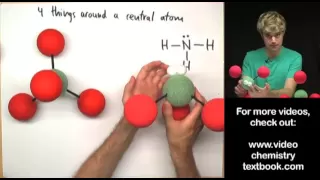
that is going to make water polar like I said before it's going to act like a little magnet so right here I have a model of a water molecule really my water molecule is supposed to look like this I'm supposed to use a red for oxygen and then these for hydrogen um but just for the sake of this description I kind of I did it on a carbon just because it Bonds in four places and I wanted you to see it these little Flags or bunny ears represent these leftover electrons and you can see that
they kind of want their own space right electrons don't want to be near each other at the same time these hydrogens don't really want to be near each other so this in three dimensions kind of looks like a tripod um and you'll have just one thing like sticking up off the top there you have it again and this no matter how you Orient it if I were to like pop off a hydrogen and pop off this lone pair and then rearrange it no matter how I arrange it the bunny ears or the extra leftover electrons
are always going to wind up next to each other um so when you draw the picture it's a good idea to just kind of Orient it at the right angle it's not quite a right angle water's angle is actually like 104.5 I think it is it's a little bit bigger than a right angle but just getting in that habit is going to help you now again Lewis structures don't show you the real life picture Lewis structures are going to show you how electrons are being shared the real life picture looks more like this and the
way I'm kind of having you draw this is like this so you have hydrogen oxygen hydrogen and then these bunny ears are actually like in the same plane of space um so you can't actually if you're looking at the Lewis structure you can't see two things at the same time if you want to put your um bunny ears at a right angle instead your hydrogens are going to be in the same plane and one's going to block the other you see that one of them just disappeared so again your Lewis structure is not here to
show you what it looks like in three dimensions it's just to show you how atoms bond but if you draw it at this right angle you are going to prepare yourself later on for the fact that this molecule is very negative in this area where the extra electrons are because electrons are negative you got a big cloud of negativity over here and then with these hydrogens you actually have a big cloud of positivity um and this this is going to show you that the molecule is lopsided so again please I draw your water molecules at
a right angle so that is it on Lewis structures there are a few that I recommend that you memorize just because it doesn't make sense to um use them over and over again and those are really the ones that I've showed you in this video you have water that I think you should memorize carbon dioxide is one of those um H2S and h2se I think are worthwhile to memorize then we have um methane CH4 is a great one nitrogen oxygen with the double bonds I also think that all of the halogens are worthwhile to memorize
because all the halogens have seven valence electrons you can plug in any halogen in place right here and it would have the same Lewis structure so you don't have to sit and memorize fluorine chlorine bromine and iodine just remember one of them as the halogen Lewis structure these are the things that are going to come up a lot of the time and then once you have this as your your ground layer foundation for Lewis structures it's going to be a lot easier to draw some of the crazier things best of luck withdrawing your Lewis structures
please leave any questions you have in the comment section below the video subscribe so you don't miss the next lesson and I'll see you there bye