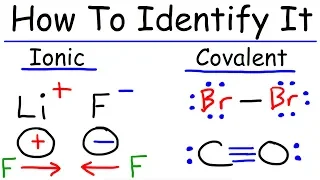
hey there welcome to today's lesson on metallic bonding the question of the day what are the properties of metals so you may remember that metals are found on the left side of the periodic table and the dividing line is the staircase line where you will find the metalloids and everything to the right is a non-metal so the periodic table is mostly metals and these metals like to lose electrons when they bond the losers are on the left so this is an example of a metal losing or giving away its electrons to a non-metal metals are
malleable um if you think of a car if you were to and not that anybody should because this is a very mean thing to do but if you were to hit a car with a hammer or a baseball bat if you hit the metal it is going to Dent right if you hit the glass it's going to shatter it's going to break that's the difference between brittle and malleable um I like to think of Mal like Mallet like a hammer a mallet is kind of like a flat Hammer a lot of the time it is
uh like heavily rubberized and if you hit something if you hit a metal with a mallet or with a hammer it's gonna Dent you can actually take a metal and Hammer it a lot over and over and over again and it'll thin out it's kind of like um like bread dough or just dough for baking like a pie crust you can roll it out and roll it out it'll get thinner and thinner and thinner metals are kind of the same way metals are also ductile which is a unique property to metals and they can be
turned into wires the same is not true for non-metals now metals have all of these specific properties because their valence electrons are far from the nucleus and they don't have a lot of valence electrons so in order to get that octet or the full valence shell they want to lose those electrons it's easier for them to lose electrons than it would be to go gain a bunch lose one or gain seven that's where group one is at um so these elements have very low ionization energy they're not very attached to their valence electrons so they're
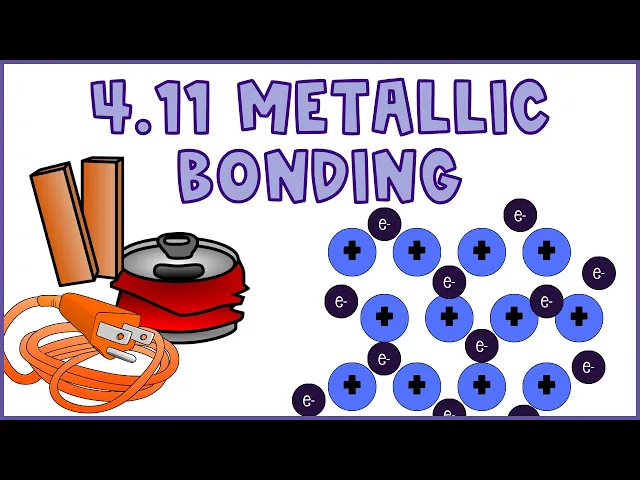
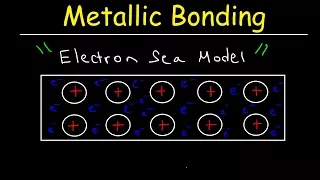
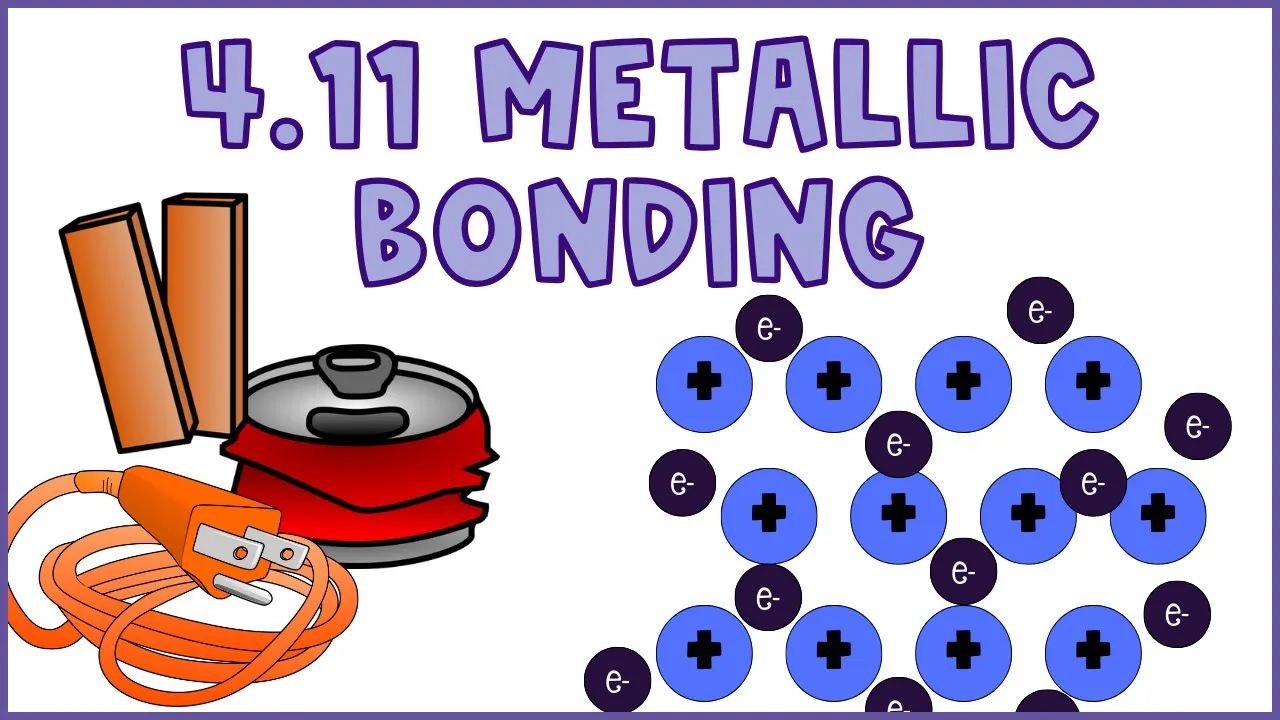
held on super super Loosely so kind of what happens is that in any sample of metal like here I have an X-Acto Knife um these metal atoms are going to kind of sort of hot potato their electrons from one atom to the next the atoms are not very attached to their valence electrons so this atom is going to like push its electrons into a neighboring atom to try to like get rid of them but at the same time his neighbor just kind of threw an electron over to him so the electrons through this entire metal
sample are all just kind of swimming around valence electrons don't really have a specific atom that they belong to they belong to the sample so this is going to happen um for a chunk of metal by itself most of the metals on the periodic table are solid at standard temperature and pressure Mercury is the only exception to that rule mercury has a weird symbol with symbols HG it's a liquid at room temperature but it is going to have the same electrons swim around properties so metallic bonding in a nutshell it's not really a bond as
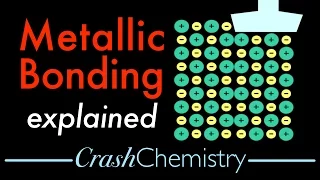
strange as that sounds we have the valence electrons being attracted to the nuclei of not just one atom but all of the other atoms that are nearby and this is how Metals get their properties of being shiny and how they're able to conduct electricity and how they're malleable and ductile all of that comes from the fact that these electrons are constantly swimming around a lot of the time we will use the key phrase they have a sea of mobile electrons now again this is going to happen for a chunk of metal all by itself it
doesn't fall into the category of ionic bond and it doesn't fall into the category of covalent bond it's just a metal element in its Elemental State not technically bonded to anything the metal atoms within that substance are kind of bonded to each other they're drawn towards each other because their electrons are being tossed around Hot Potato Style that's why we call it metallic bonding now not all metals are the same even though metals are going to have similar properties that they're malleable ductile conductive the specific metal and its internal atomic structure is going to change
the degree to which these properties are exhibited so um I think it's silver is the metal that is the most conductive but if you look at Silver and copper on the periodic table they're one on top of the other so they have very very very similar atomic structure which is why a lot of the time we will use copper for our electrical wiring copper is just cheaper and um it's easier to come by and for that reason we'll use copper but because the two are one on top of the other it makes sense that they
would have similar properties and that's because they have a similar atomic structure but if you were to compare um lithium and copper they're both Metals but they are going to have a different degree of their properties lithium is far more malleable than copper is um I mean lithium you can like squeeze in your hands if you really wanted to Copper you can't necessarily do that um so the the degree to which the exhibit the properties is going to change based on their atomic structure but overall all metals are going to have some degree of those
similar metallic properties take a look at these substances and determine if they have ionic bonds covalent bonds or metallic bonds now the way I do this is that I am going to be looking for a metal ion or a metal atom and if there is no metal atom at all that's going to make it covalent look at 1 5 7 and 10. none of those have Metals so they are going to be deemed covalent um then we have looking for the metal and if that metal is bonded to a non-metal it's going to have ionic
bonds look at uh two three and eight all of those are metal bonded to a non-metal and then lastly a metal not bonded to anything a chunk of metal all by itself that is going to be four six and nine those are the metals chromium Cobalt and Tin those are just chunks of metal and their electrons are swimming around the sample kind of sort of bonding the metal atoms together so that is everything on metallic bonding please make sure to leave any questions you have in the comment section below the video subscribe so you don't
miss the next one and I'll see you there bye