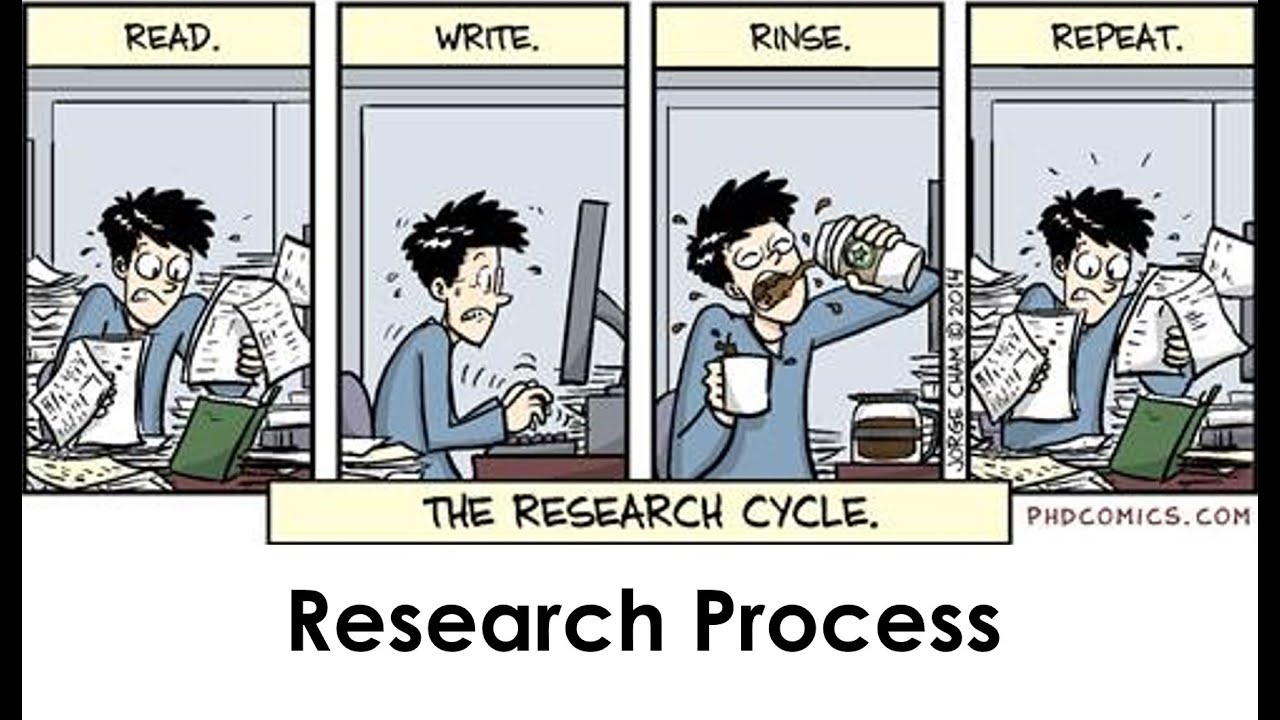
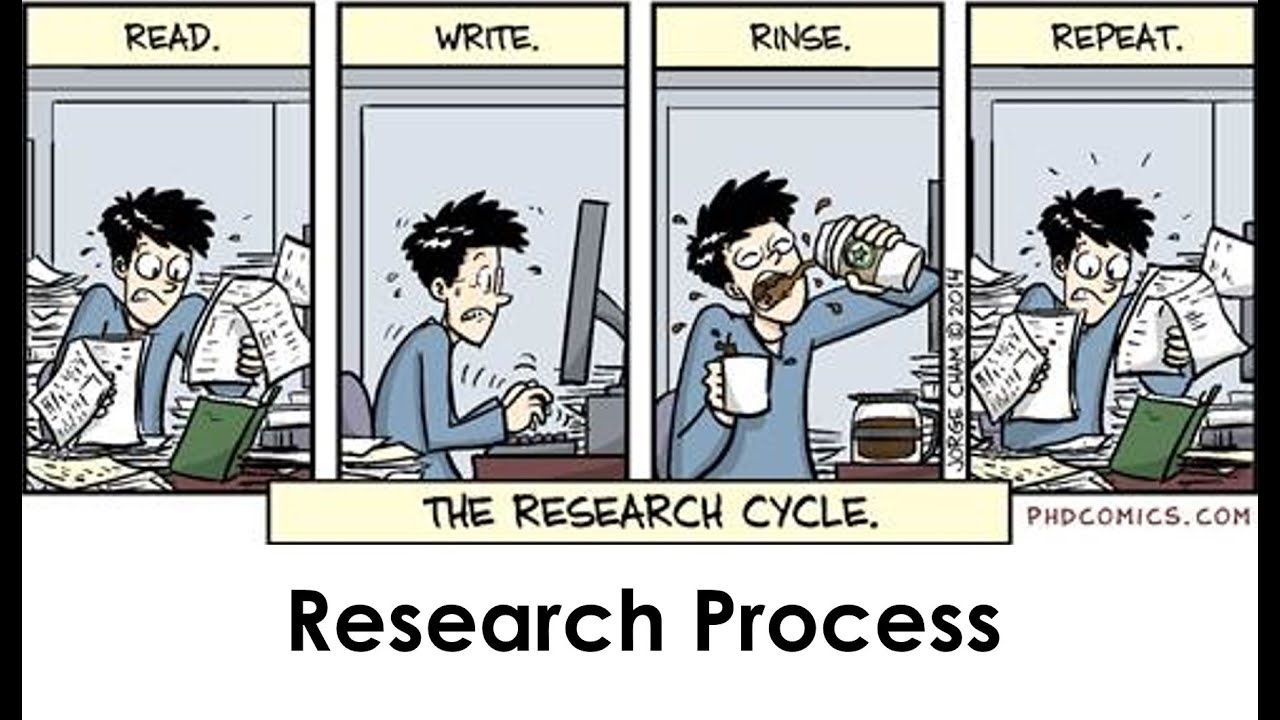
[Music] hello everyone today i'd like to talk about the overview of research process about how people conduct a research and how you will conduct the research on your own in your fourth year so even though there is no specific order to conduct research in general but research typically starts with a question and for your fourth year project or dissertation you will be provided with a list of research questions to choose from as you can see some of the previous sample questions here in case you don't find an interesting topic from the list then of course
you can come up with your own ideas and discuss it with one of the supervisors in fact it is always best to work with your own curiosity however once you pick your topic to work with then you still need to do something more about it to make it more clearly defined and focused before you actually get to work with the topic right so you first need to have your research question ready and suitable for your research [Music] so scientific research typically starts with a specific hypothesis it is not always the case but uh many times
if you're looking for you know how things occur and you know why things occur then you start your research starts with a specific hypothesis which is basically a fancy word for a scientific question that should be testable and falsifiable so briefly the testability of hypothesis means that a hypothesis should generate specific expectations or predictions that can be tested with practical means or tools so for example if we say to do such and such to test an idea then we should be able to expect or predict a certain outcome or result to follow or be observed
and secondly a hypothesis should be falsifiable or refutable of which concept was first introduced by a british philosopher named carl popper in 1959 so in short falsifiability arises when a set of relevant observations um so meaning that when you collect the data [Music] then you should be able to judge after you collect the data if the data or the collected evidence is either consistent or inconsistent with hypothesis in fact no scientific idea is ever once and for all proven to be true so even the very well-known scientific knowledge theories ideas that we think established long
time ago and accepted as facts are still open to constant challenges and empirical validations therefore the hypothesis can only be shown to be wrong so any scientific idea can only be supported modified or even be rejected by data or evidence so let's consider the following statement as a kind of sample hypothesis to illustrate what makes a hypothesis testable or falsifiable say you have this conviction that dogs are better than cats personally i love cats more than i do dogs and i can probably give you 100 reasons why i do so but in all these reasons
uh can be subjective and it is not measurable so let's try to be scientific here and think about the statement uh whether it can be qualified as scientific hypothesis based on the two qualities that a hypothesis need to have the testability and falsifiability well if you think about it the statement is very difficult to test or refute if not impossible because it is too vague and somewhat too general right so let's fix the statement in a way that we can test in a falsify by way of measuring things or collecting some evidence so now let's
change the hypothesis and now it says the dogs are better than cats in climbing trees well now this sounds a bit more specific than before as now we know that the what aspect of the animals we say better at however i think we need to be a little bit more specific about what we mean by better as it can be many different qualities so now the hypothesis is changed to say that dogs are faster instead of just better than cats in climbing trees so this way you can probably agree that now we can finally test
this hypothesis by measuring how fast they can climb a tree so after we gather the data then we can use them to show whether the hypothesis is supported or not of course there are other details you need to think about for example which breed will be representing each camp so um you know with the you know uh with respect to dogs um should it be the beagle or poodle um be representing the dogs or how about scottish fold for cats and there are other things you need to actually define some other details to make this
hypothesis uh more clear but as we will see later this process of making a research hypothesis suitable for actual testing is called operationalization so we've talked about this um the requirements of uh hypothesis then what is kind of a practical uh ways to you know make a hypothesis a good one so here are some tips so first you know that you have a good research hypothesis when it is focused and clearly stated and also it's always better to have a well-defined single hypothesis rather than multiple hypothesis especially if this is your first time doing research
well not every research can have specific hypothesis because um you know if the nature of your research is you know mainly descriptive or qualitative then you probably don't have a specific question um to test the hypothesis by gathering or collecting the data but even for that kind of exploratory hypothesis free studies you still need to have at least a purpose aim or goal for your study so that um the audience knows that your hypothesis is clearly identifying and explaining why you're doing what you're doing okay