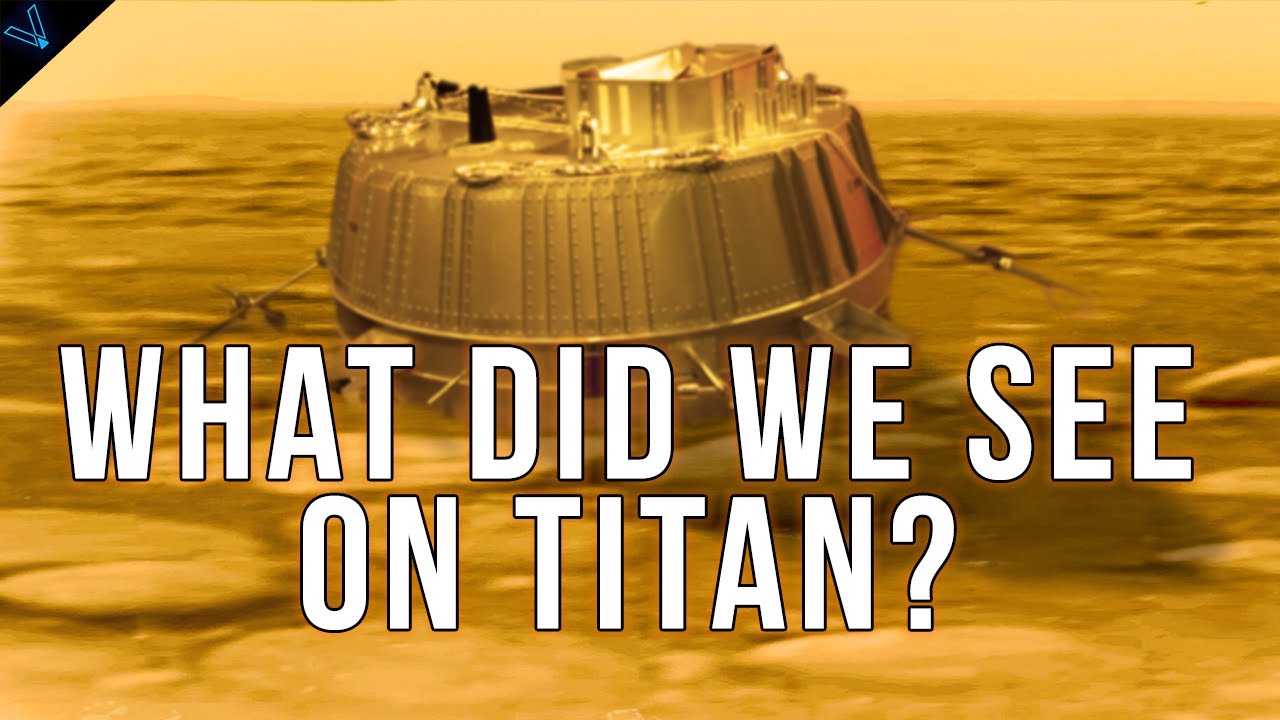
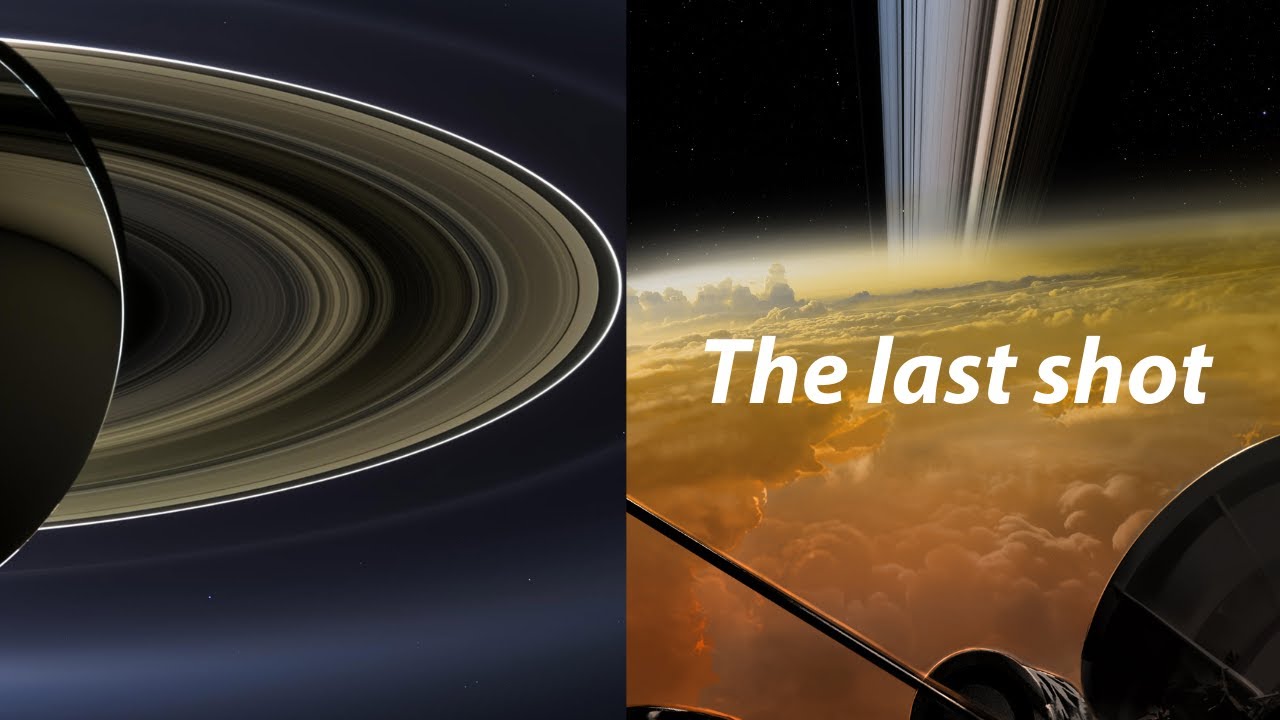
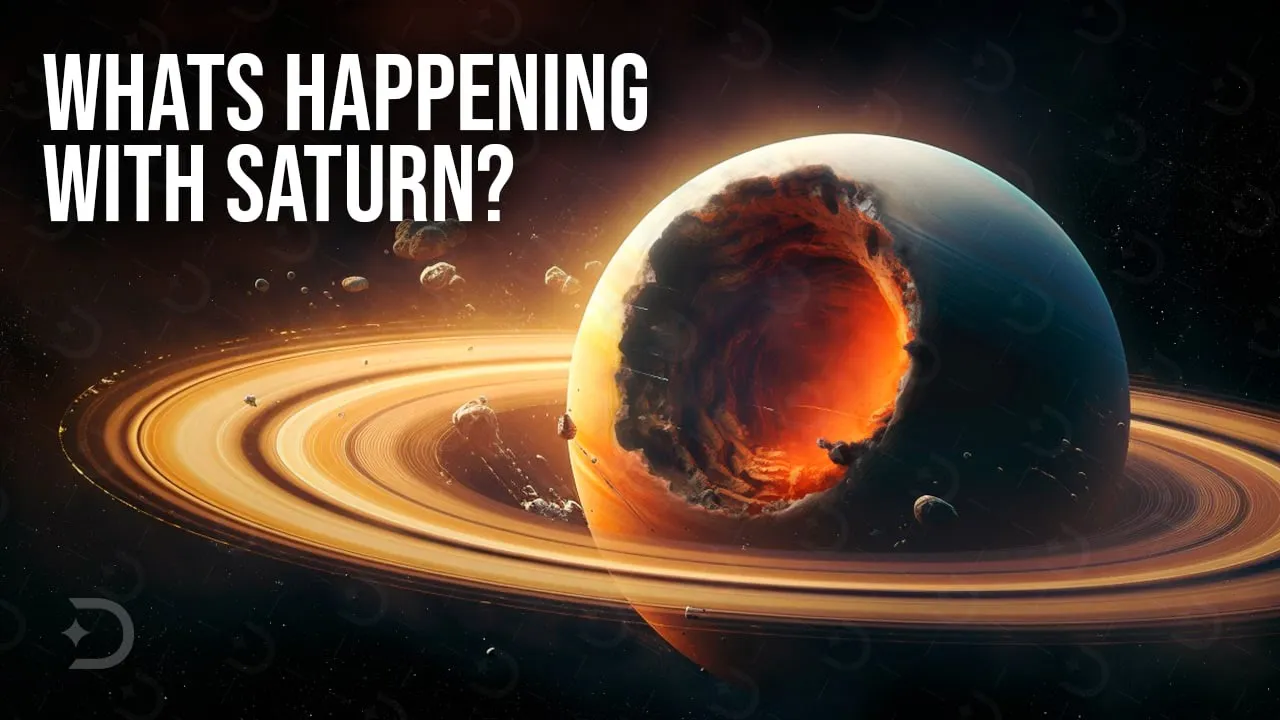
deep within the solar system some 880 Million Miles Away From Earth a baffling World Spins gracefully that has captivated the hearts and minds of astronomers for centuries welcome to the enigmatic realm of Saturn the gas giant is full of secrets from an artificially looking hexagonal pattern at its North Pole to mysterious downpours falling on Saturn from space and just recently scientists noticed something weird was happening to Saturn's rings which made them worry about our Cosmic neighbor in the very distant future whoever inhabits Earth will not see Saturn's Majestic rings but why do astronomers think they're about to disappear and what are these strange things moving along Saturn's rings foreign the first close-up images of Saturn captured by the Pioneer 11 spacecraft in 1979 marked the beginning of our journey towards understanding this Celestial giant but it wasn't until the arrival of the Cassini mission in 2004 that scientists started to reveal the true wonders of this ringed world as we continue studying Saturn occasionally the planet unveils its Secrets demonstrating how much we still don't know about its intricate nature Saturn is the Solar System's second largest planet and it has a core about half the planet's radius which weighs around 12 to 20 times the mass of Earth however the amazing thing is that it would float in water if you had a big enough Reservoir to hold it this is because the gas Giant's density is about 0. 687 grams per cubic centimeter which makes Saturn the least dense amongst the planets of the solar system but it's not just that while most other planets orbiting the Sun appear as nearly perfect spheres Saturn is the flattest of them all its orbital period is approximately 10. 5 hours and it spins remarkably fast which makes the gas giant bulge at its equator and flatten at its poles the ringed planet measures approximately 75 000 miles in diameter at its equator and spans around 68 000 miles from one pole to the other Saturn's distinctive yellow and gold bands visible from Earth are caused by Superfast winds in its upper atmosphere that reach an incredible 1100 miles per hour but if you were to closely observe the sixth planet you'd spot something truly bizarre a colossal hexagon pattern spanning about 20 000 miles in diameter or inspiring hexagon with its immense proportions might initially give the impression of an intricately crafted megastructure adding to its mystery the pattern is transitioning from a bluish shade to a golden hue cassini's high resolution images were carefully compiled to produce a breathtaking animation revealing this phenomenon in vibrant color for the very first time within the swirling Vortex of the hexagon located at Saturn's North Pole a colossal hurricane takes place in the Middle with an eye that surpasses Earth hurricanes by a staggering 50 percent reddish vortices are scattered all around the hurricane together they swirl in harmony with the counterclockwise motion of the hexagonal jet stream inside the hexagon there's a notable difference in the composition of particles compared to outside within the hexagon smaller Haze particles are abundant while larger particles are scarce and outside the hexagon the situation is reversed one of the most intriguing specs of this six-sided storm is its resilience while hurricanes on Earth last merely a week this remarkable hexagon has endured for decades or perhaps even centuries so how does a monster storm like this form computer simulation revealed an intriguing phenomenon known as deep thermal convection when heat is transferred through fluid or gas movement it can generate atmospheric flows that result in the formation of large polar Cyclones and an Eastward jet pattern at high latitudes as these atmospheric features combine near the planet's upper regions they give rise to the unexpected and distinctive hexagonal shape observed at Saturn's North Pole and the hexagon's persistence is the result of all these storms forming deep within the planet thousands of miles below the cloud tops scientists don't know of any other storm like this to exist anywhere in the universe Saturn's hexagons are a demonstration of the wonders of our universe is capable of but it's not the only intriguing feature the planet has to offer when looking through voyager's data scientists noticed something odd mysterious spokes across the planet's rings but then something even stranger was discovered during the Cassini Mission no signs of these ghost-like features were detected deepening the mystery behind this unexplained phenomenon the closer observation revealed that the spokes generally have a dark appearance when viewed from above however when observed From Below they tend to appear bright researchers still don't know for certain what causes these mysterious streaks but we do know that they re-emerge seasonally during Saturn's spring and fall just like here on our planet there are four seasons on Saturn but each of Saturn's Seasons last approximately seven earth years the spokes are hypothesized to originate from dust particles in the rings that separate from Icy chunks and Float independently Above the Rest of the icy Boulders and it might be Saturn's magnetic field that causes this when the solar wind interacts with Saturn's genetic field it creates an electrically charged environment this environment can influence the behavior of the charge dust particles making them stick together temporarily and form denser patches within the Rings although other Giants in our solar system also have rings such Iranian rings are the largest and most distinguishable The Seven Rings were named in the order of their Discovery positioned along Saturn's equator the Rings begin approximately 4 300 miles from the planet's core and stretch outward for a staggering distance the e-ring alone encompasses a distance of about 75 000 miles to 260 000 miles to give you a sense of scale imagine a road extending across the entire length of Saturn's e-ring from its outer wisps to the inner boundary if you were to drive continuously at a speed of 100 miles per hour it would take over 2.
5 months to travel from one end of the road to the other and if you take into account the tenuous Phoebe ring it extends approximately 100 to 270 times the radius of Saturn much like the distinctive shape of the planet itself Saturn's rings are incredibly flat detailed observations indicate that while certain area the Rings can reach a thickness of approximately 0. 6 miles the main rings are astonishingly slender measuring a mere 32 feet in thickness Saturn's ring particles have a wide size range spanning from minuscule icy grains resembling dust to substantial fragments comparable in size to houses and there are even a few exceptional particles that reach Dimensions the magnitude of mountains but we didn't always know about Saturn's rings nearly four centuries ago when Galileo first directed his telescope towards Saturn he described the gas giant planet as having ears or handles which were in fact the elongated bulges that we now recognize and Saturn's magnificent rings with his modest telescope Galileo could not discern the intricate details of the Rings leading him to mistake them for large celestial bodies positioned on either side of the planet today we think we know almost everything there is to know about the mighty rings of the sixth planet but it continues to shatter our expectations the particles within Saturn's rings which are almost entirely water ice are engaged in a delicate equilibrium between two opposing forces Saturn's gravitational pull attracts them towards the planet and their orbital velocity strives to propel them outward into space scientists have long wondered whether the planet evolved with its rings and the latest findings show Saturn hasn't always had this peculiar feature for more than 90 of the gas Giant's lifespan the planet had no rings so how and when did they form one possibility is that the Rings originated later in the planet's existence when small icy moons orbiting Saturn collided with each other these collisions might have been triggered by the gravitational influence of passing asteroids or comets a 2016 study proposed another intriguing idea that the Rings could be the remnants of dwarf planets this Theory suggests that these dwarf planets which met their demise in the distant past now exists as the enigmatic Rings encircling Saturn or it could have just been one large Moon that collided with Saturn's largest satellite Titan in the past scientists have identified a potential Moon called Chrysalis that existed before Saturn's rings formed through computer simulations they found that Chrysalis was similar in size to Saturn's third largest moon iapetus in the past Saturn and Neptune's gravitational interaction caused the ringed planet's axis to tilt and wobble in sync with Neptune's orbit leading to the changing angles at which we observe Saturn rings Titan exerts its gravity on the planet and moves away from it rapidly while our moon also moves away from Earth but at a slower pace around 100 to 200 million years ago Titan and Chrysalis entered into a resonance and as Titan migrated outward the gravitational forces destabilized chrysalis's orbit that caused Chrysalis to approach Saturn and get torn apart by its gravity nearly 99 of Chrysalis was absorbed by the gas giant and the remaining one percent left behind the stunning ring system we see today according to a recent study the age of Saturn's rings is approximately 100 to 400 million years but their existence May soon come to an end a true Celestial Marvel causes Saturn's Majestic rings to melt away and in another 100 or so million years they will disappear under the influence of the sun's radiation or plasma clouds caused by Space Rock impacts the dust particles of saturian rings sometimes become electrically charged and Disturbed when this happens the dust particles bind to Saturn's magnetic field which then draws them inward toward the gas Giant's upper atmosphere as the gas giant orbits the sun the planet and its rings tilt which changes the amount of the radiation output on its inner ring layers and affects the intensity of the icy ring rain NASA says the sixth planet's ring system is depleting at an extremely fast rate it's estimated that every 30 minutes it loses an Olympic swimming pool volume of water and just recently after four Decades of research scientists have revealed the Cascade of ring rain pouring down onto Saturn has an impact on the planet's atmosphere every passing second an astounding amount of up to six thousand pounds of icy particles previously bombarded by solar ultraviolet radiation gracefully descend onto the planet as these particles make their atmospheric Journey their accumulated energy is transferred to the surrounding environment through collisions with other particles this energetic exchange contributes to Saturn's atmospheric Heating and may cause glowing bands in the planet's northern and southern hemispheres but it's not the only rain there is on Saturn Enceladus a moon of Saturn shoots Jets of water ice into space from its underground ocean some of these tiny particles are influenced by Saturn's magnetic field and gravitational forces causing them to rain down onto the gas Giant's atmosphere this phenomenon is known as the moon rain Saturn's ring rain is a cocktail of chemicals including some organic compounds it consists of water butane propane methane ammonia carbon monoxide carbon dioxide and molecular nitrogen in the future this cocktail could change the oxygen and carbon amounts in the gas Giant's atmosphere this alone isn't enough for any life to emerge on Saturn but what about its moons [Music] just recently Saturn once again became the king of moons of the solar system 62 new satellites have been found orbiting the ringed planet which adds up to a total of 145 moons but to scientists particularly intriguing a Titan and Enceladus both of these satellites possess at least one essential ingredient for Life Titan is known for its thick atmosphere and abundant organic molecules including complex hydrocarbons which are considered building blocks for Life while Enceladus has a subsurface ocean of liquid water making it a promising candidate for hosting life or supporting the conditions necessary for life to exist Titan possesses a dense atmosphere resembling that of a planet similar to Earth its atmosphere is predominantly composed of nitrogen additionally Titan has rivers lakes and seas on its surface however unlike Earth's water-filled bodies tightened liquid reservoirs consist of methane and ethane methane is a compound associated with the metabolic processes of many organisms serving as a source of energy although it's highly improbable that the lipid-based membrane is crucial for sustaining life on our planet would endure Titans inhospitable conditions such as its freezing temperatures of about minus 290 degrees Fahrenheit however scientists have proposed an alternative possibility involving a molecule called acrylonitrile one of the unique properties of acrylic nitrile is that it's potentially capable to form stable and flexible structures like cell membranes forming a thin sheet-like material this sheet could then shape into a small Hollow sphere called an exotosome similar to lipid bilayers these exotosomes could act as microscopic containers for storage and transportation purposes what's fascinating the alma Observatory is detected significant amounts of acrylic nitrile molecules in Titan's atmosphere up to 2.



![Voyage Beyond the Solar System [4K]](https://img.youtube.com/vi/ZzglosGjrlM/maxresdefault.jpg)