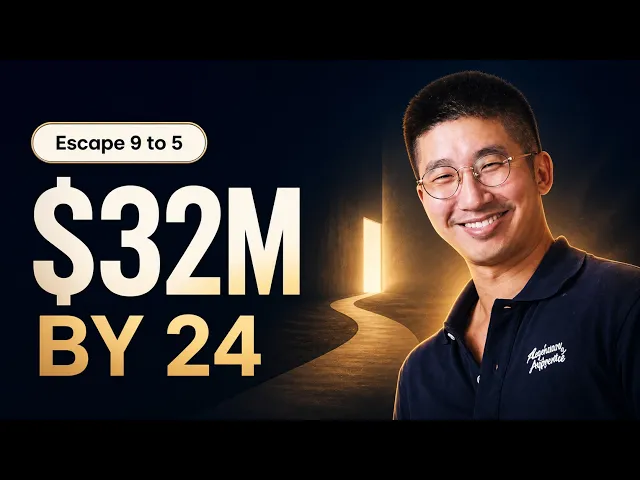
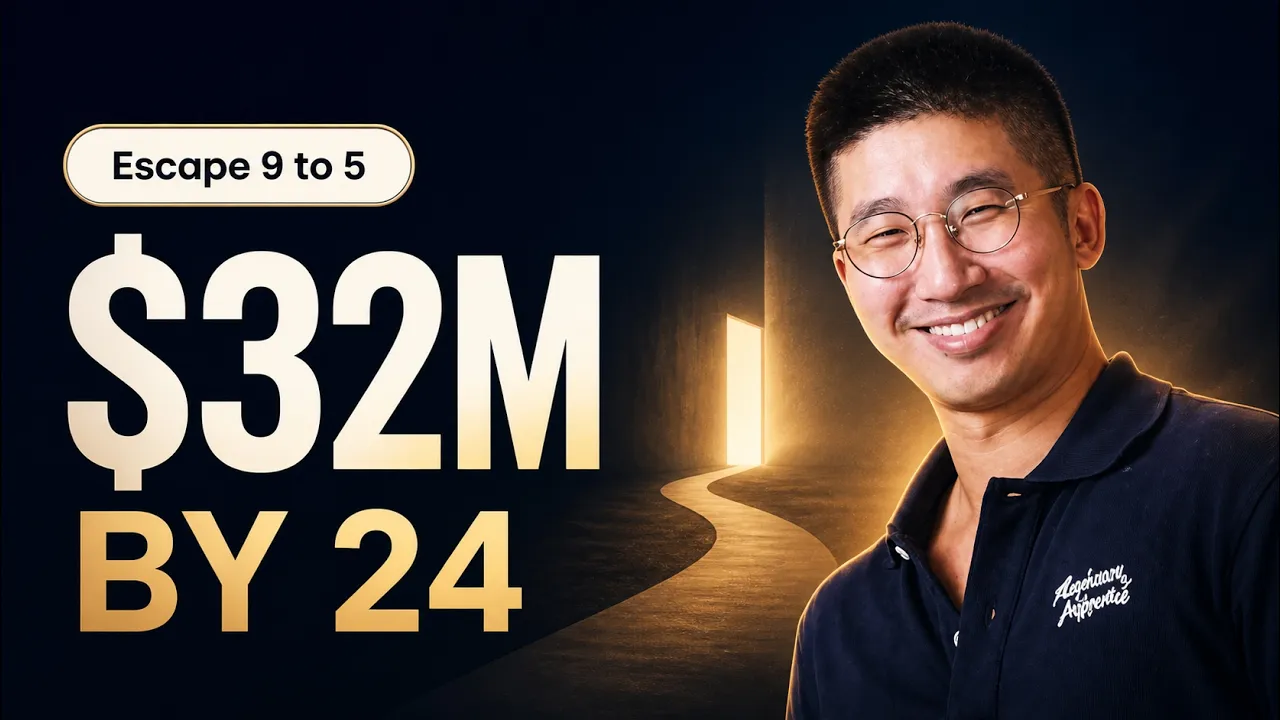
And I was flown out via a private jet. Imagine flying private at the age of 19, pitch your Fortune 500 clients when your friends are still finishing uni. Ryan Wong was the youngest startup founder who has ever raised venture capital. He started his own company at the age of 19 and raised more than 30 million before turning 25. But this is not just a story about early success. It's about ambition, identity, and growing up under The quiet pressure of traditional Asian parenting. If I didn't graduate, it would obviously dishonor my name, my family, everything. The
one that's closest to my heart is still what's your superpower? You don't judge a fish by how well it climbs a tree. So, at that point, I did feel like a fish trying to climb a tree in Vancouver. And in San Francisco, I felt more like a fish in an ocean. For your entire career, if you've only been doing 9 to5, you were given a Very limited view of how your cog worked in a machine. And in fact, you were probably convinced through a lot of unintentional, I would say, propaganda that your cog was the
most valuable cog or that your cog is one that if you let go of, your life is going to fall apart and you have to hang on to it for dear life, right? All of that is false. You starting your own company is more job security. Frankly, if you ever felt too young, too stuck, or too late to break This rip, this one is for you. This is Escape 95 and today we have the honor to host Brian W. Let's dive in. [Music] Welcome to the show, Brian. So nice to meet you. Thanks for having
me. I've been following you for a bit on LinkedIn. I know that you have 600,000 followers on LinkedIn. I go back and did some research and saw that you have raised um more than 30 million when you started your own company at the age of 19. And this podcast, the name is called Escape 9 to5. Usually I interview people who have escaped 9 to5 and I usually started with an icebreaker. It's called true truth and a lie. So I want you to tell me two truths and one lie about your entrepreneurial journey and then I'll
try to guess which one is a lie. Sure. Okay. I've started four companies in my life. That's one of them. I have been invited To a private dinner in the Caesar's Palace by the CMO of Caesars via their private jet when they opened up their most recent hotel brand and I my companies have all been acquired. I'm going to guess that you started three company. I said four. Yeah. Um cuz I was going to guess that's the lie. Okay, then that's not lie. I think the second one is the lie because there's too much detail.
No, the third one's a lie. They they have definitely not all been Acquired. That that's So you have started for a company and I did. Yeah. And which and I was flown out via a private jet. It was very bougie. It was over the top, but it was years and years ago. And this was when they launched their Nou brand. So that's how old it was. But that was quite an experience. They had a theory that young people were going to be the market for, you know, gambling products and new experiences in Vegas, which is
partially true, but Unfortunately wasn't the best thesis. And then, yeah, not all of my companies have been acquired, obviously. I know one of your most famous companies, Keep, and I just started reading your book, The Cheat Cole. So, the Chico feels like a manifesto for outsiders. What inspired you to codify these sheets and which one feels more personal to your story or all of them are very personal to your story? Well, I remember creating this because I had a lot of people curious about what Helped the rapid kind of rise in the entrepreneurial sphere of
what I was doing with Keep. And I think at the time, cuz the book is quite old now. It's 2016, 2017. There was a lot of people and a lot of media focusing on youth and why someone being young was was actually remarkable. Years later, I feel like age may not necessarily be the highlight of most people and why the media likes to give them attention. I think now it's it's come down to a few More factors. But at the time, obviously, age was fascinating. So, I was like, let me put this down into a
book. So, I I started writing that down. And I think the main goal of this was to give people the motivation that anyone could do it and and relatively quickly because a lot of the mental tricks that we play on ourselves is that something takes a lot. It feels like it takes longer, feels like it's a lot of effort when in reality you don't really need to Do that much, right? There's a huge section in there as you know about cold emailing about just going for it and doing it. If you want to do it,
just do it. Like I had a friend call me yesterday debating if he was going to take another job or start another company. is that you're not going to know if you're going to want to start a company until you actually start the company. So, you kind of have to have this mindset of like doing it and then You realize you like to do it. It's very similar to working out, right? Before you go to the gym, the thought of, well, I got to put on my gym clothes. I got to put my gym bag.
I got to walk to the gym. I got to like deal with the, you know, locker room. And then maybe the gym is going to be crowded, whatever. But then when you start working out, you're like, "Oh my god, this is amazing. Like, I should have done this. Why was I putting all this mental Stuff?" So that's kind of the comparison that I like to bring up. And the one that's closest to my heart is still what's your superpower because that is the hallmark cheat code. It's not really a cheat code. It's more like a
mindset of focusing on your strengths. I think a lot of people do like to look at the things they're not good at and be like, well, I'm not an AI engineer. I need to build an AI thing. That's a whole another topic, by the way, of why you Shouldn't be doing that. But then be like, oh, I got to I got to work on my AI stuff. Like, no. What is your strength? Like what are you naturally very good at already? Where did you come from? What was your career? Let's say you were a real
estate broker for a decade and then you decided you wanted to be a startup founder. Well, what about your 10 years that you spent being a broker taught you uh that you could probably solve as a as as a company, a Company that that attacks a solution that actually is a need. And then use that history, use that background, use the things that you already have built up rather than trying to reinvent yourself every single time. You know what pains me is when a founder comes to me and goes, "You know what? I'm going to
do a robotics you know, pet company. And I'm like, wait, have you done anything in robotics? Do you even own a pet? Right? It doesn't make any sense. Why would you do that? Is your co-founder like the, you know, one of the co-founders of Boston Dynamics? Then yeah, that makes sense. Unless they were, it doesn't make any sense. So, just pay attention to your past. Exactly. I I have come across situations like this so much because for me, it's relatively new. I'm a new I'm a first-time founder and I spent 10 years in investment banks
and then I figured that my unfair advantage one is I have Built up all this network in debt financing structure finance and investment bank and then I by chance also cover climate technology companies. So then I just want to put those two together. I'm still figuring out right and one of the other things I'm trying to do is having conversations like this is because I don't have role models. All my all my friends my family I'm very traditional Chinese family. Nobody started a business uh when they're 19 Like you. I just by chance have this
podcast as like a platform to reach out to people listening to the stories that you're going to share with me and also at the same time share the stories with other people who are kind of stuck in their 9 to5 journey. So that's that's the genesis of this uh podcast. You tap into this idea of age like back in 2015 people pay attention to age a lot. I want to double click on that because you graduating uh at 18, you skipped four Grades and starting a new company at 19, you were in boardrooms like while
your friends maybe in still in university. How did being the youngest in the room reshape your relationship with ambition and success? Yeah, I always wanted to be out there again. I also had this conversation yesterday with my therapist, which is this whole idea of like my itchiness to be in the real world cuz I realized just how almost intentionally sequestering the school Environment was, right? It it almost is like you're you're separated from the real world on purpose. For better or for worse, you're on a campus. I mean, there's some campuses that are immersed with
the cities they're in, like NYU, which is why I think NYU has an advantage sometimes. But like where I went, which was UBC, University of British Columbia, the campus is literally, you know, kilometers away from the from the city. And I realized With certain subjects that's necessary, right? If you're building in a comfortable environment with the right equipment and you're in a lab and you need that equipment, it makes sense. But in business, it's hard because you have to actually see what's going on. And so I wanted to get out there. And also with traditional
Asian parents, not that they were forcing me that much cuz I was the one who decided to skip ahead. I realized that if I didn't graduate, it Would obviously dishonor my name, my family, everything. So graduating was like the key. But then once I got out, I was like, okay, why don't I start doing things? And going to environments that were the most conducive to my strengths. So, having been in tech while I was in school, I was building websites and I was learning coding and I was learning how to do brand design to to
front-end design to as many different types of technical base skills I would try to Accumulate. And I I was teaching myself this all on my own. I didn't I didn't take any classes for that stuff. I realized that being in San Francisco or being in the valley was the place to learn better and be around people who had the same mindset. And so, you know, I like to always say you don't judge a fish by how well it climbs a tree. So, at that point, I did feel like a fish trying to climb a tree
in Vancouver. And in in San Francisco, I felt more like a Fish in in in an ocean. And so, it definitely felt a bit more comfortable. So, I think early on being in these rooms didn't really feel that unnatural. It actually was very entertaining because people found me a novelty and would give me the attention, which was also counterintuitive to a lot of what people would think. People think that because they're younger, they're not taken seriously. That may be true, but if you have found your way into a room Where you don't actually feel like
you're invited or belong, you're most likely to be taken even more seriously because they will recognize, oh, you got into this room. That must mean that there's something you have to say that's important. And I actually found myself them taking a lot of what I was saying a bit too seriously. I was like, whoa, whoa, whoa, whoa. I don't think don't even don't take that advice. I mean, I just came up with that out of thin air. Not you have been doing this for 30, 40, 50 years. Why are you taking my advice seriously? But
it also happened to come in the right time. It was around the time when a lot of pretty revolutionary companies were coming out of the valley and they knew that the disruption was real that they entire industries were being upended that the Airbnb effect the Uber effect was real. So they were like well if I'm at a big company I better be listening to people like this guy and so It was actually really fun to be in those kinds of rooms. There are so many follow-up questions I want to ask. versus you mentioned your parents.
I assume because you make your own decision at a very young age. So there's less uh resistance from your parents when you say that I'm going to go build my own company. And then my cousin is actually studying in NYU right now. He's doing his master degree. He's like 25. I remember last year I went to him. He's Like, "Oh, I actually wanted to start a company with my friends, but I feel like I need to do a PhD to give an answer to my parents." So those two points I what would you say to
my cousin if you know him? I don't know people's you know detailed situations but I would say at some point you have to break free. You have to kind of train your parents to realize that you're your own person. The way that we all do it is different. Right? For me it was going far away, Right? It was leaving home and not being next to them. And it pains me. It pains them these days because they're older and I wasn't home for the last 16 years and they are now in their 70s. So the price
that we paid was intentionally training them to not be so in my stuff and they can't help it, right? It's not that they're doing it on purpose to be a menace. They're doing it because they're your parents and they obviously love you and care about you very much. And then I Would say that Asian parents they're and I'm generalizing of course so it's different I'm sure person to person but they only want the best for us and they want us to succeed. So if you prove to them that you can do that in another method,
there's no resistance, right? So obviously when I published the book and when I started the company, raised the first round, it was very clear to them that something was going on that was worth them waiting and seeing instead of Trying to interrupt, right? But you know, still to this day, you know, those jokes that we have when we have family dinners of whether or not I should have gone and gotten an MBA or whatever, maybe life would have turned out differently. But it's you have to train them. I went on an exchange to Singapore actually
partially because I wanted to get away from Canada and see what it was like to live in Asia and Singapore felt like a nice happy medium because it Wasn't like fully Chinese and it wasn't fully western which was great. I loved it there. But I also did it so that I would get my parents used to the fact that I wouldn't be home all the time. And that I think was the first trip that gave me a bit more freedom and also proved to them that I had the chops to live my own life and
not be like dead in a ditch somewhere, right? Which is always their worry like, "Oh, we're not there all the time providing for you and Doing all this stuff. Are you going to be able to like survive?" Yes. Which obviously you can survive anywhere. Humans are pretty resilient. As long as you have half a brain cell, you're going to be fine. Yeah. just at the past 10 minutes of the conversation with you. I can feel that like you're definitely very confident in your own self and the ideas that you share resonate with with you a
lot because I also stay away from my family for the past 15 years or so. I First took the chance to go to US to study and then now I'm living in London. My family is in Guangjo in China. So I actually trained them for to be comfortable about the idea that I'm not there with them. I think the difficult part is when you're still trying to figure it out. is more like whether we have this confidence to take the risk that maybe we'll fail but I gain some skills and knowledge and network and conversations
that's better than the Other path around at the end of the day it's like do you want to break the cycle do you want to take comm command and control of your own life and the risk takingaking is all on you it's still your own life right you don't live your life for others and that's a hard concept I think to to put put your hands around when you're in an Asian household. Yeah. Yeah. Exactly. Like a lot of my listeners or my friends there in a traditional 9 to5. I believe you you must have
those friends too. And I'm a millennial. You're a millennial. They might feel a little bit too late now. How should a 19year-old and a 39year-old founder navigate society's age biases or like take the way ahead? I think you just have to get it out of your own head. No one really cares how old you are. It's all about the mindset. And it's not like you wear your age on your forehead, right? And you walk around and it's Like, "Oh, oh god, you're 42. You're you're over the hill. You suck now. Like, I'm not going to
work with you." That's not how it works. Like, if you There are many people that you'll work with, I'm sure, that pop into a meeting or boardroom and you're like, "Wow, this person is very youthful. Their energy just feels different. Their mindset is different. They're curious." There's hallmarks of youth that that surpass age physically. One is curiosity and wonder. The other is constant learning, right? The other is respect and admiration for others and what they have, whatever it might it might be. And the last is the desire to to innovate and do something new and
build. Those are all youthful characteristics. And they're all very easy to say, tough to do. And I have to reiterate this. It comes with habits that you build. You don't just wake up in the morning and go, "Oh, I'm going to be curious and and full of wonder." No, You can't. Like, you just can't. What you can do is start going to museums, which I talk about in my book. What you can do is start going to new cities and actually going to new things and not just doing the thing you're used to, right? And
you can start talking to people like you're doing that can rub off on you time and time again. It's not going to happen in one conversation. It's going to happen over a a thousand conversations. It can come from going to A city and not just staying at home and ordering Uber Eats every day, but going out to cafes and bars and parties and events and friends events and things like that and just being open. I think the second you're closed off to new ideas and new opportunities is when you become old. Yeah. Yeah. Exactly. I
totally get what you're saying. One of my boss, he's also a Chinese, but he spent a lot of his years in the US. He's 55. He still has that youthful look in His eyes. So whenever I talked about something new, he's like, but don't worry, I would Google it. It's very different from somebody who's maybe is just in their late 30s and they were like, I don't I don't want to touch anything new. So I And if this is about if the goal here is to shed some light on how 9 to5 can be either
changed or modified or, you know, you can move into a new chapter of your life that goes beyond it. I think it's a mindset thing. You know, I I have a lot of friends that have a lot of real responsibilities, kids, wives, husbands, parents. So, realistically, just leaving is not exactly the most easy, which I understand. But I have to remind people 9 to5 is only 8 hours, right? It's only 8 hours. And yes, then people can complain be like, "Oh, but I get tired afterwards and blah blah blah." I said, "That's fine. Figure out
a way to use the remaining hours in the day, right? The remaining 16 hours of the day for the record, right? That allow you to do whatever else you want and then use that time to get used to it. You might only take 2 hours, 3 hours after work to do something or maybe after you put the kids to bed, you have a couple hours and then your your your partner or whatever gives you that freedom to do it and I hope they do. that allows you to start trying new things. And slowly but surely,
you maybe stop going to this Routine you have that might be watching four episodes of Singles Inferno every night and instead you you actually start building something or architecting something. I I think TV is a perfect example of something to attack and I will cuz I don't own a TV. I've never owned a TV, believe it or not. Uh since I left home at the age of 18, I've never owned a television. First reason was because I couldn't afford it when I first moved down to the States. But the Second look because you you pay
for the subscription and you pay for the TV. It makes no sense. And then I after a while I was just like even when I could afford it, I was like this sounds like a huge waste of time. Instead I would rather just pick up a book. I would rather start architecting like I have like a whole stack of books that just like waiting to be read. Like I I I just there's always stuff I'm so curious and I'm always reading. But like I said, if It's about ideas, you can start building something. It could
be reaching out to your first five potential customers. It could be reaching out to somebody on on Upwork to build it. It could be going on cursor AI and learning how to build an app and now that you have AI to do it for you. I mean, there's so many things you can be doing during those hours. So, there's no excuse. And then slowly but surely through the habits, you can figure out what looking like breaking Out of the 9 to5 looks looks like, right? That's that's the key. It's it's not just like I want
to like quit my job and everything's going to figure itself out. You have to get yourself used to doing it and then learning it too. So the last thing I'll say on this for your entire career if you've only been doing 9 to5 you were given a very limited view of how your cog worked in a machine and in fact you were probably convinced through a lot of unintentional I would Say propaganda that your cog was the most valuable cog or that your cog is one that if you let go of your life is going
to fall apart and you have to hang on to it for dear life. Right? All of that is false. Right? It is not true. You are completely replaceable. Every major corporation is designed to keep you pacified and repetitive and satisfied only. So much so, right? Cuz if you're too satisfied, you become complacent. If you're not satisfied, Then you'll leave. So, they kind of figure out this way to keep you on the hook. As perfect as the system sounds, whether it be your 4K, whether it be your bonus, whether it be your, you know, I'm sure
you've heard it all, right? Oh, if I stay until the end of the year, I get my bonus. You know, my stock options, don't vest after this, that they figure out ways to do this. It's really, really quite clever. But you have this opportunity to just suck It, right? Like this stuff doesn't really need to be there in my life in order for me to be complete and understanding the bigger picture. So, this is why forcing yourself to start something from scratch. Let's say you wanted to sell hand cream and this was something that you're
passionate about. Shopify, creating a bank account, and in these days you can just do a neo bank account takes you 5 seconds, buying a URL, hiring a designer, going on again Chat GPT or whatever, building out the copy, you so many just do it. It doesn't matter if it's you get five sales. Even if you beg your friends to buy, I don't care. The point is at least you figured it out and you go, "Oh, wow. Now I know what revenues and my cost of goods and my fixed costs and my labor costs and my
transaction costs and my customer retention and my customer acquisition and like how the journey works and then after they buy how do I get them coming Back and then you learn all these things. Okay. Wow. These are the fundamentals of business. And you start realizing where you were in that cog because every business operates pretty much largely the same principally. And then you know where you were, right? You said you were investment banking or you were creating structured products and and helping with um the potential and and whatever it was, right? you were in what
I would call the transaction period Of a company which was like when it was ready to be bought and sold or when it was ready to be funded or there was a new stage in growth and and there were people who were betting on it or had a predatorial mindset and wanted to come in at a cheaper price and then take it over and then rehabilitate the company and sell it for higher and it was all about betting. Frankly, your business was about an educated bet as sometimes more risky than others, sometimes less Risky, but
then you understood that the fundamentals of what made a company worth betting on or worth pushing down on a valuation. And you kind of got to see it on a macro basis. But the one thing maybe that was hard to see was the the culture, the people, the history, the things that built the softer sides of the business. I'm sure you guys had interviews and facetime with some of these guys, but as an analyst sometimes and I find this and I don't know how Senior we were, they don't get that facetime. So, I actually actually
have friends who are investment banking analysts that are looking purely at the numbers and I I asked them like, do you know though personalitywise why this happened? Why do you think the history of this company played out the way the way it was? And if you look into the history of the founders, you look into the the story, it's very easy to figure out because there's usually another Reason that's not just the financial statements you see. But that's again all the nuance that you start to figure out once you step take a step back. Um,
and that's all very valuable stuff. I agree with you. I was a VP before I left banking. I've had my fair share of never get facetime of whatsoever nothing. And when you start to talk to the founders, you get to see they have different backstory. Some people are more relaxed about what's going on. Some people have More risk tolerance and things like that. But you see the machine too as a VP, right? like you realized that the fees that you got from the transaction and what was paid out to bonuses in your team was nothing
close. You saw the banking, you know, the banking machine. You saw that most of the senior partners had no idea what was going on, which was really good at having lunches and dinners and playing golf. Yes. And there was just this very broken system that Was perpetuated by simply people who had done it this way, right? It's always it always has to be like this. Like we're you know the partners source the deals. We do our diligence. We do our analysis. We put our decks together. We go through a process. We underwrite the deal which
is just sounds fancy terminology for our brand is already worth a lot of money because it's a 100-y old bank. And because we decided to do this deal, it's underwritten right? I mean obviously There's other factors in there from a regulatory standpoint but it's still pretty simple stuff. And then the fact that we invent these hilarious words to make things sound more fancy than it actually is proves to you again that there's so much more to the life of a business than just working with a bank. And um and and and again it takes it
takes time to step away to see it. And people are very happy being in it sometimes because it's comfortable Wrapped up in this knowledge of it being unique and supposedly fancy that you don't actually have a desire to leave it. And it's tough. It just it it does require sometimes like a come to Jesus moment. Sometimes it comes with friends inspiring you. But again, my encouragement and message in this entire time has been just habitually exposing yourself. It's like exposure therapy. Again, rather it could be reading tweets. It could be going on on news Articles.
Don't do too much of that. But exposure therapy less through reading media and doom scrolling and exposure therapy more so in just doing. The thing that really happened to me is because I got laid off twice. After the first layoff, I was very intentional and trying to get as much experience as I ever can in the job that I got in London. And after the second layoff, I'm just like the now it's been a year and a half. I've reached to the point that There's no way I'm ever going back to banking ever again because
a lot of stuff that now I can do with AI was spent they would spend two days doing it. Just sending email back and forth is one second with Chy. Now the other moment that I had is I had a conversation with my director. So I was like this will be more efficient because I told him something and he's like Lydia banking is not about being efficient and that moment I remember I was like it's Just doesn't make any sense and the layoff as you know is one of my moments and layoffs are actually quite
an important thing for people to realize because that's when you realize that the machine is a bit broken and that your needs are not the priority and it never was. And the control and stability that a 9-5 feels like it has is actually an illusion. And I tell people that you starting your own company is more job security frankly than working for Another company because you actually get to control it this time around. Not some quarterly review and some executive deciding that this team feels and not even numerically. This team just feels like extra weight
and it's time to to shed this extra weight. It had nothing to do with how well you performed. It had nothing to do with how much politicking you did to make yourself feel indispensable in the organization. It has nothing to do with your boss and How good your boss was. Nothing of none of those things could have mattered. It could have just been an analyst being like, I think, you know, we should have a chief AI officer and a AI engineering team. And all of a sudden, they have to cut a team that sounds stupid
in order to hire that other team. And boom, you're gone. Doing a nineto-five job forever is just some risky riskiest thing that one can do especially in this day and age. You Talked about the habit, right? If let's say I have a friend, they wanted they feel stuck, they wanted to leave every single day. You mentioned the exposure therapy and all the all this kind of stuff. What kind of habit they can put into place? Like I said, like start something small first and do it in their after hours and then once they feel comfortable
doing it and they start going to events for example and meeting other people with the same mindset, they Can't do it alone too, right? So that's why you should go to startup events. You should go to these hackathons. You should try to meet people at some kind of a startup event wherever you are. And there's always founder communities that you can be a part of. Whether it be events from incubators like YC or Founders Institute or Tech Stars or VCs that host events that have other founders there. These are all great places to start f
finding other people With the same mindset or even going to places that have founders that hang out a lot. Right? So in London as you know in uh shortage is a ton of startups. There's a lot of places you can go to like the so house etc etc and start to meet people with that with that mindset and then going through friends. So you you just reach out to and then you can even just do it cold. So the other thing too is starting to help founders is another way to to jump right in if
you Want to start working for a startup first. So you you can find a startup founder that you find fascinating. Reach out to them and not just say hey I want to work for you or I want a job. you actually identify a problem that you know that they might already have and then pose propose a solution to them and then and then actually even do it. You know, let's say you you you there's a a startup that you really like that's doing this and then you go into their Site and you try their app
or you do whatever and you realize that it sucks or there's a couple things in there that isn't good. If you literally just write an entire report of like three or four things you don't like and your proposed solutions and you send it to the founder, I can guarantee you you'll get hired and either as a contractor or consultant or you'll just do it for free proono and then they'll get a sense of how you work and they'll obviously Decide if they like working with you and you can decide if you like working with them
and if it all works and you end up having a job. And the other thing about a founder that wants to work with you or hire you is that he or she is actually very happy when you decide you want to start something, especially if you've been upfront with it. Most of the people that join our companies, if they don't tell me that they want to start something, it's a red flag. Like you Want them to start something because it's it's part of the mindset that makes you a better cultural fit. If you're just like,
I want to be here forever, I'd be like, wow, that that doesn't sound good at all. That sounds like you want to put yourself into another trap. And that doesn't that doesn't give me the sense that you're ambitious or curious or full of energy and wanting to try something new. So for a lot of people I think that's what you mentioned Is like what people would do is provide value first and solve a problem for other people and then just things just happen naturally and you've raised capital from and built from scratch. What do you
think most of the first time founders got wrong about momentum? It's a numbers game. You know it raising money is a numbers game. You have to find as many investors as you can and eventually one or two will believe in you. And there is a limit though because If your idea actually does suck, you may get nobody and you might just be spending your time pitching and not actually refining the idea or your approach. So that's why it's important to have other founders around you that have no incentive other than to give you honest feedback,
give you some guidance in the beginning. But there is that fine line where it's like, am I pitching a dumb idea or am I just so ahead of the curve that no one realizes how big of a Deal this is? And that's that's always the art. You you don't know. And and that's the beauty of of startups. But at some point, you should have a good sense if you're like introspecting enough to know that what you have is actually really good or you're terrible at executing it. So those are the things that are are worth
paying attention to. And fundraising is a relationship game as well. You have to remember that in the early days, none of this stuff Should be based on numbers. In fact, in early stages, when a VC or angel investor is like, "Give me your forecast or projections, anything beyond one year is dumb. It's just dumb. There's no way waste of time." Like, I've seen people in early stage drivers try to do projections until 2030. I'm like, why would you even waste time on that? That's so stupid. Like, you have no idea what's going to happen. That's
a that's a coloss in fact, that's also a negative Signal that you waste your time on something completely stupid. Nothing to do with what's going to help you get guidance. You might have an aggressive view that allows you to have a view towards the hundred million in revenue, but you don't have to map it out column by column. It makes no sense. Anyway, that's besides the point, but it's like those are the things that I find interesting is you have to realize that a lot of the art behind fundraising is The relationship building you're buil
you're creating with these these VCs. So, a lot of the the founders that come to me, they want to raise, they go like, I need to raise now. I'm going to raise a million dollars now. Introduce me to people now. I said, "Okay, the chances of me introducing you to a new investor funding you within the next few weeks or month is zero. Like basically close to zero. However, I can introduce you to a investor now that you can build a Relationship with over the next 3 to 6 months. And every month you send them
updates on how you're performing, execution results, customer feedback, big wins, big losses, and then about 6 months and six emails later, they're probably going to be like, "Oh, wow. like this person actually has the chops. They can execute. They actually are diligent. They're organized. They really mean it. This is not just some fly by night thing. They actually have a Passion towards solving this problem. And then boom. Right? And then they have the the track record view, right? And so that's why I encourage people when they first start, if you do want that money within
a month, it's too late. If you want me to introduce you to new investors now, you need to go and look at your history. Who are people you used to work with? Who was on the board of the company you used to work with? What are some executives that left that are Rich that could potentially fund you? Who is a former co-orker that went to a startup or now knows a VC or is a VC? Like people who've known you for a long time. Those are people that are more likely to help you out. I
get that. I I haven't started raising money for myself yet, but I talked to climate tech founders a lot, which most of them want to get debt financing. And I asked them, I said, "When do you think you need the money?" Like in 2026. I was like, "When Do you think you need to start a conversation?" They were like, "Maybe next year." But maybe 2026, beginning of next I was like, "No, that's too late." Build those. If you want to get that funding, that's even more difficult to convince a VC investor. And for me, I
did my Kickstarter campaign last month. I reach out to 300 people. And most of the people who back me without any reason. It's just a small amount, right? Are the people who know me the longest, Like for 10 years, 15 years, they would be like, "Yeah, sure. Lydia wants to do something. Let me help her." And I I I use that as a experiment for myself. me before me actually want me to raise around for my startup. I 100% agree with you. Yeah. And back to habit forming, you pitch enough people, even if you're pitching
your cousin or you're pitching your family friend, it's a great way to practice. Don't view any pitch as a waste of time in the early days, at Least. Obviously later on you should be more efficient, but in the early days every pitch is something you should be putting all of your energy into and learning how to frame the idea, communicate the idea and the opportunity and frankly how you contribute to making that idea even more successful. And you'll find that most people are betting on you long term. They're betting on the relationship. They're not betting
on the idea itself. Right? There's no price to Equity ratio. There's no, you know, uh multiple. There's no revenue, you know, margin number that you're trying to hit to make them feel like your re your your your your your investment is more safe. It's all about you and your potential. And to me, that is the key. And if you can build enough of a track record that people trust you and your ability to execute, that's when you start to to win people over. And it comes from multiple touch points. I can't tell you how many
Times some people have come back to me being like, "Man, I didn't heard about you doing this thing from like seven different people." That's the only reason why they started paying attention because it's not we I could tell them seven times but if seven other people around them that they trust say oh this guy's doing something interesting then they start to come to you. It has to happen like osmosis but the only way you can fabricate that you Can you can actually facilitate fabricate artificially induce this in a shorter period of time by guess what
having thousands of conversations about what you're doing with thousands of people. Yeah. And every single conversation is going to be a touch point in the future. I noticed that you care about habits a lot. If you can share like one daily habit that becomes part of your secret superpower or what how's it your day looks like? I do a lot Of time boxing. That's just my productivity style. I also keep Wednesday afternoons completely open. So I don't have any meetings. I block it out and that allows me to fill it up with things I need
to do that might have been lingering tasks from earlier in the week and then prepping for later in the week. I meditate every day. Even if it's 5 minutes, even if it's on the train, even if it's in line when I'm waiting for coffee, even if it's in the elevator Going up to my apartment, I work out every day, right? Getting um some kind of heart movement, some sweat is extremely critical cuz moving your body will change your mindset. Yes. 180 degrees, especially when you get older because, you know, as you know, I just turned
34. The idea behind habits also comes with the habit of doing things now. So if you have a task that you can finish off in five minutes and you know you have five Minutes waiting in line or in the in the Uber, do that task, right? Don't try to think about doing it too much. Just do it. Right? So for me it's like I have a list of I always have microtask lists. That's actually one thing I don't share a lot. Let's say it's like following up with this person, emailing like five people. I can
do that anywhere. I could literally be on the train and doing it, right? Just load up your your whatever app and you go bang a few words out and If you have that list of tasks ready, readily available, it's brainless. So, you'll be in the car and then just load up. Oh, yeah, there's that thing. Okay. And then when you walk and then you feel great because during that time, it's completely bridge time is what I used to call it. It's a bridging time. you you've been in in an Uber hundred thousand times now and
and you're in your own home city. So it's now you have to walk look out the window and be a Tourist. You can just look at your phone do whatever you didn't waste any time and you in fact achieved something during that time which to me is is a habit because now you're you're turning that dead time into productivity time. That's super helpful. Some uh an early guest in this podcast Matthew Digs he wrote this book called story working he also shares some kind of things like that. He's like why I was waiting for you
for this podcast I will be able to Do this task the similar thing you mentioned workout quite a lot what's your favorite workout I'm a 35 instructor I'm a 35 spinning class instructor so I actually don't do classes funnily enough I just do freestyle for usually 20 to 25 minutes at 44% resistance because it's a hit to the heart it gives you that kind of sweat it's a concentrated period of time and my trainer was like, "Go for it. At Least it's it's better than nothing." That is usually when I'm in a rush, right? I
do cardio twice a week, I do strength twice a week for an hour, and it's usually hitting different parts of the body that my trainer has to set up a routine for me. And then I do swimming once a week, and I do yoga once a week. So, it's a mix of a lot of different things. It's a different variety, so I don't feel like I'm doing the same thing every day. But why I like Pelaton is it Really is like I can do emails while I'm on Pelaton. I can, you know, if I'm not
paying attention to a class. That's exactly why I don't do the class because I have to like look at the person and do the thing. Like I'd rather just be on my email. And sometimes I'm on conference calls. I know it sounds disrespectful, but it's actually great. And we actually have a culture in the companies that I work with and in my fund that health is wealth and that health is number one. Like and and my team can be like, "Hey, I really need to go to the gym right now." That go do it. Go
do it because 30 minutes you spend in the gym and 40 minutes you spend in the gym is going to make you twice as productive. Yeah. Yeah. Yeah. Exactly. I was not always healthy and fit and then I started start to go to the gym in 2019. Then I become very fit and this just changed everything like changed the way that I view stuff, change the way that I react To setback, rejection. Have you always been fit and healthy in this way or something happened? No, it was my last company. I kind of burnt myself
uh at the the wick at both ends and was just not um was not taking care of myself. I never even knew what a bench press was until I was 27. Life always gave us this kind of signal. I couldn't even feel my muscle in my back when I was 28 and then I started working out like seriously when I was 29. Yeah. And I think it was right timing because in your 20s you are kind of like you're more resilient and then when you do get into your 30s you're like okay I feel it.
I need a healthy lower back. I need healthy spine. I needed healthy joints. I need healthy muscle mass and you have to start watching your protein and your, you know, not your calories necessarily. Just being active is helpful. I'm not working out to get buff. I'm not trying To become a bodybuilder. I'm only doing it to be healthy at the end of the day. It's the most important thing. It's not about how you look. It's about how you feel. That's correct. I don't know whether you share this a lot, but you mentioned that you burn
out in your last company. If there's a specific moment that you remember very clearly and that you are comfortable to share with us. That was a series of different moments. It was honestly just not having a handle On my own personal emotions and what was going on in my own dialogue. You know, when you have so many other people who need you and so many other things to take care of that don't involve taking care of yourself, you start to lose sense of self. You start to have this distance from your own needs and you
start to disrespect your own body. And when your body notices that you're doing that, it just starts to be weaker. And also like my therapist had had uh Created this analogy yesterday. It was like carrying around a weight on your back. Everything just takes more effort because the emotions are weighing on you. You have like an extra 30 40 lbs. So yes, you can still do it. It's not like you can't walk from point A to point B, but you still you're carrying 40, 50, 60, 70 pounds in your back, and so it's going to
tire you out more. So a lot of it was just reflected in less energy. A lot of it was reflected in Short temper, in the lack of self-compassion, your inability to think about others and being conscious of others' needs. Those things are early symbols of burnout. And I'm also the type of person who likes to nip things in the bud. Like I said, do things early. So, would I have wanted to wait until I actually burnt out and collapsed and needed to go to the hospital or, you know, had a blowup or or worse? No.
I immediately jumped to action. I started Noticing these things and said, "Okay, first of all, I need to get a routine." So, I started joining a gym, which was a great way because, you know, say like as an Asian, if you pay for something, you want the value for it. So, if I paid for the gym, I'm going to go that. I already knew that. Like, I had a gym in my building, but I was like, I'm going to pay separately because that way I'm forced to go. If I didn't pay separately, I wouldn't have
gone. Like, I already know this. This is how my motivation goes, right? And the other thing was to have humans be on my ass about this stuff, right? So now it was like my admin at the time knew that I had a gym routine and all this stuff and so we would be collaborating on these things and making sure that I would go and then classes were great because classes for yoga especially, you have to be there at a certain time and then there's like 30 other people that are There at the same time. So
what are you going to do? Like sit in the corner and play with your phone? No. Like you're going to have to do it. So like you kind of like forcing yourself to do it in the early days and now it's super easy. I show up to yoga class, phone's on do not disturb, people know I'm in yoga for the next hour and they know that I won't respond and there's nothing that urgent. Yes. That during that hour I have to like break. And I can tell you for this Last eight years that I've been
practicing yoga, I've never needed to leave a class in the middle. So there's nothing you need that's that urgent unless the world's falling apart. Even if the world's falling apart, you probably have a 30-minute grace period to finish your yoga class and do your shavasana and everything's fine. That's so true. It's It says a lot about prioritization, right? Like it's when we're look back to our design where We're burning ourselves on both sides and it's kind of easy to say, but if you go back there and you look into someone who's building their own thing
and they're like full speed ahead, how would you help them to prioritize all the different things on their plate? What would you say? Well, that's the thing. Being in your 20s is great because you're capable of doing the energy is not finite. As you get older, energy becomes more finite or I'd say energy is It's clear that it is finite. So, that's number one. Number two is you'll learn through trial and error what is a priority for you during that period of time and watch those signals, right? That's the key. It isn't that there's some
formula where it's like, oh, this is how I'm going to prioritize everything, right? If you'll learn that, okay, this thing that seemed to be so urgent because someone had told me that I had to do it by this time or or Someone set some fake deadline up and it ends up being a fake deadline. And when I say fake deadlines, they're real deadlines like tax filing your tax into the real deadline. But pretty much everything else is like a suggestion, right? Like you know, again, like think about it. Even even renewing your lease, I have
to threaten companies. My god, I have to re I was like, I am positive that your landlord wants you to keep pay and will do anything they can to keep You paying and you can negotiate with them. And in fact, waiting until the very last minute is in your favor. So, no, you do not have to answer them earlier on and in fact, you can wait till the very last minute, pop into their office and say, "Hey, you know what? I think I want to leave or I think I want to have a lower or
rent." Because for them, you just played them better than they played you. Everything is a is a suggestion in that regard. Again, like I said, they're hardcore deadlines, but then you'll realize what is a priority and what's not. Speaking of priorities, let's talk about the future. Is there any exciting projects that are coming up for you this year? Well, I am starting a a fund. I've made that now pretty public on my LinkedIn. It's called ASKI Ventures, ASCI, uh.vc. Have been just starting to raise for it. It's been very good. We've more than half the
fund committed. It's it's just been a great Time to start to show people my next sort of act and it's been it's been just amazing to see the response. And so that's something that I've been spending time on. And I also started this program as you saw on my website called the next stage which allows mostly foreign or immigrant founders and executives the chance to work with me to improve their public speaking skills and how they present themselves publicly. And I did this out of my own passion because I Realized I was very fortunate to
grow up in a western environment, be born in Canada and have the ability to communicate at a level that was consummate to the typical western executive. But others may not have had that privilege and may not have been that lucky. I'm not saying I'm better. I'm just saying that I have this ability to do it here in the environment where maybe you want to succeed in business here. And so for so those who want to Work with me on that can do that now and apply through that program on brainwong.co. And then yeah, if you're
a founder, you're raising and you're early stage and you want some guidance, definitely reach out to me at brianwong.co or asky.vc. Each either one's fine. Uh my chief of staff Sarah and I would love to meet you. And that's it. Yeah, we'll put all of those in the show notes and the link. We have a lightning round coming up. Are you Ready? What's one recent book or podcast that has influenced your thinking? Well, there was a book I just finished well a few months ago. It was about Genghaskhan and it was a very fascinating take
on his life that shattered the preconceived notions of him being a tyrant, a a a pillager, a power- hungry megalomaniac, and in fact painted a picture of him being quite innovative in creating the Silk Road, a protected trade route. He had been one of the first to promote Women to power. He had been one of the first to create tax benefits for the clergy and for academia and he had created a ton of innovative government mechanisms that really to this day uh have formed even western view on power. In fact, the word huray is Mongolian
and came from the con era which was amazing for me to learn through that book. So that book was incredible and I don't really listen to podcasts as much. Okay. What's one AI Tool you use daily and how does it supercharge your workflow? I mean, everybody uses chat GBT. I use chat GBT almost daily, not every day. I would say over reliance on on AI is a bit of a dangerous thing and it's worth watching yourself so that you don't end up losing sense of how you think. I think it becomes lazy to rely on
something if it's like a crutch. Again, there's things that you can do with chat GBT that are great, like manual labor tasks, But there's a reason why humans are still on this planet. Otherwise, if we were useless and the AGI truly had come out, the machines would have decided that we would have been useless and would have gotten rid of us already. So, there's a reason why humans exist and uh you should definitely preserve your humanity as a result of that. Yeah, preserve that muscle memory. What's a fun fact about you that most people don't
know? I still play ice hockey Every week. If you can have dinner with any historical figure, who would that be and why? Genghask Khan for the aforementioned reasons. Best and worst career advice you've ever received. Follow your passion. That's the best one. The worst one. The best and worst. Interesting take. Okay, we have a closing tradition is that uh the previous guest has left a question for you. So his question is about your stance on something very core to your Identity. What's a valid argument against it? Age, right? It was part of it. Now I'm
older. The valid argument is time has passed and you can't rely on that crutch and you being young is not a factor that you can use anymore. So what do you have left that is worth paying attention to? Wow, great answer. Can you please leave a question for the next guest? Yeah, I think it would be like why are you motivated every morning? What gets you out of bed? And your Answer cannot include your wife or your husband or your kids. What a great question. Thank you so much for coming to the show, Brian. I
I really really enjoyed the conversation. I hope you do, too. And for people who want to follow your work, we'll put a link down below. And it's a pleasure to have you. Thanks for having me, Leah. Thank you so much, Brian. Bye. So, that's another episode of Escape 9 to5. Escape 9 to5 is my way to help people visualize and see the Stories behind those who have changed their life from a traditional 9 to5 job to a different portfolio life. If you like this video, you might resonate with this video as well. All the links
will be in the show notes and you feel free to check out if you listen to this on Apple podcast or Spotify. And if you like it, don't forget to give us a five star review. It really helps the podcast to be discovered by other people. And if you like any specific clips or mantras Or any takeaway from this video, please share with us in the comments down below. Share with your friends and family. That really, really helps the podcast. Thanks for being on this amazing journey. And until next time, I hope this episode give
you a little bit of inspiration, nudge you a little bit to do something on your own or just try something out. For the first time ever, we're here with you. We have this whole community and all the guests coming. I'll see you next time. Bye. [Music]