Human buys an orc woman's freedom for seven coins, unaware she was worth much more. The slave market in Thornhaven smelled like three things: sweat, desperation, and money changing hands. Benedict Carver had been to this market exactly once before, when he was 12 years old, holding his father's hand.
His father had told him then, "Some prices aren't measured in silver, son. Remember that," Benedict remembered. which is probably why 24 years into his life and standing in the same market that had haunted his childhood nightmares, he did something monumentally stupid.
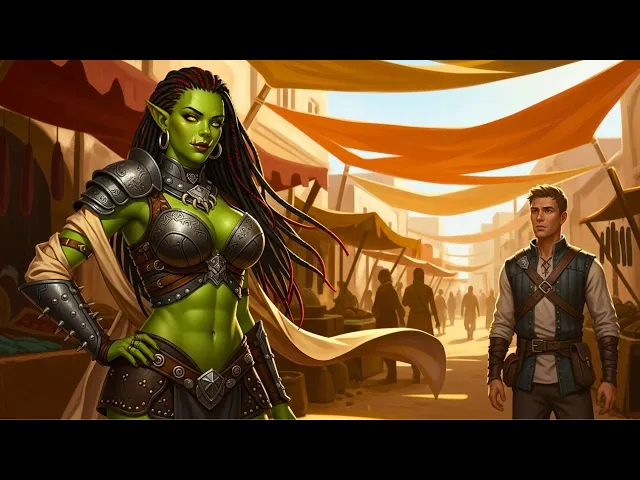
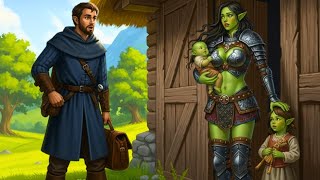
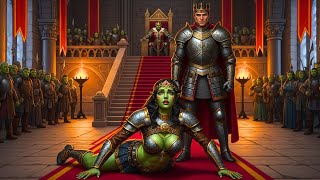
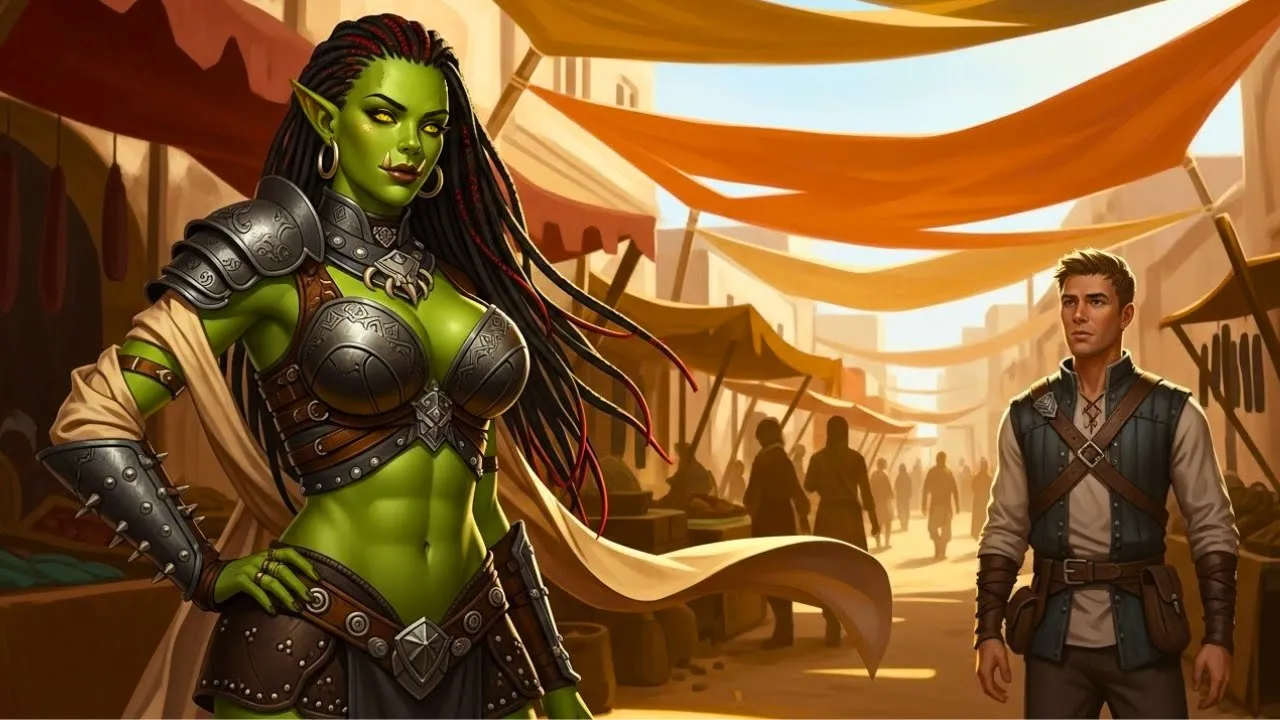
He bought a person, not just any person. An orcwoman, green skin covered in scars that looked like a map of every bad decision she'd ever made. Broken tusks, the kind of break that doesn't happen by accident.
Eyes the color of amber that looked right through you like you were made of glass. The slaver wanted seven silver coins for her. Seven.
Benedict had paid more for a decent pair of boots last month. The number was so absurdly low that it made his merchants instincts scream warnings. When something costs nothing, it's usually because it's worth less than nothing.
For it's worth so much that the seller needs it gone before someone realizes the truth. Seven coins, the slavered, scratching his belly through a tunic that had given up being white sometime during the previous administration. She don't talk, don't eat much, does what she's told.
Perfect for heavy lifting or well, whatever else you need heavy lifting for. He winked. The wink was the kind that made Benedict want to take a bath and lie.
The orc woman stood there. Just stood chained at the wrists, chained at the ankles, chained to the post behind her. Three different kinds of restrained like whoever had put her there expected her to turn into a tornado at any moment.
She didn't look at Benedict. Didn't look at anyone. Her eyes were fixed on something in the middle distance that probably wasn't even there.
I'll take her, Benedict heard himself say. The words came out before his brain had time to file the appropriate objections. Jasper the coin, a rival merchant who'd been browsing the merchandise with the enthusiasm of someone shopping for particularly ugly furniture, burst into laughter.
It was the kind of laugh that started in his belly and worked its way up through his chest like he was evacuating demons. Seven coins for that. He clutched his sides.
Benedict, my boy, I know your father's business went under, but I didn't realize you'd lost your mind along with it. The coins in Jasper's pocket clinkedked and clattered as he laughed. Nervous habit, always counting, always calculating.
The sound followed him everywhere like tiny brass ghosts. Benedict counted out seven silver coins. They felt heavier than they should.
"Kee," he said to the slaver. "Your funeral. " The slaver shrugged, pocketing the coins faster than seemed physically possible.
He tossed Benedict a key that looked like it had been used to open everything from prison cells to wine cellers. "If she kills you in your sleep, I told you she was trouble. You told me she was docel.
" Same thing, depending on the day. Benedict unlocked the chains. They fell away with the kind of clatter that sounded like freedom or doom, depending on your perspective.
The orc woman didn't move, didn't rub her wrists where the iron had been, just stood there like someone had carved her from green stone and forgotten to tell her she was supposed to be alive. "Can you walk? " Benedict asked.
She didn't answer. "Didn't even blink. " "Right," Benedict muttered.
"This is fine. This is all completely fine and not the worst decision I've made this week," he started walking. After a long moment, long enough that Benedict thought maybe she actually was carved from stone, she followed.
Her footsteps made no sound. For someone who stood nearly 6 feet tall, she moved like silence had been given legs behind them. Jasper's laughter echoed through the market.
Seven coins. Seven. More clinking from his pockets.
More demons being exercised through mockery. Benedict didn't look back. The walk to his shop took 20 minutes.
The orcw woman followed three steps behind him the entire way. Not two steps, not four, exactly three. Like she'd measured the distance and decided that was the mathematically correct amount of space between owner and owned.
That thought made Benedict's stomach twist. People stared. Of course they stared.
Thornhaven was the kind of town where everyone knew everyone else's business, their grandmother's business, and their grandmother's cat's business. A human merchant walking through town with an orc slave was the kind of gossip that would fuel conversations for months. Elder Petra Whitfield stood outside her home watering flowers that had no business looking that healthy in this climate.
She was 58 years old and had survived a war, a plague, and three different husbands. The flowers didn't stand a chance of dying on her watch. She watched Benedict pass.
Didn't say anything. just nodded once, the kind of nod that meant, "I see you doing something either very brave or very stupid, and I'll have my opinion ready after I see which one it turns out to be. " Benedict's shop was small.
Two rooms above it that he'd converted into living quarters after his parents died. The shop itself sold fabric, good fabric, the kind that didn't fall apart after one washing. His father had built a reputation on honesty in a town that valued cleverness over truth.
Benedict was trying to maintain that reputation with the determination of someone bailing water from a sinking ship using only a teaspoon and spite. He opened the door. Here, he said, then immediately felt stupid.
Here, what? Here is where you'll live now that I've bought you like a piece of furniture. Here is where we'll figure out what happens when you make terrible decisions in slave markets.
The orc woman walked inside, looked around with those amber eyes that seemed to catalog everything in half a second. the shop, the stairs, the door, all the exits. She was measuring escape routes, Benedict realized, planning for the worst.
There's a room upstairs, Benedict said. Small, but it's got a bed and a window. You can, he trailed off.
You can what? You can live there. You can be comfortable there.
You can pretend this situation is anything other than fundamentally wrong. She still didn't speak. just stood in the middle of his shop like a green statue waiting for someone to tell her what shape she was supposed to be.
Benedict ran his hand through his hair. 24 years old and he'd managed to accumulate one failing business, three regular customers, and now one orc woman who seemed determined to communicate exclusively through meaningful silence. You must be hungry.
He tried. I've got bread, some cheese. It's not fancy, but it's food.
Nothing. Her expression didn't change. didn't flicker.
She could have been carved from jade for all the emotion she showed. "All right," Benedict said. "I'm going to make some food.
You can do whatever you need to do. Rest, eat, speak, not speak, whatever feels right. " He went to the small kitchen corner, pulling out bread that was only 2 days old and cheese that hadn't yet achieved consciousness.
His hands shook slightly as he cut the bread. What was he doing? What was his plan here?
Buy an orc woman's freedom and then what? give her food and pretend that solved anything behind him. She finally moved.
Benedict heard the soft scrape of her sitting down on the floor. Not on the chair he had, not on the stool. On the floor, back against the wall where she could see all the doors.
He turned, plate of food in hand. She was sitting there, knees drawn up slightly, one hand resting on something hidden under her tunic, something she was holding like it was more precious than gold. Here," Benedict said, setting the plate down near her.
Not too close. Close enough to reach. "Eat, please.
" She looked at the food like it might be a trap, like maybe the bread would sprout teeth. Then, slowly she reached out and took a piece, ate it mechanically, chewing without tasting, swallowing without satisfaction. Benedict sat down across from her, not too close.
"Do you have a name? " Silence stretched between them like a physical thing. Then, just when Benedict thought he might drown in it, she spoke.
Her voice was rough. The kind of rough that came from not using it for a very long time. "My name was Bisca," she said.
Each word sounded like it cost her something. "Biska Ashen, but I don't deserve that name anymore. The way she said it, like she was speaking about someone dead, made Benedict's chest tighten.
" "Why not? " he asked. Her hand moved to that thing under her tunic again, held it tighter.
Because names are earned and I lost the right to mine 3 years ago. Benedict wanted to ask more, wanted to understand, but he looked at her eyes, those amber eyes that had seen too much and realized that some stories needed time before they could be told. Well, he said quietly, "Until you feel you've earned it back, I'm Benedict.
" Benedict Carver, and you're welcome here. Not as, he hesitated, not as anything other than a person who needed help. Bisca looked at him then really looked at him like she was seeing him for the first time.
Her expression shifted just a fraction just a crack in the stone into something that might have been surprise or confusion or maybe just the beginning of wondering if the world still had room for unexpected kindness. Seven coins, she said. It wasn't a question.
See seven coins. Benedict confirmed. You were robbed.
Despite everything, Benedict almost laughed. Yeah, he said. I'm starting to suspect that.
Something that wasn't quite a smile touched her scarred face. Then it was gone, but it had been there. For just a second, Bisca Ashen had looked like someone who remembered what it felt like to be alive.
That night, Benedict lay in his bed upstairs and listened to the absolute silence from the room next to his. No movement, no breathing he could hear, just the weight of another person existing in his space, carrying whatever burden had turned her into a statue. He thought about his father's words.
Some prices aren't measured in silver. Seven coins had bought something. He just wasn't sure yet what it was.
The next morning, Thornhaven buzzed with gossip the way beehives buzzed with bees. Benedict could hear it even before he opened his shop. whispers.
Speculation. The kind of talk that happened when people had nothing better to do than dissect other people's choices. Did you hear?
Benedict Carver bought an orc slave. Seven coins. Must be desperate.
Must be insane. Benedict opened his shop and tried to ignore the faces peering through his windows. Customers who'd never been interested in his fabric suddenly developed urgent need to browse.
They came in pairs, whispering to each other like he couldn't hear them. Bisca remained upstairs. "She hadn't come down since last night.
" Benedict knocked on her door around midday. "I'm going to leave food outside your door," he called through the wood. "You don't have to eat it.
You don't have to do anything, but it's there. " No response, but he heard a slight shift in weight on the other side. She was listening.
The days developed a pattern. Benedict ran his shop. Bisca stayed in her room.
Food disappeared from outside her door. That was their entire interaction. him leaving food, her eating it, neither of them speaking.
On the fourth day, Elder Petra came to visit. She walked into the shop without knocking, carrying a covered pot that smelled like heaven had learned to cook. "Soup," she announced.
"Made too much again. " The way she said again, suggested she'd never made too much of anything accidentally in her entire life. "That's kind of you, Elder Petra," Benedict said.
She waved him off. "Kind nothing. Can't let it go to waste.
" Her eyes drifted to the stairs. She's still up there. Yes.
H Petra set the pot down. I was a war widow once. Did you know that?
Benedict had heard the stories. Everyone had Petra's first husband had died fighting orcs 30 years ago. I'd heard spent 10 years hating every orc I'd never met.
Petra said her voice was matter of fact. No drama, just truth. Then I met one wounded orc left behind by his clan after a battle.
was going to die in a ditch. She poured herself tea from Benedict's kettle without asking. Saved him, nursed him back to health.
You know what he told me? What? He told me that hate is easy.
Any fool can hate, but recognizing personhood in those we're taught to fear, that takes courage most people don't have. She sipped her tea. He gave me a stone.
Said it was from his homeland. Told me to remember that stones can be weapons or foundations depending on who's holding them. She looked at Benedict.
You're holding something, boy. Question is, what you're going to do with it? Before Benedict could respond, there was a sound from upstairs.
Footsteps. Slow, careful footsteps descending the stairs. Bisca appeared.
She looked at Petra. Petra looked at her. Two women separated by decades and species measuring each other in silence.
"Soup," Petra said, gesturing to the pot. "Made too much. Eat," Bisca's hand went to that thing under her tunic again.
that hidden object she never let go of. Why? She asked.
Because I made too much, Petra repeated. And because letting food go to waste is a sin. You don't know me.
Don't need to. You're hungry. I have soup.
Mathematics is simple. For a long moment, Bisca just stared. Then she walked to the pot, ladled some soup into a bowl Benedict offered, and sat down at the small table.
She ate slowly, deliberately, like someone relearning how to be part of the world. Petra watched her with the kind of gaze that had survived wars and knew exactly what broken looked like. "Those tusks," she said casually.
"That was done on purpose. " "Biscus spoon stopped halfway to her mouth. " "Yes, h shame.
From what I understand about orc culture, broken tusks means shame or dishonor. " Petra sipped her tea. But I also understand that sometimes the most honorable thing a person can do is survive what was meant to break them.
Bisca set down her spoon. Her hands were shaking just slightly. I commanded 300 warriors, she said quietly.
We fought for our clan, protected our people. I was, she stopped, started again. I was trusted.
What happened? Benedict asked. I made a choice.
Her voice was hollow. During a raid on a human village, there were children. human children.
The order came to kill everyone. I refused. Evacuated the children instead.
Sent them to safety. She touched her broken tusks. My clan called it weakness.
Betrayal. Said I'd forgotten what it meant to be orc. The room was quiet enough to hear hearts breaking.
They broke my tusks. Bisa continued. Then they sold me to slavers.
3 years I've been nothing. Just a reminder of what happens when you choose mercy over strength. Petra sat down her teacup.
"That's the stupidest thing I've ever heard," she said flatly. "And I once watched a man try to milk a bull, so my standards for stupidity are quite high. " Despite everything, Bisca's mouth twitched.
"Mercy is strength," Petra continued. "Any idiot can kill. It takes no skill, no courage, no brain.
But choosing not to kill when you have the power to, when every part of your training says you should, that's the hardest choice a warrior can make. " Bisca pulled something from under her tunic. It was a tusk, her own tusk, broken, carved with intricate designs, hung on a leather cord.
She held it like it was both precious and poisonous. This is all I have left of who I was, a broken piece of a broken warrior. No, Benedict said.
Both women looked at him. He felt suddenly self-conscious, but pushed forward anyway. That's not all you are.
You're the person who chose children over orders. Who survived 3 years of something that should have broken you completely. Who's sitting here now telling us your story.
That's not nothing. That's not broken. That's He searched for words.
That's someone who had the courage to be different. Bisca looked at him with those amber eyes, and for the first time since Benedict had met her, there was something in them besides emptiness. Something small.
Something that might have been the faint, distant beginning of hope. Seven coins, she said again. Best money I've ever spent, Benedict replied.
Petra stood up, brushing invisible crumbs from her dress. Well, she said briskly. I'll be going.
Shop needs minding, but I'll be back tomorrow. probably make too much stew. After she left, Bisca and Benedict sat in comfortable silence.
The kind of silence that didn't need filling. Benedict, Bisa said finally. Yes, thank you.
They were simple words, just two words, but they carried the weight of someone who hadn't thanked anyone for anything in 3 years. Someone who was remembering that gratitude was a thing that still existed in the world. "You're welcome," Benedict said.
The next week passed differently. Bisca came downstairs more often, helped organize fabric when customers weren't around. She didn't talk much, but she was present, existing in the same space without hiding.
Then Noral walked into the shop. He was massive, even for an orc. Probably 7 ft of muscle and scars, wearing armor that had seen enough battles to write a book about them.
But what struck Benedict immediately was how he moved, careful, controlled, like someone who'd learned to be gentle in a world that expected violence. "Hello," Norgal said in perfect human common tongue. No accent, no hesitation, like he'd been speaking it since birth.
"I am looking for Bisca Ashen. I understand she is here. " Bisa appeared at the top of the stairs.
When she saw Noral, her entire body tensed. Fight or flight written in every muscle. Noral, she said.
Her voice was flat. Dead commander, Noral replied. Then, seeing her flinch at the title.
Apologies, Bisca. I'm not your commander anymore. You made that clear when you sold me.
I didn't sell you. Noral's voice carried something Benedict couldn't quite identify. Regret, maybe, or shame.
The clan sold you. I was, he paused. I was not consulted.
Why are you here? Bisa demanded. The clan needs you.
The clan can burn. The clan is burning. Noral's expression was grave.
3 months ago, the Steelback orcs declared war. They have allies. Human mercenaries.
We are outnumbered, outmatched, losing ground every week. He took a breath. Children are dying.
Bisa Ashen children, because we don't have a commander who knows how to fight smart instead of just fight hard. Bisa's hands clenched into fists. No.
73 warriors dead. Two villages destroyed. Young Brunach, no.
The word came out like a roar. Benedict had never heard Bisca raise her voice before. It was the sound of mountains crumbling.
I will not help the people who broke me, who called me traitor. Who, she stopped, breathing hard. Noral stood there, looking at her with eyes that held too much understanding.
I was raised by humans, he said quietly. Did you know that? After my parents died in a raid, a human family took me in, fed me, taught me their language, their customs.
I learned to be orc later from other orcs who thought I was half blood at best, abomination at worst. He touched his own tusks, whole and unmarked. They never broke my tusks, but they broke everything else.
Made me prove myself every day. Every single day, I had to be more orc than orcs born into the clan. Bisa said nothing.
I understand what they did to you was unforgivable," Norgal continued. "But children don't choose their clans. They don't choose their leaders.
They're just children and they're dying because adults can't let go of hate long enough to survive. " "Why should I care? " Bisca's voice cracked.
"Why should I care about a clan that didn't care about me? " "Because you cared about children once," Noral said. "Because that's what cost you everything.
And I don't think 3 years of slavery changed who you actually are. " He reached into a pouch at his belt and pulled out a stone. It was round, smooth, painted with careful colors to look like an eye.
Young Brunach sent this. He collects stones, gives them to people he considers family. He said it on the counter.
He wanted you to have one. Said you were the only commander who ever remembered his name. The stone sat there, small, insignificant, carrying the weight of a child's love.
Biscus stared at it. Her hand went to her broken tusk. I can't, she whispered.
I can't go back to that. Then don't go back. Benedict found himself saying.
Both orcs looked at him. Don't go back as what you were. Go as what you are now.
Someone who survived. Someone who chose mercy. Someone who's worth more than seven coins.
He looked at Noral. Can she negotiate? End the war without fighting?
Noral's expression shifted into something like surprise. Steelback orcs respect strength, but they also respect intelligence. If someone could broker peace, I'm not a diplomat, Visa said.
No, Benedict agreed. You're a warrior who learned that strength isn't just about fighting. That's better.
I can't do it alone. Then don't. Benedict grabbed his coat.
I'll go with you. The absurdity of his own statement hit him immediately. He was a fabric merchant, 24 years old.
His most significant life achievement was not burning down his inherited business. What exactly was he going to contribute to peace negotiations between orc clans, but Bisa was looking at him like he'd just offered her something more valuable than gold? Like for the first time in 3 years, she wasn't alone.
You don't have to do that, she said. I know it's dangerous. I assumed you might die.
Been doing that slowly anyway. He meant it as a joke. It came out true.
Noral watched this exchange with an expression that suggested he was recalculating everything he thought he knew about humans. "This is unusual," he said finally. "Yes," Benedict agreed.
"But so is an orc raised by humans, negotiating with an ex-commander who saved human children. "Seems like unusual is our specialty," Bisa picked up the stone Brunach had sent, held it carefully like it might break. "If I do this," she said slowly, "I'm not doing it for the clan.
I'm doing it for the children who never asked to be part of someone else's war. That's fair, Noral said. And I need a promise from you.
She looked at him directly. When this is over, regardless of what happens, you tell Bruno his stone is beautiful. You tell him someone kept it safe.
You tell him. She stopped, started again. You tell him he was right to give it away.
I promise. The journey to Ashenma territory took 3 days. Benedict had never been on a horse for that long.
His legs screamed complaints in muscles he didn't know existed. Bisa rode beside him silent, her hand occasionally touching the broken tusk around her neck. On the second night, Benedict woke to find her sitting by the fire, staring into the flames.
"Can't sleep? " he asked. "Sleeping means dreaming.
Draming means remembering. " Benedict sat beside her, not too close. "What do you remember?
" Their faces. Her voice was quiet. the children, 12 of them.
Youngest was six, oldest was 14. They were terrified. They thought I was going to kill them.
She poked the fire with a stick. I carried them out of the burning village, took them to human territory, left them at a church. She laughed, but it was bitter.
Didn't even wait to see if they made it. Just left them there and went back to my clan. Reported what I'd done.
Thought maybe they'd understand. Thought maybe mercy was still part of being Orc. They didn't understand.
No, they said I'd gone soft. That human influence had corrupted me. That warriors don't save enemies children.
She touched her broken tusks. They broke these in front of the entire clan. Made it a ceremony.
Then they sold me to the first slaver willing to take a disgraced commander. Benedict didn't know what to say. There were no words adequate for that kind of betrayal.
You know what the worst part is? Bisca continued. I still dream about those children sometimes.
Wonder if they survived, if saving them was worth losing everything. She looked at him. Was it?
Yes, Benedict said without hesitation. Every time. Always.
Yes. How can you be sure? Because you chose life over orders.
You chose to be something more than what you were trained to be. That's not weakness. That's evolution.
Bisco was quiet for a long moment. Then she pulled the broken tusk from under her tunic, held it in the fire light. The carved designs caught the flames, made shadows dance across her green skin.
I've been carrying this as punishment, she said. Reminder of my failure, my shame. She turned it over in her hands.
But maybe, maybe it's not about what I lost. Maybe it's about what I chose. What did you choose?
To be someone who couldn't kill children, even when it cost me everything. She looked at the tusk. Some things once broken don't go back to what they were.
But that doesn't mean they're useless. Just different different purpose. Benedict watched her face in the fire light.
Saw something shifting in her expression. Not healing exactly, but accepting, understanding that broken things could still have value. When we get there, Bisca said, "When we face my old clan, I need you to understand something.
They won't welcome me. They won't forgive me. Best case, they tolerate my presence long enough to hear what I have to say.
And worst case, they kill me on site for daring to return. Cheerful thought. Despite everything, Bisa smiled.
Actually smiled. You're strange for a human, Benedict Carver. You're strange for an orc.
Bisa Ashen Maw. Good. Strange people changed things.
They reached Ashen territory on the third day. The camp was massive. Hundreds of tents in organized clusters, each marked with clan symbols.
But even from a distance, Benedict could see the damage. burned sections, fewer warriors on patrol, the hollowess of a place that had lost too many people too fast. Noral met them at the border.
The council has agreed to hear you, he said to Bisa. But there are conditions. Of course there are.
You cannot enter as commander. You come as supplicant, someone asking favor, not demanding rights. Bisa's jaw tightened, but she nodded.
Understood. And the human. Noral looked at Benedict.
They want to know why he's here. Because I asked him to come, Bisca said firmly. That won't be enough.
Then tell them I'm a witness, Benedict said. Someone who saw what happened. Someone who can speak to who Bisa is now, not just who she was.
Noral considered this. That might work. Unusual, but it might work.
The council met in a large tent decorated with weapons and trophies from past battles. Five orcs sat in a semicircle. Three males, two females, all of them scarred and weathered by decades of warfare.
Behind them stood other warriors watching with hostile eyes. Bisa walked in with her head high, but Benedict could see her hand trembling slightly as it touched her broken tusk. She was terrified, and she was doing it anyway.
The center counselor, an older male with a face like granite shaped into disapproval, spoke first. Bisca Ashen, you returned to us. Why?
Because children are dying, Bisca said, her voice didn't waver. Because the Steelback war is destroying Ashen from the inside. Because someone needs to end it.
Why should that someone be you? You who betrayed us, who chose human weakness over orc strength? I didn't choose weakness.
Bisca's voice gained strength. I chose life. I chose to save children who couldn't defend themselves.
And yes, that choice cost me everything. My rank, my honor, three years of my life. She touched her broken tusks.
These, but I'd make the same choice again. Murmurss rippled through the assembled warriors. Disapproval, anger, but also something else.
Something that might have been respect from a few younger faces. You admit you would betray us again? Another counselor asked.
No, Bisca said, "I admit I would never kill children. If that's betrayal to you, then maybe your definition of honor needs re-examining. The tent went silent.
You could have heard a feather fall. The granite-faced counselor leaned forward. Bold words from someone who comes begging.
I'm not begging, Bisca said. I'm offering. You need someone who can negotiate with Steelback.
Someone smart enough to end a war you can't win by fighting. I can do that. But not as your commander.
Not as your warrior. She took a breath. as someone who learned that strength isn't just physical, that sometimes the bravest thing you can do is stop fighting and you brought a human.
Why? Benedict stepped forward before he could chicken out. Because Bisca saved my life, he said it wasn't true, but it was also more true than the actual facts.
Not physically, but she showed me what courage looks like. Real courage, the kind that chooses mercy when violence would be easier. Human opinions on courage are worthless.
A warrior spat from the back. Perhaps Benedict agreed. But human observations on effectiveness aren't.
I'm a merchant. I know how to negotiate, how to find middle ground, how to make deals that benefit both sides. He looked at the council.
You're losing a war. Visa can help you end it. I can help her do that.
Unless your pride is more important than your survival. The silence that followed was the kind that could go either way. Violence or acceptance, death or life.
Then a small figure pushed through the crowd. Young Brunach, eyes wide, carrying his bag of stones. He walked right up to Bisca, reached into his bag, and pulled out the most beautiful stone Benedict had ever seen.
It was smooth, round, painted in swirls of green and gold. "You came back," Brun said in orcish. His voice was the kind of young that hadn't learned disappointment yet.
Bisca knelt down, eye level with the child. "I came back," she confirmed. Brunac held out the stone.
This one is for family. Real family. The kind you choose.
Noral said, "You kept the first one safe. So here's another. " Bisca took the stone.
And for the first time since Benedict had met her, tears appeared in her amber eyes. "It's beautiful," she said. Her voice cracked.
"Your family," Brunach said simply. "Families come back. " One of the female counselors stood.
She was younger than the others, face scarred from recent battle. Three months ago, my son was killed by steelback warriors. He was 19, had just completed his first campaign.
She looked at Bisa. I want this war to end. If you can do that, if you can stop more mothers from losing their children, then I don't care about your tusks.
I don't care about your past. I care about the future. Another counselor stood, then another, until only the granite-faced elder remained seated.
This is unprecedented, he said. Good. The female counselor replied, President hasn't been working well for us.
The elder looked at Bisa for a long time. Then slowly, he nodded. You have 3 days.
Negotiate with Steelback. End this war. If you succeed, we will discuss restoring your honor.
If you fail, he didn't finish. Didn't need to. I'll succeed, Bisca said.
Then quieter. Or I'll die trying. Let's aim for the first option, Benedict muttered.
The negotiations with the Steelback clan took two days. They were brutal, complex, filled with posturing and threats and ancient grudges that had calcified into absolute positions. But Bisa was brilliant.
She didn't negotiate as a warrior. She negotiated as someone who'd lost everything and knew exactly how much peace was worth. She found common ground, offered compromises, reminded both sides that dead warriors didn't care about honor.
Benedict helped with the human perspective, pointed out economic benefits of peace, trade opportunities, the fact that two clans fighting each other just made them vulnerable to outside threats. On the third day, as the sun set, an agreement was reached. Not perfect, not ideal, but enough.
The war would end. Territories would be redrawn. Reparations paid.
Children could grow up without watching their parents prepare for battle every morning. That night, the Ashen Ma clan held a feast. It wasn't celebration exactly, more like relief.
The kind of grateful exhaustion that comes after surviving something that should have killed you. Bisca stood apart from the celebration, holding her broken tusk. Benedict found her staring at the night sky.
You did it, he said. We did it, she corrected. I couldn't have done this alone.
So what now? Bisca was quiet for a long moment. Then she untied the leather cord around her neck, held the broken tusk in her hand.
This was supposed to be my shame, she said. My reminder of failure, but it's not. It's proof that I chose mercy, that I survived, that broken things can still have purpose.
She walked to a small rise near the camp, started digging with her hands, pushing aside dirt and stone. When the hole was deep enough, she placed the tusk inside, covered it carefully. "I'm not burying who I was," she said.
"I'm planting who I could be. " Benedict watched her stand, watched her turn back toward the camp, toward the life she'd rebuilt from nothing. "The council wants to restore your honor," he said.
"Give you a new tusk, new rank. " "I know. " Bisa looked at him, but I don't think I want it.
Not the way they're offering. Not as commander, not as warrior. She touched her still broken tusks.
These are mine now. They tell a story. And I think I'd rather tell that story than pretend it never happened.
What will you do? Don't know yet. But I know what I won't do.
She smiled. I won't go back to being someone who only knows how to fight. World needs people who know how to build peace, not just win wars.
They walked back to camp together. The feast was winding down. Warriors were heading to their tents.
Brunach ran up to them, gave Bisa another stone, this one painted blue, and then ran off to wherever 8-year-old orcs go when they're supposed to be sleeping. Noral approached. The council wants to speak with you tomorrow, he told Bisa.
Make formal offer, new position. Peacekeeper, they're calling it. Someone who negotiates before wars start.
I'll think about it, Bisa said. After Noral left, Benedict and Bisa sat by a dying fire. The camp was quiet now, peaceful in a way it probably hadn't been in months.
See coins, Bisca said. She was smiling. Actually smiling.
See coins? Benedict agreed. You know what I realized?
She looked at him that day in the market when you bought me. I was ready to die. Had given up.
Accepted that I deserved everything that happened. That I was broken beyond repair. She touched the spot where her tusk used to hang.
But you saw something different. You saw someone worth saving even when I couldn't. I saw someone who made the hardest choice possible and survived it, Benedict said.
That's not broken. That's remarkable. Strange human, Visa said fondly.
Strange orc, Benedict replied. They sat in comfortable silence. The kind of silence between people who'd been through something together, who'd survived impossible things and come out different but not destroyed.
What will you do? Visa asked. Go back to Thornhaven, your shop.
Benedict thought about his small shop. His quiet life. The person he'd been 3 weeks ago before a stupid decision in a slave market changed everything.
Maybe, he said. Or maybe I'll stay here for a while. Turns out peace is complicated.
Could use someone who knows about trade agreements. Someone who understands humans and is willing to learn about orcs. Bisa looked at him.
You do that? Someone once told me that strange people change things. Thought I might try being strange a little longer.
She laughed. The sound was surprising. Beautiful.
The laugh of someone rediscovering joy. Years later, when people asked Benedict about the Orc war, about how peace was finally achieved, he always told them the same thing. It wasn't about grand gestures.
It wasn't about heroes. It was about one person choosing mercy when violence would have been easier. About a child who gave stones to people he loved.
about recognizing that strength isn't just physical. It's choosing to build instead of destroy. And when they asked what happened to Bisca Ashen, the legendary commander who disappeared and returned, Benedict would smile.
She planted a garden, he'd say. Right where she buried her past, turned shame into growth. Prove that broken things don't need to be fixed.
They just need to be reimagined. The garden still grows there at the edge of Ashen Ma territory. Bisque attends it sometimes along with her work as peacekeeper between clans.
Brunach helps, adding stones to mark each plant. Benedict visits when he can, bringing seeds from human lands, teaching young orcs about trade. And somewhere, buried in that garden, a broken tusk rests in the earth, not forgotten, not erased, but transformed into foundation for something new.
Because that's what redemption really is. Not erasing the past, not pretending it never happened, but choosing to build something different with the pieces that remain. Seven coins bought Bisca's freedom from chains.
But it took courage. Hers and Benedicts and Brunuks and Petras and Norles and every person who chose to see possibility instead of limitation to buy her freedom from shame. In the end, that freedom was worth more than any amount of silver could measure.
Some prices aren't measured in coins. Some are measured in choices. And Bisca Ashen chose to be someone worth saving.
Even when the world told her she wasn't, that choice changed everything. If this story moved you, if Bisa's journey from shame to redemption reminded you that broken things can still have purpose, then subscribe to Orcbound Tales. This is where we tell stories about impossible bonds, unlikely heroes, and the courage it takes to choose mercy over violence.
And here's something I want to know. Have you ever made a choice that cost you everything, but was still the right choice? Have you ever been broken and found a way to rebuild yourself into something different, something better?
Share your story in the comments below. Sometimes the bravest thing we can do is admit we're not who we used to be, and that's okay. Seven coins bought one person's freedom.
Your story might buy someone else's hope. Welcome to Orcbound Tales, where every bond tells a story worth remembering.