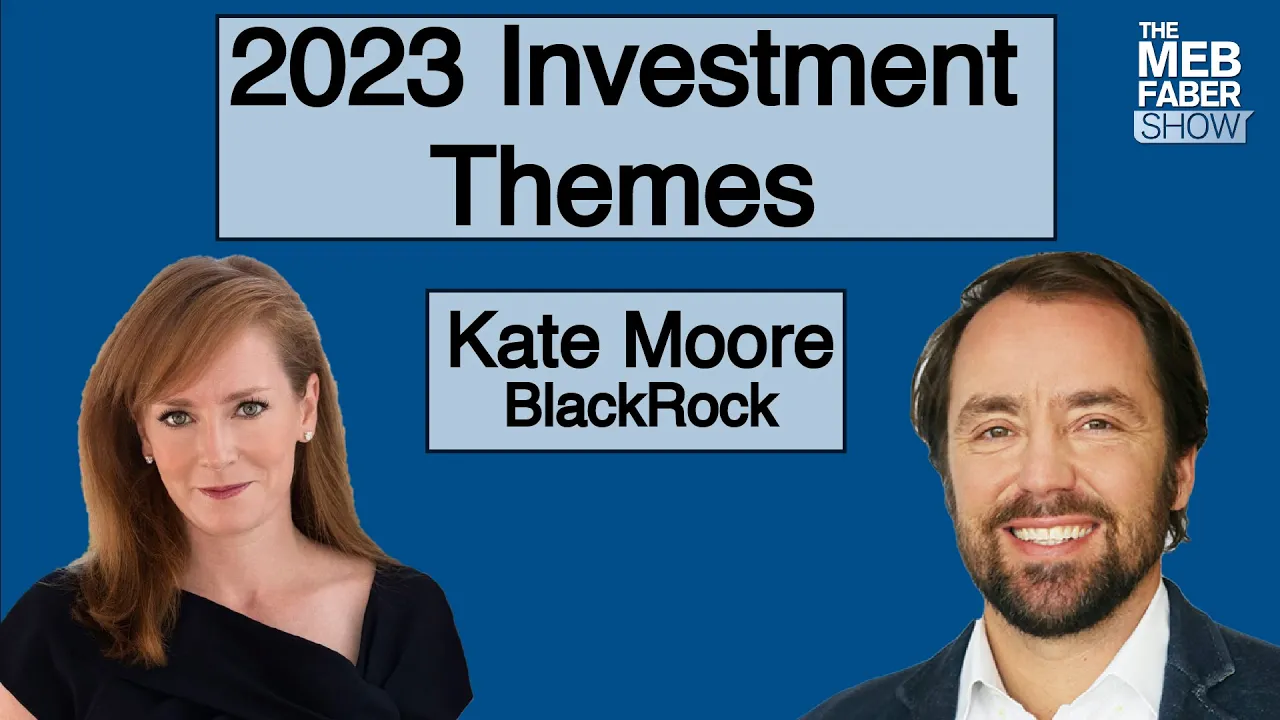
[Music] okay welcome to the show yeah thanks Meb it's like to be talking to you today for the listeners not Watchers you can see a little uh snow in the background where do we find you today yeah I'm I'm broadcasting live here from Jackson Hole which is as far as I'm concerned it's the best place in the country you know um I've been to Jackson multiple times and I'm kind of a jinx when it comes to Jackson and snow I think I've for whatever reason have timed it somewhat poorly every time we've been there in
the last conference last thing I ever did pre-covered was investment conference in Jackson I think everyone went home sick it was the last week of February 2020 or first week of March I think um magical place though how long have you been frequenting there you're not from there are you I didn't grow up here I grew up in the east coast in New England kind of Vermont and Connecticut but my first trip out to Jackson was in 1993 I was hiking or doing a big backpacking trip on the Lewis and Clark Trail and we stopped
here for a couple days kind of to regroup I think they wanted us to shower to be honest and um I fell in love with this location and the Snake River and uh then started coming out here very regularly over the last 30 years finally bought my house almost five years ago very cool a stock markets your fellow Wahoo what was your origin story did you you didn't start out Marcus didn't you you were you were a political undergrad what'd you study yeah I was in a special program at the University of Virginia called political
and social thought since I have a bunch of PST friends from other classes before and after me I can say that it's a pretty nerdy group it tends to be a really small group of people 20 to 25 people and we get to study some pretty incredible stuff through seminars and then also take a bunch of graduate level classes but political and social thought can be what you want it to be I was really into Political Theory political philosophy and I got more into political economy as I went on through my studies and that's really
how I I started getting into markets after UVA I worked in Consulting for a spin-off with McKenzie for a couple years and well it was a great experience I knew pretty soon after starting that I didn't want to be a consultant for life so it was a pretty tough lifestyle and I was thinking to myself like what do I love like what am I good at what do I want to do and I love academics my mom is an academic I love research I had all of this sort of vision of myself that was like
I'm going to be a professor I'm going to write some books and I'm going to spend all summer climbing while I do research and so I ended up applying for my PHD programs and I went to the University of Chicago I did not finish my PhD turns out I was a capitalist and was anxious to get back to making money but there I also did political economy so what was the first stint after that yeah so at University of Virginia I had sort of stumbled onto my first year studying Mandarin and I was fluent in
Spanish from an early age and so I thought it'd be fun to take Chinese when I was at UVA and actually the study of the language got me really interested in Chinese political thought and Chinese culture so I ended up taking these cool classes on China and when I went to grad school you know my focus was really on Emerging Market Capital development and also uh really understanding China even better and I use my Mandarin skills and stuff like that to do a bunch of research so I was really interested in the developing world and
development models that looked really different from the US or from Western Europe and so I had this idea that when I finished Chicago when I finished my masters that I was going to work at a think tank or an NGO you know do something really nerdy and shortly after this is kind of a fun story I was uh waiting for my Master's thesis to be greeted and before I could walk so I had maybe like a month or something and I decided I was going to go to Costa Rica to surf camp because I did
not know how to surf and that seemed like a logical thing to try and learn right so I was down there and I came back and I got this I was like all sort of blissed out toravida I got this call from University of Chicago and they basically said hey Kate we have a inbound request from the chief investment officer of warden Stanley investment management and they're looking for someone with a policy kind of politics history economics background not an MBA and I said hey guys you know I thought a lot about this I really
want to go to the NGO route and they said can you just do us the favor of going on the interview so we've put up a good candidate and I went in and met this macro team at Morgan Stanley and they were so thoughtful I loved that they were approaching problems from a multitude of different perspectives from history and philosophy you know economics understanding of the world and it was really my introduction to macro investing I fell in love with it I think I accepted my offer two weeks later what's the general framework or the
lens from which you kind of view the world and then we can kind of dial into various parts of what's Happening uh today in 2023 yeah so I call myself a macro Equity investor and so in practice I think that means a lot of the equity investors or dedicated fundamental model building Bottoms Up type analysts I think I'm very macro and then the true macro investors think I'm very Equity it's an interesting place to Bridge and actually is proven to be incredibly useful throughout the course of my almost 25-year career at this point sometimes I'm
worried that I wasn't specialized enough in one thing either being macro or being bottoms up but the truth of the matter is I do invest across other asset classes as well if the equity expression doesn't make a lot of sense but if you go back over the last 25 years the s p has returned something like 460 over that period of time okay so a huge amount especially if you kind of got and stayed invested but if you take out the fomc days from your data set and then like the day before you know maybe
that's like 430 days I think out of like 6 500 possible days the s p would be trading like sub 2 000 like 55 lower than it is today in February of 2023. the macro has really moved the market and it's really important I think when I tell this to young people as they're starting off in their careers and if they're you know have aspirations of being like an investor for their lifetime that you can't stay too specialized you have to be able to understand the macro you have to be under understand geopolitics policy had
wins policy Tailwinds you have to understand positioning and sentiment this is not just about modeling a company's cash flows so let's start to dig in a little bit from this broad sort of macro Equity framework what's it mean for the world today how is it uh we can maybe go through case studies or just kind of just talk about it generally but how does that framework apply to uh what's going on now so I always start with the macro frankly I think if you don't have a great sense for growth and policy inflation it's pretty
hard to figure out where the fast fibers are going to be and where you know you're going to see the best potential growth so I start there and and then I also think about you know where there are interesting changes in markets we can talk about like some of my thematic views uh in a moment and then I spend a lot of time frankly a huge amount of time on positioning and sentiment I mean this is an area that you can really really lose your shirt on if you're if you're not aware and I like
to say it's important to know not just what people are saying but also how they're positioned and then how they think other people are positioned that's going to really impact their trading and their allocations in the near term you know valuation is part of my process but you might know what I'm like listing this number four it is part but not the starting point of my process in part because valuations can run hot or run cold for extended periods of time you know we've done a bunch of analysis and um this made people uncomfortable at
one point when I put it out there to my BlackRock colleagues but you know in holding periods kind of less than three years even in a market like the US which is we have great history and great depth valuation explains very little of your return over that period That's because stuff can stay expensive or stay cheap you know for years at a time if you have a you know investment framework that holds for 10 years or seven to ten years or more valuation has historically predicted more of your returns but not always and I think
we need to be conscious of multiples but we also need to be conscious of really what's going on in the macro and what's going on in positioning and sentiment first what does the world look like today it's been a weird couple years since last time I was in Jackson I personally feel like I've seen some of these Market Styles in my my short career or even historically it's looked a little different um talk to us what's uh what's going on yeah the market does look really different but I would this is actually a roosting time
in the market you know there was a long period of time that the entire period of quantitative easing and like extraordinarily accommodative monetary policy and anemic but still positive economic growth where frankly it was a set it and forget it strategy you saw index outperform active decisions you know on a regular basis people try to get too cute with the market or tried to time things I actually think the macro regime here has changed in a great way not just because policy rates are meaningfully higher and we're living with a higher inflationary you know environment
but also because you know there's greater differentiation and dispersion within the market than there has been in a long time last year we all know the story it was a massive washout in terms of risk about a huge amount of derating from cyclical growth pardon me secular growth companies as policy rates adjusted higher but even this year where you know the s p is up close to eight percent for the year you know Global equities are up like over eight percent there's a huge amount of activity and dispersion below the surface and I think that's
going to be the regime for the next couple years we may see more dispersion in terms of monetary policy decisions as well so the the macro environment on the ground in different markets is going to change and we're going to see I think companies that have invested well in technology they are thoughtful around cost controls particularly in a rising inflation or sustained High inflation environment outperform their peers that have been really flat-footed when it comes to those decisions and you know I think we're going to see great competition between the asset classes which also means
you have to be super high quality growth to outperform I know you had my boss and partner on Rick reader uh I think maybe six months ago or something and Rick and I have this conversation every day because there are many more attractive investments in fixed income than there had been for a number of years so the bar for equities is higher but that's also exciting because it makes us do a little bit more work I think we have to be more tactical in this environment and we really have to separate the week from the
chaff all right so there was a lot we can dig into there you know I think the big topic for most investors coming into this year was obviously a lot of assets being down last year 60 40 Bond stocks sort of having the Dual downdraft but really the discussion uh was pretty heavy on inflation and interest rates coming up pretty dramatically and how that might affect the world is that something you guys like at this point is it feels like the consensus is that inflation is is moderating I think last I saw some of the
expectations were down to two three percent within a year which seems pretty astonishing in the US maybe not elsewhere but within the us but does the environment from 2022 as you mentioned this is pretty quick either a bounce or new bull market I don't know which but one of them or both what's sort of the prevailing thoughts on the extension of kind of this inflationary Rising bond yield environment is it y'all's view that it's going to kind of settle down or is it higher for longer what's what's the general thoughts yeah we debate inflation in
all the components have been placed a lot across the Black Rock macro and also taking in some of the microbe views as well you know I think there is this very black and white but sometimes a binary view in the market if someone says for example I think we're going to have more of a disinflationary environment over the course of 2023 disinflationary means still Rising prices but at a lower rate people will say that's not necessarily true or it's universally true have to understand that this disinflation trend over the course of 2023 is not going
to be linear we're going to have bounces in higher prices in specific segments of the economy or the market and we are going to see others decline more rapidly and then they may reverse course over a period of months just because we're starting to see some disinflation does not mean that all prices universally everywhere will fall in lockstep and I think as we take in more data that could kind of challenge The Narrative that inflation is coming down but we need to think through one data Grant and kind of look over a two to three
month or a three to six month Horizon in that case you know amongst my team and and across our platform we feel pretty confident that there will be persistent disinflationary movements will we get down to two to three percent I think that's maybe overly optimistic uh in 2023 I think we need to accept that inflation will likely remain higher than it was certainly in the pre-pandemic period or in that kind of pre-pandemic decade so getting used to more price pressure particularly when it comes to wages and particularly driven by what we think is going to
be persistent tightness in the labor market is going to be really important not just for analyzing the macro and thinking about where policy is but also in trying to figure out which companies can maintain their margins how are they controlling their labor costs what are they doing to invest in efficiencies to kind of reduce their total cost of an employee yeah well if ski town in the U.S inflation is any guide lift tickets and more importantly cost of ski instructors I have a five-year-old so this is very near and dear to my heart I want
to start like a a platform that connects the local bro bras that are great skiers with uh kids because man it's it's pricey Japan was cheaper but that's part of it may just be the the Yen being it sort of generational lows all right so let's dig into some of your themes uh you're big on themes I'll let you choose but one of your first that we saw you talking a little bit about here and there is disrupting the consumer what does that mean okay well let me just step back a minute I'm going to
talk to you about my thematic framework because there are a lot of people who claim to be thematic investors right now and everyone is a slightly different flavor so let me show kind of how I approach this which is I I think about thematic investing in three buckets right there's the first bucket that you may see represented in say a thematic ETF that is the slow bleed incremental change in some Behavior here or the slow adoption of a technology something that will play out over a number of years that is a totally valid way to
invest thematically but you just have to kind of hold these ideas and these themes for longer periods of time there's a second bucket which is more around disruptive change like a significant change in policy the introduction of a technology change in geopolitical relationships that lead to a set of companies benefiting disproportionately from some catalyst or not I mean it's also on the short side as well but I would call that more disruptive change and it doesn't mean it all to take place in the course of a week but it's not this like five to ten
year hay incremental change that I'm talking about in bucket one and then there is you know bucket three which is around macro themes and this is going to be around business cycle stuff policy decisions on the monetary side and you know significant shifts in terms of asset allocation I would say I spend all my time on buckets two and three you know where is their disruptive change and where does the macro play out thematically in the equity Market all right well let's hear about it okay so on the consumer side I mean this is something
we think about a lot where consumer preferences changing and where are they being forced to change easiest and like most straightforward example that we all knew was that a shift to e-commerce was happening for many years pre-pandemic that was falling into bucket one incrementally more spend happening with online retailers and then of course the pandemic accelerated uh and significantly led to a step change that fell into bucket two so sometimes these teams can Bridge these different buckets but we are seeing a significant preference change for consumers in terms of how they spend their money you
know what they upweighed this is not just a Goods versus services but it is also like what is the status object that allows me to broadcast to my social media followers and so you're just seeing consumers change their preferences and how they spend again that doesn't mean anti-goods but it means a very specific type of goods and they tend to be more price sensitive in you know commoditized goods and more specific around say luxury brands for example so there's opportunity there but we can also take consumer preferences one step further which is to say you
know what do they want when it comes to their big durable purchases does Energy Efficiency matter does it matter more in the U.S than Europe probably not at this point but it also matters I'd say like for European consumers that not only do these Goods especially like white goods and appliances and stuff like that meet regulations but also there's a bit of a competition to be greener so there's an opportunity to invest across the consumer in a more nuanced way based on each region not just based on policy but also based on you know Society
how does that sort of theme get investable like where do you then take sort of these ideas which are pretty Broad and sweeping and then start to dial that down into actual all right do you approach it as buckets of Securities do you approach it as individual what's next without giving you all my positions but for a considerable period of time we've been talking about the transition to EBS there was a a slow bleed part of that and then there was more policy Catalyst driven uh transition to electronic electric vehicles uh in China and in
Europe and you know we took a good look at this and I started investing in it in early September of 2020 so some time ago now it's been one of my longest held uh themes in the portfolio at the time and I said I'm never going to pick the car that everyone loves I can't pick the OEM that is going to outperform uh because there's going to be a lot of competition there but instead um I went up the supply chain and I went up all the way so early on I was investing in lithium
in front of that and then the battery makers on a global basis and then the chips that specifically go into the EVs and I chose not to invest at all in the oems or even the dedicated EV car makers and the way that looks is that I end up with a basket it's usually five to eight Securities where I'm taking some concentrated idiosyncratic risks but also diversifying across an idea I also recognize I may not be able to choose the winner especially in these kind of second bucket of themes where there's big discontinuous change and
it may make sense to buy the two best names and let them fight it out because the pie is growing in an enormous and Rapid way they're both gonna win and so I will approach that you know kind of investing this way which is come up with the idea do deep Dives in terms of the research figure out who the number you know kind of one two three players are in each parts of the supply chain and then construct based on liquidity market cap uh positioning and you know some of our kind of uh more
qualitative assessments of corporate teams how often do you have to sort of revisit these ideas so you say okay I've identified this bucket do you set sort of a Time Horizon for this investment and then how do you kind of update it on either hey it's worked out these have run too far or this is something that maybe the the macro pictures change like how do you approach altering your views both either positive or negative on sort of this kind of implementation it's an iterative process map I mean there are some themes I put on
in the portfolio to myself okay this is a six to nine month theme I expect these catalysts to play out in earnings and people will position into these names over that period and then I'm going to get out but then there's maybe a series of positive catalysts and that's what I would say for this EV theme I'm mentioning it wasn't just sort of policy in China and Europe increasing you know demand for electric vehicles but also consistent Supply constraints on the lithium side and then the US joined the party and so we're constantly reviewing the
macro policy and also micro catalysts for each of the names in the basket and then we'll we will change and update and edit the weights on a regular basis there's another software basket I've had on for a pretty long period of time on my longer standing trades and that's around cyber security and this theme I put on in January of 2020 was pretty excited frankly about this theme and of course in the pandemic hit and the need for better security software for companies all over the world you know exploded so within that theme though we
have up weighted and down weighted different names based on which segments they play in what releases of software they've had uh Channel checks we've gotten so it hasn't been a set it and forget it theme or I just bought five or six names and said hey I like this idea over the medium term it is uh actively managed tight group of names what could be like the longest running theme is there something we're like you know I'm going to put on a position and it's lasted five ten years or is it usually just like you
know a few years in and how many of these traditionally are you kind of tracking up in the air that you're positive on at sort of any one time yeah I I drink themes and maybe two of those are macro and then three of those are kind of more micro or specific industry or policy related I've never held a theme for five years I won't say it's impossible it could be the same theme name with a lot of different constituents over that period so let's say that's a real possibility but holding the same set of
names seems really unlikely because these companies are going to move and fits and starts there's going to be a lot of you know specific and idiosyncratic issues with each of the different companies and I'm gonna have to you know pay close attention to that but you asked the question when you started map around valuation I think this is really important because a number of the themes that I invest in would be characterized as more growth themes you know they are higher octane higher energy higher multiple themes in general and in some conversations I've had with
fundamental analysts both within BlackRock and outside you know they've gotten a little bit itchy and said yeah these things are trading at the top end of the range and I said yeah but this is a discontinuous change either in this technology or demand or support for this idea so you know they can blow through whatever their historic range of multiple was and actually maybe grow into that multiple as people realize the earnings and sales power let's just say as a trend follower you know in a lot of our momentum work if somebody comes to me
and says something's trading at the top end of the range I say good that's a good thing we did a paper in the pandemic which I think is probably our at least read paper I can't even remember the titles so few people read it but it was like is investing at all-time highs a good idea no it's a great idea but it's basically talking about thinking in terms of of trend and momentum but historically it's a much better idea on a pure price basis than invest and things that are going down or near the lows
valuation agnostic all right well that's one you you mentioned you always have a few themes let's talk about another one anything uh we'll let you pick and choose I know I know what's in the quiver but uh we'll let you pick one what uh what other themes are you kicking around all right well let's talk about global resources how about that global resources and the reason why I I want to talk about resources this has actually been an area that I've done work on my entire career you may have seen in the first half of
my career I was kind of dedicated emerging markets and during that time emerging market equities were pretty much Banks and resources if you wanted any liquidity so I spent a lot of time learning those two areas but resources is something after a number of years where I had probably had less allocation we really Revisited not just because of the pandemic but because we have experienced something that in the 20 years previous it felt like we had never seen which was a massive amount of Supply discipline and capital discipline from these companies that's originally what kind
of flag this for me not an economic Rebound in and of itself although that was a positive icing on this cake but really like strong and consistent fundamental shift in how these companies were being managed and so got excited about looking at some of the Diversified minors and originally put some of that on to be honest a little early and it was a time where people weren't really interested for either ESG reasons or because they were focused on more reopening trades they didn't take a good look at some of the miners and the natural resource
companies and then you know we started to see these results really play out and really raise some flags for a lot of investors changed what's in that global resources bucket a large number of time over the a large number of times over the last couple years so originally it was kind of Diversified miners actually at the time of Russia's invasion of the Ukraine I increased my exposure to aluminum we know the energy costs were going up and this is this started a course with oil prices rising uh in the fall of 2021 but was accelerated
frankly by concerns around overall Aluminum Supply so buying a bunch of you know aluminum producers that weren't just not gas dependent uh was quite helpful I have you know overweighted some resources more recently as the Chinese economy has restarted acknowledging that we're not going to have the big building and construction boom that we have seen in other economic accelerations in China but that we're moving off of a pretty depressed level so there's been a ton of rotation uh within a theme like that and I use options pretty aggressively as well not just to get exposure
to single names but you know to take in a little bit of income on some of the names that have run well the uh the resources you know I mean one of the challenges we talk a lot to investors about is we say it about asset classes but I think it applies even more to sectors and industries I say you know it's important but hard for many to be asset class agnostic and this applies a second being sector agnostic so many people you know I'm a tech bro I'm a gold mining bug I'm uh whatever
you don't find many I mean maybe some utility people in the retirement space I don't know but some of these sectors and people become very attached to certain sectors because as we've seen I mean a great example over time has been Tech versus energy and market caps and just these regimes that last a very long time and as a quan it's always curious to me to see kind of what washes in and out uh portfolios and you mentioned I think an important point is the different geographies and development levels have different market cap kind of
steady state sector exposures and so Emerging Markets you mentioned historically has certain exposures but that changes over time too part of a change is because the price and part of a change is just because of opportunity set but the odd times when value and momentum and Trend tend to overlap are my favorite and we've certainly seen over the past year a number like you mentioned last year in particular natural resource is doing really well as well as materials and others how do you approach this from I think a lot of investors really are obviously U.S
focused how do you approach this from a global standpoint you mentioned emerging markets and and your early part of your career is that your starting point yeah I do look globally on any in my Bonnet or we're doing a bunch of research on an idea we cast a pretty wide net I will say that liquidity and market cap are a consideration there's some awesome companies I found that are like sub 2 billion market cap and for the size of our fund is just not really investable for us because we do want to be able to
get in and out so Global with a liquidity and market cap consideration and then we spend a whole bunch of time learning about the companies and trying to marry what we know about the top-down theme with what these companies are doing I mentioned you know management team matters we really like to talk to them when we can unlike sometimes fundamental analysts who like interrogate management teams online items you know in their financials we really want to get a sense for strategy and vision and you know their assessment of competitive landscape and where they might have
Partnerships that's the kind of question I ask when I speak with companies because I'm trying to get big picture ID years and then I you know take some time looking at their financials but again not spending time modeling a lot on on the individual name but you know that's a huge screening criteria and then I would also say it's really important to understand positioning and sentiment I mean I can't underscore this enough it's such a huge part of my process because I may have done all this work but it might be already in the price
because the rest of the market has already figured this out they are already invested in it and I have to decide okay if current state is in the price am I convicted enough in future state to say I need to increase my allocation there so you have to understand how people are talking about an idea how they're positioned and how they think everyone else is positioned in order to really accurately and effectively size that theme in a portfolio cinnamon is I think notoriously squishy for a lot of people and as we know with sentiment and
2021 certainly is is a great use case with the meme stocks and everything going bananas how do you think about Cinema I mean there's the magazine covers chatting with your friends on the lifts are people talking about AMC or cryptos are there any sort of specific quantitative measures you look at or is it more just sort of anecdotal and Survey based how do you think about it yeah you're right it's squishy and it's why I like to play the sentiment and positioning space because there is no perfect science to analyzing sentiment so you have to
take a really kind of a mosaic approach looking at some real hard data Soft Data like surveys and then you know heavily leveraging your network to get a sense for what different trading desks are seeing so examples I would use this is something I pay very close attention to actually are CFO surveys that help me understand sentiments you know not just broadly around the economy around their own business and then segmenting that uh based on the industry that they're in has sentiment changed around their assessment of the business relative to the economy over you know
number of months or number of orders should I be paying attention to that what is that telling and I say this because you know some of our quantitative teams turned me on to this a number of years ago but apparently you're supposed to pay closer attention to CFOs than to CEOs CEOs tend to be more Visionary and strategic thinkers and maybe more kind of excited about the future CFOs tend to be more grounded in what's happening in terms of the real numbers so the CFO surveys are something I'll pay attention to you know there are
investor positioning a surveys a number of the sell side firms as you know do this but they can be aspirational like they can say are you overweight European Banks right now of course everyone wants to say yes I'm overweight European Banks because they have ripped this year but they're not testing that against your benchmark and they're not making you prove that you actually are overweight and they don't tend to show the magnitude of your positioning in any of those surveys so I say like that's a useful because good signal it tells you where people want
to be not necessarily where they are and it may in fact be a little bit of an indicator um of where people people may put incremental money and there's a lot of other data that we like to look at too which is you know looking at fund flows institutional and Retail fund flows across a variety of index instruments etps as well as you know active funds when you see significant inflows into active funds like this big allocation into International like xus equities this year that tends to be stickier money than some of the ETP uh
flows so we watch that and then again I said I said I heavily leverage my network on the street and ask a lot of questions of Traders and derivatives experts you know what are you seeing with the club anything coming out of the chats and you know looking around talking to people I would say that sentiment was despondent in the real money community in the fourth quarter uh it was despondent but you felt like you were in good company plenty of people who were much smarter than I am also felt terrible about themselves uh in
terms of their performance and we were all universally experiencing outflows so after you know a couple years of positive flows and a lot of alpha we had this catastrophic year it didn't feel great but no one felt great and everyone was experiencing similar market dynamics outside of a couple macro hedge funds which really were living it up and we're shorting the heck out of the market I think coming into this year sentiment has been a little bit more muted particularly in the real money Community because people have taken down so much risk everyone was sitting
on cash at the higher end of their overall potential allocations they were in more defensive sectors they were holding on to Quality and they were kind of in a wait and see mode as the market has ripped faster than most people would have expected I think we've seen more people try and scramble and if there's one thing back to your question that I'm you know hearing a lot from the street right now is how many people are buying short dated options like within the next 24 hour expiry or even within a week people are terrified
of missing moves on the upside or getting caught flat-footed and getting killed on the downside after having had decent performance so there's a lot of like active management in the derivative space and it's all really short dated as opposed to people saying hey I'm buying options to get through the next two CPI prints and into the flomc just in case I need to hedge myself against some of those macro events that I can't perfectly forecast so there was a little bit of anxiety around missing out on one way uh One Direction or another right now
and I I think you know that's going to lead to some gyrations that look a little outsized in the near term that's a really interesting point about the people suffering together I think uh the no place to hide is is an interesting take all right so now you got two choices you can either tell us about one more theme or you can give us something a theme that you're thinking about but not yet really putting into place we'll give you the uh the choice to go either way what's on your brain or what's one more
that you're really working on well I think one that we're working on that I is uh implemented in parts of the portfolio but not in all parts of the portfolio right now is around um automation you know you've seen Industrial Automation do pretty well some of the big multinationals but in addition to uh kind of people's experience during the pandemic and in addition to the sort of slow bleed move to more automation to crease efficiency our view of the labor market as well as some of the policies in specific countries are I think going to
accelerate spend in this space and I see that you know with a lot of I'd say this is true but for a lot of global themes a really kind of parallel way to invest one is maybe at Asia specific way and one is more of a global developed Market play so that's a place where we've been doing a bunch of work and I expect to be really interesting over the coming couple years even if uh some of the companies give more moderate guidance in the next three to six months how much of a role is
China playing in your various themes and allocations and I say that because you know China particularly as a percentage of the Emerging Markets has such a large footprint you know a lot of these Emerging Market funds 20 30 40 50 plus of em now as a percentage of the world it's less but growing but damn China's volatile man and I think uh you know a lot of people particularly in the institutional World looked at kind of the Russia situation and said okay that's scary but it's sort of a basis point rounding error on kind of
what they're doing but China you know the geopolitical side of it could have some pretty massive implications are you generally positive or like how do you think about China as a market in general and playing some of these themes is it table Stakes where you you really need to be allocated or are you a little more concerned or something in between yeah I have to see my view on China uh has really evolved over the last couple years I think like a lot of us in the beginning of the conversation we were talking about how
I had studied Mandarin and undergrad did my graduate work on China and then this like dedicated emerging markets in a pre-covered period you know I would be over in China multiple times a year three four sometimes five times a year I had relationships there I was meeting not just with companies policy makers I felt like I had my finger on the pulse and like a lot of U.S or european investors my last trip to China was in December of 2019. I feel like it's pretty hard to have an edge just when you're doing Zoom calls
you know late at night with some of these for prints so my overall allocation to China had come down um over the course of the pandemic not just because of the lockdown not just because of slower economic growth and perhaps some regulatory stuff that was pretty difficult to predict but more because I just felt like I didn't have an edge you know what was my incremental information that was going to help me figure this out at this point I do think there are some really interesting opportunities in China but if when you think about the
rent versus own I'm still in the rent camp for some of these Chinese driven things so for example the reopening increased travel increased Mobility theme very very interesting everything from you know Direct Travel names and hotel names to you know brands that benefit from discretionary spend when Chinese Travelers you know get out of their Hometown and then there's you know some really interesting plays around less regulatory pressure we've seen a bunch of the Chinese internet names balance you know an enormous size not just year to date but really since the reopening started at the end
of last year that's interesting too but I think we are renting rather than owning until we get a little more clarity and we can get on the ground and really get our finger on the pulse yeah well I've never been so let me know when you go we I've been to Hong Kong but I don't think that that uh that quite counts well you know look we've been holding you for a long time um and uh I what's what's the snow like by the way is it do we uh do we have a decent base
there I know Mammoth is like twice it's average snowpack right now how's Jackson looking Jackson thought doing great it was actually snowing right now I'm not sure if you can tell with the white out behind me but it's snowing right now and uh we probably go almost 370 inches so far this season considering it's the beginning of February that's pretty great there was a the weekend before last we had a 48 inch dump in 48 hours so that was more like snorkeling than skiing but I wasn't complaining either yeah let's ask some quicker questions as
we start to wind down and we'll let you off into the afternoon or Opry or whatever the stay May hold for you I know you are as a sort of macro World traveler you tend to have some views that may not be consensus and we may have touched on some today but what what view like really sticks out in your brain and this could apply not just to themes but just macro or just the world in general that you think most of your peers don't hold so you know at 75 plus of your professional peers
say don't share this view is there something that comes to mind yeah the immediate thing that comes to mind is that the U.S economy is going to adjust the higher rates without getting anywhere close to a recession some of my economists may call me up after hearing this podcast but you know this is something we started talking about at the end of last year like don't bet against U.S corporate dynamism don't ever I mean this is a lesson we should have all learned over the last 10 or 15 years companies will slash costs they will
streamline their operations they will do what it takes to protect their earnings and by the way with the labor market being this type you know consumer incomes look fine and so it really felt like super out of consensus at the time it's a little bit less so now but still out of consensus to say not just that we avoid a recession but that the earning story ends up being actually okay this year that we don't see a lot more Cuts because companies adapt and the U.S economy adjusts to higher policy rates yeah creative destruction of
uh of the capitalist system is is hard to pet against what um I don't see any books in your background but I know you're a big reader what's on your shelf these days anything you think that's been particularly wonderful or that you think isn't something our listeners have heard about well I'm generally like an obsessive sci-fi reader I actually started that when I was at a University of Virginia taking a class on fantasy and social value it was like a graduate level Sociology class where we read fantasy and sci-fi analyze the social and political structure
what was the curriculum back then was it Dune Lord of the Rings that's a a time machine back but yeah I mean I think it was not June it was a lot of like Ursula K Le Guin we have we also read like you know all the Orson Scott Card stuff because all of these social political structures these you know were really different than what we were living and the question was why was the author reacting what were they envisioning anyway so I read a ton of sci-fi and fantasy and I like to take a
break you know we heard Powell yesterday in that Washington economic Club lunchtime conversation mentioned he reads spy novels she take a break from markets so I felt like I was in good company reading fiction and I I just finished a book called Wayward which is the follow-up to Wanderers a creepy book that came out in 2019 basically predicting a global pandemic um and the role AI played in it but I highly recommend these were great books I'm also reading a non-fiction book right now uhmed which is second Mountain by David Brooks I think this is
really important at this point in my life the idea that you know after you accomplish certain things you have to think about climbing the second Mountain which is around your engagement uh in society with your community and and how you contribute to the collective that's two very different books Wanderers what was the book you mentioned after Wanderers the the sequel is Wayward Wayward yeah you should check these out I mean they're uh they're long they're worth it I have an enormous number of of recommendations if anyone wants a sci-fi fantasy books but I would say
in the last 12 months the best book I read was the invisible life of Addie LaRue by B.E Schwab man I haven't heard of any of these and I consider myself a Hugo nebula guy like I read a lot in your in your world and uh that's uh I was bemoaning last night that I didn't have anything good to read so you just named three at least so did you read the three body problem I read the first one a while back I haven't uh continued on is it worth keeping with two and three yeah
so I mean as you know there's a lot of physics in there but one of the things that's so cool obviously about the series is it's not just about you know contact with alien form but it's a reflection on the decisions people make because of their cultural political and and social experience and um if you want to really nerd out I mean that series is it so as a macro markets political background person let's say tonight you turn on the news CNN Fox MSNBC wherever you get your news and they say we have some breaking
news we've confirmed there's a signal extraterrestrial intelligent life is clear that it's out there what do you think the markets do you think you think they're up down I mean I think we see a big rip in the defense space stocks it's a bit of an irrational response given how long the lead times are to get equipment I might book some vacations just in case yeah yeah yeah that's a fun one to think about we may see in our lifetime who knows as we look at it in 2023 is there anything else that's on your
brain we didn't talk about today that's really burning a hole in uh in your temples I feel like we covered a lot of ground you want to hold things end up being better than many people had expected not just the end of last year but at the beginning of this year and I'll share with you some share with you a funny since I sit around a lot of the fixed income people you know some years ago someone said to me you know fixed income people like to sound smart and Equity people like to make money
so I mean I think this is not a year to not take risk but I think you need to be more tactical you need to play on the dispersion both within an industry across Industries and across different regions and I expect it to be really fun awesome well that's a positive note to end this for the for the people listening how can they uh get access to you consume your thoughts your research is there any I know a lot of it's behind closed doors do you have any public-facing uh stuff that people can access in
any way well you know I do a fair amount of media uh unfortunately I'm not publishing externally at this point or maybe fortunately because I you know I spend all my time on the internal side but yeah just catch me on Bloomberg CNBC Yahoo well listeners if you're trying to find a job at BlackRock on uh the global allocation team my value-added suggestion is just to go sit on the chairlifts of Jackson and look for some little red hair peeking out from under the helmet uh and uh and see if you can uh chat up
the uh the political scientist slash macro gal on the on the list uh or the tram I can't is Jackson's got a main tram right we do have a tram and I will say ma'am I guess like uh correction which is that uh the first thing I do before I put my helmet on is is French braid my hair I can't imagine having my hair in my face when I ski so fast uh well I hope to see you out there okay it's been amazing thanks so much for joining us today thank you so much
for having me and I wish you a good rest this ski season [Applause]