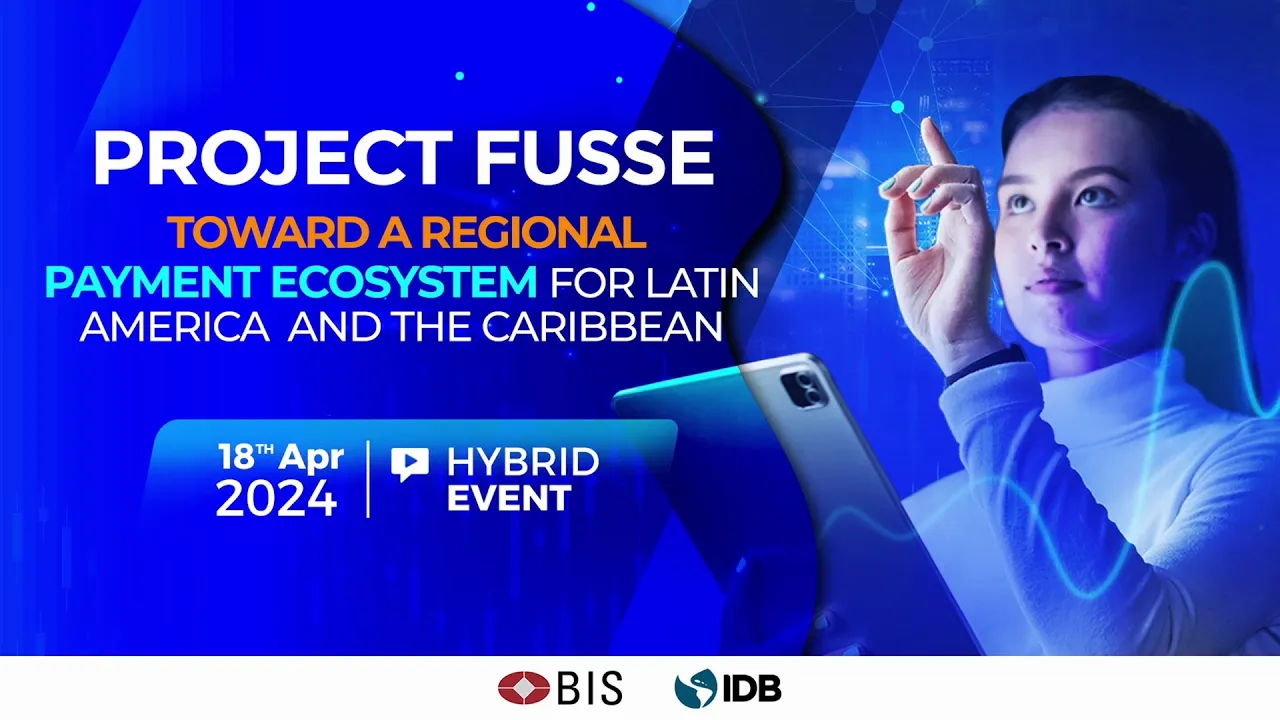
[Music] please allow me to deliver some logistical instructions we will have English to Spanish interpretation for those who are here at enri elesia Auditorium you can get interpretation equipment at the entrance welcome to join deand project F toward a regional payment ecosystem for the Latino American and the Caribbean this hybrid event aims To present the advant advancements for the f scale level settlement engine Fus a collaboration between bis and idb as the first first project within the memorandum of understanding signed in Santiago de compostella in September 2023 please let me introduce Mr Anderson Caputo division
chief for the connectivity markets and finance at DB Anderson the floor is yours please let me welcome all of you to to this spring meeting Side Event I'm I'm pleased that uh to introduce true relevant welcoming remarks by interamerican Development Bank idb president Mr Elan goldfine and bank for international settlements bis general manager Mr Augustine Carson they will Delight us with specific technical conversations on our institution's first joint project fully scalable settlement engine of fuse with a deep understanding of the Region's multifaceted challenges we at the idb have worked to Foster Dialogue among policy makers
financial institutions and other stakeholders to develop Holistic Solutions that address the root causes affecting Financial inclusion the partnership that we are materializing with bis is a significant step to amplify our capacity to scale and create an inflection point for financial inclusion in the region few is the first action item from The Joint action plan developed by the bis and idb to design and Implement programs and Projects that can contribute to the financial systems modernization and integration in Latin America and the Caribbean we will utilize FS to advancing Financial inclusion convenience and accessibility for individuals and
businesses throughout the region our technical teams have been meeting for the last few months with the of developing a backand functionality that can be adapted to multiple types of infrastructures and here we mean Payment Systems security settlement systems and even Central Bank digital currencies fuse will be a regional public good open source for regional central banks we have been also developing a calendar of activities focused on institutional capacity development and regulation complementary we can work with the center banks in the region to provide them with technical assistance focused on Fast retail payment systems and related
topics both president goldfund And general manager castons will delve into the details of the financial technology regulation and institutional capacity aspects of project views so with that said it's with great pleasure that I give you Mr Elan goldfine as the president of the interamerican Development Bank he has championed innovative strategies and collaborative Partnerships to promote Financial inclusion as a catalyst for sustainable growth poverty reduction and social Equity under his leadership we are pivotal in expanding access to financial services and products extended to financial well-being across Latin America and the Caribbean please president the floor is
yours [Applause] and we all also welcome general manager Austine carens to join the panel and then we will start with the words of president enan [Applause] Good morning thank you all for being here thank you to Austine Caron general manager for the bank of international settlements bis and a good friend and a good partner with this uh Ministers of Finance Governors presidents of central banks financial Regulators from Latin America and the Caribbean and all of you joining us today I'm thrilled to kick off the fully scalable settlement engine project our first Collaboration with our partners
the bank for international settlements and share our progress thus far I would like also to thank Bank of Canada for the partnership on this project this comprehensive initiative aims to support Latin americ and Caribbean in increasing ing their financial inclusion levels and improving Financial infrastructure regulations and institutional capacity before diving in into the project I want to focus on the more General topic on Financial inclusion in Latin America and the Caribbean and why this is this a priority of the idb it is clear that Financial inclusion is an immense opportunity for Latin America and the
Caribbean if you look at the global fex approximately one in three adults do not have access to formal financial services that means in practice only 28% used a credit card in the last year only 8% store money using mobile money account this lack of access to formal Financial Services makes everything in daily life more difficult from getting credit to buying a home to saving for retirement and others unfortunately this is even more severe for more vulnerable population such as women elderly those are living in poverty in in addition millions of micro small and medium Enterprises
in our region cannot Access the credit they need to grow and be more productive we need more to make Financial inclusion a reality in Latin America and the Caribbean that's why the idb Champions Financial inclusion isoing people and businesses have access to and can use Financial Services products and information tailored to their needs research shows that the use of financial services can help reduce poverty by facilitate Payments enabling savings to reduce household cash for low volatility generate access to basic insurance for health emergencies and many other examples for instances studies show that individuals spend a
quarter of their time on digital payments compared to inperson payments even for governments it is beneficial digital payments have reduced the cost of government transfers 3 3 3 and a half% annually or 1.3 billion per year that's the reduced Cost finally digital payments are shown to increase savings rates in at least 20% for households who use more of the digital payments we believe that bringing people into the formal Financial system is a way to help them lead balanced Financial lives at the idb we are supporting countries in developing regulations institutional capacity idb has assisted countries
such as Colombia Ecuador Surinam all of them very Recently and in Brazil last year we will assess the current payment system the current payment infrastructure the fast retail payment system which is technically the term to what PX is inail let me tell you what we concluded there first the Central Bank of Brazil issued enabling public policies regulating certain F Tech activities in 2018 including payments and modified the payment system regulation to legally create the paks That was first not later in parallel the Central Bank of Brazil used Financial technology to create a centralized infrastructure for
paks allowing licensed Bank cooperatives fintex platforms to immediately settle and clear Financial transactions at low cost such Innovation created interoperability transactionality and supply and demand Financial inclusion Possibilities finally Central Bank of Brazil developed institutional capacity to implement Pig safely and soundly so you saw the several steps and that will help us on where we're going in the future and the results are there PS were able to have now 4.4 billion transactions just in January 2024 151 million individual users equivalent to 2third of all the population more than half of the Transaction being peer-to-peer that is
people paying people people to business p2b transactions are slowly increasing their share to become almost a third of all the transactions the infrastructure is operationally efficient and reduces cost to nearly zero for the final P2P uses pxs is one example of how infrastructure could create the conditions for n inclusion and what do we need to think about as an idb to help That's not the only initiative we have we have today what we call the finac that we are launching today here our Brown new Financial inclusion initiative that is a complement of what we're doing
today with fous project pinlac will serve as our One-Stop shop for accessing the idb resources and expertise in financial inclusion it will be entral half for stakeholders to connect with us Fostering a seamless low information and collaboration so fin like is about Network and collaboration and exchange of information that bring me to today's main topic the F project as some of you remember and were there we signed a memorandum of understanding with bis is September last year and today we are putting the into action by launching the first project def fuzi fully scalable Settlement engine
the project will offer certain Banks and some of you are here open-source technology that would facilitate and enhance Payment Systems developing critical Financial Market infrastructure in L America is crucial for enhancing Financial inclusion Financial well-being stability integration however important are the Technology technological advancements alone they are not sufficient that is why we are supporting it by improving the regulations the institutional capacity and even the financial infrastructure in three actions one catalytic public policies which include a suitable regulatory framework to enable fast retainable fast payment system so the idb will continue to assess the current payment
systems and The regulations number two we're going to work with central banks to enable institutional capacity this is not a tool for just whoever already has the capacity this is a tool for everybody all the sizes all the central banks and we will help provide institutional capacity last the third one creating Financial technology and supporting Market Infrastructure to create Capital mobilization Foster standardization and create a path toward integration and crossborder payments we are developing a basic backend infrastructure including services such as micro payment clearing settlement cyber security model everything fussy has the characteristics of scalability
modularity and cyber security to allow for creating a market infrastructure for clearing be Beyond payments Securities cbdcs just to Mention a few these three actions will enable the establishment of prom efficient and cost effective local payment system supporting future crossboard payments so you see we are uh we are ambitious we're talking about the specific countries but we're also looking at the future um about cross Payment Systems the region then can gain economies of scale benefit from PE Experience exchange information just to mention a few fuse can help create markets in countries where the lack of
infrastructure restricts their existence so what next well I will let Austine D more into the details and tell us more about it for now we will focus as the idb to enable the payments as the primary activity in our financial inclusion mode General uh uh Topic we already have interest from at least six central banks in the region so that's a very good start a very good demand for our work together I think this is big news we will later focus on these three actions I I talk before achieving our financial inclusion objective the idb
group will work to offer this actions to countries in the region while also fostering Innovation through idb lab and financing Through ivb invest so just to it's catalyze public policies and regulations enable institutional capacity and help create the financial infrastructure so we are going to work as a group at idb we're going to work together with the bis and I think we can build together fussy and the future of financial inclusion together cheers and thank [Applause] you thank you thank you very much uh uh President godine it's a pleasure and an honor to be introducing
and giving the floor to Mr Augustine Carson bis leads the technology component of the three actions that President gold just mention well um good morning all of you ministers Governors friends allow me to say a few words in Spanish I don't have often the opportunity in Basel to speak in Spanish so I I don't want to forget it but I go back to to to the universal language which is English thank you very much so let me just reiterate that I'm delighted to be here sharing the stage with my very good friend Elan H in
the context of this ambitious and important collaboration between the idb and the bis the topic at hand the modernization of payment systems and digital Financial infrastructures is a critical stepping stone to the digitalization of finance and of the Economy and more broadly it will help to support economic growth and development in the region as Elan described in recent decades advances in digital technology have transformed transformed people's lives the financial sector is no exception yet we find ourselves at the critical point in the evolution of Finance the digitalization of the economy is changing expectations about the
financial system and the way we need To approach the provision of financial services going into the Future these changes come both from the demand as well as from the supply side from the demand perspective Financial inclusion is no longer a mere aspiration but a critical necessity in this digital age being financially connected is Ain to holding the key to societal particip ipation th we need to open access to everyone this means bringing many more People into the financial system at the same time individuals with access to the financial system are making more use of it
of it than ever before this growth will continue in the foreseeable future supported by the emergence of Technologies like the internet of things and artificial intelligence through which people have their devices automatically make transactions on their behalf th we need systems that allow More people to participate and for each participant to make more transactions all told this will multiply the volume of the financial system that the the volumes that the financial system needs to set settle not every day every second from the supply perspective the infrastr structures that underpin Current financial markets were designed for
a different era some are tittering on the edge of Obol these systems built to accommodate the transactions and dynamics of traditional Financial players are buckling under the strain of unprecedented transaction volumes and the diversification and growth of Market participants existing Frameworks are ill equipped to handle the velocity and comp complexity of modern Financial exchanges this creates inefficiencies that Ripple through the economy we must evolve our infrastructure into something New and more sophisticated capable of handling an increased load securely and efficiently the dire consequences of inaction in the face of growing demand and the slow and
inefficient response of supply are easy to predict fortunately the challenge is still manageable if we start working as a community on tangible Solutions today we need to invest and experiment now if we want the financial system to properly support the digital Economy in the coming years the call to action is clear we must push for the development of Next Generation payment systems and financial Market infrastructures that can rise to the challenge these Advanced systems must accommodate the sheer volume and variety of transactions while also embracing the influx of new entrance and new services that are
reshaping the financial landscape we should Forge infrastructures that are robust Adaptable and forward-looking capable of sustaining the lifeblood of economic activity through efficient payment and settlement mechanism given the toting challenges the size and complexity of the potential Solutions and the need for regional and Global cooperation the V has decided decided to partner with the idb to harness the competitive advantage of each institution and push forward the B Streets Innovation Hub is a front rer in Many aspects of financial technology Next Generation Financial Market infrastructures are one of the CPS six key Focus areas and the
idb has a deep relationship with the countries in the America region has powerful mechanisms to support them and possesses deep knowledge about local Financial systems and also they have great staff and the great leader with Elan together we can make a real difference our first joint project is The fully scalable settlement engine or Fus for short this project is a stepping stone that can help countries develop the core functions necessary to build more advanced Solutions if you want to build for the future foundations must be solid and at the same time ready to support fast
changing conditions and requirements this implies a profound technological shift from existing models Fus consists of pieces of technology that provide expandable B basic Settlement functions to enable the development of Next Generation payment systems and financial market infrastructures for the region and Beyond helping solve the exponential growth problem I have just described fuses functioning is simple it will receive settlement instructions from institutions or individuals it will register the modifications of balance and it will provide proof of settlement in real Time as we as with everything the Devils is in the details as the complexity lies in
providing these functions with security scalability flexibility and with the structure that will allow it to evolve with the technology and the needs of the financial system the system will be a module that can be implemented in different jurisdiction ions with different Payment Systems eventually it would be able to Support other infrastructures that will require the settlement of a broad gamut of digital representation of assets and also once the adequate critical mass is achieved Fus would allow for the integration of national Payment Systems creating an efficient Regional Network jurisdictions could could plug fi into their own
back ends countries would then half their own domestic structur surrounding the core functionality this would reduce the Potential disruption to the financial sector by just replacing the inner engine of the infrastructures and reusing parts of the existing systems that could be very difficult to replace the same goes for the settlement of other types of assets that can be represented on similar leg structures Securities ownership is one example as its name anticipates the system has an architecture that delivers settlement scalability in three Dimensions as many transactions as necessary as many entities or individuals or devices instructing
directly to the system as necessary and as many asset types as required these conditions make the system a Powerhouse for fast payment systems security settlement systems and even for the potential implementation of retail Central Bank digital currency if anybody wants to go that way given the scope for Fus to support the whole Financial sector we need to build and design it considering cyber security and resiliency one cannot think about financial Market infrastructure me without security being a fundamental requirement we also need to consider their ability to recover and continue to provide its basic Services under
stress Fus will have cyber security embedded from the beginning including resistance to Future Quantum Computing threats modularity will permit jurisdictions to Build resiliency through Disaster Recovery plans to be used during contingencies to keep the systems running one final technical point is that the system is designed for every jurisdiction reg regardless its size we are using open- Source components wherever possible and prioritizing a philosophy of efficiency to make the implementation of this modu feasible even for the smallest countries let me conclude I strongly Believe that fuses a key step in the direction of building infrastructures and
adopting Technologies to meet ex extraordinary increase in society's demands from financial services that we Are Witnesses today and that will accelerate in the future it can help bridge some of the technology gaps between countries and contribute to resolving the financial inclusion problems that many of our Nations face the Endeavor would also Al contribute Significantly to the economic integration of the region as both a president Elan goldine and myself second H this should be a first step uh there are many once we establish this strong platform I'm sure that each country would have its own a
innovation drive to build on it h but I think that there are other fields of collaboration where we can build on top of future and bring to make really the Latin American And the American regions a leader in a digit digital Financial transactions and a much better a a much better capacity of the financial system to contribute to growth to better income a to better opportunity to bury poor people in remote areas in our region so thank you very much I'm very excited and thank you Elan for the opportunity to collaborate thank [Applause] you president
goine general manager cast Thank you for these welcoming remarks and for your leadership uh that led to all the progress made over the last months now the implementation of our mou is an excellent example of the collaborative work between m l institutions on behalf also of the team working on this project we thank for all the support you have been providing now the teams are working together to get the best of this partnership for the benefit of the region and potentially Globally no so with these are very exciting times indeed no uh and uh a
a very encouraging project that for sure we have a huge huge impact in financial inclusion in the region so thank you very much for for your participation and the welcoming remarks thank you and thank you to the teams your team the team of V now it's with you the pressure is up yes thank you very much let's continue With the agenda now thank you [Applause] now I will give the floor to Mr Alexandre tomini who will moderate the second session of this event Mr tomini is the chief representative of the Beast office of for the
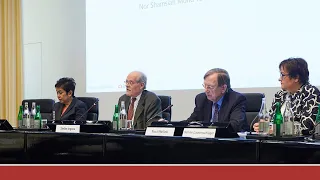
Americas before joining the Beast he was governor at the Central Bank of executive director sorry of the board of the international monetary fund he served as Governor at the Central Bank of Brazil among other Managerial positions Mr tomini holds a PhD in econom omics from the University of Illinois at Urbana champagne Mr tomini the floor is yours thank you thank you very much for the introductions it's uh it's nice it's a privilege to be here today uh moderating this formidable panel with the three governors from uh from the Americas I should say South America in
our case today so as we heard from uh Austine and Elan uh it's imperative that our Societies U equip are well equipped with a efficient and um affordable digital systems for many many areas including uh the areas of payments and uh Financial Services uh their Insight reminds us that the the institutions go beyond uh a narrative that what is important uh to develop in this domain this is a concrete initiative uh that uh open uh new possibilities for the economies of the region uh this Efforts are dedicated to a future where digital inclusion will be
the norm and to this uh to do this we must understand uh the unique realities of our jurisdictions with all their uh intricacies and challenges uh the meeting today I mean as we already already uh seen uh this far uh is uh to bring as many perspectives as as possible and grapple with practicalities of our diverse uh context uh the journey ahead demands uh That we leverage technology not just as a tool but as a bridge a bridge that bring us ever closer to the optimal in our world increasingly digitalized so I think that's important
the leadership of the central banks in this process because we know the the economy is going digital and it's important that the basic uh means of payments and financial services do not uh delay the process of digitalization that we have seen uh so Far so let's uh let's uh lean listen and learn from the experience of uh three important countries in the region I have here with us uh today rosan Costa president of B de Chile Central Bank of Chile Leonardo V governor of bang Republica Colombia and last but not leastat B rep oral the
Central Bank of UR um so let's uh let's begin with a more General questions and um so from your experience on the ground how do you see this Relationship that we talk a lot about between uh developing fast digital retail payment systems on the one hand and financial inclusion it seems like common Senseo but of course there are details that only you know and you will share with with us today so the first question is this and I will start with Rosanna then lonardo and then Diego in this order please Rosanna the floor is yours
thank you Alexandra good morning to all the Audience uh if we understand Financial inclusion as a wider access to financial services means of payment saving investment accounts Insurance a straightforward link between fast retail payment and financial inclusion is not easily observed certainly higher Financial inclusion levels have a stronger impact in fast payment system and at the same time fast retail payment system can foster the financial inclusion of person and small-sized Firms but necessary condition we have observed for creating this virtuous cycle is to accomplish ample levels of access to financial accounts and services my country
has a good Financial inclusion in uh the W in uh in line with our stage of Economic Development with a large influence of longstanding policy of opening simplified account started by Bank wal the state run Bank in an approximately 20 million Inhabitants country 40.6 million have a quent rout site deposit account that any person with a valid ID can open this in addition to commercial Banks and New Market players have contributed to achieve our 87% level of access to financal accounts by our population over 15 years old in has also we have also had a
fast retail payment system for roughly 15 years this system is operated by a Private institution and it processes approximately 2 billion transactions during 2023 and it's a number that is growing which amounts to nearly 7.5 payment per month for persons older than 15 years this system allows at 2 24 hours every seven days of the week transvers of fans which are immediately available aailable to persons although the settlements between financial Institution is deferred we have two daily payment Cycles the contribution or the combination of high degrees of financial inclusion and the existence of a fast
retail payment system has contributed to a broad use of digital payment methods in our economy but certainly there is room for improvement in our retail payment system and we have taken some steps in that direction the first one was to issue a New regulation for Clearing Houses of retail payment system to bring these infrastructures into the regulatory perimeter because the number of payments that they process is increasing 76% of GDP at March 2023 nowadays our low value payment Clearing House system is settling in our realtime gross settlements system with financial safeguards and operating standards at
International level this is relevant milestone for our payment System there are still challenges ahead especially on the private sector such interoperability open Banking and payment initiation s could be a contribution in this regard for instance there are some futures of fast payment system of other of other Juris jurisdictions that ours is lacking and could facilitate the broader use of this system as means of payment particularly for people to business payments some of these features are the Use of areas and the provision of act quing services to medium and large Merchants so they could use the
existing system for the payment which in turn would enhance competition with card schemes this is a task in which the central bank has been engaged and is part of the central bank's 2023 2027 strategic plan thank you so much Rosana I think uh it's part we see l America and South America in this case we think is a is a homogeneous block but there Are osyn chres right there are preference for cash which are different from country to country Chile is a country with a low preference for cash compared to to the peers but is
still there is a positive between digital payments and financial for the financial inclusion and should say in your cases you just demonstrated Colombia is a different case the preference for cash is much higher than in Chile or in Brazil or in Costa Rica and what's your Take on this relationship lonardo between uh digital payments and financial inclusion thank you alandre indeed in the case of Colombia about 70% of transactions are made in cash so it's a very different situation from the Chilean one um fast payment um systems can help increase the access to and the
use of financial services especially for the most vulnerable in Colombia we have witnessed a strong uptake of electronic payments But we still lack a fully interoperable ecos system we have three fast payment systems with different rules standards and use cases which inhibit Network effects we also have two big closed Lo systems with more than 40 million active accounts and more than 2.5 million QRS that lock up consumers and Merchants separately in their Gardens even so the impact of these developments in Colombia in Colombian Financial inclusion is Clear today you can see very small shops street
vendor Street vendors or domestic housemates asking for their payments being made through those accounts something that was difficult to imagine 10 or 20 years ago now not all the fast payment systems managed to have this impact on financial inclusion some designed features of fast payment system seem to have more relevance especially to be fully interoperable to offer to offer Different use cases allow universal access to be free and at least to be affordable to to the users we are moving towards a new fast payment system which can support open inclusive yet safe the efficient payments
seeking to Foster Financial inclusion Financial development and competitiveness to the markets of the country we have received uh very important support from the idb and I Want to to thank ADB for this ER in the process of building the new the new system and now we are looking forward for the um support that we can have through the um joint venture between ADB and theb thank you than Le theb will be there for sure so let me turn now to Diego Diego you you also have a lower preference for cash than in Colombia I don't
know about the comparison with Chile but what's your view on on this relationship just just to to perhaps to Repeating some of my colleagues and and atin and and Elan comments I I think it's it's crucial the the the introduction of fast payment system give us a a big opportunity to improve Financial Financial inclusion and to to give a a very important upgrade in our payment system so I think it's probably is the most important project in our countries in those years in in payment system I think that for a lot of jurisdictions The this
system the fast payment system will allow the inclusion of new instruments that allow C citizens to to have better access to the payment system I think the the case of the case of of paks in Brazil in the region probably speak by by itself but I think that there's a lot of examples outside the region I feel that India UPI it's a very very good example and there's a lot of a lot of more I think it's uh it is a very important Project so I feel that a key element of of of the fast
payment system is the the reduction of the trans transactional costs for example Uruguay has has a good level of financial inclusion as Alexandra mention however the operational cost are very very high uh so we understand that the fast payment system would would allow us an important reduction in cost and therefore continue to improve the the The the access to financial services just ju just to give just to give an example about the opportunities that that technology can give us uh last last week we publish a small a small report that you usually publish it's it's
a report about the financial advisors it's a type of license who which we have in Uruguay uh and well we publish the the report and it in some part of the of the report Appears a number a big number about the number of clients of these financial advisors and a very very important increase in the number of clients so we start to investigate and said it's a ftech who give access to a financial advisor an important access and the number of clients increase A Lot H there are small investors with the this this part of
this share of the market is it's normally Uh High income clients in this case is there's small investors who have access to to invest in shares in Bonds in a lot of things with small amounts of money and Technology give us the opportunity with very very very low costs so I think that every day we can see examples of improving in in in the access of the of the system Ju Just perhaps uh well just just to comment your we are working in implementation of the of a fast payment System H the the implementation of
the fast payment system is doing with the industry with banks and with another agents outside the banks uh now we have a system working 20 247 with P2P transactions and we hope to finish the the the implementation of the p2b in in this in this quarter just just to mention two problems that that I feel that are important important battl neck on This for for our countries I I think that the probably the the most important battl neck for us is the scale small countries as urugai for for small countries as urug it is difficult
to develop these systems it is expensive and perhaps we can uh ask for resources one one time to develop the system but it is important to understand that that it we need to continue working on this so every year introducing Innovation and I think it it Is a problem for us mainly for small countries perhaps the other thing the the other thing that it is important to consider is the incentives I think the the design of the incentives could be more precisely it is important that each part of the environment have the the right incentives
to develope to go out to the stat no I think it's sometimes for example uh the fast payment system the paks it's a good Example at at the start of the project they they don't have the the the right incentives for the bank they the banks don't like this project so it is important to continue align the incentives to to the success of the of this this kind of project very good I mean you're touching very important points uh one in addition to this relationship with financial inclusion there is also relationship with efficiency I think
there's another Channel where uh digital payments can enhance growth enhance productivity reduce informality in the economies of the region so there are many channels I mean we have discussed so far uh two two channels and you talk about the small scale of countries to develop such a Enterprise like this so I think fuse is a very good example then we can have a collaborative effort under the leadership of uh Miguel Diaz and and Diego here for For the B idb so I think we will do great things there to put the put the count together
and have a collaborative effort that goes beyond fuse as you said Innovation is everyday uh issue no very now I have a more specific question whether you are prepared to embark on new technologies to support payments I think I know the answer you already uh delve into that the other one uh is uh how do we envision the development of your local payment system you also Mentioned that but I'm happy if if you can hear again in a more in a more summarized way and last but not least in this block I want to see
how you see fuse as a as a tool uh to help you I mean navigate in in further enhancing uh the uh digital infrastructure which could be used for fast payment system could be used for for security settlement could be used for uh uh the issuance of uh Central Bank digital currencies so I'm going I'm Going to invoke the order now and then I start with you Diego I think that fuse could could help us in in in two ways the first one is just the scale as I mentioned I think in in the region
there are there's a lot of small countries as ug so collaboration between us infu it h could be an opportunity to develop a a a a higher scale project and give us the the Opportunity the the second one for me is it's about the the the the role of the Central Bank as as Regulators ER most of us uh uh things that in our mindset we only think as a as a regulators and probably actual payment system er ask us that that it is necessary to do a little bit more say an extra mile more
than than than our our traditional ER work ER and sometimes we Are afraid about this this this challenge I think we don't see us as a a developer in the market ER I think that f as a public good could give us the opportunity to to to introduce uh to to these central banks just to go to go for more to to be part of the infrastructure as we print bills hand of years ago now it is important to participate in the infrastructure and and I I think that F Could give us the opportunity to
go by by this way I think that Brazil ER take they take the challenge to to to go the Central Bank of Brazil go for the challenge to to develop the system but it is difficult for us to to think in in this way just to be not not to to think like a company no but in the middle I think the central banks in in payment system must start to to think as an intermediate must think as part of the of the Infrastructure very good thanks Diego rosan um both technology and the financial world
have been evolving very quickly in recent decades so experimenting with the use of new technologies is essential for all of central banks to continue effectively fulfill our Mandate of ensuring the normal functioning of the system of payment and also safeguarding Financial stability in recent years several central banks have begun playing a more Active role as said Diego in providing these Services particularly in the provision of infrastructures for the functioning of fast Reta payment but the reasons underlying such decision could def defer in each case because we all of us have difference at the beginning at
the the starting point of our payment system are different in my country except for the RTS system as I said the payment system is composed of Private Financial Market Infrastructures all of them regulated by the Central Bank the vision uh state by by Diego and supervised by the financial Market commission for a while we do not foresee the need for substantial changes in in this line or framework but regarding to it is an important Initiative for all of us beyond the technological development of each Central Bank this project can be seen as a tool to
analyze and detect gaps in the current central bank infrastructure Versus more advanced one it could also be a good opportunity to develop inhouse capabilities with a practical approach and a strategical look at technological innovations we believe the fuse could help us acquire knowledge in software design and development of payment system processing of settlement in instructions and other components considered in the project given the worldwide scalable challenges for the current for example rtgs system so it's an opportunity to Put our hand in technology be good regulator and know what we can do to produce public goods
excellent thank you Rosana we're going to go back in the final round on the knowledge part I think is very important uh this and this project brings about as well uh Leonardo please okay I think this the the central banks as Diego and and rosan said are changing our mindsets um traditionally we have been a pro providers of infrastructure but for large value Payments in the case of Colombia this role has been very important we have uh been even renewing the security settlement system the Central Security depository which we provide that to the to the
system in Colombus so in that part of large value payments is um our role has been traditionally important but what is new is the involvement in retail payments um in and transfers P2P and uh in that front the role of central banks is Changing very sharply U and I think we have to think about that from two perspectives one is the traditional one of as Regulators H in which we have to build new regulations which um create the right incentives for the private sector to develop a large part of the of the infrastructures at the
end the infrastructures created by the central bank will be only the core of the of the More General infrastructures that serve the the population and the incentives to the to the private institutions are are very important but we we also have to be more involved and we are becoming more involved in the development of infrastructure um by the central banks themselves um and in that process we we Face many difficulties we have um problems of U shortages of uh exper capacity we have um difficulties in the process of U Procurement um and we have to
change the way in which we work in all those fronts the coloman central bank is is committed to innovation in this in this front it is strengthening the human resources uh has created dedicated teams um it has also uh several important initiatives since 2023 the bank is engaged in in an experimentation agenda with the DLT technology which explore explores possible efficiency gains in the issu issuance of tokenized public bonds and Wholesale cbdc um with regards to the um a fast uh uh payment system I already mentioned the the the goal is to to to enlarge
the the the system to make it interoperable um to um create a unified uh user experience with the enables the consolidation of of the system but we are also Working uh in other fronts for instance to enhance our banking services to the government for the dispersion of social transfers this is a front which is important in in in our countries I think I think not only in in Colombia H and we will also expect to make important inroads in crossb payments leveraging leveraging on the national consolidation of of the payment of the faster payment ecosystem
the the the crossb cross border payments are Very inefficient very costly for the population and the role that we can play is extremely important thank you so much lonard we we're closing to our end here unfortunately but uh I still wanted to give final words to to the panel we we have discussed the connection between digital payments and financial inclusion but also efficiency that we're looking for in our economies we have looking to the technological side and and now just To finalize I mean this uh inter Enterprise between bis and idb it's technology we have
a very strong platform in the bis under the leadership of Austine Carston with the B inovation Hub since 19 2019 uh and now with the Toronto Center Miguel Diaz so the technological part is covered now the idb bring the regulatory perspective capacity building knowledge sharing so uh this is a I'm I'm looking forward to working with you and other central banks And helping uh the institutions to uh to deepen this this this process that we're embarking on so any final thoughts for us to close the panel on how do you see uh digital payments going
forward and this partnership how uh how else can can it help you well one one uh one very important issue we perceive of positive any initiative aimed at improving instant crossborder payment to Foster the financial integration within the region for Example regarding the partnership between bis and the idb the benefits come from the comparative advantage of each institution can provide in this mix on the one hand the be provides a vision that goes beyond a single jurisdiction and experience in technical Tech H testing and its Global scope is complemented by idb's knowledge of regional payment
system and it experiencing in providing technical advisory Services central banks have different needs and capacities and this should be considered when designing the technical assistant programs then for fuse to be successfully implemented it is important to be clear about the business's case or the Gap that the project intends to address in it jurisdiction then technical assistant might must be tailored to each case we trust that if all the countries in the region achieve a common Technology with similar communication standards in turn this good facilitate crossborder payment and Fin Regional integration a big challenge of course
for all of us thank you Rosana thanks for participating lonardo well the this um this process with the bis and and the and and and the idb is will be extremely important for for all our countries um the new er bis Innovation Hub in the Toronto Center Will allow us to benefit from from a process that so far has benefited more the advanced economies through the Innovation hubs of the of the bis and mainly some Asian countries but uh from speaking this is just starting in in in um in in America and for Latin America
having the bis Innovation Hub uh in in the region will be extremely important uh but working together with the idb H provides this uh project a very special U characteristic which uh comes from the Fact that the B that the idb is very close to our countries traditionally we have a very strong relations with them with the with the idb um the idb is already supporting us in many fronts I you already mentioned that the idb is supporting our process of U of the fast payment system in Colombia so there the the complementarity between the
expertise of the bis and The Innovation Hub in toron in the Toronto Center and the very strong ties that all our Countries have with the idb will be very very important for for the future of innovation in in this front in in our countries thank you so much Ronaldo award just as I said in my my previous questions I feel that F can give us the scale that we don't have uh and and well I believe that the alliance between bis and idb can can give us the can give the the impetus uh for this
process to happen and to happen quickly uh uh and and I think that There's another perspective that Rosana mentioned and atin Caron mentioned too it's it's inter interoperability between the fast payment system of all the countries ER and for this interoperability I think the the the the the the the role of idb and bis and the fuse it's more important because we need to to use the the the same Lang language the same to to share things to to to improve this I think we have a big opportunity As a region with interoperability ER with
payment inis but with with with remittances for workers and there's a lot of things that that could be a big Improvement the interoperability so fuse could be the the the key element of of this project so I I'm very optimistic on this project I I feel that it could be a big opportunity for Latin American countries to uh to improve the infrastructures and to to to to take the opportunity of the Of the technology thank you so much uh provide the Imp impetus and make it happen quickly yeah one more more layer of pressure on
on the partnership but we will deliver on that and uh so thanks for for supporting the project uh with this let me thank Rosana Leonardo and Diego this was a formidable panel on on this important issue so thank thanks so much for for being here with us so we will continue our uh program with the final uh activity which will be the Third chat of the day which Builds on uh on this one and gives us the opportunity to hear about technology behind fuse and the lessons uh for building building Institution capacity in the region
we will have the interventions from both the bis with Miguel Diaz the head of the Toronto Innovation Hub in in the Americas and from idb uh Diego errera financial markets lead Specialist of connectivity markets and finan finance division so Diego will also be the Moderator of this final session so thank you very much for your attendance and uh let's move on thank you Alexander thank you the B and thank you ad thank you very much for uh coming good morning everyone uh we know this event was a bit early so thanks double thanks for coming
let me uh I'll try to use your 10 minutes efficiently and uh with the risk of being a little bit repetitive I will try to take the main points that were discussed in the Previous panels and try to bundle them together so we have three situations going on we have a huge increase in demand coming we have the the actual element that we can no longer see Financial exclusion or the lack of access to financial services and the third one is that most of the infrastructures that we have today operating are not sufficient in order
to uh provide the services with the characteristics that we want them To and and of course the problem is not about the settlement it's about the economic activities that underly that settlement so if you don't do efficient settlements you might actually modify certain economic decisions and that is not the way to go and therefore lots of central banks and different um authorities are thinking in which ways they can actually develop and replace some of the existent infrastructure uh but we Face a couple Of very significant problems in this line the first one is these are
really complicated uh systems these are H systems that require very high uh Investments as we saw with the with the governors in the previous panel and um on the other hand this is systemic infrastructure and this is critical infrastructure too so it is not easy for a particular jurisdiction to actually give this out to anyone so that they can operate it and uh given these problems H And the size of the different countries H we have a very significant problem Brewing because the resources are very limited the bis and the idb through this partnership that
we're doing H we're trying to solve part of these issues in terms of generating a collaborative effort in which everyone can put into the same basket and then we can create the infrastructures that could be used as an open open source public good perspective and the project fuse is just One example of the many things that are being done in the Innovation Hub H so we have next Generation Financial Market infrastructures as one of our key topics and there are many things that have been explored in the different centers around the world from The Innovation
Hub fuse is just one example of this and we're focusing on trying to H fix this problem with settlement we have three principles within fuse the first one is that we need this architecture to be future Proof so we need this architecture to be able to evolve over time and to bring in all the new things that are coming both from the technology perspective but also from H the the demands that are out there in the market the second one is since we're talking about critical infrastructure and systemic infrastructure we need to be very concerned
about cyber security and business continuity so cyber resilience is of the essence and the third point is That we need to think about a way in which we can make this efficient and sustainable over time it is not just about creating the technology but it's about how we keep it up to speed given the a very fast pace of change of the Technologies and let me go one by one in these three elements very quickly so the first one in terms of future proofing the system H it is based on three pillars the first one
has to do with modularity and we have modularity at two Levels so the first one the full system is a module itself so you can use this full system in the back end of your security settlement system or your faster payment system or your cbdc but I think more importantly is that it could be a module for future infrastructures so things that we don't know how how they will work but we do know that they will need to settle certain transactions and the idea is how to generate this module in a way that it is
sufficiently Malleable so that we can use it for this future potential infrastructures the second one is that the system itself is a module but it is composed of very small modules and this is very powerful from the architectural perspective because you can use the same modules in different ways to provide different services so think about a a payment system and you have this is kind of like a a Lego system you have little building blocks and you can use the same Building blocks to con to build different structures in the case of fuse you can
use the same modules to create different functionalities in different processes think about batch payments think about immediate payments H think about uh delivery versus payment the idea with this modularity is that you can basically mix and match the things depending on the needs of the particular jurisdiction or the particular infrastructure H besides that the Modularity allows us to actually update the Technologies in a way that is much more efficient and this this is very important in terms of the future proofing in the past what we had is financial Market infrastructures that if you have to
change a little piece of it you have to bring it all down and this implies that it is not available for everyone 247 with the modularity what you can do is you can generate smooth transitions H from one technology to the Next and this allows for the systems to have the the Cyber resilience necessary for the purpose that they were created which is systemic and critical and finally these modules can be used independently so we will just publish today a a a set of cryptographic capabilities that can be used as part of the system but
they can also be used outside of the system for whichever purpose a central bank might have in terms of digital Signatures and so on the second pillar of the future proofing has to do with scalability and the general manager explained it very well we need three levels of scalability first to keep up with the number of transactions second to keep up with the number of entities that will be instructing the system and this you can think about every person having a the possibility of instructing a system but you could even go farther and think About
topples of person and and device instructing the system think about your refrigerator paying the electricity company a very small payment on your behalf and the third one has to do with scope in terms of the number of assets or the types of assets that we could settle with this thing so if you modify the ledgers in the back and the settlement functionality is more or less the same the final part here is the technology And the operation so we're using distributed Technologies this does not mean DLT but we use distributed Technologies with centralized operators in
order to make this thing more efficient but also reliable with the distribution of the Technologies and the just not just this but ledgers are sufficiently generic as to be able to represent either cash or other types of currencies or even other types of assets that we have not thought About now think about real estate think about other types of assets that can be represented in a ledger and that would need settlement when you mix modularity scalability and this type of distributed technology you get a system that can evolve over time with the Technologies and with
the need of the system of of the financial system in general the second element is cyber resilience and cyber resilience is also very Fundamental because of the criticality of this type of systems we have embedded three elements that are very important confidentiality integrity and availability of the information and of the systems and we have tried to embed this since day one since the design of the system this was something that was in the back of our minds trying to create something that could be that could deliver a service that eventually could provide a fundamental service
for A society we're thinking ahead or trying to think ahead H in terms of cryptographic services that are quantum proof uh resistant to Quantum threats H going into the future and things that can move very fast with crypto agility replacing those algorithms that become obsolete because of the new developments on different types of Technology finally this type of architecture that we're proposing lends itself to to generate the same Functionalities with different Technologies so think about fulfilling a particular payment with a completely different set of Technologies in the back end so if one of the of
your Technologies in which you are operating gets a attacked by a particular external entity you could switch to your other infrastructure and this is what from a technical perspective we call non-similar facilities and also the distributed element of our technology Gives a lot of cyber resilience to the system now how do we make this sustainable over time so as we heard not all the jurisdictions have the sufficient resources to develop all by themselves I think no institution has the resources to develop all by themselves and this is why we're trying to use as much as
possible open- Source components that are out there and this means databases this means very basic architectures that are necessary to Build new technologies on top the second one is that we are designing the system so that it could be a platform on which different entities can start building different modules and can create a different flavor of the same of the same infrastructure all of these in a framework in which we are trying to generate collaboration I think this is this is the essence of the project to generate this collaboration and to Present this as a
public good for all the institutions and the different jurisdictions around the world to bridge the gaps between those that have the Technologies and those that need the Technologies to provide basic services for societies and we're trying to generate also a community of it oriented individuals within the central banking community so that this type of Technologies and this type of knowhow can start to permeate on the different Jurisdictions because this is a complicated new world and this a is a information that is not easily available for everyone with this said let me just uh share with
you the what we have already done so we have more or less 50% of the modules already developed as I shared with you we are publishing today a couple of cryptographic functionalities that would be available this is the Quantum resistant functionalities for digital signatures And digital verification of signatures that would be open to whomever needs them and uh we have created this technical workshops that are open to any Central Bank or any other other authority in which monthly we're talking about one different technology on on the system so that we can generate this this uh
Community during the first quarter of 2025 we will H generate the integrated system functionality we will have the full Quantum resistance Su Suite Including a couple of additional aspects and we will have the basic monitoring that would allow an operator to actually H play with the system and so on H so the bis the idb and the Bank of Canada are right now welcoming contributors our idea is to generate this Cod development and to make this truly a community effort H through exchange of technology and through elements of H C development and with that I
close and I give the floor to my friend Diego that Can explain the third part of the system and a detail on how to join thank you very much uh Miguel uh H as Miguel was commenting uh we are uh making this partnership uh a reality through complementing our capacities um I wanted to mention first that uh we have been working already with central banks all across the region uh in developing uh their um fast retail Payment Systems which is um the the the the the Jon that We use to define the systems we already
uh have been running a studies today we're going to publish a study too on on digital payments ecosystems uh for 10 countries in Latin America and the Caribbean we invite you over to take a look at it if you have your cell phone here or in the screen just click that QR code you're going to have that available today at 11:00 a.m. um and um what we did there is what we do in practice when we go to countries we sit with the Central banks we uh create public private dialogues what we do is we
check at least uh three vectors which include uh the infrastructure itself uh Financial uh um the financial uh system architecture and we also run uh the institutional capacity uh and and we analyze how public and private sectors can create a dialogue where we can find Synergy sometimes what we found in many of the countries where we we have worked with is that uh so many solutions can Come just from a private private dialogue where private actors can sit together and find Solutions and then when we cannot find Solutions in the private sector then is when
the public sector uh intervenes so that's that's um what we are thinking thinking of we are thinking also of uh of a payment system when we don't only have the central bank as an actor but we will also have other actors and the free flow of information through open data and that's something That we are also working uh with some of the uh jurisdictions in the region as you can see in this diagram it's a very simple diagram what we're trying to do is to get uh all the financial consumers including um consumers like I
individuals but also Enterprises sharing their data and using the fast retail payment system as the infrastructure the road where they can uh get uh all this information flowing and getting from that information a financial profile for Instance there's something certain all of us here all of us we make payments right we we know that in the long term as K said we're going to be dead we pay taxes but I will add up that we make payments everyone here p right same happens in the country so that information is going to be useful uh for
for U creating profiles and then we have like three main drivers that we've been working through mixing uh payments and open finance which is access to data um Portability that means that you can uh move your accounts uh within the system and the last one and the most important and the motto uh for my team uh an Maria is laughing because uh that's our motto interoperability is the one we go to bed with and the one we wake up with every morning it's the key word in these uh systems and we are working also in
developing Frameworks uh for interop interoperability in the countries with the partnership as Miguel was commenting This is another QR code that can be useful we mapped we already mapped the fast retail payments in the C in the in the region uh with the idea of having the regulations uh compelled in one just one just one stop place and you can see that uh in this uh link there we have also regulations for other types of activities such as uh crypto assets uh regulatory some boxes you can access this page but for the case of fast
Retail Payment Systems we have only six functioning fast retail Payment Systems in the region and we expect that to increase because as the president of idb the general manager and and the governors that we're talking here today all of them you know have a a thing in common and it is that payments is a door for uh Financial inclusion and So within uh at idb so uh for the fuse project what we're doing is complementing exactly what Miguel was saying we see Three blocks building this project the most important uh in terms of of having
everything put put in place is technology but then we have two more blocks which are institutional capacity building and public policy to that extent what we're doing is complementing uh each other and uh we are working with central banks we're already working with central banks in the region as I mentioned building the institutional capacity through training we have for Instance a partnership with University of Cambridge for many topics including open finance and payments but we also bring uh Consultants our ourselves with our own experiences and in the side of public policy we sit with the
governments and we dialogue with the governments we create public private dialogues to create the regulations that adapt to the um financial and legal architecture of each country we don't believe in in formulas uh and um what We're doing to the to support countries is payments system assessments uh analysis on payments regulation including the delivery of the regulation and institutional capacity development and one of the topics that M Miguel touched based uh was about the working group so what we we're planning to do is have like two different tracks one super technical track focused on the
technical people that are going to work with fuse in terms of developing the project but Also we will have a let's say more General track where we will talk about topics such as cbdc um uh payments in general and so forth that will be more focused on the policy makers within central banks and financial regulators and supervisors so um we understand that uh uh the institutional capacity for payment system relies on these three which is the legal and institutional architecture on the one hand secondly the human Talent and that's why we're building the institutional capacity
and last but not list obviously as I mentioned before uh technology um we just wanted to show you what we've done for instance uh Dr taana is here in Ecuador we've worked intensively with the Central Bank of Ecuador in diagnosing and understanding what is going on with their payment system they are making decisions now based on what we did we have also worked with Colombia and I wanted to to tell You this this this is this goes beyond uh just understanding the technology or issuing regulations it has intricate relationships with uh with law uh sometimes
you have to analyze even The Branding of the system so those type of things is what we are doing uh uh in countries we also uh we are also working with Surinam to tomorrow at 2: a.m I'm going to take a flight to Surinam to talk with the Central Bank precisely uh on these topics and we are trying to Help them out and they are uh one of the countries who are interested in working with us uh at the fuse project uh before closing um we just want to make this call for Action um there's
going to be a requirement in terms of a full-time equivalent to work with the technical side uh of use uh and and we are open uh to to to receive any Central Bank of the region to work with us the the interest that was mentioned of six central banks is a fact we expect to have some more But the fact is that we will invite you all over all the central banks and the financial regulators and supervisors to be there with our seminars to be there with understanding what's uh happening and uh and the idea
is to create a public private dialogue in the end that will benefit the payment systems in the region uh so with that I think we we close and we are very happy to have the partnership with bis thank you very much [Applause] Thank you Diego and Miguel we have reached the end of the event H we want to thank all the participants and presenters it has been a a truly enriching event for the region there's no doubt that there is immense work to be done in the future and we hope to be able to respond
to this challenge thank you very much and have a good morning [Applause] [Music] he [Music]