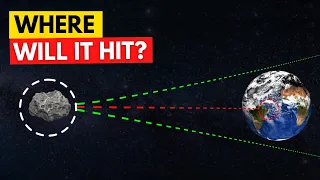
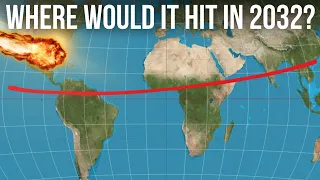
[Music] the alarm light has not yet turned red and yet there is a real danger that asteroid 2024 yr4 is on a collision course with Earth according to this the 40 to 90 M wide Space Rock could either smash into our Earthly home on December 22nd 2032 or just miss us experts currently estimate the risk of impact at 1 in 82 or 1.2% but let's be clear this is the second highest value ever reached on the tur scale but what happens next how do those in charge prepare for the rendevu with the asteroid and could
an impact be avoided at all if it comes to it it's clear to all of us that the projectiles of space are truly not to be trifled with let us just look back at the so-called tunguska event of 1908 when a gigantic explosion occurred in the the Siberian tiger that was many times more destructive than the bomb dropped on Hiroshima and which is now thought to have been caused by an asteroid or a comet exploding in the Earth's atmosphere and then of course there was the 10 to 15 km wide chunk that slammed into the
Earth 66 million years ago in the area of what is now Mexico's Yucatan Peninsula unleashing an apocalyptic Global scenario that sounded the death Nell for the dinosaurs fortunately however we have very different technical means at our Disposal today than T-Rex and Company had which is why astronomers have been keeping an eye on near Earth space and potential Earth orbit crossers with a network of automatic telescopes for quite some time but what would actually happen if the aformentioned telescopes did sound the alarm one day what if it was certain that an asteroid had set its sights
on Earth and would inevitably collide with it although we have fortunately been spared such an emergency so far those in charge regularly deal with this worst case scenario carried out at the relevant NASA and Esa centers these test alarms run through all the measures from the discovery of the asteroid to its defense or the evacuation of endangered regions however the exercises were actually followed by a real asteroid alarm on December 27th 2024 this was the day on which the Chile based telescope of the asteroid terrestrial impact last alert system or Atlas for short triggered and
reported the discovery of a rock that may have been heading for earth the news was then instantly relayed via the international asteroid warning Network to experts and observation stations around the world who also took a look at the asteroid which was named 2024 yr4 and today a good month later it's clear that this was by no means a false alarm but that 2024 yr4 could actually hit our blue home planet on December 22nd 2032 the esa states that the risk of an impact is currently estimated at around 1.2% NASA's asteroid surveillance comes to a very
similar conclusion and indicates an impact probability of 1 in 83 consequently 2024 yr4 is the only known Celestial body to be ranked above the lowest level of zero on the Turin risk scale in detail the lump is classified in the third of a total of 10 levels which puts it in the yellow area so we're dealing here with an object with a close approach to Earth a collision probability of over 1% and one that would cause local destruction in the event of an impact furthermore the scale states that and I quote the public and authorities
must be alerted if the encounter takes place in less than a decade is there reason to panic if you watch our videos regularly you will know that so far there has only been one asteroid that was classified higher on the turrin scale discovered in 2004 and about 350 m in size the impact probability for Aus was given as 2.7% which means it reached level four on the scale in the meantime however the initial Panic surrounding the supposed killer chunk has long since subsided and as a result of further orbit observations and calculations it is now
even considered impossible that the asteroid will come into close contact with our Earthly home on April 13th 2029 this could only change if Aus collides with another object in a very specific way or if it slips through the so-called Keyhole as a result which would bring it dangerously close to Earth during one of its next passages in 2036 and 2068 but if we now return to the recently discovered 2024 yr4 and assume the unpleasant case that the asteroid will actually hit us one question inevitably arises what fate will befall us then could the asteroids spark
a catastrophe of global proportions well that's improbable to put it mildly for a number of reasons on the one hand there is the size of the asteroid with an estimated diameter of 40 to 90 M it's roughly the same size as the culprit of the tunguska event it is Undisputed that the consequences of this incident were noticeable to put it mildly after all experts assume that around 60 million trees were knocked over in an area of over 2,000 square km people as far away as 500 km reported a bright Fire Light a strong Tremor and
a booming Thunderclap but a scenario that led to the proverbial end of the world did not materialize in terms of 2024 yr4 this means that NASA expects a potential impact to cause severe local destruction within a radius of around 50 km however in view of the the classification on the turrin scale and the possible consequences of a collision we must not ignore one essential point the asteroid's trajectory is still far from being measured with sufficient Precision all that can be said with certainty at present is that the asteroid orbits the sun on an elliptical eccentric
path that extends from just inside the Earth's orbit to almost as far as Jupiter basically this means that 2024 yr4 will be a classic Apollo type orbital Cruiser that will repeatedly enter our Earthly realm in this regard experts have determined that there will be seven close Earth passages between the years 2032 and 2076 and thus also seven potential impacts how can an impact be prevented in the case of aus we know that it will pass the Earth in a little more than 4 years at a distance of around 32,000 km which is still below geostationary
orbit however it is still far from Clear how close yr4 will come to us in 2024 this is because the ellipse of its possible Collision zone for the year 2032 extends far beyond our home planet normally followup observations ensure that the impact ellipse steadily shrinks over time and if the Earth moves out of this ellipse in the process an impact can be ruled out and in fact on paper it's anything but improbable that this is exactly what will happen after all level three on the Terran scale States further observations will very likely lead to a
downgrade to class zero and yet a little patience is still required before we have more clarity currently the asteroid is moving in an almost straight line from Earth which makes it all the more difficult for experts to determine its orbit precisely typically astronomers determine the orbit based on the lateral curvature of the trajectory and since 2024 yr4 is rapidly becoming smaller and darker as it travels through space ever more powerful telescopes are needed to observe it at the same time however researchers are running out of time because in a few months the asteroid will move
out of our Earthly field of vision for the time being and will not return to within observation range until 2028 however if the Earth really does move into the asteroids cross hairs by then we would only have 4 years left to react but is this even possible in such a short period of of time well the reassuring answer to this is yes after all we have already succeeded in deliberately changing the trajectory of an asteroid in the fall of 2022 NASA's Dart Mission impressively demonstrated how a 57 kilor Ram probe can be used to divert
a 165 M asteroid that weighs a whopping 5 billion kg as a result the orbit of the target asteroid Doros around its larger partner was reduced Ed by almost 35 minutes according to those in charge the mission was not only a complete success but also proof that we are no longer powerless in the face of the potential danger posed by asteroids if yr4 really is heading for Earth in 2032 we could launch a dart Mission 2.0 and once again crash a probe into the surface of a space Rock however the experts do not want to
just sit around twiddling their thumbs before the corresponding trajectory has been more accurately measured the esa Le space mission planning Advisory Group is already working on the planning of possible countermeasures in addition it's in close contact with governments and international organizations such as the UN and is informing them about the further course of action and potential Preparatory measures the nasal LED International asteroid warning network is dedicated to coordinating further monitoring and research of the asteroid and to dealing with the possible effects of a collision and now you are welcome to consider the possible effects of
your click collision with the Subscribe button just press the Thumbs Up And subscribe now to never miss another one of our new videos we'll see you soon