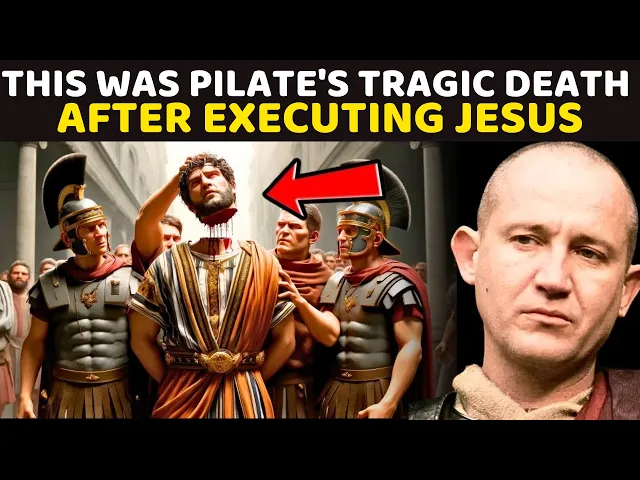
Did you know that the life of Pontius Pilate, the man who authorized the crucifixion of Jesus, ended mysteriously and tragically? Imagine being responsible for the most controversial decision in history and suffering the consequences in silence. Pilate, the Roman governor of Judea, appears in various historical and religious sources.
What happened to him after that fateful day? This story combines biblical, historical, and traditional accounts. Pilate is mentioned in the four Gospels of the New Testament, where his hesitation and eventual decision to crucify Jesus are detailed.
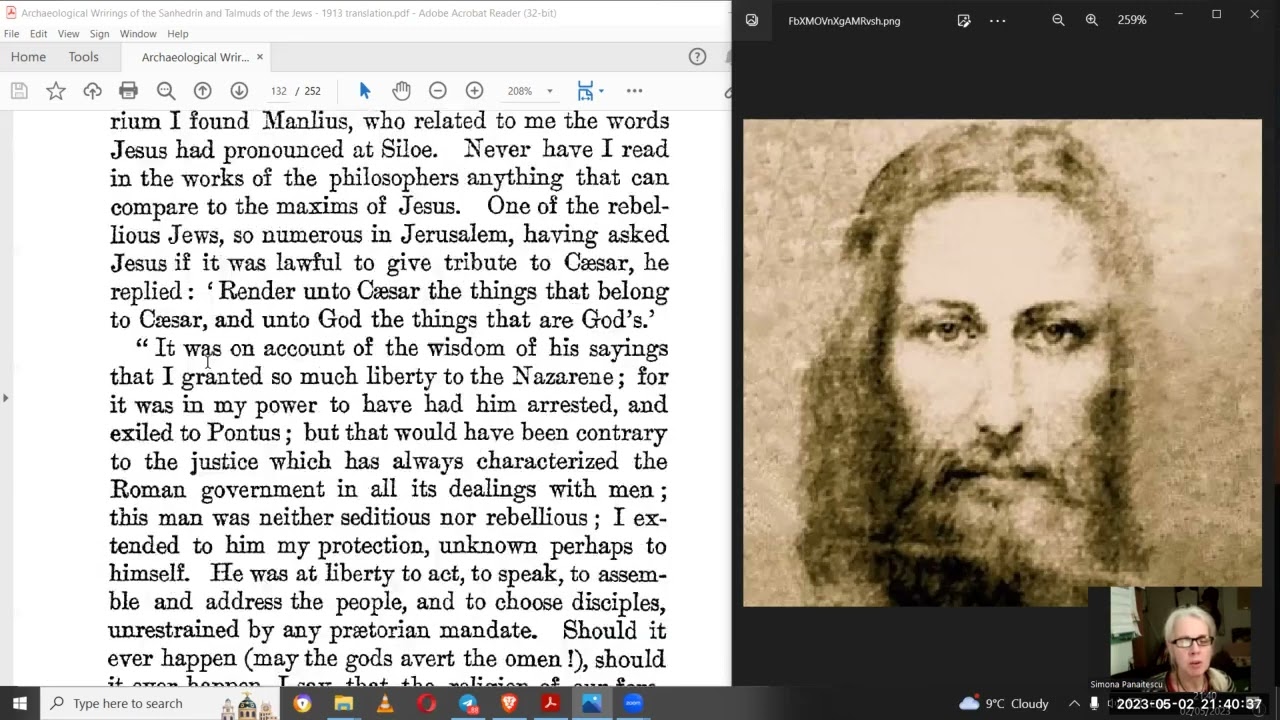
His interaction with Jesus and the pressure from the Jewish authorities are described in Matthew 27, Mark 15, Luke 23, and John 18 and 19. Sources such as the Jewish historian Flavius Josephus and the Roman philosopher Philo of Alexandria provide additional historical context for Pilate and his governance in Judea. Combining these sources allows for a broader understanding of Pilate's complex figure and his role in the crucifixion.
To fully understand his story, it is essential to explore the events narrated in the sacred texts and the complex political and social dynamics of his time. Continue watching to discover the incredible and disturbing story of the Roman governor who sealed the fate of Jesus. Pontius Pilate, Roman governor of Judea, was in a dilemma.
The Jewish religious leaders demanded the crucifixion of Jesus, accusing him of blasphemy; however, Pilate found no crime in Jesus (John 18:38). He tried several times to release Jesus, even suggesting the annual release of a prisoner during Passover. Still, the crowd chose Barabbas over Jesus (Matthew 27:1, 15-26).
Despite his reluctance, he yielded to the crowd's pressure, symbolically washing his hands and handing Jesus over to be crucified (Matthew 27:24). This gesture was an attempt to absolve himself of responsibility for Jesus' death. This act would echo throughout history as an example of cowardice and injustice.
Moreover, the biblical narrative highlights that Pilate tried various ways to appease the crowd, including the flogging of Jesus, hoping that a lesser punishment would suffice to satisfy the Jewish leaders (Luke 23:16). This moment not only sealed Jesus' fate but also marked the beginning of the end for Pilate, whose actions and their consequences would be debated and analyzed for centuries. Pilate was aware of the political instability of the region; Jerusalem was bustling with the celebration of Passover, and the presence of Jesus, considered a prophet by many, only heightened the tension.
The religious leaders accused him of inciting revolt against Rome (Luke 23:2), a serious charge that could justify his condemnation under Roman law. Pilate was in a difficult position. If he released Jesus, he could face a rebellion from the Jews.
If he condemned him, he would be authorizing the death of a man he considered innocent. To avoid a riot, Pilate yielded to their demands. Little did he know that this decision would haunt him for the rest of his life.
The Bible does not provide details about Pilate's internal thoughts, but his actions indicate a man under extreme pressure, trying to balance justice with maintaining public order. Subsequent history suggests that this choice would weigh heavily on him. Historically, maintaining order in provinces like Judea required a delicate balance of power, and Rome's enemies could exploit any sign of weakness.
Thus, Pilate was in an extremely complicated situation where any decision had the potential to generate serious political and social consequences. While Pilate was judging Jesus, his wife, Claudia Procula, had a disturbing dream. She sent a message to Pilate, warning him to have nothing to do with that righteous man (Matthew 27:19).
This dream is only mentioned in the Gospel of Matthew, and its origin and meaning remain shrouded in mystery. Some interpreters suggest it was a divine intervention to try to prevent Jesus' crucifixion. Claudia Procula is a figure who appears only briefly in biblical accounts, but her intervention highlights Pilate's moral dilemma.
She had suffered greatly because of that dream, which she believed was a divine warning. Ignoring this warning would be a mistake that would torment Pilate forever. The Christian tradition later sanctified Claudia Procula in some denominations, reflecting the perceived importance of her role in the passion drama.
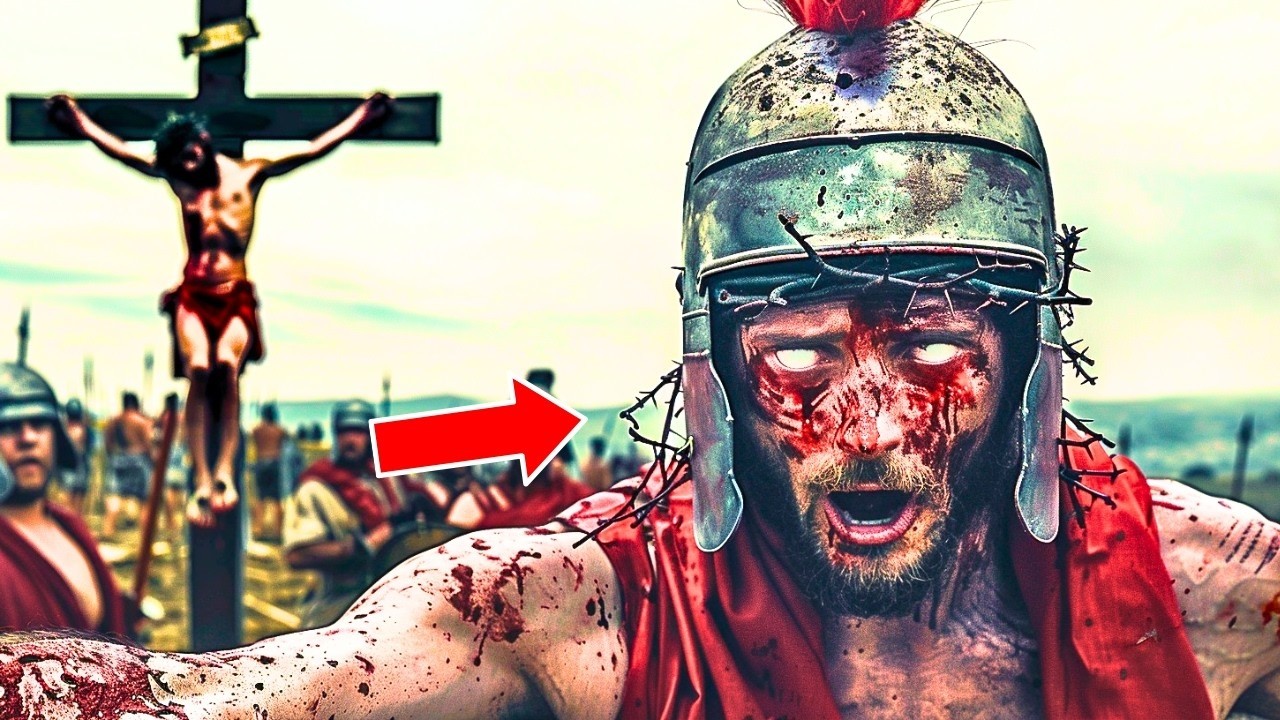
Additionally, the figure of Claudia is interpreted by some as a symbol of the voice of conscience trying to intercede in moments of moral crisis. Her disturbing dream adds a supernatural dimension to the narrative, suggesting that greater forces were at play in that trial. Jesus was crucified under Pilate's orders.
The inscription on the cross read, "Jesus of Nazareth, King of the Jews" (John 19:1). This inscription, in Hebrew, Latin, and Greek, was an attempt by Pilate to affirm the accusation that Jesus claimed to be king, an act of treason against Caesar. While Jesus suffered, Pilate struggled with his doubts and guilt.
The crucifixion of Jesus is a central event in the Gospels; it is described in detail, including the reactions of various spectators and the supernatural phenomena that accompanied it, such as noon darkness and the temple veil tearing (Matthew 27:45-51). These events only increased the weight on Pilate's conscience as he witnessed occurrences that suggested Jesus' divine innocence. The Bible implies that the crucifixion was not just a human event but also a cosmic moment where the forces of good and evil conflicted.
Historically, the practice of crucifixion was reserved for the worst criminals and was designed to be a public spectacle of shame and agony. Pilate's decision to proceed with this form of execution, despite his reservations, shows the degree of pressure and the complexity of the political and social situation he found himself in. After the crucifixion, Pilate became obsessed with the decision he had made.
The crowd and the religious leaders had manipulated him, and this ate away at his soul. The words of Jesus echoed in his mind: "Father, forgive them; for they do not know what they do" (Luke 23). Pilate's guilt grew every day, becoming unbearable.
Although the Bible does not provide details about Pilate's subsequent feelings, the psychological impact of his actions is a reasonable speculation based on the gravity of his decision. Christian tradition suggests that Pilate never overcame the weight of his responsibility in Jesus's death, a burden that deeply affected his subsequent life. The apocryphal gospels and other extracanical sources, such as the Ethiopian Orthodox Church tradition, elaborate further on Pilate's anguish, painting a picture of a man destroyed by guilt.
His attempt to symbolically wash his hands did not alleviate the moral burden he carried, and he must have constantly remembered the events of that fateful day. The Ethiopian Orthodox tradition even considers that Pilate converted to Christianity, acknowledging his guilt and seeking redemption. Although this is largely speculative and not universally accepted, the guards who watched Jesus' tomb reported that he had risen (Matthew 28:4-5).
This caused an uproar among the Jewish leaders and Pilate; he tried to suppress the truth, bribing the guards to spread a lie (Matthew 28:12-15), but the news of Jesus's resurrection spread quickly, increasing Pilate's torment. The resurrection is the central event of the Christian faith, definitely affirmed by the gospels and the Epistles of the New Testament (1 Corinthians 15:3-8). For Pilate, the resurrection represented a crisis of legitimacy; if Jesus rose, it not only validated Jesus's claims of divinity but also meant that Pilate had condemned an innocent man to death.
Pilate's attempt to cover up the resurrection reflects his struggle to maintain order and his sanity in the face of events that defied logic and Roman authority. Moreover, the spread of Christianity in the following decades, including the conversion of many Jews and Gentiles, broadened the impact of the resurrection and the implications of Pilate's decision. Efforts to suppress the truth of the resurrection reflect the ongoing conflict between the temporal power of Rome and the emerging spiritual power of Christianity.
Emperor Tiberius received conflicting reports about the events in Judea. Pilate was in a precarious position, facing allegations that he was already unpopular due to his brutal repression and insensitivity to Jewish traditions. Flavius Josephus and Philo of Alexandria describe Pilate as a ruthless governor whose actions often provoked the ire of the Jews.
In one of his most notorious acts, Pilate used temple funds to build an aqueduct, provoking a strong reaction from the Jews. The situation worsened when he was called back to Rome to account for his actions. Pilate was removed from office after an incident involving the killing of Samaritans on Mount Gerizim; this event, along with his general administration, led to his recall by Lucius Vitellius, governor of Syria.
Pilate faced a rigorous investigation in Rome, and his political career ended. The political consequences of his actions in Judea had significant repercussions for him and the province he governed. The political turbulence in Judea during Pilate's governance and his subsequent downfall reflect the complexity of Roman administration in the provinces, where maintaining order and enforcing Roman power often clashed with local traditions and aspirations for independence.
In Rome, Pilate faced a rigorous investigation; Tiberius was furious with the tensions Pilate had caused in Judea. Pilate's political enemies seized the opportunity to attack him; he was stripped of his office and exiled. His wife, Claudia, continued to suffer from nightmares, and Pilate, consumed by guilt, became reclusive.
Tradition suggests that Pilate did not have a formal trial but was forced to retire from public life. Some apocryphal accounts, such as the Acts of Pilate, offer alternative narratives of his life after the crucifixion, often with tones of remorse and penance. Pilate's death is shrouded in mystery and speculation, with various traditions suggesting different endings for his life.
In any case, history paints a picture of a man whose actions had a profound and lasting impact on his life and history. The investigation in Rome likely focused on his failure to maintain peace and his poor administration, reflecting the complex web of power and politics that characterized the Roman Empire. Pilate, who once held great power, found himself helpless, living his last days in shame and isolation—a tragic irony for a man who sought to preserve his position through injustice.
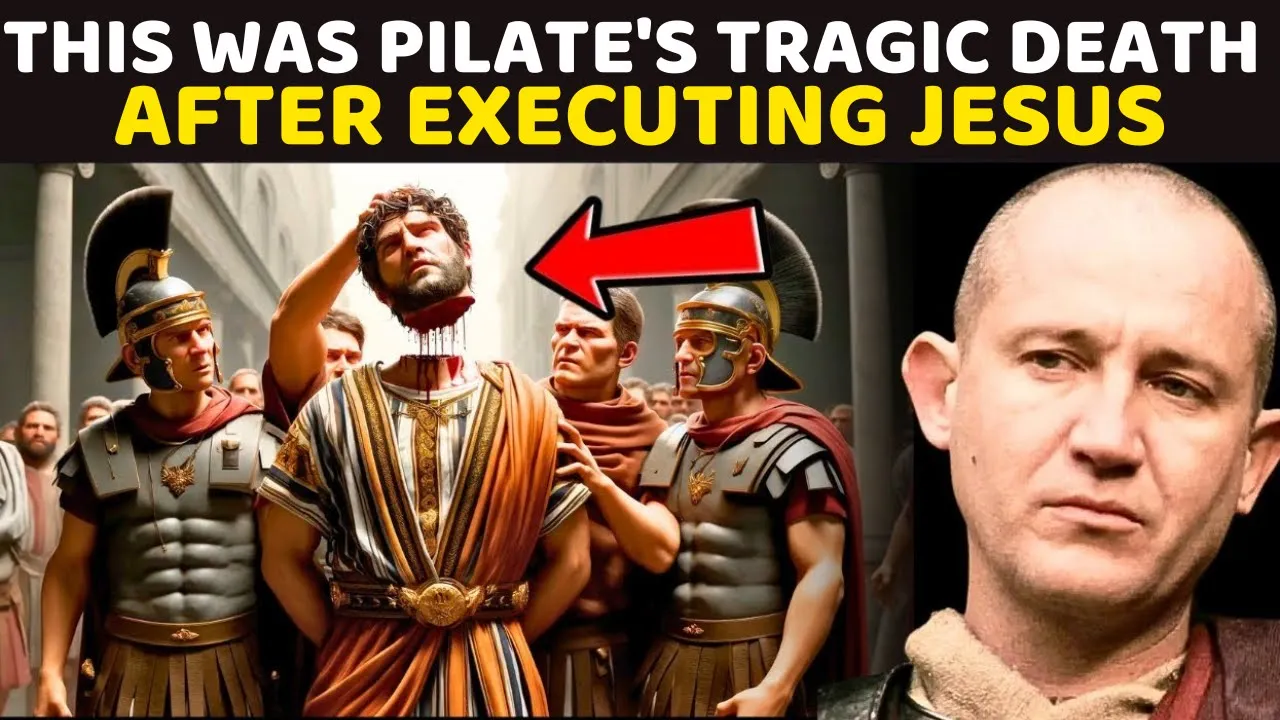
The death of Pontius Pilate is shrouded in mystery. Some historical accounts suggest that he committed suicide, unable to bear the weight of his actions and the humiliation of his exile. Eusebius of Caesarea, a church historian of the 4th century, mentions that Pilate committed suicide under the reign of Caligula.
Other accounts, such as Tacitus's, do not provide specific details about his death. The Christian tradition also presents various versions of his end, some of them suggesting that he converted to Christianity before dying. The legend popularized in medieval and Renaissance literature, such as the Golden Legend, narrates that Pilate killed himself in his exile in Gaul, where his body was thrown into a river.
In any case, his death was seen as a tragic outcome for a man who had played a crucial role in the crucifixion of Jesus. The mixture of history, tradition, and speculation surrounding his death reflects the complexity of his figure in collective memory. Furthermore, Pilate's story has been used over the centuries to explore guilt, redemption, and justice themes.
His suicide, if true, is seen as a final expression of despair and remorse, while the traditions of his conversion suggest an attempt to seek absolution. These diverse narratives highlight the difficulty of separating fact from fiction regarding historical figures involved in events of great religious and moral significance. Pilate has become a black legend in Christian history; he is often portrayed as a weak and manipulable man who lacks the courage to stand up for what he knew was right.
His life and death are a reminder of the lasting impact of our decisions and the consequences of yielding to pressure. In the gospels, Pilate is portrayed as a governor who, despite recognizing. .
. Jesus' innocence succumbed to the crowd's demands. Christian tradition has vilified him over the centuries, although some apocryphal texts offer a more sympathetic view of his character.
Pilate's hesitation and final decision have been the subject of countless theological and historical interpretations, highlighting his role's moral and ethical complexity in the crucifixion. This black legend of Pilate serves as a warning about the dangers of being swayed by external pressure at the expense of justice and truth. Pilate is often compared to other historical figures who faced similar moral dilemmas, and his story is used to illustrate the importance of courage and integrity.
In many Christian traditions, he is remembered during Holy Week as an example of how cowardice and injustice can lead to devastating outcomes. Pilate's tragic story also offers deep theological reflection; he stood before the Son of God but failed to recognize the truth. His inability to act justly is an example of human fallibility.
Pilate's story challenges us to consider our decisions and the courage to follow the truth. Theologians throughout the centuries have debated Pilate's role in the Passion of Christ, often using his figure to illustrate the struggle between justice and convenience. His attempt to wash his hands of guilt is seen as a symbol of a guilty conscience trying to avoid responsibility.
Pilate's figure is also used in sermons to highlight the need for moral courage and integrity. His story reminds us that, faced with difficult decisions, we must have the courage to act justly, even if it means facing personal consequences. Christian theology sees Pilate's figure as an example of the struggle between good and evil, and his failure to recognize and act on the truth about Jesus is a warning against moral complacency.
Furthermore, Pilate's story is an invitation for self-reflection, encouraging us to examine our hearts and seek to live according to the principles of justice and truth. Pilate has become a central figure in numerous works of art and literature. His inner struggle and role in Jesus's crucifixion have been explored by artists and writers throughout the centuries, from medieval sacred art to modern literature.
In "The Gospel According to Jesus Christ" by José Saramago and "The Master and Margarita" by Mikhail Bulgakov, Pilate is portrayed as a complex character torn between duty and morality. In art, he is often depicted in the scene of Jesus' condemnation, his expression varying between doubt and resignation. These cultural representations reflect Pilate's enduring impact on the collective imagination, highlighting his historical and theological significance.
Additionally, Pilate appears in many depictions of the Via Crucis, where his figure serves as a point of reflection on power, justice, and humanity. Theater and cinema have also explored his figure, often emphasizing the moral dilemmas he faced. The complexity of Pilate as a character allows artists and writers to explore universal themes of power, responsibility, and redemption.
In Christian tradition, Pilate is often remembered during Holy Week. His figure is evoked in sermons and theatrical representations of the Passion of Christ. He is seen as an example of how cowardice and injustice can lead to devastating outcomes.
In liturgical rites, Pilate is mentioned in the Nicene-Constantinopolitan Creed, where it is stated that Jesus suffered under Pontius Pilate. His inclusion in the Creed highlights the importance of his role in the history of Christian salvation. Pilate's figure is used pedagogically to teach about the dangers of injustice and lack of moral courage.
During Easter celebrations, the memory of Pilate serves as a reminder of the consequences of human actions and the need to seek justice and truth in all circumstances. In many Christian traditions, Pilate's figure is associated with the concept of unjust judgment, and his story is used to teach about the importance of justice and righteousness. In some liturgies, Pilate is mentioned in prayers as an example of human weakness and the need for divine grace to overcome our moral challenges.
The life and death of Pilate teach valuable lessons about responsibility and integrity. He had the opportunity to change the course of history but chose the easy way out. His story reminds us that our actions have consequences for us and all those affected by our decisions.
Pilate's figure is often used in educational and moral contexts to illustrate the importance of acting with justice and courage. His hesitation and surrender to external pressures exemplify how a lack of moral firmness can lead to disastrous decisions. The lessons of Pilate resonate in various spheres of life, from politics to personal decisions, reminding us of the importance of staying true to truth and justice.
In many contexts, Pilate is used as a case study to discuss ethics and leadership, highlighting the need for integrity in positions of power. His failures warn against complacency and the pursuit of the path of least resistance at the expense of what is morally right. Pilate's story challenges us to reflect on our actions and our responsibility to act justly, even in the face of great pressure.
Today, Pilate's story still resonates in our world; in times of uncertainties and conflicts, making just and courageous decisions has never been more relevant. Pilate's tragedy is a reminder that truth must prevail, even in the face of pressure and adversity. His figure is used in contemporary discussions about leadership and ethics, highlighting the challenges of staying upright in the face of political and social pressures.
Pilate's story serves as a warning about the dangers of complicity with injustice in times of crisis. His ongoing relevance demonstrates the enduring importance of his lessons, which transcend the barriers of time and culture. Additionally, Pilate's story is often evoked in debates about justice and human rights, illustrating how inaction can have devastating consequences.
His figure is a constant reminder of the importance of moral courage and the need to take a firm stand for the truth. The modern world is a testament to the universal and timeless nature of the moral dilemmas he faced, encouraging us to seek justice and righteousness in our own lives. Pilate's figure has also been explored in popular culture—movies, plays, and books.
He is portrayed in various ways, from a cold villain to a victim of circumstances; these representations continue to fuel fascination with the man who played a crucial role in the history of humanity. Movies such as *The Passion of the Christ* and *Jesus of Nazareth* portray Pilate with nuances that highlight his complexity. In literature, he is a central character in works exploring power, justice, and remorse themes.
Popular culture keeps Pilate's figure alive, allowing for new interpretations and understandings of his role in history. These representations show how Pilate's figure remains relevant and intriguing to modern audiences. Additionally, he appears in numerous Easter theatrical productions worldwide, where his role is examined and reimagined in various ways.
The different interpretations of Pilate in popular culture reflect changes in values and social perceptions, highlighting how each generation reevaluates his figure in light of new contexts and understandings. Pilate remains a central figure in discussions about power, morality, and the consequences of human actions, showing his ongoing relevance in our culture. Pilate's memory lives on in Christian traditions and the collective consciousness; his story is a testament to humanity's power and fragility.
He is remembered not only for what he did but for what he did not do: the courage to stand up for truth and justice. Pilate's inclusion in the creed and the passion narratives ensures that his figure remains central in Christian memory. His story is used in religious and educational contexts to teach about morality and responsibility.
Pilate's memory is a constant reminder of the challenges faced by those in positions of power and the importance of making just decisions. In many traditions, he symbolizes how fear and cowardice can lead to morally wrong decisions. Additionally, Pilate's figure reflects on the nature of judgment and responsibility, highlighting the complexity of his decisions.
His actions and the subsequent condemnation of Jesus are discussed in historical terms and as a case study on ethics and leadership. Pilate's memory serves as a warning to us about the importance of acting with integrity and courage in all circumstances, reminding us that our actions have lasting consequences. The story of Pontius Pilate has a lasting impact on the Christian faith; it challenges us to reflect on our societal role and responsibility in our decisions.
Pilate is a tragic figure whose life and death continue to inspire and warn. Christian theology uses Pilate's figure to discuss sin, redemption, and justice themes. His role in the crucifixion of Jesus is central to understanding Christ's sacrifice and salvation.
Pilate's lasting impact is a testament to the importance of his actions and the lessons we can learn from his story. Additionally, his figure is often used in educational contexts to teach about the importance of responsibility and integrity. Pilate exemplifies how power can corrupt and how a lack of moral courage can lead to disastrous decisions.
His story challenges us to reflect on our actions and the responsibility to act justly, even in the face of great pressure. The impact of Pilate on the Christian faith is profound, and his story is a constant reminder of the importance of seeking truth and justice in all circumstances, teaching us about the power of redemption and forgiveness. Pontius Pilate, the man who authorized the crucifixion of Jesus, is a complex and tragic figure.
His story is a mix of power, guilt, and remorse. As we reflect on his life and death, we are reminded of the importance of making just decisions and facing the truth, no matter how difficult it may be. Pilate's tragedy is an eternal reminder that our actions have consequences and that pursuing justice and truth should be our highest priority.
His figure mirrors our moral and ethical dilemmas, encouraging us to act with integrity and courage in all circumstances. Pilate's story challenges us to consider our responsibilities and the impact of our decisions in the present and future. It teaches us about the power of redemption and the importance of seeking the truth, no matter how difficult or unpopular that pursuit may be.
Pilate is a figure that continues to resonate in our collective conscience, reminding us that justice and truth should always be our highest priorities. As we consider Pilate's life and death, we are challenged to reflect on our own actions and the responsibility we have to act with justice and integrity, regardless of the pressures we may face. We have reached the end of our video, and I hope you liked it.
If you're looking for inspiration, knowledge, and spiritual connection, don't let this opportunity pass you by. Subscribe to our channel now, leave your like, and comment to strengthen our community. If you want to help us continue sharing religious stories that touch hearts, become a channel member.
Together, we can make a difference and strengthen our spiritual journey. We're counting on you! We've left the link in the description of this video, so you can become a member today.
Continue watching videos about the history of the Bible; I will leave two recommendations here on the screen. God bless you, and we will see you in the next video.