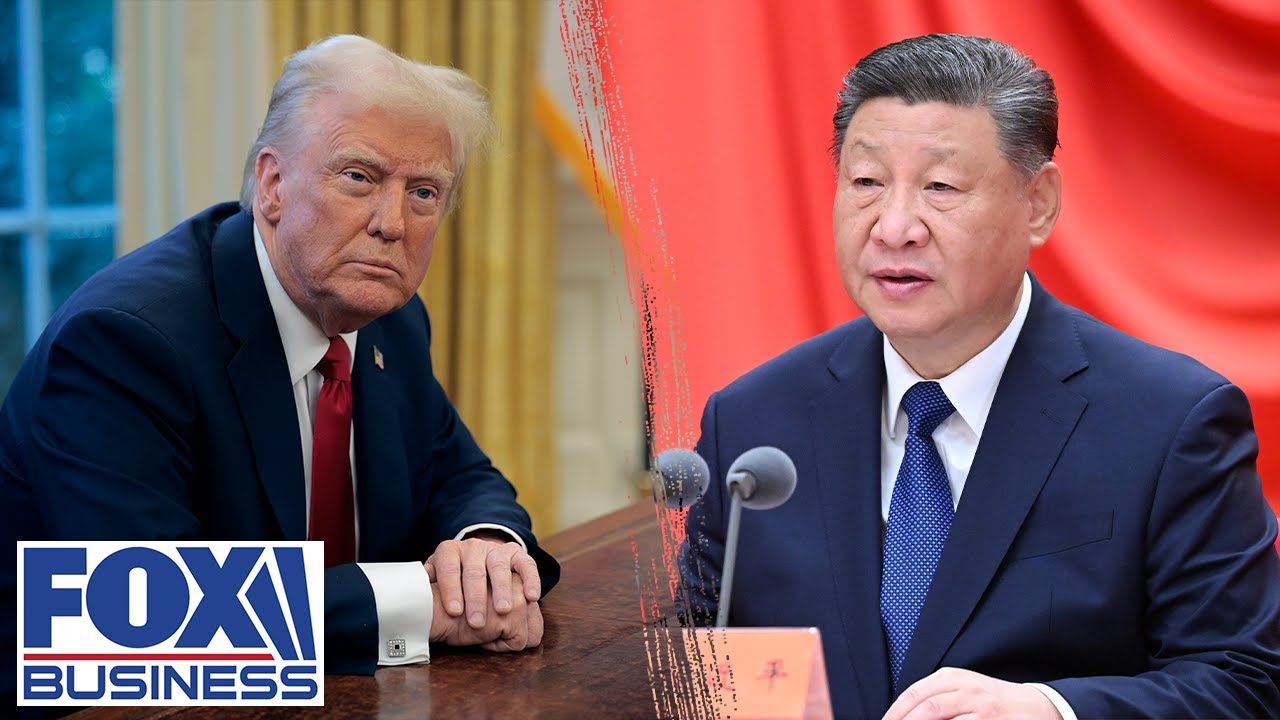
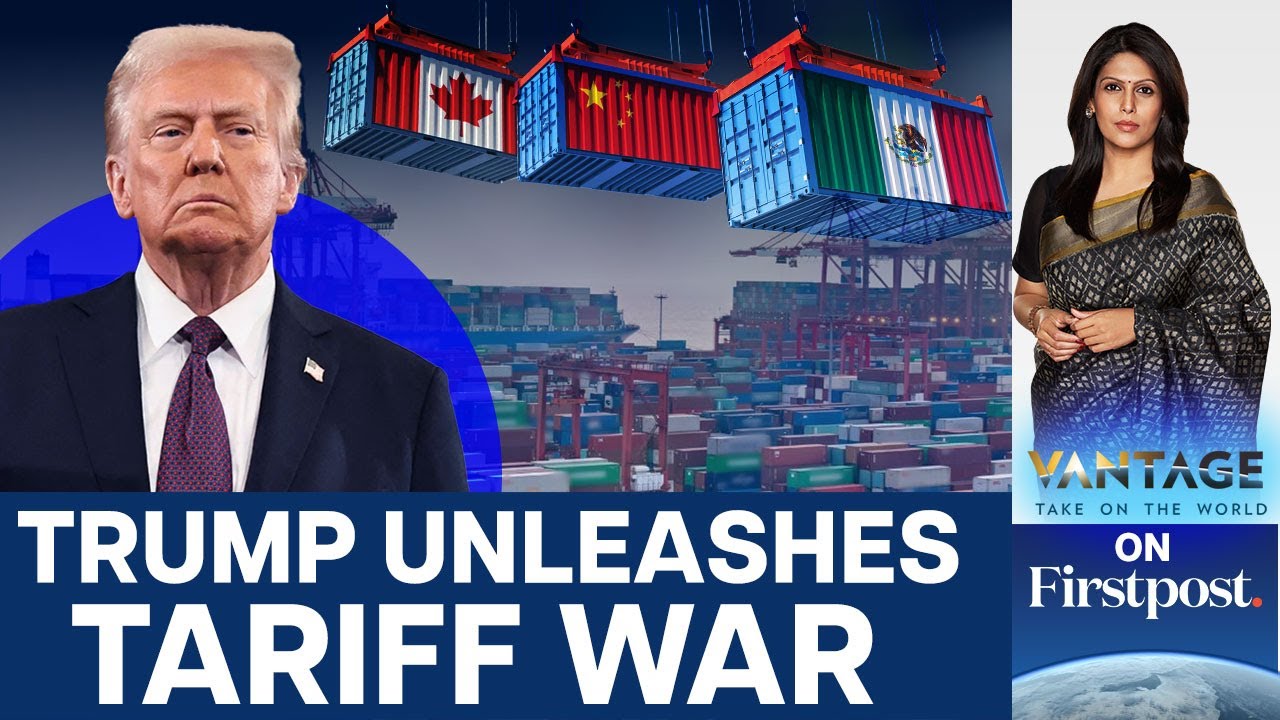
In early February 2025, trade tensions between the United States and Canada escalated following President Donald Trump's announcement of significant tariffs, citing concerns over illegal immigration and the influx of fentanyl into the U. S. Trump declared a 25% tariff on all Canadian imports, with a reduced 10% tariff specifically on Canadian energy products.
These measures were set to take effect on February 4, 2025. In response, Canadian Prime Minister Justin Trudeau announced retaliatory tariffs, imposing a 25% duty on $30 billion worth of U. S.
goods starting February 4th, with plans to extend these tariffs to an additional $125 billion of U. S. goods after a 21-day public consultation.
The targeted products include American beer, wine, bourbon, fruits, fruit juices, clothing, sports equipment, and household appliances. Following discussions between Trump and Trudeau, an agreement was reached to delay the implementation of these tariffs for 30 days. Canada committed to enhancing border security measures, including appointing a fentanyl czar and collaborating on a joint strike force with the U.
S. to combat drug trafficking. These concessions, some of which had been previously announced, led to mixed reactions within Canada.
Despite the temporary pause, concerns persist about the potential economic impact of the proposed tariffs. Economists warn that such measures could increase consumer prices, disrupt supply chains, and strain the longstanding trade relationship between the U. S.
and Canada. The situation remains fluid, with both nations engaging in negotiations to find a more permanent resolution before the new deadline. Recent developments indicate that Canada is adjusting its oil export strategies in response to evolving trade dynamics with the United States and increasing demand from Asian markets, particularly China.
Canada's oil industry and Canadian pipeline operator Trans Mountain anticipate increased interest in its pipeline system, especially if these U. S. tariffs are implemented.
The Trans Mountain pipeline, which can transport up to 890,000 barrels per day from Alberta to Canada's Pacific Coast, has been operating at approximately 80% capacity. The company expects that the tariffs will lead to a rise in shipments to Asia, particularly China, as exporters seek alternative markets. The Trans Mountain pipeline expansion, which began operations in May 2024, has tripled the flow of crude oil from Alberta to Canada's Pacific Coast, reaching a capacity of 890,000 barrels per day.
This expansion provides Canadian producers with greater access to Asian markets, reducing reliance on the U. S. In recent months, major refiners in China, Japan, South Korea, and Brunei have purchased cargos from the expanded pipeline.
For instance, in September 2024, Chinese private refiner Rongsheng Petrochemical secured multiple cargos of Canadian crude. Canada’s strategic pivot toward Asia is driven by several factors: market diversification, reducing dependence on the U. S.
market, mitigating risks associated with trade disputes and tariff impositions, and demand alignment. Asian countries, particularly China, have a growing demand for heavy crude oil, which aligns well with Canada's export offerings. Economic benefits, such as accessing high-demand markets in Asia, present opportunities for Canadian producers to achieve better pricing and expand their customer base.
Despite Canada's efforts to position itself as a leader in climate action—including implementing a nationwide carbon tax—the country continues to invest heavily in oil extraction projects. The Trans Mountain pipeline has become emblematic of this contradiction, as it facilitates increased oil exports to global markets, particularly China. Critics argue that such investments undermine Canada's emissions reduction targets and highlight the challenges of balancing economic growth with environmental commitments.
Canada is a significant player in the global oil industry, ranking among the top oil-producing nations worldwide. Here's a detailed comparison of Canada's oil production relative to other leading countries as of 2023. The top oil-producing countries and their approximate daily production figures are: - United States: 2.
91 million barrels per day, which is 22% of global production - Saudi Arabia: 11. 13 million barrels per day, or 11% - Russia: 10. 75 million barrels per day, also 11% - Canada: 5.
76 million barrels per day, making up 6% - China: 5. 26 million barrels per day, which is 5% Collectively, these top five countries account for over half of the world's total oil production. Canada's oil production has seen significant growth over the past decades.
In 2019, the country produced an average of 4. 7 million barrels per day, with 64% derived from unconventional oil sands. By 2023, production increased to approximately 5.
76 million barrels per day, solidifying Canada's position as the fourth-largest oil producer globally. Canada boasts the third-largest proven oil reserves globally, estimated at approximately 180 billion barrels, primarily located in Alberta's oil sands. This vast reserve base underpins Canada's significant role in the global energy landscape.
A substantial portion of Canada's oil production is destined for export. In 2023, crude oil exports reached a record high of 4 million barrels per day, accounting for 81% of the country's total production. Notably, 98% of these exports were directed to the United States, highlighting the integrated nature of the North American energy market.
Canada's export economy is diverse, encompassing a range of industries that contribute significantly to its GDP. Building upon the previously mentioned key export commodities, here are additional details: - Mineral Fuels and Oils: In 2023, Canada's exports in this category were valued at approximately $43. 40 billion, accounting for a significant portion of the country's export revenue.
This category includes crude oil, petroleum gas, and refined petroleum products. The United States remains the primary destination for these exports, underscoring the integrated nature of the North American energy market. - Vehicles: The automotive sector is a major contributor to Canada's exports, with vehicles accounting for about $63.
68 billion in export revenue in 2023. This includes passenger cars, SUVs, and light trucks. The majority of these vehicles are manufactured in Ontario and Quebec, with a significant portion exported to the United States.
- Machinery: Including nuclear reactors and boilers, machinery exports encompass a wide range of industrial and technological equipment, contributing approximately $42. 46 billion, with exports valued at around $16. 01 billion in 2023.
This category covers a broad range of products, from telecommunications equipment to. . .
Electronic components used in various applications. Key export destinations include the United States and Mexico, facilitated by trade agreements like the Canada-United States-Mexico Agreement, also known as CUSMA. Canada and China have developed a significant trade relationship over the past few decades, with China emerging as Canada's second-largest trading partner after the United States.
This relationship encompasses a wide array of goods and services, reflecting the economic interdependence between the two nations. In 2022, bilateral trade between Canada and China reached substantial figures: Canada exported goods worth approximately $25. 4 billion to China, while imports from China stood at about $62.
1 billion. This resulted in a trade deficit of $36. 7 billion for Canada.
In 2023, Canada's exports to China were valued at approximately $2. 6 billion, with key commodities contributing significantly to this trade. Here’s a detailed breakdown of these primary export categories: - **Oil seeds and oleaginous fruits:** $3.
84 billion. This category, dominated by canola, experienced a remarkable growth rate of 75. 21% year-over-year.
The surge can be attributed to increased demand following the lifting of COVID-19 restrictions in China and the normalization of market access for Canadian producers. Notably, in the first quarter of 2023, canola exports reached $1. 27 billion, marking a 331.
65% increase compared to the same period in the previous year. - **Ores, slag, and ash:** $3. 58 billion.
This segment includes various metal ores, with iron and copper being significant contributors. Iron ore exports to China totaled $2. 5 billion, reflecting a 15.
58% year-over-year growth, while copper exports amounted to $1. 6 billion, representing a 13. 57% increase.
These metals are essential for China's industrial activities, driving consistent demand. - **Mineral fuels and oils:** $2. 40 billion.
Coal is a primary component of this category. In 2023, Canadian coal exports to China were valued at $3. 04 billion, though this represented a 12.
93% decline from the previous year. The decrease is partly due to China's renewed coal trade with Australia, which intensified competition. - **Pulp of wood and related materials:** $2.
30 billion. Chemical wood pulp exports reached $2. 21 billion in 2023, experiencing a modest growth of 1.
98% year-over-year. This steady demand underscores China's need for raw materials in its paper and packaging industries. - **Cereals:** $1.
49 billion. Cereals, including wheat and barley, have seen increased exports to China, driven by the country's evolving food consumption patterns and the need to supplement domestic production. Between 2019 and 2023, cereal exports from Canada to China grew at an annual rate of 19%.
In 2022, Canada's imports from China reached a record high of approximately $100 billion CAD, marking a 16% increase from the previous year. This surge underscores the deepening economic ties between the two nations. Key import commodities include a diverse range of products.
In 2022, the primary import categories included: - **Consumer goods:** Valued at $31 billion CAD. This category covers a broad spectrum of products, including household items, clothing, and personal care products. - **Electronic and electrical equipment:** Imports in this sector were worth $28 billion CAD, highlighting China's role as a major supplier of electronics to Canada.
These figures illustrate the significant role that consumer goods and electronics play in Canada's import portfolio from China, reflecting the strong demand for these products in the Canadian market. For those who may not be aware of the reasons behind these strategic moves and the growing tensions between Canada and the United States, let's take a quick look at the background. Let’s take a quick pause; if you've enjoyed the video so far, could we ask a small favor?
Hitting the like button helps us reach a broader audience, and sharing your thoughts or feedback in the comments makes an even bigger impact. Thank you for watching, and now let's dive back in. In December 2024, at a meeting held at Mar-a-Lago with Canadian Prime Minister Justin Trudeau, then President-elect Donald Trump proposed that if impending U.
S. tariffs harmed Canada's economy, the nation might consider joining as the 51st state of the United States. He even dubbed Trudeau "Governor Justin Trudeau of the great state of Canada" and showed an eagerness to continue talks regarding tariffs and trade.
In early 2025, disagreements between Canada and the United States intensified after a sequence of statements and policy suggestions from U. S. President Donald Trump.
Central to the debate were President Trump's proposals that Canada should contemplate statehood as the 51st member of the U. S. and his administration's enforcement of hefty tariffs on Canadian products.
During a press conference at Mar-a-Lago on January 7, 2025, when asked if Canadian Prime Minister Justin Trudeau could offer any solution to avoid the looming tariffs, President Trump replied, "What I'd like to see is Canada become our 51st state. " Further reinforcing this viewpoint, President Trump posted on his social media outlet, Truth Social, stating, "We pay hundreds of billions of dollars to subsidize Canada. Why?
There is no reason. We don't need anything they have. We have unlimited energy, should make our own cars, and have more lumber than we can ever use.
Without this massive subsidy, Canada ceases to exist as a viable country. Harsh but true. Therefore, Canada should become our cherished 51st state.
Much lower taxes and far better military protection for the people of Canada and no tariffs. " In addition to these comments, President Donald Trump made several other statements that further strained relations between the United States and Canada. In January 2025, Trump remarked, "They don't essentially have a military; they have a very small military.
" He also stated, "We're spending hundreds of billions a year to protect Canada. " Moreover, Trump criticized Canada for its alleged prohibition on U. S.
banks, asking, "What's that all about? " These statements coincided with his administration's decision to levy a 25% tariff on Canadian goods, with a reduced 10% tariff on energy exports. The U.
S. government defended these tariffs as necessary measures to tackle issues like illegal immigration and drug trafficking. President Donald Trump's claim that the United States subsidizes Canada with hundreds of billions.
. . Of dollars each year has been thoroughly debunked by experts and fact-checkers alike.
This assertion appears to be based on a misreading of trade deficits. In 2024, the U. S.
ran a trade deficit with Canada, largely due to significant imports of Canadian oil. However, a trade deficit does not amount to a subsidy; it merely indicates that the U. S.
imports more from Canada than it exports to it—a reflection of market forces and consumer preferences rather than direct government financial support. The economic ties between the U. S.
and Canada are profoundly interwoven and mutually advantageous. In 2023, Canada exported 77% of its goods to the United States and imported nearly half of its goods from the U. S.
, rendering them each other's largest trading partners. This robust trade relationship sustains millions of jobs and makes a considerable contribution to the GDP of both countries. It is equally important to note that the U.
S. reaps significant benefits from this arrangement. Canada stands as the largest energy supplier to the U.
S. , providing crude oil, natural gas, and electricity—an energy trade that is essential for American industries and consumers. The stark difference in population sizes between the United States and Canada also significantly shapes their trade dynamics.
As of 2024, the U. S. population was approximately 303.
9 million, over eight times larger than Canada's roughly 40 million inhabitants. This immense difference results in a larger consumer base in the U. S.
, which in turn drives a higher demand for goods and services, including those imported from Canada. Consequently, the U. S.
tends to import more from Canada than it exports, leading to a trade deficit that reflects market-sized disparities rather than an act of subsidization. Former President Donald Trump's assertion that American banks are not allowed to do business in Canada is inaccurate. In fact, numerous U.
S. banks have been operating in Canada for decades under the nation's regulatory framework. Although Canada enforces strict banking regulations, these rules apply equally to both domestic and foreign institutions, ensuring the stability of the financial system.
U. S. banks are allowed to operate in Canada through two main channels.
Firstly, they may establish Schedule 2 banks, which are subsidiaries of foreign banks capable of accepting deposits and offering a full range of banking services. Several prominent U. S.
-based banks, including Citibank Canada, JP Morgan Bank Canada, and AMX Bank of Canada, operate under this category. Secondly, U. S.
banks may operate as Schedule 3 banks, which are branches of foreign banks licensed to carry out specific banking activities, mainly in corporate and investment banking. Examples include Bank of America National Association, Wells Fargo Bank National Association, and Citibank NA. These institutions are instrumental in financing, wealth management, and investment banking across Canada.
Recent data shows that there are 16 U. S. -based bank subsidiaries and branches in Canada, collectively holding approximately C$13 billion in assets.
For instance, JP Morgan Chase, one of the largest American financial institutions, has maintained a presence in Canada for over a century and currently employs around 600 people in major cities such as Toronto, Vancouver, Calgary, and Montreal. While Canada's financial regulations do impose certain requirements on foreign banks, they do not bar U. S.
banks from operating in the country. Instead, these standards ensure that all institutions, whether Canadian or foreign, adhere to high levels of stability and consumer protection. Hence, Trump's statement misrepresents the actual state of U.
S. bank operations in Canada. President Donald Trump has claimed that large quantities of illicit drugs, particularly fentanyl, are smuggled from Canada into the United States.
He has used this issue as a rationale for imposing tariffs on Canadian imports. Although there is evidence of fentanyl production and trafficking within Canada, most fentanyl entering the U. S.
originates from Mexico. Mexican cartels typically produce fentanyl using precursor chemicals from China and smuggle it into the U. S.
through well-established routes. Canadian law enforcement has identified cases of domestic fentanyl production, notably in British Columbia, and acknowledges that some of these drugs might be trafficked internationally, including into the U. S.
Nevertheless, comprehensive data on the total volume of fentanyl smuggled into the U. S. remains scarce.
Seizure data indicates that most fentanyl interdictions occur along the U. S. -Mexico border, suggesting that the northern border with Canada is a less significant pathway for fentanyl smuggling.
That's all for this video. Thank you for watching. We sincerely appreciate you joining us today.
If our content resonated with you or sparked inspiration, please consider expressing your support by liking it and subscribing to stay connected with our community. Your support holds immense value for us. You can watch another video from our channel, which is now on the screen.