Since the beginning of his second term, President Donald Trump has made several critical remarks about the European Union, primarily focusing on trade imbalances and the EU's trade practices. He has accused the EU of taking advantage of the United States by not importing enough American products, particularly cars and agricultural goods, leading to a significant trade deficit. In a recent interview, President Donald Trump criticized the European Union's trade practices, stating, "They don't take our cars; they don't take our farm products; they take almost nothing, and we take everything—from the millions of cars to tremendous amounts of food and farm products.
" He emphasized the significant trade deficit with the EU, noting, "We have an over $300 billion deficit. " Trump warned that tariffs on EU goods will definitely happen, asserting that the EU has really taken advantage of us. He also described both the European Union and the United Kingdom as out of line but expressed optimism about reaching a deal with the UK, mentioning that Prime Minister Starmer has been very nice.
Trump has also criticized the EU's regulatory environment, particularly regarding its treatment of U. S. technology companies.
During his address at the World Economic Forum in Davos, he attacked the taxes and regulations imposed on American tech firms and threatened to impose tariffs on European products. In response, President Donald Trump emphasized the need for the European Union to address its trade deficit with the United States by increasing purchases of American oil and gas. He stated, "I told the European Union that they must make up their tremendous deficit with the United States by the large-scale purchase of our oil and gas; otherwise, it is tariffs all the way.
" In January 2025, Trump proposed that U. S. military and economic support to Ukraine should be contingent upon access to Ukraine's rare earth minerals.
He stated, "We are helping Ukraine, but I want to see something in return. We have to start getting something back, and what they have are these rare earth minerals. " Beyond Trump, Scott Bessent, the Treasury Secretary, suggested the introduction of universal tariffs on U.
S. imports beginning at 2. 5% and escalating by the same rate each month, potentially reaching as high as 20%.
This approach is intended to give businesses and nations adequate time to adapt and negotiate improved trade agreements. Nevertheless, President Trump has expressed a desire for more considerable tariffs. He revealed intentions to levy tariffs on imported computer chips, semiconductors, and pharmaceuticals, shortly criticizing existing subsidies, and proposing that higher tariffs would deter imports and enhance domestic manufacturing.
These suggested tariffs are anticipated to be much steeper than the initial 2. 5%. Since taking office on January 20, 2025, President Donald Trump has swiftly implemented a variety of tariffs targeting key U.
S. trading allies, particularly Canada, Mexico, and China. These measures are part of his administration's extensive strategy to address issues such as illegal immigration, drug trafficking, and trade imbalances.
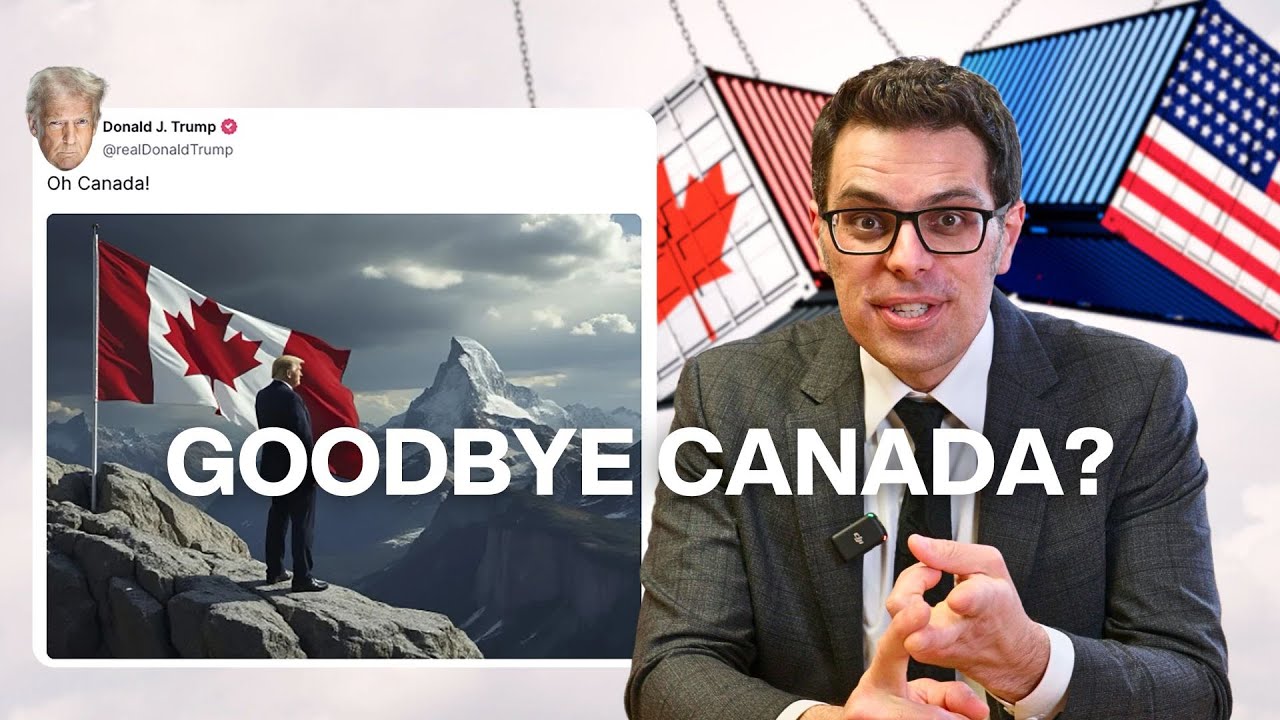
Thus far, the Trump administration has imposed tariffs on multiple countries, primarily their allies. On his inauguration day, President Trump declared a 25% tariff on all imports from Canada and Mexico. However, upon some measures taken from Canada and Mexico, Trump paused the imposing of tariffs for 30 days.
Expanding his trade policy further, President Trump has cautioned the European Union that it might face tariffs if it does not increase its purchases of American oil and gas. He asserted that the EU needs to significantly reduce its trade deficit with the U. S.
by boosting energy purchases; otherwise, tariffs on European imports will be enforced. Trump's position extends beyond tariffs; he has also shown interest in purchasing Greenland and has not dismissed the possibility of using military force to achieve this. In reaction to U.
S. President Donald Trump's renewed interest in acquiring Greenland, Denmark has undertaken several actions to reinforce its sovereignty over the territory and strengthen alliances within Europe. Danish Prime Minister Mette Frederiksen has been actively engaging with European leaders to gather support against U.
S. pressures. She highlighted the necessity of European unity when facing external threats, stating, "We must stand together in Europe.
" Frederiksen held discussions with German Chancellor Olaf Scholz and French President Emmanuel Macron, focusing on enhancing European cooperation and security. Chancellor Scholz emphasized that borders should not be altered by force, implicitly addressing the U. S.
stance on Greenland. To enhance its defense capabilities in the Arctic region, Denmark has announced a substantial investment of approximately $2. 1 billion.
This funding is designated for building three new Arctic naval vessels, acquiring surveillance drones, and improving satellite monitoring systems. These initiatives aim to bolster Denmark's military presence in Greenland and affirm its commitment to the territory's security. Denmark is working to unite European allies to secure its control over Greenland.
Prime Minister Frederiksen is holding talks with key European leaders, aiming to consolidate Europe's stance against Trump's threats. At an upcoming Brussels security summit, discussions include the potential deployment of European troops in Greenland, although Denmark has not formally requested this yet. In response to these threats, Denmark has announced new military investments to strengthen its defense in Greenland, a region gaining strategic importance due to climate change-induced navigability and resource availability.
Greenland's Prime Minister has reiterated that, while the island is open to increased cooperation with the United States, its residents do not wish to become Americans. He emphasized Greenland's desire for self-determination and independence, stating that the territory belongs to its own people. European Council President Antonio Costa reaffirmed the EU's full support for Denmark, highlighting that preserving Denmark's territorial integrity is essential for all member states.
He stated, "Preserving the territorial integrity in the Kingdom of Denmark, its sovereignty, and the inviolability of its borders is essential for all member states. " In light of Trump's interest, discussions have emerged within the EU regarding the defense of Greenland. Austrian General Robert Brieger suggested that EU troops could be deployed to ensure regional stability, though Denmark has not formally requested such a deployment.
Additionally, NATO Secretary. . .
General Mark Ruta proposed that NATO could secure the Arctic territory by potentially stationing Alliance troops there. He emphasized the importance of collective action among Arctic allies to ensure security in the High North. Greenland's leadership has firmly rejected the notion of being part of the United States.
Greenlandic Prime Minister Mute Borup A. J. stated, "We are Greenlanders; we don't want to be Americans, and we don't want to be Danish either.
Greenland's future will be decided by Greenland. " Other European leaders have also voiced their support for Denmark. French Foreign Minister Jean Baro warned against threatening the EU's borders, and German Chancellor Olaf Schultz expressed unease regarding recent statements from the U.
S. The EU and NATO have agreed to refrain from publicly responding to Trump's threats following Denmark's request for a discreet approach, aiming to prevent escalation. As a major trading partner, the EU is already facing escalating tensions with the United States, following multiple energy crises triggered by Ukraine halting Russian energy transit, Qatar stopping gas exports to Europe, and Iran ceasing supplies due to unexplained technical issues.
The EU is dealing with an increasingly unstable energy situation, and these issues were worsened by a new wave of U. S. sanctions on Russian oil and gas, leading to a spike in global energy prices.
The EU has been most affected by these consequences, with gas prices soaring. Public dissatisfaction with the European Commission is rising, and inflation continues to burden economies across the continent. Adding to the pressure, Trump has announced intentions to impose additional tariffs on European products, further endangering the already delicate EU-U.
S. relationship. These measures are expected to have long-term effects on the EU economy, exacerbating existing problems and threatening the region's economic stability.
In response, the EU is taking robust steps to lessen potential impacts, recognizing the need to decrease its dependence on U. S. trade and demonstrate economic resilience.
The bloc has accelerated efforts to diversify its global trade partnerships. A key part of this strategy is the recently signed free trade agreement with Mexico, a U. S.
neighbor. This agreement not only strengthens the EU's position in North America but also signals its ability to form significant alliances outside of U. S.
influence. Additionally, the EU has secured a landmark free trade deal with South American countries, reinforcing its commitment to expanding its global trade network ahead of Trump's potential tariffs. Through these initiatives, the EU aims to protect itself from possible U.
S. economic pressures while asserting its role as a major player in global trade. These partnerships offer more than just economic benefits; they also serve as geopolitical statements of the EU's intent to navigate and counter the challenges posed by a second Trump presidency.
In this video, we examine the EU's retaliatory measures and their possible effects on the U. S. -European Union relationship.
The European Union and Mexico have completed a modernized trade agreement, significantly enhancing their economic partnership. This updated agreement, finalized on January 17, 2025, aims to lessen both parties' economic dependence on the United States, especially in anticipation of potential U. S.
tariff hikes under President Donald Trump. Key aspects of the EU-Mexico Trade Agreement include tariff removal, which eliminates high tariffs on various EU exports to Mexico, including agricultural products such as cheese, poultry, pork, pasta, apples, jams, chocolate, and wine. This is expected to greatly increase EU agri-food exports.
Market access is another crucial element, as EU businesses will obtain better access to Mexican government contracts, investments, and service sectors, including financial services and telecommunications. This ensures EU firms receive equal treatment with Mexico's other preferred trade partners, like the U. S.
and South Korea. The agreement also includes enforceable commitments on labor rights and environmental protections, highlighting both parties' dedication to sustainable development. Additionally, the deal aims to improve the supply chain of essential raw materials, ensuring a sustainable and secure supply vital for various industries.
This modernized agreement updates the original EU-Mexico Global agreement in effect since 2000. The new accord is designed to reflect the changing economic landscape and deepen the strategic partnership between the EU and Mexico. The agreement now requires ratification by both EU and Mexican legislators before implementation.
This process is expected to undergo scrutiny from various stakeholders, including European farmers concerned about increased competition. Let's take a quick pause. If you've enjoyed the video so far, could we ask a small favor?
Hitting the like button helps us reach a broader audience, and sharing your thoughts or feedback in the comments makes an even bigger impact. Thank you for watching, and now let's dive back in. The European Union and the Mercosur block, comprising Argentina, Brazil, Paraguay, and Uruguay, have finalized an extensive trade agreement after 25 years of negotiations.
This agreement aims to create one of the world's largest free trade zones, covering over 700 million people and nearly 25% of global GDP. Key elements of the EU-Mercosur Trade Agreement include tariff reductions, which plan to remove tariffs on over 90% of goods traded between the EU and Mercosur countries, potentially saving EU companies around 4 billion EUR annually in export duties. Market access is also a significant aspect, as EU industries, including automobiles and chemicals, will gain improved access to Mercosur markets, while South American agricultural products like beef and poultry will receive increased entry into the EU, subject to specific quotas.
Both parties have agreed to uphold the Paris Climate Agreement and implement measures to prevent deforestation by 2030. The deal includes dispute resolution mechanisms to enforce these commitments. Despite potential economic benefits, the agreement faces resistance within the EU, especially from farmers and environmental groups.
Critics argue that the influx of South American agricultural products could undermine European farmers and raise environmental standard concerns. French President Emmanuel Macron has expressed strong reservations, seeking additional safeguards and sustainable commitments. For the agreement to take effect, it must be ratified by all 27 EU member states and approved by the European Parliament, given the existing opposition, particularly from countries.
. . With significant agricultural sectors, the ratification process may encounter obstacles and could take several years.
EU-US relationship over the years: After World War II, the United States’ involvement with Europe laid the foundation for its relationship with what would later become the European Union. The Marshall Plan in 1948 was crucial in rebuilding Europe, providing financial aid to war-torn nations to stabilize their economies and encourage regional cooperation. The United States also supported the creation of the European Coal and Steel Community in 1951, viewing it as a way to prevent future conflicts between France and Germany by integrating key industries.
In 1954, the EU's predecessor established its delegation in Washington, D. C. , to manage growing economic ties.
This relationship deepened with the creation of the United States Mission to the European Communities in Brussels in 1961, symbolizing a mutual commitment to fostering political and economic cooperation. Formation of security alliances: Immediately after World War II, the United States emerged as a global leader, actively shaping the post-war international order. Recognizing the escalating threat from the Soviet Union, the US took decisive actions to contain Soviet expansion and promote democratic values.
In response to the Soviet Union's increasing influence in Eastern Europe and actions like the Berlin Blockade, the United States led the formation of the North Atlantic Treaty Organization (NATO) in 1949. This collective defense pact included the US, Canada, and several Western European nations, committing each member to mutual defense in case of an attack. The US played a key role not only as a financial supporter but also as a military ally, stationing troops in Europe and appointing General Dwight D.
Eisenhower as NATO's first Supreme Commander. President Harry S. Truman introduced the Truman Doctrine in 1947, marking a significant shift in US foreign policy.
This Doctrine declared that the US would support free peoples resisting subjugation by armed minorities or external pressures, specifically targeting the spread of communism. Initially, it provided substantial economic and military aid to Greece and Turkey to prevent them from falling under Soviet influence. This policy laid the foundation for the U.
S. 's containment strategy throughout the Cold War. Complementing these efforts, the US launched the Marshall Plan in 1948, a massive economic aid program aimed at rebuilding war-torn Europe by revitalizing European economies.
The plan sought to create stable conditions where democratic institutions could thrive, thereby reducing the appeal of communist ideologies. The success of the Marshall Plan further solidified Europe's alignment with American policies during the early Cold War period. The Korean War from 1950 to 1953 significantly strengthened military cooperation between the United States and its European allies within NATO.
The conflict highlighted the perceived threat of communist expansion, leading NATO to establish the Supreme Headquarters Allied Powers Europe (SHAPE) in 1951, with General Dwight D. Eisenhower appointed as the first Supreme Allied Commander. This marked a key development in NATO's transformation from a political alliance to a comprehensive military organization.
However, the Suez Crisis of 1956 exposed underlying tensions within the alliance. When Egypt nationalized the Suez Canal, the United Kingdom and France, along with Israel, launched a military intervention to regain control. The United States, under President Eisenhower, opposed this action, fearing it would destabilize the region and push Arab nations toward the Soviet sphere of influence.
Consequently, the US applied diplomatic and economic pressure on its European allies to withdraw, highlighting differing interests and signaling a move toward more independent European foreign policy initiatives. The Berlin Crisis of 1961 was a pivotal moment in the Cold War, significantly impacting EU-US relations. The crisis began in June 1961 when Soviet Premier Nikita Khrushchev met with US President John F.
Kennedy and demanded the withdrawal of Allied forces from West Berlin, threatening to sign a separate peace treaty with East Germany that would end existing four-power agreements guaranteeing American, British, and French access rights to West Berlin. In response, the United States reaffirmed its commitment to West Berlin. President Kennedy requested an increase in the Army's total authorized strength and ordered that draft calls be doubled, demonstrating a firm stance against Soviet pressure.
The crisis underscored NATO's importance as a stabilizing force in Europe; the alliance's collective defense principle provided a framework for coordinated military and political responses to Soviet actions, reinforcing Western unity during the standoff. Throughout the crisis, the United States continued to support European integration, viewing a united and economically strong Europe as a barrier against communist expansion. This support was evident in US backing of initiatives like the European Economic Community, fostering closer economic and political ties among Western European nations.
Opposition to US involvement in the Vietnam War: The Vietnam War, from 1955 to 1975, became a major point of contention between the United States and its European allies. While the US escalated its military involvement in Southeast Asia, many European nations were hesitant to offer support. Notably, France strongly opposed the US intervention, reflecting its own colonial history in Indochina and a desire to distance itself from American foreign policy decisions.
In contrast, the United Kingdom and West Germany showed varying degrees of public support but refrained from committing troops, highlighting a complex range of European responses to the conflict. Economic tensions also surfaced during this period, particularly regarding monetary policies. The collapse of the Bretton Woods system in the early 1970s led to significant exchange rate volatility, negatively impacting European economies.
In response, European leaders sought to reduce their dependence on the US dollar and enhance monetary stability within the continent. This culminated in the establishment of the European Monetary System (EMS) in March 1979. Initiated under the leadership of then-President of the European Commission Roy Jenkins, the EMS aimed to foster closer monetary policy cooperation among European Economic Community member states by linking their currencies to prevent large fluctuations in relative value.
Key components included the European Currency Unit (ECU), a basket of member currencies, and the exchange rate. Mechanism or ERM, which set exchange rate margins and required interventions when deviations exceeded agreed-upon limits during the Reagan Administration, Europe and the U. S.
focused on economic liberalization and free market policies, aligning with Europe's push for a single market under the Single European Act of 1986. Despite this alignment, trade disputes emerged, particularly over agricultural subsidies under the Common Agricultural Policy (CAP). Post-Cold War alignment, the dissolution of the Soviet Union in 1991 marked a pivotal shift in global dynamics, prompting the European Union and the United States to realign their relationship towards economic collaboration and peacekeeping efforts.
This transition was formalized through key agreements that expanded the scope of transatlantic cooperation. In November 1990, the Transatlantic Declaration was adopted, establishing a structured framework for political dialogue between the European Community and the United States. This declaration emphasized shared values such as democracy, human rights, and the rule of law, and laid the groundwork for regular consultations on economic and political matters.
Building on the foundation laid by the Transatlantic Declaration, the New Transatlantic Agenda (NTA) was launched in December 1995 during the EU-U. S. Summit in Madrid.
The NTA outlined four broad objectives for collaboration: promoting peace and stability, democracy and development worldwide; addressing global challenges including environmental degradation, terrorism, and health issues; contributing to the expansion of world trade and closer economic relations; and building bridges across the Atlantic by fostering educational and cultural exchanges. This agenda marked a significant advancement in strengthening EU-U. S.
relations, moving from mere consultations to coordinated and joint actions. That's all for this video. Thank you for watching; we sincerely appreciate you joining us today.
If our content resonated with you or sparked inspiration, please consider expressing your support by liking it and subscribing to stay connected with our community. Your support holds immense value for us. You can watch another video from our channel, which is now on the screen.