So today I want to talk about all of the um nonurgent but important stuff that you have to do in your life outside of work right this is a topic I've been struggling with recently myself I've been thinking a lot about it so I want to bring my thoughts what I've come up with to you right now um I'll start by explaining why these nonprofessional task can be particularly tricky to deal with and then I'll Describe a approach for dealing with them I have four different strategies that I want to recommend all of which I'm
currently experimenting with in my own life the spoiler alert is how you deal with nonprofessional tasks can look quite different than how you deal with the obligations in your own job all right let's start by trying to better establish what the problem is here that we're trying to solve like when it comes to Work I'm very locked in right uh I'm ambitious I'm a professor I'm a writer and I'm a podcast I do all three of those things at a pretty high level and I have a rule that all of that work has to happen
within normal work hours this requires me to be really on the ball so I use for example multiscale planning I have a plan for the whole semester here's what I'm working on here's the big initiatives then each week I do a weekly plan where I look at That semester plan and say which of these big initiatives am I making progress on when am I going to make progress on them I get things into the calendar I clean up my calendar I move things around I cancel things I see my weekly schedule like a chessboard on
which I'm moving pieces and then I have slow productivity principles that act is back pressure I'm always adjusting my workload my ratio of execution to overhead uh I try to keep this all Pretty much in a line I'm trying to make a differentiation I'm actively working on non- actively working on taking things off my plate adding things I want to make sure that my work is sustainable and I'm not overloading myself now here's the thing that's a that's a that's a well planned busy workday so what happens once the workday ends well first of all
I'm pretty exhausted because I've just executed the sort of productivity Equivalent of the D-Day Landing it feels like that sometimes trying to make all these things work and my time after the workday is over is often already heavily spoken for with family stuff and personal stuff I like to exercise most days that eats up time I'm slepping kids all over the place that eats up time we have all sorts of like nonprofessional obligations and events that are on the calendar there's not a lot of time so I'm tired and there's not A lot of time
um somehow all of the various nonprofessional things needs to fit into these leftover slivers of time um this is difficult so today I want to discuss some strategies for how to deal with this all right strategy one resist the urge to time block your time outside of work during my workday I give every minute a job I survey the time I have available and I want to make the most out of it Here's what I'm doing for this hour here's what I'm doing for these 30 minutes um in this gap between these two meetings is
what I'm going to handle these small tasks this time is all going to be focused on this big project I'm a big believer in professional time blocking I think it roughly doubles the amount of stuff you're able to get done with the same fixed amount of time if you have a ambitious professional schedule it's pretty much uh necessary Or you're going to fall behind and get stressed out it's also really hard it's taxing because you have to keep forcing your mind to say here's what we're doing now here's the time block we're in now let's
just focus on execution now here's the time block we're in let's focus on that you'll have to constantly be on the ball you're focused you give your brain very little breaks if you try to do this in your time outside of work it's too much your brain needs a break from Completely structured approaches the time uh when you time block evenings when you time block weekends eventually your brain's going to cry Uncle it needs flexibility it needs a time to actually uh relax so resist the urge to time block whatever little time remains outside of
your work and outside of what's already spoken for strategy two on the other hand weekly plan so time blocking each of your Evenings and weekend is too much but you should consider your nonprofessional tasks when you're working on your weekly plan all right so a couple things matter here one just reviewing the nonprofessional things on your calendar each week is useful you know what's coming oh on Wednesday uh I'm taking the kid the baseball practice um and then I have like a dinner after that that's Literally actually what I'm doing today and I'm recording this
um on a Wednesday it also allows you to coordinate maybe you and your partner have a relatively intricate dance of who's going to take who and how things are going to get dropped off on a particular day it gives you a chance to make those plans to figure out in advance how that's all going to work it also gives you time to make changes you say you know what I agreed to have drinks with a friend on Thursday this is going to blow up that whole day it makes everything difficult let's move that to another
week um you see the whole picture so weekly planning matters the other thing to do when weekly planning nonprofessional events is to get the time sensitive stuff onto the calendar all right so this is a chance for you to look at your task list look at the task list you have for your nonprofessional obligations if you Follow my system you have boards and you have boards for your nonprofessional roles divided by status if there's stuff that's time sensitive these forms have to get submitted by the end of the week the kids have to get their
flu shots this week because the deadlines coming up next week um we have to go pick up the title and tags for our new car this week because the temporary license plate is going to expire at the end of the week or something all of these by the Way are like things I'm dealing with right now uh you can get the time sensitive stuff on your calendar so when are we going to do this you schedule out time and now you'll treat it like any other uh event or appointment crucially you can take time away
from your workday as needed like maybe you you have to go out to the car dealership to get your title and tags you can look at your calendar and say you know what the way I need to Do this is take a lunch break on Thursday to go do that right so it allows you to make sure the time sensitive stuff gets done and you're you're you know about it it's on the calendar won't be forgotten and you can take time away from work where needed all right so so far so good but strategy three
is what you should do with the non urgent but important nonprofessional tasks that remain this is the thing I've been Struggling with recently especially if you own a house or if you got a family or own cars you can build up a really big list of things that do not have deadlines and there's no one looking over your shoulder saying this has to be done but they all eventually need to get done if you don't do it in the future it's going to cause problems or until it is done it is an increasing source of
stress in your Life this is where things get difficult with your nonprofessional work so what I actually did here is I just copied I want to be concrete I copied a bunch of stuff from my actual list that fall under this category of non-urgent but important nonprofessional work I'm going to read some of these um we need to repaint the siding on our house we have wooden siding needs to be repainted I don't even know where to start on that there's a section of One of our backyard fences that's broken needs to be fixed our
patio ceiling needs to be washed right it's like dirty um we have a street facing fence that's white needs to be washed I don't even really know to do that needs to be done I have four or five different bathroom related repairs there's regrouting that needs to be done there's multiple towel racks that have been ripped off the wall right like somehow the drywall has to be replaced and something has to be mounted On studs there's a a a faucet somewhere that needs to be tightened like it just flops back and forth um when you
touch it there's a shower in which the thing that you use to turn the water off and on you can tell Jesse I'm like an extra plumber the water turn thing is like coming very loose at so I have like four or five bathroom related things the gutters need cleaning after the fall leaves fall my filing cabinets need to Be empty they're too full we got to pick up the tags for the new car that's more time sensitive I guess um there's three major rooms in our house that need a serious decluttering including my library
which has built up probably about 500 books and piles that have to be um severely sorted through the kids art station has to be severely sorted through the home office is storing boxes needs to be completely cleaned out um there's a whole list of Renovations we Want to do here in the deepor HQ all queued up needs to be done I'm working on my home gym trying to bring in a barbell and squat bench there's a lot of complexities around that the garage itself where that goes need to be cleaned out there's two different unfinished
basement spaces that need to be completely decluttered and reorganized I need a new primary care doctor the list goes On none of these things have a deadline all of them need to get on get done all right so now we're in kind of a tough situation right because uh we have this big list we're not time blocking our days our our days outside of work we're just putting time sensitive stuff on the calendar and weekly planning how do we get our arms around these crazy list of non-urgent but important household items that need to be
done now again the Temptation is that go back and Try to time block them and I've tried this before where I say I am going to look at my free time whatever it is and I'm going to specifically start scheduling evening time this hour here this half hour here this 45 minutes here for specific things on this list it doesn't work you're too tired your schedule is too much in flux things change kids are sick things take longer evenings are unpredictable and your mind eventually says enough scheduling hey It's Cal I wanted to interrupt briefly
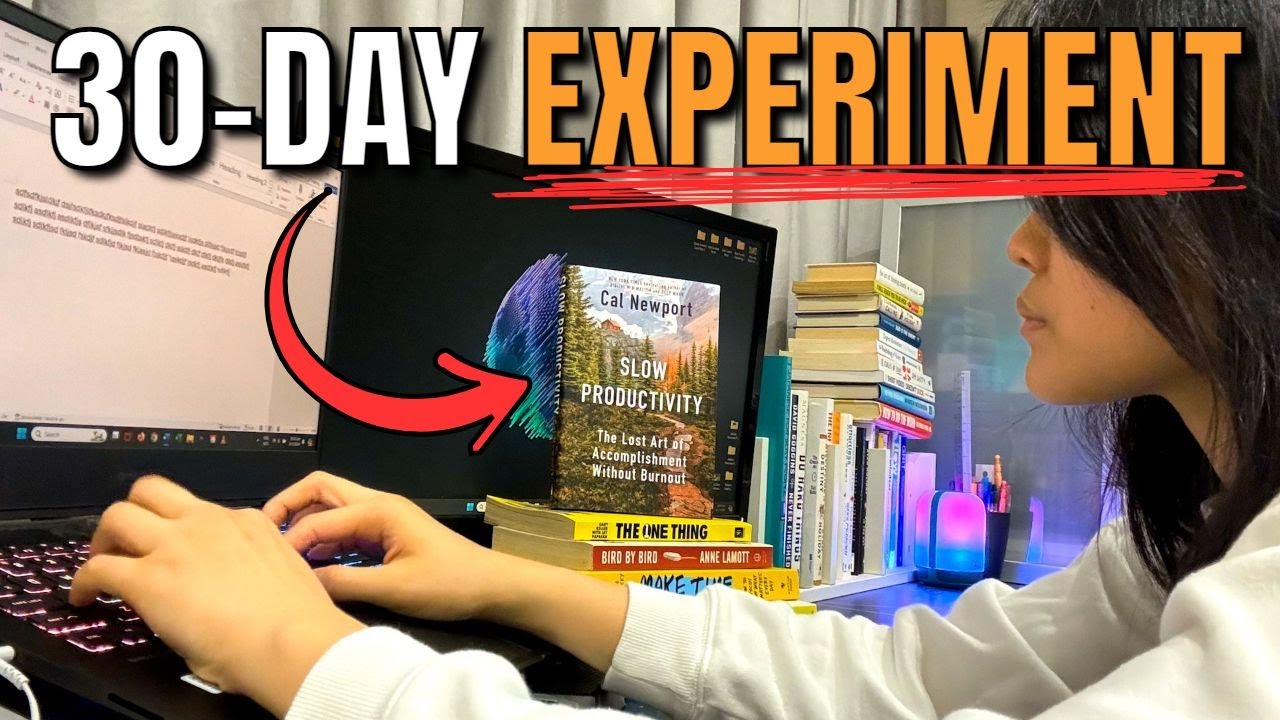
to say that if you're enjoying this video then you need to check out my new book slow productivity the Lost Art of accomplishment without burnout this is like the Bible for most of the ideas we talk about here in these videos you can get a free excerpt at Cal newport.com slow I know you're going to like it check it out now let's get back to the video so what can you do instead well I want to introduce here the notion of What I call the generic household task this is like uh a a single task
which you can Define as like work on household stuff and the goal is most days to spend some time put aside some time as you're able to on the generic household task some days you only have 20 minutes you fit it in like right after dinner other days you have like an hour free you spend an hour on it um but you've simplified this huge list like most days I want to do some work on the sort of like household stuff and you can keep this tracked in your daily metrics if you want to did
I spend you know any time on the generic household task today or not so you can try to most days you want to do work on it now what do you actually do during the time you put aside each day on the Fly of like let me go spend some time on the household task well at the beginning of your uh week you can make a sort of Mini prioritized list of like well I want to start with this at any time I have put aside for the generic household task and if I finish that
move on to this and if I finish that move on to this it's like sort of a mini list of some priorities right so maybe it's like um I want to find a fence repair person and see if I can set up an appointment I want to then work on my file cabinets I'm going to order the desk for my office renovation and see if I can get The gutter cleaners called This is an ordered list so when you first have sometime you say I'm just going to work on my generic household task you're working
on the first thing in that list if you get done with that next time you're working on the generic household task you move on to the next thing you just you know some weeks will'll get farther than others but you've reduced this massive list to a simple Heuristic I try to spend at least a little bit of time every day on these sort of like non- urgent but important household stuff and that's it and that's theistic and that's all the planning that happens you're not exhausting yourself you're not over structuring some days you have no
time some days you have a lot of time some days you have a little time but you do like the pressure if I want to do at least a little bit most days you check It off on a list to see here's what I've observed about the generic household task we call it heuristic a lot gets done over time when you're just used to like most days I put in some time on these type of things and it's clear like what to do if I have time stuff adds up think a particular Tuesday might not
be that exciting you're like I only spent 20 minutes on something but if you go Tuesday then Wednesday then Thursday then Friday then Saturday then Sunday and you wrap around another week stuff begins to pile up progress is made on this big list and the list will keep growing as you come up with new things but the point is the amount of accomplish work gets big now eventually those gutters do get clean and the fences do get repaired and uh there's a day where finally someone comes in and fixes all Those things in the bathroom
and it's like overtime progress happens it changes your mindset from I have this list I want to finish to I have a process where I always want to be making proc progress on those type of things we were discussing this it um came to mind the other day when I was talking to some board members from the school where my kids go and they were talking about how with facilities when You run a facility you just have this uh this ongoing budget you assume stuff breaks on like a regular schedule um you budget for that
in advance you just assume like every year there's like a certain number of things that break in the facilities that you repair it's not seen as we have a steady state and then something breaks when we go and fix it it's like you just this is just how you on a facility you have a Budget for you know the AC will break every 10 years like the AV will break on average like every 3 years um so the goal is just to have the process you're constantly like fixing and repairing not you have some list
you want to finish and then you're done so that has been useful to me the generic household task heuristic very little pressure very little fatigue very little overstructuring or burnout but you keep On top of things all right final strategy I want to mention here automation as you go through these generic household task items anything you get to that happens on a regular basis like you clean to gutters and you're like you know what this has to happen twice a year like it happens predictably automated and that might mean in the easiest sense that you
just add a Recurring event on your calendar and in that event you have all the information you need so when you get the gutter cleaning time again in the next season this event pops up call this number set it up here's how much it cost and it's it just goes on your it's like a a timed thing on your calendar it's not something that you have to have on a task list and get to car washes can go on there um cleaning oh I have to power wash the Patio or whatever wait a second just
when does that happen let me put this on the calendar now so when in the future I don't have to wait for it on a list it's always there um it takes things off of list and just make them happen when things happen so the automation also reduces the pressure here over time more and more things just happen when they need to happen without you having to remember to do them or or have them on an intimidating looking List right so that's my that's my advice uh for non-work tasks I'll summarize again resist the urge
to time block everything but do integrate non-work task into your weekly planning for the non- urgent but important tasks just have the generic household task heuristic so progress is constantly being made without you having to do a lot of planning and finally automate everything that can be automated um as you get to it and that again is going to Relieve your stress and get things done with even less consideration and so that's what I'm working on now my lists are endless but these type of strategies help me keep on top of them without having to
make every moment of my life life be over scheduled the household task heuristic just that list is getting long by the way a lot gets done over time is a common theme with a lot of your stuff work related and not work yeah I mean I Think that's the key to a lot of things stuff gets done over time uh it's we had the 10year rule episode month or two ago like important projects in your professional life happen over many years that's when the cool stuff happens uh household stuff it's just like you have this
back round thing going on it's not something that you ever want to be done you just want a process that keeps you on top of it yeah it's a different way of thinking about it as opposed to like I have a list of things I'm going to do and then I'm done with those things I've accomplished something your list is only going to get longer when you buy your farm to write with your writing shed oh man I'm reading a book about a farmer right now there's a lot of work farmers do a lot of
equipment repair I would be a terrible farmer I would be uh they repair a lot of stuff anyways yeah when when I when I buy my farm with my riter shed uh I'm Going to have like a staff of 30 you know how like rich people buy these like horse farms these like show farms where they just middleberg Virginia yeah in middleberg Virginia and they have like these huge staffs they don't actually have to do anything yeah I'm going to have a riding Farm like that there's going be this huge staff just to make sure
that like I have a good view from my riding cabin enough ink enough ink um probably people riding By on horses I feel like that would be inspiring I look out the window I just want people riding by on horses in colonial guard because yeah yeah like a mini Westworld I want to build a Westworld to help my concentration for writing I and I think this is only reasonable to build an entire fake world full of artificially intelligent cyborgs just to put you into the right mindset for deep work I think this is Reasonable all
right well anyways we uh we got some good questions coming up but first what we hear from sponsor all right let's hear from our longtime sponsors and friends at blink you've heard me talk about Blink forever because I have been a loyal blink user for a long time it's an app that gives you over 6,500 book summaries and expert-led audio guides you can read or listen to takes about 15 minutes per title you're getting Best in Class Actual Knowledge from 27 categories such as productivity psychology and more uh you get on the go it's also
pretty entertaining the way Jesse and I use blinkist is as a book triage service if we are interested in a book we add it to our queue and then we will if we're not sure we'll listen to or read the blink the summary of that book and it's really useful for figuring out oh do I want to actually read the whole book or not lot Of other ways to use it too you can like quickly cover a topic by listening to or reading the blinks of multiple books on a topic that I'll give you the
lay of the land um if you're looking for advice there audio guides will often you can listen to an audio guide from a how-to book and just like get the key ideas and get executing right away so it's a great companion to Anyone who reads a lot there's a new feature I want to mention called blink Connect with blink you can now give another person unlimited access for free so you will basically be getting two accounts for the price of one so I think that's pretty cool right now blinket has a special offer just for
our audience go to blink.com deep to start your 7-Day free trial and you'll get 40% off a blinket premium membership that's blink spelled b n k i s blink.com to get 40% off and a 7-Day free trial blink.com And now for a limited time you can even use blinket connect to share your premium account you will get two premium subscriptions for the price of one all right I also want to talk about my friends at element LM NT element is a zero sugar electrolyte drink and sparkling electrolyte water born learn from the growing body a
research revealing that Optimal Health outcomes occur at sodium levels two to three times to government Recommendations I like to use the element uh drink mix stick packs so you you kind of like rip open this powder you add it to any water bottle and it gives you a meaningful dose of electrolytes but the key thing is it's free of sugar it's free of artificial colors or other dodgy ingredients so you don't have to worry about in pursuing hydration adding another junk to your body I use element all the time uh our Ad Agency sends me
big boxes of this Stuff because because both my wife and I uh use it after every workout I use it in the morning I use it to get rehydrated after a long day of speaking or podcasting I drink it to get rehydrated it's got those electrolytes it's got great flavors and you know uh no bad stuff if you prefer it even easier you can get the the sparkling water with it already mixed in just grab that from from the fridge you can also drink it hot they have these limited Time flavors like chocolate mint chocolate
chai and chocolate raspberry you mix in the hot water uh if you it's cold out or like me right now you want to help your voice great way to get those electrolytes but in a refreshing hot beverage all right good news we have an offer if you go to drink element.com SL deep you will receive a free element sample pack with any order you just have to make make sure to go to drink Element.com sdeep all right Jesse let's do some questions who do we got first first question is from Jill in your organization system
with quarterly goals weekly plans and task fors where you would Place projects that are arise where do you place projects that arise unexpectedly but are necessary and take longer than a week but aren't part of your quartery goals for example being tax audited or buying a house all uh First things first you're mixing up a few things here so you said quarterly goals weekly plans and task boards so there's a couple different things going on here that are getting mixed together there's multiscale planning which is quarterly or semester plans then weekly plans then Daily Time
block plans so that's multiscale planning then you have task boards that's just a tool for keeping track of obligations you would review your task Boards for example when doing your weekly plan all right so what you're talking about here projects with sometime sensitivity like a tax audit or buying a house like you're working on them during a certain time uh time frame that would probably those would probably go on my quarterly plan like hey one the things I'm working on like this November is house buying like we really want to try to hone in on
you know a neighborhood and see if we can make an Offer or I have a tax audit going on so for the next two months I need to be here's what that means and here here's what needs to get done and here's some Milestones that's perfectly fine to be in a quarterly plan or a semester plan however you do it because then you'll see that each week when you're making your weekly plan to make sure if important that there's time if possible put aside to make progress on those goals so that's where I would put
it I Would put in the quarterly plan um they could also show up on your task board right you could have the next step if it's you know another way to deal with it is you could have like the next step I need to get loan approval or I need to like ask the accountant these questions about the information I'm I'm gathering um you could have those in your taskboard give them their own status list you know house project tax project where you can start building up The task if you have a lot of tasks
you want to keep track of with accompanying information when you're doing your weekly plan you'll see those columns and sort of make sure time is put aside so that's what I would say for time sensitive but on kind of large projects mention them in your quarterly or semester plans and if they have a lot of non-trivial task involved with them give them special columns in the relevant taskboard that'll help you make Progress oh this name's interesting all right yeah we had an interesting arga arga a r g h y a yeah arga ARA yeah all
right it's not so bad all right what's the question here I'm about to go into my final year of college I've been building my career Capital by studying programming I'll probably work as a software developer how can I Implement lifestyle Centric planning if my life has been laid down by my parents teach teachers and Professors well we got to be careful about terminology here um what is being laid down by our parents teachers and professors if it's a particular skill development path right learning computer programming I'm not so worried about that right lifestyle Centric planning
you establish your vision of the ideal lifestyle and then you work backwards to move closer to that taking advantage of your skills and opportunities and looking for ways around obstacles Having learned something like computer programming whether it was your ideas or your parents is just another skill you have in your basket when you're trying to figure out this plan it's another orientering tool in your backpack as you make this journey across the landscape of possible Lifestyles it's great it's something that has some value you can figure out how to use it on the other hand
if you're getting pressure from your parents about what Your lifestyle should look like you need to live in this type of neighborhood you need to have this type of working life you need to be sending your kids to this schools like we get a lot of this pressure if if you maybe have a parents that come from a very specific upper middle class lifestyle like this our expectation is that you should follow this very specific same upper middle class lifestyle which might require pretty narrow paths you have to go Through that's where you could get
a class with lifestyle Centric planning but when it's like hey my parents kind of pressured me to study this in school just see that as a skill you have to work with as you construct your own lifestyle Centric plan and like with programming God there's any number of ways you can build interesting Lifestyles with that and slow productivity for example I do a nice Profile of a web developer designer who left uh he was on a track of building a pretty big business around his skill he was living in Vancouver was very expensive to live
there and he said you know what I'm going to use this skill uh to pursue a different lifestyle Vision one that is slower has more nature tons more autonomy so he moved with his wife outside of the small town of tolino on Vancouver Island which is sort of a a rural place out there in the Bay tolino has a surf break his wife was a surfer he did not grow out a big development business but just sort of kept his hourly rate high and his expenses low so now he could live in this cool place
with uh a very reasonable amount of work because their expenses were very low as he said there's not there's not a lot of opportunities where they live to spend money and he used that skill in a really original Innovative way that was Specific to the lifestyle plan that he devised this his name was Paul Jarvis anyways that's what I want to say here it's not a big deal because look if a parent like I'm going to help you figure out what to study you might have not known what to study and it's good to have
valuable skills but where you need to have autonomy is and figuring out what the lifestyle is you're moving backwards from and so focus on that you know this is more of a problem Jesse This like uh parental pressure it's actually more of a problem not for lifestyle Centric planners but for people who subscribe to the passion hypothesis right so if you and this comes from my book so good they can't ignore you if you subscribe to the idea that you're meant to do one thing if you don't find your true passion you're going to be
miserable that's where the parental influence psychologically becomes a real issue because you really Worry what if the things they're encouraging to learn what if the classes of jobs they're encouraging me to pursue are not my one true passion I'll be miserable so the passion hypothesis Believers are much more sensitive to pressure than lifestyle Centric planners who just see skills as tools great these are more Tools in my toolbox for building the life I want so I've used three different metaphors here by the way you put them in your basket use them As Orient orientering tools
that are in your backpack and now as tool in your tool box for assembling your ideal life lifestyle so there you go guys metaphor that's how you know I'm a writer all right what do we got next next question is from Ben I want to start building career Capital but I'm not sure what rare and valuable skills to pursue I'm worried about investing years developing a skill and having it turn out to be not as lucrative or align with my lifestyle Vision as I hoped yeah so this is partially a hard question and partially an
easy question so the the hard hard thing about finding skills is it it can sometimes be difficult to even identify what's valuable and some felds this is obvious in other fields it really takes work right like let's say you get involved in political campaigns you get started as like an intern in college you get a position on a campaign you're trying to Figure out this world of politics it might not be obvious at first what are the things I could master that would make me invaluable in this world of political campaigning and you to figure
that out you actually have to talk to people and observe right who's getting ahead who's in demand who's influential why what are the particular skills that they have that's in demand so right so it can be tricky sometimes to figure out what Actually matters on the other hand it's not too difficult to sidestep the Trap of a dead- end skill just biased towards skills that in a general sense have a long track record and in a specific sense are very adaptable right so computer programming in a general sense computer programming has been and will continue
to be valuable because we program computers to do lots of things in our Lives in the specific or small scale sense you might have to adapt along the way what language you're using but that's okay if you're good at computer programming you can change to a different language when it emerges pretty quickly so that's a pretty safe skill dead end skills are skills that are are tied to a particular cultural Trend business moment or technological device they're tied to that and if that goes away they Have no uh other value so for example I would
be very wary right now if you said what I'm going to specialize in is uh Tik Tok videos for certain types of like marketing they're going to get really good at like what works and doesn't work on Tik Tok and how to build videos for like my political candidate are for brands that are going to do well on Tik Tok What happens if Tik tok's banned in the US or more likely just another tool Rises and The zge and that one goes away That skill is hyp specific and now you know you you you tied
your horse to a wagon that looked attractive in the moment but the the wheels are going to come off pretty soon so you do want to be careful I mean think about there's probably a lot of people out there that like specialized in vines or you know hey Instagram stories is my thing I know exactly what works on Instagram Stories the problem is once People stop using that you have to start from scratch from skills so look for the summarize here do the work to figure out what actually matters in your field it might not
be what you think it might be non obvious two bias towards skills that are in a general sense have a long track record are going to be around for a while um even if it requires that you adapt exactly how you're applying that skill in the short term and three be wary of more fattest skills skills that Are tied to a trender technology that if that goes away the skill itself is dead you do those things I think you'll be okay all right who we got next question is from Margaret I'm a mother of three
and a writer I had success with my first book but needed to quit social media to write my second it's set to be published next year should I go back on social media for promotion now that it's finished I don't think my presence on social media moves the needle at all in Terms of sales but it can be important for connections and driving attendance at events that occur with publication well look you're right in the long term it doesn't matter it doesn't move the needle needle on sales in any sort of meaningful way it's not
going to be what stands between you having a successful career as a writer or not and uh I'm completely fine with you not using social media if you feel like for the Relationship with your publisher you need to be doing something new media I think that's completely fine if you don't really care about it you can set these things up in a way that has very limited impact on your life so what I've seen fiction writers do and I think this is a perfectly fine template their ultimate goal is to get people onto an email
list an email list where they can send updates about events what's going on with their books email lists convert Very highly when it comes to Book Sales much more so than almost any other type of metric of online following that you can have um so they have an emailing list now how do you get people on to that mailing list have some sort of regular content that's low lift but interesting and it really could be like updates on your writing or your writing progress um it could be here's the book I read that here's the
books I read this month this is a good one I'm just going To go through what I read this month you only have to write this once a month and here's you know here's the books I read and and quick summary of them people love book recommendations especially if you're in the fiction world so you have some value on there but it's a very low lift then you can have some sort of Al algorithmic presence to try to drive people to it so by algorithmic presence I mean somewhere where you are out there in the
world of New Media and Recommendation algorithms could drive audiences to you that you otherwise wouldn't have direct access to the key here is whatever you pick to automate it and not spend much time on it so maybe it's an Instagram thing uh if it's an Instagram thing though again I don't want you on Instagram I don't want you looking at Instagram post I don't want you reading comments on Instagram it's I post a quote I post book I like I post a writing update um maybe I even have Someone do it for me it's not
on my phone it's done for my desktop it's a schedule as much of a schedule as watering my plants and I think about it when I'm not outside of those moments I think about it just about as much as I think about watering my plants when I'm not watering it's just not a big part of my life but I do it in the plant stay alive um so maybe you're doing Instagram maybe you're doing Tik Tok though that can be pretty difficult um maybe you're Doing YouTube Brandon Sanderson who uh if you're not familiar with
Brandon Sanderson he wrote Name of the Wind and if you have any comments about that you can send them to Jesse at Cal newport.com he loves to see him I should clarify every time I make this joke a new listener gets really upset um we know Brandon Sanderson did not write name of the wi this is an Insider joke on the show okay so Patrick Rufus fans Can it's okay we can chill um Brandon has really really leaned into YouTube and like one of the things he does is have these writers updates on YouTube where
he's like here's how many pages I wrote this week here's what's going on with this project here's what's going on with that project like people love that and that that's a way for audiences to to potentially find them and so sure have an algorithmic presence if you care about this again I don't think it Doesn't make a matter long longterm doesn't matter what matters is the book rate but I get it in the short term you want your publisher happy it's anxiety reducing and you want people to show up to your books audience I get
it so have something that is in the algorithmic media world that you post to intentionally and on a regular basis but otherwise completely ignore the technology and always be driving towards A mailing list where you have some sort of value on it I think that's probably the sweet spot right now for writers so you're taking your intentional swing and algorithmic space but not letting it be a part of your life and then you have a mailing list you know it probably will do nothing but that setup's not going to hurt you if something catches on
though it does give you the chance of like riding that wave or taking advantage of it but again with books what matters is The book being great like ultimately that matters most of the the writers who are killing it right now no one cares about their online presence right like no one cares about Kristen Hannah's Twitter account like her books sell because they get passed around hey I love this I love the women like you should read this novel you know lessons in chemistry sold all the copies in the world not because of Tik Tok
but because people started passing it around you got To read this book uh at book groups right deep work sold a ton of copies not because of my blog people just hey I like this book you should read this book so you know ultimately it doesn't matter but that's what I would recommend if you're an author and you want to be doing something that's probably right now I think The Sweet Spot don't podcast by the way unless like you really want to do podcasting as a business right like podcasting is very Hard uh it takes
up time and money and it's not worth it unless you're making a real run at having a real business and so don't do that unless like it's actually a part of your business plan that's not casual sound quality is Big too sound quality is Big YouTube you have to be careful about YouTube is hard like Jess and I have learned this uh you can't just record yourself and put it up there and say people will find it it's like pretty Difficult uh thumbnails titles exactly like how you cut into these videos um so you have
to be super specific and intentional and and the stuff you think that will do well probably won't but you know it's not a bad idea if you find something that clicks a format that works like Brandon sanderson's here's how much I wrote this week like if you find a format that works it could be good so that's my recommendation so Brandon does it from the layer he does It from the layer yeah so he does we should bring it up can I bring it up on here yeah I'm actually curious let's let's look um I
still want to get out there and see the layer Justin I got an invite but we just have not been able to make that work um all right so what I'm going to do should I go to the YouTube app or the web go to the web all right so I'm loading up here YouTube Let me don't switch to it yet All of Jesse's video recommendations are about Popa rearrangements interesting I didn't realize let me type in Brandon Sanderson all right um yeah all right so here's his channel I have it on the screen now
it's not huge uh 600,000 subscribers there like double our Channel yeah but he sold a lot of books um let me look at his videos chronologically all right so what's he up to weekly update 50,000 views last week's 58,000 views weeks Before 65,000 views so that's like like his very consistent thing he has a a base of like 50 to 60,000 people who watch the weekly updates let me put one up here this is in his layer so I'm sure it's filmed yeah so he has a very nice setup with a bookshelf and professional professional
writing I don't know why YouTube I guess it defaults the close captions now for international audiences all right so Here we go see that see on the screen that graphic yeah that's like what percent of the book he's done with so like this is his most popular thing he does um he's tried other things so he has this podcast intentionally blank these do half the traffic so this is like him talking with the co-host they do like half the traffic and then so that's more for him I think the weekly updates keeps his fans engaged
I don't know the the video Podcast this is more it's just him with someone else and they chat about things but it's not nearly as popular um and then he oneoff things on here as well like a fan event like let me put up a video of me doing a fan event Etc um and those don't do as well either so anyways I think it's kind of cool right like he has a very specific strategy he does these weekly updates that's his relationship with his fans that's what you know he got this set up Once
uh but but notice these aren't huge views for someone that famous with 600,000 subscribers you know all of that work it's still going to be like a core group of people yep so there's there's an example all right let's uh what do we got next we have our slow productivity Corner oh excellent let's hear some theme [Music] music for those who are new we like to have one question each week that relates To my most recent book slow productivity the Lost start of accomplishment without burnout if you have not read or listen to this book
yet you should I estimate about half of what we talked about on this show actually references ideas from that book so it's sort of like the source Guide to the Deep questions podcast all right Jesse what's today's slow productivity question it's from Rachel how can I do fewer things if I'm expected to build 40 client hours every Week well I think this is one of the more common questions I hear about the philosophy of slow productivity there's three principles to this philosophy that I outlined in the book do fewer things is what the questions about
work at a natural pace and obsess over quality the concern people have about do fewer things tends to be based on a misunderstanding of what's being proposed they redo fewer things as work fewer hours or accomplish fewer things That's not actually what it means I think we've become used to over the last five years we've become used to a sort of anti-work rhetoric that really focuses on on um an antagonistic relationship with work and therefore to repair our existing issues with burnout we need to reduce the amount of work we're doing so there's a that
homogenizes all work is work and what it measures is how much you're doing and it says look there's these Pressures be them capitalistic or cultural that's pushing you do too much and you need to do less right this would be at the core of books with do nothing in the title or the quiet quid movement Etc slow productivity is coming at this from another angle when it says do fewer things what it really means is do fewer things at once and it's actually a very practical argument everything you agree to do has Two components with
it there's the actual execution of the work itself and there's the administrative overhead that comes along with collaborating with other people and Gathering the information you need to do the work the amount of administrative overhead per task is fixed so as you say yes to more and more things the total amount of administrative overhead in your calendar goes up but the mystery of overhead is highly distractive and Highly inflexible because it's not just you deciding to do it you got to send a message you got to wait for response you got to get on a
call you got to go into a meeting so as you have more and more administrative overhead more and more of your day is spent servicing the administrative overhead leaves you less time to actually execute the work quality of your life goes down exhaustion goes up and the rate at which you finish things goes down as well so Do fewer things means do fewer things it wants it has nothing to do with the total hours of work that you do and if anything it'll increase what you accomplish so in the context of billing hours it would
mean look work on less clients at a time but you'll be able to give each of those clients more consecutive time and we'll probably finish or get the major Milestones with these clients faster and a higher level of quality all of this Against the same backdrop of I bill 40 hours it's like what are you doing with your 40 hours what's the ratio of deep workk execution versus administrative overhead in those 40 hours as you make the former larger your work will be of a higher quality and it'll also become more sustainable all right so
that is our slow productivity Corner question of the week let's hear that theme music one more [Music] time all right do we have a call this week Jesse we do all right let's hear it hi Cal my name is Anna and I work in campus ministry at a college campus um my deep work Ministry is definitely Focus focusing on relationships and events that we have um so I love your idea of simulating my own support staff to sort of get the administrative tasks done so I can focus on what's most important um I have a
student worker um That I use um to take care of some of the administrative um recurring tasks and one-off tasks um but I actually do get to hire a new administrative assistant so I'm wondering if you have any advice on how to integrate them into a new poran kind of system without having to spend a ton of time creating tasks for them cool thank you uh well that's great the fact that you get a hir Administrative Assistant I think is great the fact that you have Autonomy over what this assistant's going to do is also
great so how do we get a new portoni setup here well I have a couple notes here first I want to just start by underscoring something you mentioned in passing this idea of treating it admin work like a different job let me just briefly elaborate that for listeners who are unfamiliar I'm a big believer if you have a sort of autonomous role like this that has some major deepk requirements but also some Major administrative requirements is to treat those two roles as two part-time jobs I have my admin job where I am in charge of
the logistics and budget of running a particular campus ministry and I have my Minister job where I'm forming connections I'm thinking big thoughts I'm writing I'm uh on stage or in the room with other students and helping them feel secure in their spir spiritual Community right treat us different part-time jobs that have different Schedules this is when my administrative job this is when I do it um my deep work pastorial job this when I do that and so you're not mixing the two together you're still giving the same amount of time to each that you
would if you're if you were doing them in a more haphazard style but you're not mixing them together so when you're doing ad admin work and maybe that's like what the afternoons are like or the first hour of the day and from 3:00 to 5: is like That's all you're doing and in the other hours all you're doing is your office is open students are coming in you're writing you're thinking you're inspiring you're not context shifting constantly back and forth between these two worlds it's a good way of handling what's increasingly common in non-entry level
positions in the knowledge economy which are these multi-roll jobs treat the role separately all right your administrative assistant it will be helpful if you keep This in mind right what you want to avoid is the administrative assistant having a hi mind style collaboration relationship with you where you're just constantly going back and forth about things hey what about this I'm working on this what about this you do not want to sort of meld your minds into a hive mind because that assistant then is not going to save you from Contex shifts and distraction but we'll
actually amplify them because When it's just you at least you have some control over I'm writing now so I'm not going to work on getting the catering order right for this event staff but when there's someone else involved they don't know that they're working on the catering order they're going to come interrupt you right then so it can actually be worse if you don't do this right so what does work is um processes you have to do the hard work Of figuring out what are the regular things that we do what are our systems and
processes for dealing with them and then the admin can be pluged plugged into that existing system the admins can't come up with the systems and processings because you know the role and you know what's important so for example let's be specific I'm guessing here but maybe one of the things you have to do is meet with students right students will come to you and say I Whatever I just want to talk to someone on campus from my my spiritual background and and these are one you don't know when students are going to make these requests
and it's a big important part of your job Have a scheduling process that you can then plug an admin assistant into oh you want to set up a chat with me send a note to the admin right the admin then knows we've set aside specific times for student meetings maybe that he or she Can schedule them directly into or maybe we have um on Mondays you sit down with the admin you have a list of students who want to meet with you and you figure out like where you want to put those meetings in the
week and then they go back and tell the students right maybe when the student writes in the the rule is the admin says okay what is your class schedule next week what are generally the times you're Available we'll get back to you with meeting times on Monday morning right whatever it is have a system that you're then plugging the admin into the other thing you want to do in addition to process and systems is have a communication protocol all of these ideas by the way are in my book rolled without email if you want to
look deeper into this but have a communication protocol so that the default does not not become as the admin Thinks of something or needs feedback they just ping you and need an answer quickly so they don't have to keep track of it real time but regular is the right way to do it with an admin at some point in the morning you should check in on the day what's going on what's open sometime in the afternoon you should do the same in between those times they can consolidate everything that they need to talk to with
you so I think frequent but Prescheduled real-time conversation is the right way to actually communicate with an admin it's very nuanced things get done but it involves it prevents rather unscheduled distractions and interruptions and make sure that everything you have the admin doing that you have some sort of well-defined processing system that surrounds it write these things down right you do those things an admin can be very uh effective if you don't it can actually Make things worse if it's just I'm just going to be we'll just be talking throughout the day I'll give you
work you'll check in with me with what questions you have about that um you're going to find the admin is actually adding more work than they're saving so it's a good question you're in a good situation if you handle it carefully and I think that based on your call I think you probably will yeah admins are interesting Jesse I Always I always think of Joe Rogan's advice which we talked about on the show a lot which was at least in Hollywood entertainment if you need an assistant do less things like so that's like where I
start if you need an assistant you're doing too much but in some roles like no no the role is really uh well- defined like being in campus ministry there a well deployed assistant can really make your life easier yeah there should be more support staff in general I think And like most jobs that's crazy it's crazy the way we do this to have so many roles on individuals we think that this is somehow more economically efficient but it's not a campus Minister that also has to be the administrator of like a complex campus ministry is
very bad like doesn't do as much mining right an executive that has to spend all this time like emailing back and forth with HR and booking flights or this or that um it's Just way worse at being an executive we don't always think about that all right uh looks like we have a case study so what we try to do is people send in to jessal newport.com there are stories of using the type of advice we talk about on this show in their own life so we can see what it looks like in practice today
we have a case study from Hannah Hannah says I'm a software Developer in software development we have this process called poll request review when your work is put in a poll request and it must be approved by one of your peers before it can be considered done and merged into the code base all right um this a technical thing but programmers know about it um this is me talking now just think about P request as you basically saying I changed some code for from this complicated system that I want to now Add back to the
system and a poll request say someone is going to check it before it gets added back in so like you it ensures that someone doesn't like mess up something about the system all right I joined the team as a more Junior developer and I used to feel like a big part of my job is to immediately check the pull request from the senior developers and if there's no serious bug I should give a quick stamp of approval so their work can move on And be merged I was partly too nice and scared of blocking the
process and partly chose to be visibly busy by participating in the poll request review as soon as the not notification came in I felt like people can see me working stepping away again this is a classic example of what I call in my book slow productivity pseudo productivity which is the use of visible activity is a proxy for useful effort all right back to the case study this approach however Requires constant context switching and turns me into a zombie checking slacking emails all the time hunting for Visible work after reading deep work I decided this
has to change I started with time block recording just to have an account of how my time was spent and was appalled to find out how much went into checking slack and getting distracted after seeing this pattern for one week I Started to actually do ta Daily Time block planning in addition I also plann for the coming week and retrospectively review the previous week to understand myself better I now try to start the day with at least an hour block of coding work without opening slack or emails which is a game changer when it comes
to setting the mood for the day then I schedule all poll request reviews for 10:00 a.m. after the team's daily meeting and again at 3 p.m. after my Afternoon walk each Review Time block lasts at most 1 hour usually less than I move on with my own tasks I thought my co-workers would notice and be mad but it seems like waiting a few hours for review doesn't bother them at all in most cases with this new system I become more effective and happier with my own work my deep the shallow work ratio went from 20%
to 40% I was able to complete a complicated Project and got a lot of positive feedback from the team when the project is done I feel I've earned more trust from others and a lot more confidence in myself to keep optimizing my schedule to fit my vision like skipping a relevant meetings to get more deep work done right it's a classic example of the type of principles we talk about here on the show in action pseudo productivity convinces us we talk about This all the time on the show it convinces us that there's these committee
meetings where our peers and bosses are studying our every response they have bar charts of the average latency between poll requests and completions and they're looking for anything different and as soon as they see a change H I've notice that see this was from Hannah Hannah seems to be waiting till 10 a.m. to handle their poll Request this won't stand at all and they're getting really upset about this people don't care they're busy they finish something they move on to something else what they notice is if you're negligent if you skipped poll request if you
would often have a day or two go by that would flag negatively and people would notice but the fact that you've batched these a 10 and three no one cares they get done right but you've made your life more easier the other Thing that happens as we see in this case study is that as you move away from pseudo productivity you begin to obsess over quality one of the principles of slow productivity I like doing deep work I like producing stuff that matters I get good feedback when I do stuff that matters suddenly pseudo productivity
and all the performance of business seems less appealing the more you care about quality the more likely as we see in This case study you are to say I'm not going to that meeting or I'm not going to even look at my slack until 10: a.m. because you get addicted to the reward and positive feeling of doing good work and that's why obsess over quality I say is the glue for the slow productivity philosophy if you don't do that part everything else becomes just like an antagonistic relationship with your work if you don't obsess over
quality but you're still trying to Reduce the number of things you work on concurrently and work at a more natural pace it's just like I don't like work I want to do less of it I want to be less hard when you obsess over quality you start doing those things because it lets you do better work when you obsess over quality you you gain more freedom to do those things because you're doing better work so I see this as a a great case study of what happens when you leave pseudo productivity and you embrace the
Type of ideas I talk about in slow productivity all right we have a final uh segment coming up a tech Corner talk about a trend in the world of technology that is critical but you are not paying enough attention to First however let's talk hear from a sponsor uh I want to talk about notion notion combines your notes docs and projects into one space that's Simple and beautifully designed and now with the new notion AI you have the capabilities of multiple AI tools built in to the notion workspace you already know and love this means
you can search generate analyze and chat all within notion now I've talked about notion before because I think it's a fantastic tool if you want to build custom systems around the information that matters to you in your business we used to have for example an ad tracking system that was Built on notion that made it really easy for us to get to the various information relevant to the ads we do here on this show so like you could see a calendar view for example of each of the ad reads coming up on upcoming recordings you
could click on one of those ads and see all of the upcoming ad reads for just that Advertiser um you could jump on a particular ad read for a particular day from that Advertiser get the script and enter the information about the Timestamps ETC um it was a great Custom Tool that allowed us to get at all the information surrounding ads in this case in very useful intuitive and efficient interfaces so I love notion but notion AI makes this all even better because it integrates AI into the tool you can for example Now search across
notion and other apps it can generate docs for you in your own style it can analyze PDFs and images you can chat with it about anything notion AI is Connected to multiple knowledge sources it uses a uh AI Knowledge from gp4 and Claude to chat with chat with you about any topic it can search across thousands of notion docs in seconds to quickly answer any question these are questions about your own information hey when was the last time we did um an ad read for notion or something oh it it's over here what are the
um what are the main points from the script for this ad read that we did Whatever goes finds it your information gives you the information back conversational database fantastic technology unlike other specialized tools or Legacy Suites that have you bouncing between six different apps notion is seamlessly integrated infinitely flexible and beautifully easy to use so you're empowered to do your most meaningful work also notion is really big on privacy Notions AI partners are contractually prohibited From using your data to train their AI models notion AI respects the permissions of your content so it will only
reference content that you have access to so try notion for free when you go to notion.com Cal type that in all lowercase letters notion.com Cal to try the powerful easy to use notion AI today when you use our link you'll be supporting our show notion slal I also want to talk about our Friends at zbiotics Jesse and I are old men let's be honest we're in our 40s now uh it's not likely we were when we were in college and what that means is like if we're going out with some friends like tonight I'm having
dinner with three friends we'll probably have like a drink or two because it's a nice dinner that could be enough for us old men like knock us out the next day to get us off to a more sluggish start this is not the Way it was in in college my memory of Dartmouth and maybe I have this little wrong Jesse my memory of Dartmouth is that um Natty light came out of the water fountains I think it was just like part of our student fees went to you could just like the spigots right uh it's
not the case when we're we're 40 anymore okay so enter in zbiotics which is a pre- alcohol Prebiotic drink it's the world's first genetically engineered Probiotic it was invented by PhD scientists to tackle rough mornings after drinking here's how it works when you drink alcohol gets converted into a toxic byproduct in the gut it's this byproduct not dehydration that's to blame for your rough next day so pre- alcohol produces an enzyme to break this byproduct down you take you remember to take zbiotics um make that your first drink of the night drink responsible and you
feel Your best tomorrow right so it's something you actually take before you go out and meet your friends and then those couple drinks you have won't feel quite so bad the next morning kind of a cool idea especially for those of us who aren't that young anymore so go to zbiotics docomo learn more and get 15% off your first order when you use Cal at checkout zbiotics is backed with 100% money back guarantee so if you're unsatisfied for any reason they'll Refund your money no questions asked remember to head to zbiotics docomo to get 15%
off all right Jesse let's do our final segment uh I want to do something and maybe we should get eventually I think we need theme music for this Jesse but I want to add something I call Tech Corner occasionally to the end of the episode look I'm a technologist I'm a computer scientist of founding fact faculty Member of Georgetown Center for digital ethics I'm the director of the computer science ethics and Society academic program at Georgetown I think a lot about technology and its impact everything on the show is vaguely about that right the Deep
life is something that we're often establishing as a bullwark against a distracted life those distractions come from the electronic world but sometimes I want to get geeky about specific Technologies today I want to briefly talk about advances in a trend that I think is one of the most important Trends in technology that most people are ignoring and it has nothing to do with AI all right I'm putting a video on the screen here for people who are watching instead of just listening what you're going to see here is a video from a company called immersed
you see a man holding up what looks like um like a smaller version of Apple Vision Pro kind of looks like ski goggles these are important all right here's someone wearing them all right so Jesse what do you think about these go these are these still aren't casual ual you would notice if someone was wearing these right but they're like um small ski goggles with a cable coming off of them all right so what do these do I'm going to zoom ahead here to them in progress all right we see on the screen what the
person Wearing divisor sees which is their computer screens but floating in space against a sort of Scenic background you can also use these with pass through pass for to that where you see um your actual space around you but with these computer screens floating here's what's important about this particular product it's called visor it's from a company called immersed a company that I actually profiled in New Yorker back in 2021 it's about a third the price of Apple Vision Pro right why is it about a third to price they have specialized in one particular use
case which is when I put on these augmented reality goggles the only thing I want to do is have virtual computer monitors I want to take the the screens from my computer I'm using right here make them bigger and put them in Virtual space if that's all you're doing it Simplifies a lot of the hard problems about augmented reality when you don't need like the whale to come out of the floor of the gymnasium like we see in the famous magic leap demo when you don't need the ability to be walking through a a building
and have a jarar Binks character walking alongside of you when you don't need the ability to to walk 360 around a carefully rendered 3D Minecraft map that's getting the lighting right from all directions when You don't need any of that all you need is I want screens floating in space and they stay fixed in one space and in fact my laptop will be there in the scene so I can anchor him to where my laptop is the challenge of augmented reality gets much easier so the price can go way down the reason why I think
this is important is because the particular use case that aers is FOC focusing on with the visor is the killer the killer app it is the thing we should be paying attention to Virtual monitors this is the big change I've talked about this before but now we're making progress for it this is the big change that is coming I do not need a TV I do not need to buy a desktop I don't need to have multiple laptop computers screens will virtual when you think about this it makes a lot of sense right what I
bring with me is a pair of glasses and when I put on those glasses I get a big monitor computer screen or I get four computer screens or I get a TV on my wall whatever wall I happen to be in um and I can watch a movie there I can watch a TV show there this makes so much more sense when we think about it than having to have all of these pieces of Glass on top of OLED um light emitting diodes that we hang and put on hinges and put in all of our
spaces um and that we use to sort of see things why not just make all these Screens virtual then I don't have to buy all these different things I need one powerful Computing device in this pair of glasses this is the future for everyone who is making fun of the Apple Vision Pro this is what Apple has in mind yeah the demos are weird and people do all sorts of crazy stuff with them what they have in mind is their whole Hardware business is going to go away when this technology advances and they want to
be At the Forefront so why I think this announcement is important is because the price is coming down when you acknowledge this is what we're trying to do you begin to get competition in the space when you get the form factor for these glasses to be more or less normal glasses form factor and you get the price sub thousand um the race is on now you're in a killer WRA space where You're going to start to begin to see widespread adoption so is there going to be a future in which everyone has on just walking
on the street on the subway uh at their chairs at Starbucks at their offices where everyone has on basically what looks like thick Rayband glasses is that going to be the future where everyone has on glasses I say the answer is yes and I think that that feels weird to us right now could you imagine just Everyone you see has these glasses on that can just put screens in front of them when they need it but is it really any weirder to someone in the 1980s if you talked about a world in which everyone was
going to be carrying around a small rectangle with a piece of glass and just looking at it everywhere like holding this thing up in front of their head like this looks pretty weird and yet now we're completely used to that that you walk into almost any public Space and everyone is looking at this thing in their hand if you in 1982 when I was born if you told people that's what we're going to see 40 years from now in the future they' be like you mean like Star Trek like the thing Commander Kirk looks at
when they beam him down to the surface of the planet come on you're crazy and now we're completely used to it I think 10 years from now everyone's going to have on glasses everyone's Going to have on glasses it just makes too much sense there'll be some Computing device as well it'll be like a phone maybe a little bit thicker it's going to have like most your computation your data is going to be in the cloud this is going to make we're going to see this they'll be first adopters but companies are going to be
quick to this once the price is right because you can just look at a budget an IT budget for a company right man we have to buy all of These computers we have to replace them every three years we have all these projectors in the conference rooms and these TV projectors and those break and we have to replace them um we have like the phone phon people use and those have to be updated and then we have to keep the software updated and we have to force people to update the software and all these different
devices and to say what if we just bought everyone a 500 pair dollar pair of Glasses right and now every conference room every desk like we just have all the screens they need it's all there virtual everything is software based we can update it in the back end as needed it just makes a lot of sense for individuals like yes I want five monitors or three monitors or I want my email over here here and the thing I'm writing over here and the chat slack chat over here yes I want multiple monitors people are going
to get used to That and if putting on the glasses gives that to you at home at the office when you're hot swapping desks on the seat in front of you on the Delta flight people will want that the ability to shut off the world and replace it with a virtual reality world I think that will be useful as well when people want to focus hey I want to focus I want just one screen where I'm writing and I want to be you know in Mordor or whatever like that's going to be Important as well
so anyways I have been pitching this future this end of reality and what screens become virtual I've been pitching this for a long time this is a key Milestone other O's figuring out oh if all we need to do is screens we can make these things cheaper this is the beginning of the in for screens now that it's no longer the super high-end products It's not meta's Quest doing some of this but also doing games it's not Apple Vision Pro trying to do all possible augmented reality things for $3,000 it's a smaller pair of glasses
that just does screens for a th that's going to lead to a smaller pair of glasses that just does screens for 500 that's then going to lead to smaller glasses that does the same thing and then we're going to have a real change so anyways that's my tech corner for the This week keep an eye on augmented reality forget the crazy stuff this is all about having three screens at your desk at Starbucks we're getting closer to that future I heard however their event didn't go well oh really yeah they had a big event this
summer they invited me um but I think the demos weren't ready yet so a lot of people came and they didn't have the visor ready but anyways I think this Direction I meaners is going to do well Apple's going to have a lower-end product everyone else meta is working on the frames So Meta has the right size frames with limited functionality and they're working backwards from the frames to technology people are working on this and again I think we're so distracted by generative AI we don't realize that this is a technology that's going to have
a bigger day-to-day footprint probably on our Life so there you go my tech Corner obligation of the day is spreading the word about that all right but for now we will shut down our old fashioned screens because that's all we have to talk about in today's episode thank you everyone for listening we'll be back next week with another episode of the podcast and until then has always stay deat hey if you like today's discussion about working on urgent but non-important household task I think you'll also like Episode 317 which is about the 10year role about
how you make progress on uh very long-term but important non-urgent projects check it out I think you'll like it so today I want to talk about a common feature that comes up when you study the lives of people who have embraced depth