[Music] I started my career studying auctions and marketplaces and in 2007 I was invited by Microsoft to come in and be the consulting chief economist and I started working on the search engine when I saw what the search engine really was that it was this huge artificial intelligence machine learning system full of lots and lots of algorithms and a system of testing and incremental innovation and experimentation that just captured my imagination in a way that was even bigger than the problems of marketplaces that I started with and so after a few years of doing that
I refocused in academics and I had this insight that everything I had seen inside the search engine was going to transform both academia and business so it was a really interesting phenomenon to study just what what will be the impact of all of this machine learning technology on the way business works but also on the way that science works so I think it's just a new paradigm and so I saw that paradigm in the commercial private sector you're making changes that are affecting you know millions and millions of users that's exciting but it's also can
feel tough when you look out and see all these problems in the world and you think we'll wait is that really the very best use of my time and so I think it was really exciting to me to think about being able to do both things at the same time to get that exhilaration of creating products and evaluating products and doing innovation that affect a lot of people and do them for social impact there's always a huge challenge of the cost-benefit analysis and whether we can really afford to provide services to those who need them
the advent of the mobile phone has given us two things first of all for people it gives them the opportunity to use time that would otherwise be on utilized to get information to be educated to be trained and to access services really a lot of services can be delivered digitally or interacting over a mobile device so there's this opportunity to reach people at a time that's convenient for them which is really important for people who are working hard and really stretched then a second big opportunity is that we can create services and there can be
a fixed cost of creating a software product but if the if the services are delivered digitally if they're delivered through software then the marginal cost of providing those services is very very low if we can find things that work to help the poor we can actually distribute them very widely we can distribute them globally and that's a really big new opportunity and then a third insight here is that the tech firms have actually come up with a new way to do innovation that's really quite different than the old way the old way would might be
you come up with an idea you create a product or service you build it you go out and test it it's gonna take a lot of time to see if it works the way that software products innovation works is that especially if it's delivered digitally and it's a service that people are interacting with daily is that you can start with a basic version that might not work very well but then you test it and test it every day you make it better and better every day it adapts to the scenario and you you learn from
the data about how the product works and make it better and better this digital approach allows us to iterate much faster and in addition if you can actually personalize things you can make much much stronger choices like there might be things that would be very cumbersome and annoying if you were a native English speaker that might be really helpful if you're not a native English if you start personalizing and customizing and adapting to the individual then you can make choices that would definitely not be the right choice in a one-size-fits-all but they're really much more
effective for the individuals so this emphasis on personalization is is really an outgrowth of the machine learning technology and so our goal is in my research group is to try to bring all of those technological innovations that are happening inside of Amazon and Google and Facebook and so Microsoft and so on and actually teach them to these social impact startups and really help them learn to to make products that are beneficial to the poor and that are very effective there's two ways to engage with this this idea of bringing technology innovations the poor one is
to work with large for-profit companies that have a very large user base and try to convince them to put more emphasis on the social impact side these large companies actually already have large consumer bases and they already have a lot of infrastructure so if you can get them to adapt that can be impactful for a large set of people one of our projects is working with a large tech company to help induce consumers to give to charity doesn't get in the way if it doesn't annoy consumers then the company's going to be more likely to
scale it the larger set of our efforts here are to partner with smaller tech companies so tech companies that are creating training products that are creating educational experiences for poor students those firms are often working with a shoestring they often don't have a very large staff they don't have a lot of machine learning experts and data scientists on staff but here at Stanford we have thousands literally thousands of students who want to learn data science skills and who are really passionate about trying to use those skills in a way that's beneficial for the world so
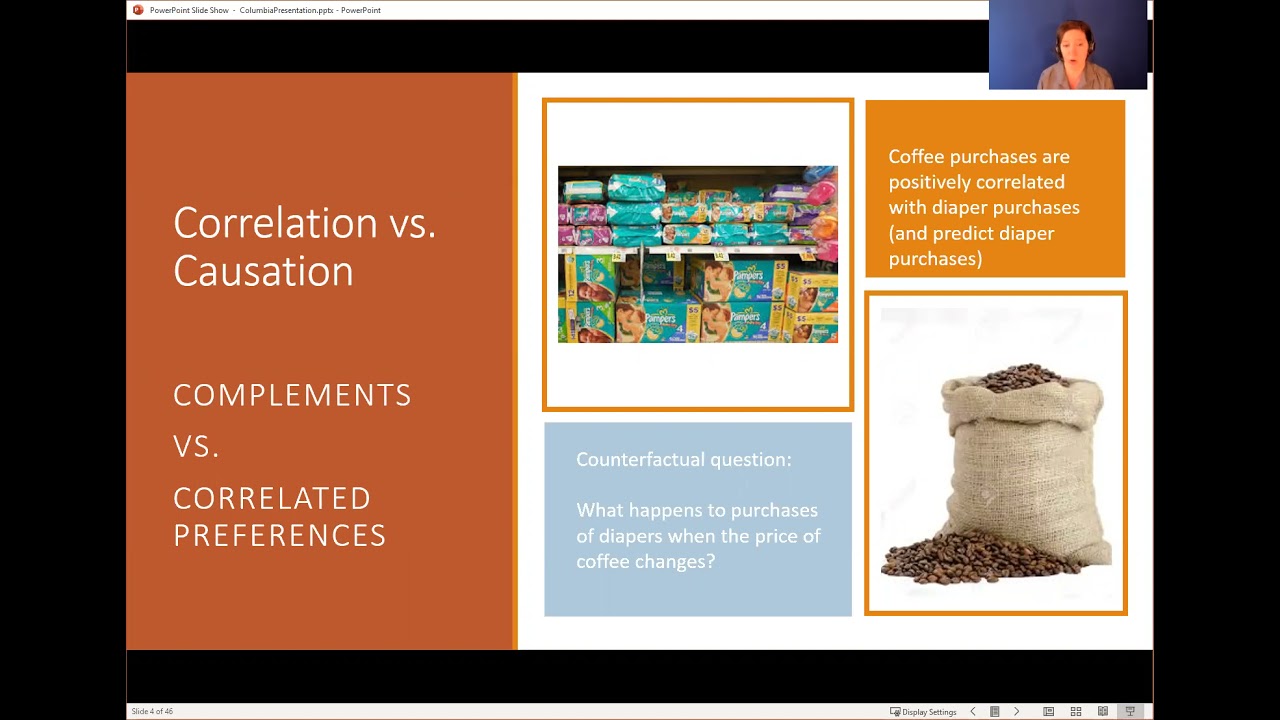
we're playing a bit of a matchmaking service between these small social impact firms and the amazing amounts of human capital we have here at Stanford how could we not take advantage of the ability to make such a big impact on the world while educating our students for me the research on causal inference understanding cause-and-effect using artificial intelligence to make decisions that's very inspiring to me and that's a big part of my research agenda the second area focus is really building artificial intelligence systems that augment humans that help humans and so if we think about the
pure commercial incentives of a firm they have to worry about the bottom line here at Stanford we can put a lot of emphasis on the augmenting humans part and really we can do some of the basic are indeed that will make it cheaper and easier for firms to take the next step into applications when we use AI to help humans so using AI to educate and train workers to help workers do jobs that might have previously required very expensive education and training but using AI to help them get the information they need in the moment
so that a less educated worker can accomplish a task if you think about trying to understand the optimization of delivery routes or of inspector allocations again this is something that can be done with data the data can predict traffic patterns and you can use software to optimize those types of scheduling problems another application is in terms of workers you could use video footage of customer service workers and then have humans watch those videos and label them this was a good interaction or a bad interaction then you could train an algorithm to look at all the
video footage and then based on the algorithm it would say oh this looks like it was a good one this was a bad one what you could do with that is you could take the ones that were flagged as bad and then have a human review those and see okay this is a mistake is it a false positive or is it really a problem and if it's really a problem then you could train that worker on better tactics of course we have to think about what are all the things that can go wrong right you're
surveilling your workers in some way how do people feel about being surveilled all the time what if somehow the algorithms tended to score women worse than men maybe the high voices were associated with problems and that tended to flag when more so there's lots and lots of issues around worker protection and the the fair use of the technology that need to be addressed a firm might not even realize that they were building biases into their evaluation metrics unless they actually had a pretty sophisticated scientific perspective about how they were building these systems and that's where
I think some of the research becomes very important most firms don't want to have racist and sexist algorithms that's just a headache for them but they don't necessarily know how to build algorithms that aren't so the great opportunity is that we can actually build fairness into algorithms in a way that we can't always force in humans but you have to be intentional about it and so that encompasses everything from understanding the impact of a I on the work force on an equality and understanding where frictions are likely to be important and where maybe everything will
be fine in the markets will take care of things also thinking about issues like privacy security surveillance discrimination bias this is also a very important role for a university to play because we can be thought leaders we can focus on areas where really society needs to weigh in the society has to decide how do we feel about surveillance how do we feel about who has our data and why I think everyone who's working in the area of artificial intelligence is very aware that this technology is dual-use you know it can be used for good it
can be used for warfare it can be used for terrorism what I believe is that by just educating and getting everyone involved in the conversation early is our best that our best hope of mitigating consequences I think there's a few big buckets of opportunity one is just delivering services more efficiently and conserving your resources so especially for city governments you spend a lot of time sending out inspectors to make sure that you know electrical wiring is good you got to fix your potholes and make sure that those street lamps are working and so ai and
data can be used to make that dramatically more efficient you can identify problems much more quickly you can prioritize the highest risk circumstances and allocate your your people to the highest risk scenarios you can allow people to do much more self-service you can do the scheduling much better so people want to sit around all day and wait for an inspector to show up you can actually make it clear to your citizens how you're doing and help provide good incentives for all of your service providers by making the citizens see right away hey how long are
the lines at the DMV and you know how long do you have to wait for an inspection and just having that information can then put the required pressure on the organizations to improve their service one project that we're looking at is understanding the the programs that are used to help unemployed workers and provide retraining services and so we're trying to use data to understand which programs are most effective for which types of people in order to both get people allocated to the right programs but also to help the programs know who their target customer really
should be and how they can improve their service to them so this is a really exciting moment to be doing research about digitisation it's an opportunity for innovation it's also an opportunity for science because it's a chance for us to learn what works and what works exactly right for a particular person in a particular place in a particular time at scale in a way that just has never been possible before and it's it's just a huge privilege to be at Stanford at this time to be able to try to take advantage of that opportunity [Music]
you [Music]