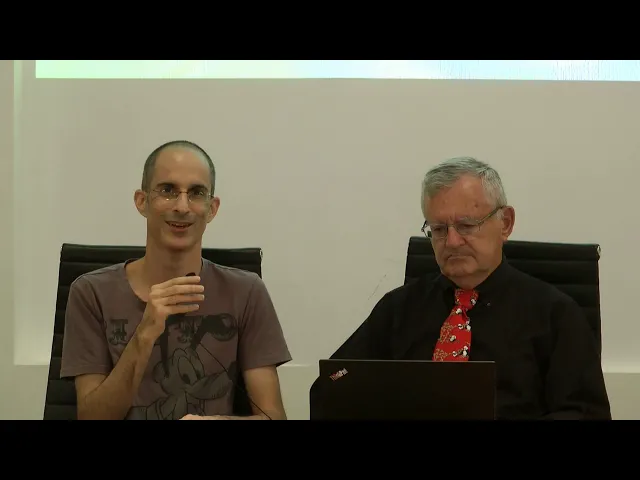
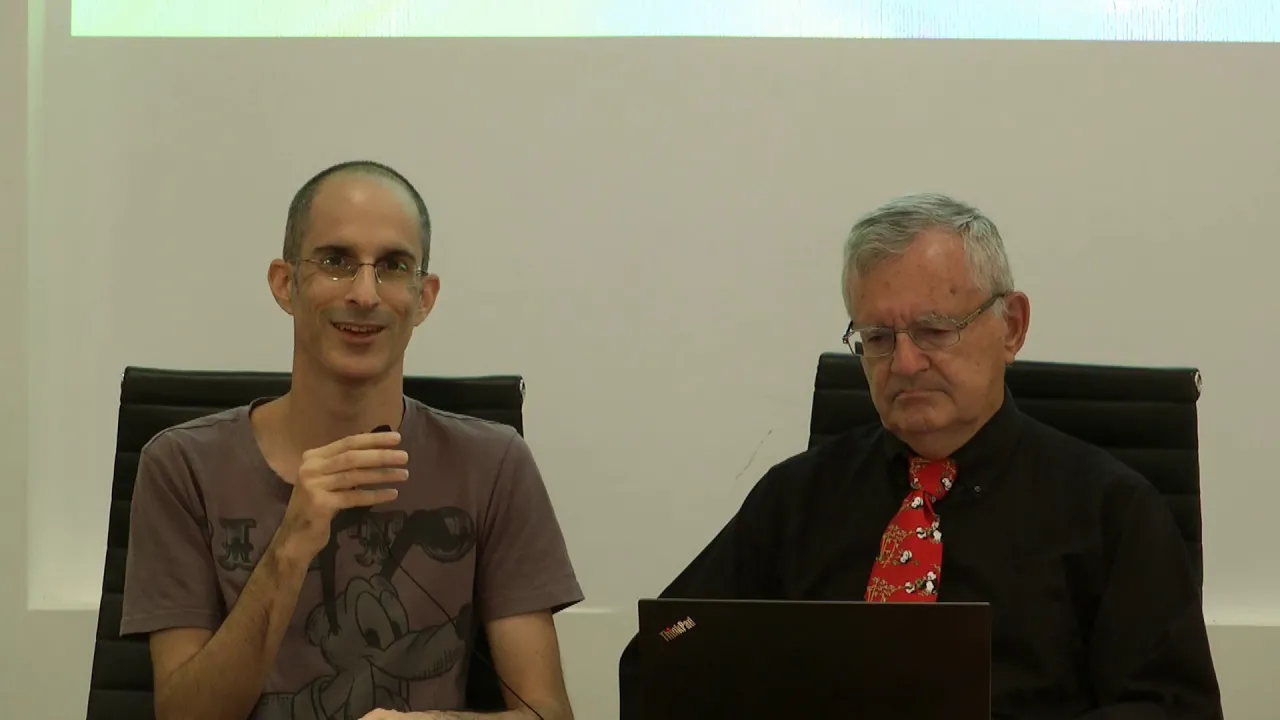
good afternoon first of all thanks a lot for signing up for our course we we appreciate it it's a new course it's the first time we've taught the course the first time you're taking it first time it's offered at Technion so all of us are going to be in a learning experience my name is slo-mo Mattel I'm a retired Technion professor my colleague Raya Navi the doctoral student in the Faculty of science and technology education and we are co-teaching the course two questions first question why am I talking in English when we're at the Technion
in Israel second question why am I not in the classroom physically for the very important first meeting of the course the first question ran and I have decided that it's important to teach in English because knowing English is an important tool and in communicating ideas and in implementing ideas globally and we want you to think big so part of our lecture as part of our teaching will be in English both Draya and I of course know Hebrew well and we will help you overcome difficulties for those of you who might struggle a bit with the
English the reading is also mainly in English almost all in English but we feel this this is important but we'll manage this process with with some empathy for for your struggles for those of you who do struggle why am I not in the classroom at the moment I'm in Ottawa lecture was scheduled for me in Ottawa I'm speaking to Canadian university presidents about how universities can develop and foster entrepreneurship based on some research that we did so it's kind of an important meeting and I apologize for not being with you in person and I will
see you next week on October 30th when we have our our second meeting I'd like to tell you a bit about my own background and then tell you a bit about have Raya tell you about his own background because I think it's relevant for for our course so until 2001 I was a economist teaching at the Technion doing economic research I requested and received early retirement great gift from the Technion when I was about 60 and became the academic director of something called the Technion Institute of Management and this was a management development and executive
Leadership Institute we were in a team in Tel Aviv right in the high tech area and I spent about a decade at this job working with companies working with startups with big high-tech global companies and for the first time really learning what innovation is and what startup on entrepreneurship is somebody once said sitting in a classroom is a terrible way to learn about the world and that's absolutely true for 20 years I also taught summer school at MIT in the MIT Sloan School of Management I taught R&D engineers from all over the world in a
program called management of Technology and I did that for about 20 years so these two experiences together gave me a good real-world view of innovation entrepreneurship and effective creativity how do you have ideas and really make them happen since 2001 I've written quite a few books I guess about 14 at last count a new one is coming out soon I'll talk to you about that a bit later and I tell you all this simply to point out that Ray and I both bring to the classroom some high tech experience and startup experience that will hopefully
bring reality into the classroom and not just theory rail would you like to tell about yourself that so my name is so again my name is relevee I'm very very happy to be with you here in this course my creativity and entrepreneurship and problem-solving experience actually starts in the Army in the Israeli Defense Forces I actually served in the military intelligence Directorate and was surrounded by engineers and computer scientists and worked on a lot of technological projects and doing a lot of research into comparing different products and different technologies and from there I proceeded to
do my studies in neuroscience actually studied biology and psychology I found later in life that psychology was one of the most useful subjects I've learned at university and it applies a lot to creativity and problem-solving and entrepreneurship of course I was involved in the founding of a biotech startup which still exists today in the field of molecular molecular diagnostics and what I did there I was mainly research manager doing research both on the business side marketing side as well as on the scientific biological and medical side I did my masters in education in bar-ilan University
my thesis was on scientific creativity and this was where essentially my trajectory or my path into learning more about problem-solving in an academic way and also in a methodical way began I began to take very large interest in what is exactly problem-solving what is exactly creativity and how can we look into it in a methodical way and improve it and assess it and today I'm doing a PhD as you all know in the Technion in the Faculty of Education in in technology and my research interests are still to do with the thinking skills involved in
complex problem-solving not just creative thinking but also systems thinking and metacognition which is thinking about thinking so I hope to bring all this experience and knowledge and expertise as much as possible to this course and I hope you enjoy this course and I hope to enjoy it with you thank you Riya thanks a lot and I think we're fortunate to have have rail because rail brings knowledge of pedagogy at a high level and of course if we're trying to help you think about thinking we need to have some deep knowledge about how people learn and
how they teach and how they develop ideas let's talk about the background of this course and our goals for the course the course builds on over 50 years of research creativity research is voluminous it's huge today it got underway really about 50 years ago and there's a vast body of research and knowledge about creativity who are who are the creative people how do they get ideas how do they make them happen rheya and i believe strongly that there is a core paradox in creativity the paradox is this creativity is based on having wild ideas sometimes
almost impossible ideas your mind floats free head in the clouds wild ideas but at the same time if you don't have a structured process for sifting through the ideas picking good ones sorting out bad ones starting to implement them test the ideas are they really good ideas are they worth putting sweat and blood into if you don't have some structure nothing will happen we all hear about brainstorming research shows brainstorming if you just talked about having ideas and putting them up on the wall brainstorming is highly highly unproductive so we're going to implement and teach
you three stage method for effective creative thinking and this has been developed here at the Technion and it's in some of my books and it's some of the work that Rey and I have done and workshops we've given and we're focusing on active or action learning practical ways to meet real needs through creative thought so in our sessions in our class sessions and we have thirteen or fourteen of them each class session will include some sort of proven tool or framework for helping you to find develop define test and implement an idea our three stage
approach to effective creative thinking is first stage we have a three stage rocket that we're going to launch and you will lunch the first stage of the rocket is ideation ideas coming up with with ideas that meet real needs second stage which by the way is vastly neglected and we know this from the huge failure rate of startups validation is this a good idea is this an idea that's worth investing in or should we find something else and it's important to validate ideas because in implementation we're going to invest time and effort sweat and blood
it may be weeks months years of our lives and finally implementation the third stage of the rocket okay we have the idea we've tested it's a good idea but how do we do it how do we make it happen and each stage takes different kinds of skills so in a moment you're going to see we're going to begin our journey outward into the world to identify pressing educational needs for your projects before we do that we're going to ask you each of you to do a very deep dive and internal journey into yourself to understand
who you are and what your skills are so that we can organize you in teams and so that you can contribute effectively to your team so each class session will involve some sort of tool or framework that's been proven helpful in one of the three stages of our three-stage rocket and we'll have action learning team-based sessions where in your teams you apply the tool and you applied in a focused manner to the idea that you're working to develop this is not a game or a simulation this is real life in other words we want you
to develop an idea and implement it and make it happen for real not just as a simulation hopefully some of your ideas at least some of them will will take place and will change the world and in a moment you'll see that we'll have you present your ideas will have some mentoring some critiques and hopefully some help in developing our ideas what's the goal of this of this course how will you know and how will we know Riya and how will we know whether we've succeeded whether you've succeeded or whether we've wasted your time after
you take this course we hope for three things three results first result is improved ability to develop creative ideas we're going to help you build a personal creativity machine a personal individually tailored method for you to develop ideas and turn the idea faucet on and never ever turn it off second we hope you will develop the ability to validate ideas to objectively carefully put your ideas feet to the fire and discard ones that don't meet a real need and embrace ones that really do and that are worth that are worth doing worth activating and finally
we hope to give you the ability to develop a practical effective plan for implementing your creative idea within the educational system this is not easy educational system in every country not just in Israel is a large bureaucracy that's a big big supertanker not easy to change direction or turnaround so we'll help you understand how to develop a plan a business plan project plan finance plan so three stages id8 validate actuate and in your projects and your teams you will go through each of those three stages and developing your plan you'll then present them visually in
a poster and get some feedback positive some of it constructive criticism and hopefully set out to implement your idea students always want to know how will we determine your grade I hate grades I've got for 50 years grades are destructive but the system requires us to give you a grade so we will your grade will be based on two things the poster presentation of your team's educational project and second the quality of your presentation to a panel of experts finally a third piece of your grade you'll submit a written business plan and a project plan
by February the 15th and your grade will be based on those those three elements and Ray I and I will judge them carefully and read them carefully and assign you a grade based on on those three three things this is not an easy course there's a lot of reading a lot of work a lot of team work to be done so I hope you're aware of that in advance and I think we're going to have a really good time so really that's present at least the first three meetings for the students so they know what
to expect and if you wish later on perhaps you can fill in some of the details for our future future meetings beyond this so I'm giving you via videotape introduction to the course we're going to ask you to each pitch educational problem issue or need pressing need that you've identified that you'd like to work on and then we're going to help you Lavie will help you divide into teams teams of three four or or five so by the end of the day we will have you divided into teams with at least an initial idea of
the idea of the need the problem the challenge that you're going to be be working on next week I'll be with you and look forward to meeting you we're going to work with you on defining your problem carefully and the requirements of a solution and I think Lavie has some very useful tools to share with you about the crucial issue of how do you define the problem Einstein said that 80% of solving a problem is is the way you frame it the way you define it the second thing we'll do is to have you present
your own personal creativity machine what is the process by which you get ideas you test your ideas and then you make them happen I've discovered in the course of many years of teaching that each person on the face of the planet has kind of a different way of doing this just like fingerprints there are no two fingerprints that are the same creative people operate in different ways and those ways have to be uniquely tailored to your own knowledge skills your history your background your culture your desires your goals they they have to be unique to
you and you're the one who decides what your creativity process is and only if it suits you will it be really effective anything to add well what I would like to add is that of course the work we're doing is not only going to be in the faculty there's also going to be were carried out at home so you will receive individual as well as team assignments with specific guidelines and deadlines and so on and we will be here of course to help you with those assignments some of the assignments will involve reading a paper
on the topic of creativity or entrepreneurship and then writing some kind of a reflection some assignments will involve the specific projects that you're working on other assignments will involve your specific creative process such as the personal creativity machine that just spoke about and all of this information is of course available to you to review and you can always ask us questions about it and I will personally always be available by email and if necessary by telephone or even face to face meetings at the faculty if required so we are here to help thanks a lot
Riya I am available by email or other ways I like doing email I answer emails quickly so I look forward to interacting with you in any way that you find suitable our third session November 6th high order thinking skills and problem solving so our first three meetings at least will be focused on ideation on the process of having ideas where do you get the ideas how do you have a lot of ideas how do you sort them and how do you define problems how do you think about problems in a structured way your assignment for
November 5th we have some extensive reading that we'd like to ask you to do on the screen you can see the cover of my new book it's called dismantle how to deconstruct your mind and build a personal creativity machine and it'll be out hopefully soon or may already be out when you when you watch this we're asking you to read 50 pages the section for the section 4 is about personal creativity machines that my students all over the world have constructed over the last 25 years so I've taught MBA courses in many countries collected essays
students wrote telling me about their creative process and I've organized these and written them down in the last part of my book section 4 and you can read these and perhaps it will help you define your own personal creativity machine but of course your own BCM will be unique unique to you and and will be suited perfectly to your own skills personality and background we also want you by November 5th just before our third meeting to submit your team's problem and Raya is going to teach you a very useful template for setting up that problem
for defining it so this is not trivial to translate an idea into a practical definition of a problem that you will solve that you will tackle on the screen you can also see the cover of another book that I've written in 2012 I wrote this with a former student of mine at the Technion cracking the creativity code and this is about a method called zoom in zoom out how to zoom in on a problem and then zoom out globally to find a wide variety of ways that you might crack the problem or or tackle it
and we will be helping you learn that model and perhaps apply it and it might be suitable for you you might find it of some use just quickly looking very quickly ahead to our future meetings November 13th Lavie will talk about metacognition higher-order thinking critical thinking there's a paradox here in order to solve problems you need old knowledge you need to respect the old masters and and learn lots and lots of things and while you're learning you need to develop new knowledge questioning you need to respect old knowledge and at the same time question it
and think critically why is this true is this true can we do this differently is there another way and that tension between respect for old knowledge Confucius thinking and Steve Jobs criticizing critically thinking about everything and doing things in a different way Steve Jobs and Confucius together produce world-changing ideas but there's tension and paradox between the two November 20th we will together talk about validation how do you test your idea how do you avoid two crucial errors the first error is discarding good ideas second error is implementing really bad ideas type two error is by
far the worst disaster putting two years into working on something and then you realize you know this this doesn't really meet a need and I could have known it if I just done my homework discarding a good idea there are lots and lots of good ideas and if you have a personal creativity machine you will have millions of good ideas and can't do them all so rejecting a good idea in my opinion is not a disaster because there's so many more where that came from I will spend two weeks on validation validation is under invested
and we know that from the immense failure rate for startups I'll show you data on that and it's really shocking and we need to do something to reduce that high failure rate and I think we can midterm December 11 all courses have midterm evaluation we're going to hear you make initial presentations we'll give you feedback your fellow students will give you good comments constructive criticism and help you improve your your ideas on the 18th of December we'll talk about social entrepreneurship and why this differs from private entrepreneurship and then for the last part of the
course we move into actuation implementation how do you implement an idea so we'll teach you how to construct a business plan of a winning business plan we'll show you some examples we'll do a bit of accounting profit and loss Gantt chart hopefully on January 1st we'll make a field trip we'd like to take you to a real startup to talk to people who have really done it not just those who teach but those who have done it we have some ideas about where we might take you January 8 and 15 two weeks of team presentations
and then the grand finale in the main lobby of the science and Education Science and Technology education faculty the Technion you'll mount row posters we'll invite the whole faculty and students to come and view your wonderful ideas to chat with you give you feedback and hopefully begin implementation a key point I want to make about about startups just before that Reyat anything to add about our course well I would say that our general philosophy in this course is to as much as possible to try and systemize the process of creative problem-solving of effective creative thinking
whilst at the same time allowing everyone room to express their ideas and to do what they like to do and what they want to do and it is a fine balance but from my experience with Ashla more I think will achieve it and I believe that this course can be both fun and challenging I don't think it's necessarily a contradiction so that's what we're aiming for and ultimately what Rome and I really really want is for everyone to not just learn a lot from this course but for this course and for your projects to actually
produce something that will last beyond the course that is our greatest hope I would say I think so I'm hoping we are able to achieve it'll be some of that another way to put this ray off is that we are challenging you to engage in head in the clouds creative thinking wild ideas head in the clouds at the same time we are challenging you to put your feet solidly on the ground and to be eminently practical and pragmatic as you move ahead to implement your idea great entrepreneurs are 10,000 feet tall their heads are in
the cloud their feet are on the ground very few people are able to do that not many people are 10,000 feet tall so this requires teamwork and teamwork will require great integration and collaboration between idea people and implementation people working closely together a quick word about how hard it is to have ideas and implement them this is a study done of 10000 Israeli startups these are not educational startups these are startups in the private sector but in some ways an educational startup may be even harder during the 17 years from 1997 to 2014 the Israel
venture Center Research Center examined whether startups failed or succeeded the red indicates startups that were shut down and well over 4,000 of the 10,000 failed and shut down including 1,700 them that got venture capital and others never did raise the money they bootstrap but they also failed the orange are startups that actually continued to exist some of them got venture money some didn't they're still alive they still exist you can still go and visit them but they're zombies they're Walking Dead they're not going anywhere they're not going to grow they're not going to scale up
they have a little revenue just enough to limp along they are the walking dead there are problem because they take up oxygen engineers talent management talent that could be used for other more successful startups the tiny tiny green rectangles of the succeeding the successful startups and if you count them now success here is measured really draconic Lee tough profitable good return on investment sustained growth scale-up so the the definition of success really is a tough one but only 4% were some 400 of the 10,000 startups really attained success this is a shocking high rate of
failure part of it stems from the fact that the entrepreneurs are mainly engineers and scientists and they know a lot about technology and science but very little about business principles basic business principles how you manage how you implement and and this I feel is a major failure certainly my own here at the Technion and this is why we want to equip you with actuation implementation tools with practical tools that can help you succeed and improve the odds I want to tell you some stories you know I was a an academic economist for 40 years and
I wrote lots and lots of research papers and I crunched numbers economists think that they know where you find truth you find truth in numbers I took me a long time I'm really slow learner it took me a long time to figure out you don't find truth in numbers probably the opposite and I was part of this game of disguising or even distorting truth by using numbers so where do you find truth it took me 40 years to figure it out you find truth in stories and the stories of real people N equals 1 or
n less than 1 of people who have dealt with problems and who have done things that I would have loved to have done and you learn from these stories and I've written books now that deal with these stories this is a book I published in 2015 called innovate your innovation process and it's a hundred and twenty eight stories of people who have had ideas and made them happen successfully so let me tell you a couple of stories that hopefully will inspire you and and show you the way forward and you will create your own story
you will tell yourself a story in future tense and then work to make it happen so that when you look back in past tense the story has more or less come true on the screen you can see an amazing young lady her name is or Tolliver I met Hotel recently or tal recently at the DL the innovation conference in Tel Aviv and or tiled presented her idea to me and told me about her background portal served in the Israeli Air Force she was a flight controller that means that she had the life-or-death responsibilities of managing
all the planes Air Force planes in the air where a slight mistake would cost lives a high-tension high-skilled job and she did this for I think eight years and retired from the Army with the rank of major now in her our Air Force service as a flight controller or tau was exposed to the culture and the pedagogy of the Israeli Air Force you learn to fly by flying you also learn to fly in a simulator a simulator is a real-life situation where you face sometimes really high tension crises that you have to deal with but
you can meet them and practice meeting them in a way that isn't life-threatening and Oritel realized that this is a powerful way to learn through these simulators and by actually flying so she is now doing an educational start-up trying to apply the principles of simulation in the Air Force to training software engineers and using simulation to examine their skills and test their skills so that they themselves can learn more about themselves and their potential employer can learn more about them through a series of simulated scenarios where they're asked to solve problems to to write code
and so on this is or tells startup she's working on a business plan she's trying to do a pilot I think this is very important because those of us who've been educators I have been for 50 years since 1967 we realized that for today's young people for the Millennials we need to change the way we teach they learn differently than older generations and we've been very very slow at Technion and in all universities in changing the way we teach young people perhaps or tell can show us the way ahead with with her project notice that
she's tackled a really big problem a really big challenge which is something that we recommend if you're going to invest the sweat and blood and years of your life in something make it worthwhile the second story very different from the world of private entrepreneurship on the screen you see two amazing people highly highly creative on the Left on my left is Mario snuffed and Mario's was one of the three co-founders of checkpoint checkpoint was founded in 1993 three young men who were friends from the army from a technology unit in military intelligence someplace that Ray
also came from they were friends in the unit finished their service worked in in high tech got some education in software engineering and then met together at Mario's apartment in Tel Aviv I think it was his grandmother's apartment on a hot July day in 1993 no air conditioning cases of coca-cola and they sat down wrote a business plan and the business plan was to create firewall protection for networks at a time when hacking had just begun and the marketplace didn't really know that firewall protection was needed and that business plan initially called nsk the company
was called nsk knocked Szwed Crammer the three friends who were founders that business plan created checkpoint checkpoint today has a market value of a chairs of eighteen billion dollars forty three percent profit margin net profit margin and is one of the last startups that grew to global independent size without being acquired in in israel now marius knock was the salesperson for checkpoint and he spent his life on planes traveling around and selling product his shares he's tall he's said by Forbes magazine to be worth well over a billion dollars that's enough money for great many
generations and Mario's could easily retire and live a life of leisure and instead he is now starting a fund a venture fund called a moon a moon is a play on words and moon faith credibility in Hebrew but also as he calls it we want to do a moon shot we want to change the world and this a venture fund with his own funds and other funds will invest in health tech medical technology and some of the companies that have already been invested in our quite amazing Mario says partner is another amazing person named doctor
yet years Shindell dr. Shindell is a medical doctor he also has a Harvard MBA he's also a computer expert he headed the Israel digital project that was advancing digital technology in the periphery in Israel a really really important project and here is partnering with Merritt Marius in building a moon and is also director of some amazing health tech companies including one amazing one Carta Hill which can help replace worn cartilage something I've had myself in my knee now how did not get into this a very important point about ideas and creativity the most effective creativity
in my experience is creativity that's intensely personal you discover a need for your grandmother your grandmother is ill she's alone she has trouble communicating she can't punch the numbers on a cell phone we identify need of somebody we love and we want to create value for them and of course if we do it for them we can do it for perhaps thousands or millions of other people Mario's beloved father died of cancer and Mario's felt helpless watching him fade and decided that he wanted to do something to change this and invest in health tech believing
that health tech will be a huge growth industry for Israel so entrepreneurs tend to be serial entrepreneurs they started startup they fail try again fail succeed make money reinvest mentor other entrepreneurs become angel investors become venture capitalists and it's called pay it forward it's a it's a chain reaction a critical mass kind of kind of process so where do you begin your journey toward becoming an effective creative thinker you begin with a long deep look inside yourself Who am I what are my skills what do I lack what do I know what do I not
know and most important what don't I know and I don't even know that I don't know it Charles the goal once said when the Americans put a man on the moon we can go to the moon that's that's no big deal the greatest distance we have to travel lies inside ourselves within ourselves so Raya and I are saying that the startup journey begins with a deep long hard look inside ourselves what is our deepest passion what do I want to do it and to change the world and how will I do this and we we
want you to begin the course by answering that question what is your deepest passion what do you really care about what makes you upset what makes you angry what makes you really really happy and we're going to help you a bit in answering that question as a beginning towards starting to form your team's that will work together and they will hopefully be balanced teams a balanced team is a team with wild idea people with pragmatic implementation beats ooha people who understand each other to respect each other and work together really well anything - Adria but
this journey inside sure well I think the only thing I'd like to add is that we do always have the entrepreneurs that we all know to look up to and she lama has mentioned some very very famous names and he's also showing you some names that you may not know but at the same time I believe that every person whether they have the typical entrepreneurship personality or the typical inventor personality or perhaps they don't can certainly develop those parts within them I think that's very important for every person to do and whether you are inspired
by those types of people or whether other types of people inspire you I think that's fine I think that the entrepreneurship and the creativity is something that can be developed to some extent in every person and is important to develop so whether you see yourselves as ID people or as people who implement things maybe as both maybe you're not sure we hope to bring both sides of you out during this course that's a really good point really I want to stress that so when you have an idea and you're working to implement the idea you
realize that there are things that you need to learn that you don't know you may not know how to write a business plan how to do a Gantt chart in the process of implementing idea you'll learn a lot and it'll be an effective way to learn because you're actually doing something you're not sitting and taking notes listening to the words of some professor like myself even if your idea doesn't work even if you fail there is no such thing as failure Edison once said after trying 10,000 different ways to create the filament of a lightbulb
he once said I haven't I haven't failed I've just had 10,000 ways to learn what doesn't work so in the process of implementing an idea you will learn a lot and the process itself will be of great value educational value to you many successful entrepreneurs fail once and twice and get it right only on the third try in Silicon Valley this is true this is not a legend when you pitch to a hard seasoned venture capitalists in Silicon Valley if you say I did one startup and fail and I did another startup and failed and
this is my third try they will give you extra points rather than take off points because they realize that you've learned a lot in in the process so we're going to give you a questionnaire to fill out fill out here now in class and we'll we'll score it quickly and this questionnaire has to do with the core paradox of effective creative thinking there are two key skills that you need to develop to create ideas and to implement them the first core skill is called discovery exploration having ideas finding creative ways to solve really hard problems
ways that other people haven't thought of and this is a skill that can be measured and we have a questionnaire with ten questions and you answer them and score them and this will give you a discovery score this is the head in the cloud score how good are you at having a lot of high quality creative ideas the second skill is called delivery there's a high tech company some of you many of you may know called Amdocs abducts does Billings billing software for cell phone companies highly successful global company they have a huge building in
Raanana they're a veteran company they're almost as old as checkpoint and their mantra used to be we deliver we don't just promise we deliver we deliver excellent cost-effective software as we promised so delivery has to do with implementation actuation can you deliver the idea that you have in an effective way that really does meet people's needs and delivery skills involve organization leadership management pragmatic thinking so in many ways as you see in the diagram discovery and delivery are orthogonal there are 90 degrees there they're conflicting they're different I know one person my co-author one of
my co-authors who has both amazing skills and on the screen you can see on the upper right-hand corner somebody who has high discovery skills and high delivery skills my friend started a leading advertising agency in Israel with amazing creative ideas and he is very much dr. Jekyll and mr. Hyde dr. Jekyll creativity and then the next moment when you're talking about implementation it's a different person it's quite amazing very few people are like that where are you in discovery delivery so we're asking you to do this questionnaire that will hand out there are 20 questions
and then we'll tell you after you answer it how to score it and you will get a discovery score and a delivery score to numbers and we'll ask you to write your name and write your discovery score and your delivery score and we'll find a way to post it and then hopefully in your team's you will at least know whether your team is balanced with people good at delivery implementation operations or creative thinking ideas and and we need that that kind of balance there are great many skills a great many questionnaires I think this is
this is a crucial one and it's important that you have self-awareness of first what is your deepest passion and then what are your main skills what are you really good at now emphasizing rails point and this is very important even if you score modestly on Discovery it doesn't mean that you can't be a super creative person you can't be a da Vinci you can creativity is a muscle you can build that muscle you can strengthen it and we'll give you some tools for doing that so begin with sort of a benchmark where am I now
and if you want to become more creative we will help you in doing that if you are a highly creative person but haven't managed to implement your ideas we'll give you tools to help you do that and you can develop your ability in terms of delivery and the goal of course is that high upper right hand corner where you have both discovery skills and delivery skills those two things together change the world just continuing this and we're close to running out of time and and I'm close to winding up this chat with you there there's
another way of looking at how to generate innovative ideas this comes from a wonderful professor named Clayton Christensen at Harvard Business School he's written wonderful books about innovation and he's developed the concept of disruptive innovation disruptive ideas sometimes an idea comes along and it completely changes the world a group of people came along and began giving out a free newspaper in Israel and completely changed the newspaper business forever not only in Israel this was done in Britain and in Boston and elsewhere as well so some ideas are so powerful that they completely change whole industries
now how does this work it starts with courage on the left-hand side of your screen I've taught a lot of innovation classes to MBA students I know for sure and looking at them looking and looking them in the eyes for some of them it was like theoretical physics they will never become entrepreneurs they simply don't have the stomach for risk they don't have fire in the belly so innovation entrepreneurship ideas changing the world it takes courage because the better your idea the more fierce the opposition you will face people will tell you you can't do
it you won't do it you shouldn't do it it won't work it can't work so challenging the status quo always always takes guts if you have those guts then you need behavioral skills what are those skills you need to question this is one of Israel's strengths people ask me how come Israel is startup nation when I teach a course president of the Technion has confirmed this he's an expert on sleep research and before he says of one sentence the students are questioning him and indicating that he doesn't know what he's talking about this is a
wonderful skill questioning question everything respect to old knowledge question everything you hear observing how do you find a real need how do you find a need that the educational system needs you need to have really really sharp eyes I have pretty poor vision I have glasses but I've tried to train myself to observe small details people school teachers principals if I clean they won't be able to really tell you about their needs because they're too busy dealing with the constraints that they face you need to observe situations you need to get out into the world
try things work in different jobs observe and and spot needs that people can't tell you about but you know they exist look at old people with cell phones and they're struggling to punch the numbers and you realize that they need simply a cell phone that has very big in large numbers but they may not be able to tell you that networking you need to know people you need to build a team and you need to have a lot of people and you know that you can assemble into your team and just fit the pieces together
perfectly Check Point had a superb manager Gil sweat he's still the CEO after 25 years mariusz knocked he was a Salesman he loves selling he was good at it and Cramer and he was the technology guy and he loved writing code and he's done several exits since then and you had this perfect triangle technology sales and management and experimenting you'd have to be willing to try things as good as your ideas you will have no idea whether it's valid or not until you try it on someone or tell Hobart that I spoke about she has
a great idea and we're excited about it but we really won't know about it until she goes into Intel or another company and actually applies her system and sees how it works and that will change her thinking about the idea and how to make it happen and then cognitive skills the last thing we need and this is called associational thinking associational is taking idea an idea from one place and bring it to another so in my book one of my books a story that I tell is about a child intensive care unit in a hospital
in Britain now getting kids to intensive care sometimes seconds really matter you have to do it really quickly and put everything in place and hook the child up to all the sensors and equipment how do you do this quickly and where do you learn so in associational thinking the intensive care team of doctors and nurses went to Formula One racing and they went to a pit and they observed a pit stop and a pit stop in Formula One racing the car stops they change four tires they fill the gas up they wipe the windshield and
they give the driver something to drink when they do that in eight seconds it's a team of 20 people and each person knows exactly what their job is there's no fuss there's no chaos the no shouting done quietly and in eight seconds the car is off so they took that method brought it to intensive care and used it to save child's lives children's lives associational thinking taking a solution from one place applying it to another completely different place and these are all different kinds of skills that that that you need last point and will end
because our hour I think is up something that personally disturbs me angers me and saddens me and this is partly why Raya and I have built this course and why I'm writing books and writing blogs and doing other things one of our main resources certainly in Israel but in the world is the creative genius of people people who are able to come up with ideas Israel's economy we have GDP of $40,000 per person per capita Israel is a wealthy country it comes from ideas not from things that we dig out of the ground comes from
ideas this is a natural national resource it's a treasure it's it's a god-given treasure that's been given to human beings and we're destroying it because in our schools because of our rigid approach to schooling in the way we teach children the way we give them exams the way we set but Groot the way they study for bug rude we are destroying creativity because we are insisting that children learn other ideas rather than have their own there's a wonderful book by an MIT scholar named Mitch Resnick who's written a book called lifelong learning lifelong kindergarten and
lifelong kindergarten talks about four p's you need for peace to be a lifelong learner to be in kindergarten for your whole life how do kids learn in kindergarten they play and they do things you need passion you need projects you need peers and you need play to try things so this graph is a study of creativity measured by the torrance creativity measure widely adopted and verified at age five 98% of five-year-old children are geniuses in terms of creativity and that's because they're fearless and anything is possible and then we send them to school and by
age 10 a third of them are genius level creativity and by age 15 10% one in 10 and by age 30 by the way that number Falls even more this must not be we cannot let this continue we've got to find ways of educating people in a way that preserves their ability to come up their own ideas rather than to regurgitate ideas old ideas of other people okay so I think I'll conclude here I turn you over to the good hands of rail for the remaining of this of this class and rail will help you
organize in teams and fill out the questionnaire final words way out before I thank you very much ash llama I enjoyed the listening to your talk and I think it's probably a lot to take in for the students but the the point of this course and the next lessons and the homework assignments is exactly that to digest everything that's been talked about and I hope that for everyone here that this course will be a transformative experience that you will come out to some degree different people hopefully better of Nepal more confident in yourselves and with
more faith that you can change things in the educational system with the students with yourselves and we are here to help you make this transformation happen and I'm sure that someone I will also learn a lot and be transformed by the experience of teaching and learning from you so much success and good luck everybody and one last word before we before I depart Israel's educational system from pre-school all the way through you'd bet and beyond israel's educational system is in deep deep trouble i think this is widely recognized by people in the system by people
outside the system it's found in global comparative measures like the piece of measure and and many other ways and this is an existential threat for this country because we make our living on our and if we are not developing our brains in in the optimal manner it's an existential threat so I want to challenge every one of you to think big from your own experience from what you've seen identify big problems problems that are really tough and significant and then use your creative thinking or experience or wisdom to try to crack them so that in
this course perhaps from this course some ideas will emerge that really will make a big difference to the next generation of young people in in Israel I wish you all the best thanks again for enrolling in our course and really looking forward to meet you in person all the best